
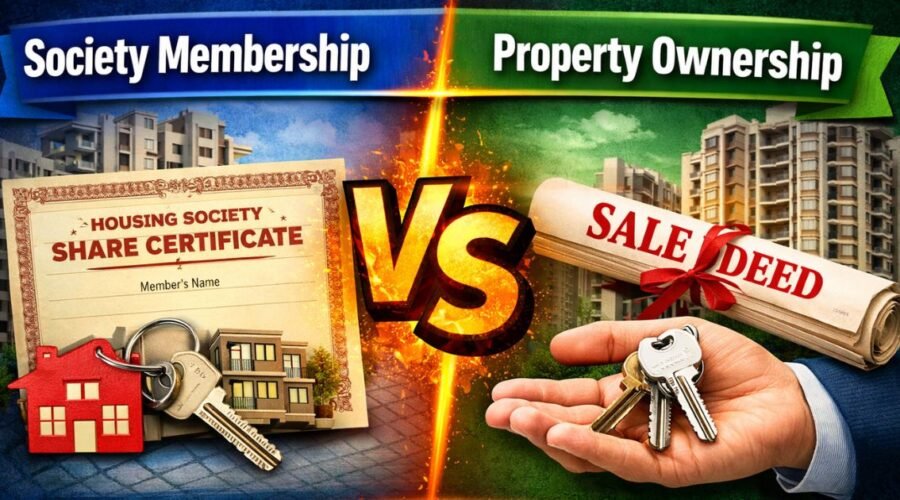
Society Membership vs Property Ownership in Navi Mumbai: What Is the Difference?
Society membership and property ownership are connected, but they are not the same thing. In Navi Mumbai, a person may be recognised by the housing society as a member and still have title issues, while another person may hold a registered sale deed but still be waiting for society transfer formalities. In simple terms, ownership comes from registered title documents and title history, while society membership governs your place inside the society’s internal administrative system.
That difference matters much more than most buyers realise. It affects resale, home loans, inheritance, nomination, redevelopment, municipal record updates, and even basic society dealings like share certificate endorsement, voting, and internal approvals. In Navi Mumbai, this confusion becomes sharper because many properties sit inside older co-operative societies, CIDCO-origin layouts, leasehold histories, or mixed paperwork chains that were not always cleaned up properly at the time of transfer.
Quick Summary
| Basis | Society Membership | Property Ownership | Why it matters in practice |
|---|---|---|---|
| Core meaning | Recognition by the co-operative housing society | Legal title in the flat or property | These are two different layers |
| Main proof | Share certificate, society records, membership entry | Registered sale deed, conveyance, and title chain | Banks and lawyers focus first on title |
| Legal role | Society administration and occupancy-related participation | Right to hold, transfer, mortgage, inherit, and defend title | You cannot safely rely only on society papers |
| On owner’s death | Nominee may get provisional membership | Beneficial ownership still follows succession law | Nominee is not automatically full owner |
| In dispute | Helps show society recognition | Civil courts mainly examine registered title documents | Title is stronger than internal society records in an ownership dispute |
This is the cleanest way to understand the issue: the sale deed answers who owns the asset, while the society record answers who the society currently deals with. Both matter, but they do not do the same job.
What actually proves flat ownership in Navi Mumbai?

The strongest starting point is the registered document trail. In a Navi Mumbai resale deal, the registered sale deed or conveyance deed and the chain of earlier registered transfer documents matter more than maintenance receipts, electricity bills, or a society letter.
A simple way to think about it is this: a registered sale deed is the real ownership document, while the share certificate is the society’s recognition that you are the member attached to that flat.
The two usually move together in a clean transaction. But when they do not, the legal risk usually sits on the title side, not on the maintenance-bill side. A buyer who only checks the society file can walk into a broken-title problem without realising it until loan processing, resale, succession, or redevelopment begins.
> Caution: A possession letter, tax receipt, maintenance bill, or utility bill may support occupancy or usage, but by themselves they do not replace a registered ownership chain.
What does society membership actually prove?
Society membership proves that the co-operative structure recognises you for its own internal purposes. That usually includes participation in society administration, use of common facilities as per rules, voting rights where applicable, and processing of share transfer and membership records.
This is why society membership is important but limited. It helps in day-to-day functioning. It helps in getting society records aligned. It may be needed for practical steps like no-dues, NOCs, transfer processing, and redevelopment participation. But it does not automatically become a substitute for legal title.
That is the mistake many people make. They see a share certificate, maintenance receipts, and the seller’s name in society records, and they assume the ownership side is fully clean too. Sometimes it is. Sometimes it is not.
Why Navi Mumbai buyers get confused between the two
In many Indian cities this confusion exists, but Navi Mumbai has its own reasons.
First, a large part of the city grew through CIDCO planning, and for many years leasehold structures, transfer permissions, NOCs, and authority-level clearances sat alongside society records and sale registration. That created a multi-layer paperwork culture. In some old deals, people became settled in a flat with society recognition even though the title trail remained incomplete or messy.
Second, older nodes like Vashi, Nerul, Airoli, Belapur, Kharghar, and Panvel-side societies often have long resale histories. When one link in the chain was badly documented years ago, the problem may stay hidden until the next buyer asks for a proper document set. In such buildings, residents often place too much weight on the share certificate because that is the paper they see most often. But title verification does not end at the society office.
Third, nomination creates false confidence. Many families assume that if the society has recorded one nominee, that nominee has become the full owner. That is one of the biggest practical misunderstandings in old Navi Mumbai flats.
Sale deed vs share certificate vs possession vs nomination
| Document / Status | What it helps establish | What it does not prove by itself | When a buyer should insist on checking it |
|---|---|---|---|
| Registered sale deed / conveyance | Legal transfer of title and transaction history | Society compliance, dues clearance, or smooth membership entry | Before token becomes serious money and before loan processing |
| Share certificate | Society membership and internal recognition | Full marketable title by itself | Before finalising resale and society transfer |
| Possession letter | Physical handover or occupancy context | Legal title by itself | As supporting paperwork, not primary proof |
| Nomination entry | Who the society may deal with on provisional basis after death | Beneficial ownership or unrestricted right to sell | In inheritance-linked sales |
| Tax / utility records | Occupancy and civic linkage | Full legal title | Only as supporting consistency checks |
This table is where many articles stop too early. Each paper does something. But not every paper does everything.
A registered sale deed is crucial because it speaks to title. A share certificate is important because it speaks to society recognition. A nomination entry is useful for society administration after death, but it does not by itself settle the beneficial ownership question. A possession letter can show handover, but handover is not the same as title.
Can you be the owner even if society membership is still pending?
Yes, that can happen.
If a buyer has already completed a proper registered sale deed and paid the necessary stamp duty and registration charges, ownership may have moved even though the society has not yet issued the updated share certificate or completed the membership process. Society admission is still a separate step that follows.
But this is not a situation to casually ignore. Pending society transfer can lead to practical headaches: delays in internal approvals, trouble getting some certificates, friction on record updates, and complications in future resale.
> What to verify if the seller says “membership transfer is pending” > Ask why it is pending, since when, whether any society objection exists, whether transfer fees and society formalities were completed, and whether the registered document set is fully clean. If the title is strong and the delay is only administrative, that is one kind of problem. If title is weak and the seller is hiding behind society delay, that is a very different problem.
Can someone hold society membership but still have weak ownership?
Yes, and this is the more dangerous situation.
This can happen in old family arrangements, nominee-based misunderstandings, unregistered internal settlements, or badly handled historic transfers. A person may get the society to recognise them for administrative purposes, but if the underlying legal transfer was never properly executed, the property can still be vulnerable in resale, succession, loan scrutiny, or civil dispute.
This is especially important in inheritance-linked cases. A nominee may be accepted by the society for provisional handling of the flat’s administrative side, but that does not automatically mean the nominee has become the full legal owner with unrestricted power to sell the flat. The beneficial rights may still lie with the legal heirs.
For a buyer, this distinction is not theoretical. It can decide whether the flat is safe to buy or whether the transaction may later be challenged.
How this shows up in common Navi Mumbai situations
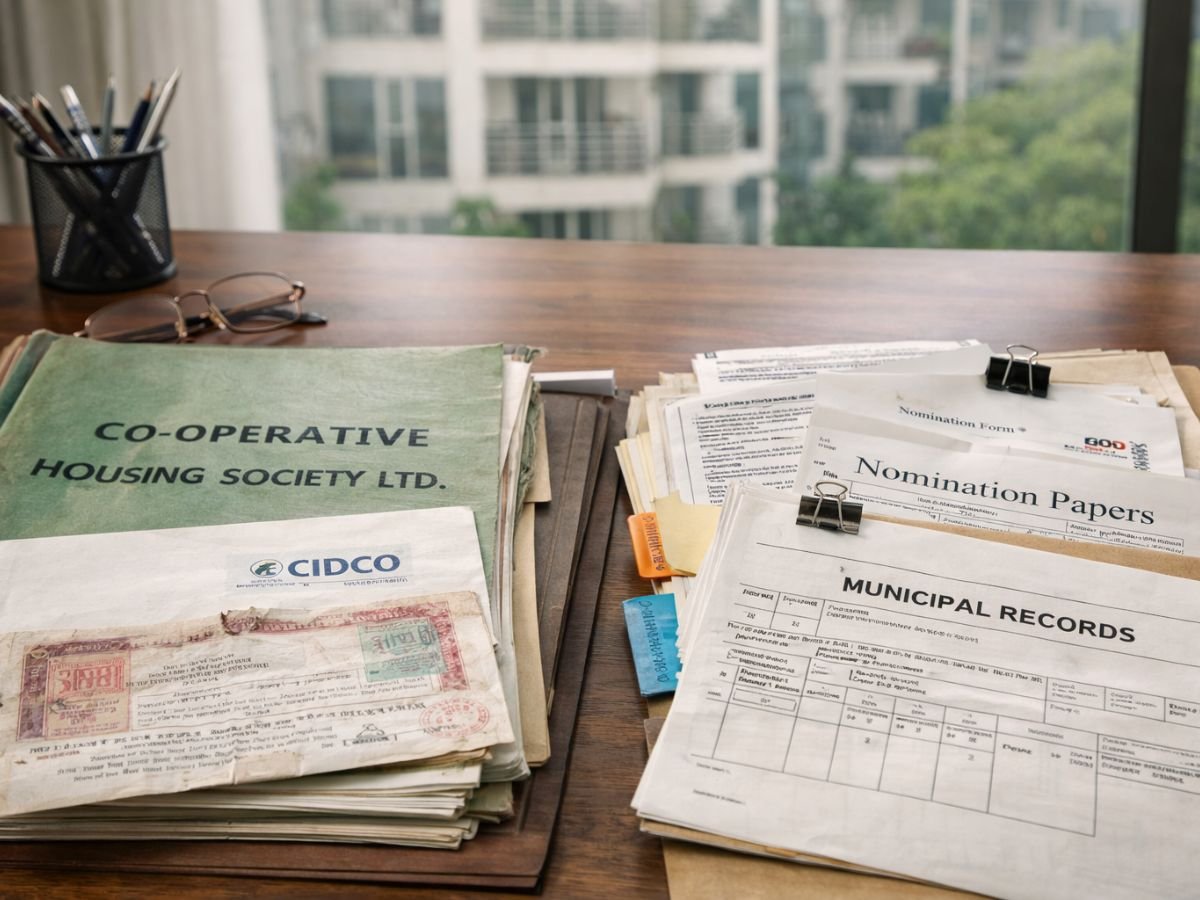
Resale flat in an older co-operative housing society
This is common in older nodes. A seller may show the share certificate, old maintenance bills, and even continuous possession, but the registered title chain may be incomplete, missing, or inconsistent. In such cases, the society file may look more organised than the ownership file. That is exactly why buyers should not confuse society comfort with title safety.
CIDCO-origin property with leasehold history
This is where Navi Mumbai becomes different from a generic property article. Many properties have CIDCO history, and buyers should ask a very practical question early: is this property still leasehold, or has it already moved to freehold where eligible?
That answer changes both paperwork burden and financial liability. If a property still carries leasehold complications, transfer permissions, dues, or authority-level compliance may still matter. If it has been properly regularised or converted where applicable, the future transaction path can become cleaner.
Family transfer after the original owner’s death
This is the classic trap. A brother, daughter, spouse, or other family member may be the nominee in the society and believe that is enough. But nomination and inheritance are not the same thing. The society may deal with a nominee administratively, while the beneficial ownership still follows succession law and legal-heir rights.
That means resale from such a case needs extra care. Buyers should not assume that a nominee alone can always give marketable title.
Municipal records are aligned, but title is still weak
Municipal and property-tax layers help with consistency, but they do not cure broken title. In PMC limits and NMMC limits, civic records and mutation processes may work differently in practice, but those records are still supporting layers. They are useful cross-checks. They do not replace registered transfer papers.
What banks, lawyers, and serious buyers usually care about more
They care more about title first.
A bank may ask for society documents, but loan security is built on ownership, not just membership. A lawyer doing proper due diligence will want the registered chain, consistency of names, authority-level issues if any, and whether the society and property records match the ownership story being presented.
During redevelopment too, internal society participation matters, but the strength of ownership documentation becomes even more sensitive because the asset is being translated into a future entitlement structure. If the title side is weak, the problem often shows up when the stakes become highest.
Checklist: what to verify before buying if society records and ownership records do not fully match
Use this as a practical 3-tier check.
1) Legal tier
- Registered sale deed, agreement to sale, or conveyance papers
- Earlier chain documents in resale cases
- Title continuity from prior owner to current seller
- Gift deed, release deed, heirship documents, or succession papers where relevant
2) Society tier
- Share certificate
- Membership transfer status
- Society no-dues or transfer paperwork
- Nomination entry, if any
- Any pending society objection or dispute
3) Authority tier
- CIDCO leasehold or freehold status, where applicable
- Any pending CIDCO transfer issue on old leasehold properties
- Property-tax identity and municipal record consistency
- Basic civic record alignment in PMC or NMMC jurisdiction
This is the practical order to follow in Navi Mumbai. Do not start with “society has no problem” and assume the rest is fine. Start with title, then society, then authority-side consistency.
Red flags where buyers should slow down immediately
A buyer should become cautious if any of the following happens:
- The seller shows only a share certificate and not a clean registered title trail
- A nominee is trying to sell without proper legal-heir documentation or release structure
- The society transfer is pending for years with no clear reason
- Old family arrangements are verbal or unregistered
- The CIDCO status is unclear on a property with leasehold history
- Names differ across sale deed, share certificate, and civic records
- The society demands extra donation-type money beyond normal lawful transfer handling
- The original title papers are said to be lost, but no proper legal follow-up exists
- The seller says “everyone in the building does it this way” instead of showing a clean document trail
These are not minor paperwork issues. They are signals that the transaction may be messy, delayed, or risky.
What matters more in a dispute: society membership or legal ownership?
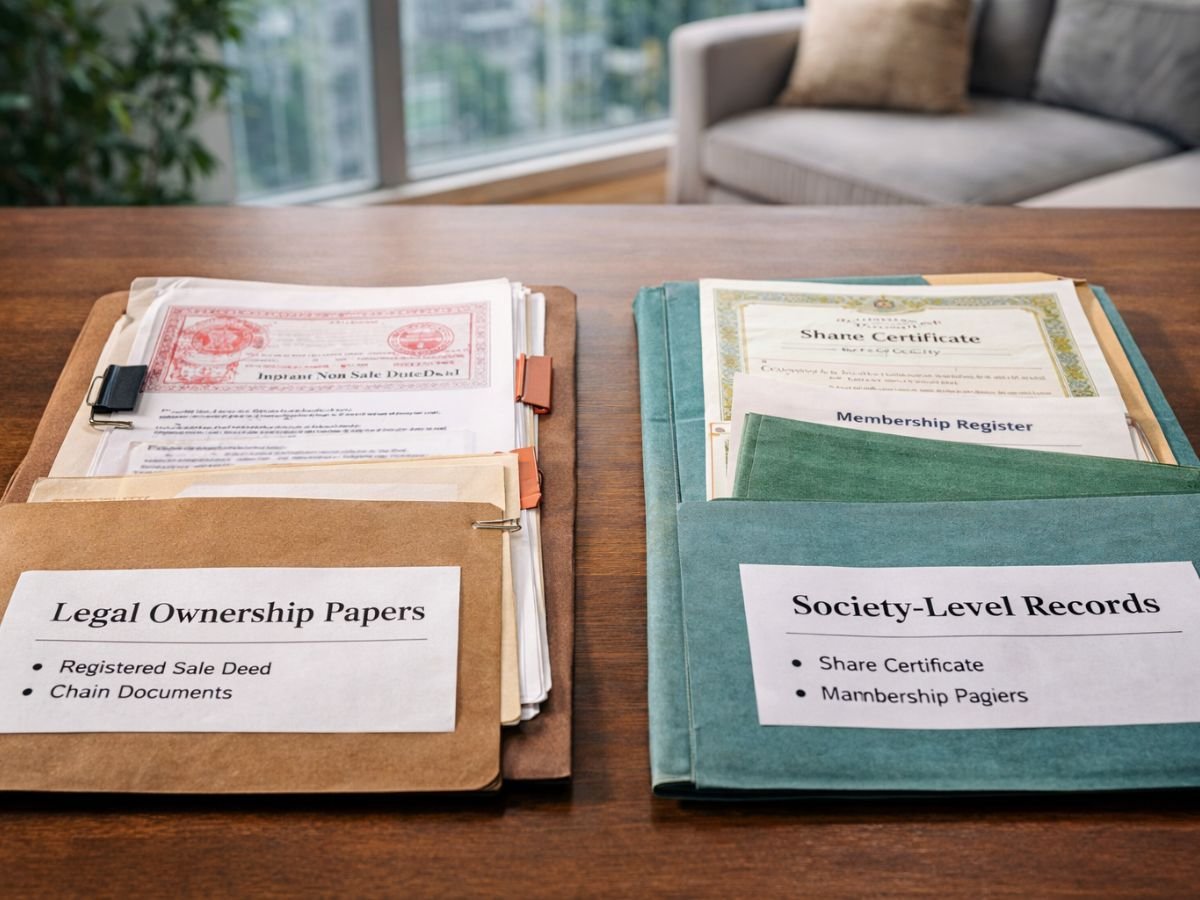
If the dispute is about who the real owner is, legal ownership matters more.
Society membership still matters for internal administration, but it does not override registered title in an ownership contest. Society records help explain who the society was dealing with, who was treated as a member, and who was paying or participating. But if the core dispute is ownership, inheritance, validity of transfer, or title, the registered document trail becomes much more important.
That is why society membership should be treated as important but secondary in title disputes. It helps explain the society’s records. It does not, by itself, settle ownership.
Conclusion
If you want the simplest answer, here it is: society membership tells you who the society is dealing with; property ownership tells you who actually owns the flat in law.
In Navi Mumbai, you need both to be aligned for a clean, low-risk property transaction. But when the two conflict, buyers should usually give more weight to the registered title chain and then fix the society layer, not the other way around. That one distinction can save people from bad resale deals, nominee confusion, and expensive documentation surprises later.
For a local buyer, investor, heir, or seller, the safest mindset is this: do not treat society papers as fake or unimportant, but do not let them replace the ownership check. Society membership helps the flat function smoothly inside the building. Property ownership decides whether the flat is truly yours to hold, transfer, mortgage, defend, or pass on.
FAQ's
Frequently Asked Questions