Blogs

Everything about Navi Mumbai

Sector 15 Kharghar: Introduction & Real Estate Overview (2025)

Sector 15: The Balanced Pulse of Kharghar You notice it the moment you enter. The roads feel deliberate, not improvised. The buildings don’t crowd each other. There’s a sense of order that doesn’t feel forced. Mornings begin with walkers and joggers, many heading towards Central Park, while evenings belong to families, not traffic. Sector 15 doesn’t rush you. And it doesn’t isolate you either. In 2025, this sector has matured into one of Kharghar’s most balanced residential pockets. It may not trend on real estate hoardings, but among people who actually live in Kharghar, Sector 15 quietly holds its reputation. Year Months ₹18 K₹15 K₹12 K₹9 K₹6 K Sec-15 Kharghar ₹16.5 K Kharghar (Avg) ₹13.9 K Explore Sector 15 Kharghar Projects 1 BHK Sector 15 🏠 AVG PRICE ₹85 L – 95 L AVG RATE ₹13.8K / ft² 2 BHK Sector 15 🏢 AVG PRICE ₹1.45 Cr+ AVG RATE ₹14.5K / ft² 3 BHK Sector 15 👑 AVG PRICE ₹2.25 Cr+ AVG RATE ₹15.2K / ft² The Residential Structure of Sector 15 Sector 15 is clearly residential in nature, and that clarity shows in how daily life unfolds. Most of the land use here is dedicated to housing societies. You won’t find heavy commercial clusters, loud nightlife zones, or office crowds spilling into residential lanes. Buildings are mostly mid-rise, with a few taller structures, planned during a phase when Kharghar’s development still prioritised space, ventilation, and internal road widths. The resident profile reflects this planning. Families form the core population, many of whom have lived here for years. Working professionals choose the sector for its calm environment combined with reliable connectivity. Senior citizens appreciate the walkability and predictable pace of life. Daily routines here feel settled. School drop-offs don’t feel chaotic. Office commutes are planned, not rushed. Evenings are for walks, conversations, and quiet social interactions. Late-night activity is minimal, which keeps the sector genuinely residential. Why Sector 15 Kharghar Is Getting Attention As Kharghar has expanded outward, buyers have started looking back at sectors that already offer finished infrastructure rather than promises. Sector 15 fits that requirement perfectly. Its biggest advantage is proximity to Central Park Kharghar. Very few residential sectors in Navi Mumbai enjoy such direct access to a large, maintained green space. That single factor changes how people live here. Mornings and evenings revolve around outdoor activity, not screens or traffic. Beyond greenery, the sector benefits from being close enough to central Kharghar amenities without inheriting congestion. Schools, clinics, grocery stores, and daily-need shops are all nearby. At the same time, Sector 15 avoids heavy through-traffic and excessive commercial movement. Families are drawn to the safety and environment. Retirees like the calm and routine. Investors see it as a low-risk residential zone where demand remains steady rather than speculative. Current Real Estate Prices in Sector 15 Kharghar (2025)      Configuration                    Current Price Range            Approx. Carpet Area         1 BHK         ₹72 Lakh –  ₹90 Lakh            450 – 650   sq. ft.          2 BHK         ₹1.45 Cr –   ₹2.10 Cr             750 – 1100  sq. ft.         3 BHK         ₹2.35 Cr –   ₹3.30 Cr              1150 – 1600 sq. ft.   Current Property Rates: Sector 15, Kharghar (January 2026) Detailed Market Breakdown Price per Square FootAverage Rate: ₹14,500 – ₹21,500 per sq. ft. (on carpet area).Premium Towers: High-end societies like Goodwill Paradise, Tricity Eros, and Galaxy Carina are consistently demanding ₹19,000/sq. ft. and above.Budget Options: Older CIDCO built or semi-private complexes (like Spaghetti Complex) are trading between ₹13,500 – ₹15,000/sq. ft.Rental Market (Monthly) Rental demand in Sector 15 remains very high due to its proximity to the highway and established social infrastructure. 1 BHK: ₹18,000 – ₹24,0002 BHK: ₹28,000 – ₹38,0003 BHK: ₹45,000 – ₹60,000 For January 2026, commercial property rates in Sector 15, Kharghar have stabilized at a higher bracket compared to residential units. Because Sector 15 is a mature, fully developed residential pocket, the available commercial space is scarce, which has pushed the “scarcity premium” up.Based on current 2026 listings and market transactions, here are the accurate rates: Commercial Property Rates            Property Type       Price Range (per sq. ft. Carpet)          Typical Total Price          Main Road Facing Shops              ₹35,000 – ₹65,000      ₹1.80 Cr – ₹4.50 Cr          Interior/Society Shops              ₹22,000 – ₹32,000       ₹45 Lakh – ₹1.20 Cr          Office Spaces (Above Gr. Floor)              ₹16,000 – ₹22,000      ₹95 Lakh – ₹1.80 Cr   Detailed Market Observations The “D-Mart Road” & Main Road Premium Shops located on the main approach roads or near the D-Mart / Reliance Digital stretch are the most expensive. Current Rate: Small boutique shops (approx. 300–400 sq. ft.) in premium towers like Galaxy Carina or Keystone Elita are currently trading at ₹45,000 to ₹55,000 per sq. ft.Extreme Highs: Very small, high-visibility corner units can even touch ₹80,000+ per sq. ft., but these are rare.Rental Yields (Investor Perspective) Investors are currently seeing a 3.5% to 5% ROI (Return on Investment) in this sector. Average Rent: ₹100 – ₹250 per sq. ft. depending on the road frontage.Example: A 400 sq. ft. shop on the main road currently rents for approximately ₹60,000 – ₹85,000 per month.Society Shops (Internal) Shops inside residential complexes (facing the internal garden or side roads) are significantly cheaper but have steady demand for “necessity” businesses like laundries, milk booths, and small kirana stores. These range between ₹22,000 and ₹28,000 per sq. ft. Future Outlook: Where Prices Are Headed (Up to 2035) Public Transport: Sector 15 Kharghar to NMIA

Read More
Proposed Thane–NMIA Elevated Corridor: Connecting Thane to the New Airport

For years, Thane has been physically close to Navi Mumbai and yet frustratingly far from its biggest upcoming asset. The Navi Mumbai International Airport (NMIA) changed the conversation, but for Thane residents, one question kept coming back again and again. How do we actually reach the airport without spending half our life on the road? In 2026, that question has a serious answer on the table. The proposed Thane–NMIA Elevated Corridor is not just another road idea floating in government presentations. It is a planned expressway designed specifically to connect Thane directly to the new airport, cutting through one of the most congested travel belts in the Mumbai Metropolitan Region. I want to be clear from the start. This corridor is still in the planning and approval phase. Construction has not begun yet. But the intent, alignment logic, and impact potential are strong enough that this project already deserves attention, especially from daily commuters, frequent flyers, and real estate watchers in Thane. Fast Facts: What You Need to Know Project Name: Thane–NMIA Elevated Corridor (Proposed Expressway) Proposed Length: Approximately 25 to 26 kilometres Design Concept: 6-lane elevated expressway Starting Point: Digha and Nirankari Chowk area in Thane End Point: Navi Mumbai International Airport approach zone Estimated Cost: ₹6,500 to ₹8,000 crore Current Status: DPR prepared; awaiting statutory and environmental approvals Primary Objective: Reduce Thane to NMIA travel time to around 30 minutes Project Concept: A Direct Elevated Link from Thane to NMIA The core idea behind the Thane–NMIA Elevated Corridor is simple but powerful. Create a fast, signal-free, access-controlled road that allows vehicles to move from Thane directly to the airport without getting stuck in city traffic, industrial bottlenecks, or port-bound congestion. CIDCO, which is spearheading multiple NMIA-linked infrastructure projects, has proposed this corridor as a dedicated airport access route for Thane and its surrounding micro-markets. Unlike existing options that force travelers to loop through Vashi, Belapur, or the MTHL alignment, this expressway aims to provide a straight, predictable drive. From a planning perspective, this corridor acknowledges a reality that many commuters already feel. Thane is one of the largest residential and employment hubs in the MMR, yet airport access has always been its weak link. This project attempts to correct that structural gap. Cost and Execution Model Current estimates place the project cost between ₹6,500 crore and ₹8,000 crore, depending on final alignment, land acquisition requirements, and structural complexity. Execution could follow a Public-Private Partnership (PPP) or Hybrid Annuity Model (HAM), both of which are commonly used for large urban expressways. The final model will depend on traffic projections, toll feasibility, and state policy decisions at the time of tendering. Synergy with Other Major Corridors One of the strengths of this proposal is how it fits into a larger regional network. The corridor is expected to integrate smoothly with NMIA’s internal road system and could potentially connect with other major projects such as the Airoli–Katai Naka Freeway. It also complements the coastal road and Atal Setu network by offering an alternative northern access point to the airport. Together, these corridors create multiple entry paths, reducing dependency on any single route. Thane’s Infrastructure Growth Story This expressway is not an isolated project. It is part of Thane’s broader infrastructure transformation. Metro expansion plans, including Line 12 and future loop connections, aim to integrate Thane more tightly with Navi Mumbai and the rest of the MMR. By 2030, Thane is expected to be part of an extensive metro network exceeding 400 kilometres. When combined with direct road access to NMIA, this positions Thane as one of the best-connected urban regions in the state. Real Estate and Economic Impact Improved airport connectivity almost always affects property dynamics. Areas such as Kalwa, Airoli, and Rabale could see increased interest as commute times to NMIA reduce dramatically. For commercial zones like Mahape and the DAKC belt, faster airport access improves business efficiency, especially for IT services, logistics firms, and export-oriented industries. Over time, this could translate into higher office absorption and residential demand nearby. Challenges and Risks No major infrastructure project is without hurdles. Land acquisition through industrial belts, environmental clearances near creek zones, and coordination between CIDCO, TMC, MIDC, and state authorities are all potential challenges. Delays are possible, and timelines may shift. Acknowledging these risks is important, especially for readers tracking the project for investment decisions. Conclusion The Thane–NMIA Elevated Corridor is still a proposal, but it is a serious one. Its logic is sound, its benefits are clear, and its impact could be far-reaching. For Thane residents, it represents something rare. A direct, predictable connection to an international airport. As NMIA becomes fully operational and regional travel patterns evolve, projects like this will define which cities truly benefit from the airport. Thane, quietly and steadily, is positioning itself to be one of them. FAQs Frequently Asked Questions Is there a direct road planned from Thane to Navi Mumbai International Airport? CIDCO has proposed an elevated expressway specifically to connect Thane with NMIA, significantly shortening travel time. What is the current status of the Thane–NMIA corridor? As of 2026, the DPR is ready and the project is awaiting statutory and environmental approvals. Construction has not started yet. How much time will this corridor save? Once operational, it is expected to reduce Thane–NMIA travel time to around 30 minutes, compared to 90 minutes or more today. Will this expressway connect to other highways? Yes. The corridor is expected to integrate with the Thane–Belapur Road network and NMIA’s internal access roads, with possible future links to other expressways. Will this impact real estate in Thane? Improved airport access typically boosts demand in nearby residential and commercial areas, particularly in zones close to entry points.

Read More

Navi Mumbai SEZ Reliance – From SEZ to Economic Hub”

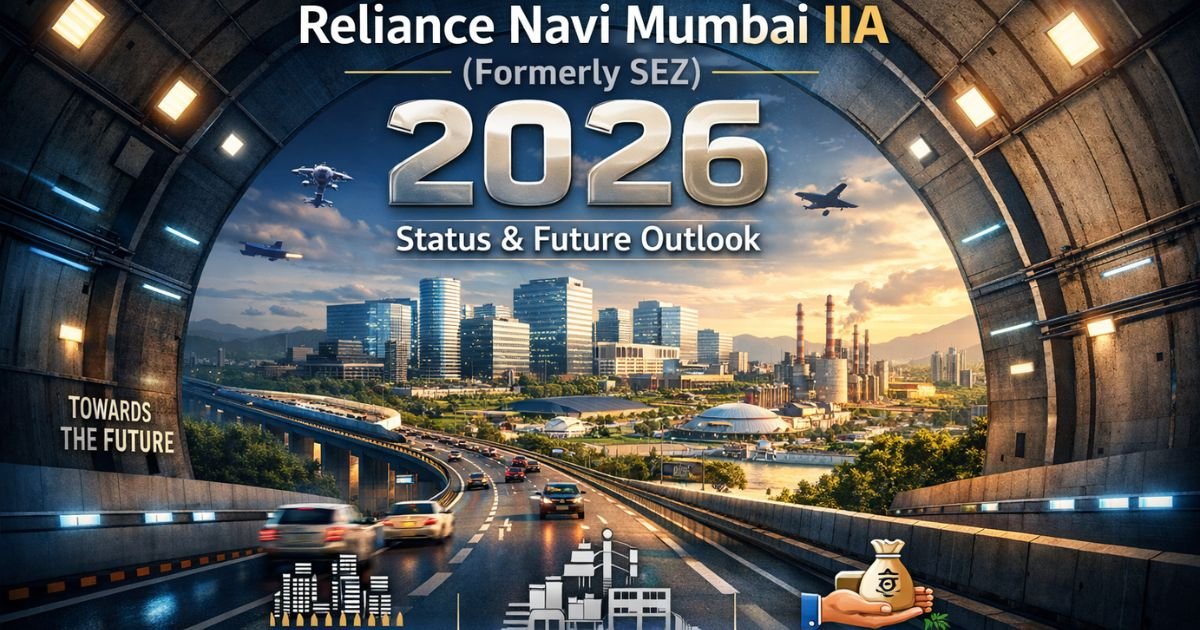
What Is the Reliance Navi Mumbai IIA? The Reliance Navi Mumbai Integrated Industrial Area (IIA) is among the largest industrial and logistics developments in Western India. Spread across more than 5,200 acres in Ulwe, Dronagiri, and Kalamboli, this project was earlier known as the Navi Mumbai Special Economic Zone (SEZ). That identity has now changed decisively. The acquisition in late 2024, where Reliance Industries Limited secured a 74% controlling stake for ₹1,628 crore while CIDCO retained the remaining 26%, set the stage for the rapid on-ground development that became clearly visible throughout 2025 and now defines the project’s active execution phase in 2026. This acquisition marked a turning point, transforming a long-stalled plan into an active, execution-driven industrial ecosystem. By 2025, on-ground activity had visibly increased. Land grading, boundary fencing, internal road planning, and utility provisioning began, especially in the Dronagiri belt. This is no longer a speculative proposal. It has entered a measurable development phase.   Fast Facts: What You Need to Know Project Name: Reliance Navi Mumbai Integrated Industrial Area (IIA) Current Status: Converted from SEZ to IIA; Reliance Industries holds a controlling 74% stake following the late-2024 acquisition Location: Navi Mumbai, covering key nodes such as Ulwe, Dronagiri, and Kalamboli Total Area: Approximately 5,200 acres Investment Value: ₹1,628 crore, representing Reliance’s stake acquisition Strategic Edge: Direct connectivity to JNPT, Mumbai Trans Harbour Link (MTHL), Dedicated Freight Corridor (DFC), and the Navi Mumbai International Airport (NMIA) Why the SEZ Was Converted Into an IIA India’s older SEZ framework imposed export-heavy compliance rules. Companies were expected to primarily export goods, which restricted flexibility for firms that also wanted to serve domestic markets. Over time, this rigidity slowed growth across multiple SEZs nationwide. The shift to Integrated Industrial Area (IIA) status removes those constraints. Under the IIA framework, businesses gain significantly more operational freedom. Companies are now permitted to manufacture for both domestic and export markets from the same location, develop commercial, industrial, and limited residential infrastructure within the zone, and operate without the heavy export-linked compliance burdens that earlier restricted SEZ projects. For Maharashtra, this policy shift was practical rather than symbolic. The conversion unlocked the true economic value of strategically located land near a major port, a new international airport, and India’s financial capital. The Three Strategic Nodes Explained The Reliance Navi Mumbai IIA is not a single uniform land parcel. It is structured around three distinct nodes, each serving a specialized role within the larger ecosystem. Ulwe: Corporate, Technology, and Services Ulwe’s biggest advantage is proximity to the Navi Mumbai International Airport (NMIA). This makes it ideal for: Corporate offices and regional headquarters IT and technology parks Data centers and digital infrastructure Light manufacturing and precision assembly Ulwe already supports a growing residential population. With metro connectivity, arterial roads, and airport-driven demand, it is positioned as the white-collar and services-facing node of the IIA. Dronagiri: Port-Centric Logistics and Warehousing Dronagiri lies closest to JNPT, India’s largest container port. This makes it the backbone of logistics activity. Development here will focus on: Grade-A warehousing Container Freight Stations (CFS) Bonded and customs-compliant storage Cold chain and temperature-controlled facilities For import-export businesses, shorter port access directly translates into lower logistics costs and faster turnaround times. Kalamboli: Distribution and Heavy Trade Kalamboli already functions as a major steel and commodities trading hub. The IIA strengthens this role by integrating it with modern infrastructure and expressway connectivity. Expect: Regional distribution centers Heavy goods handling terminals Improved trucking and freight aggregation zones Kalamboli’s connection to the Mumbai–Pune Expressway gives it unmatched access to the wider Maharashtra market. Connectivity: The Real Competitive Advantage Industrial success depends on how efficiently goods, people, and data move. The Reliance IIA benefits from multiple national-scale infrastructure projects. Mumbai Trans Harbour Link (MTHL) The 22-kilometer MTHL connects South Mumbai (Sewri) to Navi Mumbai (Nhava Sheva). Commute times have dropped from nearly two hours to under twenty minutes. This single link makes executive travel, talent mobility, and corporate integration dramatically easier Dedicated Freight Corridor (DFC) The Western DFC connects Mumbai to Delhi via high-speed freight rail. Manufacturers operating from the IIA can now reach North Indian markets within 24 hours, reducing inventory holding costs and improving supply-chain predictability.   Navi Mumbai International Airport (NMIA) NMIA will play a critical role in air cargo logistics. High-value and time-sensitive goods such as electronics, pharmaceuticals, and precision equipment benefit directly from airport-adjacent industrial zones.   Metric Value Total Area 5,200 acres Stake Acquisition Value ₹1,628 crore Reliance Ownership 74% CIDCO Ownership 26% Distance to JNPT ~5 km (Dronagiri) Distance to NMIA Target Industries and Business Use-Cases The IIA is designed as a multi-sector industrial ecosystem rather than a single-use zone. It is expected to attract heavy engineering and industrial manufacturing units, pharmaceutical production supported by cold-chain logistics, electronics assembly and packaging facilities, IT services and backend operations, large-scale e-commerce fulfillment centers, and integrated logistics and supply-chain management firms. The plug-and-play model significantly reduces setup timelines, allowing companies to begin operations in months rather than years. Employment and Economic Impact Large-scale industrial developments generate layered employment beyond factory floors and warehouses. Direct employment is created within manufacturing units, logistics parks, and corporate offices. Indirect employment emerges through transport operators, security services, maintenance teams, and utility providers. Over time, induced employment grows in housing, education, healthcare, and retail as the surrounding population expands. Conservative estimates suggest 50,000+ direct jobs once the IIA reaches maturity, with many more indirect opportunities across Navi Mumbai. Impact on Surrounding Real Estate Reliance-led infrastructure historically alters local property dynamics. The IIA is expected to do the same. Ulwe sectors 16 to 25, Dronagiri and adjacent CIDCO nodes, and nearby areas such as Pushpak Nagar and Navade are expected to experience spillover demand as employment density increases. As workforce migration accelerates, demand for housing, retail outlets, and social infrastructure in these micro-markets is likely to strengthen steadily. As employment density increases, demand for housing, retail, and social infrastructure will follow. Compared to established nodes like Vashi or Nerul, entry prices

Read More

Ulwe & Pushpak Nagar Development: Navi Mumbai’s Airport-Adjacent Residential Hotspots

Ulwe and Pushpak Nagar are no longer just names discussed in Navi Mumbai real estate circles with a sense of future promise. In 2026, these two nodes stand at a very real turning point. The Navi Mumbai International Airport is operational, rail connectivity is active, and CIDCO’s planning is finally visible on the ground. What was once speculative has now become experiential. I want to be very clear here. This blog is not written from a distance. I was personally in Ulwe and Pushpak Nagar recently, walking through Bamandongri, observing construction activity, talking to local shop owners, and watching the morning rush near the railway station. The changes are not subtle anymore. They are physical, visible, and impossible to ignore. This detailed guide looks at Ulwe real estate 2026, Pushpak Nagar property rates, and the real impact of the Navi Mumbai International Airport on real estate. Not from brochures. From the ground. Introduction to Ulwe Node Ulwe is a CIDCO-planned residential node located south of Nerul and Seawoods. From the beginning, it was designed as a structured urban extension rather than an unplanned suburb. Sector-wise development, wide internal roads, planned drainage, and clearly demarcated residential zones are part of Ulwe’s DNA. When Ulwe was first announced, many buyers hesitated. Development felt slow. Social infrastructure was missing. The airport was only on paper. But standing in Ulwe today feels very different. Families live here. Children wait for school buses. Grocery shops open early. Trains are crowded during peak hours. This is no longer a “future location.” It is a working residential node. Distance to Navi Mumbai International Airport Ulwe’s biggest advantage is its proximity to NMIA. Areas around Bamandongri and Pushpak Nagar are barely 2 to 3 kilometres from the airport terminal. Central Ulwe sectors fall within a 5 to 7 kilometre radius. This closeness is crucial, especially for professionals working in aviation, cargo, hospitality, and airport-linked services. During my visit, local residents repeatedly mentioned how airport-related employment has already started impacting rental demand. Flats that remained vacant earlier are now seeing enquiries from airline staff and logistics professionals. CIDCO Planning and Sector Development CIDCO’s planning is evident across Ulwe. Roads are wider than older Navi Mumbai nodes. Several internal roads measure nearly 30 metres. Drainage systems are pre-laid, not added later. CIDCO housing schemes, PAP rehabilitation buildings, and private residential projects coexist, creating a mixed but balanced residential ecosystem. Yes, there are challenges. Water supply issues still exist in some sectors. Footpaths are incomplete in patches. But compared to organically grown suburbs, Ulwe’s problems feel solvable rather than structural. Pushpak Nagar The Emerging Airport-Focused Node Current Status of Pushpak Nagar Development Infrastructure such as internal roads, stormwater drains, and plot demarcation is largely complete. CIDCO has auctioned multiple plots, and many developers are already constructing mid-rise residential buildings. Population density is still low, but that is changing steadily. Pushpak Nagar property rates reflect this transition phase. In 2023, average prices hovered around ₹6,000–6,500 per sq ft. In 2026, most projects quote between ₹7,000 and ₹8,500 per sq ft, depending on location and construction quality. Projects closer to the airport boundary and main access roads command a slight premium. Infrastructure Driving Growth in Ulwe and Pushpak Nagar Rail Connectivity and Bamandongri Station The Uran suburban railway line changed Ulwe’s trajectory. Bamandongri and Kharkopar stations have been operational since 2018, connecting Ulwe directly to Mumbai CST via the Harbour line. The extension to Uran, completed in 2024, further strengthened confidence. During peak hours, trains from Bamandongri are noticeably crowded. This is a sign of real residential adoption, not speculative holding. Ulwe Coastal Road Status The Ulwe Coastal Road is one of the most anticipated infrastructure projects in this region. Once completed, it will connect Ulwe directly to Atal Setu, dramatically reducing travel time to South Mumbai. While construction work causes temporary inconvenience, the long-term impact on property values is expected to be significant. Metro Connectivity Plans The Belapur–Khandeshwar metro corridor passes east of Ulwe, with future extensions proposed towards NMIA. Once operational, this will further integrate Ulwe and Pushpak Nagar into Navi Mumbai’s transport network. Ulwe and Pushpak Nagar Property Rates: Year-wise Reality Check (2023–2026) Below is a realistic, year-by-year price movement table based on site visits, broker conversations in Ulwe and Pushpak Nagar, and active listings. This shows how Ulwe real estate 2026 and Pushpak Nagar property rates have actually evolved, not just jumped suddenly. Location 2023 Avg (₹/sq ft) 2024 Avg (₹/sq ft) 2025 Avg (₹/sq ft) 2026 Avg (₹/sq ft) Ulwe 6,500 – 7,500 7,200 – 8,200 7,800 – 9,200 8,000 – 10,500 Pushpak Nagar 6,000 – 6,500 6,500 – 7,200 6,800 – 8,000 7,000 – 8,500 This gradual increase clearly shows airport-led absorption and infrastructure delivery at work. Prices have moved step by step, not overnight, which makes both nodes healthier from an investment perspective. One Section That Explains Why Buyers Are Choosing These Locations Many buyers ask a simple question. Ulwe or Pushpak Nagar, why here and why now? From on-ground conversations, these are the most common reasons mentioned by actual residents and investors: Proximity to Navi Mumbai International Airport without living directly under flight paths, which keeps livability intact. CIDCO-planned layouts with wider roads, proper drainage, and clearer zoning compared to organically grown suburbs. Functional rail connectivity via Bamandongri and Kharkopar, making daily travel to Mumbai realistic. Entry-level pricing that still allows long-term appreciation, especially when compared to Vashi, Nerul, or Seawoods. Growing rental demand from airport staff, logistics professionals, and service-sector employees. These are not brochure points. These are real reasons people are putting their money here in 2026. Social Infrastructure and Daily Living Experience Ulwe’s social infrastructure has improved noticeably. During my visit, I saw active local markets, pharmacies like Apollo Pharmacy and Wellness Forever, clinics, and grocery stores operating throughout the day. Small restaurants, bakeries, and hardware stores now line key internal roads. Pushpak Nagar is still catching up, but this is expected. As residential occupancy increases, social infrastructure usually follows quickly.

Read More

How to Reach From Sector 12 Kharghar to DMart

Updated: 14 January 2026 (IST) Reaching Kharghar DMart from Sector 12 Kharghar is quick and hassle-free by bus and car. NMMT buses, shared autos, and local transport are easily available on internal Kharghar roads leading towards DMart. Traveling by car, taxi, or auto usually takes 5–10 minutes, depending on traffic, via Sector 12 internal roads or Kharghar main road, making it a convenient option for daily shopping. By Walk Sector 12, Kharghar to DMart Kharghar by Walk Mode Start Point End Point Walking Distance Estimated Time Walking Route Walking Sector 12, Kharghar DMart Kharghar, Sector 15 1.4 km 18–20 minutes Sector 12 → Mini Market Road →Gharkul Road →D-Mart / Gharkul →DMart Kharghar   By Car Sector 12, Kharghar to DMart Kharghar by Car Start Location Destination Total Distance Estimated Travel Time Main Route Major Roads Toll Road Best For Sector 12, Kharghar, Navi Mumbai DMart Kharghar, Sector 15 2.3 km 8–10 minutes APJ Abdul Kalam Road → Shilp Chowk → Raghunath Road → DMart Road APJ Abdul Kalam Road, Shilp Chowk Road No Private Car, Taxi, Quick Shopping Trip By Bus Sector 12, Kharghar to DMart Kharghar by Bus Method Bus Number Boarding Point Drop Point Route Details Travel Time Bus Fare NMMT Bus 53 Nagari Aarogya Kendra, Sector 12 D-Mart / Gharkul, Sector 15 Walk from Sector 12 to Nagari Aarogya Kendra bus stop →Board NMMT Bus 53 →Alight at D-Mart / Gharkul bus stop →Short walk to DMart Kharghar. 14–15 minutes ₹7.00   FAQs Frequently Asked Questions How far is D-Mart Kharghar from Sector 12, Kharghar? The distance from Sector 12, Kharghar to D-Mart Kharghar is approximately 2–3 km, depending on the internal road route taken. What is the easiest way to reach D-Mart from Sector 12, Kharghar? The easiest way is by auto-rickshaw or private vehicle. The journey usually takes 5–10 minutes, depending on local traffic. How much does an auto-rickshaw cost from Sector 12 to D-Mart Kharghar? Auto-rickshaw fare generally ranges between ₹30 and ₹60, depending on traffic and pickup point within Sector 12. Are buses available from Sector 12, Kharghar to D-Mart? Yes. NMMT and local buses passing through Kharghar can be used. You may need to walk a short distance from the nearest bus stop to reach D-Mart. Is it possible to walk from Sector 12 to D-Mart Kharghar? Yes. If you are nearby within Sector 12, walking is possible, but it may take 20–30 minutes. It is more convenient during early morning or evening hours. Is parking available at D-Mart Kharghar? Yes. Limited parking space is available at D-Mart Kharghar for two-wheelers and cars. During weekends or peak shopping hours, parking may get crowded.

Read More

MTDC Kharghar Hotel Navi Mumbai

There are some places in a city that don’t scream for attention. They don’t have giant LED screens or glossy billboards shouting discounts. They simply exist  quietly, reliably. And over time, they become part of people’s routines. MTDC Kharghar is exactly that kind of place. changes. This hotel is where the noise of the city fades. It is where students find silence before a big test. It is where families find a budget-friendly sanctuary. MTDC Kharghar does not try to compete with luxury hotels in Belapur or the flashy stays in Vashi. It does not need to. It plays a different role  one that is quietly woven into the fabric of Sector 12. I have seen it on slow monsoon mornings, when mist from the Kharghar hills hangs low over its roof, making the building feel almost like an old mountain lodge. And I have seen it on bustling weekends, when families from Pune and Mumbai stop by for a grounded, no-frills stay. That contrast is what makes it interesting.   Quick Facts: MTDC Kharghar at a Glance Before getting emotional or philosophical about the stay, let’s get the practical details out of the way. Because this is usually what people search for first. You need to know if it fits your pocket and your schedule before you care about the vibe. Location: Sector 12, near Shilp Chowk, Kharghar. Price Range: Approximately ₹1,200 to ₹3,500 depending on room type. Best For: Families, solo travellers, students, exam attendees, official visits. Connectivity: Around 3 km from Kharghar Railway Station. Booking: Official MTDC website or direct walk-in at reception. Simple. No exaggeration. No hidden asterisks. Just a straightforward place for people who need a place to crash without the glitter. Nearby Attractions In Navi Mumbai Staying at MTDC puts you within a short distance of some of Navi Mumbai’s best spots. Here is what you can visit: Seawoods Grand Central Mall : located around 10 kilometres from the hotel, is a convenient option for shopping, dining, or catching a movie.  Jewel of Navi Mumbai :roughly 12 kilometres away, offers a calm lakeside promenade that’s best enjoyed in the evening.  Palm Beach Road : located around 12 to 14 kilometres from MTDC Kharghar, is one of Navi Mumbai’s most scenic drives.  Vashi Mini Seashore : approximately 15 kilometres away, offers a small but pleasant waterfront experience.  Parsik Hill : located about 8 kilometres from the hotel, is known for its elevated views of Navi Mumbai and Thane Creek.  Nerul Lake Nature Park : roughly 11 kilometres away, is a lesser-known but peaceful green space feel especially calm. DY Patil Stadium : around 10 kilometres from MTDC Kharghar, is a well-known landmark in Navi Mumbai. Sagar Vihar : located about 16 kilometres away, is another waterfront spot known for its sunset views. Central Park : is just about 2 kilometres away and is often the first place people head to. It’s massive, much larger than most city parks, and surprisingly quiet during early mornings. Pandavkada Waterfalls : lies roughly 4 to 5 kilometres from the hotel and comes alive during the monsoon season.  ISKCON Temple : is located around 4 kilometres away and offers a calm break from everyday routine.  Kharghar Hills : and the Golf Course Road area are about 3 kilometres from MTDC Kharghar and are best enjoyed early in the morning or around sunset.  Utsav Chowk : roughly 3.5 kilometres away, is considered the social heart of Kharghar.   Nearby Places to Visit Around MTDC Kharghar Central Park – 2 kmIdeal for morning walks, jogging, and relaxed evening strolls in one of Asia’s largest urban parks. ISKCON Temple – 4 kmKnown for its peaceful atmosphere, beautiful architecture, and calm surroundings. Pandavkada Waterfalls – 5 kmA popular monsoon attraction surrounded by hills and greenery, best visited during the rainy season. Kharghar Hills – 3 kmPerfect for sunrise or sunset views and short scenic drives away from city noise. Utsav Chowk – 3.5 kmA lively area in the evenings with cafés, restaurants, and local street food options. Modern Amenities & Facilities Despite being a government-run (Maharashtra Tourism Development Corporation) property, the Kharghar Residency offers modern infrastructure: Room Options: Choose from Twin Rooms (AC/Non-AC) for couples or Luxury Rooms for a bit more space. They even offer bunk-bed style Group Accommodations for large families or friends. In-Room Comforts: Expect high-speed Wi-Fi, electric kettles, geysers for hot water, and flat-screen TVs. For Business & Events: The property features a state-of-the-art conference room and a banquet hall with a terrace popular for weddings and local corporate meets. Recreation: There’s a small play zone with indoor games like billiards and table tennis to keep you entertained. How to Get There: The Local Routes If you are traveling within Navi Mumbai or coming from Mumbai, the connectivity is surprisingly efficient. From Panvel to MTDC Kharghar By Train: Take a Harbour Line local towards CST/Andheri. Get down at Kharghar Station (20-25 mins). From Station: The hotel is about 3 km away. Take a shared or private auto from the east side. It takes 10-15 minutes. By Road: Drive via the Sion-Panvel Highway towards Shilp Chowk. It’s a 12-14 km stretch, usually a 30-40 minute drive. From CST (Mumbai) to MTDC Kharghar  The Best Route: Board a Panvel-bound Harbour Line train. Travel Time: Roughly 1 hour 10 minutes. Arrival: Get down at Kharghar Station and follow the auto route mentioned above. It is the most economical and reliable way to beat the highway traffic. How to Book: A Quick Guide to Avoid the “Sarkari” Tech Headache Booking a government property can feel intimidating, but the MTDC portal is actually quite straightforward if you follow these steps:Visit the Official Site: Go directly to www.mtdc.co. Avoid third-party booking sites to ensure you get the actual government rates.Search Kharghar: Under ‘Online Reservation’, select Kharghar and enter your dates. You’ll instantly see the availability for AC and Non-AC rooms.Quick Registration: You will need to create a basic login using your mobile number and email. Keep your Aadhaar number handy, as the

Read More

Shree Datta Mandir Kharghar

Some places don’t announce their importance. They simply exist quietly shaping the lives around them. Shree Datta Mandir in Kharghar is one such place.Long before Kharghar became known for its wide roads, CIDCO sectors, metro pillars, and glass-fronted societies, this land moved at a slower pace. There were villages, gaothans, and open fields. It was a time when faith didn’t need grand architecture to feel powerful. The Datta tradition here grew naturally almost stubbornly refusing to disappear even as the city arrived. The original Datta shrine was modest. There was no grand structure, no decorative lighting just belief. Over time, as families moved in, buildings rose, and Kharghar transformed into a planned node of Navi Mumbai, the temple evolved too. Yet, it never lost its core. That calm, grounded feeling remains the sense that this place existed before all of us and will remain long after we are gone. After visiting the temple, you can explore other iconic Places to Visit in Kharghar like Central Park or the scenic Hills. Location and How to Reach By Train Kharghar Railway Station on the Harbour Line is the nearest station. From here, Sector 12 is roughly a 10 to 15-minute drive, depending on the traffic. Many locals prefer taking an auto or a shared rickshaw. Some even choose to walk part of the way if the weather allows. By Road Road connectivity is straightforward. The Sion–Panvel Highway keeps Kharghar well-linked with Panvel, Belapur, Vashi, and Mumbai. The internal roads leading to Sector 12 are wide, though like most of Navi Mumbai, they feel the pressure of ongoing development. By Metro The Navi Mumbai Metro has changed everyday movement patterns here. Metro stations in nearby sectors have brought faster access, especially for office-goers and students. From the metro station, the temple is just a short auto or cab ride away. Public Transport  Buses remain the backbone of transport here. NMMT buses regularly stop near Datta Mandir Road. BEST buses connect Kharghar to other parts of Navi Mumbai and Mumbai. The Datta Mandir bus stop itself is a small landmark. You’ll often hear conductors announce it loudly, which shows how deeply the temple’s name is woven into the area’s identity. Darshan and Aarti Timings There’s a rhythm to the temple that you start noticing only when you visit often. Early mornings are soft, quiet, and almost meditative. Evenings are warm and familiar slightly crowded, but never overwhelming. While exact timings may vary during festivals and special days, the general pattern remains consistent. Locals plan their routines around it: morning walkers time their exercise, and office-goers adjust their return journeys to catch a moment of peace. Aarti moments are not rushed here. Bells ring, incense rises, and people stand silently, even if only for a few minutes. Nobody pushes; nobody hurries. Sometimes you don’t even attend the full aarti; you just stand outside, listen, and that is enough. While Shree Datta Mandir is a local favorite, there are several other beautiful Temples in Kharghar that offer a similar sense of peace. Social Work by the Mandal his is a part that many outsiders don’t notice immediately. The mandir is not only a place of prayer; it’s a place of community responsibility. Over the years, the mandal associated with the temple has quietly taken up social initiatives. There are no flashy banners shouting about charity—just work that needs to be done. Some efforts are regular, while others happen during festivals or special occasions. A few things locals often mention include: Food distribution during festivals and Datta Jayanti. Support activities for nearby residents during difficult times. Maintaining cleanliness and hygiene around the temple premises. Helping elderly devotees navigate the temple during crowded days. What makes this special is the absence of publicity. The work doesn’t feel like an obligation; it feels personal, like helping a neighbor. What Makes This Temple Special? This temple didn’t arrive with development plans or architectural drawings. It was already here, quietly holding space, long before Kharghar became a structured urban node. As buildings rose and roads widened, the mandir adapted without changing its essence. That quiet resilience is rare. Another thing that makes this temple special is how deeply it blends into everyday life. It is not separate from the neighbourhood it is part of it. People don’t always come here with intention; sometimes they just stop by on the way home, during a morning walk, or between daily responsibilities. The temple allows for that kind of relationship unforced and natural. What Makes This Temple Special? 1. Pandavkada Waterfalls Location: Sector 35, KhargharHighlights: 107-meter tall waterfall, lush green surroundings, monsoon hotspot Pandavkada is one of the most famous natural attractions in Navi Mumbai. During the monsoon season, the waterfall is at its most powerful and scenic. While it draws many visitors for its beauty, swimming is strictly not advised due to safety concerns. 2. Kharghar Hills Location: Sector 8 / Sector 10Highlights: Sunrise point, trekking trail, panoramic city views Popular among early-morning walkers and fitness enthusiasts, Kharghar Hills offers peaceful trails and sweeping views of greenery and the city skyline. It’s a favourite spot for those who enjoy quiet exercise and nature. 3. Central Park, Kharghar Location: Sector 23–25Highlights: Jogging tracks, musical fountains, botanical garden, amphitheatre Spread across approximately 119 hectares, Central Park is one of the largest urban parks in Asia. It’s widely used by families, joggers, yoga groups, and anyone looking to unwind in a green, open environment. 4. Utsav Chowk Location: Sector 4Highlights: Roman-Greek inspired architecture, evening lighting, photo spot Utsav Chowk is a visual landmark of Kharghar, known for its classical architectural style and well-lit evenings. It’s a common spot for evening walks, casual meet-ups, and photography. 5. ISKCON Temple Kharghar Location: Near Central ParkHighlights: Peaceful atmosphere, architecture, spiritual programs The ISKCON Temple near Central Park is another important spiritual destination in Kharghar. Known for its calm environment, it often hosts kirtans, spiritual discourses, and community events. Conclusion Shree Datta Mandir, Kharghar, doesn’t try to impress. It

Read More

Driving Range Waterfall Kharghar – Location, How to Reach, Best Time & Safety Guide (2026)

Driving Range Waterfall in Kharghar is a lesser-known yet refreshing monsoon destination nestled amidst the green hills of Navi Mumbai. Unlike popular and crowded waterfalls, this spot attracts mostly locals who prefer calm surroundings and short nature breaks. During the rainy season, the waterfall comes alive, creating a soothing atmosphere filled with greenery, mist, and the sound of flowing water. What makes this waterfall special is its simplicity. It is not a commercial tourist spot, nor does it involve long treks or adventure activities. Instead, it offers a peaceful escape for those who want to enjoy nature responsibly without traveling far from the city.   Quick Information About Driving Range Waterfall, Kharghar Details Information Location Near Driving Range / Golf Course, Kharghar Area Sector 21–23, Kharghar Distance from Kharghar Station Approx. 4–5 km Waterfall Type Seasonal (Monsoon Waterfall) Best Time to Visit July to September Ideal Time of Day Morning to Early Afternoon Entry Fee Free Trek Required No (Short walk only) Crowd Level Low to Moderate Suitable For Nature lovers, photography, short visits Facilities Available None (No washrooms or food stalls) Safety Restrictions Entry may be restricted during heavy monsoon Photography Allowed Yes (from safe distance only) Location of Driving Range Waterfall, Kharghar Driving Range Waterfall is located near the Driving Range and golf practice area in Kharghar, close to Sectors 21 and 23. The waterfall lies along the foothills of the Kharghar hill range and is surrounded by forest patches and open green land. Due to its location near residential sectors, the waterfall is easily accessible, yet it remains relatively uncrowded. However, since it is a seasonal waterfall, it becomes visible only during monsoon or after continuous rainfall. How to Reach Driving Range Waterfall The accessibility of Driving Range Waterfall is its greatest convenience and its most dangerous trap. By Railway Kharghar Railway Station on the Harbour Line is the nearest station. From the station, Driving Range Waterfall is around 3 to 4 kilometers away. Autos are easily available outside the station, and most drivers understand “Kharghar Valley Golf Course” or “Driving Range.” The ride usually takes 10 to 15 minutes, depending on traffic. By Bus NMMT buses regularly operate from major nodes like Belapur, Nerul, Panvel, and Vashi towards Kharghar sectors. Buses that go towards Central Park, Sector 22, or Golf Course side are the most convenient. From the nearest bus stop, people usually walk towards the golf course area. By Auto or Cab Autos and app-based cabs are easily available throughout Navi Mumbai. If you are coming from nearby areas like Belapur, Nerul, Kamothe, or Panvel, a direct auto or cab is the easiest option. Just mention Kharghar Valley Golf Course or Driving Range. From Navi Mumbai International Airport (Upcoming) Once the Navi Mumbai International Airport becomes fully operational, Kharghar will be one of the closest residential nodes. Driving Range Waterfall will be reachable within a short drive from the airport via arterial roads connecting Ulwe, Belapur, and Kharghar. This increased connectivity is likely to increase casual footfall in the future.Reaching the area is easy. Knowing when to stop is what matters. Best Time to Visit Driving Range Waterfall The best time to visit Driving Range Waterfall is during the monsoon season, especially from July to early September. This is when the waterfall flows at its full strength and the surrounding hills turn lush green.Morning to early afternoon is considered ideal, as visibility is better and weather conditions are relatively stable. Visiting during late evenings or after heavy rainfall should be avoided due to slippery paths and sudden water flow. Safety Guidelines & Restrictions Safety is extremely important while visiting Driving Range Waterfall. During heavy monsoon, the water flow can suddenly increase, making the area risky. Slippery rocks, uneven ground, and strong currents pose serious dangers. Local authorities may restrict access during intense rainfall or issue safety warnings. Visitors should strictly follow police instructions, avoid entering water pools, and stay away from steep edges. Just like Pandavkada Falls, negligence here can lead to accidents. Nature Experience & Surroundings The area around Driving Range Waterfall offers a calm and scenic environment. The surrounding hills, green grasslands, and forest patches create a soothing backdrop, especially during monsoon. The sound of water combined with cool breeze makes it a relaxing spot for short visits. This place is best suited for quiet nature walks, sitting peacefully, or casual photography. It is not meant for trekking, swimming, or adventure activities, and visitors should keep expectations aligned with its natural simplicity. Photography Tips for Visitors Driving Range Waterfall is a great spot for monsoon photography. The best shots include wide landscape views, flowing water against green hills, and cloudy skies that add drama to photos. However, photography should always be done from safe distances. Standing on wet rocks or near the edge for pictures is highly dangerous. A zoom lens or wide-angle lens is safer than trying to get close to the waterfall. Nearby Places to Visit Visitors can combine their trip to Driving Range Waterfall with nearby attractions in Kharghar. Central Park Features: Vast green lawns, jogging tracks, musical fountain, amphitheater, botanical gardens, children’s play area, and pathways. Vibe: Peaceful escape with fresh air, popular for walks, photography, and family outings, though some facilities need maintenance. Access: Very close to the Central Park Metro Station.  Kharghar Hill Viewpoints Highlights: Part of the larger hills surrounding Kharghar, offering spots for trekking and nature walks. Views: Panoramic views of the valley, roads, and distant hills, with some viewpoints offering great urban/architectural photography opportunities. Nearby: Close to the Golf Course and accessible via trekking trails.  Kharghar Valley Golf Course Description: A 9-hole public golf course with a driving range and caddies. Amenities: Offers a cafeteria/restaurant with views, but lacks a full clubhouse. Experience: A great spot for golfers and non-golfers to enjoy the scenery, often compared to international courses in its setting. Access: Easy to reach from Central Park and Vashi.  surroundings are good options for spending additional time outdoors.These nearby places make

Read More

Shree Sabai Maa Temple Kharghar

Shree Sabai Maa Temple in Kharghar is not a name that appears only during festivals or formal poojas. For many families across Navi Mumbai, Panvel, and surrounding pockets, her presence is woven quietly into everyday life. People speak her name during moments of uncertainty, before important decisions, or when life feels slightly out of balance. You will often hear simple, reassuring words like “Sabai Maa baghel” or “Mata sambhal gheil” — phrases that don’t sound dramatic, but carry deep emotional trust built over generations. In a region changing rapidly with new roads, towers, and lifestyles, devotion to Sabai Maa remains grounded, intimate, and personal. It doesn’t demand grandeur. It asks for faith, discipline, and responsibility values that still survive in many local households. Who Is Shree Sabai Maa? Shree Sabai Maa is worshipped as a powerful maternal deity, believed by devotees to be a form of Shakti protective, grounding, and deeply compassionate. Unlike distant or fear-based representations of divinity, Sabai Maa is approached like a mother who listens patiently and intervenes when truly needed. Her identity has been preserved largely through oral tradition rather than written scripture. Families recount stories of protection during illness, safe returns from journeys, resolution of long-standing problems, and emotional strength during loss. Over time, she came to be regarded as a Kuldevi by certain communities, meaning her presence extends beyond worship into family identity itself. Births, marriages, new homes, and major life decisions often begin with her name. What makes Sabai Maa’s worship unique is this closeness. There is no rigid formality. Devotees speak to her, not about her. Planning a full day in Kharghar? After seeking blessings at Shree Sabai Maa Temple, explore the other gems this city has to offer—from the lush Central Park to the scenic Kharghar Hills. 📍 Check out the Best Places to Visit in Kharghar here! Origin and Spiritual Roots The spiritual roots of Shree Sabai Maa trace back to rural traditions where faith developed organically, shaped by land, livelihood, and shared hardship. Her worship did not emerge from royal patronage or large temple institutions, but from lived experience families depending on faith as much as effort to survive. As communities migrated for work and settlement from interior regions toward Maharashtra’s western belt devotion to Sabai Maa travelled with them. The deity did not require relocation of idols or formal temples at first. A small shrine, a framed image, or even a symbolic space within the home was enough to establish her presence. Over time, as settlements stabilised and populations grew, modest temples emerged, reflecting continuity rather than expansion. Connectivity to Shree Sabai Maa Temple By Railway:Nearest railway stations are Kharghar and Panvel, both well connected to Mumbai, Thane, and Pune local & express trains. By Bus:Regular NMMT, BEST, and MSRTC buses operate from Navi Mumbai, Panvel, and nearby areas, making the temple easily accessible. By Road:Well connected via Sion–Panvel Highway, Mumbai–Pune Expressway, and internal Navi Mumbai roads; taxis, autos, and private vehicles are easily available. By Airport:The upcoming Navi Mumbai International Airport will further improve accessibility; currently Chhatrapati Shivaji Maharaj International Airport (Mumbai) is the nearest major airport. Everyday Worship and Local Practices Worship at Shree Sabai Maa temples is simple and consistent. Daily diya lighting, incense, coconut offerings, and quiet prayer form the core of devotion. There is little emphasis on elaborate rituals unless it is a special occasion like Navratri or a community gathering. Many families observe personal vows visiting the temple after a wish is fulfilled, offering food, or participating in collective aarti. These practices are not enforced but inherited, passed down through observation rather than instruction. Cultural Importance in a Rapidly Urbanising Region by time constraints and changing priorities. Yet temples like Shree Sabai Maa Mandir quietly resist disappearance by adapting rather than competing. They coexist with apartments, shops, and traffic. Morning aartis happen before office hours. Evening lamps are lit after work. Faith adjusts without losing its core. For many residents, especially older generations, these temples offer emotional continuity — a reminder that despite external change, internal anchors remain. Challenges and Ground Reality Like many small community temples, Shree Sabai Maa Mandirs face practical challenges. Limited funds, dependence on voluntary service, and lack of formal management structures can affect maintenance and expansion. These temples survive largely on trust and collective responsibility rather than structured income. Urban pressure also plays a role. Shrinking open spaces and redevelopment sometimes threaten older religious structures. Yet the resilience of belief often ensures relocation or preservation, driven by community effort rather than authority. Recognising these challenges is important. Faith alone does not sustain spaces awareness and responsible participation do.   Why Shree Sabai Maa Still Matters Gaushalas play an important role in preserving indigenous cattle, promoting ethical dairy practices, and offering shelter to cows that would otherwise be abandoned, especially in rapidly urbanising regions like Navi Mumbai and Panvel.  At their best, they represent sustainability in action manure is used for compost, cows are allowed to live beyond their milking years, and traditional knowledge of animal care is preserved through generations. However, the ground reality is far more complex. Many Gaushalas struggle with limited funding, overcrowding, inadequate land, and rising veterinary costs, which directly affect the quality of care they can provide.  In some cases, the intention to protect cows exists, but resources fall short, leading to compromised hygiene or insufficient nutrition. Urban pressure has only intensified these challenges, as shrinking open spaces and stricter regulations make it harder to operate shelters responsibly. This contrast between idealism and reality is important to acknowledge, because blind faith or unchecked donations do not always translate into better outcomes for the animals. True support for Gaushalas today requires awareness, accountability, and informed involvement rather than emotional reaction alone. Recognising both the strengths and limitations of these institutions allows devotees and citizens alike to engage more responsibly, ensuring that the  Conclusion Shree Sabai Maa Temple stands as a quiet symbol of lived faith in Navi Mumbai and Panvel. It reflects how

Read More

Khutari Gaon: Navi Mumbai | The Village Heart Inside a Modern City

A Village Breathing Within the City Khutari Gaon is a peaceful village known for its natural beauty, simple lifestyle, and close-knit community. Surrounded by fields, trees, and open skies, the village reflects the traditional charm of rural life Most of the people in Khutari Gaon depend on agriculture and related activities for their livelihood, and they value hard work, honesty, and cooperation. Festivals, local customs, and cultural traditions are celebrated with great enthusiasm, bringing everyone together. Life in Khutari Gaon is calm and disciplined, away from the noise and pollution of cities. The village promotes a strong sense of unity, where people help each other in times of need. Basic facilities like schools, temples, and small markets play an important role in daily life. Khutari Gaon represents the true spirit of rural India, where simplicity, respect for nature, and strong human values are deeply rooted. Quick Facts About Kharghar Gaon Aspect Details Nearby Nodes Kharghar, Taloja, Panvel Location Navi Mumbai, Maharashtra (close to Kharghar–Taloja belt)     A Village that Still Feels Real Khutari Gaon stands out for its calm and unforced lifestyle. People still greet each other by name, mornings begin with fresh air instead of traffic noise, and daily routines are shaped by simple, meaningful activities. The village reflects a balance between nature and community, with open spaces, familiar faces, and traditions that are lived, not just remembered. The charm of Khutari Gaon lies in its honesty nothing feels staged or artificial. Why Truly Khutari Gaon Feels Like Home Khutari Gaon has a rare warmth that many urban areas lack. Life moves at a slower pace where neighbors greet each other by name, children play freely, and elders sit together exchanging daily news. Unlike gated societies, the village encourages real human connection and a sense of belonging. Festivals and community events bring everyone together, strengthening bonds and cultural identity. Residents enjoy calm, safe surroundings while still having easy access to nearby schools, markets, and workplaces. This balance of tradition, community, and connectivity is what truly makes Khutari Gaon feel like home. A Culture of Togetherness Festivals in Khutari Gaon are more than just celebrations — they are a way of life. Events like Ganpati Utsav, Navratri, Holi, Diwali, and Gudi Padwa bring the entire village together, with music, rituals, shared meals, and temporary pandals creating a sense of unity. These communal gatherings blur social and economic boundaries, making everyone feel included. This shared participation fosters deep connections among residents. Newcomers are welcomed warmly, traditions are passed down through generations, and cultural identity remains strong. In a city where loneliness is common despite population density, Khutari Gaon’s togetherness stands out, making it a true community at heart. Simple Living with Urban Support Life in Khutari Gaon is simple and grounded, yet residents enjoy easy access to urban conveniences. Schools, hospitals, local markets, and workplaces in nearby Kharghar, Taloja, and Panvel are just a short drive away, making daily life comfortable without compromising the village’s calm and green surroundings. This balance allows residents to enjoy peace at home while staying connected to the city. Modern amenities blend seamlessly with traditional living, giving families the best of both worlds — a safe, community-focused environment and practical access to education, healthcare, and shopping. Connectivity: Peaceful Yet Perfectly Connected By Auto or Cab: Exit Kharghar or Taloja station. Shared autos or private cabs are readily available. Travel time is 15–25 minutes, with fares around ₹70–120. By Bus: Local and municipal buses operate toward adjoining nodes. Get down at the nearest stop to Khutari Gaon, then walk or take a short auto ride (₹20–40). By Personal Vehicle: Drive via the main connecting roads. Roads are mostly motorable, passing residential sectors, small markets, and green patches.   Real Estate in Kharghar Gaon: Prices, Demand Real estate in Khutari Gaon has witnessed steady and sustainable growth over the years. Its strategic location near central Kharghar, combined with limited availability of gaothan land and low-rise plots, makes it increasingly attractive for both investors and end-users. The area offers a mix of independent homes, traditional gaothan properties, and small residential projects, blending village charm with modern living potential. Indicative property prices in 2025 range from ₹35–50 Lac for 1 BHK units and ₹55–70 Lac for 2 BHK apartments, while rental estimates are around ₹12,000–18,000/month for 1 BHK and ₹18,000–28,000/month for 2 BHK. Popular options include independent homes, local redevelopment projects, and low-rise builder floors. This combination of affordability, connectivity, and calm village living makes Khutari Gaon a compelling choice for families and investors alike. Rental Market Rental demand in Khutari Gaon is modest but steadily growing. Popular among working professionals and small families seeking affordable yet peaceful living. Proximity to Kharghar, Taloja, and Panvel makes commuting convenient. 1 BHK units: ₹12,000–18,000/month (2025 estimates) 2 BHK units: ₹18,000–28,000/month (2025 estimates) Tenants value access to public transport, local markets, schools, and daily amenities. Village charm combined with practical connectivity attracts long-term tenants. Rental market expected to strengthen gradually with ongoing infrastructure and metro development. Facilities Available at or Near the Bus Stop Small food stalls and tea vendors for quick snacks and refreshments. Auto-rickshaws and shared cabs readily available for local commuting. Short walking distance to nearby shops and daily essentials markets. Informal seating and waiting areas — mostly used by regular commuters. Easy access to main connecting roads for Panvel, Kharghar, and Taloja. Local buses and NMMT services frequently stop nearby, connecting to adjoining nodes. App-based cab pickups are convenient for longer trips or off-peak hours. The Local Buzz: What People Are Saying Others chime in with appreciation too:“Gaav shant aahe, kids safe aahet.”“Market ani basic facilities saglya easy access madhe aahet.”“Khutari Gaon ek hidden gem aahe, future growth khup strong aahe.” Travel Tips for Commuters Board early if you’re traveling during peak hours — autos and buses fill up fast.Stand closer to known stopping points along the main roads, rather than waiting at random spots.AC buses move faster but get crowded quickly, so plan ahead.Avoid waiting at sharp curves or junctions; it’s safer and easier

Read More