

Vashi vs Nerul for Family Living and Everyday Convenience
If your main question is which area feels better for real family life, the practical answer is this: Vashi is better for faster commute, stronger connectivity, and quick-access daily convenience, while Nerul is usually better for calmer living, more residential comfort, better school ecosystem, and a more family-friendly routine. So the smarter choice depends less on “which is superior” and more on what your family deals with every single day: office travel, school runs, noise tolerance, and budget.
Quick Answer: Vashi vs Nerul for Family Living
| Factor | Vashi | Nerul |
|---|---|---|
| Overall personality | Busy, central, commercial, high-access | Residential, calmer, greener, more family-paced |
| Best for | Working couples, frequent Mumbai commuters, people who want everything close by | Families with kids, larger households, people who want quieter daily life |
| Commute edge | Stronger | Good, but slightly slower |
| School ecosystem | Good and established | Usually stronger and denser |
| Shopping convenience | Excellent, especially for markets and malls | Very good, more sector-based and quieter |
| Housing feel | More compact, mixed-use, older plus redevelopment | More spacious, society-led, residential |
| Noise and crowd | Higher | Lower in many internal sectors |
| Budget value | Higher entry cost | Better space-for-money in many pockets |
What Daily Life Actually Feels Like in Vashi vs Nerul
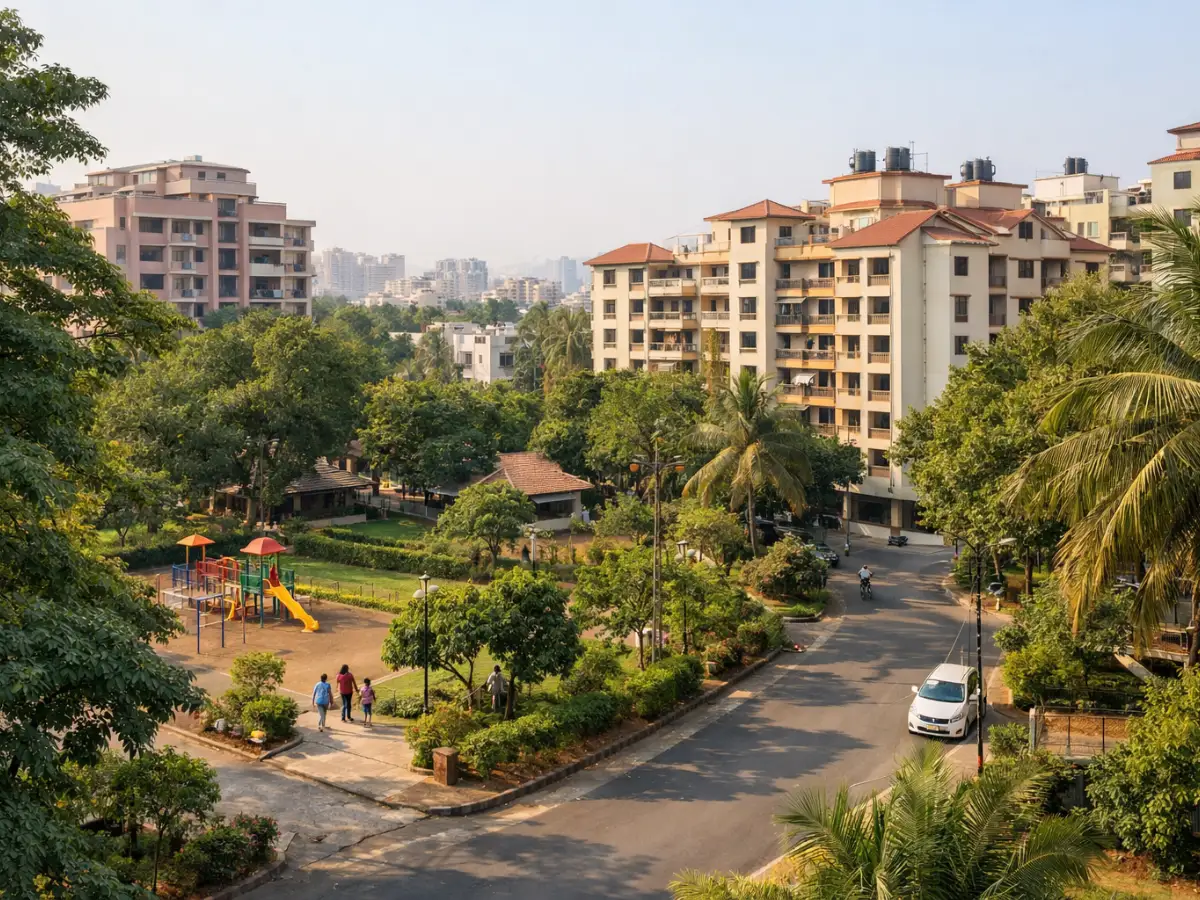
This is where the difference becomes real.
Vashi feels active from morning till late evening. It is one of those places where you step out and immediately feel movement: offices, traffic, station flow, markets, buses, delivery activity, retail, people everywhere. For some families, that feels convenient and efficient. For others, it feels tiring after a few months.
Nerul feels more residential in comparison. It still has station activity, commercial pockets, and busy stretches, but many internal sectors feel more settled. The pace is softer. The mood is less “always on.” That matters a lot when your family routine includes school-going children, older parents, evening walks, or simply the need to come back to a quieter environment after work.
A very practical way to think about it:
A family in Vashi may enjoy being able to reach malls, hospitals, markets, and transport points very quickly. But they may also deal with more noise, tighter parking, and more crowded public space.
A family in Nerul may need a slightly longer ride for some high-intensity commercial needs, but in return they often get more breathing room, a more neighbourhood-style feel, and a routine that is easier on the mind.
So this is not just a location comparison. It is a lifestyle-speed comparison.
Which Area Is Better for Office Commute and Daily Travel?
For commute, Vashi has the stronger edge.
That is the biggest reason many working couples still choose it despite the premium. It is one of the most strategic nodes in Navi Mumbai for reaching Mumbai, Thane, and key parts of Navi Mumbai. If one or both family members travel regularly toward Mumbai side, Vashi usually saves time and mental energy.
The practical advantage is not just map distance. It is commute rhythm. Train frequency is stronger, access is more direct, and Vashi’s position as a major transit hub gives it a daily convenience advantage that is hard to ignore.
Commute reality in simple terms
|
|---|
Schools, Colleges, and Kid-Friendly Infrastructure Where Do Families Feel More Comfortable?

For families with children, Nerul usually has the stronger overall case.
This is one of the clearest decision points in the Vashi vs Nerul comparison. Nerul has a more education-centred environment, a stronger cluster effect, and a more family-comfort-driven daily setup. That matters not just for admission choices, but for what everyday parenting feels like.
Nerul is known for having a denser concentration of schools and colleges, including bigger campus-style institutions. That creates a very different atmosphere from a purely commercial-heavy node. Many parents value that deeply because it affects school commute, tuition access, after-school movement, and peer ecosystem.
Vashi also has established and trusted institutions. So this is not a case of “Vashi is weak.” It is more that Nerul feels more naturally aligned with family schooling logistics.
Why Nerul often feels easier for parents
- More school clustering in the same broad node
- Better chance of shorter school-run distances
- Stronger tuition and activity ecosystem nearby
- More child-oriented neighbourhood rhythm in many sectors
In practical terms, a Nerul parent may be able to manage school, tuition, park time, and routine grocery errands with less daily friction. In Vashi, the same can still be done, but the environment around it often feels busier and less relaxed.
For younger children especially, Nerul’s more residential texture often feels easier.
Grocery, Markets, and Everyday Shopping Which Is More Convenient?

Vashi wins if your idea of convenience means everything is available quickly and in volume.
Nerul wins if your idea of convenience means quieter, local, sector-level errands without too much chaos.
That is the real difference.
Vashi has the advantage of big-format shopping logic. APMC access, major commercial markets, malls, and stronger retail density make it very efficient for families who like choice, bulk buying, and one-trip problem-solving. If you are the sort of household that wants fruits, groceries, home items, pharmacy, and a mall errand all within a compressed urban zone, Vashi is excellent.
Nerul is more neighbourhood-oriented. Many sectors function in a self-sufficient way, which makes daily life easier for families who prefer smaller, routine, less stressful shopping patterns. You go downstairs or nearby, finish what you need, and return. That works very well for households with children or elderly family members.
So the better answer depends on your shopping style:
Vashi is more powerful.
Nerul is more comfortable.
Housing Feel: Space, Society Type, and Living Comfort
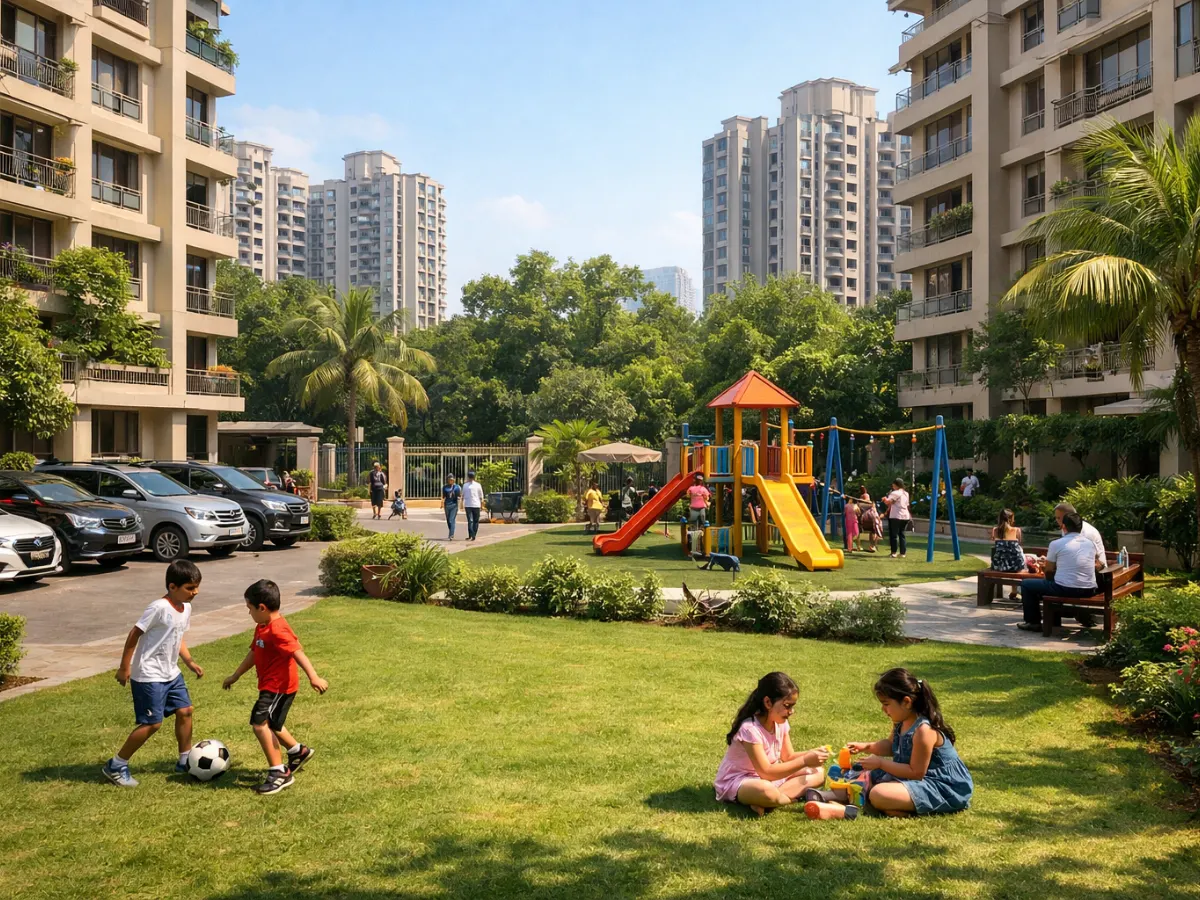
For housing comfort, Nerul usually gives better family value.
This is especially true when families compare what the same budget buys in both nodes. Vashi carries a location premium. You pay more for centrality, access, and commercial advantage. That often means more compact homes or older housing stock unless you are buying into a premium redeveloped tower.
Nerul usually feels more residential in form as well as function. In many pockets, families can get better apartment size, better society amenities, and a more comfortable internal environment for the same or lower budget.
That matters in everyday life more than many people expect.
A flat is not just an asset. It is where children study, grandparents walk, laundry dries, deliveries arrive, guests visit, and weekends happen. Families often realise later that 150 or 250 extra square feet, better internal society movement, or a calmer compound matters more than being close to a mall.
Broad housing feel comparison
|
|---|
Safety, Cleanliness, and Civic Services Is There a Real Difference?
There is no dramatic civic quality gap between the two. Both benefit from Navi Mumbai’s relatively strong municipal standards under NMMC.
That said, the lived safety feeling can differ.
Vashi often feels safer for late-evening public movement because it stays active longer. There is more lighting, more footfall, more commercial presence, and more visible movement near major roads, stations, and retail zones. For some families, especially those returning late, that creates reassurance.
Nerul feels safe in a different way. Inside good residential sectors and gated societies, it can feel more stable and family-oriented. But some quieter internal stretches may feel more isolated late at night compared to active parts of Vashi.
Cleanliness and regular civic upkeep are generally strong in both nodes, though like any city area, specific buildings, internal roads, and ward-level conditions can vary. Water supply is usually stable in many sectors, but local society-level issues, maintenance gaps, or temporary disruptions can still shape the resident experience.
So the honest answer is this:
Vashi feels more actively secure.
Nerul feels more residentially secure.
Neither answer is universal for every sector.
Traffic, Noise, and Crowd Levels What You Actually Deal With Daily
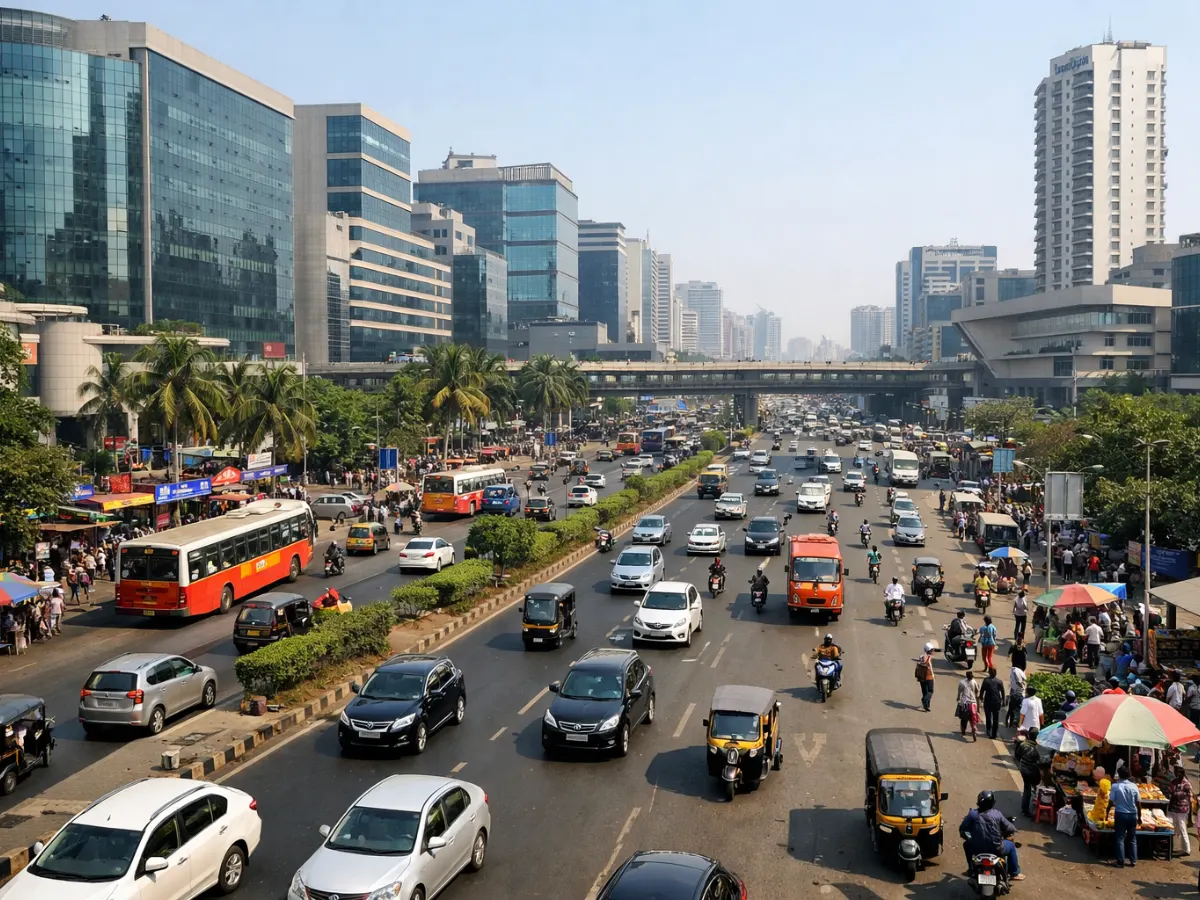
This section matters more than property brochures admit.
Vashi is noticeably busier. The crowd is not occasional. It is part of the area’s personality. Station influence, market traffic, malls, offices, buses, and arterial road movement create a more intense everyday atmosphere. For some people, that means convenience. For others, it means fatigue.
Noise is also a real factor in Vashi, especially closer to highways, station influence zones, and heavily commercial sectors. Families who are sensitive to traffic sound, street activity, or parking chaos should take this seriously before choosing purely on connectivity.
Nerul is not silent, but it is generally easier on the senses in many internal residential pockets. That becomes very important if your family values sleep quality, children playing downstairs, senior citizen walks, or simply less sensory overload.
Here is the practical caution: do not compare Vashi and Nerul as single labels only. Compare the exact sector and exact building. One well-placed pocket in Vashi can feel surprisingly liveable. One badly chosen stretch in Nerul can feel inconvenient or bottlenecked.
Rent and Property Cost Differences That Affect Family Decisions
This is where many final decisions get made.
Vashi usually costs more. Nerul usually gives more breathing room for the money.
For many families, that one fact changes the answer immediately.
Broadly, Vashi’s buying rates sit in a higher range, and rentals are also stronger because of centrality, connectivity, and the node’s premium positioning. Nerul is not cheap, but it often offers better space-value balance, especially for families comparing 2 BHK and 3 BHK options.
Which Area Works Better for Different Types of Families?
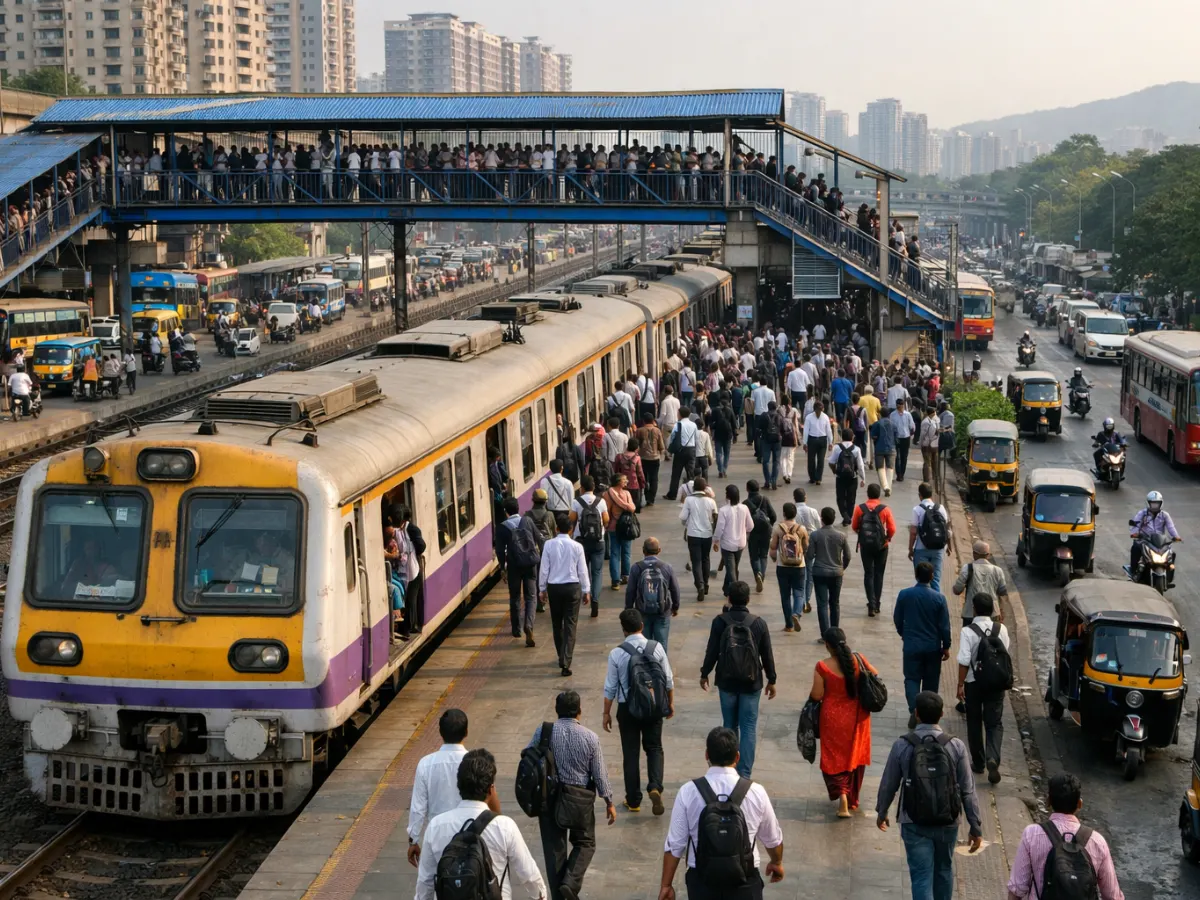
This is where the comparison becomes easiest.
Working couple with a heavy Mumbai commute
Choose Vashi.
If both partners commute regularly and time matters every single weekday, Vashi’s connectivity advantage is not small. It changes the full rhythm of life. Less travel drag. Easier station access. Better highway-side movement. More realistic weekday functioning.
Family with school-going children
Choose Nerul in many cases.
The school ecosystem, residential feel, calmer daily routine, and stronger family-living texture make Nerul a very natural fit. For many parents, reduced school-run stress matters more than marginally better office travel.
Household with elderly parents
Nerul often makes more sense.
Quieter sectors, parks, more walk-friendly internal areas, and a less commercial daily environment generally work better for older family members.
Family that wants city-like convenience and fast access to everything
Choose Vashi.
If your family likes quick retail access, busy energy, major hospitals nearby, mall convenience, and stronger “everything is close” logic, Vashi can feel very efficient.
Budget-conscious first-time buyer or renter
Nerul usually offers the better balance.
Not because Vashi is not worth it, but because Nerul often allows a family to enter a strong Navi Mumbai node without the same central premium pressure.
Sector-Level Reality: Not All of Vashi or Nerul Feels the Same
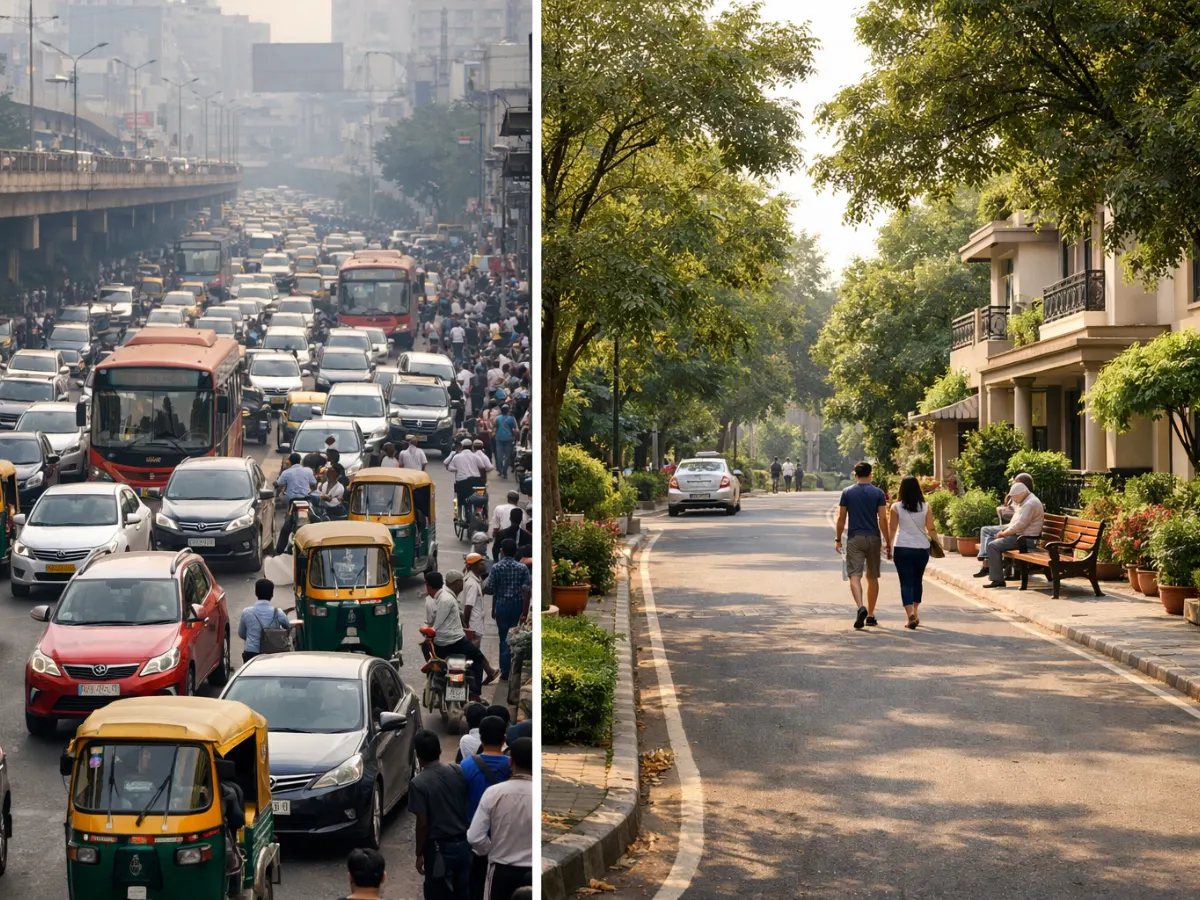
This is one of the biggest mistakes people make. They compare node names, not real micro-locations.
In Vashi, some sectors feel much more family-friendly than others. Premium residential belts away from the busiest commercial intensity can feel far more comfortable than the image people carry of “crowded Vashi.” At the same time, highly central sectors near strong activity zones may suit young professionals more than families seeking calm.
In Nerul, Palm Beach-facing and newer society belts can feel very different from older internal pockets. Some sectors offer stronger premium housing and open feel, while some older or more congested stretches may not deliver the calm, spacious lifestyle people assume Nerul automatically offers.
So before choosing, families should not stop at “Vashi or Nerul?” The more useful question is:
Which sector, how far from station influence, what kind of building, what school route, what evening traffic, and what daily walking environment?
That is where good decisions happen.
conclusion
Choose Vashi if your family’s biggest problem is commute, access, and time loss. It suits people who want stronger station logic, faster Mumbai-side movement, more retail density, and a city-like everyday setup. It is especially strong for working couples, dual-income households, and families who value convenience over extra space.
Choose Nerul if your family’s biggest priority is living comfort. It suits households that want a more residential atmosphere, stronger school ecosystem, better space value, quieter surroundings, and a routine that feels easier for children and older parents.
So which is better for family living?
For pure family comfort, Nerul is usually the safer answer.
For family life shaped by daily commuting pressure, Vashi can absolutely be the smarter answer.
That is why this decision should not be made from brand image alone. It should be made from your weekday routine.
FAQs
Frequently Asked Questions