
Vashi vs Nerul: Which Is Better for Family Living?
If the main goal is family living, Nerul is usually the better choice. It generally offers calmer residential pockets, better school access, more open-space feel, and stronger day-to-day comfort for children and parents. Vashi still makes sense for families who want maximum central convenience, faster road access toward Mumbai, and a busier urban setup. So the real answer is not just Vashi versus Nerul. It is what kind of family life you want to live every day.
For many buyers, this comparison comes up at the final shortlisting stage. Both are mature Navi Mumbai nodes. Both have strong civic infrastructure. Both are well known, well connected, and expensive enough that a wrong choice can trouble a family for years. But they do not behave the same way on the ground.
Vashi feels like an older, more commercial, more active city centre. Nerul feels more like a residential-first node built for everyday living. That difference changes everything once children, schooling, elderly parents, maintenance burden, and daily commute start mattering more than just the pin code.
If you are also considering another mature and more premium alternative nearby, this Vashi vs Seawoods comparison will help you judge which node fits better.
Why families compare Vashi and Nerul so often in Navi Mumbai
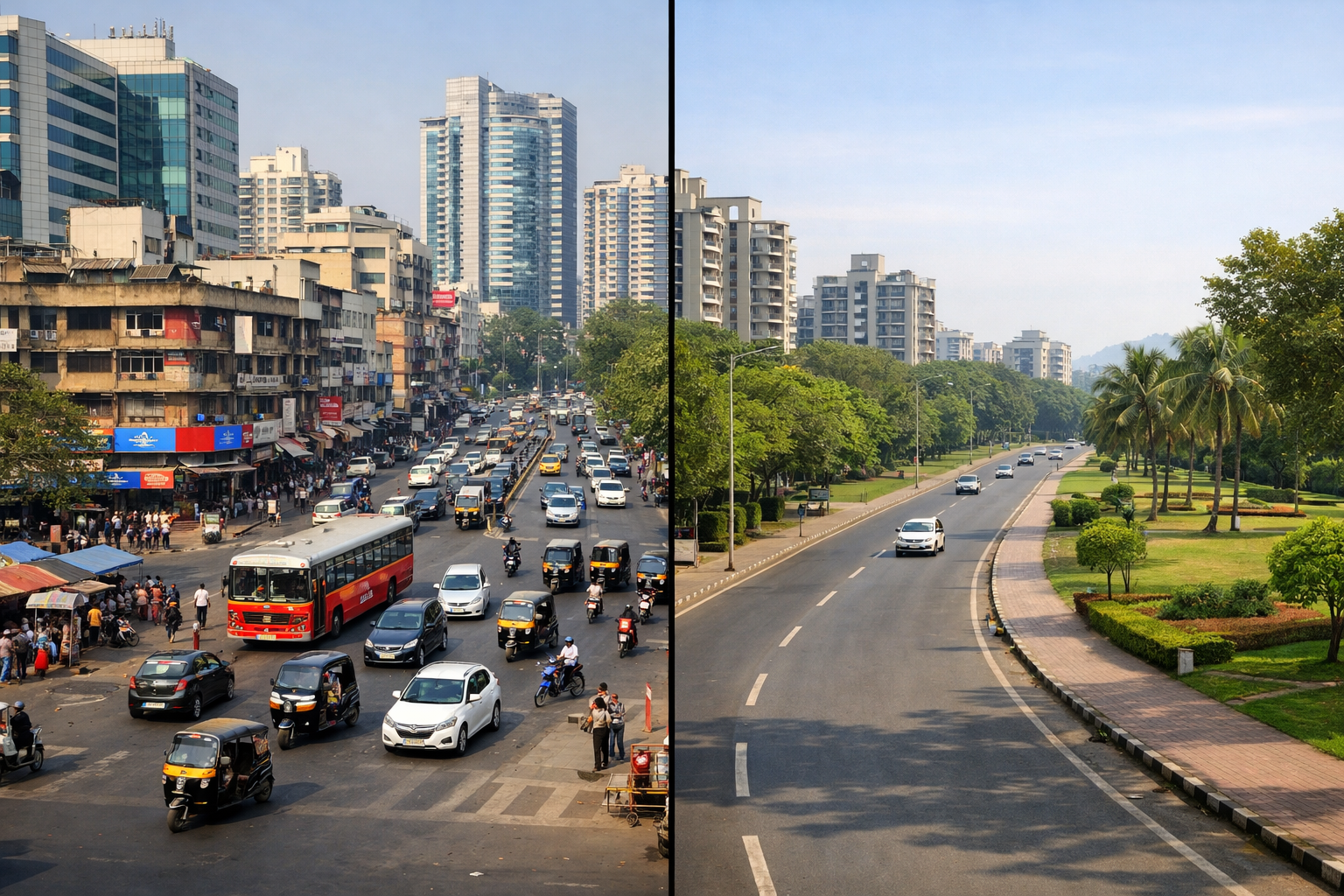
Families compare these two nodes because both sit in the premium, mature part of Navi Mumbai. They are not fringe growth bets like Ulwe or early-entry markets like some Panvel-side pockets. They are established, known, and trusted.
But the reason the comparison becomes confusing is that the two nodes became premium in different ways.
Vashi grew as the gateway node. It absorbed commercial spillover, office traffic, transport movement, retail, markets, and constant city activity. That gave it maturity, convenience, and strong identity. It also gave it crowding, traffic pressure, and a more urban-commercial feel.
Nerul developed with a more residential logic. Wide internal roads, stronger school clustering, better open spaces, and calmer family pockets made it attractive for households that wanted Navi Mumbai comfort without leaving the premium zone. That is why many upper-middle-class buyers moving out of Mumbai congestion or upgrading from other Navi Mumbai nodes end up stuck between these two choices.
In simple words, this is not just a comparison of two good areas. It is a choice between two different styles of family life.
Which area feels more comfortable for daily family life?
For family living, the real test is not how the area looks on a Sunday visit. It is how it behaves on a Tuesday evening after work, school, errands, and traffic.
Nerul usually feels more comfortable in that daily-life test.
Where everyday errands feel easier
Vashi has everything nearby, but “nearby” does not always mean easy. The node is deeply functional, but also heavily used. Commercial spillover, dense traffic movement, illegal parking pressure, and crowd-heavy pockets make short local trips more tiring than buyers often expect.
Sector 17 is the clearest example. It is useful, central, active, and full of life. But for family routine, that intensity can become draining. Even quieter Vashi pockets like Sectors 6 and 8 still do not fully escape the broader commercial character of the node.
Nerul, especially in residential pockets like Sector 21, Sector 19 East, and some Seawoods-adjacent stretches, usually feels more balanced. Local movement is easier to absorb into family routine. Small trips to tuition, parks, medical shops, and local markets feel less chaotic.
Which area feels calmer after work hours
This is where the difference becomes obvious.
Vashi remains active well into the evening. That is a strength for people who like energy, walkable commerce, restaurant access, and constant movement. But for families with small children or elderly parents, a busy environment is not always an advantage.
Nerul tends to settle better after work hours. The residential mood is stronger. Evening walks feel easier. Internal roads feel more like neighbourhood spaces and less like business overflow. That matters more than buyers think.
Open spaces, parks, and breathing room
Nerul again has the edge here. The node has a more spacious residential feel, and that directly improves family life. Places like Wonders Park, Rock Garden, and the Jewel of Navi Mumbai side give families actual breathing room, not just map-based “green cover.”
Vashi has Mini Seashore and some strong public zones, but its overall environment feels denser and more urban. Families who want children to cycle, elders to walk comfortably, or evening routines to feel less rushed often find Nerul more forgiving.
Practical verdict: If the family values calm, internal comfort, and a more residential atmosphere, Nerul wins. If they enjoy dense convenience and a lively city rhythm, Vashi can still work.
Which one works better if children are part of the decision?
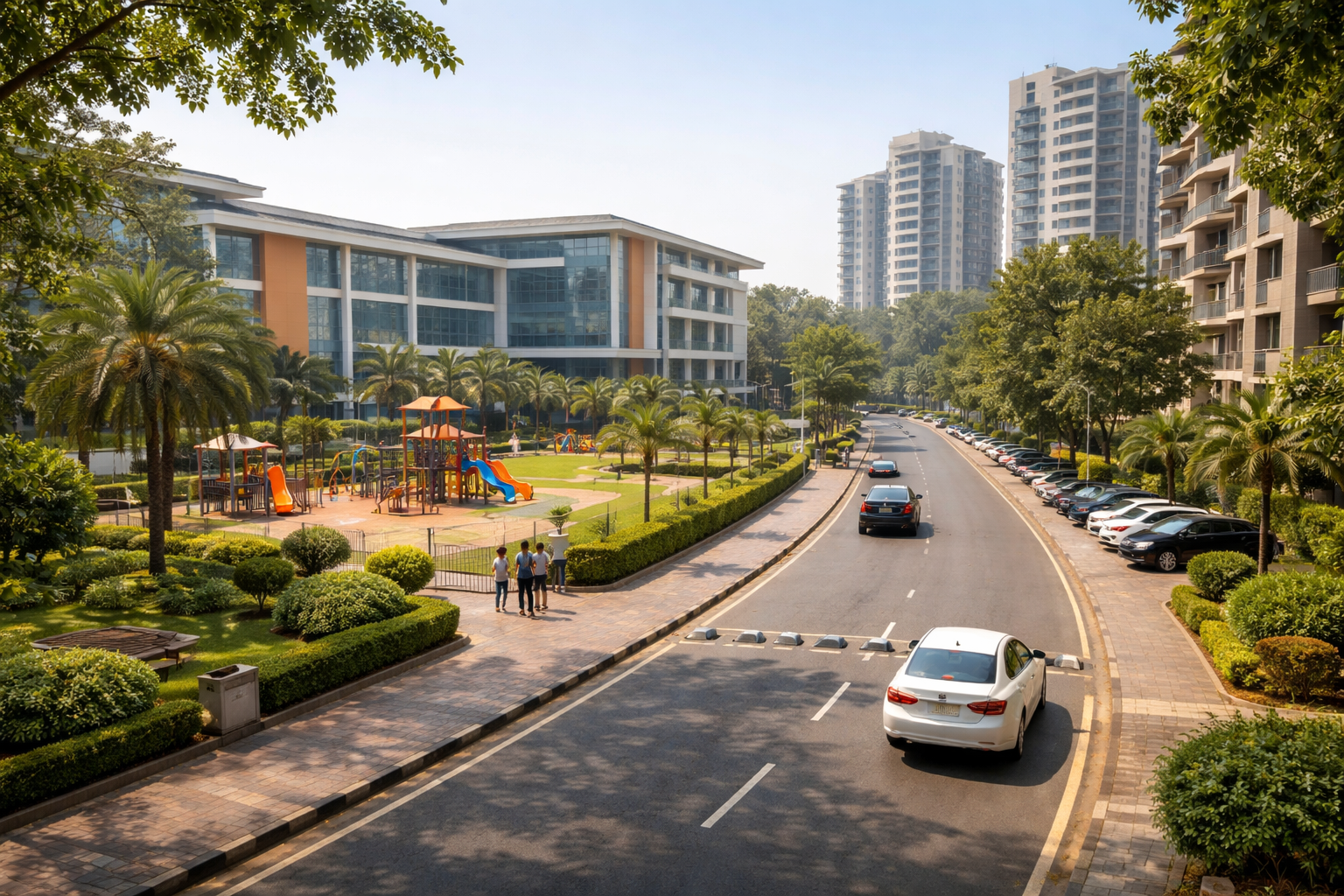
When children enter the picture, the comparison changes sharply. This is no longer just about address value. It becomes about school access, schedule fatigue, hospital comfort, play spaces, and how much daily stress parents want to carry.
Nerul is usually the stronger family node once children become central to the decision.
School access and family routine
This is probably the biggest reason Nerul pulls ahead.
Vashi has respected legacy schools, and that should not be dismissed. Schools like St. Lawrence and Ryan Christian remain relevant and can work very well for many families. But Vashi leans more toward older institutional patterns, especially State Board and ICSE.
Nerul has become one of the strongest education-led residential choices in Navi Mumbai. It offers a denser mix of CBSE, ICSE, and IB options, including D Y Patil International, Apeejay, and Delhi Public School. For families already clear about board preference, especially CBSE or IB, Nerul removes a major future inconvenience.
That matters because school choice should come before property emotion. A family that wants IB or a strong CBSE ecosystem but buys in Vashi only because the area feels “more famous” may end up creating unnecessary daily travel for years.
Play areas, activity zones, and weekend practicality
Children do not experience cities the way adults do. They experience them through parks, activity spaces, play freedom, and how easy it is to leave the house without planning every outing like an event.
Nerul does this better. Wonders Park and Rock Garden are not just names in a brochure. They change routine. The node feels more usable for family evenings, light outings, and small breaks without too much friction.
Vashi offers strong retail and entertainment convenience, and families who prefer mall access or active public movement may enjoy that. But it feels more grown-up and commercial. Nerul feels more child-compatible.
Hospital and emergency convenience
Both nodes are strong here. Vashi has very dense access to healthcare through Fortis Hiranandani, MGM New Bombay Hospital, Cloudnine, and D Y Patil Healthcare options nearby. Nerul remains well supported through D Y Patil Hospital, Seawoods Hospital, and access toward Belapur-side facilities like Apollo.
So this section is not about one area being medically weak. It is more about the broader family ecosystem around healthcare. On balance, both are dependable, but Nerul still benefits from its quieter and more child-friendly daily setup.
Simple takeaway: For school-going families and families planning children in the next few years, Nerul is usually the safer long-term choice.
Does commute favor Vashi or Nerul for working parents?
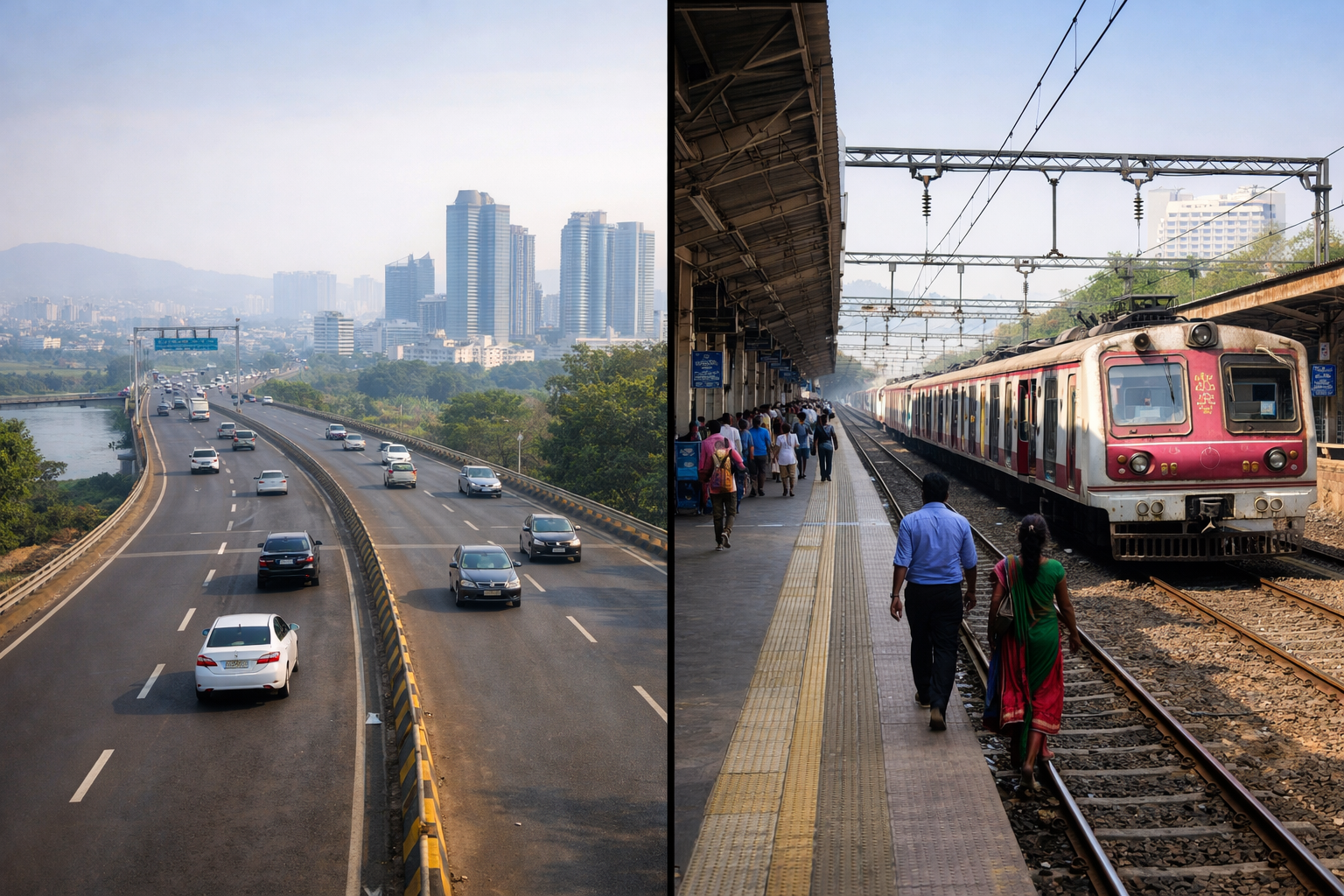
This answer depends on how the family actually travels.
If the main commute is by road toward Mumbai, Vashi has a location advantage. If the main commute is by train, or toward Panvel, Thane, or the wider Navi Mumbai belt, Nerul often becomes more practical.
A practical commute comparison for working parents
| Commute Type | Vashi | Nerul | Practical Winner |
|---|---|---|---|
| Road commute toward Mumbai | Better base position and direct highway logic | Slightly longer base distance | Vashi |
| Peak-hour road comfort | Hurt by Vashi bridge/toll bottlenecks and heavy local pressure | Less central, but often less stressful internally | Depends on route |
| Train convenience | Strong, but more standard | Stronger due to junction role and wider line utility | Nerul |
| Commute toward Thane/Panvel side | Good, but not always easiest | Often more balanced | Nerul |
| Parking and station handling | Can feel higher-friction in many situations | Generally more organized around junction use | Nerul |
Station access and local train dependence
This is where many buyers miscalculate the answer. They assume Vashi is automatically better because it is closer to Mumbai. But geographical closeness and real commuter comfort are not always the same thing.
Nerul’s junction advantage matters. It connects movement more efficiently for many rail users, especially those with mixed-direction travel needs. For train-dependent households, Nerul often feels more practical on a weekly basis.
Palm Beach Road and road travel logic
Both nodes benefit from Palm Beach Road logic, but buyers should be careful here. Palm Beach-facing prestige and actual family convenience are not always the same. The premium is real, but so is the traffic noise and crossing difficulty in some stretches.
For families, a calm internal sector is often more useful than a headline Palm Beach address.
Mumbai-side commuters vs Navi Mumbai-side commuters
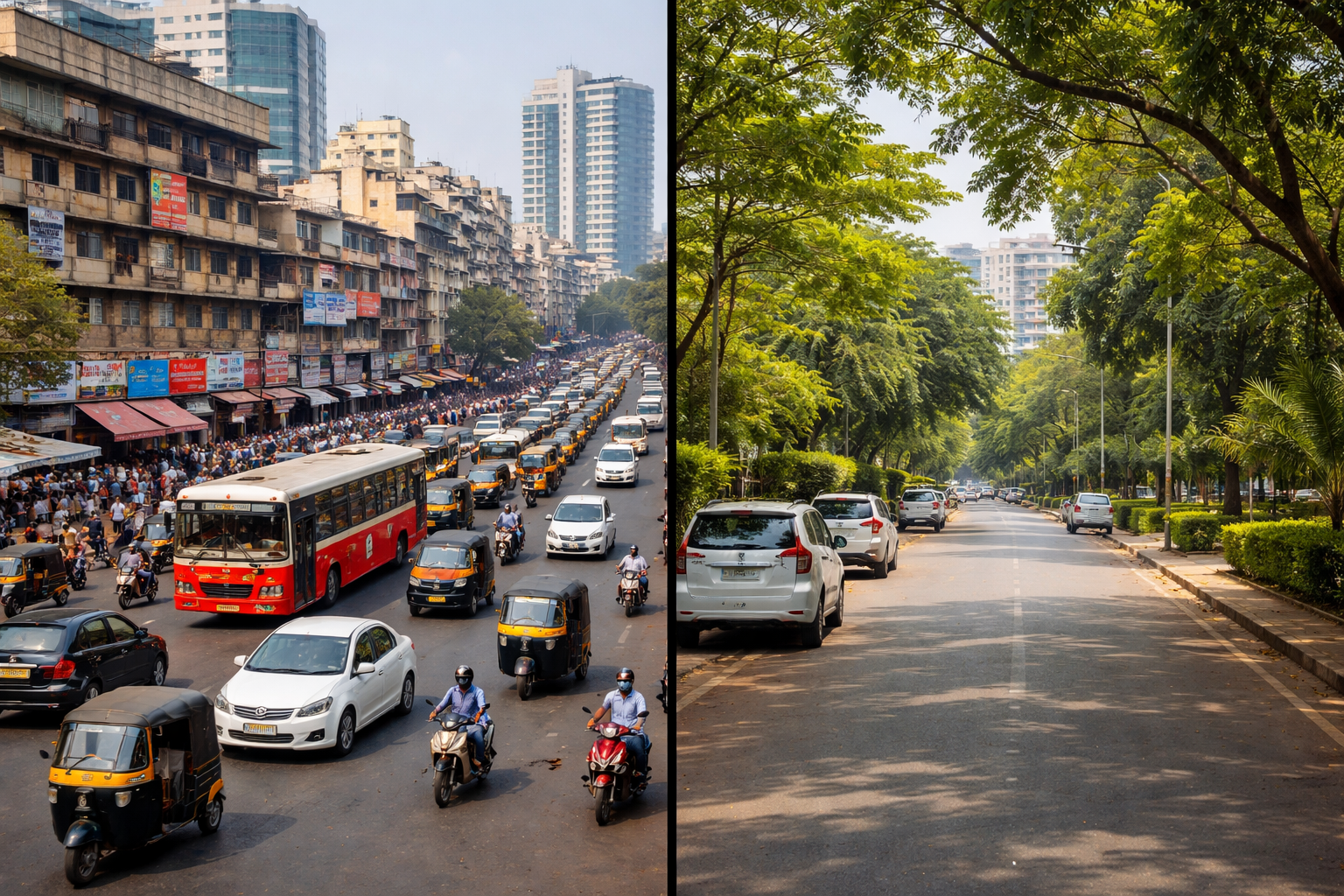
If one or both parents travel toward South Mumbai or similar road-linked work zones, Vashi still has a real advantage. But if the family’s work pattern is more spread out across Navi Mumbai, Thane-Belapur belt, Panvel side, or train routes, Nerul becomes very hard to ignore.
Commute verdict: Vashi wins the old-fashioned “closer to Mumbai by road” argument. Nerul wins the more modern “which place feels more manageable across mixed family routines” argument.
Which area gives families a better home for the money?
This is not just a price-per-square-foot question. It is a self-use value question.
Current market averages indicate that Vashi usually sits around ₹12,000 to ₹15,000 per sq.ft. for standard residential stock, while Nerul often ranges around ₹11,000 to ₹14,000 per sq.ft. Premium Palm Beach inventory in both nodes jumps sharply, often into the ₹26,000 to ₹31,000 per sq.ft. zone depending on exact location, age, view, and building type.
On paper, the gap may not look dramatic. In real family use, it can feel significant.
Vashi’s housing stock is older on average. That can mean lower base maintenance, often around ₹2 to ₹4 per sq.ft. in older societies, but it can also mean sudden sinking fund demands for lift work, terrace waterproofing, structural repairs, and other capital expenses. Many families budget for EMI and monthly maintenance, but not for a surprise ₹30,000 to ₹50,000 society demand.
Nerul often gives buyers either a newer building or a more balanced residential experience for the same budget. Even when maintenance is higher in modern towers, usually around ₹4 to ₹7 per sq.ft. and sometimes more in amenity-heavy buildings, the outflow is often more predictable.
That predictability matters to family finances.
Carpet area also matters. In many cases, a family stretching to buy in Vashi may end up accepting older layouts, more renovation needs, and a more compromised monthly comfort equation. In Nerul, the same budget can sometimes produce a better liveability outcome.
Money verdict: If the goal is stable self-use value, not just owning in a famous node, Nerul usually gives a more sensible family deal.
What kind of family usually fits Vashi better?
Vashi is not a bad family choice. It is simply a more specific one.
It suits families who genuinely value centrality over calm. This includes business households, families linked to Vashi’s commercial economy, couples who want strong market access, or long-time locals who already understand which sectors work for them.
It also works for families who do not mind older buildings, slightly denser surroundings, and a more active street environment in exchange for convenience. If the household prioritizes quick access to Inorbit Mall, major retail, offices, hospitals, restaurants, and road routes, Vashi can feel extremely efficient.
A young working couple with one child, flexible school expectations, and a strong Mumbai-side road commute may still find Vashi the better practical fit.
What kind of family usually fits Nerul better?
Nerul fits the broader range of family buyers.
It works especially well for school-going families, parents planning children, multigenerational households, and buyers who want the home to feel like a daily retreat rather than an extension of the city rush. It also suits families who care about board choice, calmer evenings, modern society living, and more breathable neighbourhood design.
A family choosing between multiple school boards, wanting easier park access, and looking for a longer-term self-use home will usually feel more settled in Nerul.
If the emotional goal is not just buying a flat but building a stable family routine, Nerul is usually the better answer.
Which mistakes do families make when choosing between Vashi and Nerul?
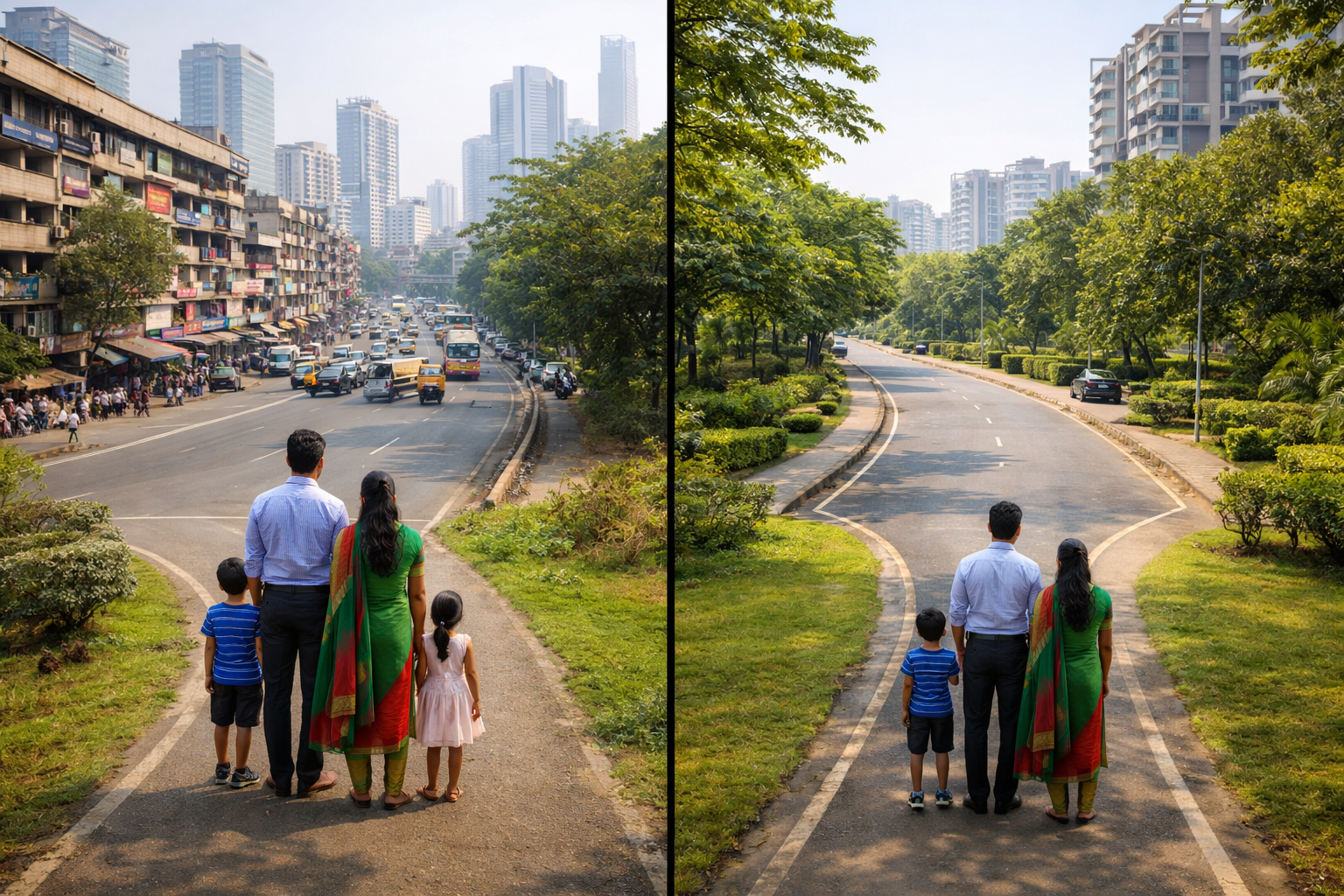
The biggest mistake is thinking this is only a brand comparison. It is not. It is a routine comparison.
Another major mistake is buying older stock without fully checking the cost of living inside it. Lower maintenance on paper can hide serious repair demands. In older CIDCO-linked resale properties, buyers also need to be very careful about title chain clarity, transfer paperwork, and legal due diligence. This is not a market where casual document checking is enough.
Families also make the mistake of choosing the node first and school board later. That is backwards. The school decision changes the property decision.
And then there is the Palm Beach mistake. Many buyers overpay for prestige without checking traffic noise, internal access, and whether the flat actually supports walkable daily life.
A caution box for buyers
Before buying an older resale flat in Vashi or Nerul, especially legacy CIDCO stock, check these properly:
- recent structural audit status
- society sinking fund history
- lift, terrace, and repair liabilities
- seller’s full chain of title documents
- CIDCO transfer process status and NOC readiness
- actual noise and traffic conditions around the building
- parking practicality, not just brochure claims
That one checklist can save a family from a very expensive mistake.
So, which is better for your family: Vashi or Nerul?
For most families, Nerul is better.
It is usually the stronger choice for school access, calmer living, open-space feel, balanced self-use value, and long-term day-to-day comfort. It behaves more like a family node and less like a commercial centre with residences attached to it.
Vashi still wins for a certain kind of buyer. If centrality, business movement, road access toward Mumbai, and dense market convenience matter more than residential calm, Vashi remains one of Navi Mumbai’s most powerful addresses.
But if the buyer asks the most important end-use question, “Where will family life feel more natural for the next 10 years?”, Nerul is usually the clearer answer.
Choose Vashi if:
- you need stronger road-led Mumbai access
- your work or business life is closely tied to Vashi’s commercial ecosystem
- you actively like a busier, more urban environment
- you are comfortable handling older stock carefully
Choose Nerul if:
- children and schooling are central to the decision
- you want calmer sectors and better daily residential comfort
- you prefer more balanced self-use value
- you want the home to support family routine, not just location prestige
Conclusion
If this is a genuine family-living decision and not just a prestige or market-name decision, Nerul is usually the better choice. It gives most families a calmer rhythm, stronger school compatibility, better residential feel, and more practical self-use value. Vashi remains powerful, convenient, and highly relevant, but it suits families who intentionally want centrality and activity, not families who simply assume the more famous node must be better.
For most end-use buyers choosing between the two today, Nerul is the safer family answer.
If Nerul is already on your shortlist, it also makes sense to compare Kharghar vs Nerul and see which node works better for your lifestyle, budget, and long-term goals.
FAQs
Frequently Asked Questions