
How Metro and Corridor Growth Affect Taloja Housing Demand
Metro and corridor growth are increasing Taloja housing demand, but not evenly. Demand is rising first in pockets with real station access, usable roads, and better day-to-day livability, not across all of Taloja at the same speed. That is the real answer. Connectivity creates attention quickly, but actual housing demand in Taloja still depends on commute practicality, civic readiness, and the type of buyer or renter entering the market.
For years, Taloja was sold on future promises. The difference now is that one part of that promise has become real. Navi Mumbai Metro Line 1 between CBD Belapur and Pendhar is operational, and that changes how people judge Taloja. But the market is still selective. A project brochure may say “metro-connected,” yet on the ground the real question is simpler: can a buyer or tenant actually reach the station comfortably every day, and does the surrounding area feel practical enough to live in?
Quick Summary
| Factor | What it improves | What it does not automatically fix |
|---|---|---|
| Operational Metro Line 1 | Buyer confidence, commute logic, rental interest, site visits | Water shortage, pollution worries, weak last-mile roads |
| Taloja–Khandeshwar Metro Line 2 approval | Future growth confidence for Kamothe-Kalamboli-Taloja linkage | Immediate move-in convenience today |
| Kharghar-Turbhe Link Road and corridor growth | Regional access, wider job catchment, stronger long-term market logic | Uneven internal access across all Taloja sectors |
| Airport-led regional growth | Investor confidence, long-hold narrative, employment expectation | Instant end-user demand in every pocket |
The short answer is this: metro and corridor growth improve Taloja’s housing demand in stages. First, more people start considering it. Then rentals and commuter-led demand improve. Stable family-led and resale-led demand comes later, once the area feels more settled and essential services become more dependable.
Does metro and corridor growth really increase housing demand in Taloja, or just improve its image?
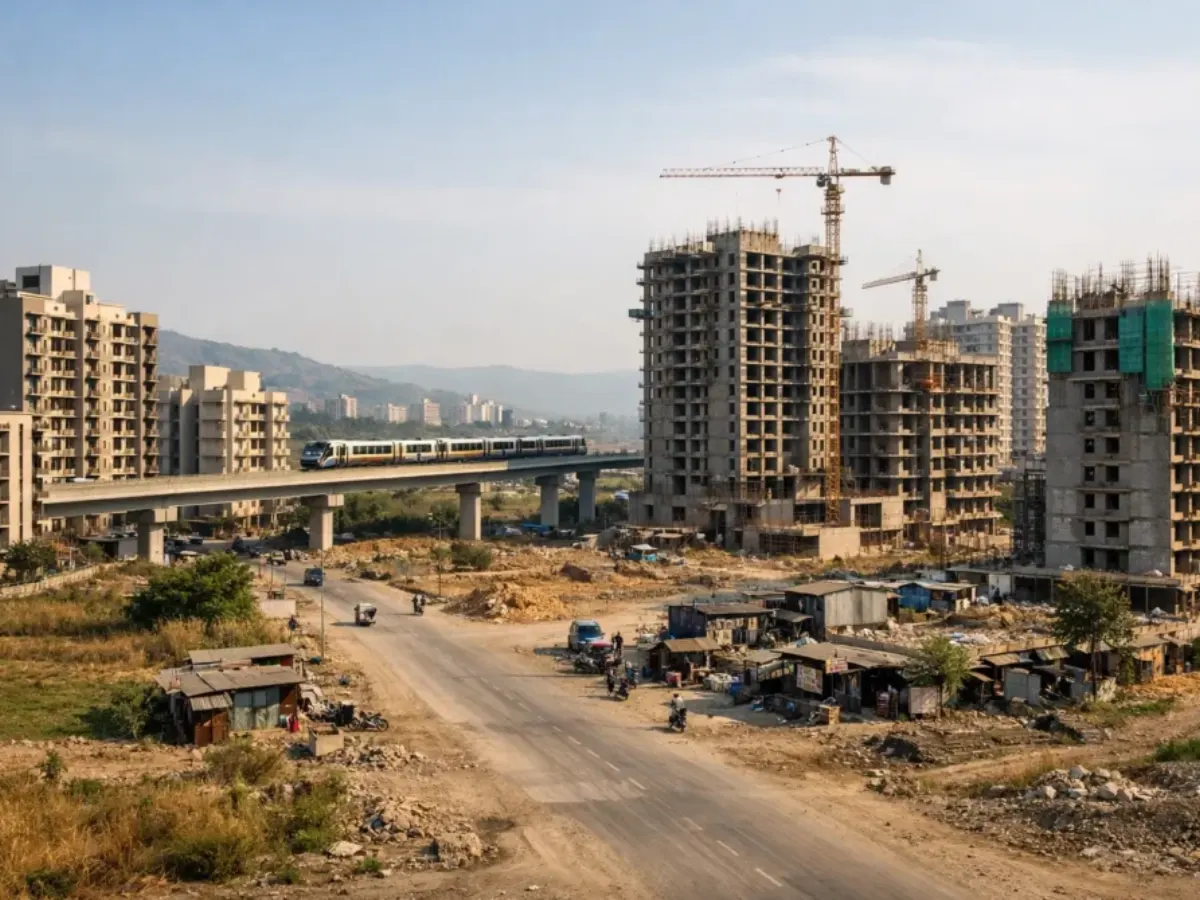
It does both, but image improves first.
That is where many weak articles get this topic wrong. They treat “better infrastructure” and “higher housing demand” as the same thing. They are not. In Taloja, operational metro service has clearly improved perception. It has reduced the mental distance between Taloja and the rest of Navi Mumbai. A place that once felt too disconnected now feels more reachable, especially for people who work around Kharghar or CBD Belapur.
But improved image is only the first layer. Real housing demand means people are willing to rent there, buy there, move there, and stay there. That happens more slowly. Taloja’s market still filters demand by micro-location. Projects with smoother approach roads, easier station access, and better surrounding activity benefit earlier. Deeper pockets still get attention, but a lot of that remains investor-heavy or future-focused rather than immediate end-user absorption.
So yes, metro and corridor growth are increasing Taloja housing demand. But they are not creating a uniform Taloja-wide jump. They are creating a selective demand map.
What kind of housing demand changes first when connectivity improves in Taloja?
The first thing that rises is not always bookings. It is usually curiosity.
Enquiry demand vs booking demand
When transport improves, Taloja enters more buyer shortlists. More people search it, call brokers, visit projects, and compare it against Kamothe, Kalamboli, or outer Kharghar. That is enquiry demand. Metro operations tend to push this up quickly, because buyers can now see a visible transport spine instead of just hearing a future promise.
Booking demand is slower. Here, buyers become stricter. They start checking RERA status, possession timelines, developer credibility, and whether the project is actually easy to access from the metro. This is why metro growth alone does not convert every enquiry into a sale.
There is also a practical pattern here. Enquiries rise across Taloja, but actual bookings tend to move more toward branded developers, integrated projects, and ready or near-possession stock. Buyers still want utility, not only hope.
Rental demand vs end-user demand
Rental demand usually reacts faster than end-user buying. That is because renters care strongly about affordability and commute practicality, but they are less locked into long-term civic risk. If rents are lower than central Navi Mumbai and the metro reduces daily travel pain, Taloja becomes easier to accept.
That is especially true for budget commuters and working professionals who want lower monthly outgo. In practical terms, rental demand in Taloja has become more meaningful because the area now offers lower rent plus better movement. That is a stronger proposition than “cheap but inconvenient.”
End-user demand is more demanding. A family buying for self-use will ask more questions: what about schools, hospitals, water, road quality, evening environment, and the overall lived feel of the area? So end-user demand rises, but only in the more practical pockets first.
Resale demand vs new project demand
Resale improves only when the market starts trusting occupancy value. In Taloja, that means older or already delivered projects near usable metro access can slowly become more attractive because they offer immediate utility.
New projects still pull interest because they come with better amenities, newer layouts, and modern gated communities. In Phase 2 especially, many buyers still prefer new projects because they want lifestyle features, better architecture, and long-term appreciation potential. But the metro helps resale most where daily usability is obvious.
Which parts of Taloja benefit more from metro and corridor growth, and why not all pockets move together?
This is where the real decision-making begins. Taloja is not one single housing market behaving in one straight line.
Pockets closer to usable access and station logic
Areas closer to the operational metro spine, especially around the Pendhar and Panchanand side, naturally benefit first. But buyers should not judge this only by map distance. A project can look “near station” on paper and still feel inconvenient if the approach road is weak, dusty, broken, or dependent on awkward auto changes.
That is why practical station logic matters more than brochure logic. A smooth 10-minute route often beats a technically shorter but uncomfortable route. In Taloja, this difference is very real.
The pockets that benefit first are usually the ones where the metro feels like a daily tool, not just a future advantage.
Areas that still depend heavily on road and auto connectivity
Deeper sectors and pockets that still rely on shared autos, slower internal movement, or incomplete road quality do benefit from the infrastructure story, but more gradually. These areas often attract investors first because investors can wait for future execution. Families and daily commuters are usually more selective.
This is the difference between transport-led optimism and daily commute reality. Taloja does not improve just because infrastructure exists somewhere nearby. It improves when that infrastructure becomes conveniently usable from the project itself.
There is also a hidden cost here. When the last mile still depends on repeated auto rides or time-consuming movement, budget-conscious buyers notice it. A lower flat price can lose some of its attraction if daily mobility remains irritating.
Why Phase 1 and Phase 2 are not read the same by buyers
Phase 1 usually feels more lived-in. It has more visible day-to-day activity, more operational local commerce, and stronger immediate metro comfort in certain pockets. That makes it easier for end users to understand. It may be more congested in parts, but it feels more settled.
Phase 2 often looks newer and more township-driven. It can attract buyers who like bigger modern projects and long-hold upside. But some parts still feel more under-formation than fully settled. That can work for patient buyers, but it does not suit everyone.
So the demand pattern is different. Phase 1 often captures immediate practicality-led demand. Phase 2 captures more selective end-user demand plus longer-horizon investor demand.
How metro-led growth changes the thinking of first-time buyers, renters, and investors
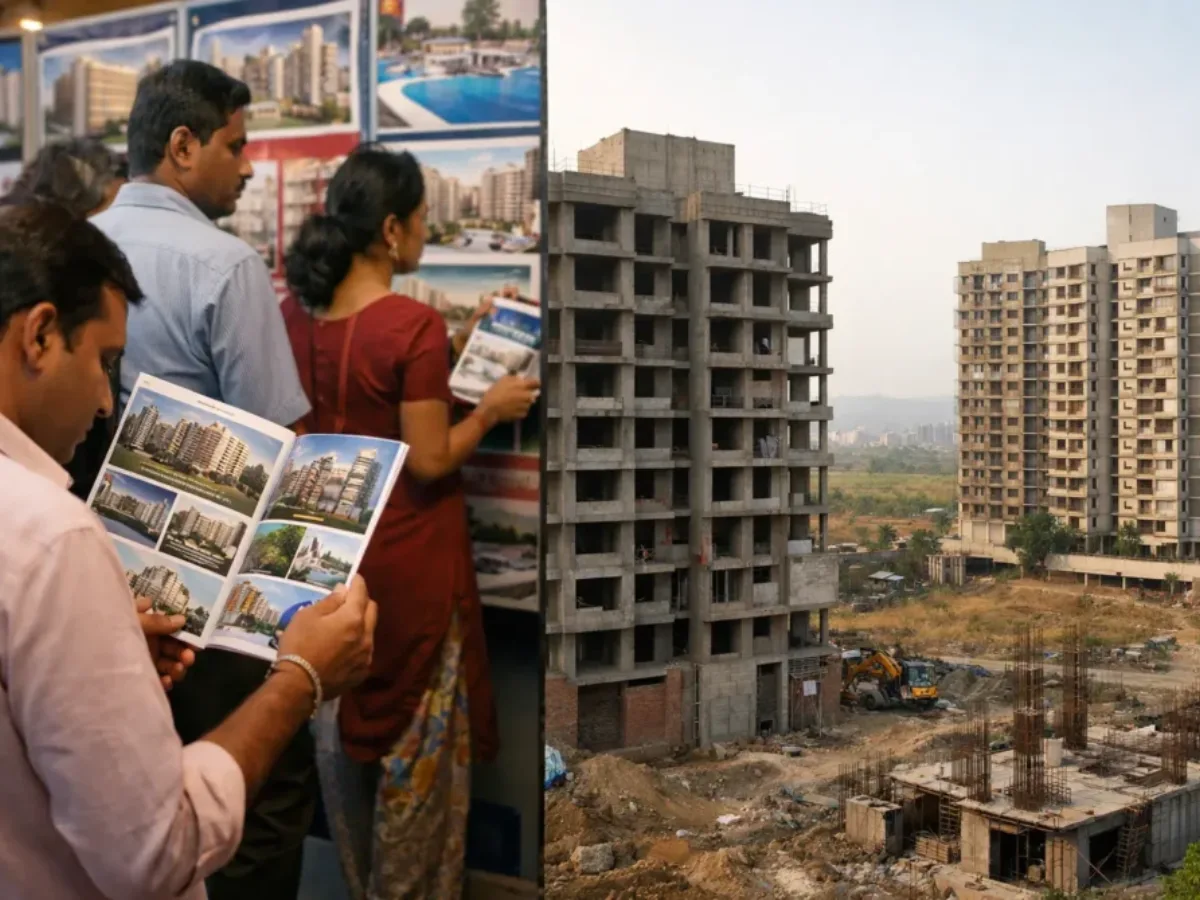
Different buyer types read the same infrastructure very differently.
Budget end users
For a first-time buyer, the metro reduces fear. Earlier, Taloja could feel like a budget compromise with weak fallback if buses failed or roads got messy. Now, an operational metro line gives at least one dependable transit layer. That makes many buyers feel that even if the area is still maturing, it is no longer completely disconnected.
For buyers in roughly the ₹35 lakh to ₹60 lakh bracket, this matters a lot. Taloja starts looking less like a risky outer option and more like a workable starter-home market.
Daily commuters
Commuters care less about the story and more about repeat convenience. If Taloja helps them save on rent while still allowing manageable travel toward Kharghar or Belapur, they start accepting the location faster. This is why connectivity growth supports real absorption, not just speculation, in commuter-friendly pockets.
For this group, time matters more than branding. If the metro saves daily effort and corridor improvements widen access to more job zones, Taloja becomes functionally stronger as a residential base.
Long-hold investors
Investors do not need every civic issue to be solved immediately. They look at the larger stack: operational metro, approved future corridor, airport-led regional growth, and road expansion. For them, Taloja is no longer just cheap land logic. It is becoming part of a broader connected belt.
That is why the approved Taloja-Khandeshwar Metro Line 2 matters even before it becomes operational. It changes how investors read the future internal connectivity of Taloja, Kalamboli, and Kamothe. Add the airport narrative and Taloja begins to look less isolated and more strategically placed.
Why corridor growth matters almost as much as metro growth in Taloja
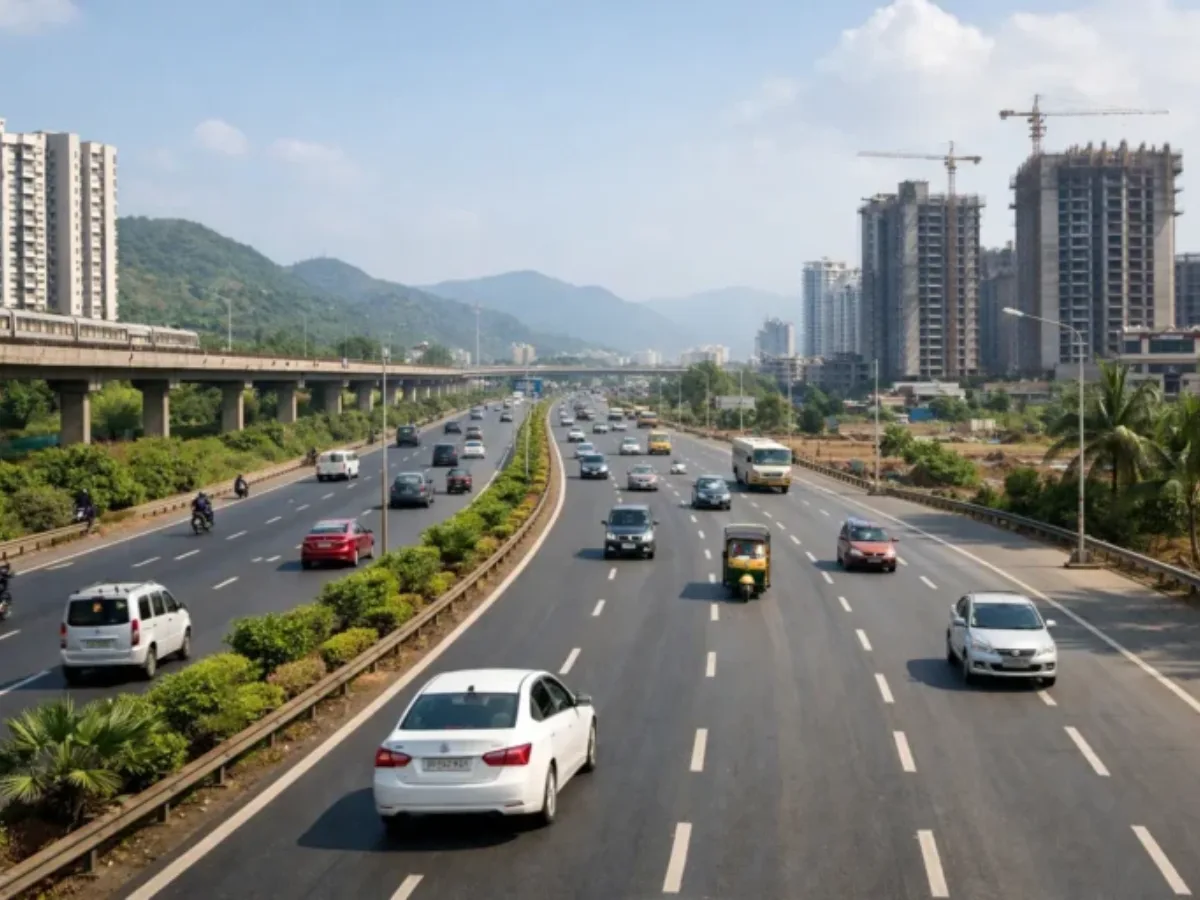
A metro line is powerful, but it is not enough on its own. Housing demand grows better when the whole movement network improves.
Taloja buyers are not only thinking about one station ride. They are thinking about how the area connects to Kharghar, Kamothe, Kalamboli, Panvel-side movement, and job corridors across Navi Mumbai. This is why road-led and corridor-led growth matter almost as much as the metro itself.
The Kharghar-Turbhe Link Road matters because it strengthens regional connectivity and expands Taloja’s practical catchment. That kind of corridor growth brings more job zones within easier reach. It changes how a working household judges the area.
The same logic applies to the Taloja-Khandeshwar metro extension story. Even before full execution, approval itself changes how the market reads future internal connectivity across Taloja, Kalamboli, and Kamothe.
There is also an airport layer to this. The airport is not a daily commute destination for most residents. But it does support long-term employment logic through logistics, hospitality, aviation-linked activity, and regional business movement. That is why airport and corridor narratives improve investor confidence even when daily commute demand is still being driven more by the metro and road network.
So corridor growth matters because it turns metro access into a bigger mobility ecosystem. Without that, the metro improves image. With it, the metro starts improving residential logic.
Can better connectivity alone fix Taloja’s housing demand problem?
No. And this is the most important caution in the whole article.
Transport can attract people to Taloja. It cannot by itself solve the reasons some buyers still hesitate.
Where civic issues still limit demand
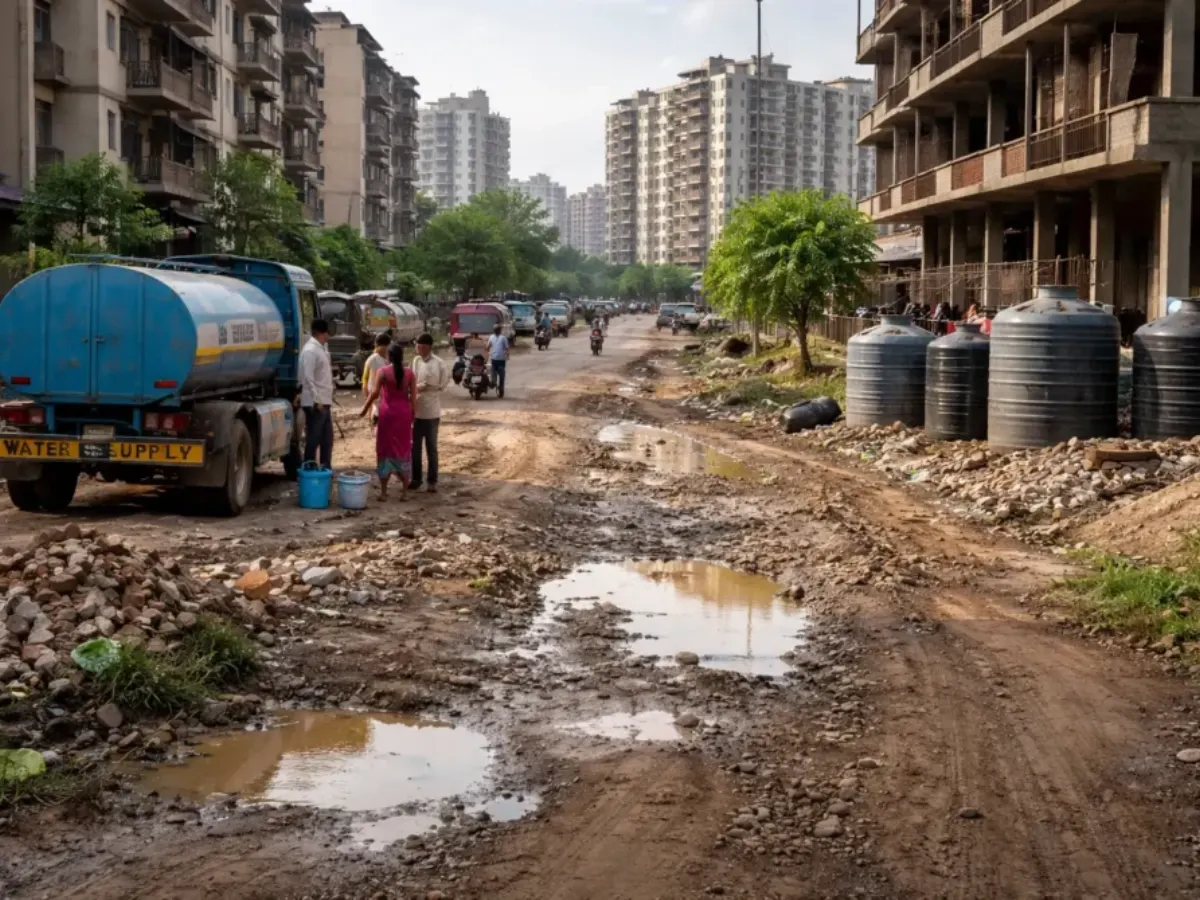
Water remains a serious concern. That is not a small issue. It directly affects whether buyers feel comfortable moving in, especially families and long-term end users.
When water supply is inconsistent and dependence on tankers remains high, the area develops a demand ceiling. More people may become interested in Taloja because of the metro, but a portion of serious buyers will still pause at the final decision stage.
Where industrial perception still affects buyer comfort
Taloja’s MIDC-side identity still shapes buyer thinking. Pollution concerns around the Taloja-Kasardi belt and the broader industrial image continue to influence how families read the area. This does not mean every Taloja pocket feels the same. It means micro-location matters much more here than in a cleaner, more uniform residential node.
This is why one buyer may feel comfortable in a newer, cleaner-feeling Phase 2 pocket while another may reject a Phase 1 location because of smell, traffic, or industrial unease.
Why last-mile inconvenience can weaken a strong transport headline
This is a very ground-level point, but it matters. A metro station is valuable only when the last mile is manageable. If residents still depend on uncomfortable internal movement, weak road stretches, or unreliable auto dependence for the final approach, the connectivity story loses force.
That is why two projects in Taloja can react very differently to the same infrastructure headline. The metro may be common to both, but the lived experience is not.
Does connectivity growth improve rental demand in Taloja, or mostly sale demand?
It improves both, but rental demand usually moves earlier.
Renters respond faster because they can take advantage of lower rent and better travel without making a permanent commitment. Sale demand rises more slowly because buyers are still weighing civic and micro-location risk. So in practical terms, metro growth often strengthens Taloja’s rental appeal first and its ownership confidence later.
| Demand type | Tends to improve first or later? | Why |
|---|---|---|
| Rental demand | First | Lower commitment, stronger commute savings, easier affordability decision |
| Investor-led sale demand | Early to mid-stage | Buyers price in future corridor and airport potential |
| End-user sale demand | Mid to late-stage | Depends on civic comfort, water reliability, and social infrastructure |
| Resale demand | Later | Improves when occupancy and daily usability become visible |
This is why many Taloja projects may look better as rental assets before they fully feel like mature end-user neighborhoods. In simple terms, rental utility can arrive before ownership comfort.
What signs show that Taloja housing demand is becoming real and not just speculative?
The best signs are boring. And that is a good thing.
Do not look only at ads, launch events, or rising asking prices. Look at lived signals instead.
- More occupied buildings, not just sold units
- Evening activity in local markets
- Stronger tenant continuity
- Realistic resale conversations around station access
- Resident groups pushing for better water, roads, and safety
- Less dependence on pure airport hype and more focus on daily convenience
When an area starts producing active societies, repeat renters, and believable resale value, housing demand is becoming real. That is when the market starts behaving like a residential node, not just an investment story.
Who should take the Taloja connectivity story seriously, and who should stay cautious?
Taloja makes the most sense for budget buyers, patient end users, and long-hold investors who understand that connectivity has improved the direction of the market, but not fully solved its friction points.
If someone wants a lower-budget entry into a CIDCO-planned growth belt with operational metro support and future corridor upside, Taloja deserves serious consideration. The operational Belapur-Pendhar metro section is already a real utility, and the approved Taloja-Khandeshwar line plus corridor projects strengthen the longer-term case.
But caution is still necessary for buyers expecting Taloja to behave like a finished premium node in the next two or three years. It is not that market yet. Water reliability, environmental comfort, internal access quality, and micro-location variation still matter a lot.
For families with children, elderly residents, or health-sensitive members, one late-evening site visit is not enough. Multiple visits, a weekday commute test, and careful pocket-level evaluation are smarter.
A simple decision matrix for Taloja buyers
| Buyer profile | Verdict | Why |
|---|---|---|
| First-time buyer | Buy selectively | Affordability plus metro support improves safety of decision |
| Long-term investor | Buy selectively | Rental demand and future corridor growth support the case |
| Daily commuter | Consider strong pockets only | Station approach and time savings matter more than brochure claims |
| Families with kids | Wait or choose very carefully | Water reliability, schools, and environment still matter heavily |
| Health-sensitive buyer | Be cautious | Industrial perception and pocket-level comfort vary sharply |
| Short-term speculator | Avoid aggressive assumptions | Market is improving, but not exploding uniformly |
Conclusion
Metro and corridor growth are helping Taloja move from promise-driven demand to utility-driven demand, but the shift is selective, not blanket. The metro has made Taloja more credible. Road and corridor projects are making it more connected in the broader Navi Mumbai sense. But genuine housing demand is still concentrating in the pockets where station access, roads, and daily livability work together.
So the right way to read Taloja in 2026 is not “metro aa gaya, sab badal gaya.” It is this: Taloja is improving, the demand story is becoming more real, and the better-connected pockets are gaining first. Buyers who understand that difference will make better decisions than those who treat the whole node as one identical market.
FAQ's
Frequently Asked Questions