
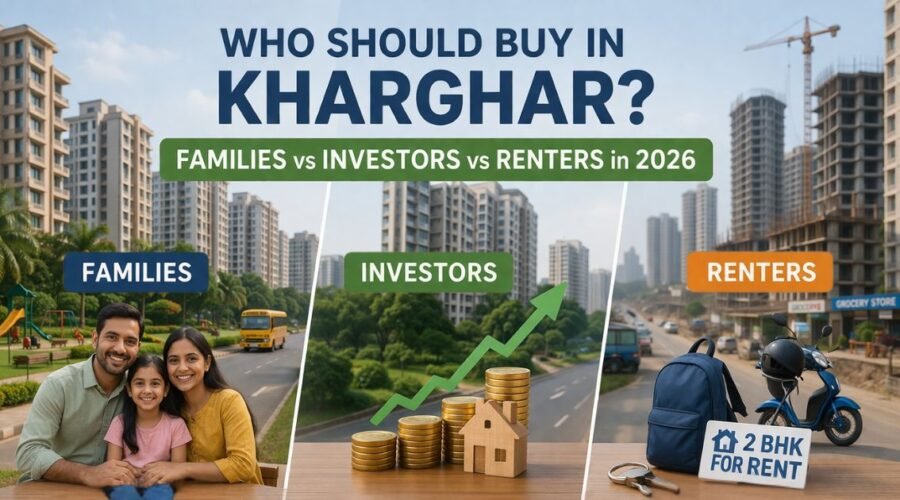
Who Should Buy in Kharghar: Families, Investors or Renters?
Kharghar is usually best for families and long-term end users first, selective for investors second, and often smarter for renters than buyers if their stay is only for a few years. That is the real answer in 2026. Kharghar is no longer Navi Mumbai’s affordable suburban alternative. It has become a premium lifestyle node shaped by the operational airport, the metro, and future commercial expectations, but also by very real sector-level problems like water stress and pollution in some pockets.
Quick Summary
| User type | Is Kharghar a good fit? | Why it works | Main caution | Best kind of Kharghar pocket |
|---|---|---|---|---|
| Families buying for self-use | Strongest fit | Planned layout, schools, hospitals, parks, better daily routine | High entry cost, some sectors face water or pollution stress | Established central sectors and family-friendly internal pockets |
| Investors | Selective fit | Long-term wealth preservation, future corporate and airport-linked demand | Rental yields are modest, fast flips are harder now | Better entry-point sectors only if risk is understood |
| Renters | Conditional but often very smart | You can enjoy the lifestyle without locking huge capital | Premium rents and maintenance can reduce value | Near-station or education-heavy pockets |
Why Kharghar feels attractive in the first place
Kharghar still has one of the strongest first impressions in Navi Mumbai. That is not only marketing. CIDCO’s planned layout, broad roads, open spaces, metro access, hill backdrop, and education ecosystem make it feel more breathable and more organized than many nearby nodes. Metro Line 1 has been operational since November 17, 2023, and the airport opened in October 2025 with commercial flights beginning in December 2025, which has strengthened the area’s premium identity.
The attraction is also emotional. A family visiting Central Park side pockets, Utsav Chowk zones, or better internal sectors often feels that Kharghar is more livable than cheaper alternatives. That emotional pull is real. But it should not be confused with “good for everyone.”
If Kharghar fits your budget and lifestyle, the next step is to shortlist the best sectors in Kharghar based on what kind of buyer you are.
Is Kharghar best suited for families?
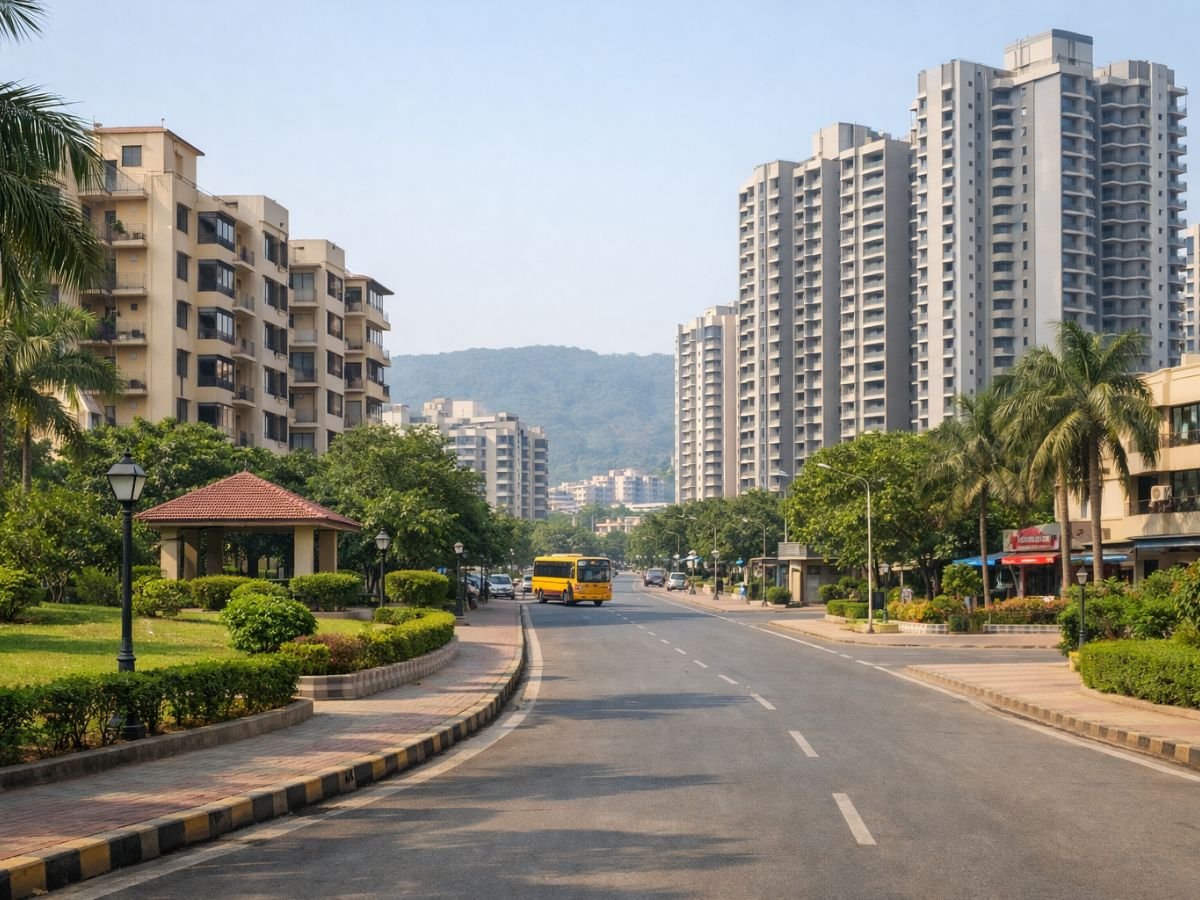
Yes, families are the clearest best-fit category for Kharghar, especially those buying for long-term self-use rather than short-term gain.
Kharghar works well for families because the value is not only inside the flat. It is in the routine outside the flat. Schools, coaching, hospitals, parks, grocery access, wider internal roads, and a generally more planned environment make daily life easier. For parents, that matters more than generic price appreciation talk.
What families usually value in Kharghar
Families usually value four things here.
- better daily livability than many lower-cost nodes
- strong education ecosystem and social infrastructure
- open spaces and less claustrophobic road design
- long-term end-use comfort rather than pure short-term returns
That is why Kharghar makes more sense for an established household planning a 7 to 10 year stay than for a buyer stretching heavily just to own a “premium” address.
Even when Kharghar suits you as a location, you still need to compare new projects vs resale flats in Kharghar before making the final decision.
Which kinds of families benefit most
Kharghar is strongest for:
- families with school-going children
- households that want long-term self-use
- buyers who can pay for better livability without becoming EMI-stressed
- families who genuinely use the parks, schools, metro, and daily convenience
Where families may still struggle
Not every family should blindly choose Kharghar. Some sectors and societies face water stress. Upper Kharghar pockets closer to the Taloja side have also seen repeated resident complaints around air quality, dust, and chemical odors, especially at night. That makes sector selection critical, not optional.
What makes Kharghar strong for family living beyond just reputation
Kharghar’s family-friendly image is strongest when the sector is right.
A practical family checklist looks like this:
- School run comfort: better if you are in established pockets with smoother internal movement
- Weekend routine: Central Park, local gardens, and better open-space culture help a lot
- Healthcare comfort: easier than in many newer growth nodes
- Commute balance: metro improves internal Navi Mumbai movement, and the Atal Setu bus connection has improved access toward South Mumbai for some commuters
- Street feel: planned roads and a more residential atmosphere support family living better than purely speculative belts
This is where Kharghar beats many cheaper areas. It often feels like a place designed for living, not just for selling flats.
Is Kharghar a smart choice for investors today?
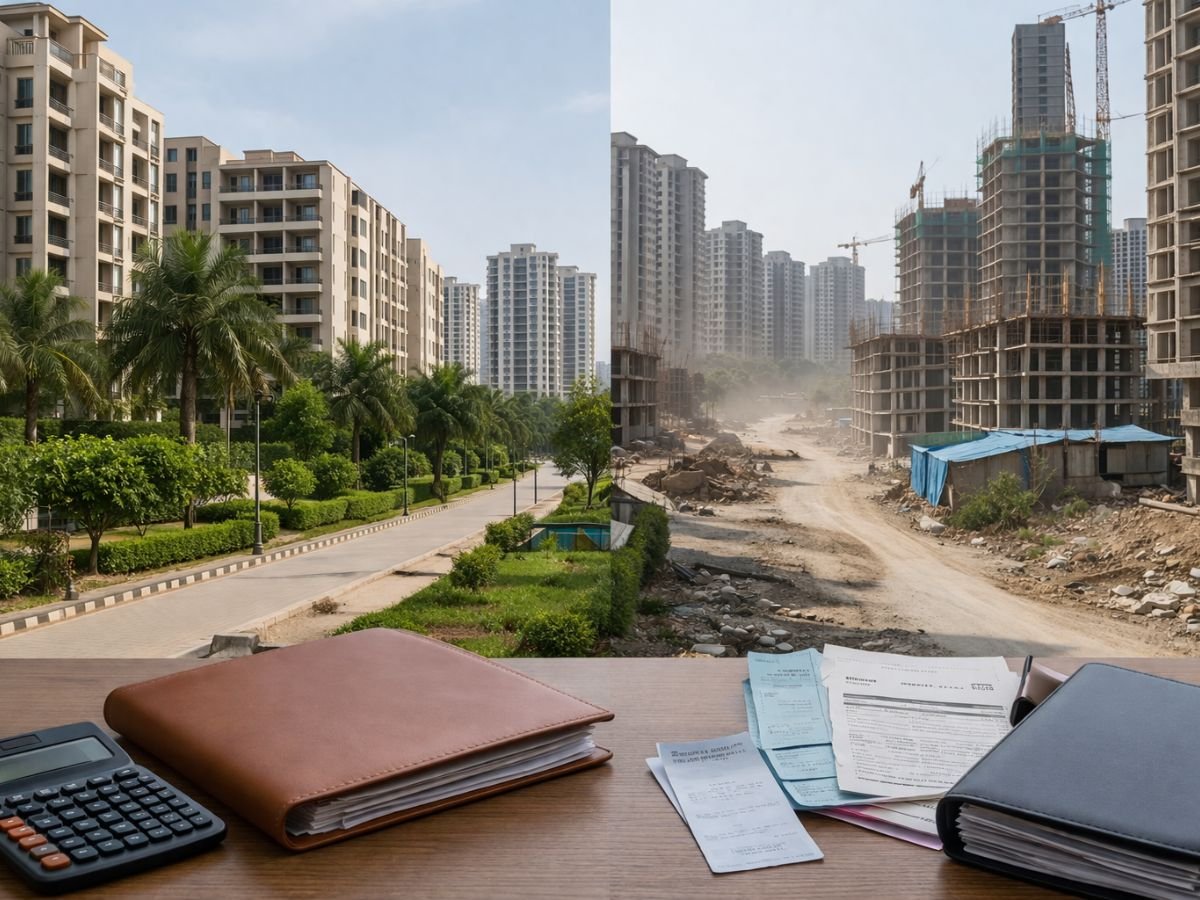
It can be, but only for a narrow type of investor.
Kharghar is no longer a simple high-upside, low-entry story. The airport, metro, and corporate hub narrative have already pulled up expectations. The question is no longer “Will infrastructure come?” It has partly come already. The question now is whether your entry price still leaves enough room for sensible returns.
Which investor type Kharghar suits
Kharghar suits investors who:
- have a long holding horizon
- are not dependent on strong monthly rental cash flow
- want a relatively stronger long-term residential node rather than a speculative bargain
- are comfortable choosing between premium stability and growth-periphery risk
Which investor type should be careful
Kharghar is weak for:
- short-term flippers
- highly leveraged investors
- buyers chasing high rental yield
- investors assuming airport hype alone will double prices quickly
That last mistake is common. Airport-linked optimism is real, but much of that premium is already reflected in current asking sentiment.
Appreciation logic vs rental yield reality
This is the most important investor filter.
A good area is not automatically a good investment entry point. In Kharghar, rental yields are generally modest, especially in bigger ticket homes. That means a debt-heavy investor can end up with a very weak monthly equation. If the main goal is monthly cash flow, Kharghar is usually not the strongest answer. If the goal is long-term asset holding in a strong node, the case is better.
Why many investors like Kharghar, but not all investors should buy here
Investors like Kharghar because the story sounds strong: airport, metro, future commercial growth, and a premium residential brand. All of that is valid.
But the weakness is equally real. In mature or maturing pockets, future appreciation is usually slower than the language used by brokers and portals. In emerging periphery pockets, the upside may look better on paper, but civic distress is also higher. That means the investor decision in Kharghar is not only about price. It is about what kind of discomfort, delay, and risk you are willing to absorb.
Caution: If you are buying mainly for rent yield, Kharghar is usually not the best math. If you are buying for 8 to 10 year wealth preservation in a stronger node, it becomes more defensible.
Does renting in Kharghar make sense, or is it better to buy?
For many professionals and even some families, renting in Kharghar makes excellent sense.
This is where the article needs to be very honest. A person staying in Navi Mumbai for 3 to 5 years can often enjoy the same Kharghar lifestyle by renting, without locking a huge down payment into a flat and carrying a much larger EMI burden. The metro is already running, the airport is already operational, and the lifestyle value is available today even without ownership.
Who should rent in Kharghar
Renting makes strong sense for:
- corporate professionals with uncertain city horizon
- young families testing whether Kharghar suits them
- people who want the lifestyle now but do not want to overpay at the current stage of the market
- parents choosing proximity to education or routine convenience
Who may feel Kharghar is not worth the rent
It may feel expensive for:
- renters who only need functional accommodation
- people who do not use the locality’s premium benefits
- tenants entering high-maintenance premium towers without reading the cost burden clearly
Example
If a professional expects to stay in Navi Mumbai for only five years, renting a well-located 2 BHK can be much smarter than locking a large down payment and paying a far higher EMI for an asset whose short-term appreciation may not be dramatic. In Kharghar, that is a practical, not emotional, decision.
Which parts of Kharghar suit families, investors, and renters differently?
| Kharghar pocket type | Best for | Main strength | Main weakness |
|---|---|---|---|
| Legacy core sectors such as 10, 12, 20 | Families, long-term self-use buyers | Best livability, stronger routine comfort, better long-term end-use appeal | Higher ticket size |
| Commuter and education-friendly pockets such as 15, 17 | Renters, students, working professionals | Better access to institutes, convenience, easier rental fit | Can feel denser and less serene than top family pockets |
| Growth-periphery sectors such as 34, 35, 36 | Selective long-term investors only | Lower entry band, metro narrative, future upside possibility | Water stress, pollution complaints, dust, higher civic risk |
| Taloja-border budget edge | Budget-constrained buyers entering the wider belt | Lower entry cost | Kharghar brand without full Kharghar livability |
When Kharghar is worth paying a premium for, and when it is not
Kharghar is worth paying a premium for when you are buying daily quality of life, not just an address.
It is usually worth the premium if:
- you are buying for long-term self-use
- your family will actively use the schools, parks, and better urban layout
- you want a more planned residential environment
- you can afford the right sector without financial strain
It is usually not worth the premium if:
- you are stretching your budget only for reputation
- you are chasing rent yield
- you are buying an older legally messy resale without checking transfer and title issues
- you are choosing a peripheral sector only because the brochure says “future growth”
That last point matters in Kharghar more than many buyers realise. Older CIDCO-linked resale properties can carry meaningful transfer costs and document-chain complications, so resale buyers need extra legal and financial caution. CIDCO’s transfer charges are slab-based and can be substantial, not token.
Who should avoid Kharghar or look at alternatives first?
Some people should step back from Kharghar, at least for now.
You should seriously consider alternatives first if you are:
- a budget-sensitive first-time buyer
- a buyer with respiratory sensitivity looking at Upper Kharghar
- an investor chasing fast gains or better rental cash flow
- a renter who only needs utility, not lifestyle
- a family that wants more carpet area for the same money
The harsh truth is that water shortage and pollution are not evenly distributed across the whole node, but they are serious enough in some sectors that they must affect the decision. Residents and housing groups have repeatedly raised concerns over tanker dependence, distribution shortfalls, and local air quality problems linked to nearby industrial activity.
In such cases, Panvel or Ulwe may give a more logical entry point depending on whether the priority is affordability, airport influence, or a simpler buying equation.
Conclusion
Kharghar is best for families buying for long-term self-use. That is the strongest and cleanest fit.
Renters come second, and in many real-life situations they may make the smartest financial move of all. Renting lets them use Kharghar’s lifestyle, connectivity, and routine comfort without taking on a heavy ownership burden at current pricing.
Investors come third. Kharghar still works for selective long-horizon investors with strong balance sheets, but it is no longer an easy, high-yield, high-speed investment market. Anyone buying only because of airport hype, metro headlines, or the idea that every part of Kharghar is equally premium is taking the lazy view of the market.
So if the question is who should buy in Kharghar, the answer is this: established families first, renters selectively, and investors only with patience, discipline, and sector-level caution.
FAQs
Frequently Asked Questions