
Best Residential Pockets in Taloja
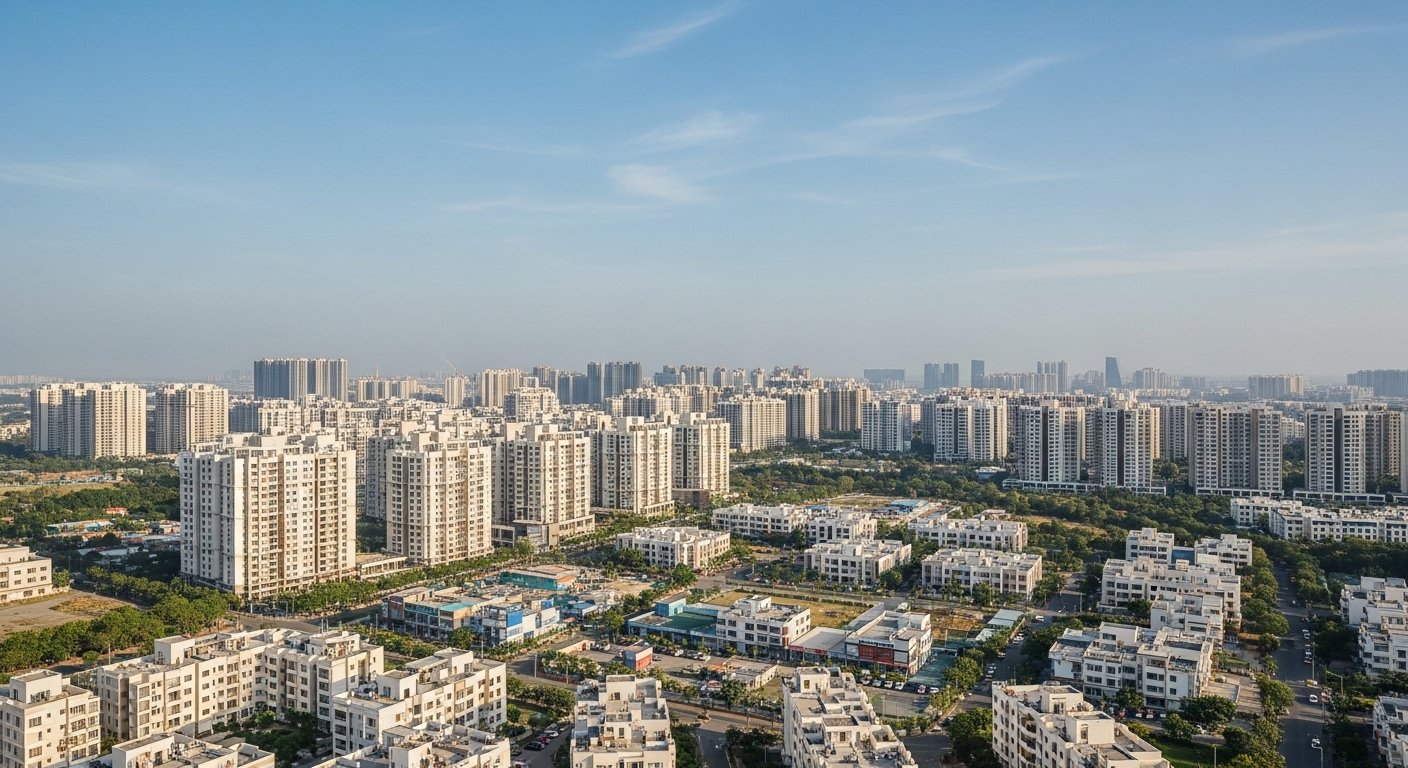
The best residential pockets in Taloja are not the cheapest ones on paper. In practice, the stronger pockets are usually the ones that balance metro or station access, better internal roads, occupied societies, daily-use shops, and more settled surroundings. For immediate living, parts of Phase 1 are often stronger. For newer township-style living and long-hold buying, selected Phase 2 pockets usually make more sense. For very low-budget entry, some inward pockets work, but only with caution.
Taloja is one of those places where broad labels mislead people. Listings say Taloja, Taloja Phase 1, Taloja Phase 2, Taloja Panchanand, even Upper Kharghar, as if all of it feels the same on the ground. It does not. One pocket may feel functional enough for a family or renter today. Another may still feel too raw, too dusty, too dependent on future improvement, or too close to industrial influence.
Quick answer
| Pocket / side | Best for | Main strength | Main trade-off | Buy / Rent / Wait |
|---|---|---|---|---|
| Phase 1, Sectors 11 and 14 | Families, renters, daily users | Stronger daily market, walkability, practical station-side life | Older stock, more noise, some industrial influence | Buy for use / Rent |
| Phase 2, Sectors 24, 25 and 26 | First-time buyers, long-hold buyers, township seekers | Metro influence, newer projects, better long-term comfort potential | Raw surroundings in parts, construction dust, retail still maturing | Buy |
| Sector 16 belt, Phase 2 side | Families working around Panvel or Kharghar | Better road-side practicality and balanced location feel | Not equally mature in every stretch | Buy selectively |
| Sectors 34, 36 and 37 side, often sold as Upper Kharghar | Upgraders, low-ticket buyers, longer-hold buyers | Better air in many stretches, CIDCO-planned context in parts, modern stock | Construction dust, pocket unevenness, dependence on road movement | Buy selectively / Wait selectively |
| Sector 27 and nearby CIDCO mass-housing side | Budget investors, compact-unit buyers | Lower ticket size, demand from budget segment | Compact units, tanker-linked maintenance burden in some societies | Buy only after checks |
| Deeper Ghot / inward village-linked pockets | Lowest-budget seekers | Low entry price | Weak internal roads, patchy infra, higher day-to-day friction | Proceed with caution |
| MIDC-border sectors like 2, 5, 7 side | Industrial workers, high-yield budget rental investors | Very strong worker rental demand | Localized odor risk, weaker family comfort | Investor-only in many cases |
What makes one pocket in Taloja better than another?
Inside Taloja, the answer is not simply metro versus no metro, or Phase 1 versus Phase 2. The better pocket is usually the one that reduces everyday friction. That means easier movement, more finished surroundings, better essential access, and fewer unpleasant surprises after possession.
How station and metro access change daily life
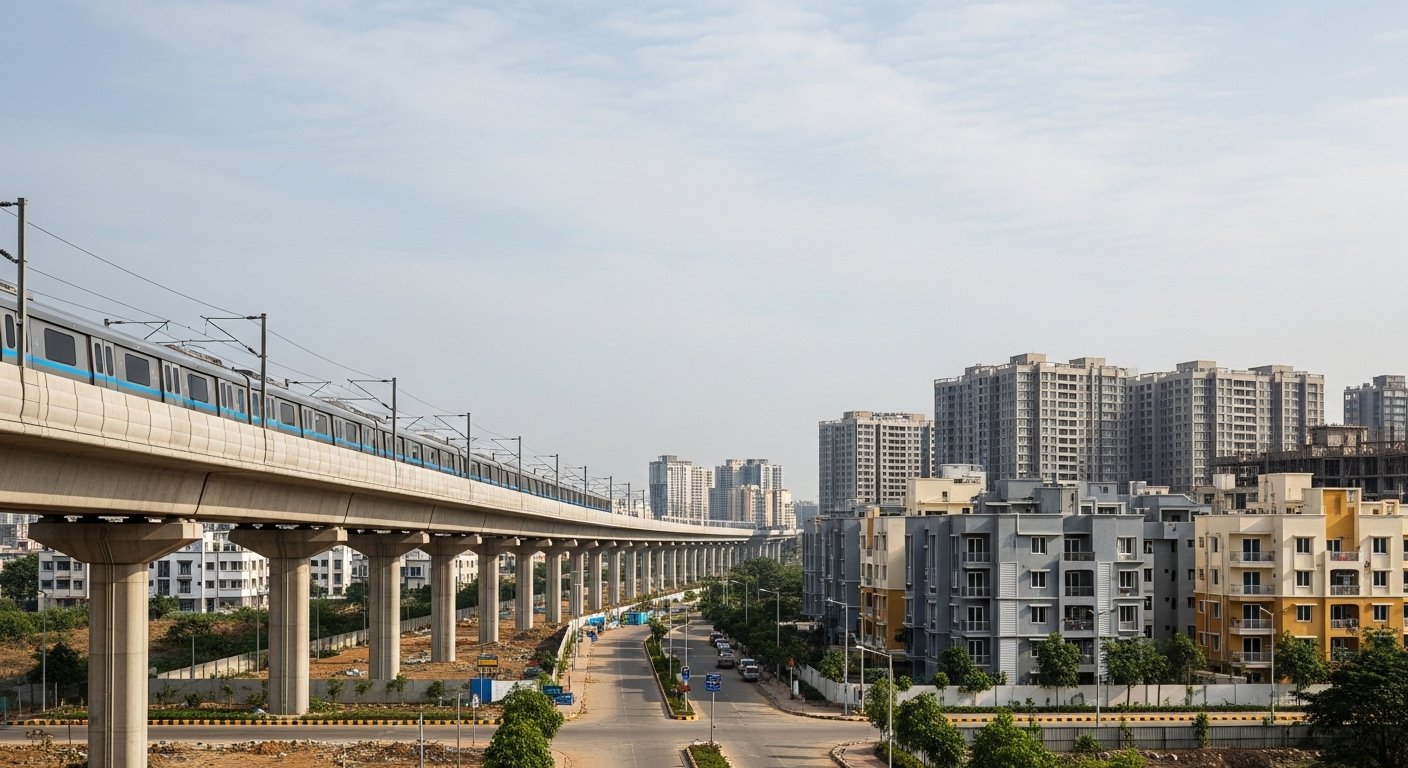
Transport still matters a lot. The operational Navi Mumbai Metro Line 1 changed Taloja’s position in the wider Navi Mumbai map. Pockets closer to Pendhar or Taloja-area metro influence are now more practical than they were a few years ago. In general, homes within roughly 1 km of metro access tend to command a premium, and that is not only because of future hope. It is because the commute is already more usable.
But there is a difference between access and comfort. A station-side label may help a renter or commuter. It does not automatically mean the surrounding lane, market support, air quality, or project quality are better.
Why internal roads and active daily markets matter more than brochure amenities
This is where many buyers get trapped. A project may show clubhouse, rooftop garden, and modern lobby, but if the approach road is patchy, the nearest useful market is 15 minutes away, and the area still feels under-built, daily living becomes tiring.
That is why older but functional pockets in Phase 1 often still perform better for actual living than a shinier but isolated building deeper inside a weaker micro-location.
Why some low-price pockets still feel weak on the ground
Cheap entry price does not always mean value. Some pockets stay weak for years because their problems are structural: narrow approach roads, fragmented planning, low market activity, tanker dependency, or too much dependence on future infra.
That is especially important in Taloja, where some inward stretches and village-linked belts may remain low-friction only on paper, not in real life.
What to check before calling a Taloja pocket “good”
- Is metro or station access genuinely usable, not just mentioned in the ad?
- Are there occupied societies nearby, not only under-construction towers?
- Are there groceries, chemists, clinics, autos, and daily services close enough?
- Is the approach road a proper wider planned road or a weaker internal lane?
- Does the area feel settled after sunset?
- Is tanker dependence pushing monthly costs higher than expected?
Which pockets in Taloja usually feel strongest for actual residential living?
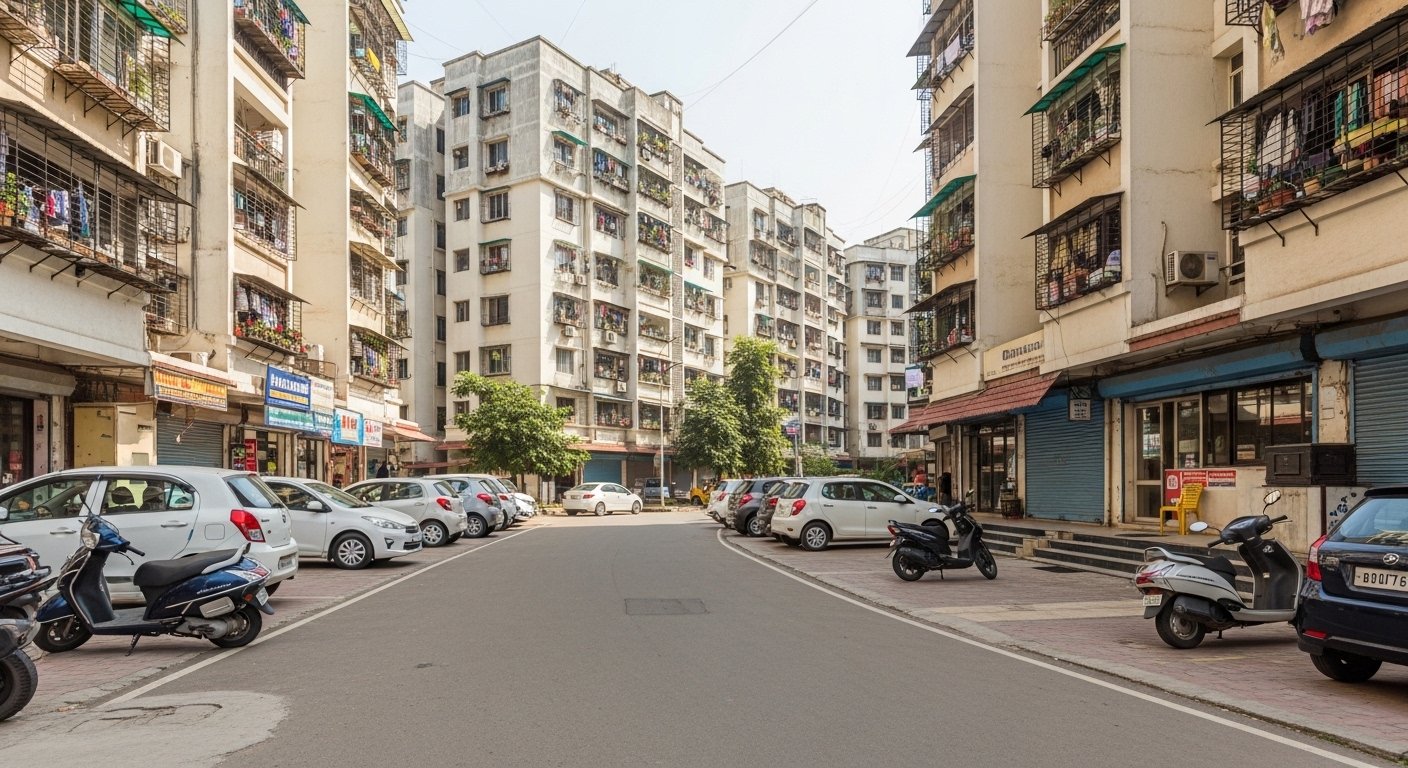
For actual living, the strongest pockets in Taloja are usually the ones that already function like a neighbourhood, not just a project cluster.
Pockets closer to stronger transport and daily-use support
Phase 1, especially sectors like 11 and 14, usually feels strongest for day-to-day practicality. These pockets have the advantage of older market formation. That matters more than people think. You get kirana shops, clinics, food joints, basic financial services, local transport movement, and a more lived-in environment.
For renters, working couples, and families who want a place that feels usable right away, these pockets often make more sense than newer but rawer parts of Taloja.
The trade-off is equally real. Older buildings, more traffic, more noise, and in some stretches a greater chance of industrial influence mean these are not polished lifestyle pockets. They are functional pockets.
Pockets that feel more settled than purely speculative
Selected Phase 2 pockets, especially around sectors 24, 25 and 26, have become the stronger answer for buyers who want a newer residential environment and can accept that the broader area is still maturing. These pockets are shaped by township-style development, metro influence, and a more modern project profile.
They usually suit first-time buyers who want gated society living, lifts, amenities, newer building systems, and a better long-term residential setup than older stock in Phase 1.
Still, this is not a fully finished urban fabric. Parts remain dusty, retail depth is still uneven, and some residents remain dependent on delivery-based convenience more than true neighbourhood convenience.
Practical comparison
- Phase 1 stronger living pockets: better for immediate functionality
- Phase 2 stronger living pockets: better for newer product and longer residential upside
- Upper-border pockets: better only when project quality and road access are verified properly
Which pockets make more sense for budget homebuyers?
Budget buyers should not ask only, “Where is it cheapest?” They should ask, “Where is it still cheap enough, but not so weak that daily life becomes frustrating?”
That is why the better budget options in Taloja are usually not the deepest inward pockets. They are the pockets where price is still manageable, but access and livability are not broken.
Phase 2 pockets like sectors 24 to 26 often make more sense for budget homebuyers who want a newer flat and are okay with a developing environment. Prices in Taloja broadly sit in the affordable Navi Mumbai band compared with Kharghar, Seawoods, or Nerul, but the real difference comes from project quality, carpet area, and micro-location. A lower price per square foot means very little if the usable carpet is poor or the society has recurring water and maintenance issues.
CIDCO mass-housing influenced pockets such as sectors 27, 34, 36, and 37 can also appeal to budget-conscious buyers, especially those looking for compact ownership entry. These can offer trust value in planning context and price access, but compact sizes and maintenance realities must be understood clearly.
Example scenario
A first-time buyer with a budget around the lower end of the Taloja market may feel tempted by a very cheap inward pocket in Ghot or a village-linked stretch. On day one, that looks smart. But once monthly tanker cost, extra auto dependence, slower daily movement, and weak surroundings are added, the savings may not feel as attractive. In many cases, paying slightly more for a better-connected Phase 2 or stronger Phase 1 pocket is the wiser decision.
Which pockets work better for renters and daily commuters?
Renters usually care less about five-year appreciation and more about daily convenience. That changes the answer completely.
For rental practicality, stronger Taloja pockets are usually the ones with easier metro or station movement, usable autos, food options, and less dependence on long internal travel.
Pockets that suit Kharghar and metro-oriented movement
For people commuting toward Belapur, Kharghar, or other Navi Mumbai work belts linked through the metro spine, the better rental pockets are usually in the metro-facing Phase 2 side. Sectors 24 and 25 are often more practical because they reduce first-leg commute pain and fit the lifestyle of working professionals.
These pockets are especially relevant for renters who work in the TTC side, Belapur belt, or who need more structured metro access.
Pockets that suit Panvel, Kalamboli, and nearby work zones
For those working around Panvel, Kalamboli, or nearby industrial and logistics zones, selected pockets in Phase 1 and Sector 16-side belts can work better. They offer better functional movement and in some cases a more balanced location profile than inward raw zones.
Rental demand in Taloja remains active because it serves both lower-budget family renters and workforce demand. Broadly, 1 BHK rents often fall in the ₹7,000 to ₹14,000 range, while 2 BHK rents can range from about ₹12,000 to ₹26,000 depending on project type, location, furnishing, and access.
Taloja Phase 1 vs Taloja Phase 2: where are the better residential pockets really?
This is the real comparison behind the topic. And the honest answer is that Phase 1 and Phase 2 solve different problems.
Phase 1 usually has the better pockets for immediate livability. Phase 2 usually has the better pockets for modern stock and longer-hold residential comfort.
| Factor | Better pockets in Phase 1 | Better pockets in Phase 2 |
|---|---|---|
| Daily convenience | Stronger today | Improving, but still uneven |
| Internal movement | More practical in established stretches | Better in some planned belts, weaker in some raw stretches |
| Pocket maturity | Higher | Lower to medium |
| Building profile | Older stock, resale opportunities | Newer townships and modern amenities |
| Family comfort today | Better where market support exists | Better where township quality is strong |
| Speculative exposure | Lower in stronger old pockets | Higher in weaker undeveloped stretches |
| Overall verdict | Better for immediate use | Better for selective long-hold buying |
Phase 1 is for people who want Taloja to work now. Phase 2 is for people who want a newer residential product and are ready to accept that the surrounding ecosystem is still catching up in parts.
That is why Phase 1 often suits renters, daily commuters, and practical end users. Phase 2 often suits first-time buyers, newer-society seekers, and buyers with a three-year-plus holding mindset.
Which pockets in Taloja need more caution before you buy?
Some pockets in Taloja are not bad in every situation. But they do need slower decision-making and more verification.
Pockets that are too inward or too dependent on future improvement
Deeper Ghot-side or village-linked inward pockets often attract buyers because ticket size looks very attractive. But that low entry may come with long-term friction. Roads may remain weak, local planning may feel uneven, everyday services may be patchy, and tanker dependence may stay high.
These are the places where a low budget can quietly become a high-hassle lifestyle.
Pockets where low price can hide daily-living trade-offs
The MIDC-border belt, especially around sectors closer to industrial edges such as 2, 5 and 7, may work for some investors targeting industrial-worker rental demand. Vacancy can be low in these belts because of job-side demand. But for families or buyers sensitive to air and residential comfort, these are usually not the first-choice pockets.
There is also a separate caution around stressed-project history. Areas near old problematic project zones, including the Rohinjan-side context mentioned in the research dossier, should be checked carefully through MahaRERA status and actual site reality.
> Caution box > > In Taloja, a cheap flat is not automatically a smart flat. Before buying in a low-price pocket, check approach road width, actual occupancy, water source, tanker cost, night-time air and lighting conditions, and MahaRERA status. Many buyers compare only ticket size and miss the monthly friction cost.
Are metro-facing or station-facing pockets automatically the best?
No. They are often better, but not automatically the best.
Transport-facing pockets have a clear advantage. They usually support stronger rental demand, better mobility, and better resale confidence than isolated pockets. Historically, better-connected sectors tend to outperform weaker inward pockets over time.
But transport is only one part of the answer. Some station-side zones can feel too messy, too noisy, too smoky, or too chaotic for families. In Taloja, a pocket just outside the immediate station clutter can often be more livable than one right at the transport edge.
That is why the best transport-linked pocket is often not the closest one. In many cases, the sweet spot is the zone that stays roughly close enough for access, but not so close that day-to-day comfort is compromised.
How should buyers shortlist a pocket in Taloja before visiting projects?
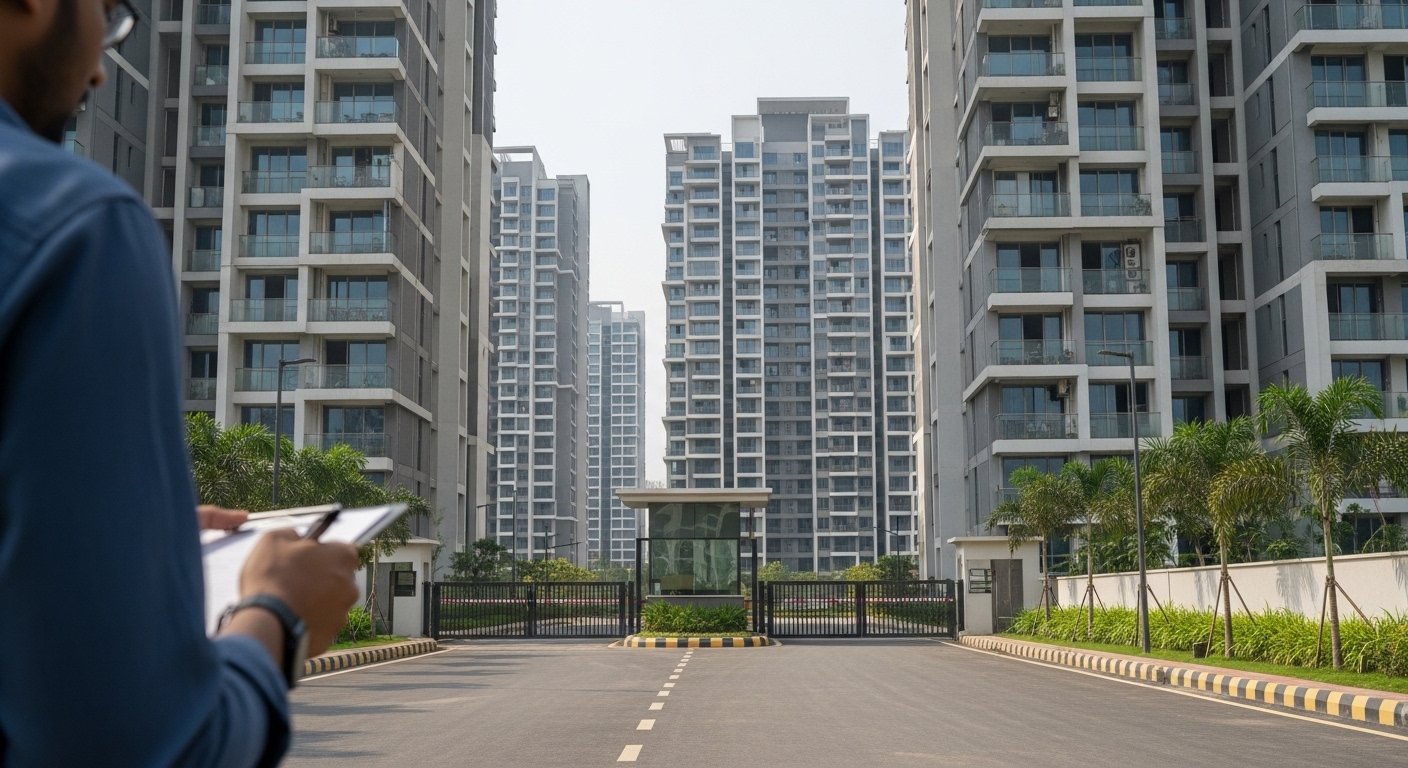
Before you visit individual projects, shortlist the pocket properly. This step alone can save a lot of wasted site visits.
Pocket shortlisting checklist
- Check the exact approach road, not just Google Maps distance
- See whether the pocket is on a proper planned road or a narrow internal lane
- Visit an occupied nearby society and ask about water timing and tanker use
- Ask what the monthly maintenance really includes
- Check whether groceries, pharmacy, autos, clinics, and school transport are actually available nearby
- Visit once in daylight and once late in the evening
- If pollution sensitivity matters to you, notice how the air feels at night, not only in the afternoon
- Verify project status on MahaRERA, including whether it is active, delayed, lapsed, suspended, or under stress
- Compare carpet area, not just saleable area
- For resale or ready stock, verify registration records and related documents through proper IGR-backed paperwork where relevant
This is also where Taloja’s water reality matters. On paper, many projects look fine. On the ground, recurring tanker dependence can become the hidden monthly cost that changes affordability completely.
Best residential pockets in Taloja by buyer type
The best pocket depends on what you are trying to solve.
| Buyer type | Usually stronger Taloja pocket type | Why |
|---|---|---|
| First-time buyer | Phase 2 sectors 24 to 26 | Better mix of new housing, metro influence, and future residential comfort |
| Renter | Phase 1 sectors 11 and 14 | Better daily convenience, local movement, and functional surroundings |
| Family | Select Phase 2 belts like Sector 16 and stronger township-side stretches, or settled Phase 1 areas if convenience matters more | Depends on whether the family values newer society life or stronger market support |
| Budget investor | Sector 27 or selected compact-unit CIDCO-linked belts | Lower ticket entry and continued demand from budget segment |
| Investor focused on worker rental demand | MIDC-edge pockets | Strong rental pull, but not ideal for most end users |
| Low-budget buyer | Better-connected lower-cost pockets first, not the deepest inward ones | Slightly higher price can save major daily-life trouble later |
So, which pocket in Taloja is actually best for you?
If your priority is living comfort now, Phase 1’s stronger residential-commercial pockets, especially around sectors like 11 and 14, usually make the most sense. They are more practical, more lived-in, and easier for daily life.
If your priority is buying a newer flat in a more modern setting with better long-term upside, selected Phase 2 pockets, especially around sectors 24 to 26, are usually the better answer. They are not perfect today, but they often offer the stronger combination of metro influence, township-scale development, and future residential quality.
If your priority is the absolute lowest price, do not rush into the deepest inward pockets without checking the hidden trade-offs. In Taloja, the cheapest pocket is often not the smartest pocket.
The simplest way to think about it is this:
- Buy in stronger Phase 1 pockets if you want functionality now
- Buy in selected Phase 2 pockets if you want newer living and can hold
- Be extra careful in inward, weak-road, tanker-heavy, or industrial-edge pockets unless your use case clearly fits them
Conclusion
The best residential pockets in Taloja are the ones that match your purpose, not the ones with the loudest brochure. For current livability, stronger Phase 1 pockets usually win. For newer projects and better long-hold residential potential, selected Phase 2 pockets usually win. For pure low-budget entry, some other pockets may look attractive, but they demand more caution.
So before you shortlist a flat in Taloja, do not ask only, “How much is the price?” Ask the more important question: “Will this pocket still feel practical after I move in?” That one question usually separates a smart Taloja decision from an avoidable mistake.
FAQ's
Frequently Asked Questions