
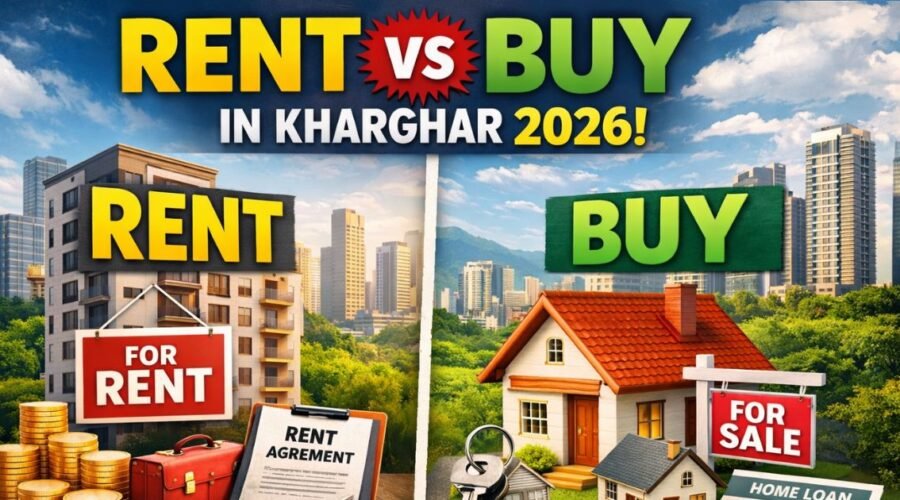
Rent vs Buy in Kharghar: Which Option is best?
If you are confused between renting and buying in Kharghar in 2026, the practical answer is this: buying usually makes sense for stable end users who want to stay at least 7 to 10 years and can handle both the down payment and the real monthly ownership cost. Renting usually makes more sense for people with uncertain job plans, limited capital, or doubts about sector quality, pollution, water reliability, or long-term fit.
Kharghar is no longer a simple “good area, buy if possible” market. It has become one of those Navi Mumbai nodes where the brochure story and the daily reality can be very different depending on the sector, building type, and budget. Property prices have moved up because of airport momentum, Metro Line 1, and future job demand around the International Corporate Park. But monthly rent is still much lower than the true cost of ownership in many cases. That is why this decision needs local logic, not generic advice.
Rent or buy in Kharghar: what is the right answer for most people in 2026?
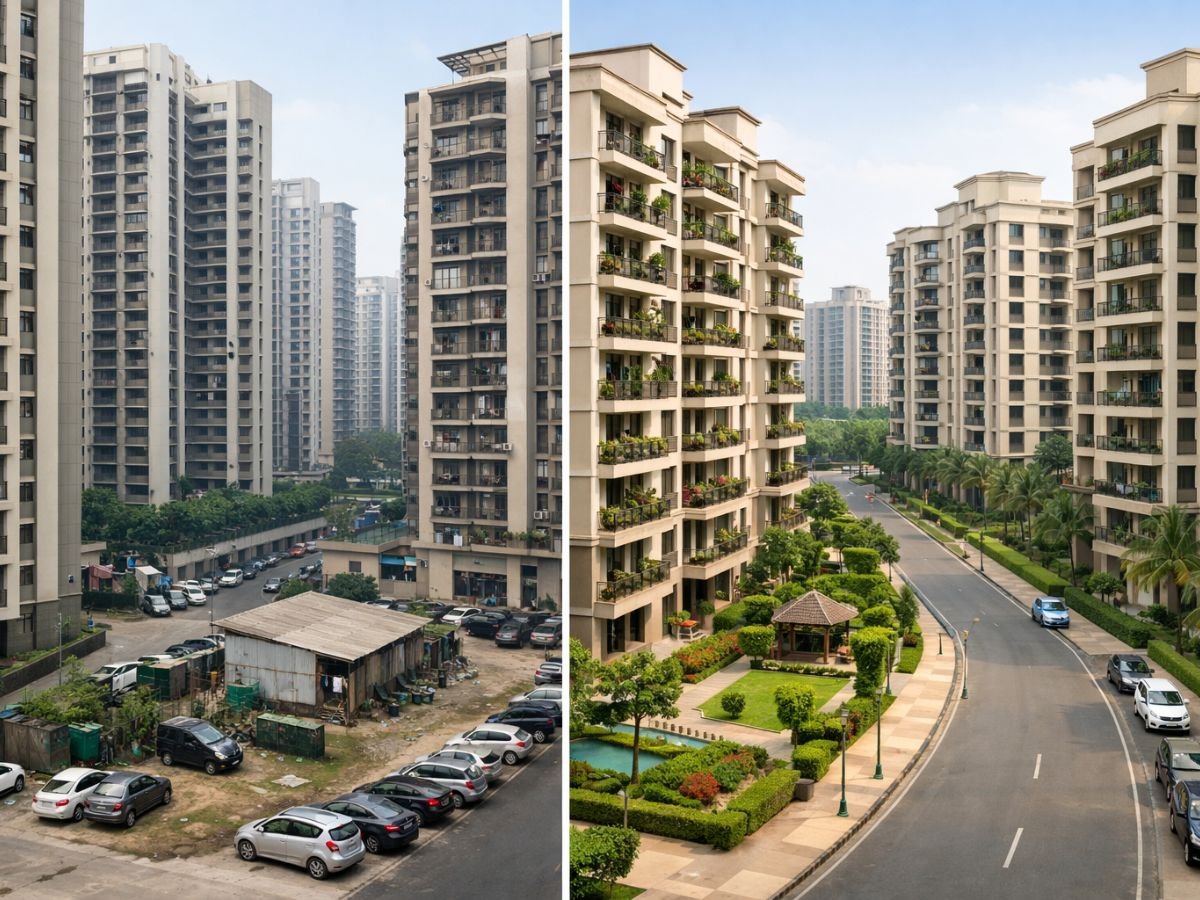
For most people in 2026, renting is the better short-to-medium-term decision, while buying is the better long-term stability decision.
That does not mean buying is wrong. It means buying in Kharghar should not be treated as an automatic upgrade from rent. A flat here is expensive enough now that the decision only works well if your life is reasonably stable and your chosen micro-market is actually worth committing to.
If buying makes more sense for your situation, the next step is to shortlist the best sectors in Kharghar based on budget, commute, and lifestyle.
Quick summary
| Situation | Better choice in Kharghar |
|---|---|
| You may shift jobs, cities, or family size in 2 to 5 years | Rent |
| You do not have a strong down payment buffer | Rent |
| You want to test a sector before locking capital | Rent |
| You are buying for self-use for 7 to 10+ years | Buy |
| You want school stability and control over your home | Buy |
| You found a mature sector with better daily livability | Buy |
| You are only buying because rent feels “wasted” | Usually rent, then rethink |
| You are buying mainly for future growth but in a risky emerging sector | Buy selectively or wait |
Why this decision feels harder in Kharghar than in many other Navi Mumbai nodes
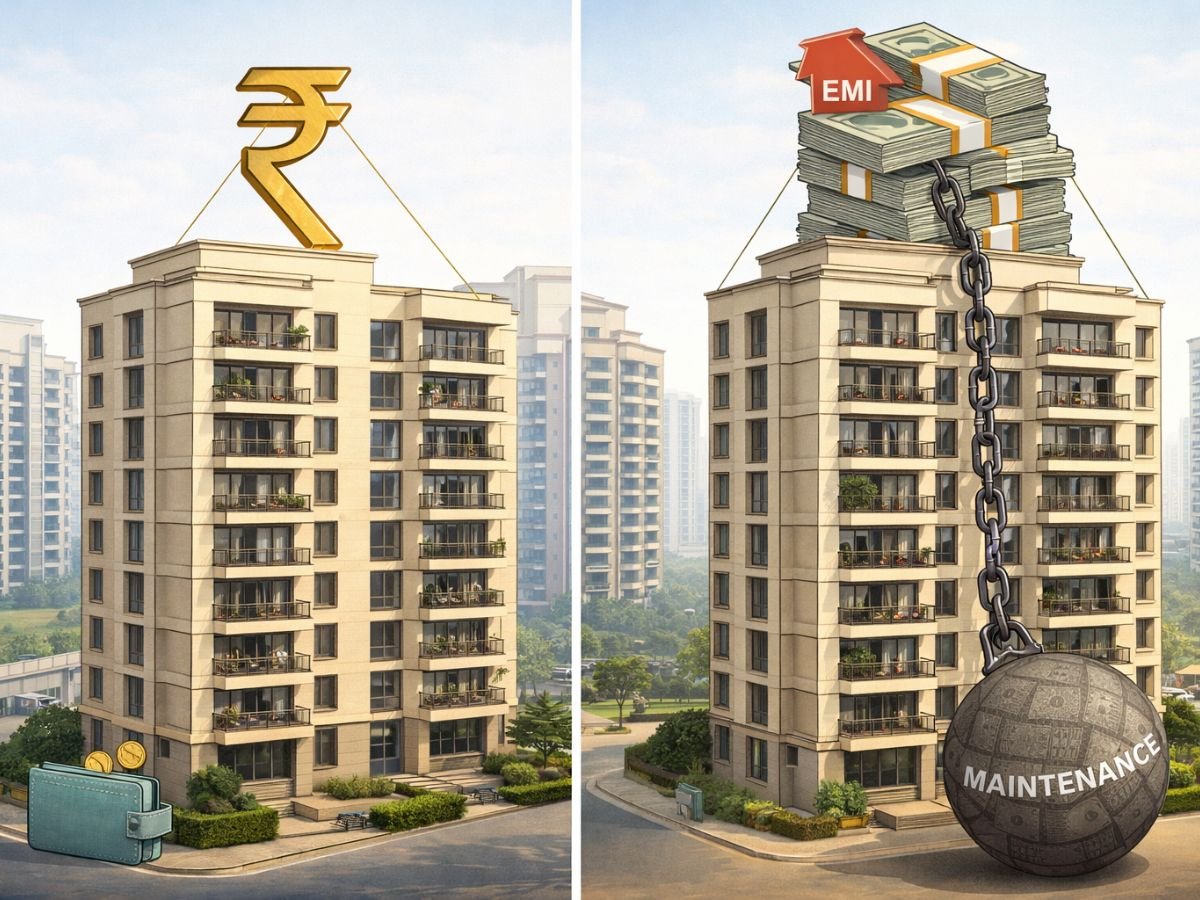
Kharghar is attractive for very real reasons. It has wide roads, a strong residential image, major education institutions, Central Park, the golf course belt, better visual planning than many older suburbs, Metro connectivity, and now much stronger long-term relevance because of NMIA and upcoming employment growth.
At the same time, Kharghar also has some sharp ground-level contradictions.
Prices in established sectors can already reach roughly ₹14,000 to ₹17,000+ per sq. ft., while even emerging sectors have moved well beyond “cheap entry” territory. Yet many residents are still dealing with water cuts, tanker dependence, rising maintenance, dust from construction corridors, and in some pockets, serious late-night air quality concerns linked to the Taloja industrial belt.
This is what makes Kharghar tricky. You may be paying tier-1 residential pricing in some pockets while still living with basic civic compromises that feel very un-tier-1.
That is why rent vs buy in Kharghar is harder than in nodes like Vashi or Nerul, where civic maturity is more stable and the daily life equation is easier to understand.
A rent-versus-buy decision only makes sense when you compare it against actual Kharghar property rates rather than broad assumptions.
When renting in Kharghar is the smarter move, even if you can afford to buy
Renting is not failure. In Kharghar right now, renting can actually be the more intelligent move.
If your job location, marriage plan, or family size may change soon
If you are working in Mumbai, Belapur, Vashi, the Thane-Belapur belt, or even Pune-linked circuits and your future location is not fully clear, rent keeps your options open. Buying too early in such a market creates friction. Stamp duty, registration, brokerage, CIDCO-related transfer costs in resale cases, and resale timing risk can make a short holding period expensive.
In practical terms, if you may move within 3 to 5 years, renting is usually safer.
If your capital is weak but loan eligibility is strong
This is a very common mistake. Many people qualify for an EMI that looks manageable on paper, but their real capital position is weak. The down payment drains their savings, then ownership starts adding pressure through maintenance, furnishing, taxes, and emergency repairs.
In Kharghar, that stress can become worse because some societies are already carrying higher monthly operating costs due to tanker dependence. So even if the bank says yes, that does not automatically mean you should buy.
If you want Kharghar lifestyle without locking into the wrong sector
This is one of the best reasons to rent first. Kharghar is not one market. The experience of living in Sector 12 or Sector 20 is not the same as living in an upper, newer, more transit-led pocket like Sector 35.
Some of the emerging sectors offer modern towers, strong Metro access, and future upside, but they also come with more uncertainty around dust, water dependence, market maturity, and in certain pockets, greater exposure to the Taloja-side pollution problem. Renting lets you test this reality without locking a huge amount of capital.
Renting in Kharghar makes sense if this checklist sounds like you
- You may shift within 5 years
- You are still building your down payment
- You are not fully sure which sector fits your life
- You want to test commute, water reliability, and neighbourhood comfort
- You are uncomfortable with a very high EMI-to-income ratio
- You want liquidity more than ownership right now
When buying in Kharghar usually makes more sense than renting
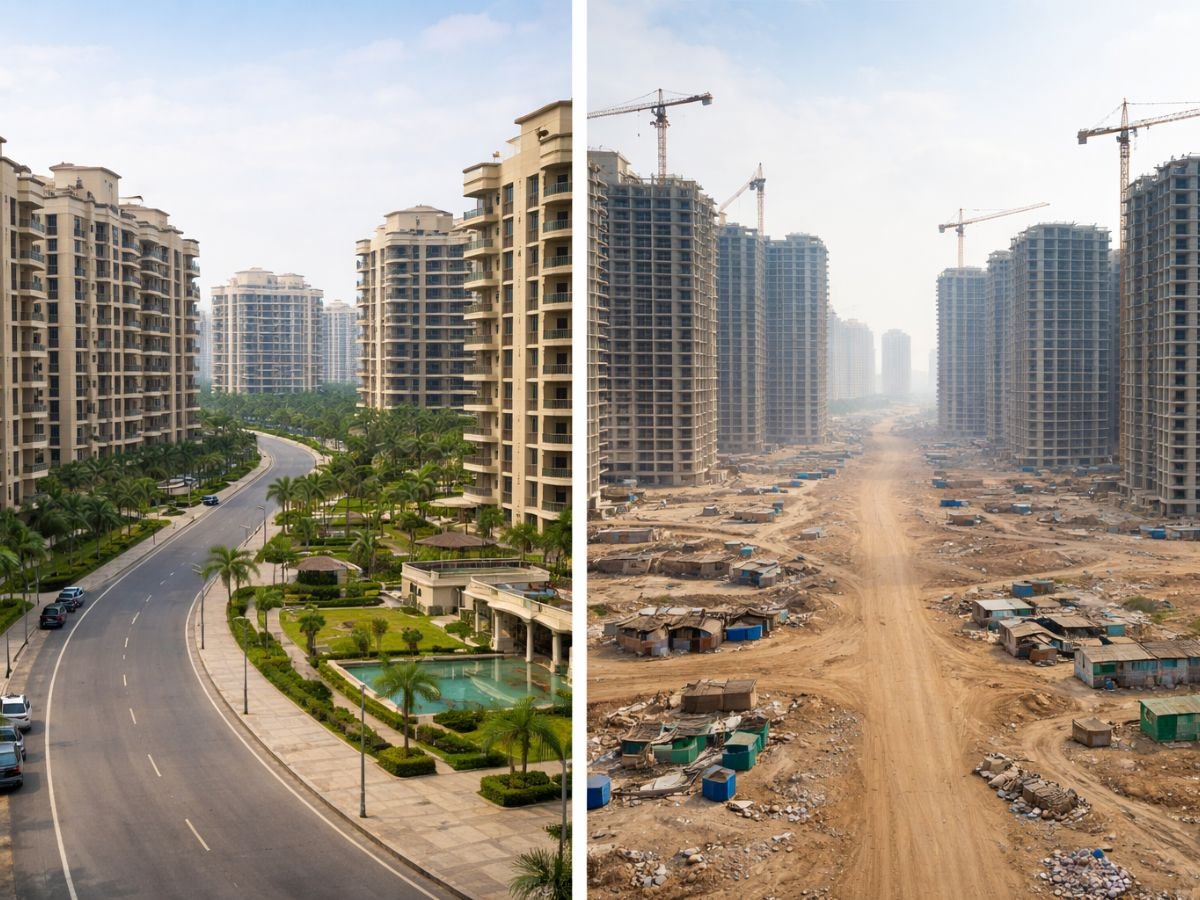
Buying works best in Kharghar when the decision is driven by stability, not by pressure.
Stable self-use plan of at least 7 to 10 years
Because ownership costs are high and transaction friction in Navi Mumbai is real, buying makes the most sense when you are planning to stay long enough for the decision to settle financially and emotionally. In a short holding period, the cost burden can feel too heavy. In a longer holding period, the benefits of control, stability, and equity build-up become more meaningful.
Need for school stability, family setup, or long-term control
Families with school-going children often value stability more than monthly financial optimisation. If you have already decided that Kharghar is your long-term base and you want predictable schooling, routine, and neighbourhood familiarity, buying becomes easier to justify.
This is especially true in more established sectors where daily living feels more settled and less experimental.
You have found the right sector and society, not just a loan-approved flat
This point matters a lot. In Kharghar, buying makes sense when the property itself is right, not simply when the EMI is technically possible.
A mature sector, a better-run society, sensible water management, reasonable maintenance, and lower exposure to pollution risk matter more than a polished sales pitch. The best buying cases in Kharghar are often not the flashiest ones. They are the ones where the sector and building still make sense after the brochure effect is removed.
Is Kharghar’s rent still low compared to ownership cost, or has the gap narrowed?
The gap is still wide. Renting remains far cheaper month to month.
A practical example makes this easy to understand. A typical 2 BHK rent in Kharghar often falls around ₹35,000 to ₹40,000 depending on sector, building age, and amenities. Buying a similar 2 BHK can require roughly ₹1.3 crore to ₹1.5 crore in many mid-to-better Kharghar pockets.
If someone buys at around ₹1.3 crore to ₹1.5 crore with a 20% down payment, the EMI can land near ₹87,000 at roughly 8% over 20 years. Then add monthly maintenance, which may range from moderate to quite high depending on the society. That means the owner’s real monthly outgo can be far above the renter’s outgo.
Rent vs ownership cost in Kharghar: a practical comparison
| Cost head | Renting a 2 BHK | Buying a similar 2 BHK |
|---|---|---|
| Monthly outgo | Around ₹35,000 to ₹40,000 | EMI around ₹87,000 plus maintenance |
| Upfront capital | Deposit and setup cost | 20% down payment, stamp duty, registration, other charges |
| Flexibility | High | Low |
| Exposure to transfer-related resale costs | None | Relevant, especially in resale transactions |
| Maintenance shock | Usually indirect | Direct monthly burden |
| Ability to exit a wrong sector | Easy after lease period | Difficult and costly |
| Long-term equity build-up | No | Yes, but slow in early years due to interest-heavy EMI |
This is the point many buyers miss. The EMI is not the same as asset creation in the early years. A large part of the initial EMI goes towards interest. So the financial argument for buying becomes stronger only when the holding period is long enough.
What are you really paying for when you buy in Kharghar?
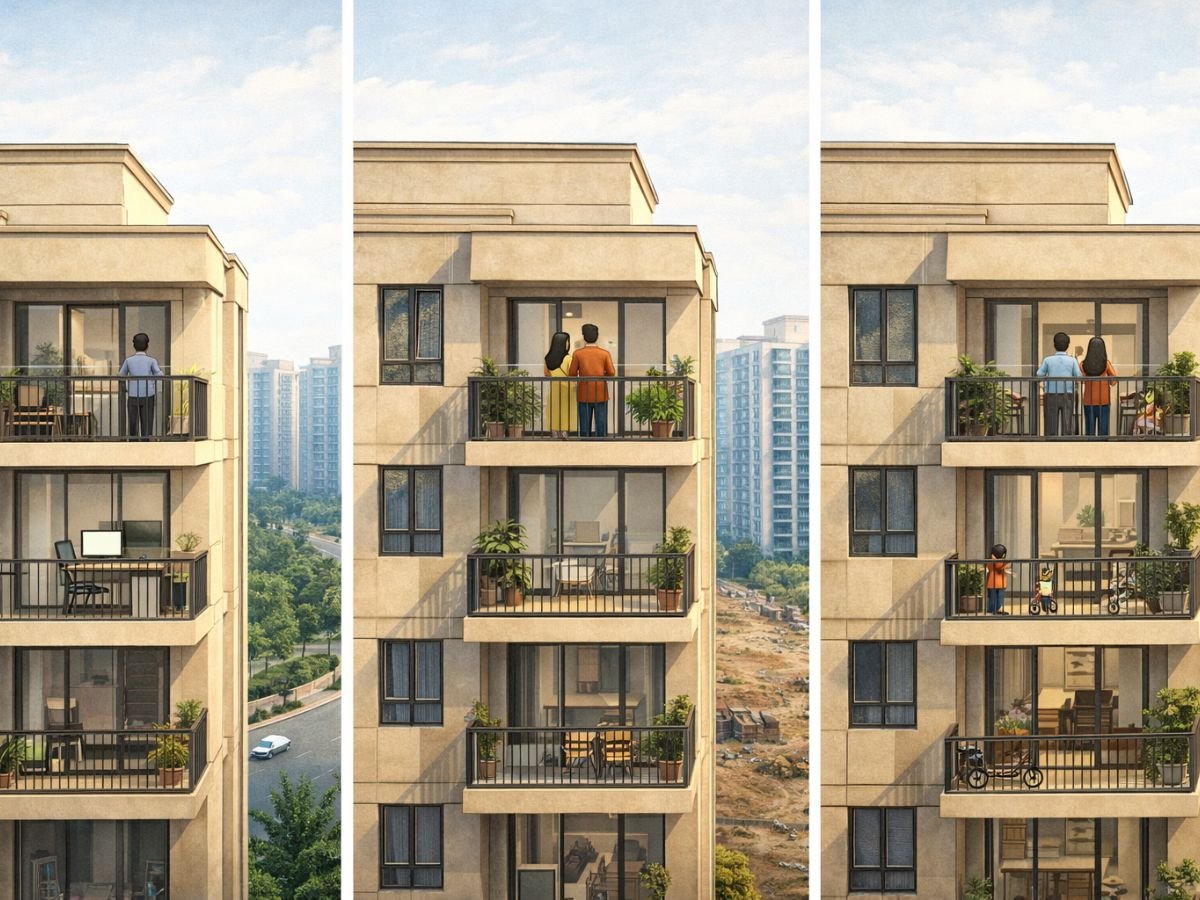
You are not just paying for a flat. You are paying for control, location quality, future optionality, and in many cases, the promise of future Kharghar rather than only present Kharghar.
Part of the premium is justified. Kharghar has real structural strengths. NMIA operations have started, Metro Line 1 is operational, the Kharghar-Turbhe Link Road is under development, and the International Corporate Park could materially increase long-term housing demand in and around relevant sectors.
But part of the premium is also hidden inside the ownership structure.
A buyer may need to account for stamp duty, registration, brokerage, monthly maintenance, past dues clearance in resale, and CIDCO-related transfer implications depending on the asset and title situation. CIDCO’s 2025 transfer fee hike made resale economics more important to check properly. Freehold conversion also changes the long-term value discussion, but that comes with its own cost structure. In society transfers, statutory limits matter too, because a housing society cannot legally demand arbitrary large transfer amounts beyond the allowed framework.
So the sticker price is never the full story.
Which Kharghar sectors make buying easier to justify, and which ones make renting safer?
The broad pattern in 2026 is this: established sectors are better buy zones for long-term end users, while emerging sectors are often better rent-first zones unless the buyer is very selective and fully aware of the trade-offs.
Better-settled sectors where self-use buying can make sense
Sectors such as 10, 12, 15, 20, and nearby established pockets are easier to justify for buying because they are more proven. These areas tend to have stronger day-to-day livability, more stable family demand, better-known residential character, and stronger resale comfort. The pricing is higher, yes, but so is certainty.
For buyers who want Kharghar mainly as a real home rather than as a speculative position, these sectors make more practical sense.
Sectors where rent can be a better first move than ownership
Sectors like 34, 35, and 36 attract attention because of Metro access, newer tower stock, and future upside linked to larger infrastructure and employment themes. On paper, these look exciting.
But these are also the sectors where renting first can be smarter. Why? Because the ground reality still needs testing. Water reliability, construction disturbance, actual neighbourhood maturity, and in some pockets the late-night pollution issue matter too much to ignore. In these parts, an 11-month rent decision can save a 20-year regret.
Rent vs buy in Kharghar for different types of people
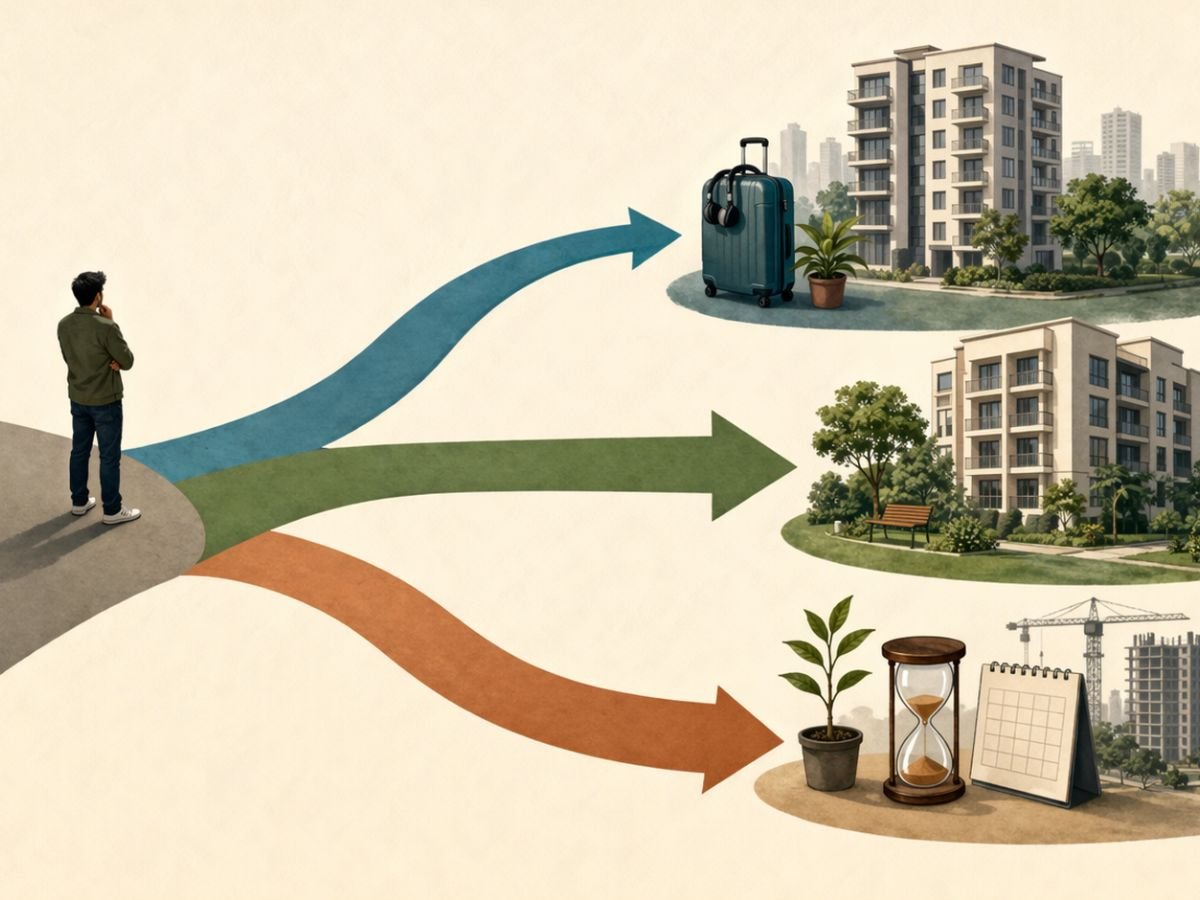
Single working professional
Usually rent. Your mobility matters more than ownership prestige. Unless your job base and lifestyle are very stable, renting keeps you flexible and financially lighter.
Newly married couple
Usually rent strategically first, then buy if Kharghar proves right. This is especially useful if both commute patterns are still evolving or if you have not yet tested which sector truly suits daily life.
Family with school-going children
Buying often makes more sense, but only in the right sector and society. For families, community continuity, school stability, and control over the home are genuine advantages that go beyond spreadsheet logic.
Investor or second-home buyer
Buy very selectively, not blindly. The case is stronger near future demand corridors, Metro-linked zones, or areas likely to benefit from the KTLR and ICP ecosystem. But a generic investment purchase in Kharghar is not automatically a smart one.
Buyer with uncertain income or transfer risk
Rent. This is one of the clearest rent cases in the entire market. Ownership friction in Navi Mumbai is too high to ignore when your income or city plan is not firm.
What mistakes people make when they buy in Kharghar too early
The biggest mistake is assuming affordability means readiness.
Another major mistake is buying based on a showroom version of Kharghar. A tower may look modern, the clubhouse may look premium, and the sales pitch may sound future-ready, but that does not solve tanker dependence, high maintenance, or local environmental discomfort.
Caution box: early buying mistakes
- Stretching for an EMI just because rent feels “wasted”
- Ignoring maintenance burden in private towers
- Not checking whether the sector is truly settled
- Underestimating CIDCO-related transfer implications in resale
- Not verifying society dues and operational discipline
- Visiting only in daytime and missing late-night air quality reality in upper sectors
- Assuming all hill-facing or upper pockets are automatically healthier
What mistakes people make when they keep renting in Kharghar for too long
Renting has advantages, but delay also has a cost.
Kharghar has already seen meaningful long-term appreciation over the past decade. Now with airport activation, Metro strength, and future employment growth tied to the corporate ecosystem, the longer-term direction of the node still looks structurally important. That means someone who keeps waiting without a plan may eventually get priced out of the sectors they actually want.
The mistake is not renting. The mistake is renting passively for years without building capital, sector clarity, or a purchase strategy.
If Kharghar is genuinely your long-term base, then renting should be used as a preparation phase, not as indefinite delay.
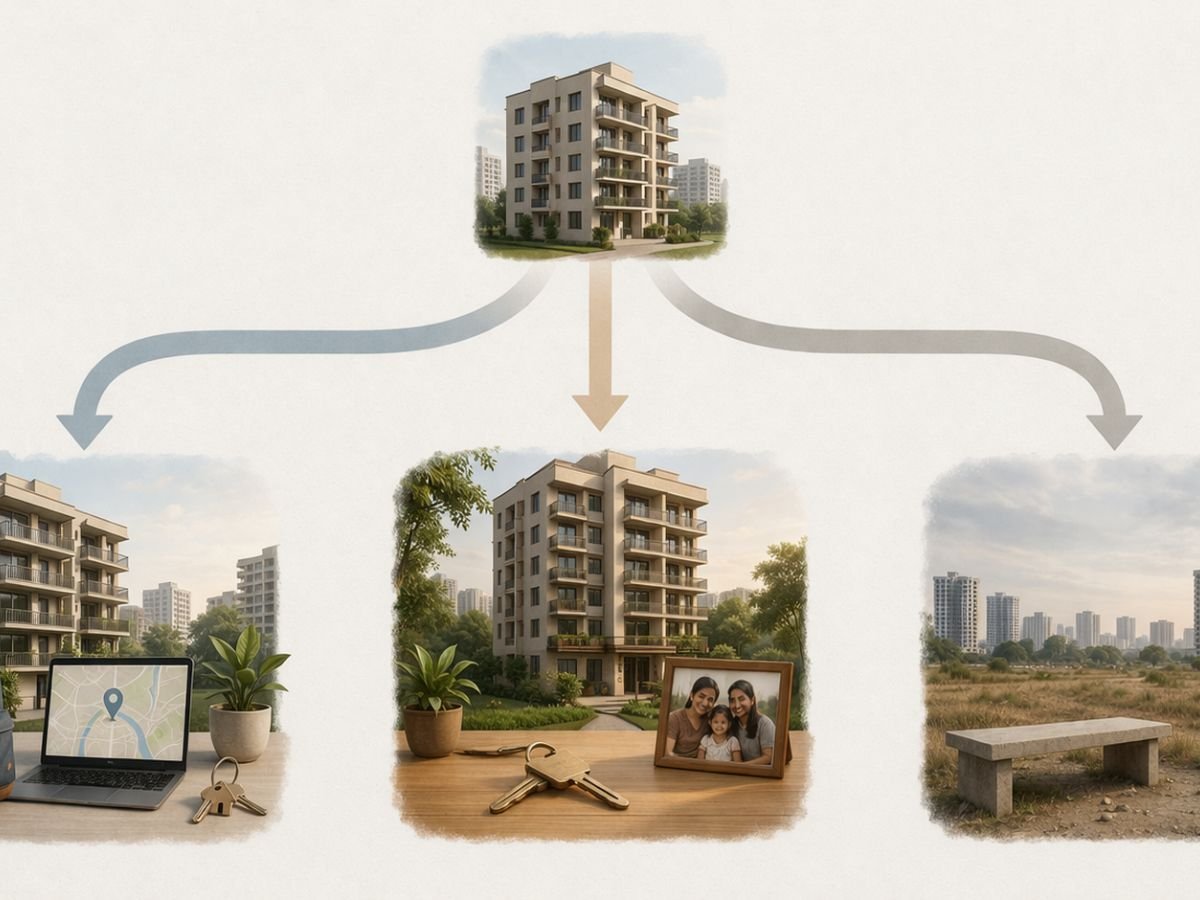
A simple decision framework: should you rent, buy now, or wait for a better purchase in Kharghar?
| Your situation | Best move |
|---|---|
| Stay horizon under 5 years | Rent |
| Down payment under 20% or emergency buffer weak | Rent |
| Unsure about sector, pollution comfort, or water reliability | Rent first |
| Clear 10-year self-use plan in a mature sector | Buy now |
| Family needs stable school and home base | Buy now |
| Want to buy but still building capital or waiting for better civic clarity | Wait and prepare |
| Interested in future-growth sectors but not ready to fully trust them | Rent there or wait selectively |
| Buying only because everyone says property prices will rise | Slow down and re-evaluate |
The cleanest way to think about Kharghar in 2026 is this:
- Rent if you need flexibility, liquidity, or field testing
- Buy now if your life is stable and the sector is proven
- Wait and prepare if you want ownership, but your capital or conviction is not ready yet
Final verdict
For most people asking about rent vs buy in Kharghar in 2026, the real answer is not emotional. It is situational.
If you want Kharghar for the long run, have a strong down payment, understand the sector properly, and are buying in a mature pocket for self-use, ownership can make real sense. But if your life is still shifting, your capital is tight, or you are looking at newer, more uncertain pockets, renting is not a compromise. In today’s Kharghar, it is often the smarter move.
The best decision is not “buy if possible” or “rent forever.” The best decision is to match your holding period, budget strength, sector quality, and daily livability tolerance with the actual reality of Kharghar, not the sales version of it.
FAQs
Frequently Asked Questions