
Lease vs Buy Commercial Space in Navi Mumbai: Which Option is best for buyer?
Leasing usually makes more sense in Navi Mumbai when your business needs flexibility, lower upfront commitment, and time to test the right location. Buying usually makes more sense when your business is stable, depends on one micro-market, and can absorb the real cost of ownership beyond the quoted price. That is the straight answer. In 2026, this decision has become sharper because not every commercial node deserves ownership, and not every lease is actually cheap.
Navi Mumbai is no longer a side-market that can be judged with lazy “rent vs EMI” thinking. After the Navi Mumbai International Airport became operational in December 2025, and with airport and connectivity-led corridors already seeing stronger pricing, commercial decisions now carry bigger upside and bigger risk. A wrong purchase can trap capital in an illiquid asset. A wrong lease can burn money through deposit, fit-out, CAM, and future shifting cost.
This guide is for people who want the practical answer, not the brochure answer.
Before taking that call, the Navi Mumbai Commercial Real Estate Guide is worth reading for a more complete view of the commercial market.
Lease or buy commercial space in Navi Mumbai
The practical answer is simple: lease when the business is still evolving, the space need may change, or the location is not fully proven; buy when the business is stable, the location is strategically important, and the property will likely be used for 7 to 10 years or more.
That answer becomes even more important in Navi Mumbai because commercial ownership here is shaped by factors that many generic articles ignore:
- node maturity
- property type
- CIDCO leasehold versus freehold status
- stamp duty, registration, and GST
- commercial property tax rules
- fit-out cost
- resale liquidity
- whether the building has real occupier demand or mostly investor inventory
Commercial ownership can look attractive because indicative rental yields in Navi Mumbai are often in the 6% to 9% range, much stronger than typical residential yields of 2.5% to 4%. But that does not mean buying is always smarter. It only means buying can be powerful when the asset, use case, and holding period all line up.
Quick summary
| User Type | Better Option | Why |
|---|---|---|
| Small IT or back-office user in Mahape or Airoli | Lease | Workforce and space needs may change, and these are lease-led office ecosystems. |
| Retail shop operator in Vashi | Buy | Stable footfall, location continuity, and rent escalation can all justify ownership. |
| Doctor or clinic owner in Nerul | Buy | Heavy fit-out and local trust make shifting expensive and damaging. |
| Investor targeting airport-corridor demand in Panvel-side belt | Buy selectively | Works only with strong micro-market conviction, long holding power, and careful due diligence. |
Who should lease and who should buy?
The biggest mistake people make is asking, “Can I afford to buy?” That is not the first question. The first question is, “Does my business actually need ownership?”
Businesses that should usually lease first
Leasing is usually the safer move for startups, IT teams, back-office operators, logistics firms with changing manpower, coaching businesses still testing catchment, and companies entering a new node for the first time.
This is especially true in Airoli and Mahape, where many office users want scalable, institutional-grade supply and do not need to tie up capital in one strata unit. Standard commercial lease tenures often run 5 to 9 years, and escalation clauses are common. Even then, leasing can still be the smarter option because it protects liquidity and lets the business correct course if the location or space requirement changes.
Leasing is also smarter when buying would starve the business of operating capital. A company may be able to put ₹80 lakh, ₹1.5 crore, or more into a unit, but that capital may produce far better returns inside the business than inside a fixed property asset.
Businesses that can seriously consider buying
Buying becomes stronger for businesses where continuity matters more than flexibility. This includes retailers, clinic owners, diagnostic centres, doctors, CAs, professional offices with stable local catchment, and yield-focused investors buying in the right location.
For these users, the address is not just a place. It becomes part of the business. A clinic in Nerul or Vashi does not want to shift every few years. A retailer in a proven Vashi market cannot casually lose customer habit and frontage. In such cases, ownership is not only an asset play. It is a business protection move.
Why the answer changes by property type in Navi Mumbai
This is where real clarity begins. Airoli office space, a Vashi shop, and a Nerul clinic do not follow the same lease-versus-buy logic.
Office space
Office space is the most lease-friendly category in Navi Mumbai. That is because offices, especially in Airoli and Mahape, are often linked to corporate ecosystems, talent access, scale changes, and institutional landlords. Many occupiers do not want ownership risk there. They want operational flexibility.
There is another reason. Office fit-outs are expensive. Approximate Grade-A office fit-out costs in the Mumbai region are currently around ₹6,209 to ₹6,588 per sq.ft. That means a bare-shell 1,000 sq.ft. office can absorb more than ₹60 lakh in interior spend. So yes, leasing gives flexibility, but for heavy custom offices it also creates a huge sunk-cost problem.
You may also want to read Office Space in Navi Mumbai: Complete Guide for Buyers, Investors and Businesses if your decision is specifically office-led.
Shop and retail unit
Retail is far more ownership-friendly in the right pocket. In mature locations like Vashi, indicative capital values for retail can sit around ₹18,000 to ₹25,000 per sq.ft. That is not cheap, but retail businesses that depend on repeat footfall, frontage, and local habit often benefit from staying put.
Still, there is a serious warning here: cheap retail stock can be dangerous. A low-priced unit inside a weak commercial complex can become a long-term dead asset. If occupancy is poor and customer movement is weak, the lower purchase price does not save you.
Showroom and high-visibility frontage
Showrooms are even more location-sensitive than normal shops. Here, visibility, parking, frontage, and approach road matter a lot. If the location is already proven, buying may make strategic sense because the address becomes part of the brand. But in emerging belts where demand is still forming, leasing first is often safer.
Clinic, studio, coaching, or service-use commercial unit
This is one of the clearest buy categories. Clinics and other specialized service businesses often invest heavily in non-transferable interiors. Approximate medical clinic MEP and related fit-out costs can range from ₹3,200 to ₹4,500 per sq.ft. Once that money is sunk into a leased space, shifting later becomes expensive, disruptive, and emotionally draining for the practice.
There is also the local trust factor. People return to the same doctor, same diagnostic centre, same coaching address. That continuity supports the case for ownership.
What does leasing really cost beyond monthly rent?
Leasing looks lighter on day one, but the real cost stack is much bigger than the rent agreement headline.
The hidden or underestimated lease costs often include:
- security deposit, typically 2 to 6 months of rent
- interior fit-out
- CAM charges
- rent escalation
- lock-in penalty
- brokerage and legal drafting
- signage and branding limits
- eventual shifting, refit, and business disruption cost
CAM alone can range from roughly ₹10 to ₹25 per sq.ft. In Airoli Grade-A stock, approximate averages of ₹14.50 per sq.ft. on usable area have been reported. Then add rent escalation. Many commercial leases carry periodic increases of 5% to 15%. Over time, what looked manageable on day one can become painful.
> Practical caution: Leasing is not automatically the low-risk option. If the unit is bare-shell and your fit-out is heavy, you may sink lakhs or even crores into a space you do not own and cannot fully recover later.
What does buying really cost beyond the quoted price?
Buying looks safer emotionally, but the cost of acquisition in Navi Mumbai is heavy and very local in nature.
A commercial buyer may have to absorb:
- down payment
- EMI and interest
- stamp duty
- registration fee
- GST on under-construction property
- interiors
- society or maintenance charges
- property tax
- CIDCO transfer charges where applicable
- legal verification and title review cost
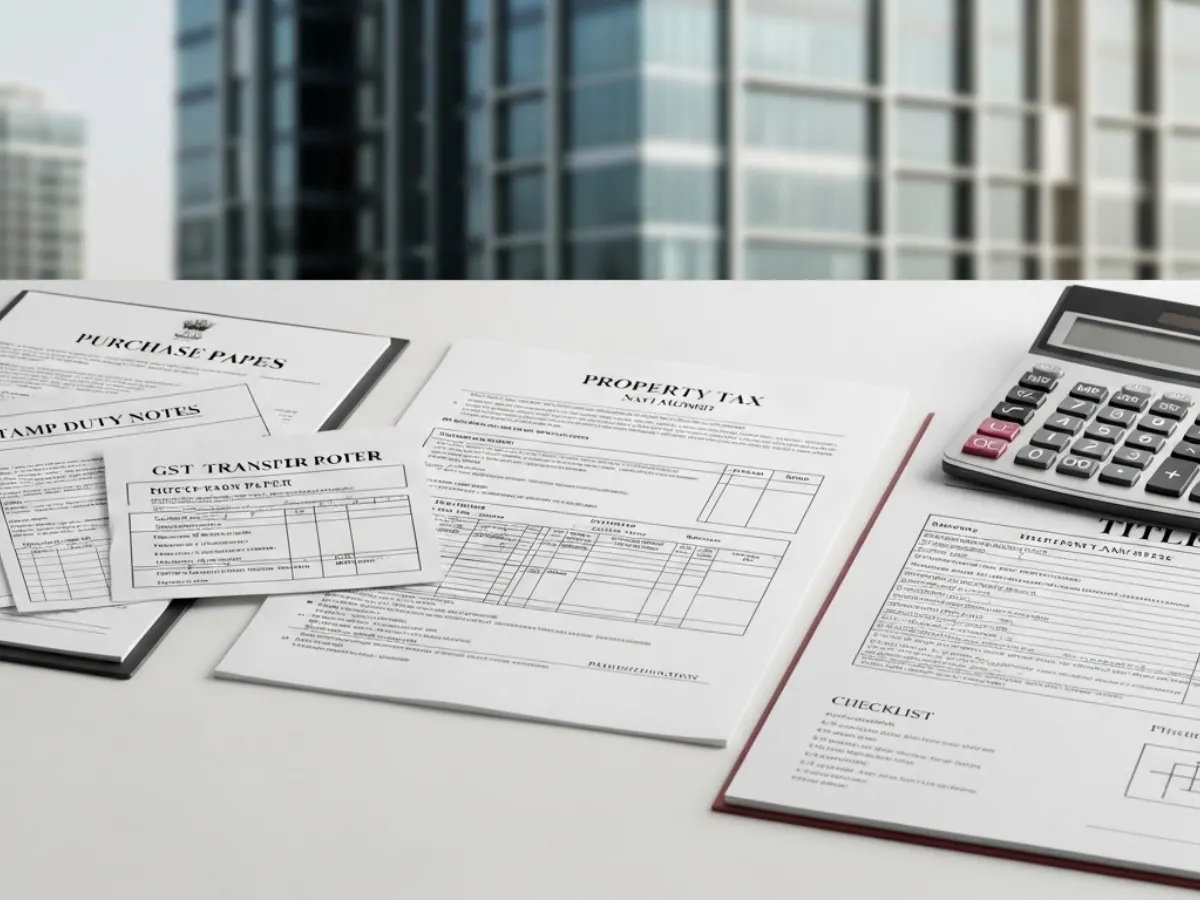
The broad statutory numbers matter. Commercial stamp duty in Navi Mumbai is generally 7% for men, 6% for women, and 6% for joint male-female ownership, with the metro cess included in the applicable structure. Registration fee is 1%, but it is capped at ₹30,000 for properties above ₹30 lakh.
Then comes GST. Under-construction commercial property attracts 12% GST. Ready-to-move property with a valid Occupancy Certificate does not. This is a major difference. It matters even more because, under the 2025 CGST amendment discussed in the dossier, Input Tax Credit is blocked in the leasing-investment context mentioned there. So this 12% should not be treated casually as something that can always be recovered later.
Local tax is another major blind spot. Under NMMC, commercial property tax is levied at 68.33% of the rateable value, and that can materially reduce net yield, especially in weak occupancy periods. Meanwhile, PMC-side logic differs because the method is based on capital value and unit-area style formulas rather than the exact same system. This means the same investor cannot model all Navi Mumbai commercial assets with one tax assumption.
Then there is the CIDCO layer. Commercial leasehold transfer charges saw a 50% hike from April 2025, and for larger properties the amounts can be enormous. That alone is enough reason to understand one thing clearly: short-term flipping of commercial property in Navi Mumbai is often mathematically weak.
In which Navi Mumbai locations does buying make more sense, and where is leasing safer?
Navi Mumbai is not one commercial market. It is a set of very different commercial behaviors.
Vashi, CBD Belapur, and Seawoods for stability-first buying logic
These are among the stronger mature-node choices for user-led buying and stable commercial holding. Broad pricing in such mature zones can sit in the ₹14,000 to ₹25,000 per sq.ft. range depending on type, location, building, and frontage. These are not cheap markets, but they are easier to understand because the “story versus reality” gap is lower.
Vashi works especially well for proven retail and service-use logic. CBD Belapur suits structured office and professional use. Seawoods can also fit stability-led users, though the answer remains property-specific.
Airoli and Mahape for safer leasing logic
These markets are strong, but the strength is more occupier-ecosystem based than ownership-based for many users. This is where the average office rental discussion around ₹70 per sq.ft. becomes relevant. Navi Mumbai office rentals remain meaningfully lower than prime Tier-I markets while still attracting serious occupiers, including larger corporate demand. That makes leasing in these office belts a practical and often efficient decision.
Kharghar, Panvel-side, and airport-linked growth belts for selective buying
These areas can make sense for long-horizon buyers who understand infrastructure-led pricing. Panvel reportedly saw a 74% rise in capital values between 2021 and early 2026, and the airport is no longer a future-only story. That is exactly why caution matters. Once a growth story is already being priced in, lazy buying becomes dangerous.
In simple terms, mature nodes are better for stability. Growth corridors are better for conviction. Weak commercial stock is bad in both.
Buyer safety checklist for Navi Mumbai commercial property
- Check whether the land is leasehold or freehold
- If leasehold, verify CIDCO transfer history, dues, and any pending unearned income
- Confirm whether the property has gone through freehold conversion, if claimed
- Verify title chain, not just society papers
- Check MahaRERA if the property is under construction
- Confirm Occupancy Certificate if the seller says GST does not apply
- Verify the intended use matches the actual approved commercial category
- Audit real occupancy in the building, not just promised occupancy
- Ask how CAM is collected and whether defaults are common
- Check local tax implications under NMMC or PMC-side jurisdiction
- Understand fit-out burden before comparing rent versus EMI
- Avoid units that look cheap only because exit liquidity is poor
When does leasing become the better business decision even if you can afford to buy?
Leasing becomes the smarter move when flexibility is more valuable than ownership. That is the real principle.
If the business may grow, shrink, pivot, or relocate within a few years, ownership can become a burden. The same is true if the location is prestigious but still unproven for your exact use case, or if the building type is naturally lease-led, such as premium office campuses.
This is why a fast-growing office user in Airoli or Mahape may still be better off leasing even with strong capital reserves. Liquidity matters. In volatile business phases, liquidity is often more useful than a locked commercial unit.
When does buying become smarter than continuing on lease?
Buying becomes stronger when the business has crossed the uncertain stage and the address itself starts adding value.
That usually means:
- you expect to stay for 7 to 10 years or more
- the micro-market is already proven
- your fit-out is expensive to relocate
- rent escalation is starting to hurt margins
- the business gains from permanence and signage control
- you can still maintain healthy working capital after buying
Historically, prime-zone commercial appreciation in Navi Mumbai has ranged around 10% to 15%, though this should never be treated as guaranteed. Combined with rental yields in the 6% to 9% band, ownership can become very powerful over time. But only when the property is right and the business is ready.
What market signals should you check before buying commercial space in Navi Mumbai?
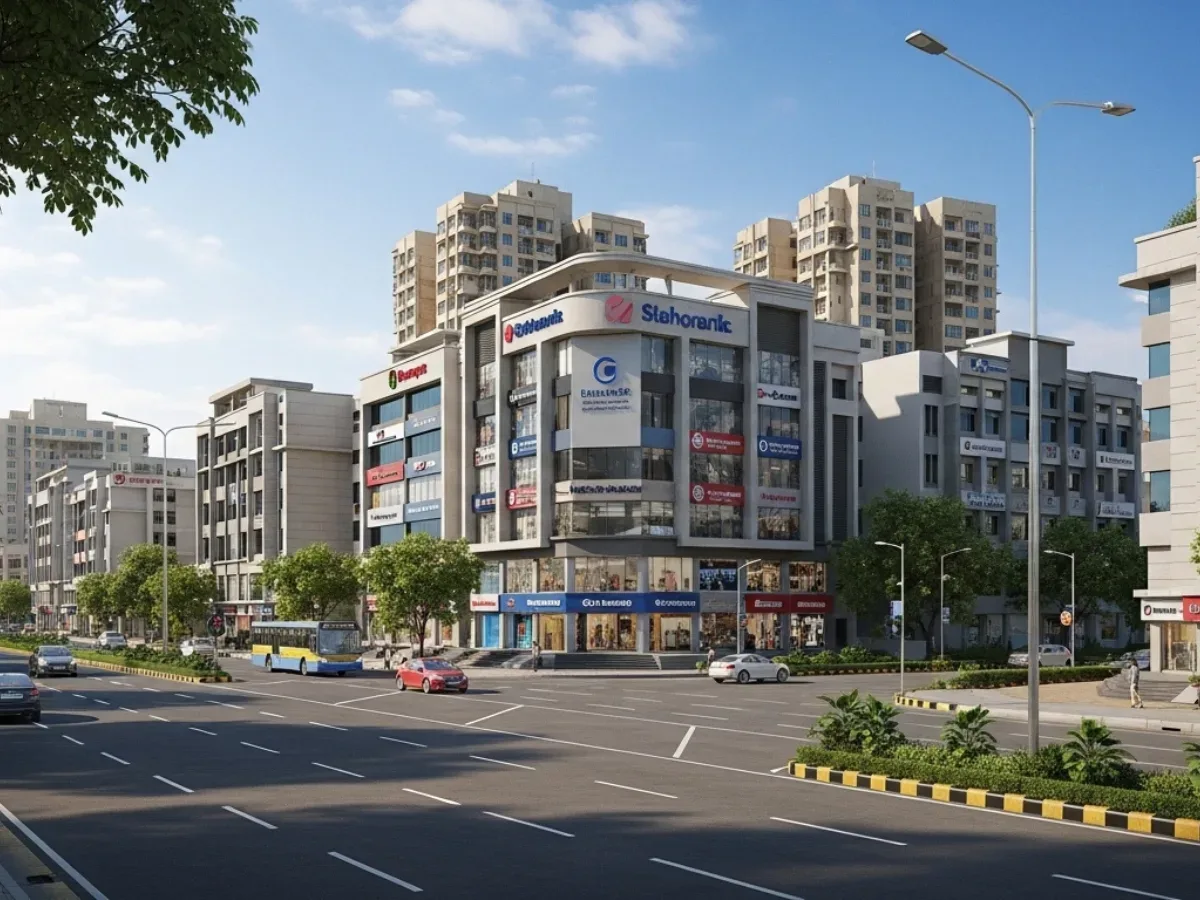
A commercial buyer should study building health, not just price.
That means asking:
- Are real businesses operating there?
- Is footfall actual or just projected?
- Are too many units locked by investors and kept inactive?
- Is the tenant mix healthy?
- Are nearby roads, parking, and station access practical?
- Is maintenance visibly slipping?
- Is demand organic, or only being sold on infrastructure hype?
This matters because high-vacancy commercial assets can quietly collapse in value. The dossier mentions India’s ghost mall problem, with 74 such properties and around 15.5 million sq.ft. of dead retail space. That is not a random statistic. It is a warning. In commercial property, a cheap unit in a dead ecosystem is often worse than no purchase at all.
What legal and document checks matter more if you plan to buy instead of lease?
In Navi Mumbai, land-tenure clarity is not a side issue. It is central to the decision.
A very common mistake is assuming that a unit sold by a private developer must automatically be freehold. That is not true. Much of Navi Mumbai developed through CIDCO leasehold structures, often around 60-year leasehold planning. Unless formal conversion has happened, the asset may still remain leasehold even if the building looks completely private on the surface.
That changes resale, transfer, financing, and cost math. A genuinely freehold-converted asset can have better resale liquidity and cleaner financing. A leasehold asset may still be perfectly valid, but the buyer must understand the implications clearly before committing.
For under-construction assets, MahaRERA verification remains essential. For ready stock, title, OC, dues, land status, and transfer records matter just as much.
Real examples: lease vs buy decisions for 4 common Navi Mumbai users
| User Type | Better Option | Why |
|---|---|---|
| Small IT or back-office user in Mahape or Airoli | Lease | Workforce and space needs may change, and these are lease-led office ecosystems. |
| Retail shop operator in Vashi | Buy | Stable footfall, location continuity, and rent escalation can all justify ownership. |
| Doctor or clinic owner in Nerul | Buy | Heavy fit-out and local trust make shifting expensive and damaging. |
| Investor targeting airport-corridor demand in Panvel-side belt | Buy selectively | Works only with strong micro-market conviction, long holding power, and careful due diligence. |
A simple decision framework: how to decide in 10 minutes
If most of the following are true, lease:
- you may shift within 3 to 5 years
- the business model is still changing
- location fit is not fully proven
- the unit is part of a leasing-led office market
- you need capital inside the business more than inside property
If most of the following are true, buy:
- you are confident about the exact location
- the business is stable
- you expect to stay for 7 to 10 years or longer
- relocation would waste expensive interiors
- rent escalation is already becoming a problem
- you can fund the purchase without hurting working capital
- legal title and land-tenure position are clean
That is the real framework. Not emotion. Not “rent is wasted money.” Not “ownership always wins.”
Conclusion
If your business still needs flexibility, lease. If your business needs permanence, expensive customization, and long-term control of the same location, buy. That is the clearest answer.
In Navi Mumbai, this decision matters more because the city combines mature commercial markets, airport-led growth corridors, CIDCO land-tenure complexity, and heavy transaction friction. Vashi, CBD Belapur, Airoli, Nerul, Seawoods, Kharghar, Panvel, and Ulwe should not be judged with one formula. Mature nodes usually reward stability. Growth corridors reward conviction. Weak commercial stock punishes both buyers and tenants in different ways.
So before signing anything, ask the most useful question of all: am I choosing the option that suits my business model, or the option that only feels safer on paper? In commercial property, those are often two very different answers.
FAQ's
Frequently Asked Questions