
Best Commercial Sectors in Vashi: Where Offices, Shops and Investors Should Actually Look
The best commercial sectors in Vashi are not the same for every business. Sector 17 usually works best for mainstream offices, local service firms, clinics, salons, and high-street showrooms. Sector 18 and 19 work best for APMC-linked trade, wholesale, transport, and distribution activity. Sector 30 and 30A work best for station-connected corporate offices, IT-style business parks, and premium commercial use. But in Vashi, building age, parking, maintenance, and actual business type matter as much as the sector name.
That is the first thing most buyers get wrong. They search for “commercial property in Vashi” as if the entire node behaves like one premium market. It does not. Vashi is one of Navi Mumbai’s strongest commercial nodes, but it works through very different micro-markets. A local CA office, a grain distributor, a showroom, and a 150-seat back office should not shortlist the same roads, the same buildings, or the same sectors.
Vashi is mature, established, and still one of Navi Mumbai’s most practical commercial addresses. But it is also old in parts. That means buyers need more than location branding. They need sector logic, building logic, legal clarity, and daily operational practicality.
For a wider understanding before comparing specific pockets, Vashi Commercial Property Guide is worth reading first.
Which commercial sectors in Vashi actually deserve to be shortlisted?
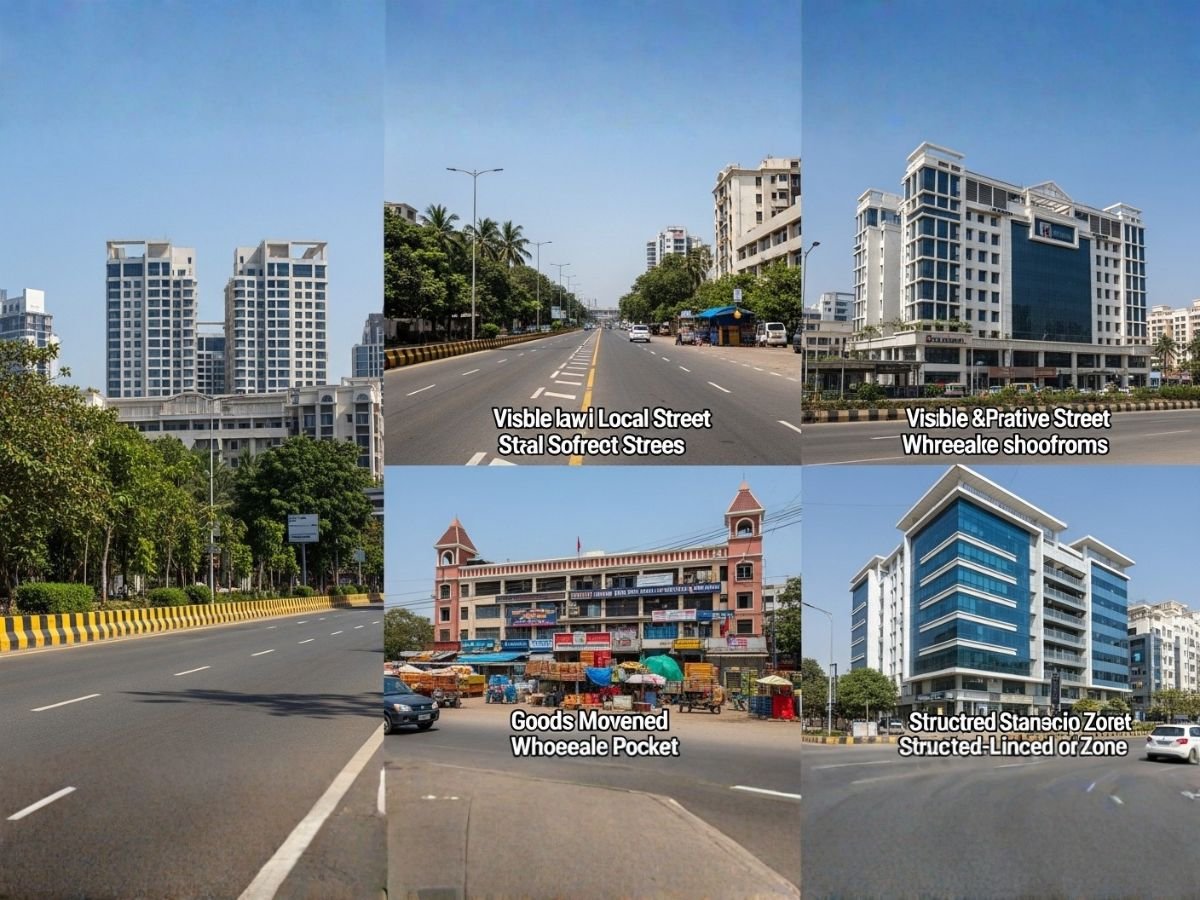
The strongest shortlist in most cases is Sector 17, Sector 18–19, and Sector 30–30A. But each one works for a very different kind of business.
| Sector / Pocket | Best For | Weak For | Demand Strength | Practical Caution | Verdict |
|---|---|---|---|---|---|
| Sector 17 | Small and mid-sized offices, clinics, consultants, coaching, salons, showroom-style retail | Large corporate setups, heavy logistics, parking-dependent operations | Strong for local visibility and regular footfall | Older stock, parking stress, maintenance variation | Best all-rounder for local commercial use |
| Sector 18–19 APMC belt | Trade offices, wholesale, distributors, transporters, agricultural and FMCG-linked businesses | Premium consulting, white-collar office environments, walk-in elite clients | Strong for trade demand | Truck traffic, loading activity, dust, congestion | Best for trade and supply-chain users |
| Sector 19C / edge pockets | Investors, hybrid commercial users, some office occupiers wanting a middle ground | Pure high-street retail | Moderate to strong depending on exact building | Must check exact road and building type | Better as a selective shortlist, not blind buy |
| Sector 30 | Station-connected commercial, institutional offices, transit-oriented business use | Small neighbourhood retail | Strong for structured office demand | Premium entry cost and maintenance | Strong for office-led users |
| Sector 30A | IT parks, back offices, MNC branches, premium office use, mall-linked visibility | Small businesses with low budgets, businesses sensitive to CAM costs | Very strong for Grade-A office demand | High CAM charges, premium pricing | Best for modern office stock and tenant depth |
In simple words, Vashi has three commercial engines. Sector 17 is the old and active high-street engine. Sector 18–19 is the trade and freight engine. Sector 30–30A is the station-plus-business-park engine. The mistake is not choosing the “wrong area in Navi Mumbai.” The mistake is choosing the right building format in the wrong Vashi ecosystem.
Is Sector 17 the safest all-round commercial sector in Vashi?
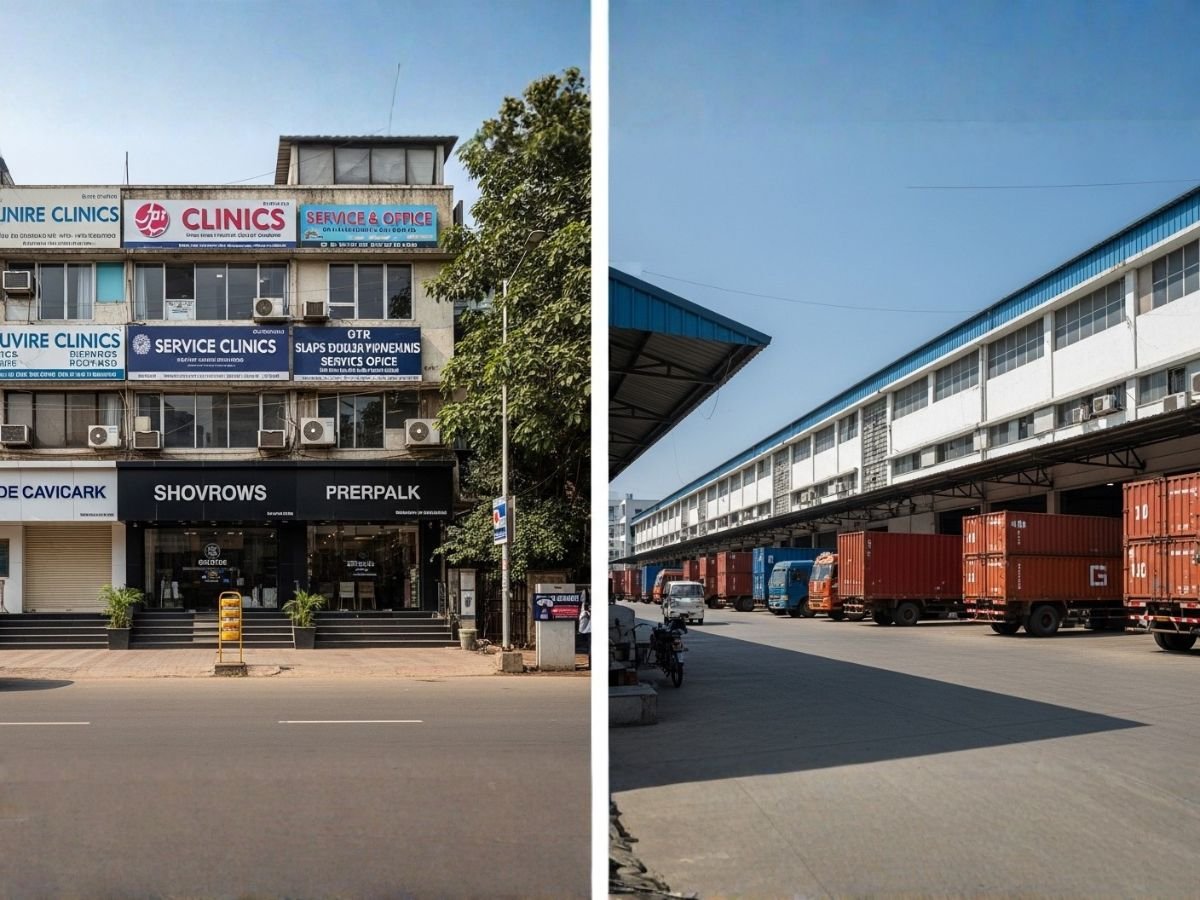
Yes, for many normal business users, Sector 17 is still the safest all-round commercial sector in Vashi. But it is safest only if your business benefits from visibility, daily local movement, and walk-in convenience.
Sector 17 remains one of the most practical places in Vashi for chartered accountants, consultants, coaching classes, clinics, boutique service offices, branded street-level retail, and businesses that need a known address. It has habit value. People know it. Clients are comfortable coming there. That matters more than glossy façade appeal for many local businesses.
Why Sector 17 works for mainstream offices and street-facing business
The biggest strength of Sector 17 is functional familiarity. Many Vashi residents, business owners, and repeat visitors already treat it as a natural commercial destination. That gives smaller offices and service businesses an advantage. A tax consultant, pathology lab, visa agent, architect, or beauty clinic usually benefits more from recognisable access and regular street activity than from being inside a premium business park.
Sector 17 also works well when your business depends on local trust. For example, a clinic or finance office often gets more value from a visible, known market-side location than from a more polished but less personal corporate tower.
Where Sector 17 can disappoint despite the strong location label
Sector 17 is not automatically the best answer for every office buyer. A lot of stock here is old. Some buildings are now well past the stage where only cosmetic renovation is enough. Maintenance standards differ sharply from one building to another. Parking is a real issue. NMMC’s pay-and-park expansion has reduced illegal roadside parking in some stretches, but it has also added friction for quick-stop customers.
This is where many buyers make an expensive mistake. They buy the “Sector 17 address” without checking whether the exact building can support modern use. A premium client-facing office with no proper visitor parking, no decent lobby, weak lift condition, and ongoing structural concerns can become a daily headache. In Vashi, the sector can stay strong while the building underperforms badly.
Who should choose the Sector 18–19 APMC belt and who should avoid it?
Sector 18 and 19 should be shortlisted mainly by businesses that are directly linked to trade, wholesale movement, freight, agricultural produce, FMCG distribution, or supply-chain activity. For those users, this belt is not just good. It is often the most logical choice.
The Mumbai APMC ecosystem changes the whole commercial character of this side of Vashi. Roads, timing, traffic, loading patterns, and demand all behave differently here. This is not a clean white-collar office environment. It is a working commercial spine.
Why the APMC belt works for trade-linked and logistics-adjacent businesses
If your business depends on market movement, goods handling, distributor networks, or regular freight coordination, the APMC side offers direct operational value. You are closer to the people, products, trucks, and transaction flow that actually matter to your business. For agricultural traders, transport operators, wholesalers, and supply-chain offices, that proximity is an advantage, not a problem.
This is why a lower entry point here can still make sense for the right user. The value is not in polished corporate optics. The value is in raw efficiency.
Why some office buyers overestimate this pocket
The APMC side is often a bad fit for standard consulting offices, premium client-facing businesses, and many IT or back-office users. On paper, some deals may look attractive. In practice, the environment can work against tenant demand if the target tenant is expecting a cleaner office ecosystem.
That is the yield trap. A buyer sees a seemingly lower per-square-foot entry point and assumes the property will rent out easily to any office user. But many white-collar tenants do not want freight-heavy surroundings, uneven traffic flow, loading congestion, or a market-driven environment outside the office.
So yes, Sector 18–19 can be excellent commercial real estate. But only when the business type matches the area logic.
Why do Sector 30 and 30A work differently from old Vashi commercial stock?
Sector 30 and 30A work differently because they are built around station access, business-park planning, and modern office expectations. This is the part of Vashi where the commercial proposition is less about old market familiarity and more about organised access, corporate comfort, and scale.
For many office occupiers, especially those with teams, this changes everything. An employee can get off at Vashi station and reach office space with much less last-mile friction. That directly affects hiring comfort, daily attendance, and tenant preference.
Sector 30: station complex and structured office logic
Sector 30 benefits from the Vashi Railway Station Commercial Complex and the broader institutional commercial ecosystem built around it. For office-led use, this creates a more structured environment than many legacy parts of Vashi. It suits businesses that want transit connectivity, cleaner commercial organisation, and better scaling potential than older strata offices usually offer.
Sector 30A: mall visibility, business parks, and commuter comfort
Sector 30A is where Vashi feels closest to a modern corporate node. This side is associated with business parks, premium commercial buildings, and mall-side visibility. It works especially well for IT, back offices, institutional tenants, and businesses that care about office image, floor plate quality, and daily commuter convenience.
But this advantage comes at a cost. Common Area Maintenance charges can be materially higher in this kind of stock. So a small self-use buyer should not copy the logic of a corporate tenant. A 15-seat office may not need the same building ecosystem that a 200-seat operator does.
Which Vashi sectors are best for offices, shops, showrooms, and trade businesses?
The best commercial sector in Vashi depends heavily on business format. That is why a direct comparison is more useful than a general ranking.
| Business Format | Best Vashi Sector | Why It Usually Works Best |
|---|---|---|
| Premium corporate office | Sector 30 / 30A | Better business park stock, stronger station connectivity, more scalable office environment |
| Small professional office | Sector 17 | Familiar address, local access, visibility, easier fit for clinics, consultants, and CA firms |
| Retail showroom | Sector 17 or selective 30A pocket | Sector 17 for high-street presence, 30A for organised commercial visibility |
| Trade office | Sector 18 / 19 | Best alignment with APMC, freight, and wholesale-linked daily movement |
| Wholesale-linked business | Sector 18 / 19 | Operationally strongest match |
| Investor buy-to-lease office | Sector 30A or selective 19C / edge buildings | Better tenant depth when building quality and user profile are right |
| Local service business | Sector 17 | Strongest fit for repeat local footfall and trust-led business |
This is also where many articles become too generic. “Best office sectors in Vashi” and “best commercial shops in Vashi” are not the same question. A showroom buyer, a doctor, a logistics firm, and an investor are all asking different things, even if the search looks similar.
Which sectors are best for self-use buyers, and which are better only for investors?
Self-use buyers should usually choose based on daily friction. Investors should usually choose based on tenant depth, exit liquidity, and building relevance over time.
If you are buying for your own business, Sector 17 often makes more sense than a premium tower if your clients are local, your team is small, and your business depends on accessibility rather than corporate image. A local consultant may gain nothing from paying Grade-A maintenance charges in Sector 30A.
If you are buying as an investor, Sector 30A can look stronger because good office stock there may attract more stable institutional or white-collar tenants. Selective pockets near 19C can also work if the building has the right tenant profile and does not depend entirely on chaotic inner market movement.
The key is simple: do not apply investor logic to self-use purchase, and do not apply self-use comfort logic to an income-focused investment. Those are different decisions.
Where does commercial demand weaken even if the address still says Vashi?
Demand weakens when the sector label is stronger than the actual building reality. This happens more often in older Vashi stock than many buyers admit.
Some buildings in older pockets carry the advantage of the Vashi pin code but not the functional strength expected from that premium. The problem can be structural age, weak maintenance, back-lane positioning, parking failure, outdated common areas, or lease-related friction under the CIDCO framework. In some cases, the land remains valuable but the building itself becomes a liability.
This is especially important in older commercial assets where NMMC structural audit issues, redevelopment uncertainty, or urban renewal expectations start affecting usability. Buyers sometimes treat such stock as a bargain. In reality, a cheap commercial unit in a struggling building can trap capital for years.
So when demand weakens in Vashi, it usually does not happen because Vashi suddenly became weak. It happens because the exact building stopped matching what modern users need.
What should you check before buying or leasing commercial space in Vashi?
In Vashi, sector selection is only step one. Real due diligence begins at the building and document level.
First, check the CIDCO side properly. Much of Vashi’s commercial stock sits under a leasehold framework. That means transfer permission, NOC, and related charges are not side issues. They directly affect transaction smoothness, budget, and legal safety. If there is a pending lease-related problem, a seemingly good deal can become very costly.
Second, check structural condition, especially in older Sector 17 and legacy commercial stock. If the building is over 30 years old, structural stability and maintenance quality are not optional questions. Ask for the latest structural documentation available and do not rely only on verbal comfort.
Third, separate base rent or sale value from actual cost of occupancy. In modern business-park style assets, CAM charges can materially change affordability. A unit that looks reasonable on the quoted rate may become expensive after maintenance, parking, and operational overheads are added.
Fourth, verify parking with documents, not promises. In Vashi, the difference between “parking is available nearby” and “this unit has dedicated parking rights” is huge.
Finally, check whether the building’s actual commercial ecosystem fits your business. A nice unit inside the wrong user environment is still the wrong purchase.
How should different buyer types choose between Vashi sectors?
The easiest way to understand Vashi is through real buyer situations.
A chartered accountant, tax consultant, or clinic owner will usually do better in Sector 17. The business depends on recognisable access, repeat local visitors, and a familiar commercial setting.
A distributor, agricultural trader, or transport-linked operator should generally look at Sector 18 or 19. Their revenue depends more on market and freight proximity than on polished office image.
A 100- to 200-seat technology, operations, or back-office setup should usually prioritise Sector 30 or 30A. Team movement, station proximity, and modern office expectations matter far more here.
An investor looking for stable leasing logic may prefer Sector 30A or a selective commercial asset in a strong edge pocket where tenant depth is proven. But even then, building selection matters more than brochure branding.
A premium showroom buyer needs to think carefully. Sector 17 works for strong high-street visibility. A selective mall-side or structured commercial environment in 30A may work better if the brand benefits from organised premium footfall rather than pure street activity.
Are Vashi’s best commercial sectors still worth paying for in 2026?
Yes, the best commercial sectors in Vashi are still worth paying for in 2026, but mainly for stability, usability, and leasing depth, not for fantasy-level speculative upside.
That is the right lens. Vashi is not the place buyers usually enter for wild capital growth stories anymore. It is a mature commercial node. The premium here is justified when you are paying for immediate usability, station access, tenant confidence, and business relevance. In that sense, Vashi behaves more like a blue-chip commercial location within Navi Mumbai.
The wrong move is overpaying for old, weak, or legally messy stock simply because the brochure says Vashi. The right move is paying for the correct micro-market and the correct building quality. That difference decides whether your commercial asset performs well or becomes an expensive compromise.
You should also read Vashi Commercial Rates, Rents and Market Trend to see how pricing and demand are moving across Vashi.
Conclusion
If you want one simple answer, this is it: Sector 17 is usually the best all-round commercial sector in Vashi for local offices, services, and high-street business. Sector 18–19 is the right answer for trade, wholesale, and logistics-linked operations. Sector 30–30A is the strongest answer for modern office users, business parks, and premium tenant-driven commercial demand.
So the best commercial sector in Vashi is not decided by prestige alone. It is decided by fit. In Vashi, the correct sector can make an average commercial unit work better, while the wrong sector can make even a polished property fail operationally. That is the real buying lens.
FAQs
Frequently Asked Questions