
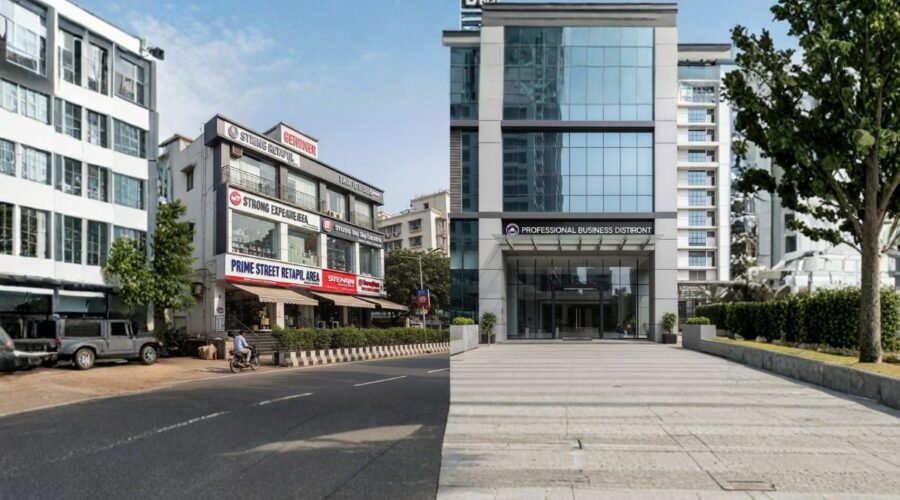
Shop vs Office Investment in Vashi
In Vashi, a shop usually makes more sense if you want stronger visibility-led demand, tighter vacancy protection, and long-term high-street defensibility. An office usually makes more sense if you want a lower entry barrier, more unit-size flexibility, and commuter-linked leasing demand. But there is no universal winner. In Vashi, the right commercial buy depends on sector, frontage, station access, tenant profile, CAM burden, taxes, and how much vacancy risk you can handle.
Vashi is not a speculative node where buyers are only betting on future infrastructure. It is already a mature commercial market with active business density, strong commuter movement, a large local population, and established trade ecosystems. That is exactly why the shop-versus-office decision here needs to be practical, not generic.
A bad shop in an internal lane can underperform badly despite carrying a Vashi address. A well-located office near the station can outperform a cheaper but weak commercial unit elsewhere. So the real question is not “shop or office?” in theory. It is “which one works better for my budget, risk appetite, and holding strategy in Vashi?”
Before comparing both formats too closely, Vashi Commercial Property Guide is worth reading for the bigger picture.
Quick summary: When does a shop make more sense, and when does an office make more sense?
| Buyer goal | Shop usually better | Office usually better | What to verify first |
|---|---|---|---|
| Stable rental defensibility | Yes, especially in prime high-street pockets | Only if building and access are strong | Frontage, footfall, lease quality |
| Lower entry ticket | Usually no | Usually yes | Building quality, vacancy history |
| Self-use with future leasing backup | Sometimes | Usually yes | Layout efficiency, commuter access |
| Long-term wealth preservation | Strong if main-road retail is truly prime | Good if office stock is institutional and well-managed | Location strength, asset liquidity |
| Fast tenant replacement | Usually stronger in prime retail | Can take longer depending on building and tenant segment | Micro-location and tenant pool |
| Passive ownership comfort | Good if the unit is truly prime and simple to manage | Can work, but CAM and tenant needs are more operational | Tax, CAM, lease structure |
A simple way to think about it is this: prime Vashi shops are usually tougher to buy but easier to defend. Offices are usually easier to enter but harder to get right.
Is a shop in Vashi actually safer than an office investment?
Yes, but only in the right pocket and only if the shop has real commercial quality on ground.
The reason many investors consider shops safer is simple. Good retail supply in Vashi is limited, consumer movement is established, and prime high-street locations do not remain empty easily. In strong pockets, retail vacancy is effectively very tight. That gives shops a natural advantage in tenant replacement and rent stickiness.
But this “safety” is often misunderstood.
A Vashi shop is defensible only when it has the things that real retailers pay for: visible frontage, easy approach, a broad road or active commercial stretch, and natural walk-in movement. A deep unit with weak width, poor visibility, or awkward access may still be in Vashi, but that does not make it a strong retail investment.
What makes a Vashi shop defensible?
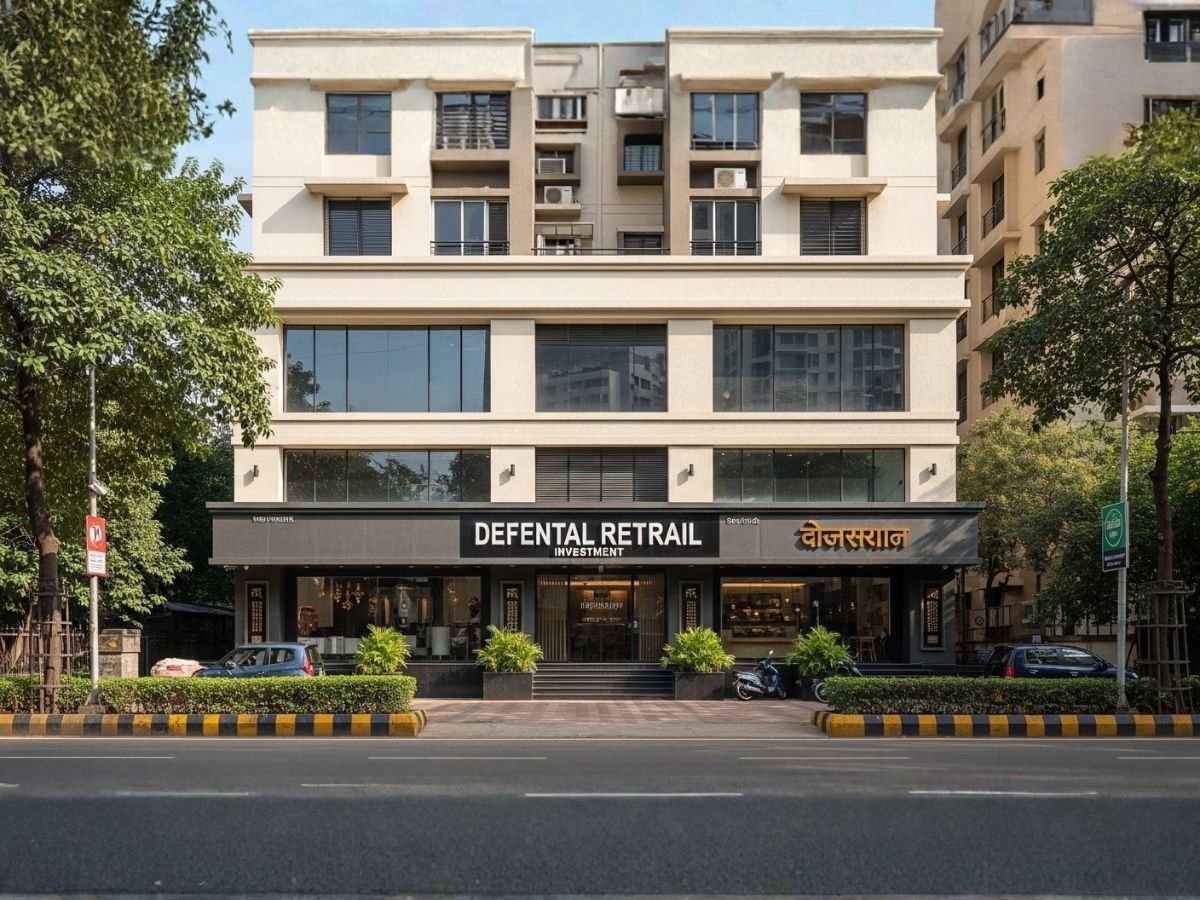
A shop becomes truly defensible when it has:
- direct street visibility
- usable frontage, not just depth
- footfall from offices, residents, or both
- practical loading and delivery access
- legal and functional commercial surroundings
This is why Sector 17-style high-street retail remains so valuable. Entry cost is high, often very high, but the demand logic is easier to understand. People can see the unit. Businesses can operate from it. Replacement demand is easier.
What makes a Vashi shop weak despite the address?
A shop becomes risky when it is in an internal lane, hidden from movement, or dependent on footfall that does not really exist. Some internal pockets may work for hyper-local convenience uses, but not every internal commercial-looking unit deserves premium pricing.
This is where many buyers get trapped. They buy a slight discount, thinking they are getting “Vashi commercial property.” In reality, they are buying dead frontage.
When does an office in Vashi become the smarter commercial buy?
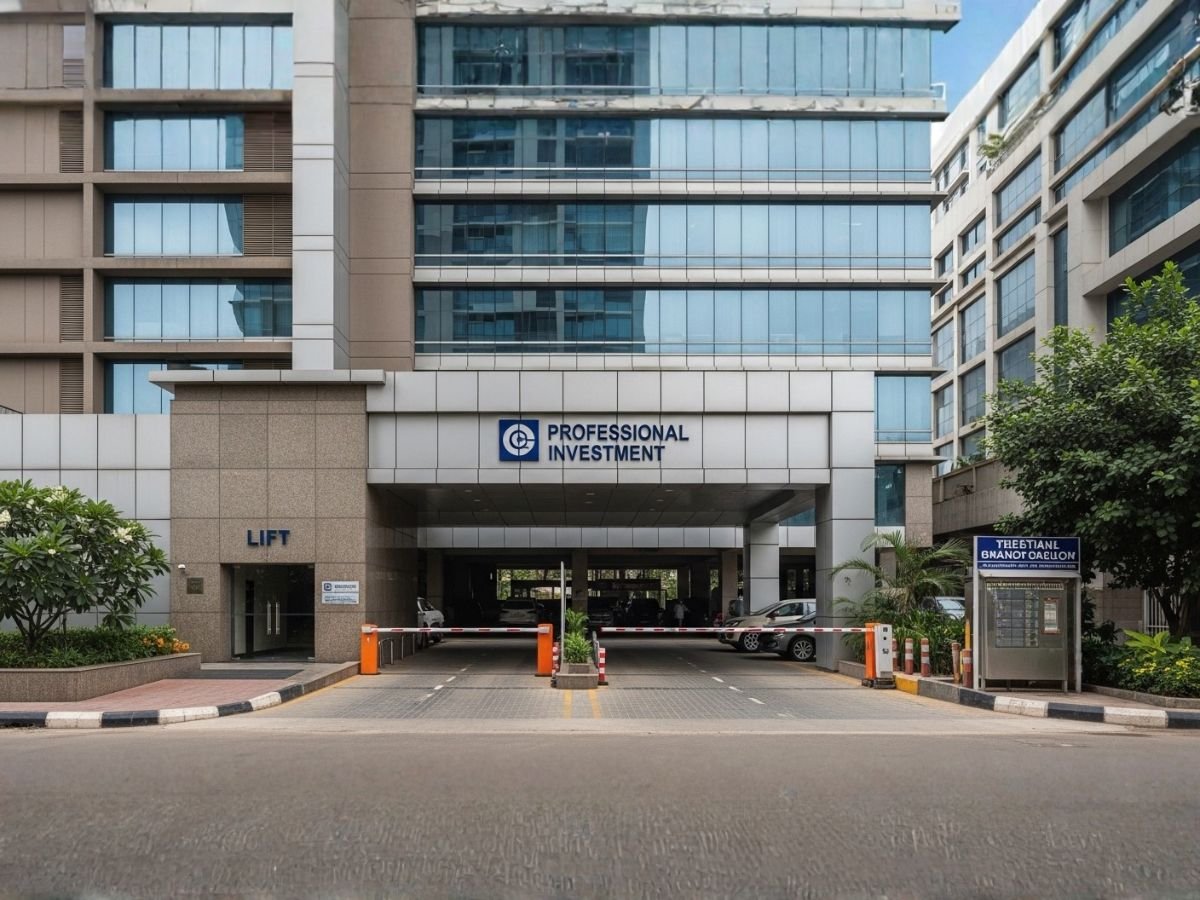
An office becomes the smarter buy when you want commercial exposure without paying the extreme premium for street visibility.
This usually happens when the office is in a building that supports real business use: good lift access, professional maintenance, acceptable parking, usable floor plate, and strong commuter connectivity. In Vashi, station-linked office logic matters a lot more than it does in many residential-heavy nodes.
Office spaces near the railway-station belt and established commercial clusters can attract SMEs, service firms, BFSI users, consultants, and operational businesses that care more about access and functionality than display visibility.
That is why a good office can be the better buy for someone who wants:
- a lower entry point than prime retail
- more choice in unit sizes
- self-use today and leasing optionality later
- corporate or business tenant demand rather than retail walk-ins
Office stock that usually works in Vashi
Offices generally work better when they are:
- close to Vashi railway station
- inside recognizable commercial buildings
- supported by better CAM and building management
- usable without major design compromises
- in clusters where business users already exist
A compact 300 to 800 sq ft office in a strong commuter-linked building can make much more sense than a larger but weaker office in an old, poorly maintained structure.
Office stock that often struggles despite a lower price
A cheap office is not always a good office.
Older buildings with weak maintenance, poor HVAC support, weak lobby quality, limited parking, and poor lift infrastructure may look attractive on price per sq ft. But if the kind of tenant you need will never shortlist that building, the cheap entry price means very little.
This is one of the most common commercial-property mistakes in Vashi.
Which Vashi sectors suit shops better, and which suit offices better?
This is where the answer becomes truly local. Vashi does not behave like one single commercial market.
| Vashi pocket or market type | Better for shop or office | Why demand holds | Main risk |
|---|---|---|---|
| Sector 17 high-street belt | Shop | Strong pedestrian activity, brand visibility, established retail logic | High capital cost, not every unit frontage is equal |
| Sector 30/30A station-linked commercial belt | Office | Railway access, commuter convenience, clustered business demand | Weak building quality can ruin office leasing |
| Sector 19 APMC trade belt | Trade office / logistics-linked commercial unit | B2B activity, wholesale ecosystem, operational proximity | Wrong buyer may judge it by retail aesthetics instead of trade function |
| Internal sectors such as certain pockets of 9, 14, 28 | Selective convenience retail only | Local catchment can support some uses | Weak parking, poor visibility, low broader liquidity |
| Palm Beach-facing or premium road-facing retail | Shop | Strong visibility and wealth-preservation style demand | Entry cost can suppress gross yield |
Sector 17 is usually where strong retail logic becomes obvious. Sector 30/30A is where office logic becomes stronger because commuter access supports day-to-day business use. Sector 19 should not be judged like either of those in a generic way because the APMC belt works on trade efficiency, not showroom glamour.
That difference matters. A buyer comparing a Sector 17 shop with a Sector 30A office is not comparing two versions of the same market. They are comparing two different demand engines.
What matters more in Vashi: footfall, frontage, floor plate, or building quality?
The answer changes by asset class.
For a shop, frontage and pedestrian visibility usually matter more than almost everything else. For an office, building quality and business usability matter more.
A wide-front shop with strong exposure is often financially better than a deeper but narrower shop with poor visual pull. Retailers pay for what customers can see and access. A badly shaped shop with weak approach can remain functionally inferior even if its carpet size looks decent on paper.
For offices, the real filters are different. Tenants care about whether staff can reach the building easily, whether the maintenance quality supports professional operations, whether there is power backup, whether the common areas are respectable, and whether the floor plate is actually usable.
Quick checklist before comparing a shop and an office in Vashi
Before you compare prices, check these first:
- Is the location visibility-led or access-led?
- Is the shop frontage actually usable?
- Is the office building maintained to a business-acceptable standard?
- Is there practical parking or drop-off convenience?
- Is the tenant pool obvious from the area, or are you guessing?
- Are you evaluating carpet area and recurring charges correctly?
- Is the unit in a main commercial stretch or just near one?
This is why price per sq ft is one of the weakest first filters in Vashi commercial buying.
Are rental yield comparisons between Vashi shops and offices often misleading?
Very often, yes.
On paper, Vashi commercial yields usually look strong compared with residential property. Commercial yields can broadly range from around 4% to 9% annually, while local residential yields are much lower, typically around 2% to 3%. That pushes many investors toward commercial assets.
But brochure-style yield comparisons can be deeply misleading.
Retail in prime pockets often gives slightly lower gross yield because the capital value is so high. Offices may show a stronger gross yield because the entry cost is lower. That does not automatically mean the office is the better investment.
The real issue is net cash flow after deductions.
Commercial properties in Navi Mumbai face a heavy municipal tax burden. NMMC commercial property tax is materially higher than residential taxation and is based on rateable value logic. Add to that CAM charges, which can range roughly from ₹10 to ₹25 per sq ft per month on super built-up area, and the return picture changes quickly. If maintenance billing crosses the threshold, GST on maintenance also becomes relevant.
Then there is vacancy. A shop in a strong high-street pocket may hold demand well. An office can face fit-out gaps, leasing delays, or rent-free periods between tenants. So a headline 7% gross yield can become far less exciting after taxes, CAM, and vacancy friction.
A buyer should never compare a shop and an office in Vashi using only gross rent.
Which buyer profile should choose a shop, and which should choose an office?
The best commercial asset is usually the one that matches your management bandwidth and capital structure.
| Buyer type | Shop usually fits better | Office usually fits better | Why |
|---|---|---|---|
| Conservative rental-income buyer | Yes | Sometimes | Prime retail is usually more defensible if frontage is strong |
| First-time commercial investor with moderate budget | Sometimes | Yes | Offices usually offer lower entry barriers and more stock options |
| Self-use business owner | Sometimes | Yes | Office is usually easier to use now and lease later |
| High-net-worth long-hold investor | Yes | Also possible | Prime retail can preserve value well if bought correctly |
| Buyer with limited management bandwidth | Yes, if truly prime | Sometimes | Prime retail can be simpler than active office vacancy management |
| Yield-focused buyer chasing headline ROI | Not always | Often considered, but risky if done blindly | Office gross yield can look strong, but net yield may disappoint |
If your main goal is defensive rent and long-hold stability, a truly prime shop usually deserves attention first. If your goal is flexible entry, self-use optionality, or commuter-linked leasing demand, a strong office can be the better commercial buy.
You should also read Who Should Buy Commercial Space in Vashi if you want to match the asset type with the right buyer profile.
What are the biggest mistakes buyers make when comparing shop and office deals in Vashi?
The first mistake is assuming all Vashi commercial property is equally liquid. It is not. A main-road shop and an internal-lane shop do not have the same demand structure. A commuter-linked office and an aging office in a tired building do not have the same tenant pool.
The second mistake is buying on price per sq ft instead of business viability. Cheap offices often stay cheap for a reason. Low-visibility shops often remain weak even when the broader node is strong.
The third mistake is trusting pre-leased marketing without lease analysis. A pre-leased asset is only as safe as its remaining lock-in, escalation logic, deposit strength, and tenant durability.
The fourth mistake is ignoring statutory friction. In Vashi, that is a serious issue because CIDCO transfer mechanics and charges matter heavily in secondary market transactions. Since the 2025 revision cycle, transfer costs became a much more important part of the resale calculation, especially for larger commercial assets.
The fifth mistake is focusing on gross yield but forgetting tax, CAM, super built-up billing, and vacancy gaps.
How should you evaluate a pre-leased shop or office in Vashi before buying?
Treat the lease as seriously as the real estate.
A pre-leased commercial asset is not automatically safe just because rent is currently coming in. You have to read the lease structure properly. Check the remaining lock-in period, escalation schedule, deposit, exit clauses, fit-out responsibility, and whether the tenant is paying CAM and operational charges or the landlord is absorbing them.
A 15% escalation every three years may be a reasonable reference point in many commercial deals, but what matters is whether that clause is real, enforceable, and tied to a durable tenant.
Also pay attention to lease format. A gross lease and a triple net style structure create very different net-income outcomes for the owner.
For under-construction or newly delivered commercial stock, MahaRERA becomes relevant for project legitimacy, carpet area transparency, and timeline visibility. But for secondary market resale, title, transfer process, CIDCO leasehold position, and transaction costs can matter even more.
This is also where IGR Maharashtra and document-side verification become relevant in the broader transaction chain. Do not enter a commercial deal assuming that the lease cheque alone tells the full story.
Realistic examples: What should different Vashi investors actually choose?
Scenario 1: Budget around ₹80 lakh to ₹1.2 crore, wants stable rent
A buyer in this range usually has limited room for premium main-road retail in top Vashi pockets. A compact office in an established station-linked commercial belt often makes more sense here than forcing a weak retail buy. The better strategy is to choose a unit where commuter demand and usable building quality can support SME or service-office leasing.
Scenario 2: Budget around ₹2 crore to ₹5 crore or more, wants wealth preservation and strong rent defensibility
This buyer should look seriously at high-quality ground-floor retail in prime Vashi pockets such as strong Sector 17-style retail or premium road-facing commercial stretches. The gross yield may not always look dramatic because capital values are high, but the rent defensibility and long-term resale quality can be stronger than many office alternatives.
Scenario 3: Business owner wants self-use first, leasing flexibility later
An office usually fits better here. A good office gives layout control, day-to-day operational usability, and later leasing optionality. A shop only makes sense if the business actually needs visibility and customer walk-ins.
Scenario 4: Buyer attracted to a cheap, large office in an aging building
This is the classic trap. The entry price looks attractive, but if the building cannot attract modern tenants because of weak maintenance, poor HVAC support, weak access, or poor parking, the low price becomes irrelevant. Vacancy and maintenance drag can quietly destroy the whole thesis.
Conclusion : Which is the better investment in Vashi right now?
A shop is usually the better investment in Vashi if you have the capital to buy true main-road or high-street quality and your goal is defensive income, visibility-led demand, and long-term wealth preservation. But that only works when the frontage is real, the location is commercially alive, and the unit is not compromised by lane weakness or poor access.
An office is usually the better investment if you want lower-ticket entry, better unit-size flexibility, self-use optionality, and commuter-linked tenant demand. But that only works when the building is professionally usable and located in a real business cluster, especially near strong station-linked commercial zones.
So the real Vashi answer is this:
- choose a shop when you can afford uncompromised retail quality
- choose an office when you want capital efficiency and functional leasing demand
- avoid internal-lane shops sold like high-street assets
- avoid aging offices that look cheap but cannot attract quality tenants
- do not underwrite either asset on gross yield alone
In Vashi, the better investment is not decided by the word shop or office. It is decided by whether the exact unit can survive real commercial reality after taxes, maintenance, lease friction, and tenant replacement.
FAQs
Frequently Asked Questions