
Kharghar Commercial Rates and Rent Trend: Shops, Offices, Prices and Local Market Reality
Kharghar commercial rates and rent trend do not move as one market. Shops and offices behave very differently here, and the gap is big enough to change whether buying makes sense at all. As of Q1 2026, some Kharghar office assets still offer practical rent-backed value, while many premium retail asks look far stronger on brochure pricing than on real tenant affordability. That is the real starting point.
If you are searching for one average commercial rate in Kharghar, you are already looking at the market the wrong way. A main-road shop in an older established sector, an internal podium retail unit, a Grade-A office in Sector 10 or 14, and a mixed-use office floor above a residential building are not the same commercial product. They should not be priced the same way, and they definitely should not be judged by the same yield logic.
This article breaks that down in practical Navi Mumbai terms.
To read these numbers in the right context, Kharghar Commercial Property Guide is a useful place to start.
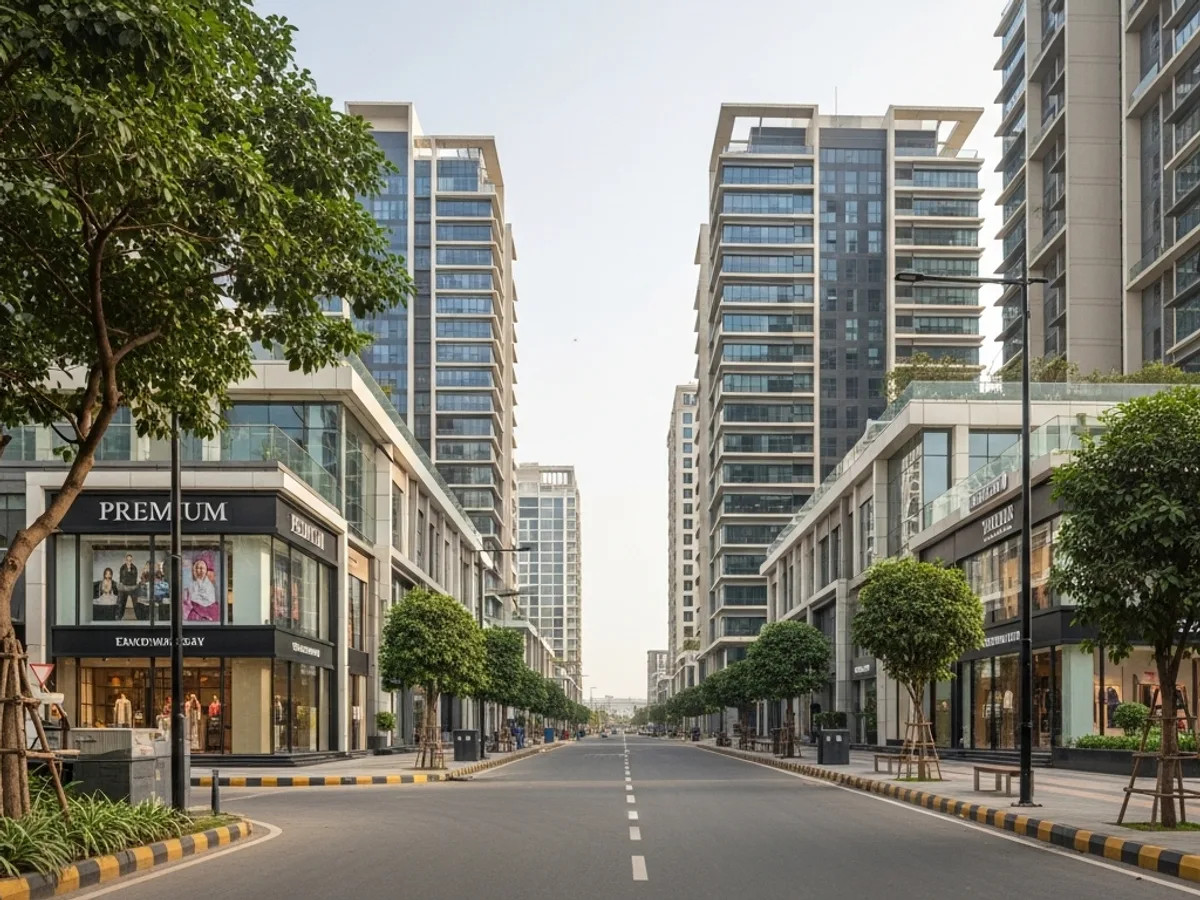
Kharghar Commercial Rates and Rent Trend: The Short Answer Buyers and Tenants Need First
The simplest useful answer is this: Kharghar offices are usually easier to justify mathematically than Kharghar shops at current asking rates. Retail still commands the highest visual premium, but office space often gives more stable leasing logic, lower vacancy drama, and better yield consistency.
Here is the quick picture as observed from current market patterns in Q1 2026.
| Asset type | Typical current asking sale rate (carpet) | Typical current asking rent | Estimated gross yield pattern | What it usually means |
|---|---|---|---|---|
| Premium main-road retail | ₹25,000 to ₹66,000+ per sq. ft. | ₹110 to ₹350+ per sq. ft./month | 5.5% to 7.0% | Very location-sensitive, high visibility premium, risky if rent support is weak |
| Internal catchment shops | ₹13,000 to ₹20,000 per sq. ft. | ₹60 to ₹100 per sq. ft./month | 4.5% to 6.0% | Better for daily-use businesses than prestige buying |
| Grade-A corporate offices | ₹20,000 to ₹35,000+ per sq. ft. | ₹90 to ₹140 per sq. ft./month | 7.0% to 9.0% | Usually the most stable commercial format in Kharghar |
| Standard mixed-use offices | ₹14,000 to ₹18,000 per sq. ft. | ₹50 to ₹80 per sq. ft./month | 6.0% to 7.5% | Lower entry cost, mixed tenant quality, more building-dependent |
The key point is not just the rate band. The key point is that the relationship between price and rent changes sharply by asset class. That is where good and bad buying decisions are made.
Why Kharghar Does Not Have One Single Commercial Rate
Kharghar is one node, but it is not one commercial market. That is not a line for effect. It is the main reality.
A shop facing a strong main road near an active junction can carry a heavy visibility premium because the buyer is paying for signage exposure, frontage, and category status. An office in a formal commercial tower is priced more around professional usability, building quality, parking, and tenant profile. An internal podium shop inside a residential catchment depends less on passing traffic and more on repeat neighbourhood demand.
That is why broad averages are misleading.
Shops, offices and mixed-use stock do not price the same way
Retail buyers often pay a premium for what can be seen. Office occupiers pay for what can be used. Those are two different value systems.
A main-road shop in a known belt can look expensive even before the business math is checked. Meanwhile, a well-managed office in a proper commercial complex may appear less glamorous, but can still make stronger financial sense because the rent support is cleaner and the tenant base is more stable.
Sector, frontage and building type change the answer
In Kharghar, a few hundred metres can change the commercial story.
Near station-linked or high-visibility corridors, the rate often includes a visibility tax. In internal sectors, daily convenience demand matters more than traffic volume. In a glass-facade office tower, the building itself becomes part of the value. In an older mixed-use property, the buyer has to judge layout efficiency, signage quality, lift access, maintenance standards, and real carpet usability much more carefully.
Mini reality check: a “commercial unit” above a residential society and a professionally managed office in a dedicated business building may both be called commercial, but they do not attract the same tenants, do not behave the same on rent, and should not be compared lazily.
What Are Commercial Shop Sale Rates and Rents in Kharghar Right Now?
The retail side of Kharghar is sharply divided. Premium frontage and internal catchment shops do not belong in the same rate discussion.
At the premium end, main-road and high-visibility retail spaces in sectors such as 6, 12, 15 and 20 can push asking sale rates into the ₹25,000 to ₹66,000+ per sq. ft. range, with asking rents commonly in the ₹110 to ₹350+ per sq. ft./month range. At the more practical end, internal catchment shops are usually quoted far lower, often around ₹13,000 to ₹20,000 per sq. ft., with rents around ₹60 to ₹100 per sq. ft./month.
That is a major spread. It also changes who should buy.
Main-road and high-visibility shop logic
Main-road retail in Kharghar is a premium product, but not every business can support it.
If a unit has strong frontage, sits on an active approach road, or benefits from an established commercial belt, the capital ask can rise very fast. In real terms, that kind of pricing only makes sense when the eventual tenant is the kind of user who can monetise visibility properly. Think high-volume quick-service food, major showroom formats, bank branches, branded clinics, or businesses with strong walk-in dependency and better-than-average margins.
The problem comes when buyers assume the frontage alone guarantees success. It does not. A premium ask only works if the tenant can keep paying a premium rent without breaking.
Internal residential catchment shop logic
Internal sector shops usually depend less on visual prestige and more on habit demand.
That can actually be more stable in some cases. Grocery, pharmacy, salon, small clinic, snack outlet, stationery, daily service businesses, and local convenience retail often perform better in dense residential catchments than on flashy but expensive frontages. The rent may be lower, but the conversion can be better because the demand is repeat-based.
That is why internal catchment retail should not be dismissed as second-grade stock. In many cases, it is simply a different business model.
When a shop premium is actually justified
A shop premium in Kharghar is justified only when at least most of the following are true:
- the frontage is genuinely visible, not just technically road-facing
- there is practical stopping or parking behaviour nearby
- the user category needs high visibility
- the local catchment can support the rent
- the unit size suits actual tenant budgets
- the building does not create operational friction
If three or four of those points are weak, then a high retail ask can quickly become an overpricing trap.
What Are Office Sale Rates and Office Rents in Kharghar Right Now?
Office space in Kharghar is currently the more mathematically stable commercial segment.
As of Q1 2026, Grade-A corporate offices in areas such as Sector 10 and Sector 14 are commonly seen in the ₹20,000 to ₹35,000+ per sq. ft. asking range, with rents around ₹90 to ₹140 per sq. ft./month. Standard mixed-use offices in older or less formal stock often sit lower, around ₹14,000 to ₹18,000 per sq. ft. sale and ₹50 to ₹80 per sq. ft./month rent.
For many buyers, that makes office space more practical than retail.
Formal office buildings vs mixed-use office floors
This difference matters a lot, because both are called “office” in listings but behave very differently.
A formal office building usually comes with better lobby standards, better maintenance, stronger building identity, more predictable tenant expectations, and sometimes higher CAM charges. A mixed-use office floor in an older building may offer lower entry cost, but it can also bring weaker corporate appeal, more layout inefficiency, and a wider range of tenant quality.
In Kharghar, that gap is especially important because many small businesses, consultants, coaching operators, and SME service firms are not just choosing location. They are choosing how credible the address feels.
Which office pockets suit occupiers better than investors
For occupiers, office space in Sectors 10 and 14 often makes practical sense because it connects better to highway movement, has clearer commercial identity, and suits professional users who do not need high-street visibility.
For pure investors, the case depends on purchase price discipline. If the entry price is too aggressive, even a stable tenant profile will not fully protect the yield. But in general, offices still offer cleaner leasing logic than trophy retail because the tenant requirement is easier to define and the rent is less dependent on street-level drama.
Which Kharghar Sectors Usually Command a Premium, and Why?
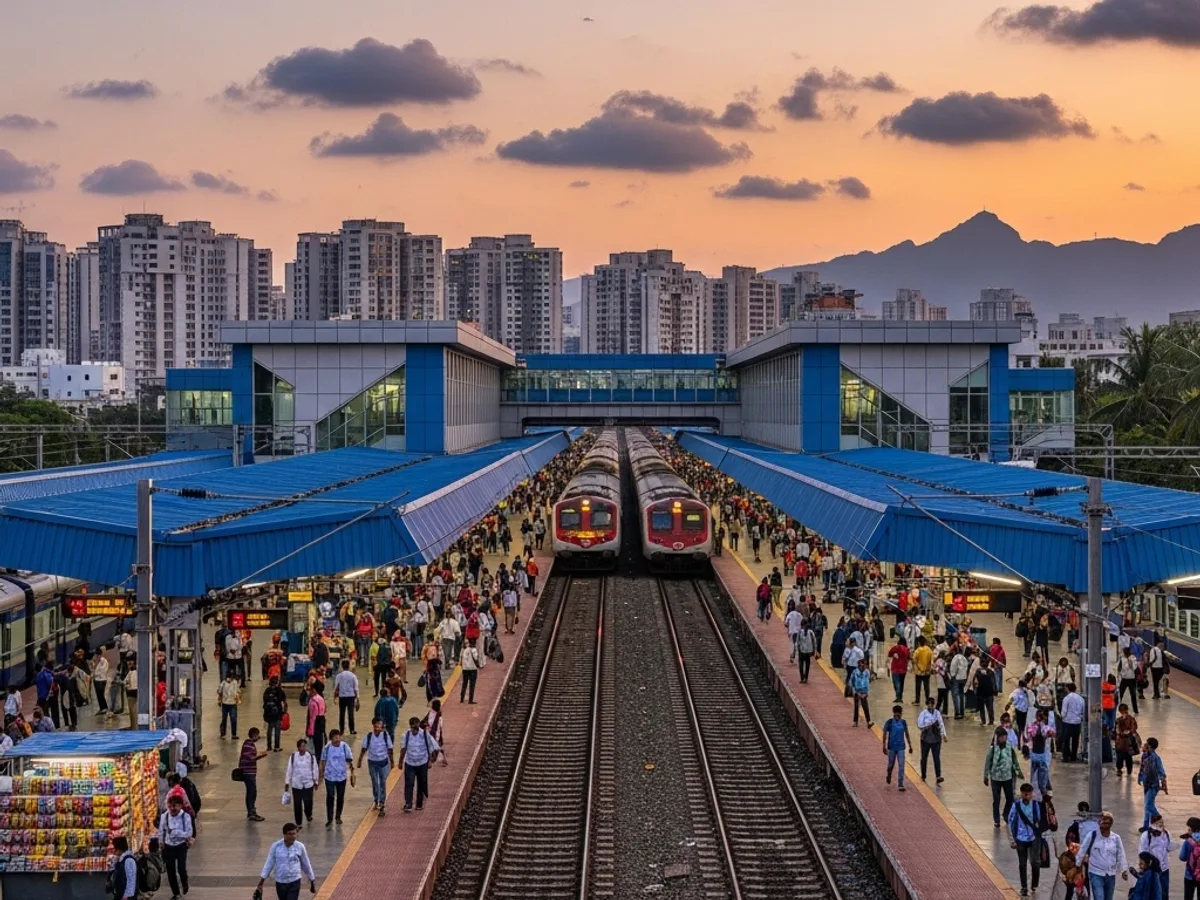
Kharghar premiums are not random. They come from function.
Some sectors command a premium because they already have established commercial behaviour. Others command a premium because the market is betting on future infrastructure, future office concentration, or future corporate demand. Those are very different kinds of premium.
| Pocket type | Sectors commonly discussed | Why the premium appears | What buyers should understand |
|---|---|---|---|
| High-street retail belt | 6, 7, 12, 20 | Visibility, known movement corridors, stronger street-facing trade | Good for selective retail, but capital premiums can run ahead of rent |
| Corporate and coaching belt | 10, 14, 15 | Office identity, service business fit, educational and professional demand | Usually better for office users and office investors than for speculative retail buyers |
| Future-oriented upper belt | 34, 35, 36 | Metro, International Corporate Park expectations, future growth narrative | Strong long-term story, but current rental reality may lag current asking prices |
Station-linked belts
Station access in Kharghar matters, but not in the same way for every asset.
For selective retail near real pedestrian corridors, station access can help. But “near station” is not automatically a commercial gold stamp. A lot depends on whether the movement is actually walkable, whether it converts into browsing or purchase behaviour, and whether the route benefits the exact unit.
For offices, rail proximity helps, but highway connectivity, parking, and ease of staff access can be more important than being marketed as walking distance from the station.
Residential catchment-led sectors
Some sectors perform commercially because the housing around them is already active enough to support repeated daily demand.
These are often better for category-specific shops than for grand investment narratives. A pharmacy, clinic, coaching support business, diagnostics, mobile store, salon, or food counter can work better in a steady residential catchment than in an expensive frontage bought only for image.
Sectors where price can run ahead of rent reality
This is the danger zone.
Emerging sectors such as 34, 35 and 36 are getting serious attention because of Metro Line 1, airport-side momentum, and the International Corporate Park story. That long-term story is real enough to matter. But present-day rental support can still lag present-day asking optimism. So buyers in those areas should be clear whether they are buying for current yield or future appreciation.
Those are not the same game.
What Actually Drives Rent Strength in Kharghar Commercial Property?
The strongest rent is not always the highest quoted rent. Strong rent means rent that a real tenant can continue paying without constant turnover, renegotiation, or distress.
That changes the way commercial property should be judged.
Footfall quality vs raw traffic
A common mistake is to overvalue raw movement.
Highway-side movement does not always convert into local business. Commuter traffic does not always stop. A road may look busy but still fail to support retail conversion. In contrast, a smaller internal catchment with repeat local demand can create far stronger business continuity.
So when people say, “This area has huge footfall,” the next question should be, what kind of footfall, for which business category, and at what rent?
Visibility, parking and repeat local demand
In Kharghar, parking and loading matter more than many buyers admit. A good unit with bad stopping behaviour can underperform. A visible unit with difficult access can see tenant churn. A professional office with weak parking can lose better tenants.
Repeat local demand is often what protects rent in real life. That is why daily-use businesses in certain catchment pockets can stay healthier than glamorous but overburdened retail spaces.
Building age, maintenance and tenant fit-out burden
A modern commercial building may command higher rent, but it can also bring higher CAM charges. In Kharghar, CAM often becomes a silent pressure point for tenants.
That matters because gross rent means less if the tenant is also carrying high maintenance burden, interior cost, compliance cost, and fit-out expense. Sometimes a slightly less premium building becomes the better rent story because the total occupancy cost remains sustainable.
Are Current Kharghar Commercial Prices Supported by Rent, or Are Some Assets Overpriced?
Yes, some Kharghar commercial assets look overpriced when rent support is checked honestly. This is especially true at the top end of retail asking prices.
The biggest issue is not that premium shops are expensive. Premium shops are supposed to be expensive. The real issue is when the rent required to justify the purchase price crosses what most real tenant businesses can comfortably pay.
> Caution: A high asking price is not proof of a strong investment. In Kharghar, some premium retail listings look attractive on status, frontage, or future promise, but the eventual rent needed to support that purchase may be too high for the local tenant market. That creates vacancy risk, yield compression, and forced price negotiation later.
A simple practical example helps. If a buyer pays a heavy premium for a main-road retail shop expecting a strong yield, the tenant still has to survive the rent, maintenance, staffing, inventory, local competition, and category-specific operating costs. If that business model is weak, the investment logic breaks even if the property “looks prime.”
This is why office space is often easier to justify. The math is not always spectacular, but it is often cleaner.
Shop vs Office in Kharghar: Which Asset Usually Makes More Sense?
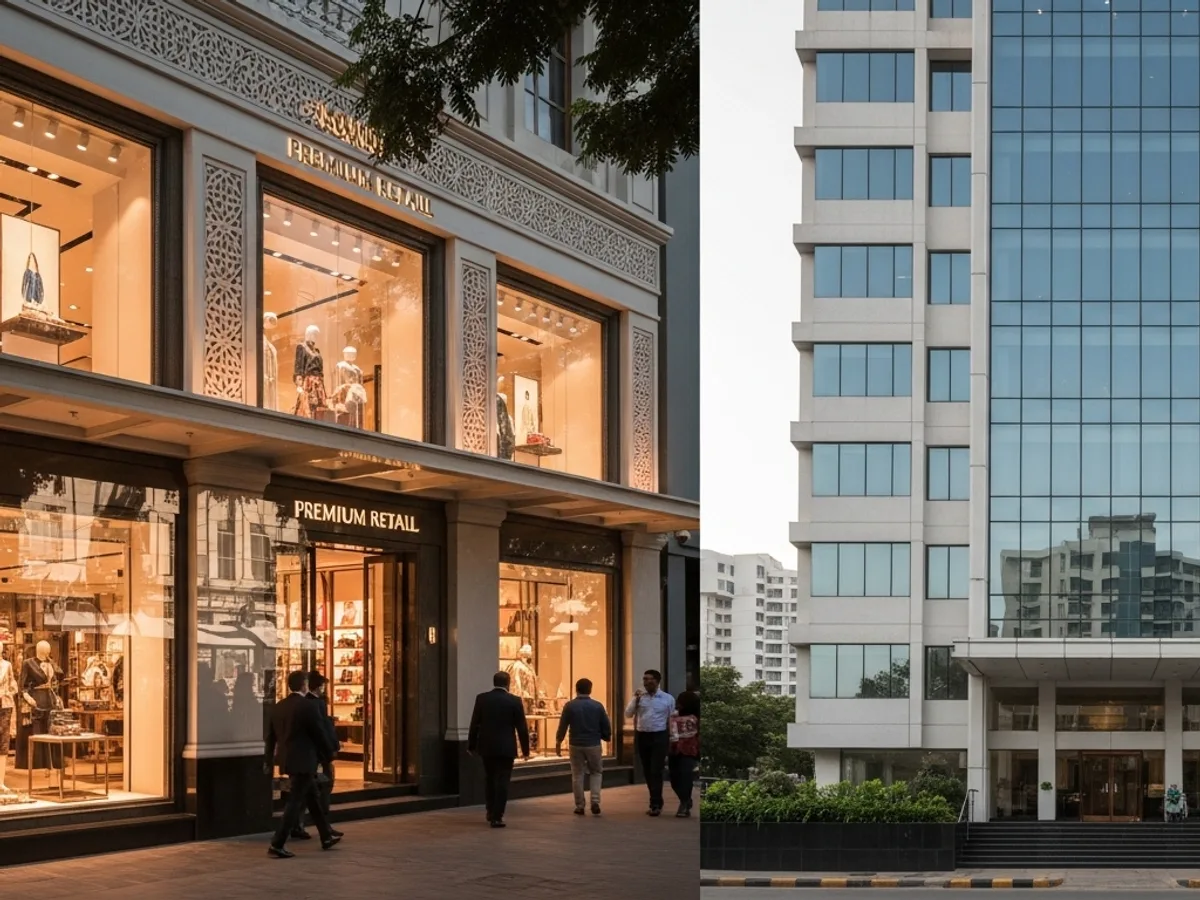
For most first-time commercial buyers in Kharghar, office space usually makes more sense than retail. Not because offices are always better, but because they are often easier to price, easier to lease, and easier to underwrite.
| Factor | Shop | Office |
|---|---|---|
| Capital entry | Usually higher in premium pockets | Often more manageable in usable formats |
| Yield stability | More volatile | Usually more predictable |
| Vacancy risk | Higher if tenant business fails | Lower when the building and pricing are right |
| Dependence on visibility | Very high | Much lower |
| Tenant profile stability | Mixed | Usually stronger in formal buildings |
| Management effort | Higher | Lower to moderate |
| Best fit | Selective high-margin retail, strong catchment trade | SMEs, professional services, coaching, backend operations, end-users |
A shop makes sense when the location-business match is strong and the tenant can absorb the rent. An office makes sense when the buyer wants a steadier commercial asset without paying too much for street visibility.
You may also want to read Shop vs Office Investment in Kharghar if you are comparing pricing with asset type.
Who Should Lease in Kharghar Instead of Buying?
Many businesses should not buy commercial property in Kharghar right now. They should lease.
This is especially true for startups, first-time franchise operators, growing SMEs, service businesses testing the market, and retailers who are not yet sure whether a specific micro-location can support their model.
Leasing protects working capital. It lets the business test demand, parking reality, customer behaviour, and local competition without locking crores into an illiquid asset.
Lease-first profiles in Kharghar usually include:
- first outlet operators testing a local market
- coaching or consultancy businesses with uncertain scale path
- franchise users still validating catchment response
- startups that need cash flexibility more than asset ownership
- retailers entering speculative sectors based on future growth stories
In simple words, if your business model is still being tested, buying is often the expensive way to learn.
Who Should Buy Commercial Space in Kharghar, and Who Should Wait?
Buying makes sense in Kharghar only when the buyer is clear about the reason.
End-users with a long operating horizon can justify office purchases in strong business pockets. Long-hold investors can justify selected emerging-sector exposure if they understand that present rent may lag future appreciation. Selective retail investors can buy, but only when the tenant and location logic are unusually strong.
Others should wait.
Buying usually makes more sense for:
- end-user office occupiers who want long-term cost control
- investors targeting stable office leasing, not hype buying
- long-hold buyers comfortable with a 5 to 7 year horizon
- selective retail investors with very clear tenant underwriting
Waiting usually makes more sense for:
- short-term flippers
- prestige-driven retail buyers
- buyers assuming all main-road shops will automatically rent fast
- anyone depending on future appreciation without holding power
- buyers who have not accounted for taxes, CAM, and transfer friction
What Local Checks Matter Before Trusting a Commercial Rate in Kharghar?

This is where local authority knowledge changes the article from generic to useful.
Kharghar falls under Panvel Municipal Corporation, not NMMC. That single point already changes the financial reading of a commercial asset. The municipal burden is not just an administrative detail. It affects the net return.
CIDCO leasehold, building documents and use conditions
Commercial property in Kharghar remains tied to CIDCO leasehold realities, and that matters more after the April 2025 transfer fee revisions.
A lot of buyers see headlines about residential leasehold-to-freehold movement and assume commercial assets get the same comfort. They do not. Commercial transfers still carry serious cost consequences, and those can badly hurt short-term resale economics.
So before trusting a commercial rate, the buyer should check:
- leasehold transfer implications
- exact transfer fee exposure
- unit area and its effect on charges
- use permissions and restrictions
- title chain and society or building documentation
PMC and local operating reality
Because Kharghar is under PMC, commercial property tax burden is not something to ignore. The PMC framework applies a 2.0 category-of-use multiplier to commercial property. In simple language, that means the tax burden on a commercial unit can be materially heavier than a comparable residential property.
For investors, that compresses net yield. For occupiers, that increases actual carrying cost.
MahaRERA and project-stage caution where relevant
If you are evaluating newer or under-construction office stock, MahaRERA checking is not optional. Delayed possession means delayed rent, delayed business use, and damaged ROI projections.
Also remember one more local caution: commercial developers can present large super built-up numbers. In practice, usable carpet may be much lower. If a buyer thinks they are buying a 1,000 sq. ft. office but the usable space is far less, the pricing logic gets distorted immediately.
Authority checklist before trusting a Kharghar commercial rate:
- confirm whether the quoted area is carpet or loaded area
- verify PMC commercial tax implications
- check CIDCO transfer and leasehold position
- check building age, CAM structure, and real occupancy cost
- verify MahaRERA status if the project is not fully delivered
- use IGR Maharashtra ready reckoner only as a duty benchmark, not as proof of market value
- confirm business-use suitability and local compliance needs
Conclusion: Where Kharghar Commercial Rates Still Make Sense and Where Caution Is Smarter
Kharghar commercial rates still make sense, but only in selected formats and for the right reason.
If the goal is stable, rent-backed commercial ownership, Grade-A or decent-quality office space in practical office pockets such as Sectors 10 and 14 usually makes the strongest case. The rate may not look cheap, but the leasing logic is often cleaner and the tenant profile is easier to support.
If the goal is long-term appreciation, Upper Kharghar and future-oriented sectors such as 34, 35 and 36 deserve attention, but that is a patience story, not a quick-flip story. The pricing there is influenced by future infrastructure and the International Corporate Park narrative, so buyers need holding capacity.
If the goal is retail investment, caution should be much higher. Main-road shops in older established sectors can work, but only
FAQs
Frequently Asked Questions