

Panvel Commercial Rates and Market Trend: Shops, Offices, Prices and Local Market Reality
Panvel commercial rates are not moving as one market. Old Panvel, New Panvel, station-linked belts, Khanda Colony and the airport-influence side pockets all behave differently. In 2026, the market is no longer being driven only by “future growth” talk because Navi Mumbai International Airport has already started commercial operations. That means rates now have to be judged by actual business usability, rental logic, parking, frontage and local demand, not just by hype.
If someone gives you one “average Panvel commercial rate,” treat it carefully. A small ground-floor shop near a dense market lane, an office unit in a structured New Panvel sector, and a larger commercial unit near a highway-facing belt cannot be valued with the same logic. That is where most generic pages fail.
To read these numbers in the right context, Panvel Commercial Property Guide is a useful place to start.
Quick Summary
Below is a practical Q1 2026 view of indicative asking-rate bands. These are not guaranteed deal-closing prices. They are working market bands useful for comparison.
| Panvel commercial pocket | Indicative capital value (₹/sq.ft. carpet) | Market character | Who it suits better |
|---|---|---|---|
| Khanda Colony | 15,800 – 17,768 | Premium captive residential catchment, stronger lifestyle and service demand | Clinics, branded retail, selective self-use buyers |
| Old Panvel market / station side | 10,500 – 14,000 | Dense trader footfall, organic market fabric, congestion and parking stress | Daily-need shops, service retail, legacy market-facing users |
| New Panvel East & West | 6,500 – 12,500 | CIDCO-planned sectors, wider roads, better structure, mixed office-retail usability | Offices, coaching, services, practical investors |
| Peripheral NAINA / Palaspe-side belts | 5,000 – 8,200 | Logistics and future-growth influence, but uneven ground readiness | Patient investors, logistics-linked users, long-hold buyers |
These bands matter because Panvel has already gone through a major re-rating phase around the airport-infrastructure story. The airport started commercial operations on December 25, 2025, so the easy “buy before airport” argument is over. The question now is whether a given commercial unit still makes sense on rent, access and business conversion.
Why There Is No Single Commercial Rate in Panvel
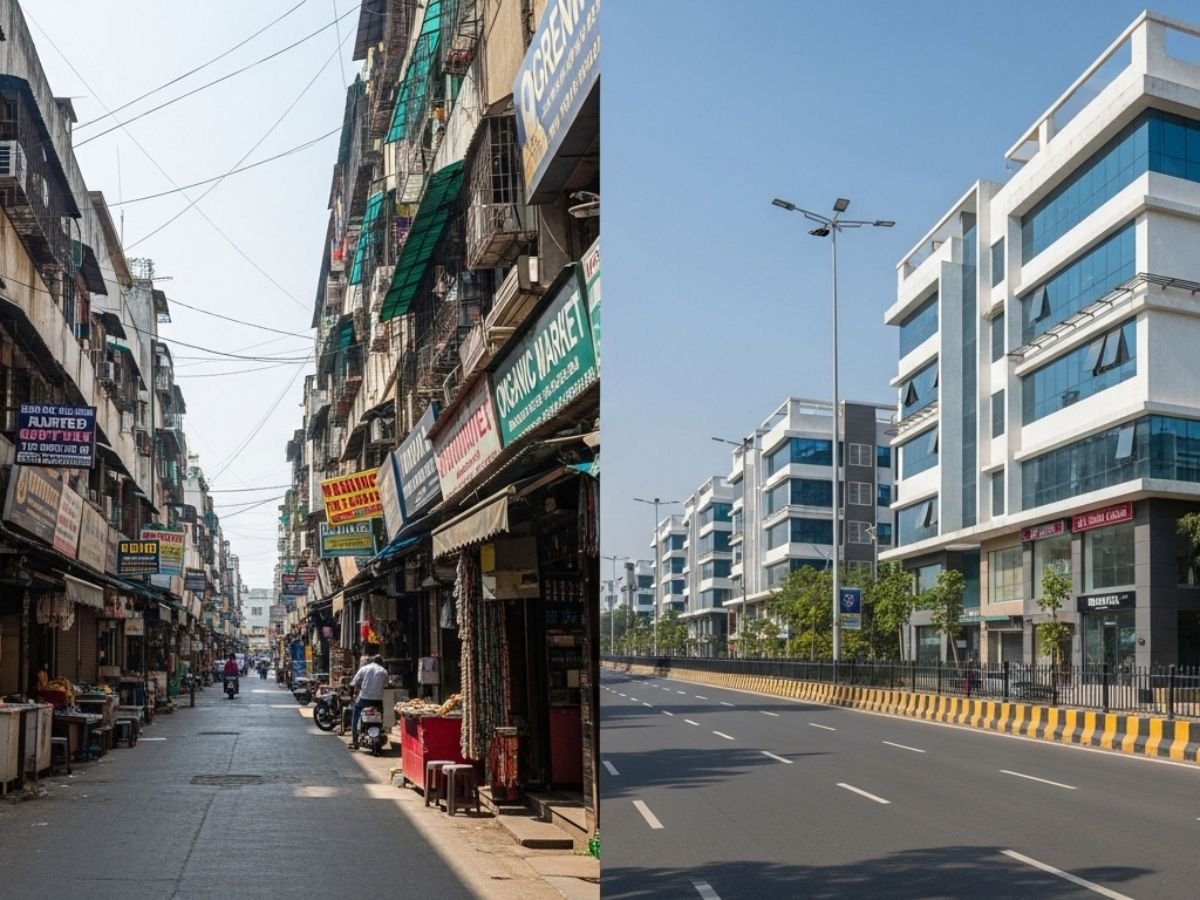
The simple answer is urban form. Panvel is one name on the map, but commercially it behaves like multiple smaller markets stitched together.
Old Panvel, New Panvel and station-linked belts behave differently
Old Panvel works like an older, organically evolved trading pocket. Streets are tighter, certain stretches carry strong habitual footfall, and some units command a premium because people already know that lane, that chowk or that cluster. In places like the Shivaji Chowk side and older market-facing pockets, a shop can get valued much higher than its building quality would suggest, simply because customer flow is already proven.
New Panvel works differently. CIDCO-style sector planning, wider roads and better layout logic make many units more usable for offices, coaching classes, clinics, small consultancies and appointment-based businesses. The built environment may feel less chaotic, but not every road in New Panvel has the same commercial pull. A formal-looking building does not automatically create retail performance.
Then there are station-linked belts. These can get strong quoting because access is easy and commuter movement is real. But commuter movement and buyer conversion are not the same thing. A person rushing to or from the station supports some formats, not all formats.
Front road visibility, parking and access change pricing more than many buyers expect
This is where many buyers overpay. They see “main road” and assume premium. But in Panvel, raw road visibility is not enough.
A shop on a fast-moving road without easy stopping, legal parking or a settled catchment may look prime on paper and still underperform. On the other hand, a less glamorous unit inside a functioning local cluster may lease faster because customers can actually reach it, stop there and return again.
Which Panvel Pockets Usually Command Higher Commercial Pricing and Why
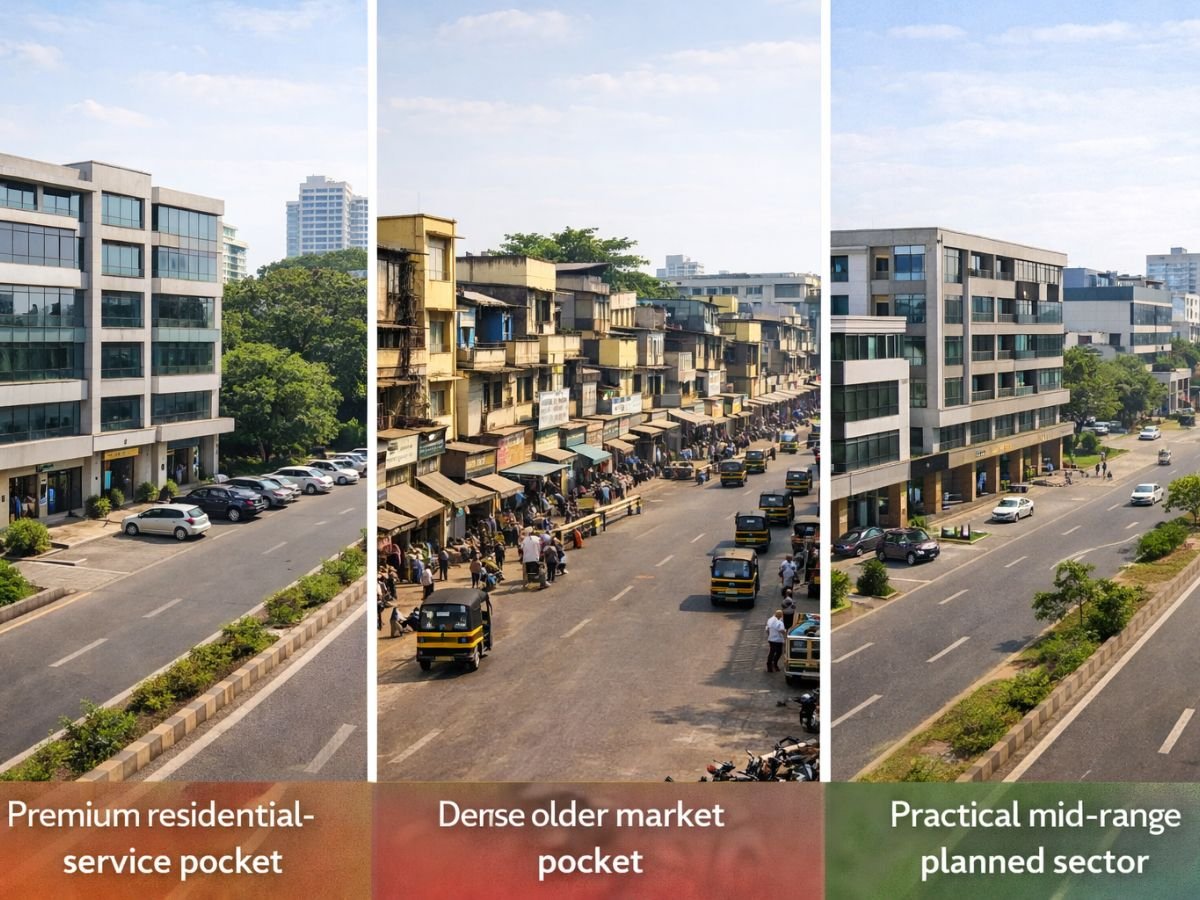
Some Panvel pockets do command higher pricing, but each does so for a different reason. That difference matters more than the headline number.
| Why pricing becomes stronger | Main caution | |
|---|---|---|
| Khanda Colony | Premium residential catchment, service demand, stronger local spending ability | High entry cost can reduce yield comfort |
| Old Panvel market side | Established trader footfall, known market behaviour, repeated local usage | Parking stress, older stock, built-up vs carpet confusion |
| New Panvel station-linked side | Access, commuter convenience, wider user pool | Not every station-near unit converts into strong retail |
| Palaspe / highway-influenced belts | Showroom and logistics logic, strategic road linkage | Highway frontage can be visually strong but commercially sterile without access design |
Station-linked and high-convenience belts
These pockets usually hold value because convenience is real. Staff can reach easily, small service businesses get natural visibility, and customer travel friction is lower. But the premium works better for offices, clinics, service centres and commuter-linked retail than for all retail formats.
Old Panvel market-style catchment
Old Panvel can still support very strong shop pricing in the right lanes because it has habit-based business. That is a real advantage. But buyers must discount for congestion, ageing building stock and parking pressure.
New Panvel planned pockets
New Panvel is often more practical than dramatic. It may not always deliver the emotional “bazaar premium” of Old Panvel, but it can make more business sense for offices and professional users because access, layout and usability are better.
Khanda Colony and practical service-commercial stretches
Khanda Colony stands out because it pulls from a better residential base and supports lifestyle-plus-utility consumption. That tends to help pharmacies, clinics, specialty food, coaching, beauty, convenience retail and certain family-facing service categories more than generic commodity retail.
How Shop Rates and Office Rates Move Differently in Panvel
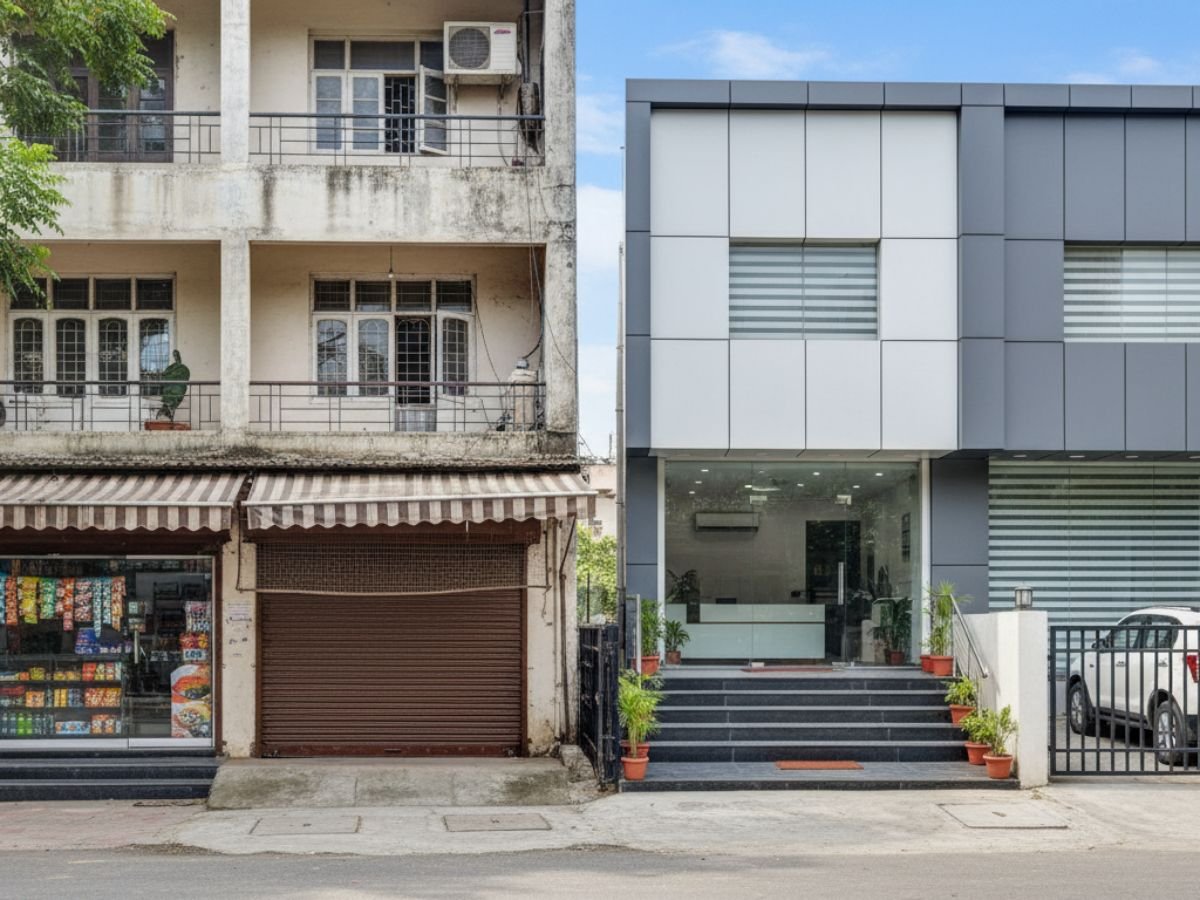
This is one of the biggest mistakes in Panvel commercial investing. People apply shop logic to offices and office logic to shops.
When shops justify higher capital pricing
Shops can justify higher capital values when three things are working together: frontage, repeat catchment and easy stopping. In the right lane or the right cluster, a small shop can outperform a larger office in pure business relevance. That is why shop rates in Panvel can look expensive.
But shops are fragile too. If the business depends heavily on impulse conversion and walk-in traffic, even a slight weakness in access, frontage or surrounding tenant mix can hurt performance. Many investors forget that a shop is only as good as its exact spot, not just its node name.
When offices make more practical sense
Offices usually make more sense in structured pockets where the tenant cares about usability, connectivity, floor efficiency and address stability more than raw street visibility. In New Panvel and selected practical belts, offices can offer a lower capital entry point than high-street shops while still attracting a stable tenant pool.
That is why office spaces often look less exciting in brochures but can make more disciplined investment sense. A good office does not need bazaar-style footfall. It needs approachability, parking practicality, decent building maintenance and a repeatable user base.
What the Panvel Commercial Market Trend Actually Looks Like Right Now
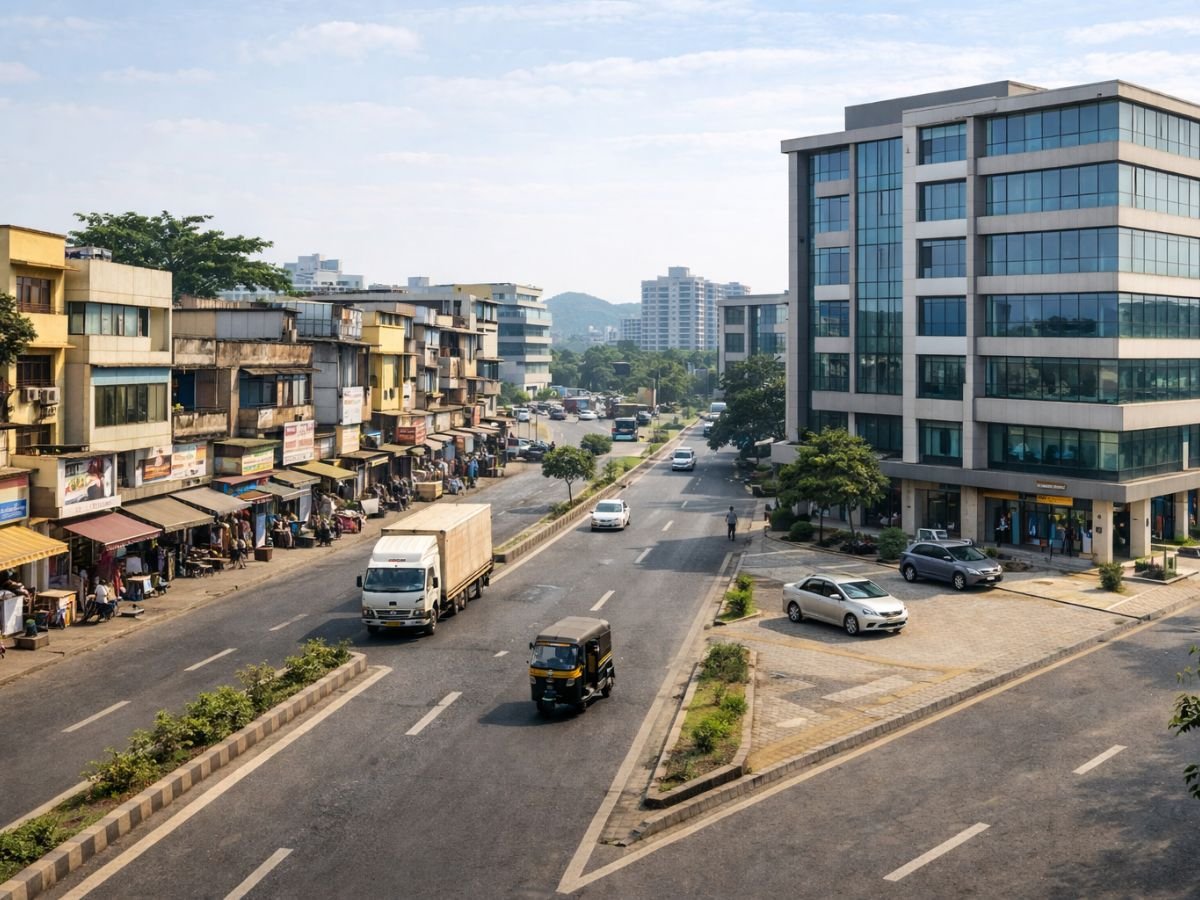
The market trend in 2026 is best described as selective demand after a big infrastructure-led re-rating phase. It is not correct to describe the whole Panvel commercial market as uniformly booming.
The airport narrative has already moved from promise to operations. Navi Mumbai International Airport opened for commercial flights on December 25, 2025, and has been ramping up services in early 2026. That changes the market psychology. Earlier, people were buying on expected future upside. Now buyers have to ask whether current pricing has already absorbed too much of that upside.
Panvel also remains tied to broader transport upgrades, including the 29.6 km Panvel–Karjat suburban corridor, which was reported at over 85% completion in February–March 2026 and expected to be commissioned within the current financial year. That future commuter shift matters, but it still has to translate into actual catchment change on the ground.
So what is the real trend? Stronger quoting continues in better pockets. Ready and usable commercial stock remains more attractive than concept-heavy promises. Retail with proven local demand still gets attention. Offices with sensible entry pricing remain practical. But highly speculative commercial stock in outer influence zones can still face slower absorption.
Are Asking Prices in Panvel Matching Real Business and Rental Logic
Not always. In fact, this is where many buyers get trapped.
If a commercial seller is quoting a price so high that the likely rent produces a weak gross yield, the deal may be more vanity-priced than market-priced. This is especially common where brokers pitch “future appreciation” more aggressively than present rentability.
A simple reality check helps. If a small commercial unit is being sold at a premium because it is “main road” or “airport side,” but the likely tenant demand is shallow, then the price may not be supported by actual business logic. A unit can be visible and still remain vacant.
This is especially true in highway-influenced stretches. Heavy traffic volume does not automatically create retail demand. Cars moving fast do not turn into customers unless there is safe access, clear stopping room, service roads and a business category that fits that environment.
What Tenants, Investors and Self-Use Buyers Should Check Before Trusting a Quoted Rate
Before you accept any Panvel commercial quote, check these practical points:
- Is the quote based on carpet area or built-up area?
- Does the unit have legal parking or usable stopping space?
- Is the road genuinely customer-friendly or just visually prominent?
- Is the building old, maintenance-heavy or likely to need major repairs?
- Does the exact cluster already have functioning businesses?
- If your tenant leaves, how easy will re-leasing be?
That last point matters a lot. A commercial unit is not only a purchase. It is also an exit problem. You are buying present utility and future releasability together.
How to Use MahaRERA, IGR Maharashtra and Local Market Signals Without Misreading the Market

Official sources help, but only when you understand what each source can and cannot tell you.
The Maharashtra Department of Registration and Stamps’ e-ASR portal gives the statutory rate framework used as a baseline for valuation and stamp duty. The portal itself says it provides approximate rate information and advises users to verify details with the relevant authority. In other words, it is a floor for statutory valuation, not a live market deal calculator.
The research baseline for FY 2025–26 also points to a 4.97% upward revision for the Panvel jurisdiction. That matters because it raises the formal transaction base, but it still does not tell you whether a particular commercial unit deserves its quoted market premium. Use it as a check, not as the final answer.
MahaRERA is different. It helps you check project registration, disclosures, extensions and compliance history. That matters even more in commercial buying because registration alone is not enough. In January 2025, MahaRERA suspended 1,905 projects for non-compliance with status update notices, a strong reminder that buyers must verify ongoing compliance, not just a project’s marketing claims.
Then come live market signals like portal listings. These are useful, but only as asking-side signals. They show what owners want, not necessarily what the market is finally paying. That gap is critical in Panvel right now.
Is Panvel Better for Commercial Buying, Leasing, or Waiting
There is no one correct answer for every buyer.
For self-use business owners, buying can make sense in Panvel if the location truly suits the business and the cost is manageable. This is especially true for people who know their catchment, want a permanent base and are tired of recurring lease uncertainty.
For yield-focused investors, selective buying makes sense only when the rent math works. Practical offices and proven local retail can still work. Blind buying in overpriced pockets usually does not.
For first-time retail brands or uncertain occupiers, leasing is often the smarter move. Panvel is still evolving internally, and testing demand through rent can be wiser than locking large capital at peak asking values.
For pure short-term speculative buyers, waiting may be better than forcing an entry. The easy infra-story money is largely behind the market. From here, quality of pocket selection matters much more than excitement.
Common Mistakes People Make While Reading Panvel Commercial Rates
The first mistake is thinking Panvel is a single commercial market. It is not.
The second is trusting a broker’s rate without separating carpet from built-up area. In older pockets especially, this can distort your real cost badly.
The third is ignoring transaction friction. In Navi Mumbai and Panvel-side CIDCO-linked markets, transfer-related charges can materially change the economics of resale commercial property. Secondary sources reporting the April 2025 fee revision showed sharply higher commercial transfer slabs, which is exactly why resale deals need closer scrutiny before ROI is calculated.
The fourth is assuming airport or highway influence automatically makes every nearby commercial unit investable. It does not. Some benefit from the ecosystem. Some are merely using the story.
You may also want to read Old Panvel vs New Panvel for Business and Commercial Property if you are comparing market movement across different parts of Panvel.
Conclusion
What Panvel Commercial Rates Really Mean for Different Buyers
Panvel commercial rates in 2026 make sense only when read pocket by pocket, asset by asset and use-case by use-case. Khanda Colony, Old Panvel, New Panvel and peripheral growth belts should not be compared blindly. The market has matured beyond the old “airport aa raha hai” story. Now the real questions are simple: can the unit lease well, can a business actually run there, is the access practical, and does the quoted price still leave room for sensible returns?
That is the real Panvel commercial market trend today. Selective demand. Selective pricing. Selective opportunity.
FAQs
Frequently Asked Questions