
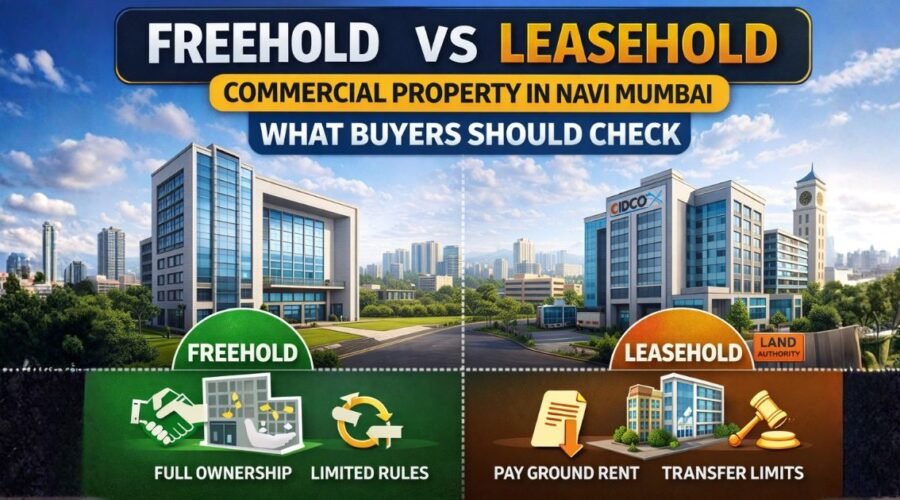
Freehold vs Leasehold Commercial Property in Navi Mumbai: What Buyers Should Check
Freehold vs Leasehold Commercial Property in Navi Mumbai: Which Makes More Sense for Buyers?
If you are buying a commercial office, shop, showroom, or gala in Navi Mumbai, freehold is usually simpler and stronger on paper, but leasehold is not automatically a bad buy. In this market, the real decision is whether the property is transferable, compliant, financeable, and correctly priced after authority-side charges. A clean leasehold unit in a strong location can easily be safer than a weak freehold one.
That is the practical answer, and honestly, it matters a lot in Navi Mumbai. This is not a city where every commercial asset sits on the same ownership structure. In many planned nodes, CIDCO remains the land authority. In parts of the TTC belt like Mahape, Rabale, and Turbhe, MIDC rules shape the deal. So if you judge a property only by the words freehold or leasehold, you can miss the real risk completely.
A buyer should therefore stop asking only, “Which is better?” and start asking, “Who is the lessor, how clean is the transfer chain, how much lease is left, what charges are pending, and is the discount worth the friction?” That is where the real decision sits.
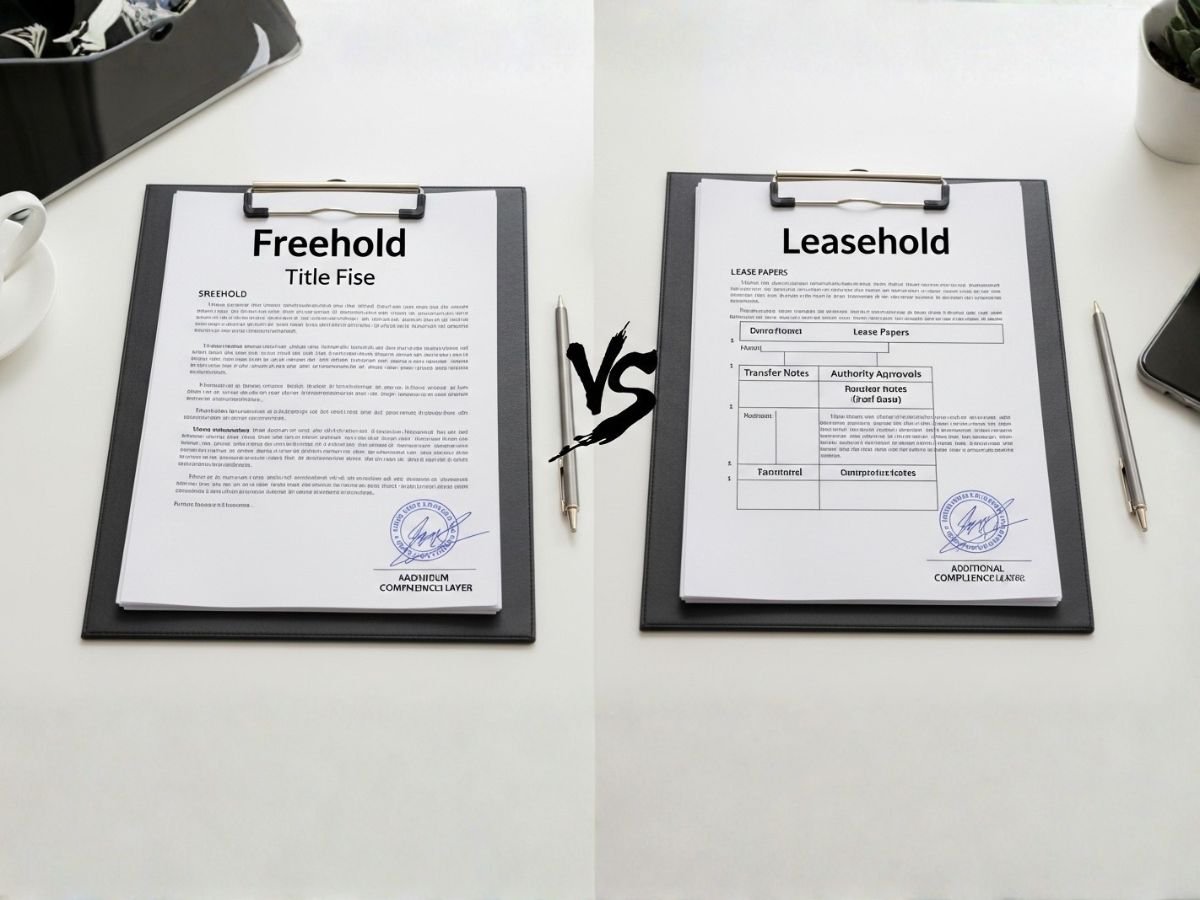
Freehold or leasehold: which is usually safer for commercial buyers in Navi Mumbai?
| Factor | Freehold | Leasehold | What it means for a commercial buyer |
|---|---|---|---|
| Ownership control | Stronger and cleaner | Rights over structure and long-term use, not absolute land ownership | Freehold is simpler, but leasehold can still work if documents are clean |
| Transfer process | Usually easier | Often depends on CIDCO or MIDC transfer process, NOC, and dues | Leasehold needs tighter due diligence before token money |
| Hidden authority costs | Lower risk of authority transfer friction | Higher risk of transfer premium, dues, penalties, and processing delays | Price negotiation matters more in leasehold deals |
| Loan comfort | Usually stronger | Often financeable, but depends on remaining lease term and file cleanliness | Lease term and title chain directly affect sanction comfort |
| Resale ease | Usually better | Can be slower if transfer file is messy | Exit-focused buyers usually prefer cleaner structures |
| Local availability | Rare in many prime commercial pockets | Common in planned nodes and industrial-commercial zones | You cannot reject all leasehold stock in Navi Mumbai and still expect the best options |
What “leasehold” usually means in Navi Mumbai commercial property
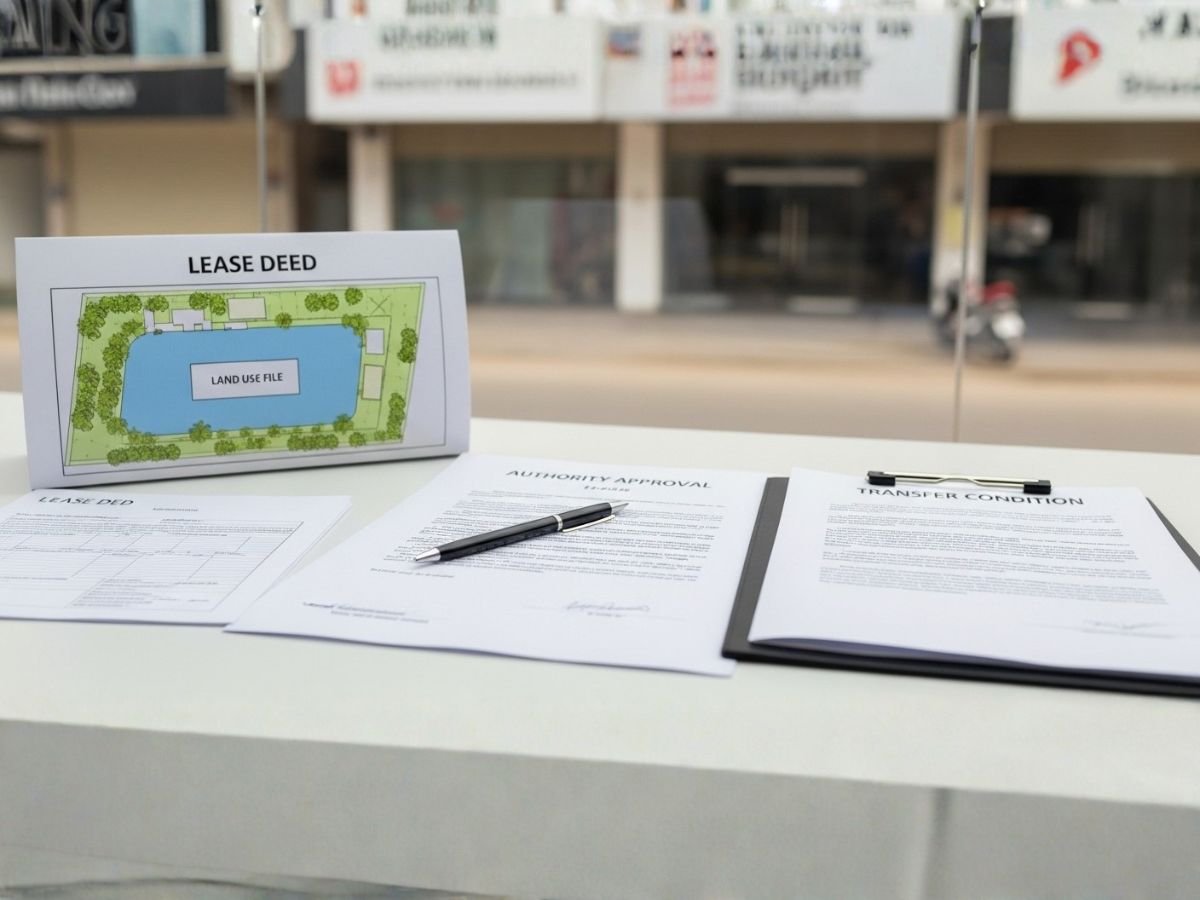
Many buyers hear leasehold and think it means ordinary tenancy or renting. That is not what this means here.
In Navi Mumbai commercial property, leasehold usually means you are buying the structure and the long-term right to use the land for the lease period, while the underlying land remains with the authority. In practical terms, the authority is often CIDCO in planned nodes and MIDC in industrial belts. Your rights may be long, valuable, and commercially useful, but they are still governed by the lease document and authority rules.
Why many buyers get confused by the ownership label
The confusion happens because brokers often present leasehold commercial stock as if it is almost freehold. Sometimes they say things like “clear title,” “no issue in transfer,” or “practically same as freehold.” That language hides the real question.
The real question is not whether the unit can be used today. The real question is whether it can be transferred smoothly, mortgaged smoothly, and sold later without nasty surprises. That depends on the lease deed, prior transfer orders, pending dues, permitted use, and authority-side compliance.
Why the lessor, lease document, and transfer conditions matter more than sales language
In planned belts from Vashi to Panvel, CIDCO’s role matters heavily. In the TTC belt, MIDC’s rules matter heavily. These are not cosmetic details. They decide whether a transfer needs authority permission, whether a modification needs approval, and whether certain dues or premiums must be paid before the file moves.
This is also why many buyers are confused by the recent freehold-conversion talk in Maharashtra. The big public conversation around leasehold-to-freehold conversion created the impression that everything is becoming freehold. But in practical commercial buying, that is not the position buyers should assume. As of 2026, commercial shops, offices, and industrial galas should still be treated as governed by the existing leasehold transfer framework unless a specific property document says otherwise. Do not buy a commercial unit believing it will “definitely become freehold soon.”
Is leasehold commercial property actually a bad buy in Navi Mumbai?

No. Not automatically.
In fact, some of the most useful and profitable commercial assets in Navi Mumbai sit on leasehold land. A good leasehold office in a strong business belt or a well-positioned retail unit in a proven market can perform far better than a poorly located freehold asset with weak demand. Commercial property performance still depends on business logic: location, access, permitted use, building quality, tenant demand, and exit ease.
When leasehold can still be a smart purchase
Leasehold can be a smart buy when five things line up.
First, the remaining lease term is healthy and long enough to make financing and future resale practical. Second, the title chain is clean and each prior transfer has been properly documented. Third, there are no hidden transfer premiums or ground-rent problems waiting in the file. Fourth, the unit has valid occupancy and permitted commercial use. Fifth, the price reflects the friction.
That last point matters. Leasehold often works well when it gives you entry into a strong location at a lower capital cost than a comparable freehold alternative. For a yield-focused investor, that can improve return on invested capital. For a self-use business owner, it can secure the right location without paying a freehold premium that may not produce additional business income.
When leasehold should make you walk away
Walk away when the seller says “paperwork is manageable” but refuses to show the file.
Walk away when the transfer chain has gaps, when past sales were never properly regularised, when dues are unclear, when the property tax trail is messy, or when the unit’s actual use does not match what is legally allowed. In MIDC zones, this is especially important. A gala that looks commercially usable is not automatically permitted for showroom, restaurant, or retail use. If change of use is required and not obtained, your business plan can collapse after purchase.
Also walk away if the lease term is already too short for comfort. A cheap price does not save a property that may become difficult to finance or resell.
Which matters more in practice: ownership type or transfer and authority risk?
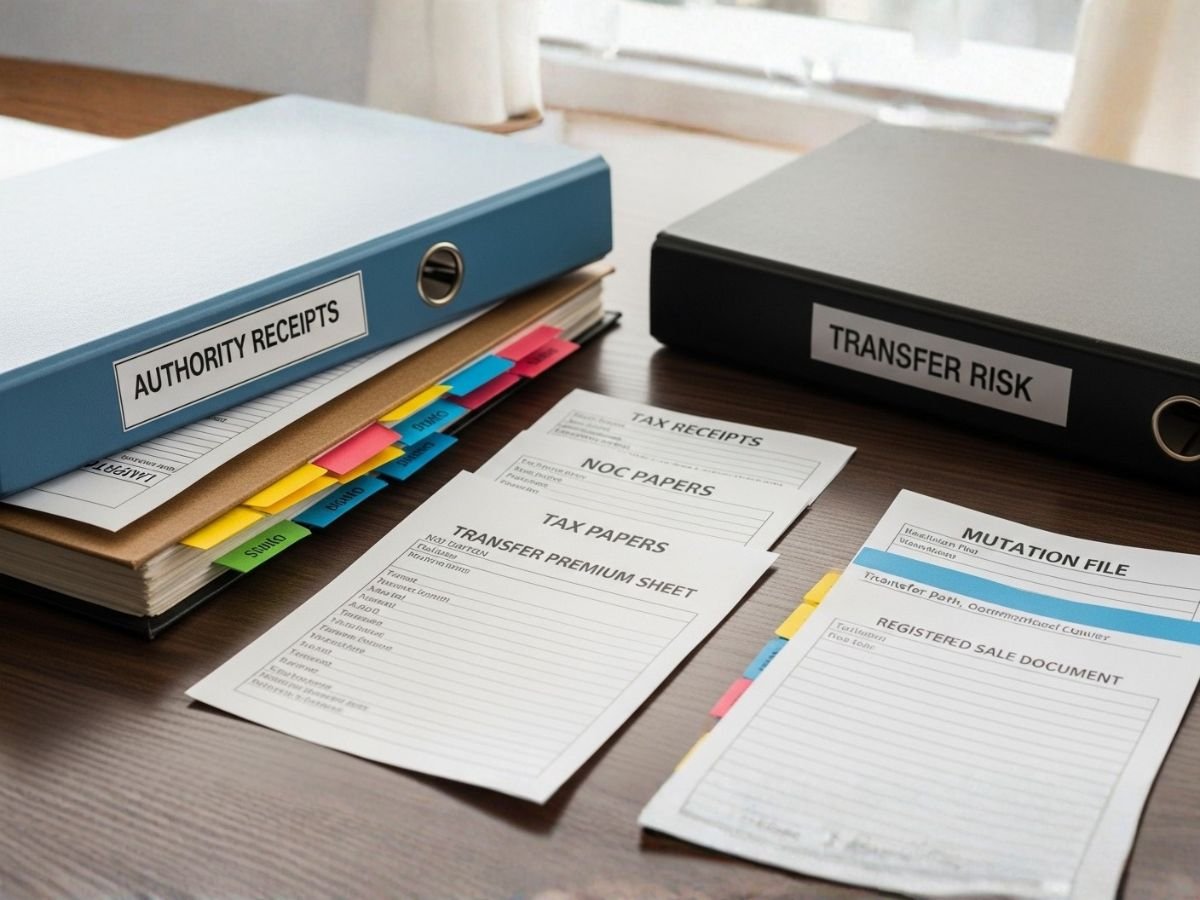
In Navi Mumbai commercial property, transfer and authority risk often matter more than the label itself.
This is where many buyers make the wrong call. They see a lower price on a leasehold shop and think they found a bargain. But once CIDCO transfer premium, late file regularisation, GST on certain authority costs, municipal mutation, and old dues begin surfacing, the bargain disappears. Sometimes it disappears fast.
The April 2025 hike in CIDCO transfer charges made this even more important for commercial buyers. After that change, commercial transfer costs moved sharply higher, and for larger commercial properties they can become very serious numbers. On top of that, NMMC revised its property transfer fee structure from October 2025 to 0.20% of the registered value or Ready Reckoner benchmark, whichever is higher. So even municipal-side compliance has become more financially visible.
This changes the whole way buyers should think. A property is not safe because the brochure says freehold. And a property is not unsafe because someone called it leasehold. The safer property is the one whose transfer path is clear, dues are known, tax records are updated, and intended use is legally supportable.
One more mistake deserves a direct mention: a society NOC is not enough in a leasehold framework. It may be useful as one supporting document, but it is not a substitute for the authority-side transfer trail.
What should you check before buying a leasehold office, shop, showroom, or gala?
This is the heart of the decision. Before you pay token money, do not stop at the price, the frontage, or the footfall pitch. Check the file.
1) Remaining lease term and renewal conditions
Ask for the original lease basis and calculate how much term is actually left. This matters because banks usually look more comfortably at assets where the remaining lease term clearly exceeds the proposed loan tenure. It also matters for resale. A buyer ten years later will ask the same question you should ask today.
Do not assume renewal will be effortless just because “everyone gets extension.” Market practice and legal certainty are not the same thing.
2) Transfer permission, NOC, premium, and hidden dues
Ask who the lessor is. Then ask what exact transfer permissions are required. Then ask for the latest calculation, not verbal estimates.
If it is a CIDCO-governed commercial asset, ask for the latest transfer premium calculation and no-dues position. If it is in MIDC territory, ask whether the proposed structure is formal or non-formal and whether any differential premium issue can arise. These are not small technicalities. They can change your real acquisition cost by lakhs.
3) Permitted use, OC, and whether the unit can legally operate as marketed
Commercial buying in Navi Mumbai is full of “should be okay” language. Avoid it.
A retail shop, office, showroom, and industrial gala do not carry the same use conditions. A property may look perfect for your business but still have a compliance problem if the approved use does not match the operational use. That is especially risky in industrial belts where buyers try to treat a gala like a free-form commercial box.
Occupancy Certificate also matters. A clean ownership structure does not save a unit that lacks proper occupancy or use compliance.
4) Title chain, society records, and tax trail
In a leasehold commercial purchase, the chain of documents matters a lot. You want to see how the property moved from one holder to another, whether those transfers were properly recorded, and whether the file is complete.
Then check the tax trail. In NMMC areas, mutation and transfer compliance matter. In Panvel-side locations such as Kharghar, Kamothe, and Panvel, PMC-side arrears risk deserves serious attention because municipal recovery pressure has become more aggressive. A no-dues certificate is not a formality here. It is protection.
5) Loanability and resale friction
Even if you are buying with cash, think like the next buyer’s banker.
Ask yourself: if I sell this property later, will the next buyer get stuck because the file is weak, the lease term is short, the authority transfer is unclear, or the use approval is not clean? That is the real exit question. Good commercial property is not only about rent or self-use. It is also about whether the next transaction will be smooth enough for the market to trust it.
When is paying more for freehold commercial property actually worth it?

Paying more for freehold makes sense when you genuinely benefit from the cleaner structure.
Cases where freehold deserves a real premium
A legacy business that wants long-term control, cleaner inheritance, smoother corporate restructuring, or less authority friction may rightly value freehold more. The same applies where you expect major redevelopment flexibility or where ownership simplicity is itself part of the business strategy.
This is why certain businesses are more naturally freehold-leaning. Large-format destination retail, family-held commercial assets, and long-hold owner-users often value control more than entry discount.
Cases where “freehold” still does not save a weak commercial asset
But this is the trap: freehold cannot rescue a weak commercial property.
If the building lacks proper occupancy, if access is poor, if footfall is weak, if parking is impractical, if building management is poor, or if demand is thin, the freehold label does not magically create value. In many parts of Navi Mumbai, a strong leasehold commercial unit in a proven business ecosystem can be the better asset overall.
So yes, freehold deserves a premium in some cases. No, it does not deserve blind overpayment.
How should buyers negotiate price differently for freehold and leasehold stock?
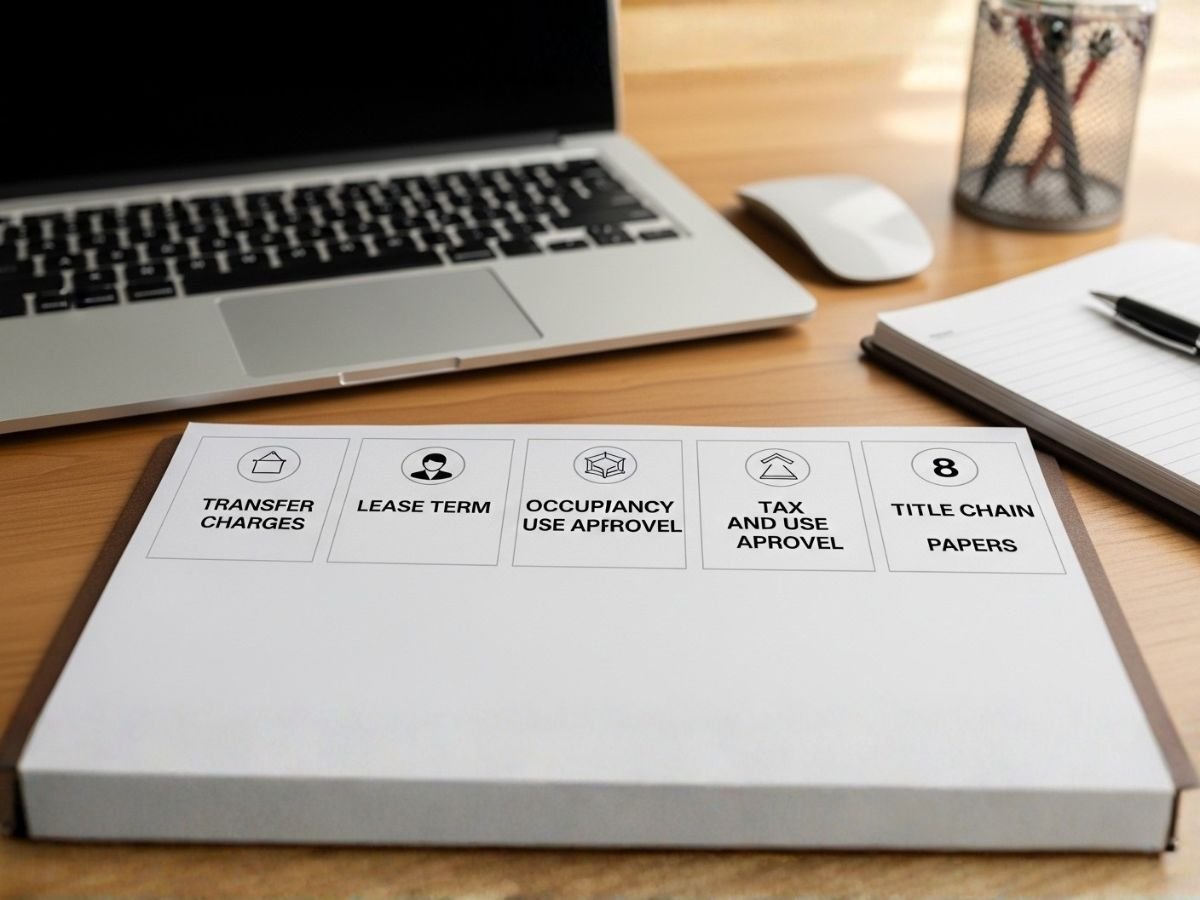
Buyers should negotiate freehold and leasehold stock differently because the friction profile is different.
In freehold, the negotiation is more about asset fundamentals: location, building condition, tenant quality, yield, frontage, and marketability. In leasehold, you must negotiate both the asset and the file.
Take a practical retail example. Suppose a shop in Kharghar is quoted at ₹1.5 crore. The broker says the title is clear. But if the property is leasehold and the due diligence reveals transfer-related outgo, file regularisation costs, and municipal-side compliance costs that together may add up to around ₹4 lakh, that number cannot be treated as a side note. Either the seller clears it before closing, or you reduce the price accordingly. Otherwise you are buying the seller’s friction.
Now take a TTC belt example. Suppose an industrial gala in Mahape looks attractive for a business shift or commercial-style use. If MIDC permissions, transfer structure, or change-of-use exposure create a future burden, that has to be reflected in the price. A lower rate per square foot is meaningless if your operations later hit a compliance wall.
The clean rule is simple: deduct document friction from the asking price, not from your peace of mind after purchase.
Which type suits you better: self-use business owner, rental investor, or resale-focused buyer?
Different buyers should not make the same ownership decision. Commercial intent changes the answer.
| Buyer type | Usually better fit | Why | Main caution |
|---|---|---|---|
| Self-use business owner | Freehold if affordable, otherwise clean leasehold in the right location | Stability and control matter, but location still drives business income | Do not sacrifice business viability just to chase the freehold label |
| Yield-focused investor | Often leasehold | Lower entry cost can improve rental yield if the asset is clean and demand is real | Hidden transfer costs can destroy the yield advantage |
| Resale-focused buyer | Usually freehold or very clean leasehold | Faster future transfer and cleaner buyer perception matter | Messy leasehold files slow down exit and compress price |
If you are a self-use buyer, focus first on business logic. A perfect freehold asset in a weak pocket may still be the wrong choice. If you are an investor, price discipline matters more. If you are exit-focused, paperwork simplicity becomes a much bigger part of the investment thesis.
Common broker and seller lines buyers should not accept without documents
This section is blunt because it needs to be.
- “Everything is becoming freehold now.”
Do not rely on this for commercial property. The widely discussed freehold conversion policy has created huge confusion, but commercial buyers should not assume their shop, office, or gala is covered.
- “CIDCO transfer is manageable.”
Maybe. But manageable for whom, and at what cost? Ask for the actual calculation sheet and written responsibility split.
- “Society NOC is enough.”
No. Not for a leasehold title chain.
- “Commercial use is allowed here.”
Ask for the document that proves the permitted use matches your intended use.
- “Bank loan ho jayega.”
Possibly. But loanability depends on lease term, title chain, NOC position, and bank-level comfort.
This is where many buyers lose money. Not because the property was impossible, but because they trusted language instead of paper.
A simple 5-question test before you pay token money on any commercial unit
Before you pay a token, answer these five questions with a proper yes, not a verbal yes.
1. Are the transfer charges and authority-side dues calculated in writing on the latest applicable basis? 2. Does the remaining lease term look strong enough for financing comfort and future resale? 3. Are municipal tax records updated, and is a no-dues position available? 4. Does the unit have valid occupancy and the correct permitted commercial use? 5. Is the title chain complete through registered documents and authority-backed transfer trail, not just society paperwork?
If even one of these answers is unclear, slow the deal down. Commercial property mistakes are expensive because they usually appear after the cheque is signed.
Conclusion
For commercial property in Navi Mumbai, freehold is usually the cleaner structure, but leasehold is still a normal and often workable part of the market. The smarter buyer does not reject leasehold blindly, and does not overpay for freehold blindly either.
The right decision is to buy the asset that is cleaner to transfer, legally usable, easier to finance, and properly priced after authority-side friction. In other words, do not buy the better-sounding label. Buy the better-documented commercial property.