
Vashi Property Guide 2026: Should You Buy, Rent or Wait?
Vashi is still one of the safest all-round property markets in Navi Mumbai in 2026, but it is not a bargain market. You usually choose Vashi for mature infrastructure, strong train-and-road connectivity, hospitals, retail, and daily convenience, while accepting older building stock, parking stress, and a higher entry cost than many outer nodes. Current portal data and your uploaded Vashi research brief both point to the same truth: Vashi is a premium but highly uneven micro-market, not one single rate bucket.
Quick Summary
| Decision point | Practical answer |
|---|---|
| Best for | Families, established professionals, buyers who want a mature node that works immediately |
| Less suitable for | Pure appreciation hunters, bargain seekers, buyers who want only brand-new stock |
| Headline sale reality | Portal averages vary sharply, roughly from about ₹20,477/sq ft on Housing to about ₹31,450/sq ft on 99acres, which shows how mixed the inventory is |
| Active rent reality | 1 BHK and 2 BHK rents vary a lot by sector, furnishing, age, and access. Premium pockets can go meaningfully above the locality average |
| Main strength | Rail connectivity, mature social infrastructure, retail, healthcare, and established city feel |
| Main risk | Older societies, seepage and maintenance, parking shortages, and overhyped redevelopment talk |
Why Vashi Still Matters in 2026
Vashi remains relevant because it is not dependent on “future promise” alone. It already has the kind of infrastructure many buyers in Navi Mumbai still want every day: suburban rail access, established shopping, serious healthcare, and a proven commercial ecosystem. Official Central Railway information shows Vashi benefits from both Harbour Line connectivity and the Thane–Vashi Trans-Harbour route, while Inorbit Mall, Fortis Hiranandani Hospital, and the APMC complex remain major everyday anchors in and around the node.
The external connectivity story is also stronger now than it was a few years ago. MMRDA states that Atal Setu opened for traffic on 13 January 2024 and has improved regional mobility between Mumbai and Navi Mumbai. On the airport side, NMIA is no longer a vague future story: the official airport site is live with flight information, and reporting in March 2026 said the airport, inaugurated on 25 December 2025, was scaling up its first summer schedule with rising daily departures and 46 domestic destinations.
That is why Vashi works best as a “live-now” node. Your uploaded research dossier frames it correctly: this is usually a safety-and-time-saving play, not a cheap-entry, explosive-growth bet.
Vashi Price Reality in 2026: Why the Headline Average Can Mislead You
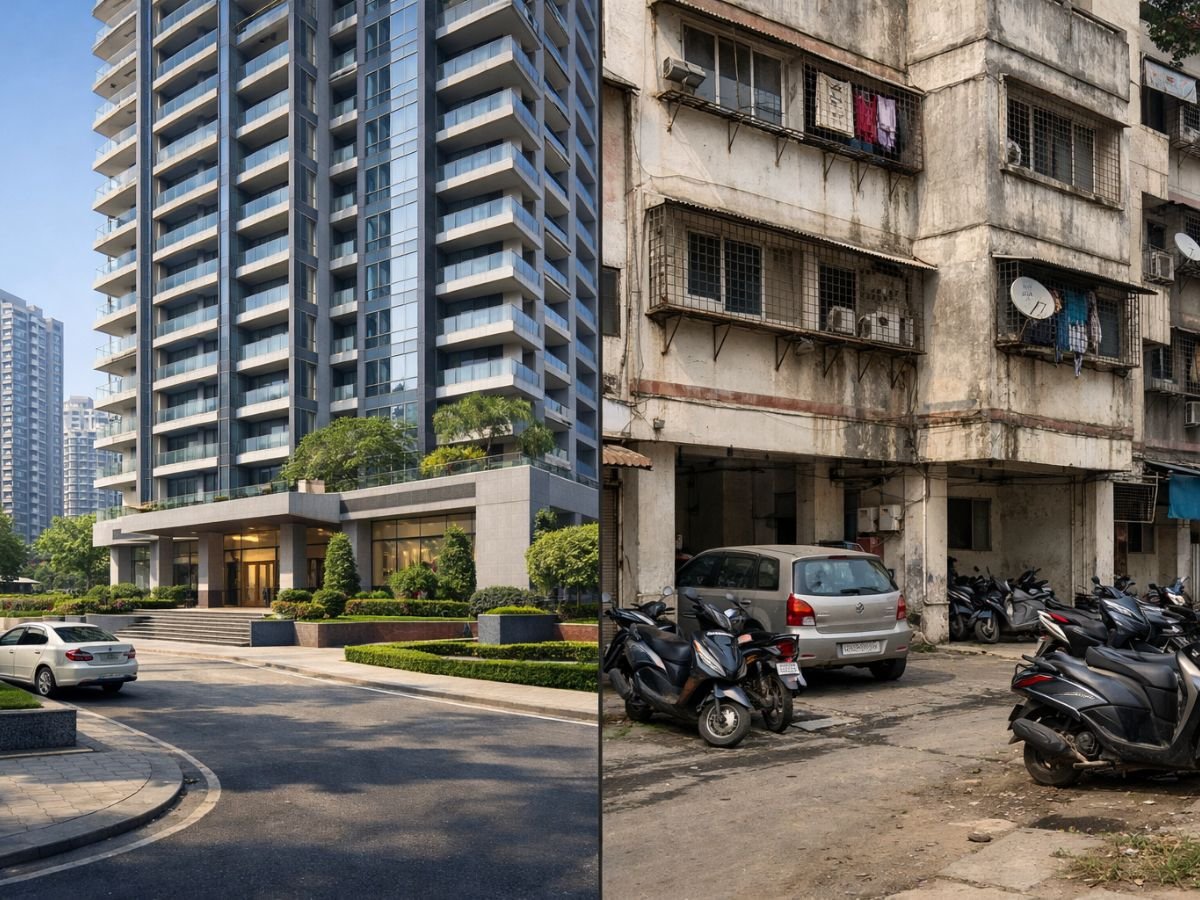
The first thing buyers should understand is that Vashi has no single honest average. Housing currently shows an average sale price of about ₹20,477 per sq ft in Vashi, while 99acres shows an average around ₹31,450 per sq ft. That gap is not a small rounding error. It tells you that Vashi has very mixed stock, and that portal averages are only rough signals, not decision-grade valuation.
The real price is driven by what kind of Vashi property you are actually looking at. A premium newer tower near the station or Palm Beach-facing belt behaves very differently from an older CIDCO or co-operative housing society flat with limited parking, weaker lifts, lower carpet efficiency, and higher maintenance uncertainty. Your uploaded brief is right to warn that old stock can distort averages and that tower inventory often commands a clear premium over walk-up or aging CHS inventory.
Current listing examples show this spread very clearly. In Sector 17, Housing currently shows resale 2 BHK inventory around ₹2.15 crore to ₹2.8 crore for roughly 950 to 1,150 sq ft built-up, and it also shows a new booking example in Downtown Avenue at nearly ₹37.98k/sq ft built-up. In Sector 29, Housing shows 2 BHK stock around ₹2.25 crore to ₹2.5 crore and larger 3 BHK or penthouse inventory going much higher. In Sector 28, you can still see 2 BHK and 3 BHK listings with a broad spread, including roughly ₹1.48 crore to ₹3.35 crore depending on size and product type. Sector 26 also shows meaningful variation, with active resale and new-project stock rather than one fixed price story.
So the correct question is not “What is Vashi rate?” The correct question is: Which sector, which building, how old, what carpet efficiency, what parking situation, and what actual daily convenience am I paying for?
Rent Reality in Vashi
Rent in Vashi is strong, but again, it is not uniform. Housing’s live rental listings show the spread well: in the broader Vashi market, examples include 1 BHKs from about ₹22,000 to ₹45,000, while 2 BHK examples cluster around ₹55,000 to ₹70,000 in stronger pockets like Sector 17. In Sector 16 specifically, current listings show 1 BHKs around ₹30,000 to ₹38,000 and multiple 2 BHKs around ₹50,000 to ₹60,000. In Sector 26, Housing currently shows an average 1 BHK rent of about ₹35,200.
What explains the difference? Usually four things: furnishing, walking access to station and major roads, whether the society has proper parking and lift quality, and whether the flat feels practical for modern family use. A ready-to-move furnished 2 BHK in a better-maintained building can command a very different rent from an older flat with weaker upkeep, even if both are technically in Vashi.
For landlords, that means Vashi can still give strong rental demand, especially for professionally used, family-ready stock. For investors, though, it is better treated as a relatively stable demand market than as a dramatic yield or appreciation play.
Sector-Wise Vashi Guide
Sector 17 and 30A: Convenience, Premium Access, More Noise
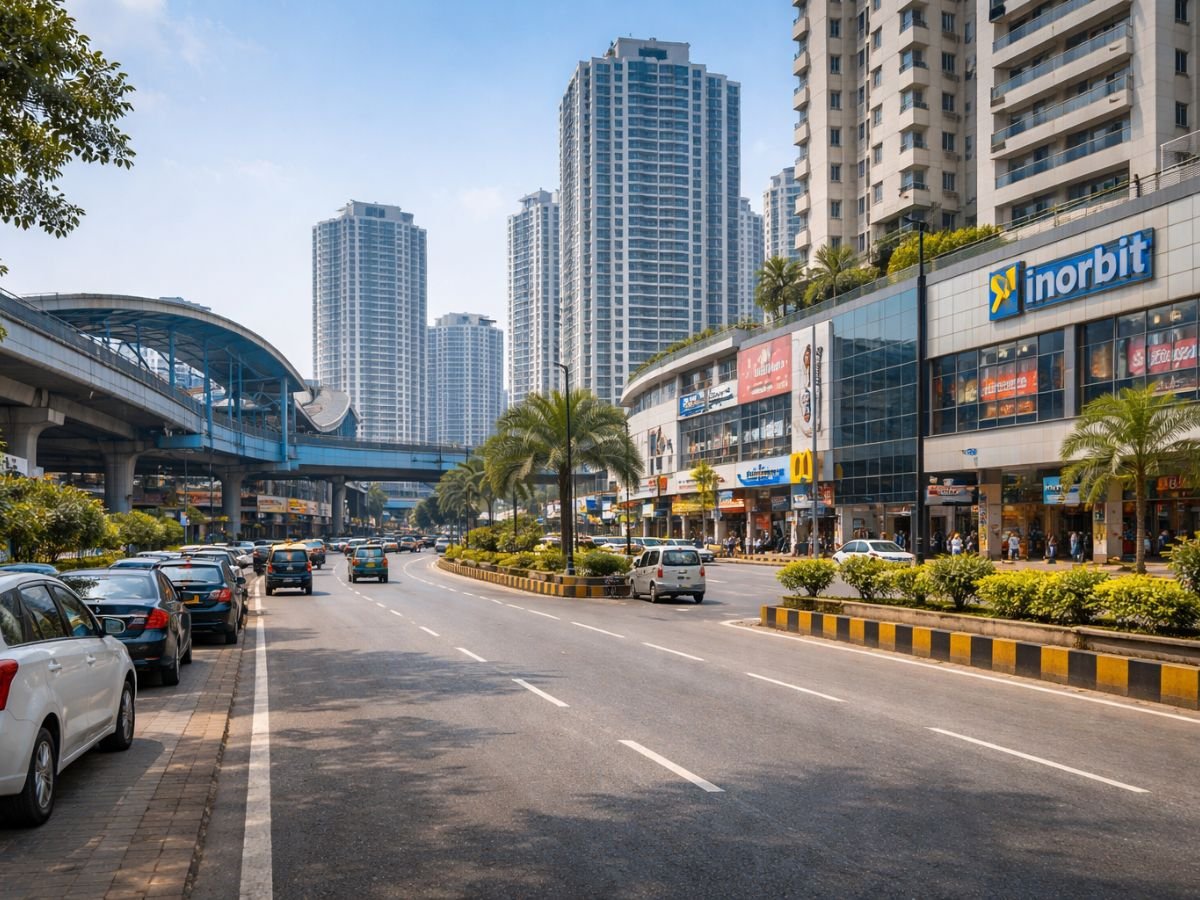
If you want the sharpest “Vashi advantage,” this belt is usually where it shows up first. Sector 17 sits close to station-driven convenience and strong commercial activity, while Sector 30A includes Inorbit Mall and a very visible Palm Beach Road address. Housing’s current Sector 17 sale listings show both premium resale pricing and very high-end newer stock, and the mall’s official address confirms the commercial weight of the Sector 30A side.
The trade-off is simple: convenience comes with cost, traffic, and noise. This is not the part of Vashi buyers usually choose for pure peace. It is the part they choose when immediate access matters more.
Sectors 9, 10 and 14: The Family Core of Old Vashi
Your uploaded Vashi brief describes these sectors as the family core, and that fits the local logic well. These are the kinds of pockets many end-users like because the feel is more established, the roads and daily routine are familiar, and the market is less driven by station-commercial intensity.
But this is also where buyers must be extra careful about old-building realities. In these family-core sectors, the society matters more than the sector name. A well-run older society can still work beautifully. A poorly maintained one can become a headache very fast.
Sectors 28 and 29: Quieter, More Premium, Better for Larger Homes
Sector 28 and Sector 29 usually attract buyers who want Vashi but not the busiest version of Vashi. Current Housing listings show larger 3 BHK and duplex stock in these sectors at clearly premium ticket sizes, and current rental examples in the broader Vashi dataset also show stronger rents for larger homes in these pockets.
This part of the market suits end-users more than bargain investors. Families looking for more space, a calmer feel, and a more residential environment usually find these sectors more aligned with their needs.
Sector 26: A More Practical Entry Pocket
Sector 26 is often a more mixed and practical Vashi entry point. Housing currently shows both sale and rental stock here, including 1 BHK and 2 BHK options, and the locality overview shows active demand on both sides of the market. Housing also pegs average 1 BHK rent here at about ₹35,200, which tells you this is not an off-market pocket, even if it does not always carry the same prestige as the strongest Vashi addresses.
This sector works for buyers who want Vashi access and ecosystem benefits but are more price-conscious. Even here, though, building quality and upkeep remain non-negotiable.
The Real Risk in Vashi Is Not the Locality. It Is the Building.
This is where many buyers make mistakes. Vashi as a node is strong. But a weak society inside Vashi can still become a bad purchase.
Your uploaded brief highlights the main practical risks correctly: older CIDCO or co-op stock, parking shortages, seepage and maintenance issues, and broker-led redevelopment hype. CIDCO’s website also shows that Vashi is part of its planned node structure and that redevelopment of dilapidated buildings is a live governance category, but that does not mean every old society is about to be redeveloped soon. A January 2026 report on Vashi Sector 9 makes the point clearly: redevelopment approvals are very specific, tied to unsafe buildings and process compliance, not a blanket windfall for all old stock.
So if someone tries to justify a weak building by saying “redevelopment ho jayega,” treat that as sales talk until you see real documents, actual society movement, and credible process evidence.
The 5-Point Vashi Resale Check

Before booking any resale flat in Vashi, check these five things properly:
1. Parking reality
Do not ask only “parking hai?” Ask whether it is allotted, open, stilt, stack, society-managed, or effectively first-come-first-serve. Parking stress is a real Vashi issue in older societies.
2. Seepage and structural condition
Older stock can look fine on a sunny visit and still hide waterproofing and slab issues. Ask for recent repair history.
3. Carpet efficiency, not just built-up area
Vashi has enough old inventory that built-up number alone can fool buyers. Compare usable space room by room.
4. Society dues and maintenance discipline
An older but disciplined society is often safer than a better-looking but poorly run one.
5. Redevelopment status only on documents
CIDCO’s redevelopment framework exists, but society-level timing and eligibility are specific. Never price in redevelopment upside casually.
Who Should Buy in Vashi in 2026?
Vashi makes the most sense for end-users. That includes families who want mature infrastructure, professionals who want reliable daily connectivity, and buyers upgrading from outer growth nodes who are tired of waiting for an area to become fully livable. Rail connectivity, hospital depth, retail presence, and an already-functioning city fabric are Vashi’s biggest strengths.
It can also make sense for a conservative investor who values rental demand and lower regret over flashy appreciation stories. But if your plan is simply “buy now, double fast,” Vashi is usually the wrong mindset. Your uploaded research brief frames it more honestly as a preservation-and-usability market than a speculative rocket.
Who Should Wait or Look Elsewhere?
You should think twice about Vashi if you want brand-new stock at a reasonable budget, if you cannot tolerate old-society uncertainty, or if you are chasing early-cycle appreciation. In those cases, a cross-check with a newer inventory market such as Sanpada or other selected Navi Mumbai nodes may give you a better fit, depending on budget and purpose. Even on portals, Sanpada’s current average rates are not automatically low, which is exactly why buyers should compare product quality, not just locality name.
Conclusion
Vashi is still worth serious attention in 2026, but only if you understand what you are paying for. You are not mainly buying “future potential” here. You are buying maturity, access, convenience, and lower lifestyle friction. That is exactly why Vashi continues to command a premium.
But do not buy the Vashi name blindly. Buy the right sector, the right building, the right carpet efficiency, and the right maintenance culture. If you do that, Vashi can still be one of Navi Mumbai’s most satisfying end-user markets. If you skip that discipline, even a premium address can become an expensive mistake.
FAQs
Frequently Asked Questions