

Best Commercial Areas in Navi Mumbai
The best commercial areas in Navi Mumbai are not the same for every business. Vashi and CBD Belapur are still the safest for established commercial relevance, Airoli and Ghansoli work better for office and IT demand, Turbhe matters more for B2B and logistics, and Seawoods-Nerul suits premium consumer-facing businesses. Kharghar, Panvel, Kamothe, Kalamboli, and Taloja can work too, but mostly in selected pockets and for the right holding period. This is not a generic list. It is a decision guide.
Navi Mumbai’s commercial market has become much more specialised than many articles suggest. Recent market data shows the city now has about 32.7 million sq ft of prime office stock, around 430 occupiers, and office rents that are roughly 21 percent lower than the average of Tier-1 city benchmarks. That cost advantage is one reason large occupiers and office users continue to expand here.
But that does not mean every “good” residential node is automatically a strong commercial one. A clinic, a coaching centre, a law office, a warehouse-linked operation, and a ground-floor retail shop all need different things. In Navi Mumbai, station access, frontage, parking, business ecosystem, and even municipal or CIDCO-related paperwork can change whether a deal is smart or a headache.
For a broader understanding of how different business locations, property types, and investment patterns work across the city, you can also read our detailed Navi Mumbai Commercial Real Estate Guide.
Which commercial area is best for what in Navi Mumbai?
| Area | Best for | Better for | Core strength | Main caution | Suitability |
|---|---|---|---|---|---|
| Vashi | Retail, clinics, trading, business services | Both | Strong footfall, old commercial ecosystem, APMC influence | High entry cost, older stock in some pockets | Very strong mature market |
| CBD Belapur | Professional offices, institutions, branch offices | Office | Administrative and formal business environment | Not every pocket works for walk-in retail | Very strong for offices |
| Airoli | IT, corporate offices, co-working, GCC-linked demand | Office | Strong eastern office corridor, big occupiers | Less suitable for pure high-street retail | Very strong for office use |
| Ghansoli | Growing office demand, support services, selective investment | Office | Lower entry than Vashi, corridor growth | Micro-location matters a lot | Strong but selective |
| Turbhe / APMC belt | B2B, wholesale, logistics, supply-chain businesses | Both, but operational use first | Movement-driven demand, strong yields in the right format | Not a lifestyle-premium market | Very strong for trade-linked use |
| Seawoods / Nerul | Premium clinics, studios, education, premium services | Both | Affluent catchment, station-driven demand in selected pockets | Internal pockets can be much weaker than station-facing ones | Strong but selective |
| Kharghar | Catchment retail, clinics, education, long-term office speculation | Both | Large residential base, long-term institutional story | Sector variation and utility gaps in some pockets | Selective |
| Panvel | Transit-linked offices, hospitality, future-facing investment | Both | Airport and movement logic | Still not equal to mature western nodes for everyday premium retail | Selective growth market |
| Kamothe / Kalamboli | Highway-facing businesses, local services, logistics-linked uses | Both | Practical catchment and road connectivity | Not all projects have strong daily business flow | Selective |
| Taloja | Industrial, storage, low-entry commercial, long-hold investors | Office / operational | Higher yields in some industrial formats | Utility and operational risk in some pockets | High-risk selective bet |
Which commercial areas in Navi Mumbai are actually the strongest today?
If the question is about overall commercial strength, the real shortlist is Vashi, CBD Belapur, Airoli, Ghansoli, Turbhe, and selected parts of Seawoods-Nerul. These are the nodes where business activity already exists in a meaningful way, instead of being sold mostly on future promise.
After that comes a second bucket: selected Kharghar sectors, Panvel, Kamothe, Kalamboli, and Taloja. These can absolutely work, but not in a blanket way. They are more dependent on exact sector, building type, catchment maturity, and holding power.
A useful way to think about Navi Mumbai is this: Vashi and Belapur are stability-led plays, Airoli and Ghansoli are office-corridor plays, Turbhe is an operations-and-yield play, Seawoods-Nerul is a premium consumer-services play, and Panvel-side markets are growth-stage plays.
To understand what these commercial areas look like from a pricing and returns perspective, you can also explore our Navi Mumbai Commercial Property Rates, Rents and Yields guide.
Why Vashi is still one of the safest commercial bets in Navi Mumbai
Vashi remains one of the safest commercial areas in Navi Mumbai because it has the broadest all-round commercial identity. It is not just a place with offices. It has trading activity, transport movement, clinics, coaching centres, banks, hospitality, and a long-established business habit. That matters.
For retail and street-facing business, Vashi still works because people actually come here for work, shopping, services, and market activity. The APMC-side influence adds daily commercial movement. In the right pockets, vacancy risk is relatively low compared to newer nodes.
For offices and business services, Vashi works because it is familiar, connected, and easy to explain to clients and staff. That is underrated. Many commercial tenants still prefer a node that feels established over one that only looks modern on paper.
The caution is equally important. Vashi is expensive by Navi Mumbai standards, and not every old commercial asset is a good asset. Some older buildings carry maintenance, parking, structural, or circulation problems. Ground-floor shops in strong Vashi pockets can command very high capital values, but a badly positioned unit in the same node may still underperform. NMMC also continues to flag dangerous old structures in the city through periodic audits, which is a reminder that older stock must be checked carefully before purchase.
Why CBD Belapur suits offices and formal demand differently from Vashi
CBD Belapur is strong, but in a different way. If Vashi is broader and more mixed, Belapur is more formal and professional. It benefits from its administrative identity, established institutional presence, and strong fit for professional services.
This is where chartered accountants, legal offices, consultants, branch offices, compliance-heavy businesses, and firms that deal with authorities often feel more at home. It is also one of the few Navi Mumbai nodes where “formal office environment” is itself part of the value.
That is why Belapur should not be judged by the same standards as Vashi. A business that depends on walk-in shopping energy may prefer Vashi or a transit-linked retail pocket elsewhere. A firm that wants a more structured office base may prefer Belapur.
The caution here is that Belapur is not automatically a high-street retail winner. Some parts are better for office use than for daily walk-in consumer retail. Peak-hour congestion at key junctions can also affect ease of movement. So Belapur is excellent for the right use case, but not a universal answer.
When Airoli and Ghansoli make more sense than Vashi or Belapur
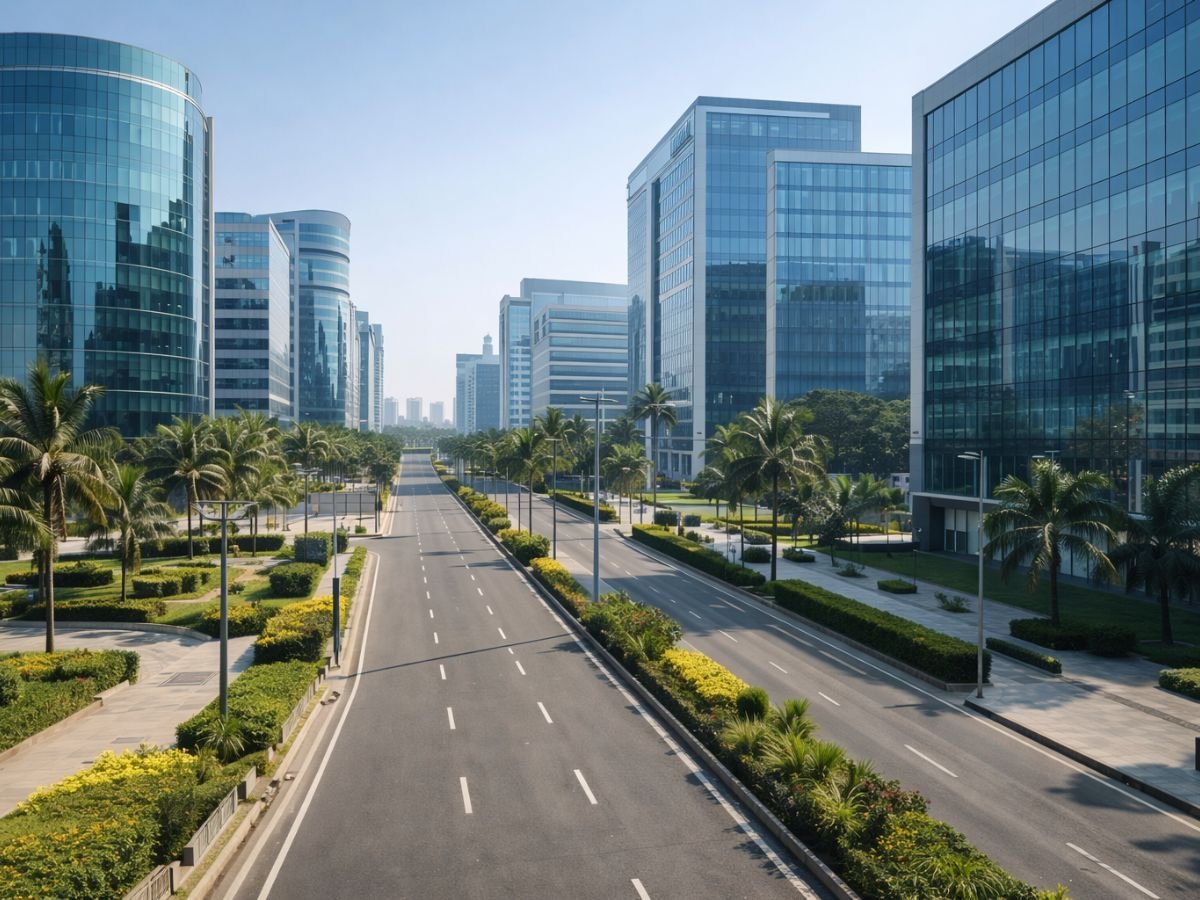
If your business depends on office employees, corporate occupiers, tech workforce movement, or a scalable office environment, Airoli and Ghansoli can make more sense than both Vashi and Belapur.
Airoli is already part of a serious eastern office corridor. Large occupier deals continue to happen here. Wipro leased about 1.45 lakh sq ft at Mindspace Airoli at roughly ₹67 per sq ft per month, which reinforces the point that this is not a speculative office story. It is an active office market.
That changes the kind of commercial demand around it. Co-working operators, support services, staffing firms, backend offices, training businesses, small corporate vendors, and food-service formats that serve office users can all benefit from this environment.
Ghansoli is more selective, but it is one of the most interesting commercial stories in Navi Mumbai right now. It has lower entry levels than Vashi in many cases, yet benefits from the broader Thane-Belapur business corridor and nearby employment ecosystems. That is why Ghansoli often works better for investors and office-linked users than generic “upcoming area” articles admit. The caution is simple: buy only where the micro-location already connects to real movement and business use. Ghansoli is not one uniform market.
Why Turbhe and the APMC-side belt matter more than many polished articles admit
Turbhe is one of the most under-discussed commercial areas in Navi Mumbai. That is exactly why it deserves attention.
This is not a lifestyle-driven node. It is a movement-driven node. Businesses that depend on trade, stock movement, light industrial access, wholesale activity, logistics, supply-chain movement, or operational convenience often get more practical value here than in prettier commercial addresses. Yields in industrial and warehousing-linked formats can also be meaningfully stronger than mature office-retail nodes, with broad city-level estimates often running in the 7 to 10 percent range for the right asset type.
That is the key idea many weak competitor pages miss. A logistics firm does not need Palm Beach Road aesthetics. It needs approach roads, service access, workable loading conditions, and a tenant base that stays longer. Turbhe and the wider APMC-side belt can offer that logic.
The caution is also practical. Turbhe is not for every business. A premium boutique, aesthetic clinic, or brand-conscious consumer format may struggle here. Also, in trade-linked buildings, the wrong floor plate or lack of service lift can kill usability even if the node itself is strong.
Are Seawoods and Nerul good for premium consumer-facing commercial spaces?
Yes, but only in selected pockets and for selected business types.
Seawoods and Nerul work best where there is a combination of strong residential catchment, higher spending ability, and either station-linked movement or well-established internal community demand. This is why premium clinics, diagnostic centres, boutique fitness studios, education businesses, cafes, and selective service brands often see real potential here.
Seawoods Grand Central has made the area more visible as a station-connected destination, and Palm Beach-facing affluence in the wider belt helps premium services. But the real rule is this: station-facing or clearly visible assets behave very differently from internal-pocket assets. A commercial unit in a quiet internal stretch cannot be priced or expected like one that benefits from daily movement.
That is why Seawoods and Nerul are good commercial areas, but not in a lazy, blanket way. They work best where the surrounding catchment is proven and the service offering matches local spending behaviour.
Is Kharghar really one of the best commercial areas, or only in selected pockets?

Kharghar is one of the most searched commercial nodes in Navi Mumbai, but it needs balanced judgment.
Yes, Kharghar has strong long-term reasons to stay commercially relevant. It has a large residential base, education-driven movement, healthcare demand, and a growing institutional identity. CIDCO has also pushed the International Corporate Park vision here, which keeps long-term commercial interest alive. Recent reporting around CIDCO’s broader Kharghar corporate-park push reflects that positioning.
But no, Kharghar is not one uniform commercial market. Mature sectors and active stretches are very different from upper sectors that still face infrastructure strain. That difference matters more in commercial property than many buyers realise.
A clinic, salon, restaurant, or office with higher utility dependence can be hit badly if the surrounding sector still struggles with water or sewage reliability. So Kharghar can be a good commercial area, especially in mature sectors, but it should never be bought as a one-line “next big thing” story.
What about Panvel, Kamothe, Kalamboli, and Taloja for commercial use or investment?
These markets belong to the broader growth corridor, but each one behaves differently.
Panvel benefits from transport relevance and from the airport story. Navi Mumbai International Airport began commercial operations on 25 December 2025, and that has reinforced the longer-term commercial logic of the broader Panvel belt.
Kamothe and Kalamboli are more practical than glamorous. They can work for local services, transport-linked businesses, student or family catchment businesses, and some highway-oriented formats. But they are still not equal to Vashi or Belapur for mature all-round commercial demand.
Taloja is a different beast. It makes more sense for industrial, storage, operational, and low-entry commercial use than for premium consumer-facing business. In the right format, it can offer attractive yields. But it is also a place where operational issues, especially infrastructure reliability, can turn a cheap purchase into an expensive problem.
Which area is best for your exact commercial purpose?
| Commercial purpose | Best-fit areas | Why they fit |
|---|---|---|
| Ground-floor retail shop | Vashi, selected Nerul-Seawoods, mature Kharghar pockets | Need daily visibility, catchment, and regular movement |
| Small professional office | CBD Belapur, Vashi, selected Nerul | Better for client-facing formal office use |
| Clinic or diagnostic centre | Seawoods, Nerul, Vashi, mature Kharghar | Residential catchment plus repeat local demand |
| Coaching centre / education business | Kharghar, Nerul, Vashi, Kamothe in selected pockets | Student and family catchment matters more than prestige |
| Branch office | CBD Belapur, Airoli, Vashi | Access, recognisable business address, and staff movement |
| IT / GCC support office | Airoli, Ghansoli | Better fit for office-corridor demand |
| Showroom | Vashi, selected Palm Beach-facing stretches, Panvel in future-facing formats | Visibility and frontage matter most |
| Trade / logistics / B2B setup | Turbhe, Taloja, Kalamboli | Operational suitability beats lifestyle value |
| Long-term commercial investor | Ghansoli, selected Kharghar, Panvel-side growth corridor | Better for selective appreciation plus business expansion logic |
What actually decides a good commercial location in Navi Mumbai beyond just the area name?
Before buying or leasing, check these practical points:
- Is the space right for your business model, or only cheap?
- Does the building have the parking, lift, loading, or access your use actually needs?
- Is the demand walk-in, appointment-based, corporate, or logistics-driven?
- How close is it to a station, arterial road, or business cluster?
- Is the catchment already active, or still being sold as future potential?
- Is the unit visible from the road, or hidden inside a weak arcade?
- Is the building old and maintenance-heavy?
- Will water, power, drainage, or service access become a daily problem?
This is where many commercial buyers go wrong. They choose by node name instead of operational fit.
Which commercial areas are safer for end use, and which are more speculative for investors?
Safer, mature markets are Vashi, CBD Belapur, and Airoli. These usually offer lower uncertainty and more immediate commercial logic, though the upside may feel less dramatic.
Selective opportunity markets include Ghansoli, Nerul-Seawoods, and mature Kharghar sectors. These can work very well, but only when the exact micro-location and format are correct.
More speculative or execution-dependent markets include upper Kharghar pockets, some airport-corridor bets, and lower-entry Taloja or outer Panvel-side plays. These may reward patience, but they need stronger due diligence and a longer view.
What local authority and document checks matter before renting or buying commercial space here?

This is where a lot of generic articles fail badly.
First, check whether the property is leasehold or freehold under CIDCO context. In July 2025, CIDCO announced a scheme for conversion of eligible leasehold plots to freehold. The scheme is optional and applies where lease deeds have already been executed. Once converted, future CIDCO transfer charges are no longer levied in the same way.
Second, if the asset is still leasehold, do not ignore transfer charges. CIDCO revised transfer fees with effect from 1 April 2025, and reported commercial transfer charges for larger properties rose sharply, with some categories going as high as ₹5,84,600 per sq metre. This can materially change resale economics.
Third, understand the municipal difference. NMMC-side and Panvel-side properties do not sit in the same operating context. Panvel property-tax disputes around retrospective demands have already seen court action, and the Supreme Court’s interim direction in 2024 asked Panvel property owners to pay from assessment year 2021-22 onwards while the older retrospective issue remained contested.
Fourth, use IGR Maharashtra and project-level verification intelligently. Ready Reckoner or ASR rates affect stamp duty, valuation context, and freehold-conversion economics. Under-construction commercial inventory should also be checked on MahaRERA wherever applicable.
In simple words, do not budget only for sale value, stamp duty, and registration. In Navi Mumbai commercial property, ownership structure, transfer cost, municipal tax exposure, and project status can change the real acquisition cost by a lot.
Conclusion
If you want the safest mature commercial choices in Navi Mumbai, start with Vashi, CBD Belapur, and Airoli. If you want office-corridor growth, Ghansoli deserves serious attention. If you care more about B2B movement, logistics logic, and stronger operational yields, Turbhe is far more important than glossy city lists admit. If your business depends on affluent local catchment, look at Seawoods and Nerul. And if you are entering Kharghar, Panvel, Kamothe, Kalamboli, or Taloja, do it selectively, with patience, and only after checking micro-location, utility reality, and document structure.
That is the real answer to the topic. The best commercial area in Navi Mumbai is not one place. It is the place that matches your exact business model, risk tolerance, and holding period.
FAQs
Frequently Asked Questions