
Seawoods Commercial Property Guide: Shops, Offices, Demand, Risks
Seawoods is one of the stronger premium commercial locations in Navi Mumbai, but it is not a “good for everything” market. It works best when the business matches the local catchment, station access, frontage, and spending profile. For offices, premium services, clinics, selective retail, and brand-led businesses, Seawoods can make sense. For budget-sensitive traders or businesses that depend only on cheap rent and mass-volume footfall, it often does not.
If someone is planning to buy or lease commercial property in Seawoods, the real question is not simply whether Seawoods is premium. The real question is whether the exact unit fits the exact business. That is where most weak property pages fail. They praise the location, mention connectivity, and stop there. Real decisions in Seawoods are more specific than that.
If you want to compare Seawoods with other leading locations, Best Commercial Areas in Navi Mumbai is worth reading next.
Quick Summary
| Decision Point | Practical Answer |
|---|---|
| Is Seawoods commercially strong? | Yes, especially for premium offices, service businesses, clinics, branded retail, and businesses that benefit from station access and higher-spending nearby residents. |
| Is every Seawoods unit a good investment? | No. A Seawoods address alone does not guarantee demand, high rent, or easy leasing. |
| What is the strongest commercial advantage? | The Seawoods Grand Central ecosystem, transit-oriented planning, station integration, and a relatively affluent surrounding residential base. |
| Who should be careful? | Small businesses with low margins, buyers chasing only "premium" branding, and investors overpaying for units without strong tenant fit. |
| Buy or lease first? | Leasing first is often smarter for first-time operators. Buying makes more sense for long-hold investors and businesses with stable use plans. |
Is Seawoods actually a strong commercial location in Navi Mumbai?
Yes, but it is a selective strength, not a universal one.
Seawoods has a real commercial identity because it combines three things that do not always come together in Navi Mumbai: station-linked movement, organised retail gravity, and a relatively premium residential catchment. Seawoods Grand Central is not just a mall project. It works as an integrated office, retail, food and residential ecosystem, and that matters because integrated commercial environments usually create more stable business demand than isolated buildings do.
That said, strong location does not mean every commercial unit will perform equally. In Seawoods, one office near the core transit-commercial belt can have a very different leasing profile from an inner unit with weak visibility or awkward access. This is why buyers should treat Seawoods as a micro-market, not as one flat category.
What makes Seawoods commercially different from many other Navi Mumbai nodes?
Station connectivity and integrated movement matter here more than in many other nodes
Seawoods has a structural advantage because the commercial story is tied closely to transit. This is not a random roadside commercial cluster. It is a planned node where rail access, road connectivity, organised retail and office presence meet in the same zone.
For a business, this changes the quality of demand. Some locations get only neighbourhood traffic. Some get only office traffic. Seawoods gets a mix: commuter movement, mall-linked movement, resident demand, and business visits. That mix is valuable, but only for the right categories.
The Seawoods Grand Central effect is real, but it should not be overstated
Seawoods Grand Central has clearly improved the commercial perception of the node. It has created a premium anchor, helped office branding, and strengthened the idea that Seawoods is not just a residential pocket. That halo effect helps nearby commercial sentiment. It also raises expectations and, in some cases, asking prices.
But this is where buyers need discipline. Footfall around a major mall and transit hub is useful only when it matches the business category. A premium office, a clinic, a boutique service brand, or a selective retail format may benefit. A weakly positioned shop with poor frontage, despite being in Seawoods, may not.
Premium image helps some businesses and hurts others
This is one of the most important local realities. Seawoods’ premium image helps businesses that need cleaner surroundings, stronger address value, or better-spending customers. Think consultants, healthcare professionals, premium salons, smaller corporate offices, wellness businesses, selected food formats, and high-trust service brands.
But the same premium image can hurt businesses that need low occupancy cost and mass conversion. In simple words, Seawoods is not ideal just because it looks good. It is ideal when the economics still work after rent, maintenance, parking limitations, and customer acquisition.
Which types of commercial property make the most sense in Seawoods?
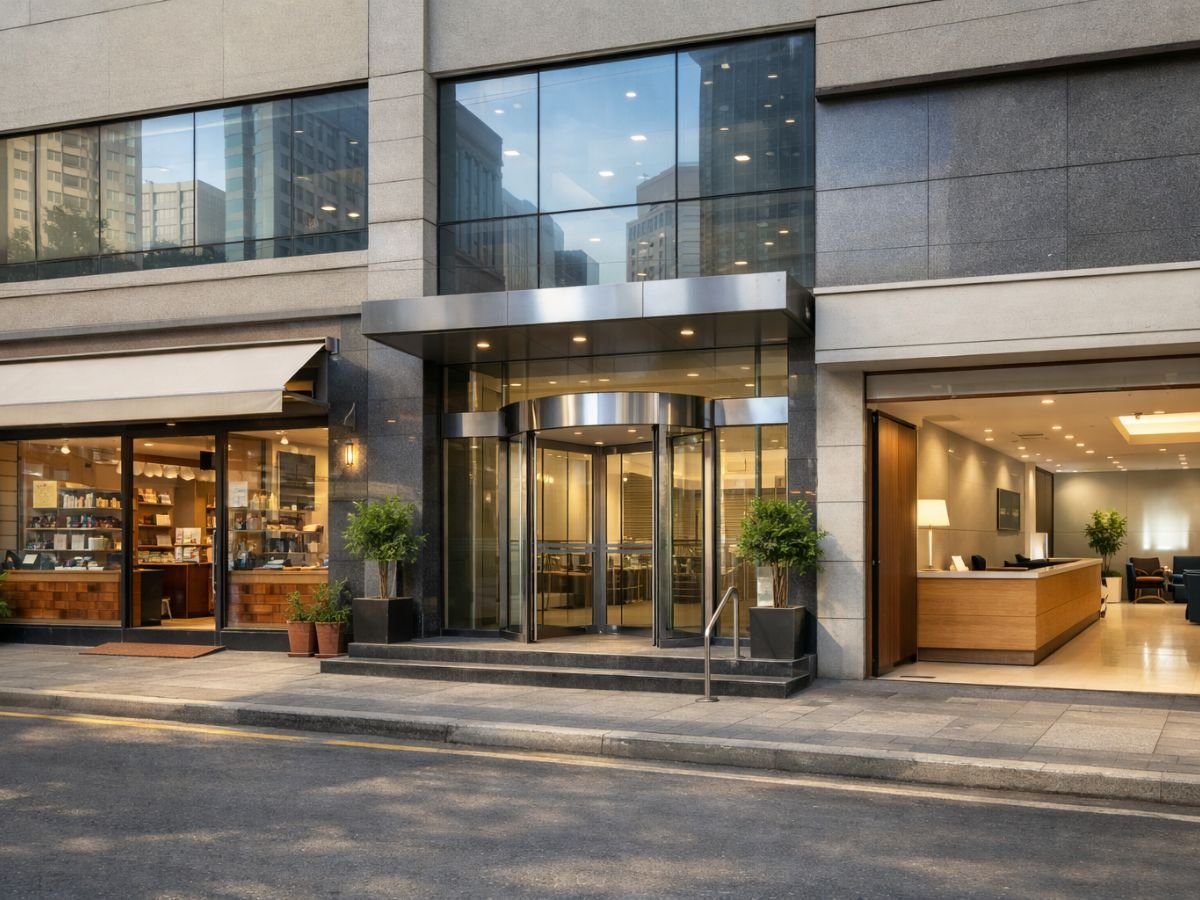
The strongest commercial formats in Seawoods are usually not the cheapest ones and not the most speculative ones. They are the ones that align with local demand behavior.
Retail shops and frontage-led businesses
Retail works in Seawoods when visibility, access, and consumer relevance come together. Shops near stronger movement corridors, near established commercial concentrations, or close to organised retail gravity have more logic than inner, tucked-away units sold only on brochure language.
This is especially true for:
- specialty food and beverage
- beauty and wellness
- branded convenience
- selective fashion and lifestyle
- premium daily-use services
Pre-leased retail can attract investors, but buyers should still study tenant quality and whether the rent is sustainable for that exact micro-location.
Offices, clinics, consultants, and appointment-led spaces
This is where Seawoods becomes particularly interesting. Office space in Seawoods makes sense for businesses that want a better address, station connectivity, and cleaner surroundings without going into the chaos of older trade-heavy belts.
Clinics, CA offices, legal chambers, consultants, boutique agencies, architects, and wellness professionals often fit Seawoods better than pure volume-driven traders do. These businesses do not depend only on random passing footfall. They depend on trust, convenience, parking practicality, and catchment quality.
Service businesses linked to local residential spending
Seawoods also suits businesses that serve an upper-middle-income or premium local household base. This includes tutoring formats, child-focused services, salon and grooming businesses, boutique fitness, home-related services, and specialist stores. Here, the surrounding residential economy matters as much as the station economy.
Which businesses are a strong fit in Seawoods and which are not?
| Business Type | Fit in Seawoods | Why |
|---|---|---|
| Boutique office / consultancy | Strong | Good address value, station access, manageable space needs |
| Clinic / diagnostics / wellness | Strong | Trust-driven category, local catchment quality helps |
| Premium salon / grooming / beauty | Strong | Residential spending power and convenience matter |
| Café / dessert / selective F&B | Moderate to Strong | Works better in the right frontage and destination pockets |
| Coaching / classes / child services | Moderate | Depends heavily on exact sector and surrounding family density |
| Small-ticket general trading | Weak to Moderate | Can struggle if occupancy cost is high |
| Low-margin mass retail | Weak | Premium rent and maintenance can damage unit economics |
| Investor buying only for "premium tag" | Weak strategy | Address value alone is not enough |
A simple example explains the difference. A consultant or clinic can perform from a well-kept office with moderate walk-in traffic because appointments drive usage. A general low-margin retailer may fail in the same building because the rent-to-sales balance may never become comfortable.
Does Seawoods work better for buying commercial property or leasing it first?
For many business owners, leasing first is the smarter move.
If someone is launching a new format, testing a local catchment, or still learning whether Seawoods suits the brand, leasing reduces the risk of locking large capital into a premium market too early. This is especially relevant because Seawoods pricing can reflect both real location strength and premium expectation.
Buying makes more sense when:
- the business has stable long-term use
- the operator wants control over branding and occupation
- the unit is in a proven micro-location
- the buyer is comfortable with holding cost and slower liquidity
- the commercial category has durable demand in that pocket
For investors, the decision is not just about appreciation. It is also about yield discipline. Commercial yields can be meaningfully better than residential in a place like Seawoods, but buyers should still treat yield assumptions carefully because tenant profile, vacancy, fit-out burden, and micro-location can change the actual result.
Which parts of Seawoods matter most before you judge a property?
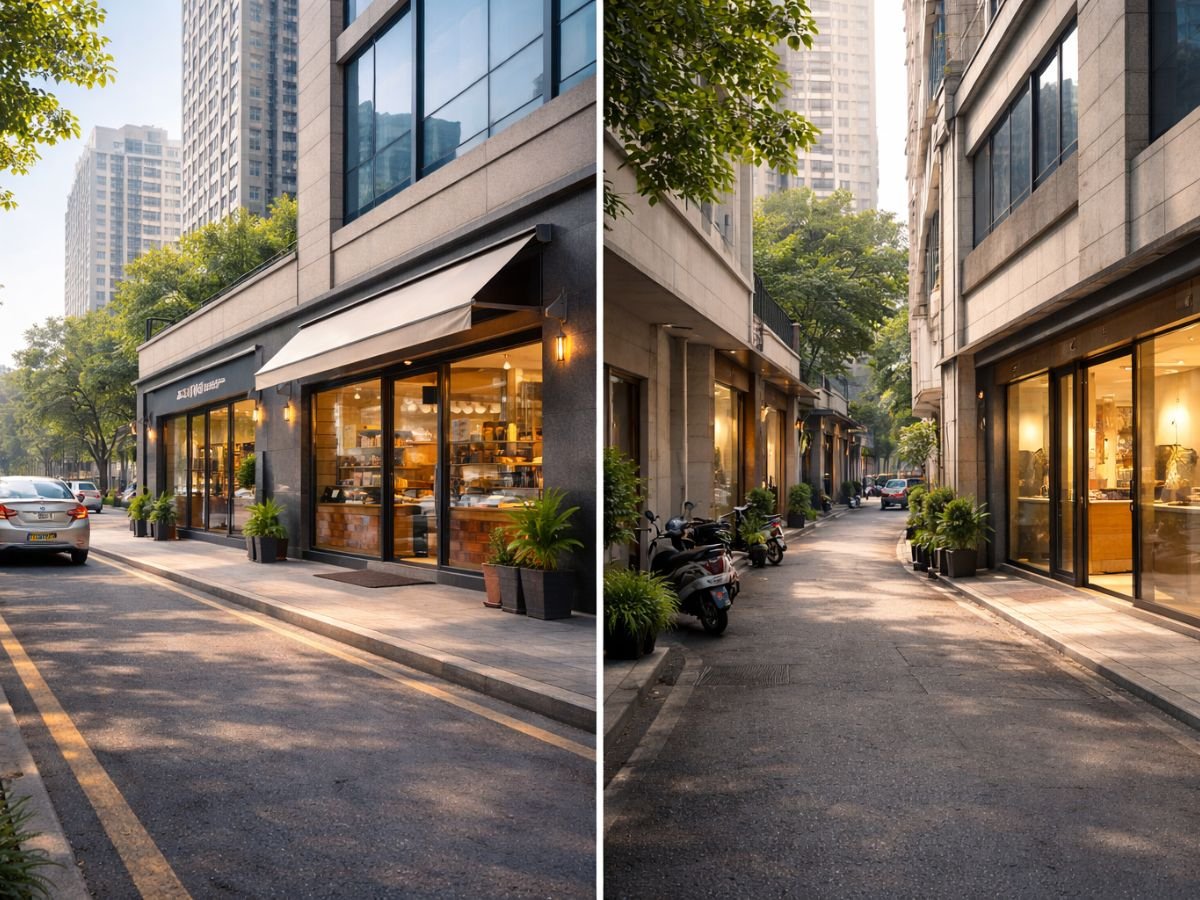
This is where many people oversimplify the market.
Near-station and core visibility pockets
Units closer to the station-commercial belt and stronger movement corridors usually justify more attention. These locations benefit from better recognition, better address recall, and, in some cases, stronger office and retail visibility.
Inner sectors and resident-serving pockets
Some inner pockets can still work well, but usually for the right categories only. Child services, local clinics, tutoring, neighbourhood convenience, and resident-linked services may work here better than destination retail.
Main-road frontage vs tucked-away units
This one changes everything. A Seawoods shop on paper and a Seawoods shop with actual visibility are not the same product. Before buying, the reader should check:
- natural walking movement at different times
- ease of parking or drop-off
- whether the unit is visible without effort
- whether the frontage is wide enough for the category
- whether surrounding businesses improve or weaken the location
- whether the area depends on residents, commuters, or destination visits
How does Seawoods compare with CBD Belapur, Nerul, and Vashi for commercial property?
| Node | Best For | Main Strength | Main Caution |
|---|---|---|---|
| Seawoods | Premium offices, clinics, branded services, selective retail | Transit-oriented ecosystem + premium residential catchment | Higher pricing can reduce efficiency for some businesses |
| CBD Belapur | Institutional offices, finance-linked setups, formal business use | Government and business-office character | Not every format gets strong lifestyle-driven demand |
| Nerul | Mixed business use, practical local demand, mid-range flexibility | Balance of residential and commercial utility | Some belts are less premium in image than Seawoods |
| Vashi | Heavy trade, established retail, stronger traditional business density | Mature commercial identity and wider market familiarity | Can be busier, older, and less lifestyle-led than Seawoods |
Seawoods is usually strongest when the reader wants a premium hybrid: better commercial environment than a purely residential node, but a more lifestyle-linked and modern setting than older business-heavy belts. Vashi is often stronger for denser conventional trade. Belapur can make more sense for institutional or office-led needs. Nerul can be more practical where flexibility matters more than premium image.
What are the biggest risks buyers and tenants underestimate in Seawoods?
The biggest mistake is paying for address value without checking business fit.
Another common mistake is assuming all footfall converts into customers. Mall traffic, commuter traffic, residential traffic, and serious business traffic are not the same thing. A unit may be in a busy zone and still underperform if the wrong people are passing by.
Other risks include:
- poor parking practicality
- weak frontage despite a good pin code
- higher commercial property tax burden
- society or building usage restrictions
- maintenance structures that hurt smaller operators
- overconfidence about future rent growth
This tax point matters. Commercial property tax burden is typically much heavier than residential, and buyers should factor that into long-term holding cost instead of looking only at the purchase rate.
What documents and local checks matter before buying or leasing a Seawoods commercial unit?

This part should never be skipped, especially in a premium market.
First, check whether the project is under MahaRERA where applicable. That is especially relevant for newer or under-construction commercial or mixed-use inventory. MahaRERA status does not replace title verification, but it is still a basic filter.
Second, check agreement terms, title chain, occupancy status where relevant, and registration valuation discipline. Buyers should not judge a deal only by broker language or portal asking rates.
Third, do not ignore local usage and compliance matters:
- society by-laws
- signage permissions
- operating restrictions
- maintenance obligations
- parking norms
- whether the unit is truly approved and usable for the intended activity
The Marathi signboard rule is also not just a cosmetic issue. Businesses should comply properly from day one.
One more point needs careful wording. CIDCO’s move on converting certain residential leasehold plots to freehold is an important background change in Navi Mumbai property thinking, but readers should not casually assume that every Seawoods commercial transaction is automatically simplified by that. Eligibility, asset type, and the specific land/title history still matter. Treat it as a context point, not as a shortcut conclusion.
Who should seriously consider Seawoods commercial property and who should look elsewhere?
Seawoods is worth serious consideration for:
- clinic owners
- consultants and professionals
- boutique offices
- premium service brands
- selective retail operators
- investors targeting quality tenants rather than only cheap entry
Seawoods is less suitable for:
- businesses surviving only on low rent
- buyers who want mass-market trade density at budget cost
- investors buying blindly for a “premium” tag
- operators who need rough-and-ready, low-friction, high-volume commercial belts
In simple words, Seawoods rewards fit more than hype. That is the right way to read this market.
You should also check Seawoods Commercial Rates and Market Trend to understand how this node is performing right now.
Conclusion
When Seawoods is worth the premium and when it is not
Seawoods is one of Navi Mumbai’s more compelling commercial micro-markets because it combines transit access, organised commercial gravity, and a stronger residential spending profile than many ordinary nodes. That is real. It is not just branding.
But Seawoods is not automatically a smart buy. It is worth the premium when the property has the right micro-location, the business category suits the local demand, and the buyer is realistic about cost, tax, usage limits, and leaseability. It is not worth the premium when the purchase is based only on the name, the building looks good but the commercial logic is weak, or the business model needs cheaper and more forgiving trade conditions.
That is the real Seawoods commercial property guide in one line: good market, selective fit, no shortcut decisions.
FAQs
Frequently Asked Questions