
Airoli-Ghansoli Data Center Guide: Best Pockets, Fit, Drivers and Risks
Airoli-Ghansoli data center is one of Navi Mumbai’s strongest tech-infrastructure corridors, but it is not one uniform market. Airoli makes more sense when office campuses, daily staff movement, and station access matter. Ghansoli, Rabale, and the wider TTC belt make more sense when power depth, fiber density, industrial land format, and infrastructure-grade use matter more. It is a very strong fit for data centers, disaster recovery, colocation, and some backend tech users. It is not automatically the right answer for generic warehousing, ordinary manufacturing, or every investor chasing a “tech hub” story.
Airoli–Ghansoli: does this corridor actually suit data centers and tech-industrial users?
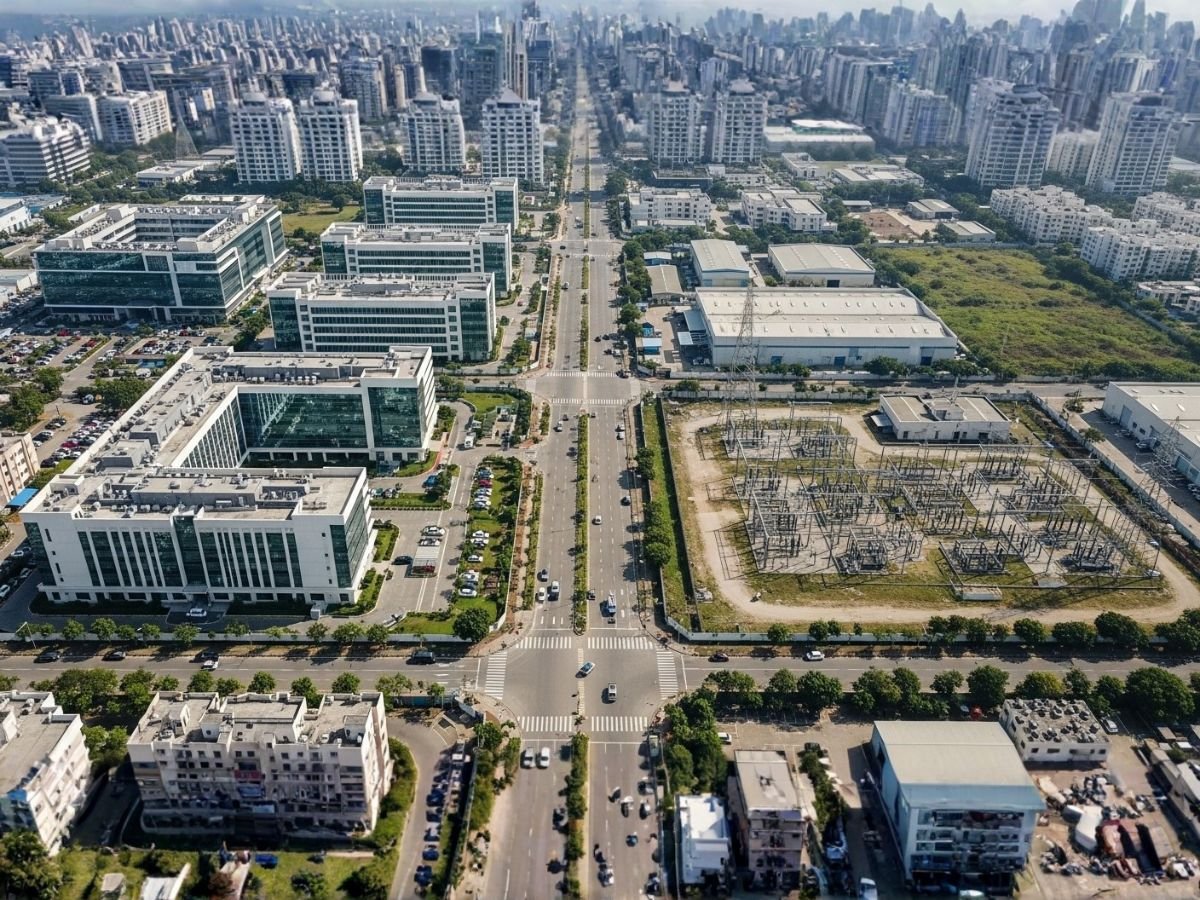
Yes, it does, but only for the right kind of user and only in the right pocket. This corridor is not valuable because it sounds modern. It is valuable because parts of it already function as a serious digital infrastructure belt with real operator presence, strong power-grid logic, fiber depth, and an established office-tech ecosystem.
The first thing to understand is simple. Airoli and Ghansoli should not be treated as one smooth, identical market. Airoli has a more office-campus and commuter-led logic. Ghansoli, Rabale, and Mahape-side industrial pockets have a more utility-heavy, engineering-led logic. That difference changes everything: what type of occupier fits, what kind of building works, what risk matters, and whether buying, leasing, or build-to-suit is sensible.
Here is the practical answer in one view:
| User type / need | Is this corridor a good fit? | Best side of the corridor | Practical note |
|---|---|---|---|
| Hyperscale cloud, colocation, major data center operator | Strong fit | Rabale, Mahape, utility-heavy TTC pockets | Works where high-capacity power, fiber redundancy, and infra-grade design are possible |
| Enterprise DR site, BFSI backup infra, network-heavy backend use | Strong fit | Ghansoli, Rabale, Mahape, select Airoli-side infra pockets | Good if low latency and resilient utility access matter |
| GCC, backend office-tech operations, IT/ITeS | Strong fit | Airoli East, Airoli West | Better where rail access, office parks, and staff movement matter |
| Light tech-manufacturing, R&D, clean industrial-tech use | Borderline fit | Select TTC industrial pockets | Possible, but land competition and infra pricing can make it expensive |
| Generic warehousing and low-yield storage | Weak fit | Usually better elsewhere | Panvel-side, Taloja, or Dronagiri often make more sense |
| Retail investor expecting huge spillover from data centers | Weak fit | Usually not the right lens | Data centers do not create normal footfall-based demand |
The corridor also matters at a national level. The wider TTC belt has become one of India’s most important digital infrastructure clusters, with the research dossier estimating roughly 44% to 50% of the country’s data center market capacity linked to this broader ecosystem. But that scale should not confuse the reader. A data center cluster next door does not automatically make every nearby plot, office, shop, or shed premium.
Which part of the corridor fits what: Airoli, Ghansoli, Rabale and the wider TTC belt
The biggest mistake people make is saying “Airoli-Ghansoli” as if it is one seamless tech belt with the same value everywhere. It is not. The corridor works in layers.
Airoli works better when office-campus access and workforce movement matter
Airoli operates more on a human-capital logic. It is stronger when your use case depends on daily staff movement, office leasing, transit convenience, or a campus-like work environment. This is why Airoli has become important for IT, ITeS, GCC-style operations, and corporate back-end setups.
Airoli East has a clear commuter advantage because of railway access and the office-park ecosystem around it. That matters for companies that care about shift staffing, employee retention, and easy day-to-day access. Airoli West, with Thane-Belapur Road and vehicular connectivity, can work well for newer enterprise setups and for users drawing staff from Thane and the central suburbs.
In plain language, if your operation needs people every day, Airoli usually deserves a harder look than a purely industrial pocket.
Ghansoli and Rabale work better when utility-heavy infrastructure matters more
| Best suited for | What makes it useful | Main caution | |
|---|---|---|---|
| Airoli East | GCCs, IT/ITeS, backend office-tech users | Rail access, office parks, commuter convenience | Not every office building is infra-grade |
| Airoli West | Enterprise offices, hybrid tech setups | Vehicular access, Thane-side catchment | Site format varies sharply |
| Ghansoli | Select tech-industrial and backend infra users | TTC adjacency, industrial land context | Service-road realities and utility checks matter |
| Rabale | Hyperscale, colocation, infra-heavy operators | Proven data center-grade ecosystem | Acquisition and approval complexity can be high |
| Mahape / wider TTC | Advanced digital infra, large-scale tech campuses | Deep utility logic, strong operator presence | Saturation, power deliverability, and land complexity must be checked carefully |
Why serious data-center and backend tech users look at this belt in the first place
People often say this corridor works because of “good connectivity.” That line is too weak and too generic. Serious digital infrastructure capital comes here for engineering reasons, not because a broker said the area is upcoming.
Power, redundancy, and utility depth
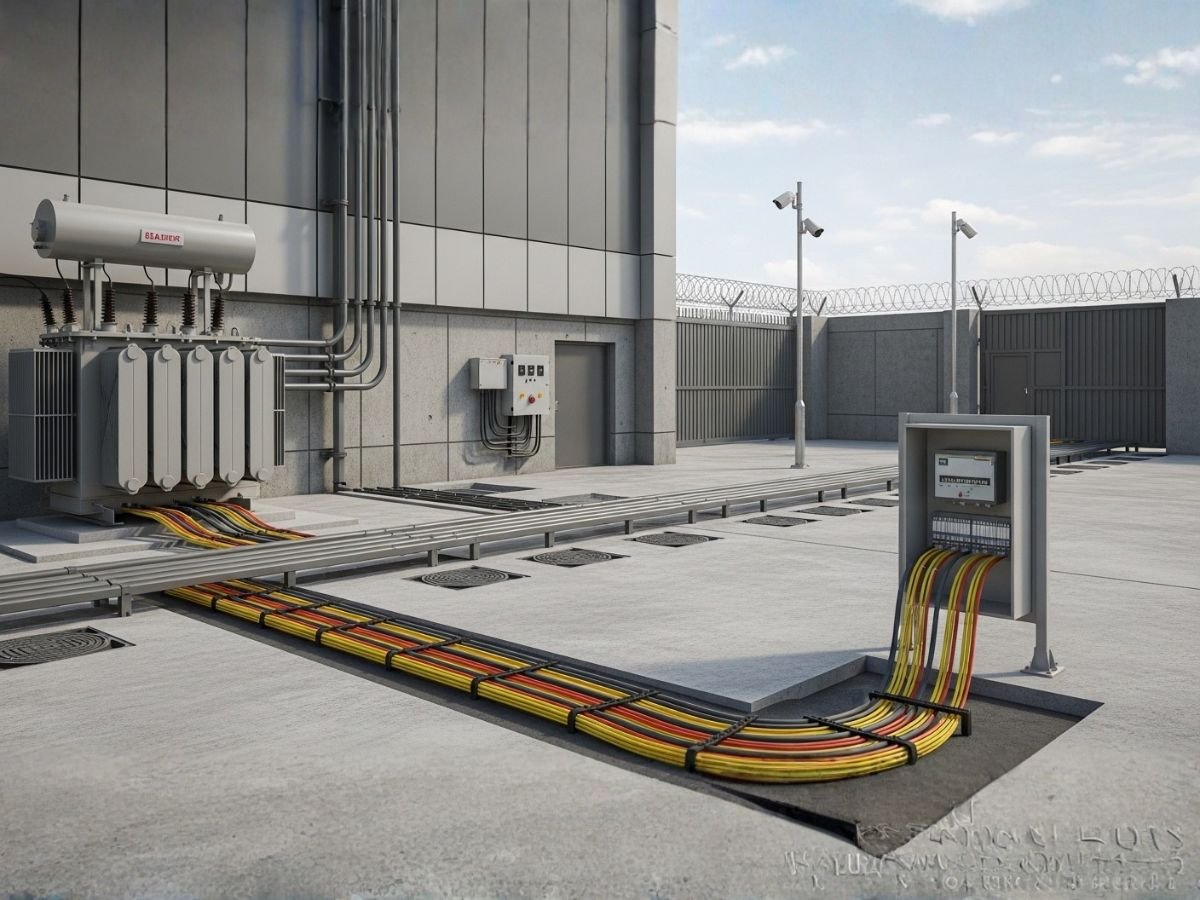
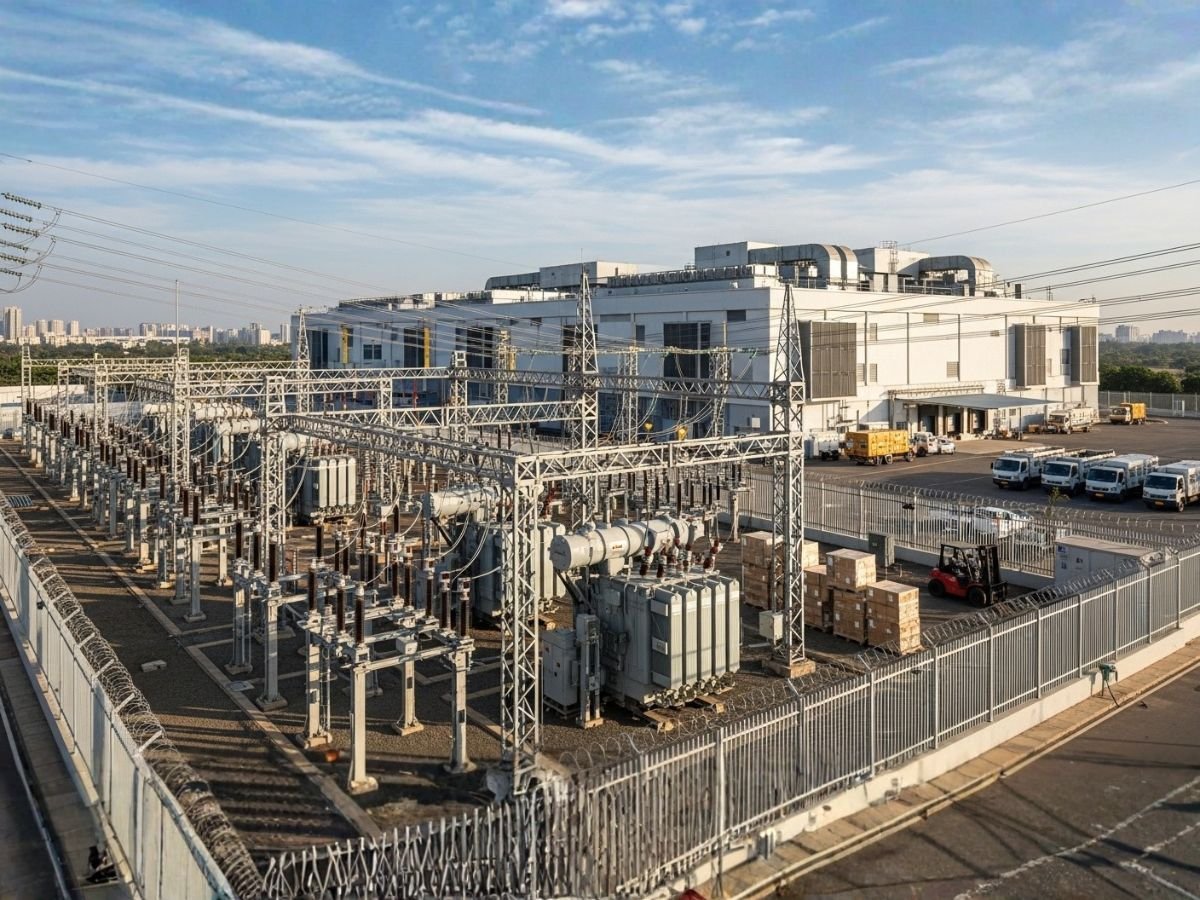
The corridor’s industrial history matters. The TTC belt was originally built for heavy industrial use, and that legacy created a stronger power-network base than many normal commercial districts can offer. That is one reason large data center operators prefer this side of Navi Mumbai over ordinary office markets.
But there is a very important caution here. A strong regional grid is not the same as instant plot-level deliverability. A plot may sit inside a powerful corridor and still face long lead times for high sanctioned load, cable right-of-way issues, or last-mile infrastructure bottlenecks. The research dossier specifically warns that securing a 40 MW load can face 18 to 24 months of lead time in some situations. So the real question is never “Is Maharashtra power-surplus?” The real question is “Can this exact site get the load we need, in time, with the right last-mile infrastructure?”
Fiber, carrier, and enterprise adjacency
This belt also matters because of carrier density and interconnection logic. Serious data center users need diverse fiber entry paths and low-latency enterprise connectivity. That kind of redundancy is much easier to justify in an established digital infrastructure corridor than in a cheap outlying location.
This is also why the corridor works for disaster recovery and enterprise backend use. It can offer geographic separation from South Mumbai while still preserving extremely low latency and strong connectivity. For banks, cloud operators, SaaS infrastructure teams, and domestic enterprise DR strategies, that is a practical advantage, not just a marketing phrase.
Station access, shift transport, and residential catchment
Not every user here is a windowless data hall. Airoli in particular works because people can actually get there. Staff movement, late-shift travel, daily commute friction, and access to surrounding residential catchments matter a lot for backend offices, network operations teams, and GCC-style occupiers.
That is why Airoli and Rabale should not be judged by the same rule. One side is more people-led. The other is more utility-led.
Which businesses fit here strongly, which are borderline, and which usually do not
This corridor is powerful, but it is selective. The right user can benefit enormously. The wrong user can overpay badly.
Strong fit users
Hyperscale cloud operators, colocation providers, enterprise disaster recovery setups, network-heavy backend infrastructure, and large IT or GCC-style occupiers are the strongest fit here.
They benefit from one or more of the following:
- strong regional power logic
- fiber and carrier density
- data-center ecosystem proof
- office-tech workforce access in Airoli
- policy support under Maharashtra’s IT/ITeS framework
For example, a bank looking for a DR environment, or an enterprise shifting from a pure CapEx model into colocation leasing, can find real operational logic in this corridor.
Borderline fit users
Light tech-manufacturing, R&D-led industrial-tech users, clean assembly, and some hybrid office-plus-infra users are more of a borderline fit.
Why borderline? Because the corridor may work technically, but land competition, utility cost, and location economics may not always work commercially. A business that only needs moderate industrial capacity can get pushed out by the pricing logic created by data center demand and high-value tech use.
Weak fit users
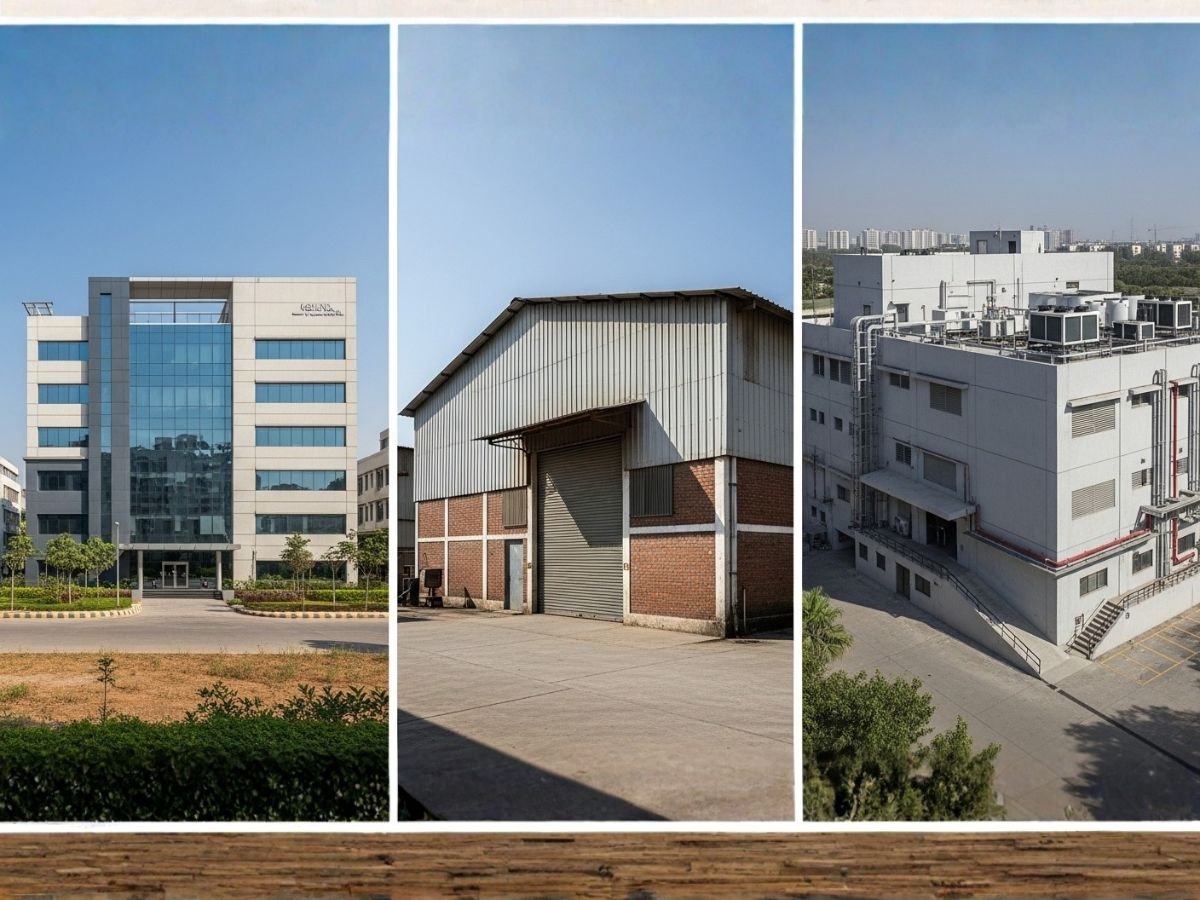
Generic warehousing, low-yield storage, and polluting heavy manufacturing are usually weak fits here.
Warehousing is a weak fit because the corridor’s better pockets are too valuable for plain storage economics. If the use case is port-led freight, large-format logistics, or cost-sensitive storage, Dronagiri, Panvel-side locations, or Taloja usually deserve stronger consideration.
Heavy polluting industry is a weak fit because the corridor is moving toward more regulated, infrastructure-heavy, digital, and clean-tech use patterns. Even when industrial zoning exists, the practical direction of the belt is changing.
How buying or leasing here is different from taking normal office or factory space in Navi Mumbai
This is where many people make an expensive mistake. They apply regular office logic or ordinary industrial-shed logic to a location that may need a completely different real estate structure.
Regular office stock vs industrial unit vs infra-grade site
A standard office floor in Airoli may be excellent for a backend tech team and completely useless for server-heavy infrastructure. Office buildings are not designed like data center shells. Their floor loading, cooling format, and utility design are different.
The dossier notes that normal office stock may have floor-loading in the roughly 400 to 500 kg/sqm range, while serious data-center-grade environments can need far more. Sify’s Rabale reference point of 2,100 kg/sqm makes the difference obvious. So if a buyer is evaluating an old office floor or an obsolete industrial shed using normal commercial rules, the analysis is already wrong.
Why This Airoli Ghansoli Data Center Guide Matters for Buyers and Operators
For serious digital infrastructure, build-to-suit is often the most realistic model. The developer handles land and shell development, while the operator commits to a long lease and installs the internal systems.
For many enterprise users, colocation leasing is even more practical. Instead of buying land, taking demolition risk, dealing with MIDC permissions, and creating utility redundancy from scratch, they lease capacity from an established operator and shift the model from heavy CapEx to more predictable OpEx.
Outright land purchase is usually the hardest route. It can involve old industrial stock, total demolition, soil issues, land-use complications, transfer charges, and long utility approval cycles. So paying the headline price is only the beginning, not the decision.
What MIDC, land-use, utility, and approval questions can change the whole answer
This section is where reality begins. In the TTC belt, title and transaction mechanics matter almost as much as location.
Most industrial land here is not freehold. It is usually MIDC-controlled leasehold, often on a 95-year basis. That changes how transfer, redevelopment, subletting, and use permissions work.
The second major issue is FSI. According to the dossier, the base FSI is 1.0, and maximum 3.0 FSI becomes possible only where the plot fronts a road of 30 meters or wider. Plots on roads below 9 meters stay capped at 1.0 FSI. This matters enormously for vertical data center economics. A buyer may love the location and still discover that the road width kills the project design.
Then comes transfer complexity. Legacy plots can carry hidden baggage, especially where there is historical Urban Land Ceiling exemption history. That can trigger retroactive transfer premiums tied to prevailing Ready Reckoner values. These liabilities vary by plot history and government resolution timing, so broad assumptions are dangerous.
Subletting is also not free and easy. MIDC prior permission is required, and sub-lessee obligations, project reports, and fee compliance matter. In simple language, this is not a belt where you can casually buy an industrial asset and assume smooth short-term subleasing later.
What risks people underestimate in Airoli–Ghansoli
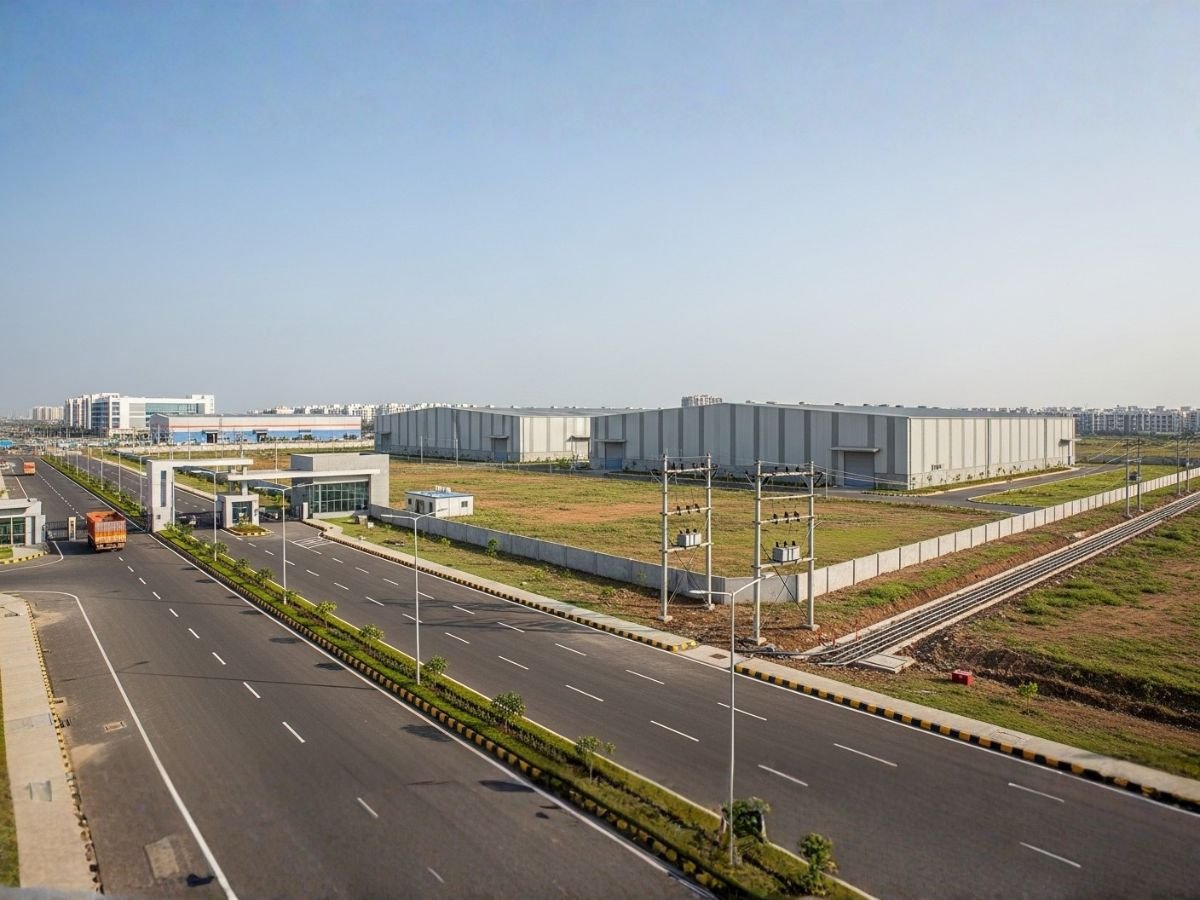
This corridor has real strengths, but it also has traps. The biggest problems usually come from assuming that a strong regional story automatically solves site-level problems.
Headline power promise vs actual usable infrastructure
The most common mistake is confusing corridor-level capacity with actual deliverability. A broker may say the area has strong power infrastructure. That may be broadly true. But the real test is whether your exact site can secure the load, cable route, and timing your project needs.
For a data center or serious backend infra user, “power available in the area” is not enough. You need written, site-linked, timeline-aware verification.
Road access, heavy equipment movement, and shift-time friction
This is a very Navi Mumbai-specific reality. Thane-Belapur Road is useful, but it is also a working corridor with bottlenecks. Moving heavy chillers, DG sets, or bulky infrastructure equipment is not the same as driving to an office meeting. Rush-hour restrictions, inner-road movement, and physical pinch points matter.
That is also why a commuter-friendly office location and a deployment-friendly infrastructure site are not always the same thing.
Flood, drainage, basement, and resilience issues
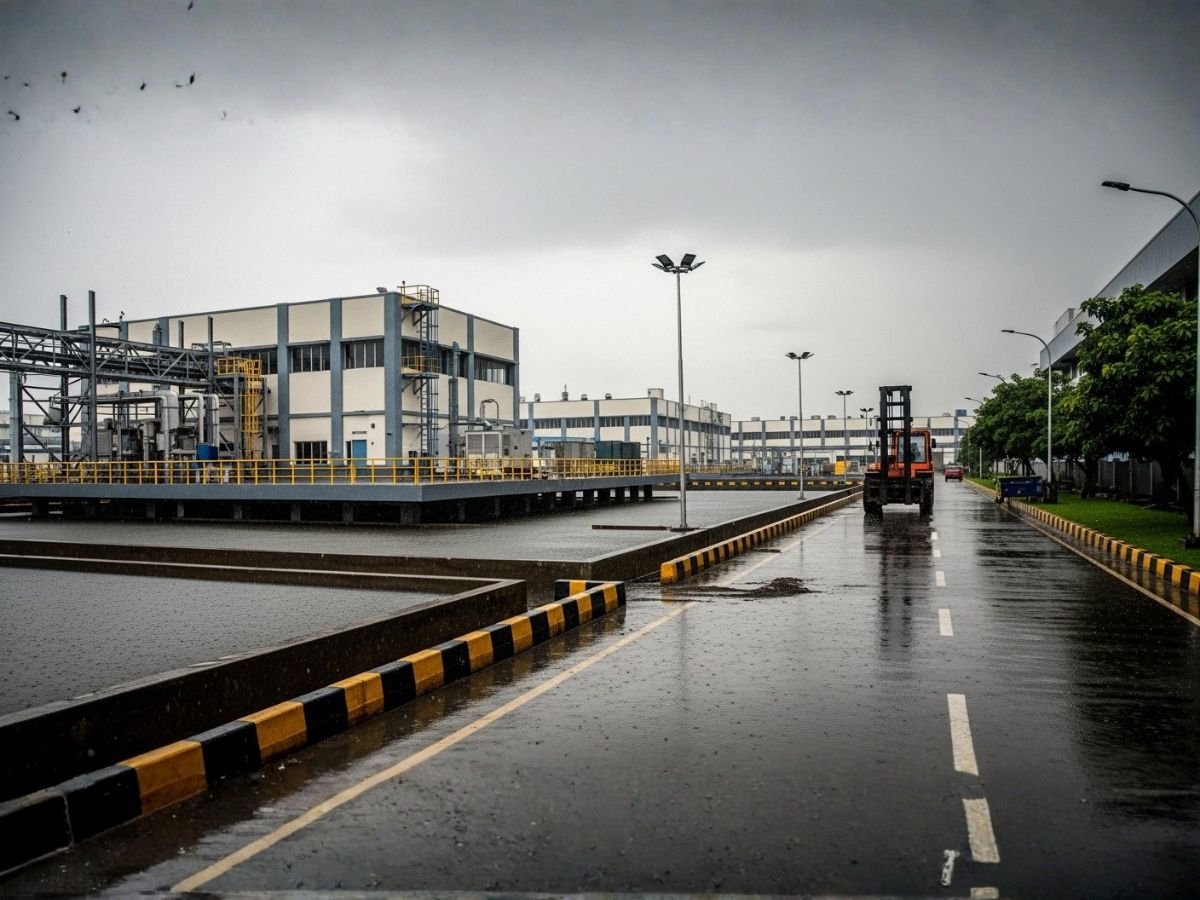
The dossier rightly flags the MIDC-NMMC overlap as a real local issue. Industrial allocation, local infrastructure, and civic maintenance do not always move in a perfectly integrated way. In monsoon periods, localized waterlogging risks in parts of Digha, Airoli, Mahape, Rabale, and Ghansoli can become operationally serious.
Airoli Ghansoli data center guide is not just about location branding. This corridor works only for specific tech-industrial and infrastructure users who understand power, fiber, and utility logic.
Smart operators do not rely only on municipal confidence. They plan elevated plinths, internal stormwater handling, and site autonomy. For a normal investor, that point may sound technical. For an operator, it can be the difference between resilience and outage risk.
> Caution box: the spillover myth > > A large data center next door does not automatically create a booming retail, residential, or small-office micro-market around it. Data centers are highly automated and low-headcount compared with their capital intensity. They strengthen infrastructure demand more than they create normal footfall demand. So do not treat nearby ordinary property as premium just because a major operator entered the belt.
When should you choose Airoli–Ghansoli over Mahape, Dronagiri, Panvel-side or a pure office district?
Choose this corridor when your priority is digital infrastructure, enterprise backend resilience, or office-tech access with real utility depth. It is especially strong when you need some mix of power density, fiber logic, low-latency interconnection, industrial-tech format, and access to the wider Mumbai-region workforce.
Choose Airoli more confidently when the project is office-heavy, commuter-heavy, or GCC-like.
Choose Ghansoli-Rabale-Mahape-side pockets more confidently when the project is infra-heavy, site-engineered, utility-intensive, and not dependent on standard commercial floorplates.
Look harder at Dronagiri or Panvel-side belts when the real requirement is port-led logistics, large-format warehousing, export movement, or lower land-intensity operations. Look harder at Taloja when land economics matter more than premium digital adjacency. Look harder at a pure office district when the requirement is almost entirely staff-led and the infrastructure side is light.
The best corridor depends on what you are building, not what sounds impressive in a pitch deck.
A practical shortlist checklist before you buy, lease, or pursue a site here
Before committing to Airoli–Ghansoli, verify these points in writing wherever possible:
- Confirm whether the property is standard office stock, industrial unit, or genuinely infra-grade land
- Check MIDC tenure, transfer structure, and whether the land is leasehold rather than freehold
- Verify road width and FSI potential before assuming vertical development economics
- Ask for site-specific power deliverability, not just broad statements about regional power strength
- Check last-mile cable routing and timeline risk
- Review whether the plot carries legacy ULC-related transfer exposure
- Understand whether subletting later will require fresh MIDC approval and fees
- Check flood history, plinth level, and internal stormwater handling
- Assess equipment movement practicality, especially from Thane-Belapur Road into inner industrial roads
- If the requirement is office-led, judge commute and shift movement first; if it is infra-led, judge utilities first
Final verdict: who should seriously consider this corridor, and who should look elsewhere
Airoli–Ghansoli is one of Navi Mumbai’s most important tech-infrastructure corridors, but only when read correctly. Airoli is stronger for office-tech users, GCCs, backend operations, and occupiers who need real commuter convenience. Ghansoli, Rabale, and the wider TTC side are stronger for data centers, colocation, disaster recovery, and utility-heavy tech-industrial use.
This corridor deserves serious consideration if you are a hyperscale operator, enterprise infra team, BFSI DR user, colocation-led user, or a tech occupier who truly understands the difference between office access and infrastructure depth. It deserves caution if you are a generic investor, warehouse user, or someone trying to apply ordinary commercial-property logic to highly specialized real estate.
The right way to read Airoli–Ghansoli is not as a fashionable tech hub. The right way to read it is as a fragmented, high-potential, regulation-heavy corridor where utility logic, MIDC structure, and pocket selection matter more than headline price or hype.
FAQs
Frequently Asked Questions