

How Knowledge Park, Rail Access and Highway Connectivity Affect Airoli Commercial Demand
Airoli commercial demand is real, but it is not evenly spread across every office, shop, or mixed-use unit. In practical terms, Knowledge Park drives the office ecosystem, rail access drives daily staff convenience and tenant depth, and highway connectivity expands regional reach. The best-performing commercial assets are usually the ones that convert these big location advantages into small daily conveniences like walkability, parking, better building management, and smoother last-mile access. If someone tries to sell Airoli using only one line such as “great connectivity” or “close to Knowledge Park,” that is incomplete. In Airoli, the real question is not whether demand exists. It does. The real question is which type of demand a specific property can actually capture
. understand where these demand drivers fit into the wider market, Airoli Office Market Guide is worth reading too.
Why Airoli commercial demand is strong but uneven
Airoli is one of those Navi Mumbai nodes where macro strength and micro reality can look very different. At a broad level, the market has genuine commercial demand because it sits inside a working office corridor with rail access, strong road links, and a proven institutional occupier base. That part is true. But not every building benefits equally from that truth.
A Grade A office campus, a small office in a station-linked pocket, and a fragmented highway-facing unit may all sit in Airoli, but they do not participate in the same demand story. One may benefit from large corporate occupiers. Another may work because staff can walk from the station. A third may look visible on paper but still struggle because parking, pedestrian access, and building quality are weak.
Quick summary
| Demand driver | What it mainly improves | Best fit asset type | Where people misread it |
|---|---|---|---|
| Knowledge Park and office concentration | Office ecosystem, B2B support demand, tenant quality | Managed offices, institutional floors, better small offices serving office users | Assuming it automatically lifts every nearby shop or old office |
| Rail access | Staff commute, daily usability, tenant retention, SME demand | Station-walkable small offices, support services, occupier-led spaces | Counting map distance instead of real walking convenience |
| Highway and road connectivity | Regional access, executive movement, hiring catchment, client reach | Larger offices, service centers, selected commercial assets with parking | Confusing road visibility with actual occupier demand |
The easiest mistake in Airoli is to read the whole node through one average number or one sales narrative. That usually leads to wrong asset selection.
How much of Airoli demand actually comes from Knowledge Park and surrounding office concentration
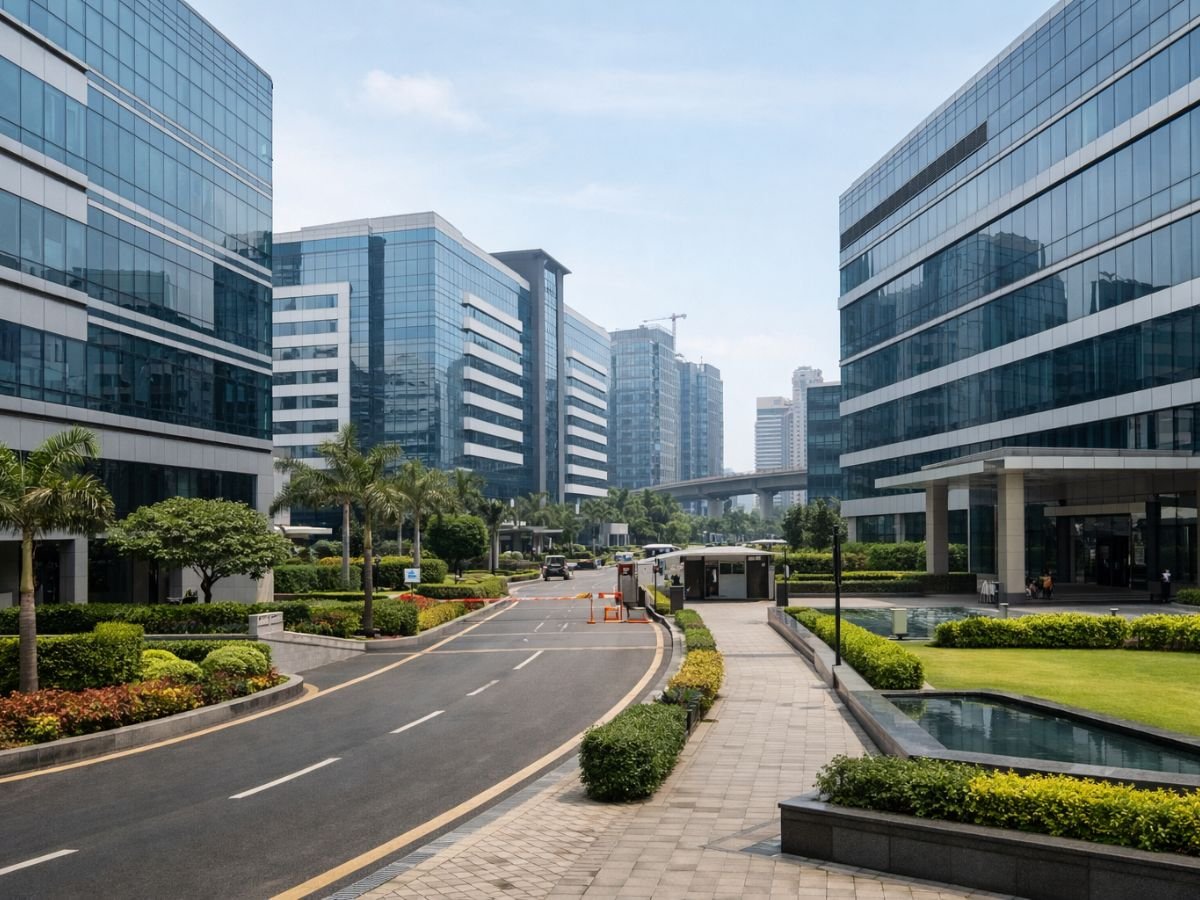
A very large part of Airoli’s office identity comes from its technology and corporate concentration. This is not just perception. A major recent signal was the ₹550 crore acquisition of Capgemini’s Airoli Knowledge Park by a Panchshil Realty arm in September 2025, which underlined institutional confidence in this office ecosystem.
That matters because institutional money usually does not enter a node only for branding. It enters where occupier logic, long-term business use, and leasing depth look credible.
Why job density supports office absorption more than general commercial hype
Knowledge Park type demand is not the same as high-street retail footfall. It is more structured. It creates a daily base of office users, corporate support vendors, B2B services, compliance firms, small technology suppliers, flexible workspace demand, and selected food and service demand around office timing.
This means Airoli’s strongest commercial logic is still office-led, not broad retail-led. That is why the node often works better for small offices, support offices, managed commercial space, and some service commercial formats than for random speculative retail buying.
Airoli should not be read like Vashi high-street logic. It behaves more like a functional enterprise corridor. The market rewards properties that are useful to office users, not properties that simply exist near an office concentration.
Which types of commercial property benefit most from this office ecosystem
The biggest direct beneficiaries are:
- managed Grade A office buildings
- larger floor plates suited to institutional or serious occupier use
- compact offices for SMEs, consultants, and support businesses
- selected service commercial uses that depend on weekday office demand
The weakest interpretation is this: “There is a big IT park nearby, so this small commercial unit will automatically do well.” That is not how it works. Large campuses can be very self-contained. Internal cafeterias, security controls, internal services, and campus-style operations often reduce the spillover many small investors expect.
So yes, Knowledge Park helps Airoli. But it helps in a very specific way. It improves the quality of office demand more than it creates universal demand for every commercial format.
You may also want to read Best Office Parks and Commercial Campuses in Airoli to see which locations benefit most from this connectivity.
Why rail access matters more than many buyers first assume
In Airoli, rail access is not just a transport feature. It is part of the commercial demand engine. The node sits on the Trans-Harbour suburban corridor, and Digha Gaon station, opened in January 2024, added another important access point while reportedly drawing around 2,000 daily boardings soon after launch.
That matters because office demand in Mumbai region is still heavily shaped by staff commute practicality. A property may look fine on a brochure, but if daily access is frustrating, occupier confidence drops very quickly.
What station access changes for staff movement, renter depth, and daily usability
Rail-linked locations improve three things at once.
First, they improve hiring comfort. Employers know that if staff can reach the office with fewer transport changes, retention improves.
Second, they improve the depth of the potential tenant pool. A small office near a genuinely walkable station pocket appeals to more occupiers than an equally sized office that needs an auto ride, a highway crossing, and uncertain last-mile movement.
Third, they improve daily usability for clients, employees, vendors, and support staff. In a commercial market, this boring practical convenience matters far more than many investors realise.
When “near station” is real advantage and when it is just map-level closeness
This is where many listings become misleading. A property may be marketed as “near station” because it falls inside a broad radius on a map. But actual usability depends on what that journey feels like on a weekday.
A few local checks change the answer completely:
- Is the route genuinely walkable?
- Does the pedestrian path feel practical in heat and rain?
- Does the user need an auto for the last stretch?
- Does the route involve crossing busy roads?
- Does the commute feel easy for regular staff, not just for one site visit?
In Airoli, the station-linked story is strongest when the answer to these questions is positive. That is why some SME-friendly pockets usually hold demand better than outwardly similar buildings deeper inside the corridor.
What highway and road connectivity genuinely add to commercial demand in Airoli
Road access is absolutely part of Airoli’s commercial strength, but it should be understood correctly. Airoli benefits from the Thane-Belapur Road corridor, access toward Mulund through the Airoli bridge side connection, and the future advantage expected from the Airoli-Katai Naka Elevated Freeway, which is designed to improve movement toward the Kalyan-Dombivli side and reduce travel distance and time.
This is important. But it is not the same as saying road access alone guarantees strong occupier demand.
Thane-Belapur Road and cross-city access
For businesses with regional movement, vendor interaction, management travel, or staff coming from multiple directions, road connectivity improves operational flexibility. It also helps Airoli compete as a serious office destination rather than just a station-linked SME pocket.
The Thane-Belapur corridor has long had a working commercial-industrial character. That legacy still matters. Businesses understand this belt. The road spine gives the node recognisable business geography.
Airoli-Mulund side access and regional business movement
One of Airoli’s practical advantages is that it can connect well across the creek side toward Mumbai and Thane-side movement while still remaining inside Navi Mumbai’s office geography. For many occupiers, especially those with teams or clients spread across MMR, that regional link matters.
And the upcoming Airoli-Katai Naka connection is not only a transport project on paper. For office users, it can widen the practical hiring catchment from places like Dombivli, Kalyan, and Palava side once fully operational. That changes how employers think about labour access and office viability over time.
Why road connectivity helps some occupiers more than others
Road access is strongest for:
- larger office occupiers
- client-facing businesses with frequent travel
- regional service operations
- companies drawing staff from a broader catchment
- businesses needing better executive and supplier movement
Road access is weaker as a standalone advantage for small commercial units if parking is poor, the frontage is chaotic, and pedestrian convenience is low. This is a major distinction. In Airoli, road connectivity adds value, but only when the property can actually absorb that value through access design, parking, and building quality.
Which matters more in Airoli for commercial demand: Knowledge Park, rail access, or highway connectivity?
There is no one answer for every buyer. The strongest driver depends on the type of commercial asset and the type of user.
| Use case | Strongest driver | Why |
|---|---|---|
| Small self-use office | Rail access | Daily staff convenience and easier tenant/occupier acceptance |
| Larger managed office or leased institutional asset | Knowledge Park / office ecosystem | Better fit with corporate occupier profile and stronger ecosystem pull |
| Regional service office with multiple movement points | Highway connectivity plus rail | Both staff and client movement matter |
| Small investor buying generic commercial space | Depends on micro-location | Macro story alone is not enough |
| Service commercial linked to weekday office users | Knowledge Park plus walkable access | Needs office catchment and actual usability |
This is the most practical way to read Airoli.
If you are buying a compact office, rail access may matter more than road branding. If you are evaluating a large managed commercial asset, office ecosystem quality matters more. If you are buying only because the property sits on a major road, that is usually not enough.
Which parts of the Airoli market benefit the most from these demand drivers
Airoli is not one flat commercial map. Internal pockets behave differently.
Station-linked office and commuter-friendly pockets
Pockets that are genuinely useful for people walking from Airoli station or benefiting from the wider rail network usually work better for compact offices, SME occupiers, and businesses that need easy repeat access. The dossier specifically highlights Sectors 19 and 20 as strong SME office pockets because of this kind of practical commuter advantage.
These are the kinds of places where occupier logic is often easier to defend.
Knowledge Park and office-cluster influenced pockets
Areas influenced by major office campuses and organised office parks benefit more from the ecosystem effect. They are not always the best fit for every small investor, but they are important for the overall demand strength of the node.
These pockets often support the best office-led narrative, especially when building quality and management are strong.
Road-led but not necessarily walkable pockets
Some properties on or around major road links benefit from visibility and access, but that does not always translate into easy leasing or easy resale. If the building is hard to approach on foot, has poor visitor parking, or sits inside a messy access pattern, the macro-location story can break down quickly.
This is where investors must stay disciplined. Airoli has some strong road-linked commercial logic, but not every road-linked unit deserves a premium.
Which commercial assets gain the most from Airoli’s connectivity story
Airoli rewards asset types that match its working character.
Small offices often do well when they are in commuter-friendly, practical buildings. They fit consultants, support teams, branch offices, small tech vendors, and local professional users.
Larger managed offices and institutionally maintained stock are the clearest winners from the office ecosystem story. The dossier places indicative Grade A rent ranges in Airoli roughly around ₹83 to ₹140 per sq ft per month, with broader asking capital values often around ₹10,000 to ₹13,000 per sq ft, though actual pricing varies by building quality, fit-out, and location.
Retail and service commercial units need more caution. Airoli is not a weak market, but it is not a blanket retail market either. A good service commercial unit with the right surrounding office catchment can work. A speculative retail purchase based only on “IT park nearby” is much riskier.
Leased investment units can make sense if the tenant profile, building quality, and long-term reletting depth are strong. But blending all Airoli commercial assets into one expected yield story is dangerous. Real outcomes vary sharply by asset quality and vacancy risk. The dossier’s indicative commercial yield band of roughly 4.5% to 7% should be treated as an asset-sensitive range, not a promise.
Where buyers and investors usually misread the Airoli demand story
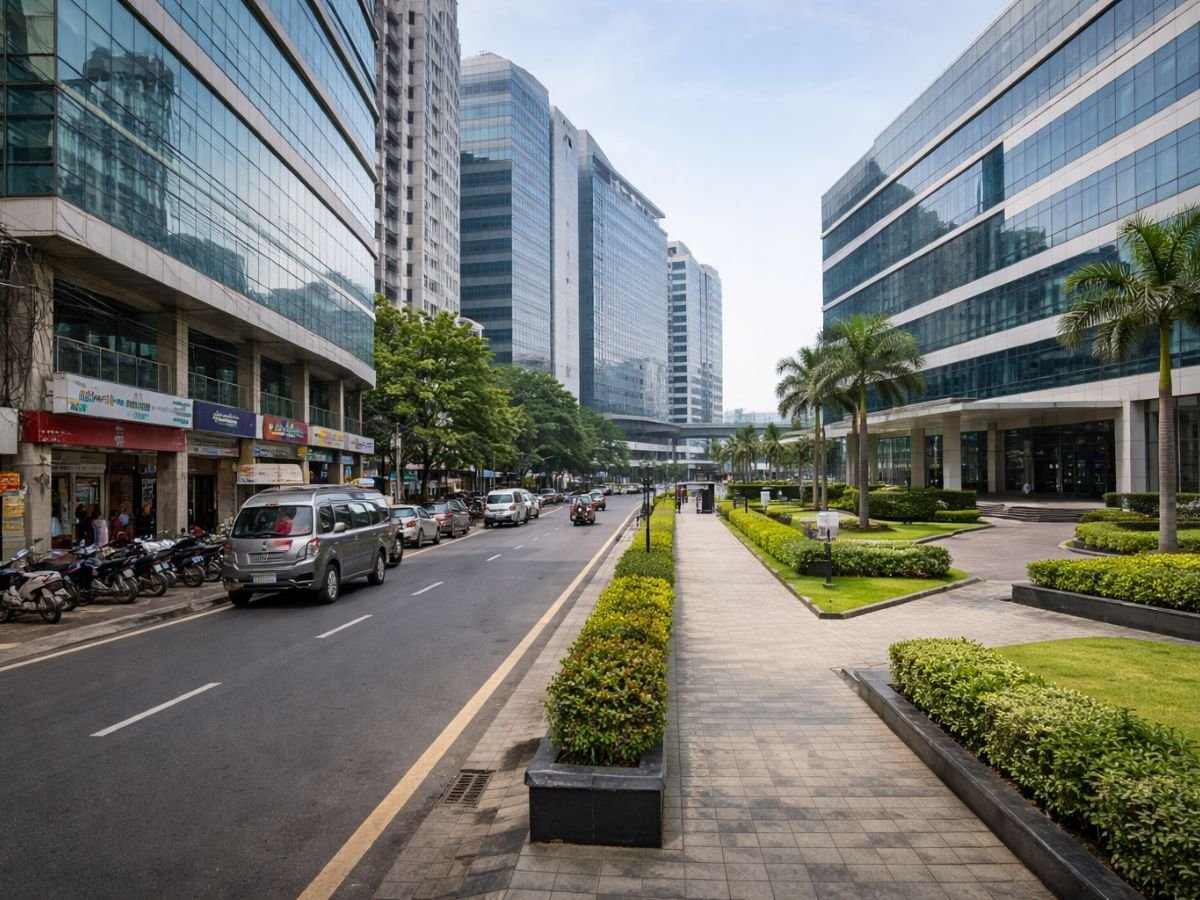
This is the section most buyers actually need.
Confusing road visibility with occupier depth
A property may be highly visible from a major road and still remain a weak commercial choice. If clients cannot park, staff do not enjoy coming there, and the building feels inconvenient, road visibility becomes mostly cosmetic.
Assuming all station-side property is equally strong
Two offices can both claim station proximity, but one may have a smooth walking route and the other may depend on a difficult last-mile stretch. In the real market, that difference matters.
Overestimating demand in weak buildings just because the macro-location is good
Airoli’s big story can make average buildings look better than they are. But occupiers eventually judge real things: lift quality, maintenance, HVAC performance, fire safety confidence, parking, surrounding environment, and convenience.
> Caution: In Airoli, good macro-connectivity cannot rescue a poor commercial asset forever. A weak building in a strong node can still underperform, carry vacancy risk, and disappoint on resale or reletting.
What occupiers, investors, and brokers should check before trusting the demand narrative
Before buying or leasing in Airoli, the due diligence should go beyond location marketing.
Check the actual commute, not just the pin location. Walk the route from station to building if rail access is part of the pitch.
Check parking honestly. On this corridor, parking is not a small detail. It is often the difference between workable and frustrating.
Check whether the building’s use, approvals, and project status line up properly, especially if the property is under construction or sits in a legacy industrial-commercial environment. For under-construction stock, MahaRERA checks remain essential. For land title and transfer realities in Navi Mumbai, CIDCO-related context can matter depending on the asset type. For baseline government valuation reference, IGR Maharashtra Ready Reckoner rates are useful, but they are not the same as real market price.
Also check:
- building maintenance quality
- fire and safety systems
- whether the tenant profile matches the property type
- whether the unit layout is genuinely usable
- whether the area feels office-active on a weekday
- whether the building performs only on paper or in actual occupancy
Airoli is a market where one site visit is never enough. The weekday test matters.
Who should buy in Airoli based on these demand drivers and who should stay selective
Airoli usually makes the most sense for:
- self-use office buyers
- office-led SMEs
- businesses that value staff commute logic
- investors targeting better office-linked tenant demand
- occupiers who want Navi Mumbai office access with broader MMR connectivity
Airoli is more selective for:
- pure retail investors chasing generic footfall
- buyers assuming every road-facing unit is premium
- investors buying old fragmented stock only because the node sounds strong
- people copying Vashi-style retail logic into an office-led market
This is why buyer intent matters so much. The same node can be a smart buy for one user and a poor buy for another.
Conclusion
Airoli’s commercial demand is not a myth. It is supported by a proven office ecosystem, meaningful rail connectivity, and strong regional road links. But the market only rewards assets that translate those macro advantages into daily usability.
That is the real filter.
Knowledge Park improves the quality of office demand. Rail access improves the human side of occupancy. Highway connectivity improves regional reach. The best commercial property in Airoli is the one that brings these three forces down to ground level through walkability, parking, smoother access, better building management, and the right fit between asset type and actual occupier need.
That is where the smart decision lies. Not in the headline story, but in how well the property captures it.
FAQs
Frequently Asked Questions