
FSI, Loading, Dock Height and Clear Height: What Industrial Users Should Check
If you are buying or leasing an industrial property, do not judge it only by location, rent, or total area. Industrial users should check four things early: FSI for legal and future-use comfort, loading for truck movement, dock height for faster handling, and clear height for real storage or operating capacity. The right mix depends on your actual business. A warehouse, light factory, and distribution user will not read the same building in the same way.
A unit can look big, cheap, and “industrial” on paper, yet fail in daily use. That is the real issue. In Navi Mumbai and the wider port-logistics belt, many bad decisions happen because the building is shortlisted on brochure language, not on operational fit.
Quick summary: what each factor controls and why it matters
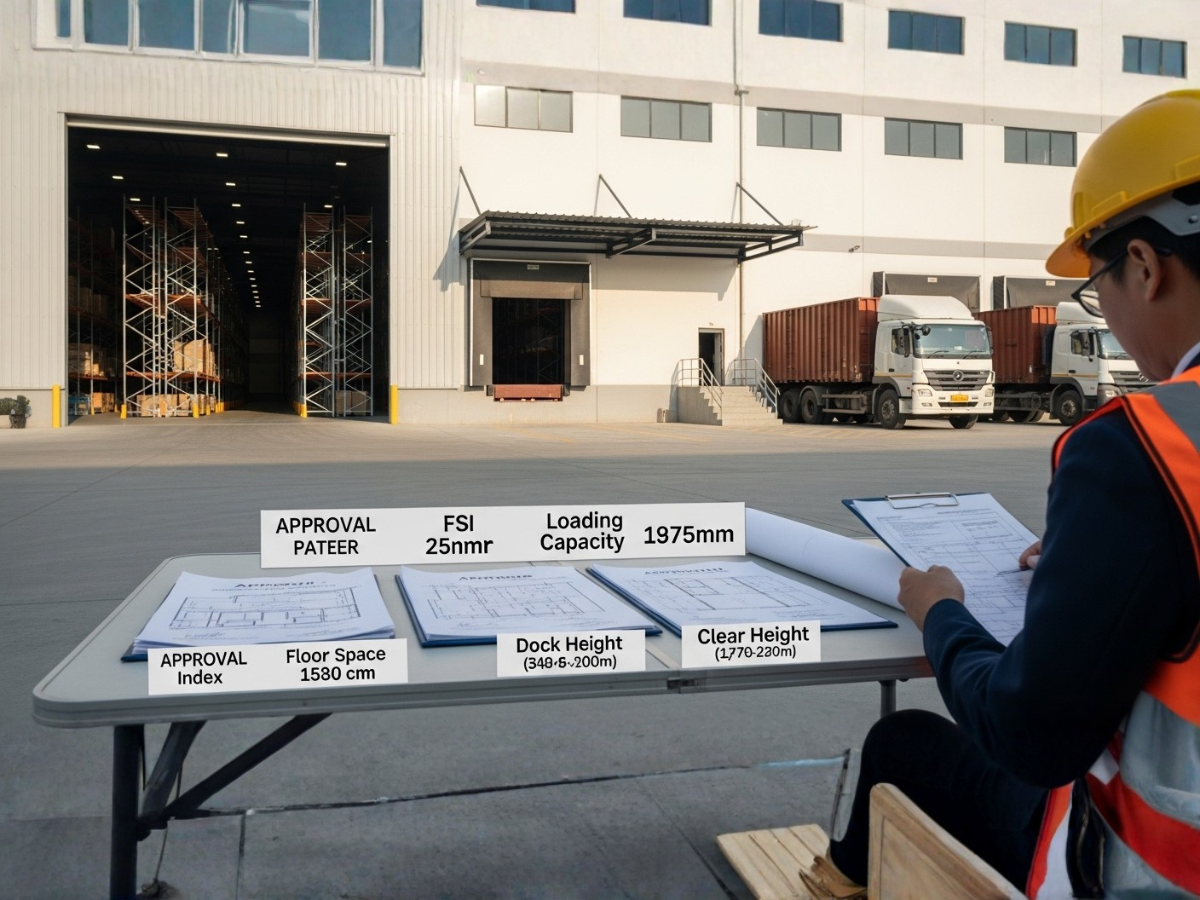
| Factor | What it actually controls | Who should care most | Common mistake | Deal-risk level if weak |
|---|---|---|---|---|
| FSI | Legal built potential, sanctioned additions, mezzanine comfort, future flexibility | Owner-users, investors, manufacturers planning internal office or future expansion | Thinking FSI is only a builder topic | High |
| Loading | Truck entry, turning, staging, dispatch flow, unloading practicality | 3PL, FMCG, e-commerce, container-linked users | Looking at open space without checking turning angle and bay usability | Critical |
| Dock height | Speed and safety of transfer between truck and warehouse | Fast dispatch and warehouse users | Assuming one standard dock works for every fleet type | Medium to high |
| Clear height | Real cubic utility, racking potential, vertical handling efficiency | Storage-heavy users, modern warehousing, investors | Confusing outside height with usable inside clear height | High |
Why FSI is not just a planning term and why industrial users should still care
FSI in industrial property is not just a technical file-room term. It affects whether the built form is comfortable on paper, whether later additions are easy or risky, and whether a unit has future flexibility or is already boxed in.
MIDC’s draft CDCPR framework ties permissible FSI to road width, with the table showing higher FSI bands on wider roads, and it also states that mezzanine floor area is counted toward FSI. The same document shows premium-based additional FSI logic, with industrial-use premium lines at 25% in the relevant clause.
What FSI changes in practical terms
For an industrial occupier, FSI changes more than just theoretical building capacity.
It affects whether:
- a mezzanine can be regularized comfortably
- future office space or service areas can be added without trouble
- the building feels overbuilt for the plot
- approvals, sanctioned plans, and actual construction look aligned
This matters more in industrial property than many first-time users realise. A lot of people see a ready shed or gala and assume the legal side is “already handled.” That is dangerous thinking.
Why occupiers should care even if they are only leasing
Even a tenant should care about FSI if the building has odd add-ons, closed terraces, oversized mezzanines, or internal alterations that do not seem to match the approved built form.
Why? Because if the structure is badly aligned with sanctioned plans, the pain is not theoretical. It can show up later in fire NOC issues, fit-out restrictions, insurance discomfort, licensing delay, or direct authority queries. The occupier may not own the problem, but the occupier still suffers the disruption.
When low remaining development flexibility becomes a long-term problem
A low-rent industrial unit can become expensive if the business grows and the site cannot absorb even small changes. A light manufacturer may need a modest admin block, testing room, staff utility area, or mezzanine storage. If the property is already tight from an FSI or approval point of view, that flexibility disappears.
Caution: Do not present FSI as a fixed universal number for every industrial asset. In Maharashtra industrial areas, road width, plot conditions, zone rules, and authority control all change the answer. Read the current approved plans and authority papers, not just a broker summary.
Loading is where many industrial properties fail in real life
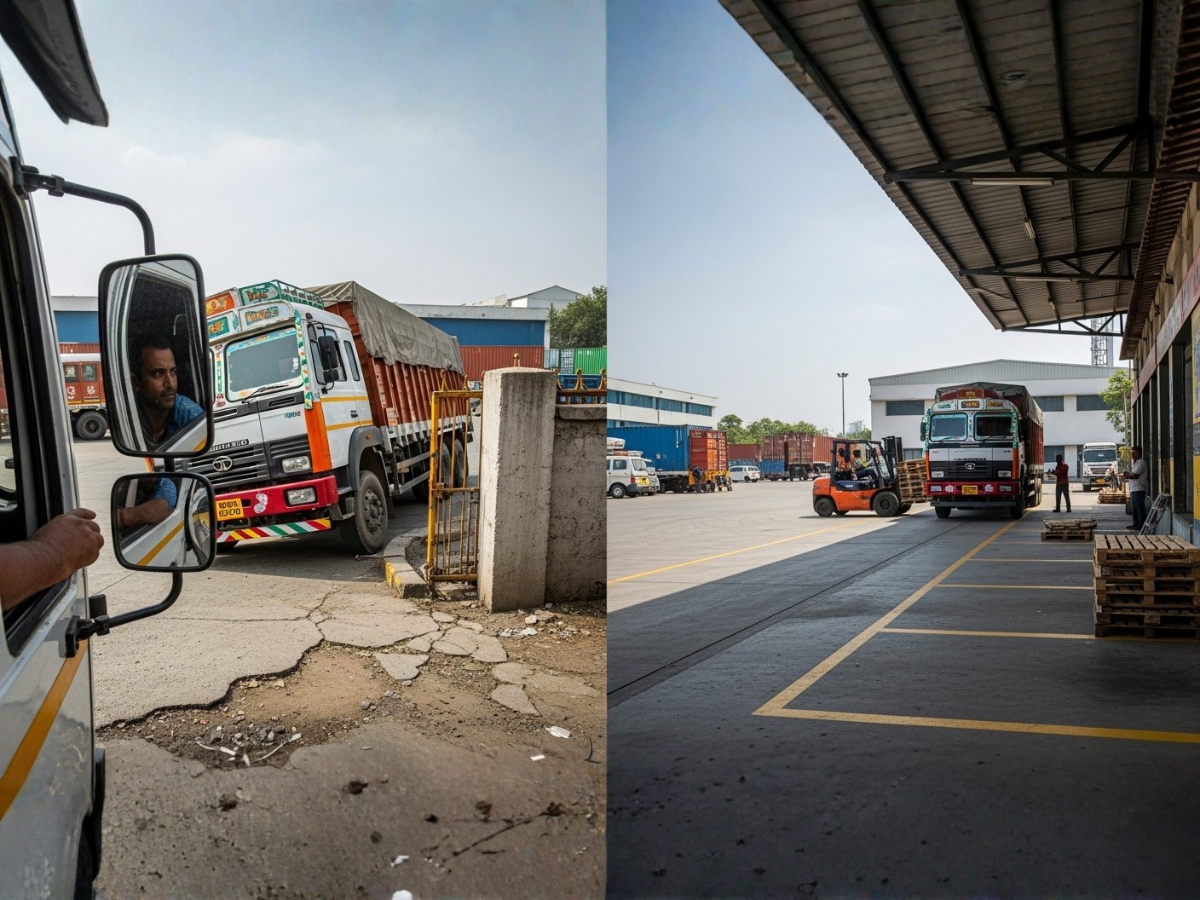
Loading is not the same as “there is some open space in front.” Loading means whether your vehicles can enter, turn, wait, align, load, unload, and exit without daily drama.
This is where many legacy industrial properties in Navi Mumbai fail. They may have usable internal area, but bad gate width, awkward approach angle, blind reverse movement, shared access, or poor apron depth. On ground, that becomes lost time, labour friction, dispatch delay, and vehicle pile-up.
Loading width, turning space, and bay practicality
A 40-foot trailer needs real turning geometry, not visual comfort. The engineering references commonly used in logistics design show outside turning requirements in the roughly 12.4 metre range for large trailers, while heavy rigid trucks need substantial turning yard geometry too. That is why “compound hai” is not a proper industrial usability check.
If your business depends on:
- 40-foot containers
- frequent truck arrivals
- high outbound dispatch
- reverse parking into bays
- simultaneous loading and unloading
then loading must be checked physically, not assumed.
Why a property can look large but still work badly for goods movement
A site can fail even when the carpet area is decent. Common reasons:
- narrow entry gate
- sharp internal turn immediately after entry
- loading bay too close to wall or setback edge
- no waiting area for multiple vehicles
- internal congestion caused by columns, ramps, or mixed movement
This is why a large shed with weak loading can be a worse operational asset than a slightly smaller but better-designed one.
Which users feel loading pain the fastest
3PL, FMCG, e-commerce dispatch, and port-linked cargo users feel bad loading first. They do not have the luxury of saying, “thoda adjust ho jayega.” Their cost is tied directly to speed and movement.
A slow-loading site does not just waste time. It breaks dispatch rhythm, increases idle labour, raises damage risk, and affects vehicle utilization.
Example: A Mahape or Rabale unit may suit a light fabrication or service user who uses smaller vehicles and controlled inward-outward movement. The same unit may completely fail for a high-volume container-linked distribution operation.
Dock height can improve or damage warehouse efficiency faster than most first-time occupiers expect
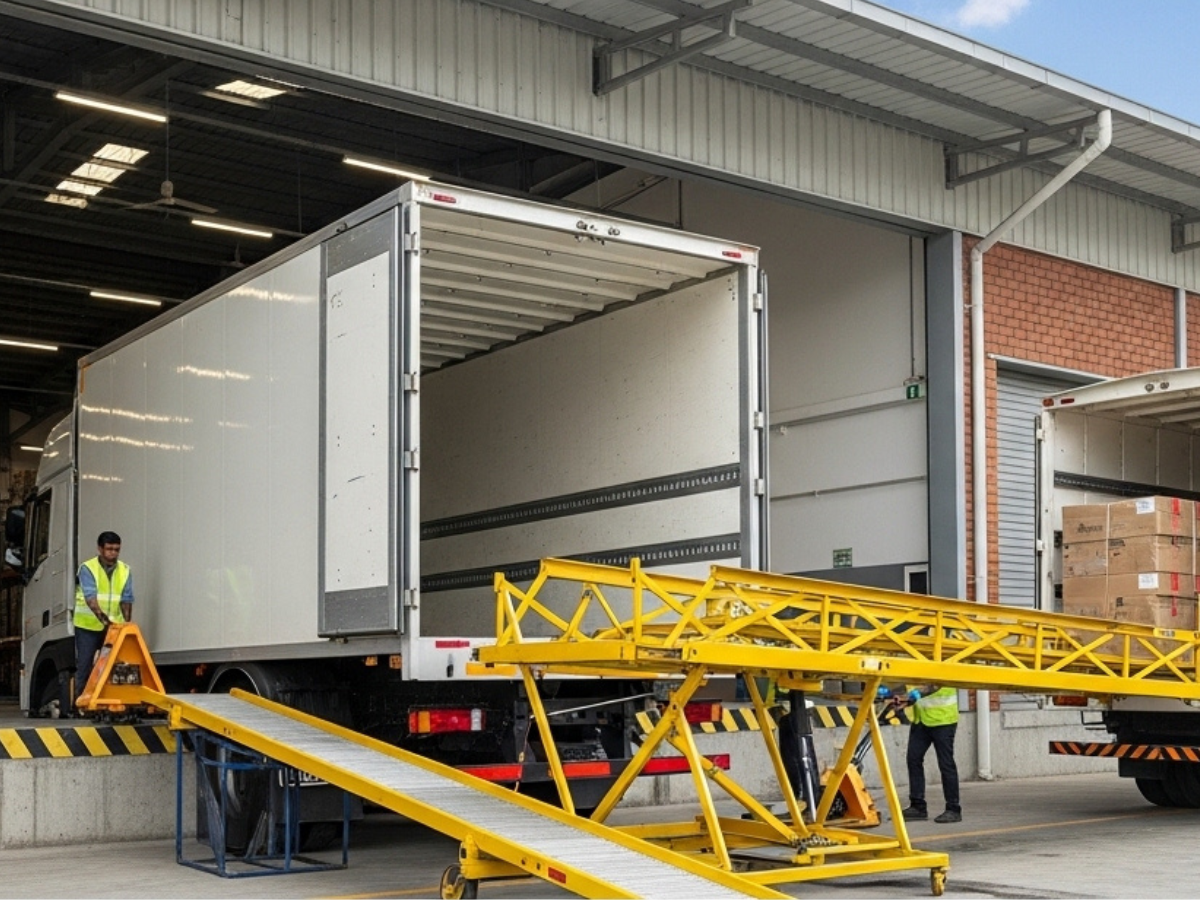
Dock height is one of the most misunderstood parts of industrial usability. People understand loading in a general way, but they often ignore the warehouse-to-truck interface itself.
That interface matters because the Indian fleet is mixed. Smaller LCVs and mini-trucks do not align with the same dock logic as long-haul trailers or port-linked container vehicles.
What dock height changes in daily operations
Dock height changes:
- forklift movement angle
- unloading speed
- labour effort
- pallet stability
- product damage risk
- dispatch turnaround time
This is why a “good warehouse” on brochure can still perform badly in real life.
Ground-level loading vs raised dock: when each works better
Raised dock systems usually work better for organised warehousing, repeated pallet movement, and faster dispatch cycles. Ground-level loading often suits machinery movement, flexible side loading, irregular cargo, or smaller manufacturing setups.
There is no single best answer. The right answer depends on what kind of vehicle comes daily.
MahaRERA’s official site also confirms that commercial projects generally need registration beyond the statutory exemption threshold of 500 square metres or eight units, which becomes useful when you are checking newer industrial parks rather than old standalone stock.
Where mismatch shows up in labour cost, turnaround time, and damage risk
This is the practical issue. A standard dock that works well for one fleet can work badly for another.
A Tata Ace-type low-bed delivery vehicle and a container trailer do not meet the dock at the same level. If the height mismatch is too big, the operation depends on makeshift ramps, awkward leveler use, extra labour, slower forklift movement, and higher tipping or spillage risk.
Comparison:
- High-volume warehouse with repeated pallet movement: dock design matters a lot
- Light manufacturer with occasional loading and mixed cargo: ground-level access may matter more
- JNPA-linked container movement: trailer compatibility and apron depth matter heavily
Clear height decides whether the building only stores goods or actually performs well
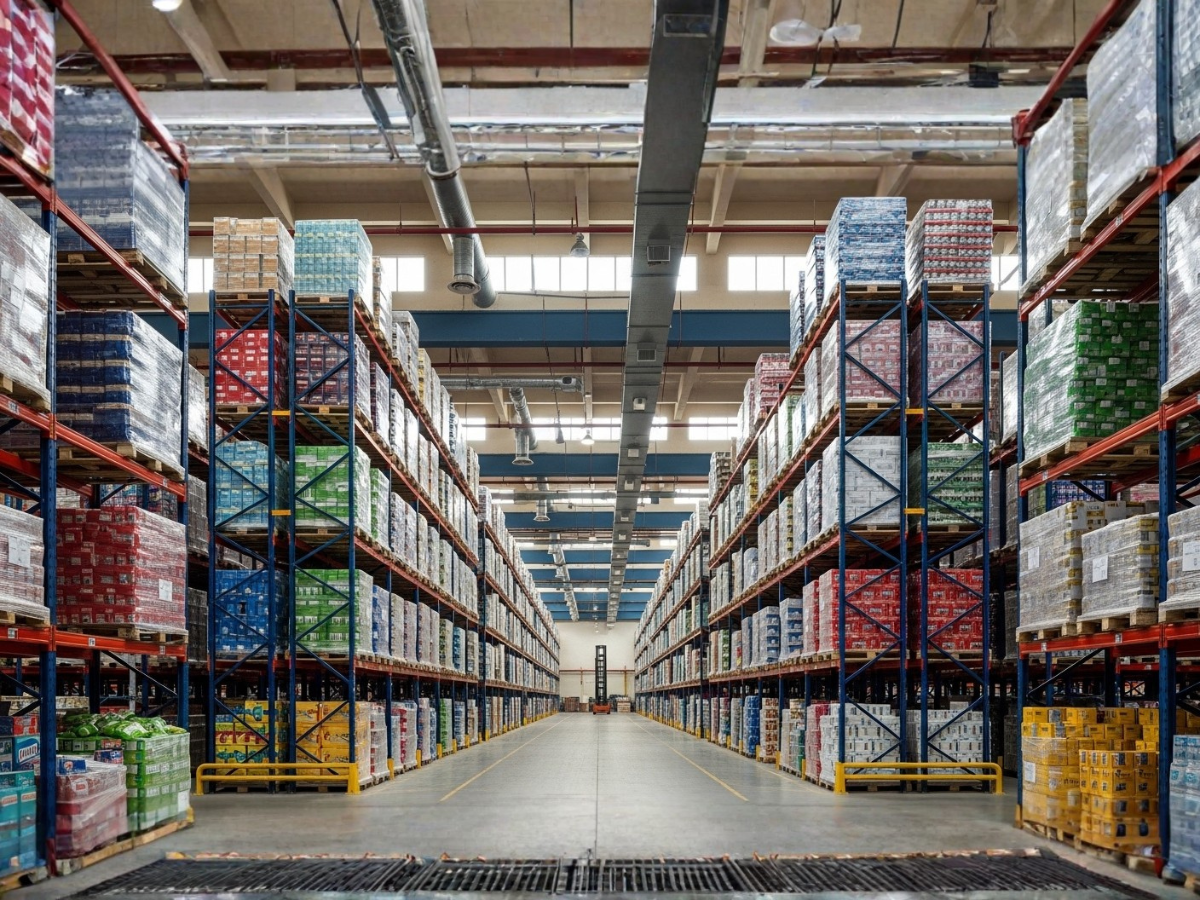
Clear height is where the biggest misunderstanding happens. Many people still think area is the main thing. For modern storage-heavy use, cubic utility matters more than just flat square footage.
A warehouse does not earn from floor area alone. It earns from usable volume.
Why clear height matters beyond “taller is better”
The issue is not height for show. It is usable vertical space.
A simple example explains it well:
- 10,000 sq. ft. with 20 ft usable height gives about 200,000 cubic ft
- the same 10,000 sq. ft. with 36 ft usable height gives about 360,000 cubic ft
That is a huge difference in storage potential from the same footprint. For warehousing, this changes the real cost per pallet stored.
Which operations need real vertical utility
Clear height matters most for:
- pallet racking
- storage-heavy logistics
- organised warehousing
- e-commerce inventory handling
- future multi-level storage planning
- investor-owned assets targeting premium tenants
It matters less for some light manufacturing users, especially if machines, process lines, or internal workflow do not benefit much from extra verticality.
Why beams, obstructions, mezzanine changes, or poor design reduce practical height
This is the trap. External height is not the same as usable clear height.
Beams, trusses, hanging ducts, sprinklers, false ceilings, badly inserted mezzanines, and uneven floor design can all reduce real operational height. The space may be advertised as tall, but the usable clear zone may be much lower where racking or forklift movement matters.
There is one more important point. High clear height is not enough on its own. If the slab or floor is not built for dense loading, the extra height may not translate into safe storage capacity. That is especially relevant when older industrial stock is retrofitted for modern warehousing.
Which matters most for your type of industrial use?
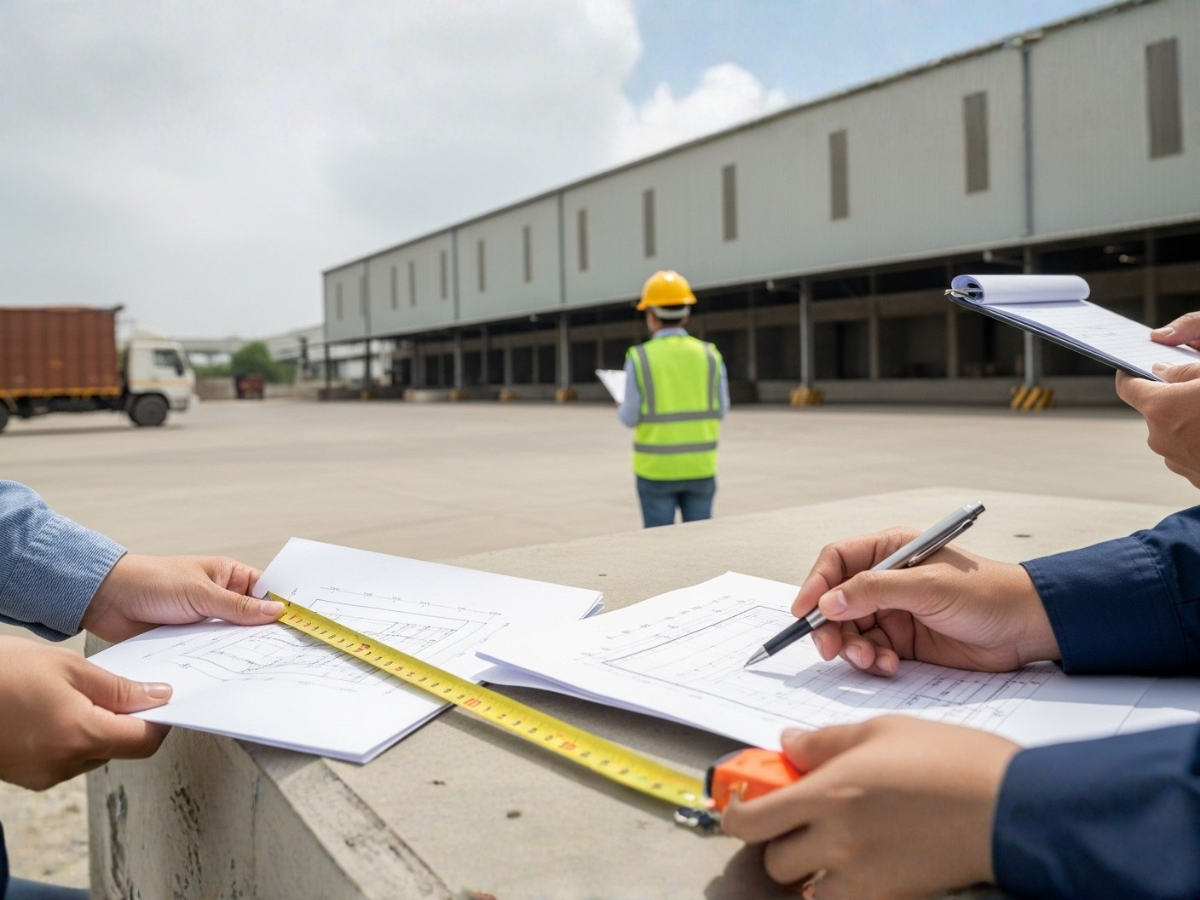
Different occupiers should not use the same checklist in the same order. That is where most generic articles fail.
| Industrial use type | What matters most | What can sometimes be secondary | Common mismatch |
|---|---|---|---|
| 3PL and logistics | Loading geometry, dock design, clear height | FSI flexibility | Big shed but poor truck movement |
| FMCG distribution | Dock height, dispatch flow, multiple vehicle handling | Extra height beyond need | One dock type serving mixed fleet badly |
| Light manufacturing | Ground access, floor strength, practical internal layout, legal comfort | Very high clear height | Paying for warehouse specs that add little value |
| Storage-heavy user | Clear height, floor load comfort, racking feasibility | Fancy frontage or office finish | Large area but low usable cubic capacity |
| E-commerce dispatch | Fast loading rhythm, staging, vehicle compatibility | Expansion-led FSI | Small-vehicle and pallet movement mismatch |
| Investor leasing to occupiers | Future-proof clear height, broad tenant compatibility, good loading | Narrow use-specific layout | Asset becomes hard to lease to stronger tenants |
What should be checked first during a site visit and what should be verified later on paper?
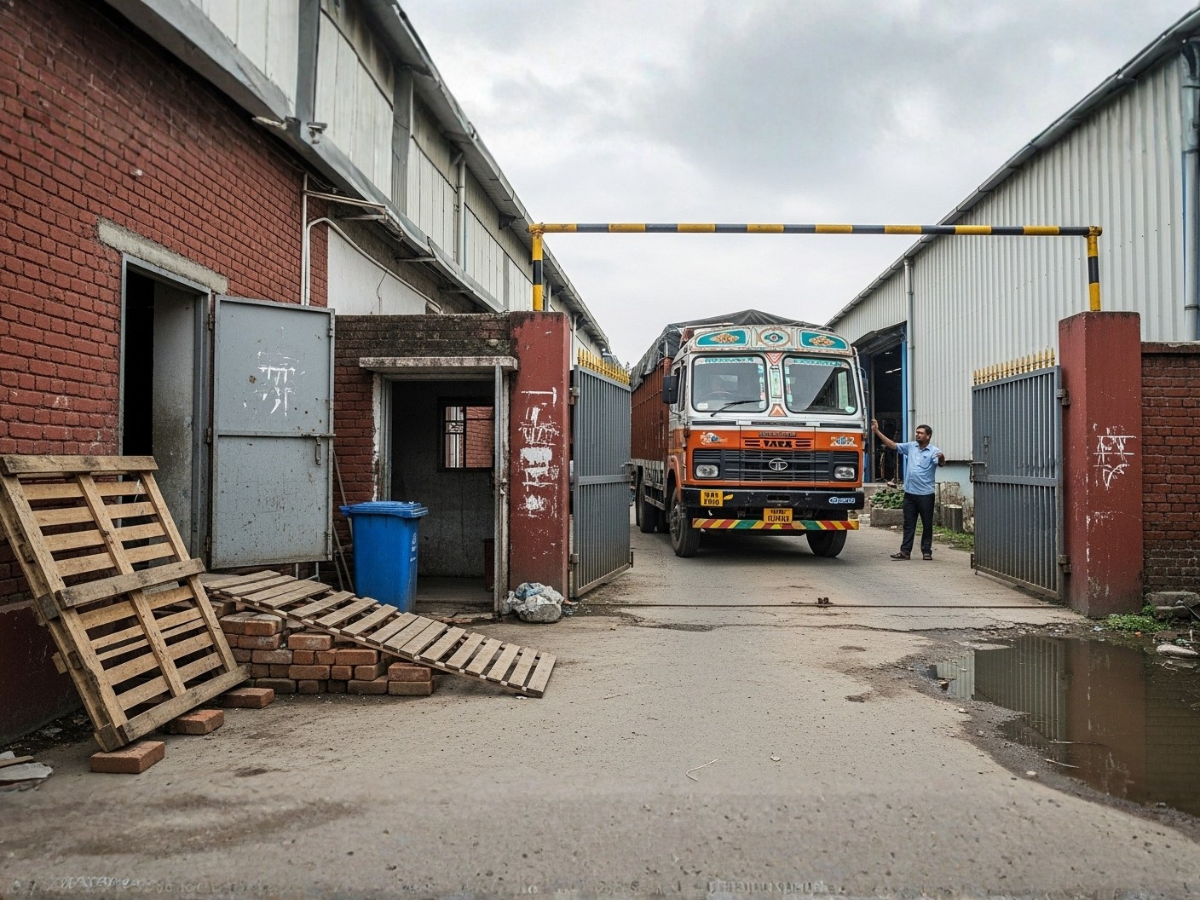
The correct sequence matters. First inspect the physical reality. Then verify the paperwork. Do not reverse that order, and do not stop at brochure claims.
Physical checks during inspection
Check these on site:
- actual gate width and turning comfort
- truck approach angle
- loading apron depth
- whether two vehicles can operate without blocking each other
- real dock condition and truck alignment practicality
- actual usable clear height at the lowest obstruction point
- floor condition, slab distress, cracking, slope, patchwork
- whether mezzanines, offices, or add-on structures look later inserted
Take videos, not just photos. Truck movement problems show up better on video.
Document and approval checks
Ask for:
- approved building plans
- sanctioned layout and built-up details
- completion or occupancy-related records where applicable
- lease papers and authority conditions
- fire and utility compliance documents where relevant
- project registration details on MahaRERA for applicable newer developments
MahaRERA’s own guidance states that projects above 500 sq m land area or more than eight units generally need registration, which makes the portal useful for checking larger commercial or industrial developments being actively marketed.
Questions to ask the owner, broker, or developer
Ask these directly:
- What vehicle type does this property currently handle most comfortably?
- What is the actual lowest clear height, not the brochure height?
- Was any mezzanine added later?
- Are there any restrictions on large vehicle movement at certain hours?
- Has the property been used as warehouse, manufacturing, or mixed use earlier?
- Which authority approvals support the present built form?
What usually goes wrong when industrial users ignore one of these four factors?
The damage is rarely abstract. It becomes operational pain.
When loading is ignored, trucks struggle to enter or reverse, causing bottlenecks. When dock mismatch is ignored, labour dependence rises and damage risk increases. When clear height is misunderstood, racking plans fail and space efficiency collapses. When FSI and sanctioned-built alignment are ignored, future fit-out or compliance risk rises.
Fatal mismatch box: Walk away early if:
- your main vehicle type cannot enter or turn properly
- usable clear height fails your already-planned storage system
- the built form looks materially inconsistent with available approvals
- the loading system depends entirely on makeshift adjustments
A cheap industrial unit with these defects is often not cheap at all. It simply pushes the cost into delay, retrofit, lower throughput, or future exit problems.
Navi Mumbai reality: where local industrial stock makes these checks even more important
This topic becomes more practical in Navi Mumbai because the industrial stock is not uniform.
In the TTC belt, including Mahape, Rabale, Pawane, and nearby legacy industrial pockets, you often see older buildings, tighter internal roads, mixed-use movement, smaller-format loading practicality, and lower clear-height comfort compared to newer institutional-grade warehousing. These locations can still work very well for the right business, especially controlled light industrial use, services, fabrication, repairs, and smaller distribution. But they should not be read like modern logistics parks.
On the other side, belts such as Taloja and Dronagiri increasingly attract newer logistics and industrial formats because they fit port-linked and corridor-led movement better. The building language there is often more aligned with modern warehousing expectations.
There is also a local traffic reality. Heavy-vehicle restrictions in the wider Thane-Navi Mumbai movement network can change and tighten based on traffic management needs. For example, a September 2025 notification reported a daily 6 a.m. to midnight restriction on heavy vehicles entering Thane Police Commissionerate limits from Navi Mumbai during that period. That is exactly why internal staging space and yard logic matter more than many occupiers think. These restrictions are dynamic, so they should always be checked at transaction time
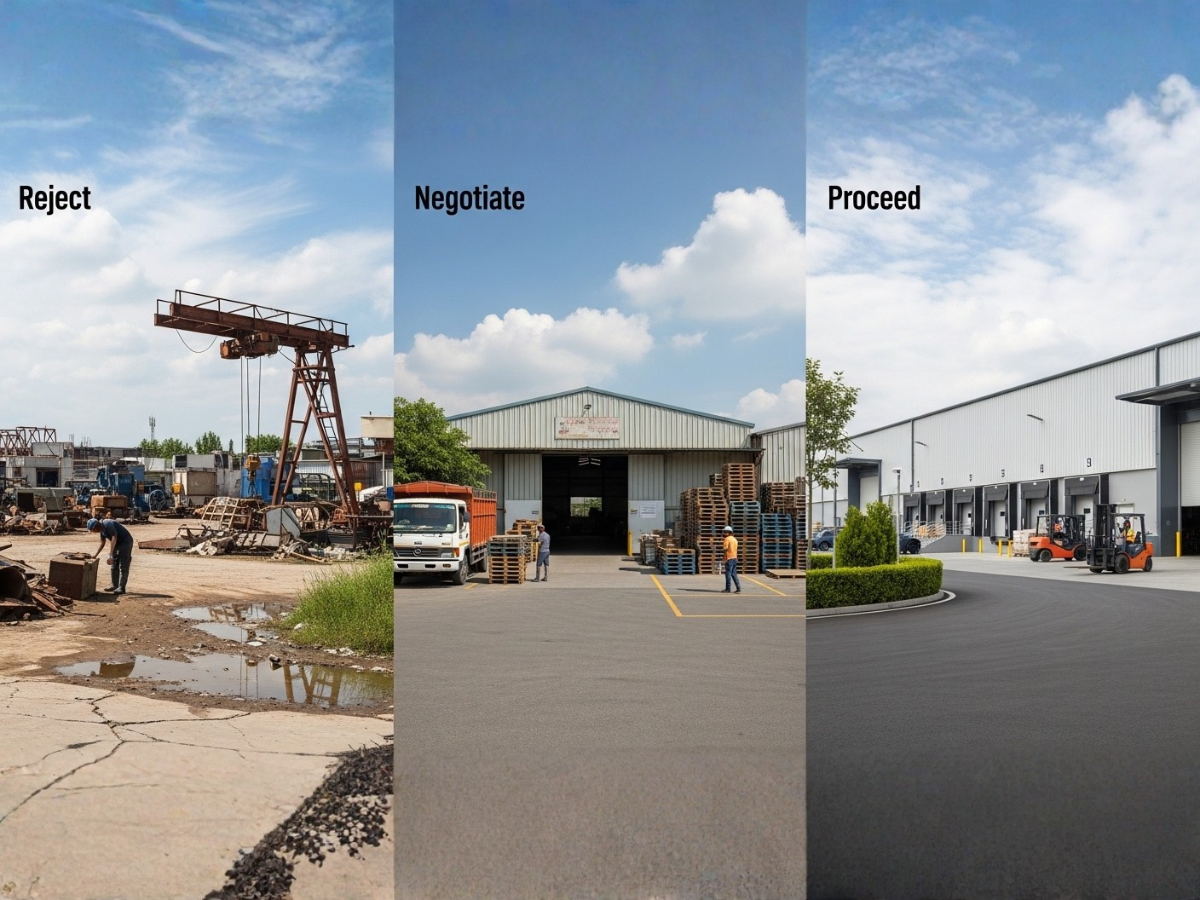
A simple decision framework: when to reject, when to negotiate, and when to proceed
Reject when the problem is geometric or structural and cannot be reasonably fixed. Negotiate when the issue is manageable through capex, rent adjustment, or operational redesign. Proceed when the building matches your vehicle type, storage logic, and document comfort without heroic assumptions.
Use this logic:
- Reject if the truck movement simply does not work, or the real clear height fails your core operating model.
- Negotiate if dock equipment, levelers, staging adjustments, or limited internal works can solve the issue economically.
- Proceed if the site works physically first, and paperwork supports what you are seeing on ground.
That is the right order: physical fit first, document comfort second, commercial negotiation third.
Conclusion
The best industrial property is not the one with the biggest area or the lowest rent. It is the one whose FSI comfort, loading design, dock interface, and clear height match your real operation without forcing daily adjustment. In Navi Mumbai, that matters even more because older TTC stock, newer Taloja-Dronagiri formats, and changing traffic realities create very different usability outcomes. Judge the building by operational fit first. Everything else comes after.
FAQs
Frequently Asked Questions