
Environmental Compliance, MPCB and CETP Basics for Industrial Buyers in Navi Mumbai
Buying an industrial property in Navi Mumbai is not just about title, rate, and location. Before paying token, you need to check four things very clearly: your intended activity, the unit’s MPCB consent status, how trade effluent is handled, and how waste is legally disposed. A MIDC address or one old approval copy is not enough. The real risk is simple: the unit may be industrial on paper, but not compliant for your exact future use.
If you are buying a plot, shed, gala, or tenanted unit in belts like Taloja or TTC, this is one of the most important parts of due diligence. A wrong read here can affect setup timeline, financing, transfer, leasing, expansion, and even whether you can operate smoothly after possession.
Quick summary: what to check before paying token
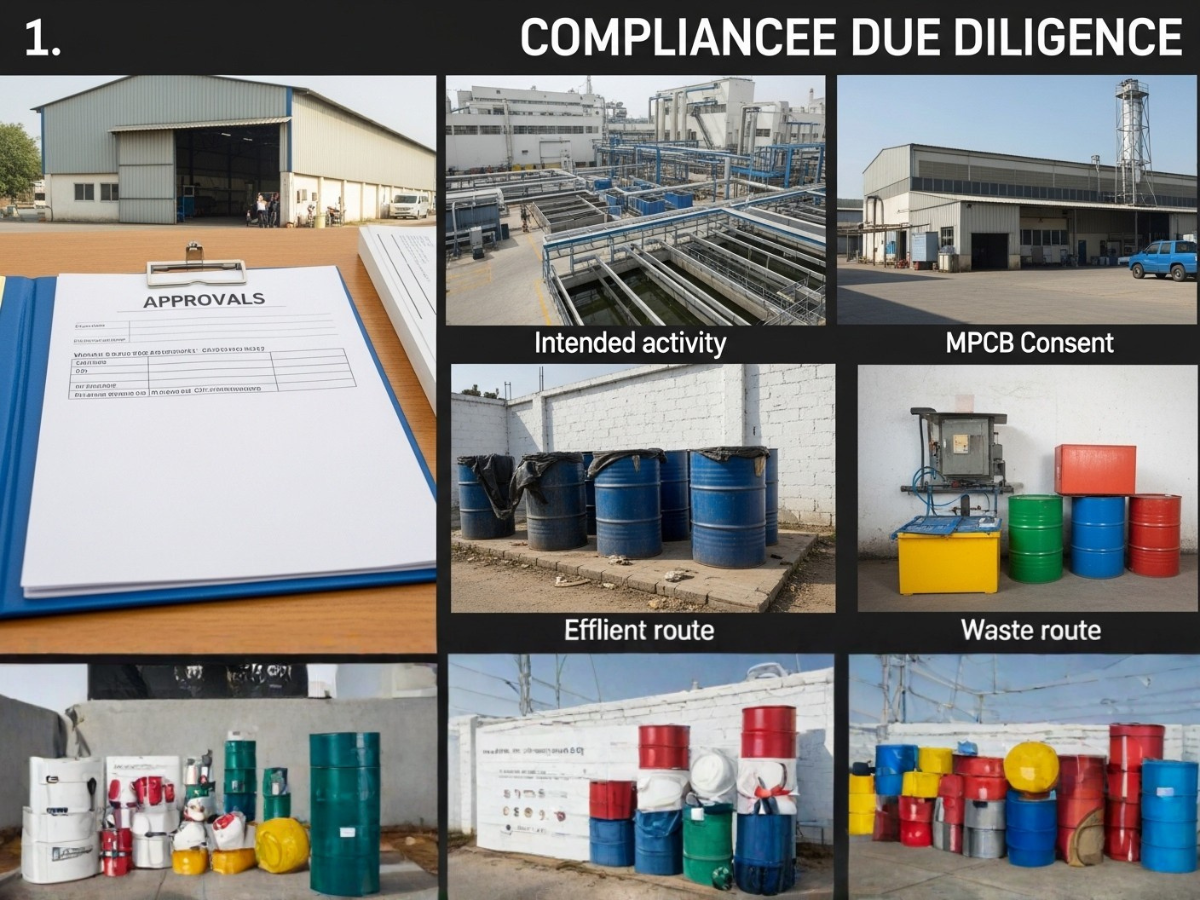
| Check | Why it matters | What to ask for | Walk-away signal |
|---|---|---|---|
| Intended activity | Compliance depends on the exact process, not the broker’s label | Product list, process note, raw materials, utilities use | Seller cannot clearly explain what activity the unit is actually suited for |
| MPCB consent status | Old or partial approvals do not prove present compliance | Latest CTE, CTO, renewal history, portal cross-check | Only one old consent copy is shown, no latest validity proof |
| Effluent route | Trade effluent handling is central to environmental risk | Water balance, discharge route, CETP link, ETP details | “CETP is there” but no membership, bills, or discharge records |
| Waste route | Hazardous waste issues can create ongoing liability | Waste authorization, manifests, disposal records | Unit generates waste but there is no authorization trail |
| Consent holder | Owner, tenant, occupier, and operator roles matter | Name of present consent holder and occupier | Seller avoids answering who currently holds the consent |
| Activity-category fit | Red, Orange, Green, White affects scrutiny and ease of operation | Category basis for present and future use | Proposed activity may fall in a stricter category than seller claims |
Environmental compliance, MPCB and CETP basics: what an industrial buyer must verify before paying token
For an industrial buyer, environmental due diligence is not a side check. It is a deal filter. The fastest useful framework is this: first check the intended activity, then the consent status, then the discharge route, then the waste route.
That sequence matters because industrial buyers often start from the wrong end. They see a ready shed, a running factory, or a MIDC address and assume the environmental side is already solved. It is not. What matters is whether your actual use will remain legally and operationally aligned with the approvals, infrastructure, and disposal systems attached to that unit.
In practical terms, do not pay token unless you know these four answers:
- What exactly will run from this unit
- Whether that activity needs MPCB consent, and in what form
- Whether the process generates trade effluent, air emissions, hazardous waste, or none of these materially
- Whether the disposal and treatment route actually exists on ground and matches the unit’s use
That is the core of industrial buyer environmental due diligence.
Does this property actually need MPCB consent for your intended activity, or is the compliance load being overstated or hidden?
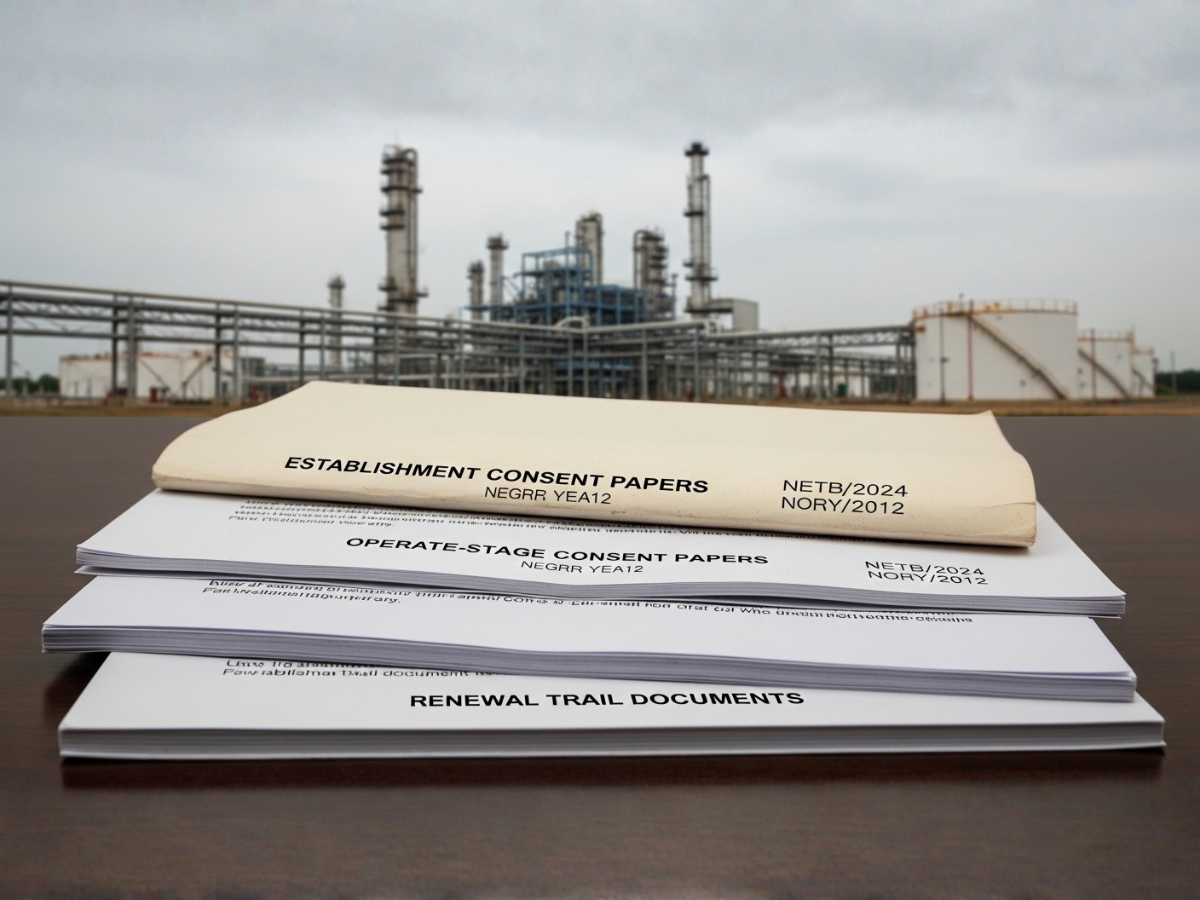
Not every industrial-looking property has the same environmental burden. That is the first important point. Some units are effectively dry, low-process, low-discharge spaces. Others look similar from outside but involve chemicals, wash water, fumes, sludge, solvent use, or hazardous waste. The compliance difference between these two can be massive.
When a “dry” industrial unit is different from an effluent-generating unit
A dry or low-impact unit may have very limited process discharge. In some cases, the main wastewater may be domestic sewage rather than trade effluent. On the other hand, a process-driven unit may generate effluent that needs treatment, controlled discharge, or CETP linkage.
This difference affects almost everything: approvals, setup speed, utility design, pollution-control equipment, and future tenantability. A buyer looking for warehousing, assembly, storage, or light fabrication should not casually buy a unit previously used for a more pollution-intensive activity without understanding whether that old use shaped the approvals and infrastructure.
Why the proposed activity matters more than the broker’s category label
Broker language is usually broad. “Industrial use,” “factory approved,” or “MIDC unit” are not enough. MPCB compliance is tied to the real process. If your intended activity changes the product mix, raw materials, water use, air emissions, or waste profile, the old comfort can disappear quickly.
Caution
A running unit is not automatically a safe unit for your business. The seller’s past process and your future process are not the same thing. Always read the asset together with the proposed activity.
What Consent to Establish, Consent to Operate, and renewal history really tell you about a unit
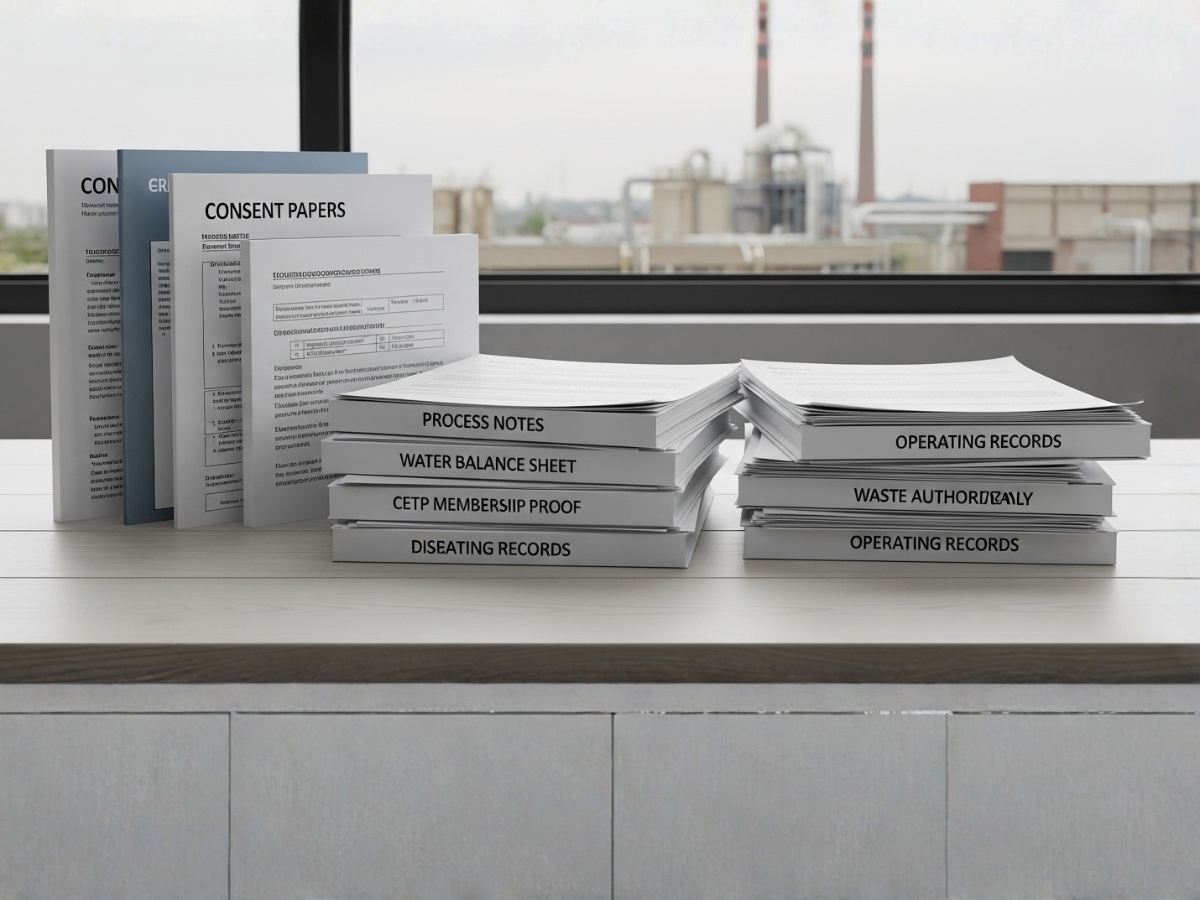
Industrial buyers often make one common mistake: they treat any one MPCB paper as complete comfort. That is not how it works.
Consent to Establish and Consent to Operate serve different purposes. One tells you what was permitted to be set up. The other tells you whether the installed operation was allowed to run. Renewal history helps you understand whether the compliance file was kept alive properly over time.
| Consent stage | What it really tells you | What it does not prove by itself | Buyer action |
|---|---|---|---|
| Consent to Establish (CTE) | The proposed project and pollution-control setup were accepted before establishment | It does not prove the current plant is operating legally today | Check whether your intended process still matches the approved setup |
| Consent to Operate (CTO) | The built unit was cleared to run subject to conditions | It does not prove future change in process or occupier is automatically covered | Ask for latest valid CTO and verify conditions carefully |
| Renewal history | Shows whether the consent file has been maintained over time | It does not cure mismatch, unreported change, or hidden non-compliance | Ask for latest renewal copies and portal cross-check |
In practical due diligence, ask for the latest valid copies, not just photocopies from years ago. Cross-check them through MPCB access systems or available dashboard records. Also check whether the validity period is current and whether there were any important conditions attached to discharge, waste handling, fuel, product mix, or pollution-control systems.
A clean consent history does not mean a risk-free deal. But a weak or missing history is a major warning sign.
Why MPCB category matters before you buy: Red, Orange, Green, and White are not just labels
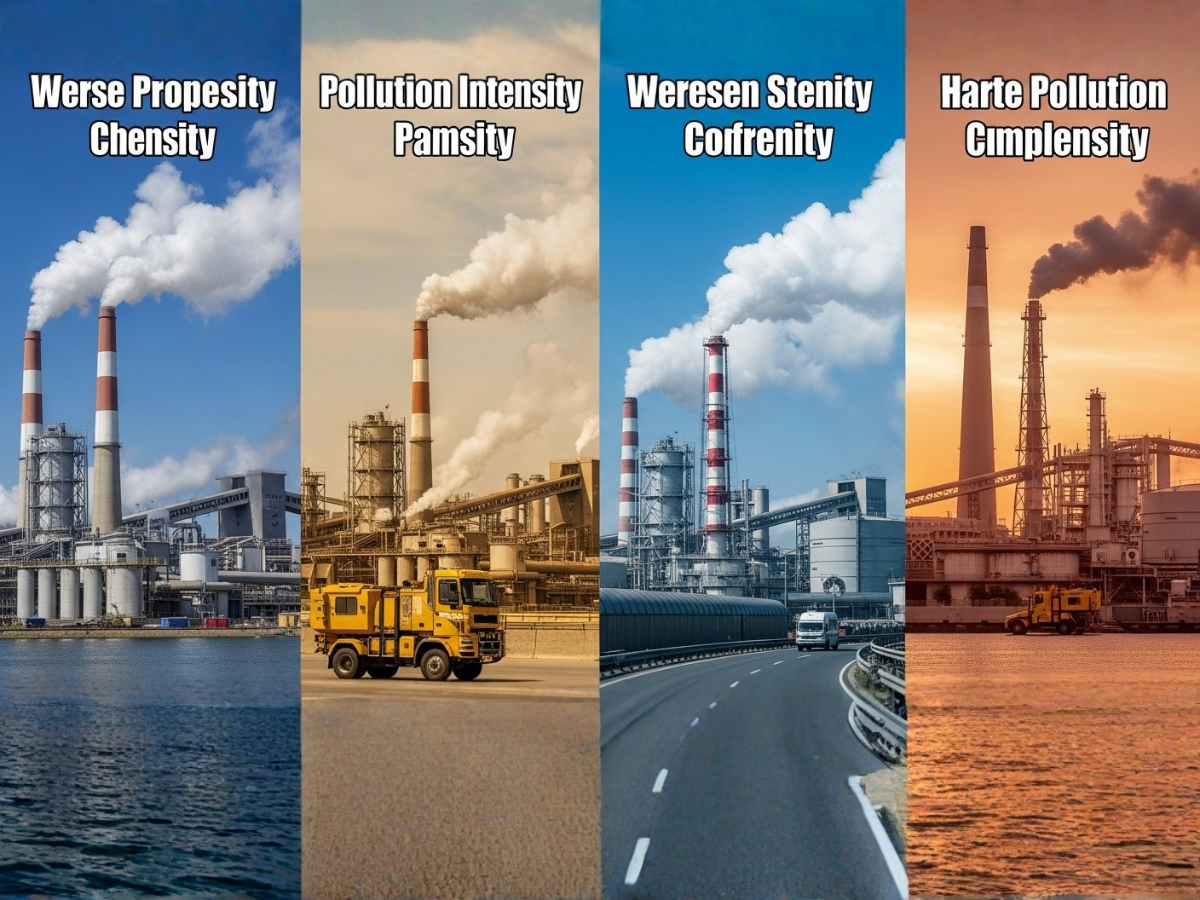
For a buyer, category is not theory. It is a fast way to understand the likely compliance burden and operating sensitivity of the unit.
At a broad level, Red means high pollution potential, Orange means moderate, Green means lower, and White means practically non-polluting. A newer Blue category has also been used for certain environmental service activities. The exact classification depends on the process and pollution profile, not just on what the unit is called in the market.
How category changes financing, fit-out, timeline, and neighbor risk
A stricter category can mean heavier scrutiny, shorter operating comfort, more technical documentation, more conditions on discharge and waste, and more dependence on proper treatment infrastructure. It can also affect how quickly a new occupier can stabilise operations after transfer.
Even from a practical real estate perspective, category matters because it changes the difficulty of re-leasing. A simple Green-type use and a chemically exposed Red-type use do not create the same tenant pool, approval burden, or compliance anxiety for the next user.
Example
Suppose a seller markets a unit as a general industrial shed. On paper that sounds flexible. But if the intended use shifts into a more pollution-intensive process with effluent, fumes, or hazardous waste, the real compliance burden changes. That difference can affect whether the asset remains easy to run, easy to finance, and easy to exit.
CETP, in-house ETP, or no trade effluent: which disposal model are you actually buying into?
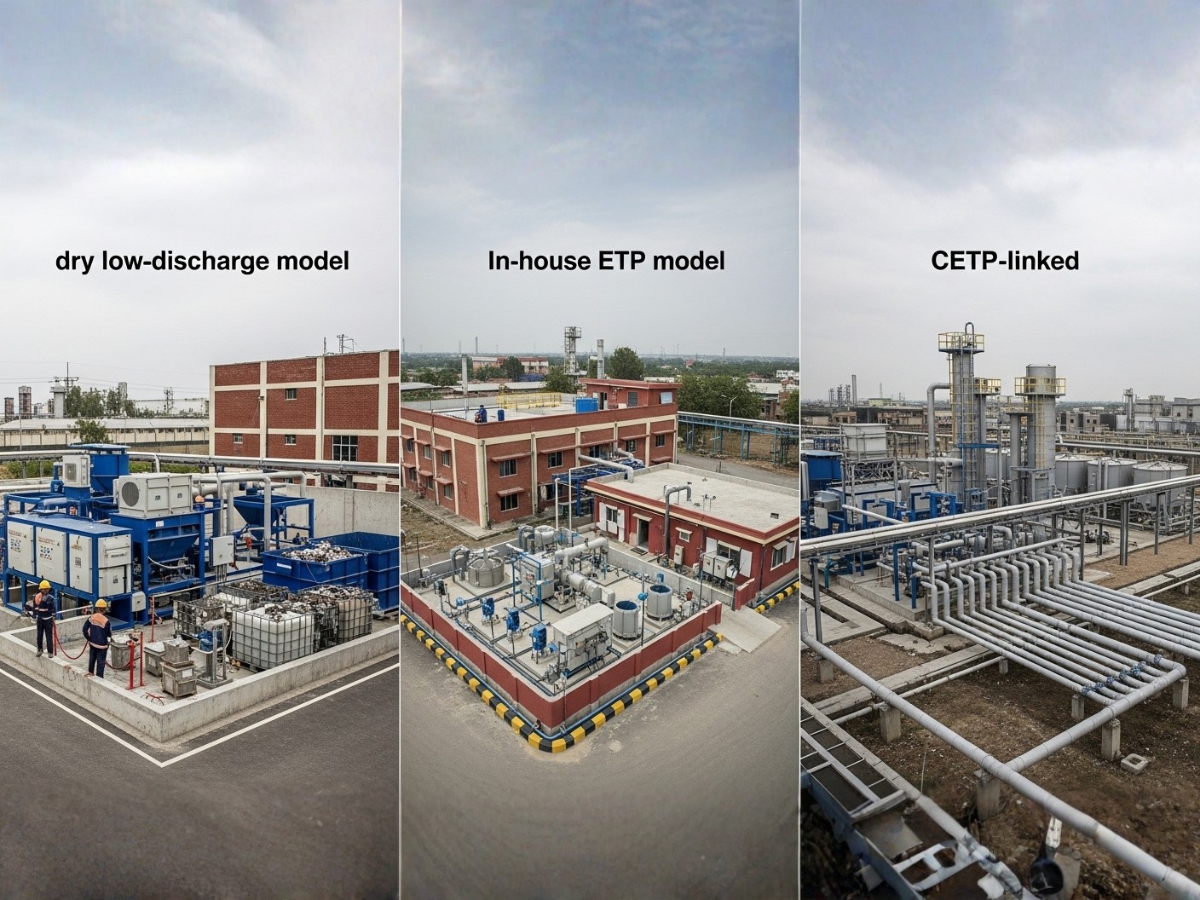
This is the operational heart of the entire topic. An industrial buyer must know whether the unit is meant to function as:
- a low or no-trade-effluent unit
- a unit with in-house treatment
- a unit that depends on CETP linkage
- a hybrid case where pre-treatment is required before CETP discharge
Do not mix up sewage and trade effluent. They are not the same issue.
When CETP membership is a strength
In clusters where common treatment infrastructure is real and functional, CETP linkage can be a major strength, especially for small and medium industrial users who cannot economically build full treatment systems on their own plot. It can make a certain type of industrial activity viable in a dense cluster.
That is why CETP membership proof matters. If the seller says the unit is connected or covered, ask for the membership trail, service records, discharge arrangement, and whether pre-treatment obligations apply.
When “CETP available” is still not enough
This is where buyers get trapped. CETP presence by itself does not solve every compliance issue. You still need to know whether the unit’s influent profile, load, treatment conditions, waste residue, and actual operating model fit the CETP framework. If a process generates problematic waste streams or requires specific pre-treatment, casual reliance on cluster-level infrastructure is dangerous.
Practical reading of the disposal model
- Low or no-trade-effluent unit: simpler on paper, but still verify if the process is truly dry
- In-house ETP model: more control, but more capex, technical dependence, and operating responsibility
- CETP-linked model: can be efficient in the right cluster, but only if membership and discharge compliance are real
In Navi Mumbai-side industrial belts, where do CETP and environmental checks become more serious?
Local context matters only when it changes the answer. Here, it does.
In Navi Mumbai-side industrial due diligence, Taloja and TTC are not just location names. They are distinct compliance contexts. That is because cluster infrastructure, environmental history, waste routes, and monitoring realities are not identical across belts.
Taloja logic: chemical-side caution, common facility relevance, and waste-route scrutiny
Taloja needs more careful reading if the unit is chemical-adjacent, process-heavy, or waste-linked. This is not just because it is an industrial area, but because CETP performance, hazardous waste route, and enforcement history have made environmental scrutiny more serious here.
Taloja CETP has gone through expansion and regulatory attention, and the area also has relevance for common hazardous waste infrastructure. For a buyer, that means one thing: never rely only on the seller’s statement that “everything is managed in cluster.” Read the actual waste and discharge chain.
Also price in local operating realities. Water cuts, treatment pressure, and stricter scrutiny are not abstract risks in such belts. They can affect continuity and cost.
TTC / Thane-Belapur logic: do not assume one industrial address means one compliance profile
The TTC belt is often seen as a more established industrial corridor, but buyers still make the mistake of treating the whole stretch as one uniform compliance market. It is not. Different units in the same broad belt can have very different activity profiles, treatment dependency, and environmental risk.
A shed used for light assembly and a process-heavy factory within the wider TTC corridor are not equal from an MPCB or CETP reading. This is exactly why “industrial address” is not enough.
Local example box
In Taloja, the environmental file often has to be read together with CETP dependency and hazardous waste route. In TTC, the mistake is usually over-simplification: buyers assume a strong cluster means every unit is equally safe. In both cases, the correct method is the same: check activity, consent, discharge route, and waste route unit by unit.
Which environmental and operating documents should you ask for before buying a plot, shed, gala, or tenanted industrial unit?
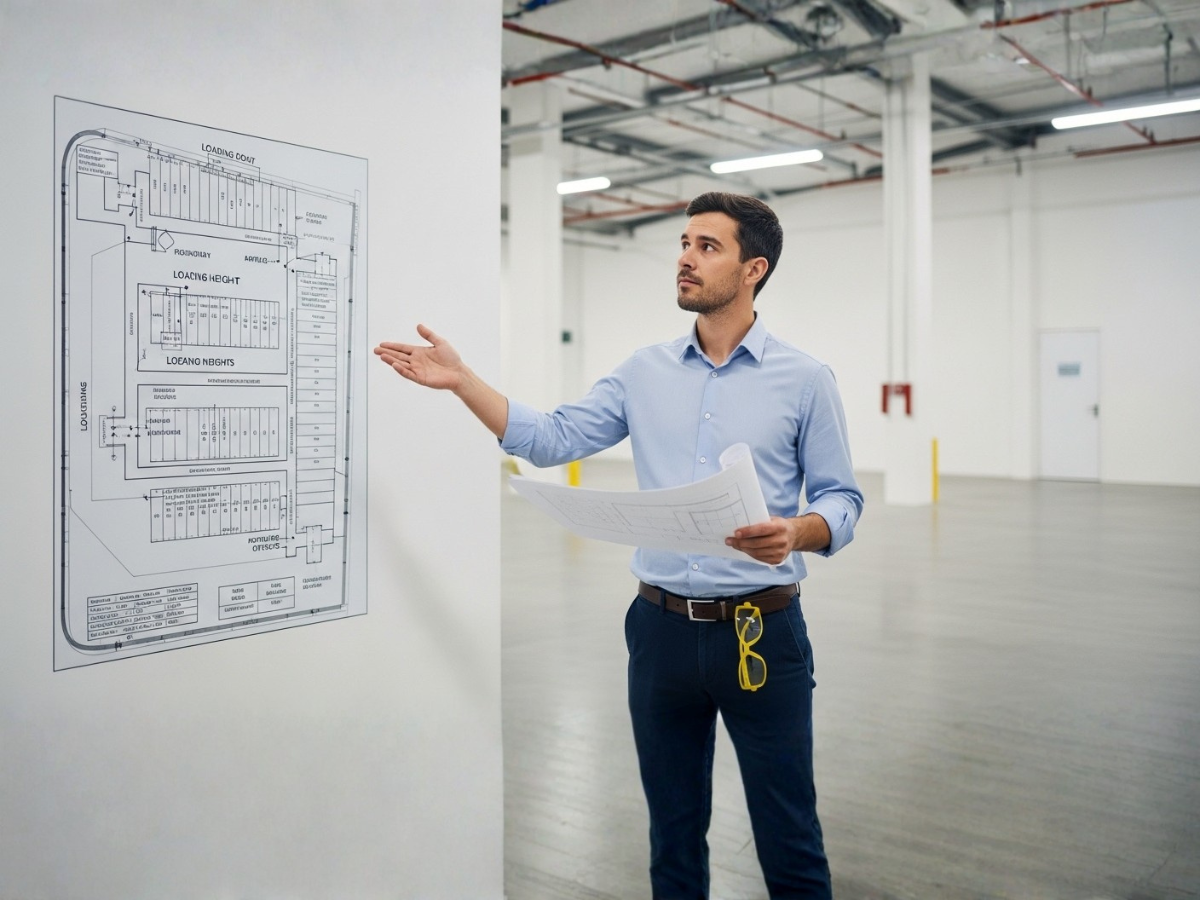
This is where buyer diligence becomes real. Do not ask for “all approvals” in a vague way. Ask for a defined pack.
Must-have before token
- Latest Consent to Establish, if relevant
- Latest Consent to Operate
- Renewal history and validity details
- Exact process list and product list
- Basic process flow chart
- Water balance or discharge note
- Details of ETP, APCD, or other pollution-control systems, if applicable
- CETP membership proof, bills, or discharge arrangement, if CETP is claimed
- Hazardous waste authorization, if waste is generated
- Disposal records or manifest trail where relevant
- Name of present consent holder and occupier
Important before registration or final commitment
- Capital investment certificate used for consent fee slab
- Board resolution or occupier appointment records where applicable
- History of notices, closure directions, bank guarantee forfeiture, or non-compliance
- Confirmation on whether any change in process, capacity, or occupier will trigger fresh approval steps
- MIDC-side transfer, sublease, BCC, and operating-status papers where relevant
A good buyer does not read these documents as random paperwork. They read them as one operating file.
What can go wrong even when the seller says “all approvals are there”?
A lot, frankly.
Old consent that does not match the present process
A consent may exist, but the actual activity may have changed over time. If the process, product, water use, fuel, emissions, or waste profile changed without proper alignment, the paper comfort is weaker than it looks.
Seller consent exists, but transfer or change in occupier use will change the risk
This is a very important point for buyers and investors. The present operator’s consent history does not automatically make the unit future-proof for another occupier or another business model. Even when ownership transfer is possible, the operating compliance risk may reset in practical terms.
CETP line exists, but the unit’s influent or waste profile still creates exposure
This is the classic false comfort. Common infrastructure helps, but it does not excuse wrong process design, unsupported discharge assumptions, or hazardous waste gaps.
Red-flag box
Be careful if you hear any of these lines:
- “MIDC unit hai, approvals toh honge”
- “Old factory was running for years, so no issue”
- “CETP available hai, anything can be managed”
- “Renewal karwa lenge later”
- “Documents after token”
These are not reassuring statements. They are due-diligence warnings.
If you are buying for self-use, investment, or future leasing, how much environmental diligence is enough?
The answer depends on buyer type.
For self-use buyers, the diligence standard should be highest because you are taking direct operating risk. You need to know whether your exact business can run, not whether the previous business ran.
For investors, the mistake is under-checking. Many investors think environmental diligence is the tenant’s problem. It is not that simple. Tenantability, releasability, and exit all depend on whether the unit is easy to operate compliantly for the next occupier.
For future leasing buyers, the most valuable industrial asset is not always the one with the biggest pitch. It is often the one with the cleanest, most adaptable compliance profile.
So the practical rule is:
- Self-use buyer: deep process-level diligence
- Investor: tenantability-focused diligence
- Future leasing buyer: focus on flexibility, category burden, discharge model, and paperwork continuity
A 10-minute industrial compliance screening checklist before token payment
Use this as a stop, hold, or proceed filter.
Proceed
- Intended activity is clear
- Consent copies are current and match broad use
- Discharge route is explained properly
- Waste route is documented where relevant
- CETP claim is backed by proof
- Seller clearly identifies present consent holder and occupier
Hold
- Old approvals exist, but current validity is unclear
- Activity fit is mostly right, but process details are incomplete
- CETP exists, but membership or service records are missing
- Hazardous waste angle may exist, but records are not shown yet
Stop
- Seller says approvals exist but does not share them before token
- Proposed activity may be very different from past use
- No clear answer on trade effluent or waste generation
- Consent holder identity is vague
- Environmental history shows repeated non-compliance or closure-style risk
Conclusion
Environmental compliance is not a side issue for industrial buyers in Navi Mumbai. It is part of the asset itself. Before buying any plot, shed, gala, or tenanted unit, do not ask only whether the property is industrial. Ask whether your exact future activity fits the consent file, the discharge model, the waste route, and the local compliance context.
That is the real filter.
A good industrial deal is not just legally transferable and commercially attractive. It must also be operationally runnable without hidden environmental shocks. In Taloja, TTC, and other Navi Mumbai-side belts, the smartest buyers are not the fastest token payers. They are the ones who verify the activity, the consent, the effluent path, and the waste chain before they commit.
For related due diligence, you can also read:
- How to Verify Sanctioned Industrial Use and Zoning in Navi Mumbai
- MIDC Transfer, Sublease and Subletting Basics for Industrial Buyers
- Fire NOC, Building Approval and Occupancy Checks for Industrial Units
- Industrial Plot vs Shed vs Gala: What Changes in Due Diligence
- FSI, Loading, Dock Height and Clear Height: What Industrial Users Should Check
- How to Read an Industrial Lease Before You Commit
- Taloja vs TTC for Different Types of Industrial Users
- Industrial Property Due Diligence Checklist Before Token in Navi Mumbai
“`
FAQs
Frequently Asked Questions