
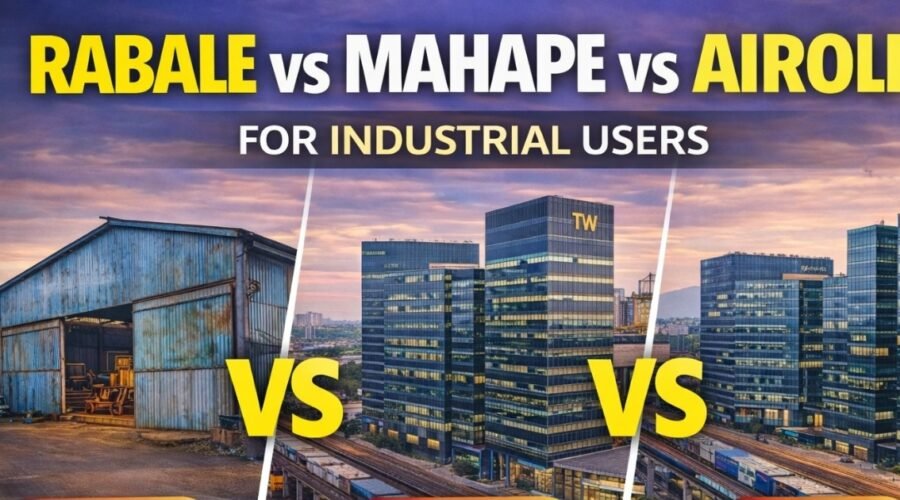
Rabale vs Mahape vs Airoli for Industrial Users
Rabale, Mahape, and Airoli are not the same industrial market even though they sit in the same wider TTC belt. Rabale usually fits heavier, more rugged industrial operations. Mahape usually fits cleaner hybrid and tech-industrial users. Airoli usually fits office-linked, data-led, and staff-heavy business formats far better than traditional factory use. The right choice depends on truck movement, staff profile, power needs, building format, and whether you want to lease, buy, or invest.
Quick summary table
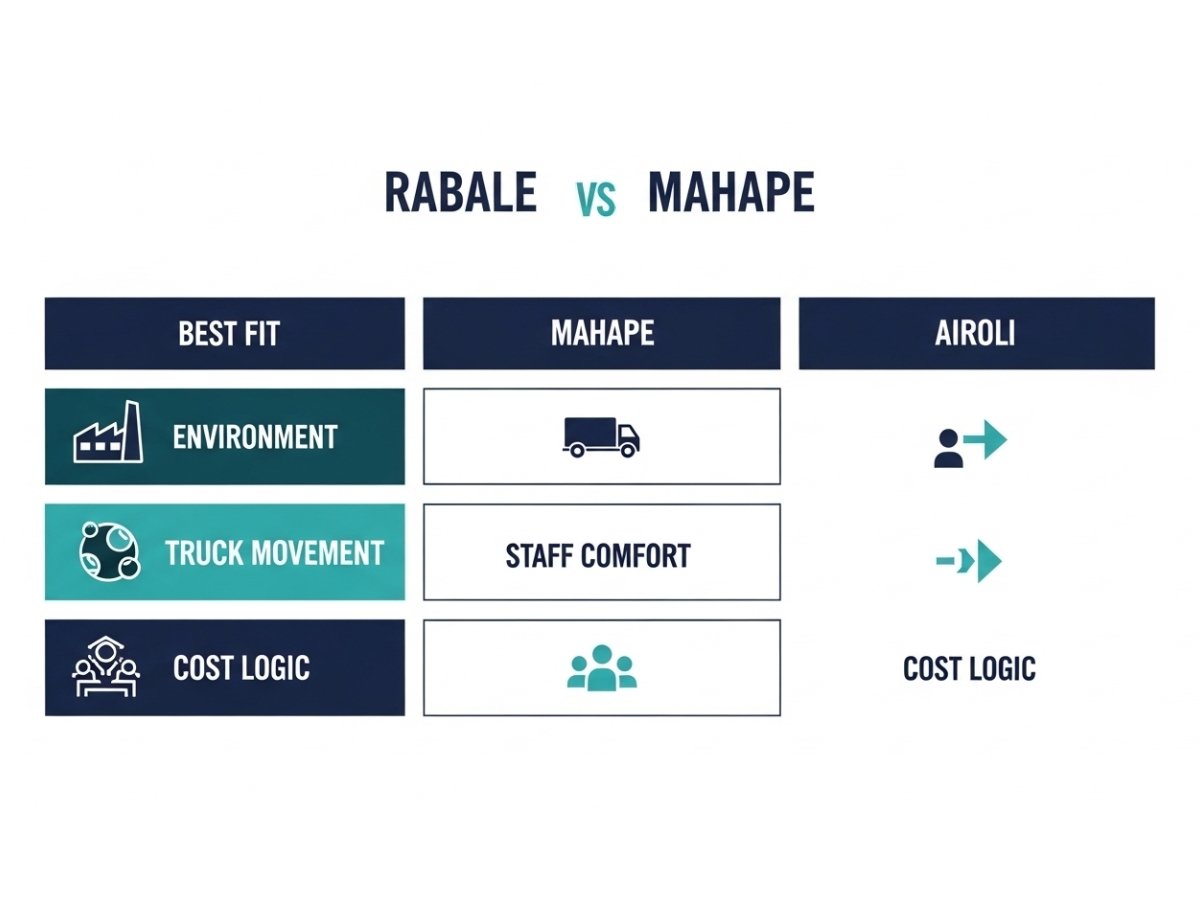
| Factor | Rabale | Mahape | Airoli |
|---|---|---|---|
| Best fit | Heavy engineering, fabrication, rugged industrial use | Hybrid industrial, electronics, medical devices, clean assembly, tech-industrial | Data centers, IT-linked operations, office-heavy technical businesses |
| General environment | Older, harder industrial belt | Cleaner, more mixed, more modern | More office-tech dominant |
| Truck practicality | Better for true industrial movement, but internal friction can exist | Balanced, especially in better planned parks | Weaker for heavy freight in commuter-heavy pockets |
| Staff convenience | Weaker for white-collar-heavy teams | Better than Rabale, manageable with shuttle logic | Strongest |
| Power-sensitive use | Can work, but occupiers may need stronger backup planning | Stronger fit for power-sensitive operations | Strong for digital and office-led infrastructure |
| Cost logic | Usually the more accessible industrial option | Mid-to-premium | Premium, often yield-driven and use-selective |
| Best buyer profile | Owner-occupier with operational priority | Hybrid occupier or modern industrial investor | Yield or tech-space investor, selective occupier |
Rabale vs Mahape vs Airoli for industrial users: what is the practical answer?
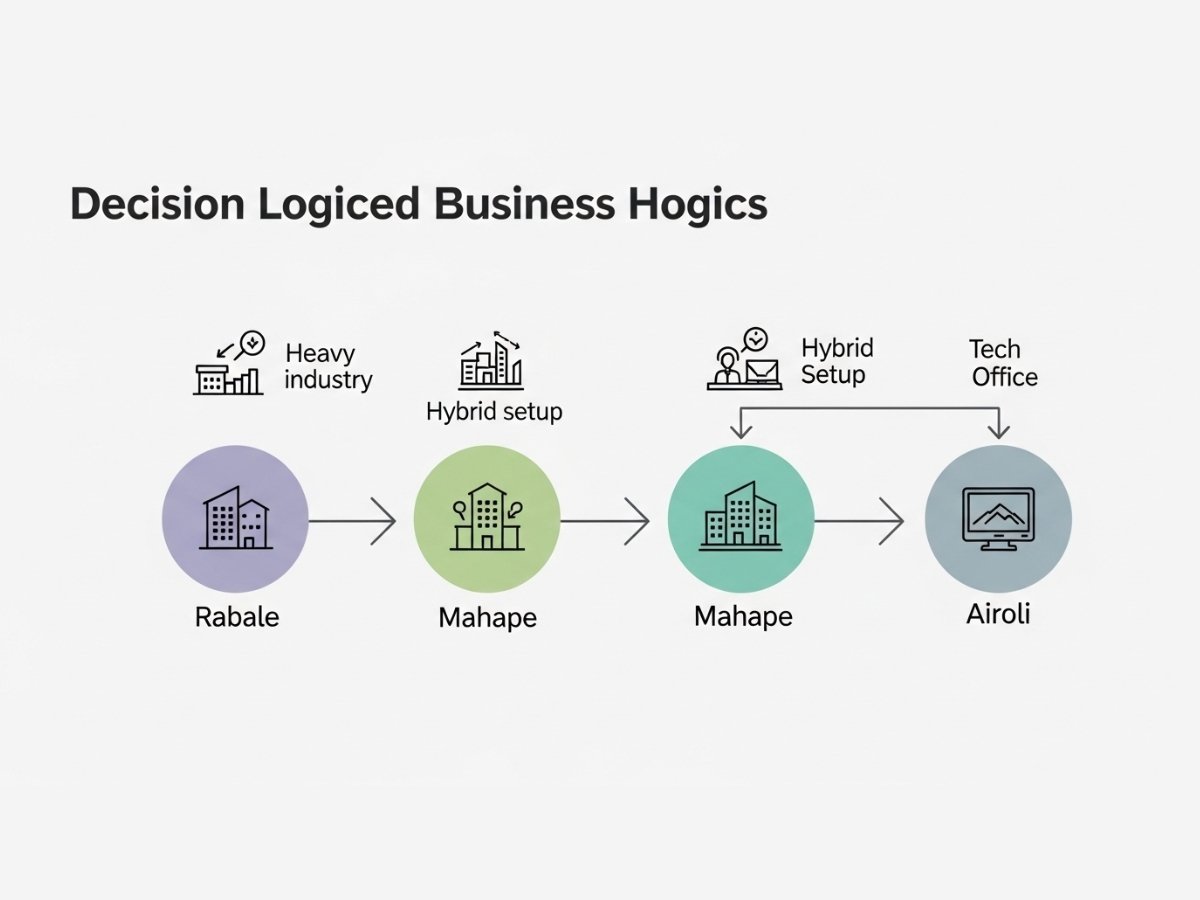
The practical answer is simple: choose by business model, not by map distance.
Rabale is the more functional choice when the operation is heavy, dusty, rugged, machinery-led, or floor-loading sensitive. Mahape is the strongest middle ground for businesses that need both industrial utility and a more modern working environment. Airoli is no longer the natural answer for most traditional industrial users. It works better for tech-infra, back-office, data-linked, and highly staff-dependent operations than for classic manufacturing.
This difference becomes even more important because land pricing, transfer rules, civic dues, and development obligations in the TTC belt can materially affect real acquisition cost. Official 2025 MIDC base rates indicate a gap between general TTC industrial pricing and electronics or knowledge-park-oriented zones, but actual secondary-market values can move far above official base rates depending on building quality, road access, remaining lease conditions, and use profile.
Which types of industrial users should shortlist Rabale, Mahape, and Airoli?
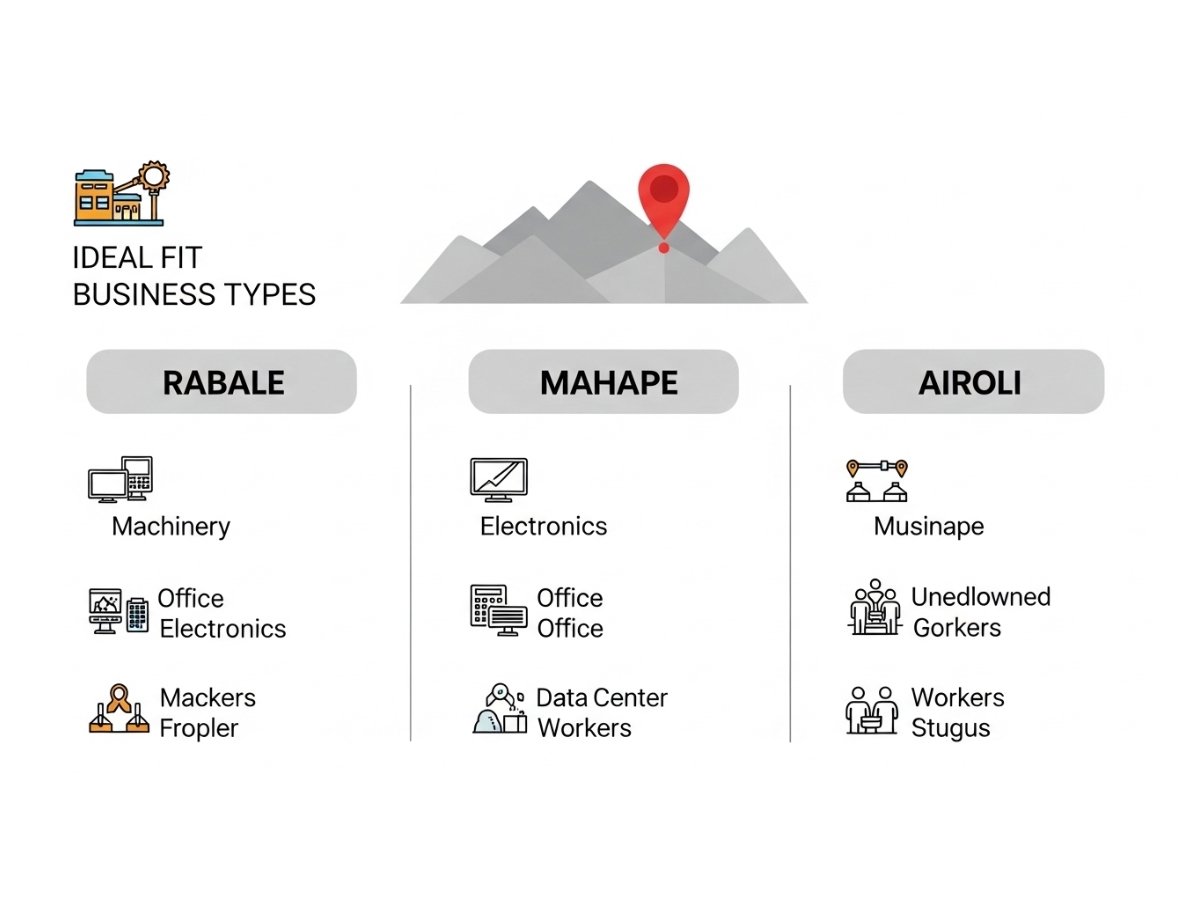
A lot of wrong decisions happen because buyers compare all three belts as if they serve the same kind of business. They do not.
Who usually fits Rabale better
Rabale makes more sense for users who need physical industrial toughness more than image. Think heavy engineering, industrial automation hardware, fabrication, machinery handling, automotive component work, or operations that need ground-floor access, crane support, or tolerance for vibration and higher loading. Older industrial sheds and practical industrial stock matter here more than glossy frontage.
The trade-off is that infrastructure quality and daily operating comfort can vary sharply by building and internal road condition. If the business is fundamentally blue-collar, machine-led, and less dependent on client-facing polish, Rabale can still be the sharper industrial answer.
Who usually fits Mahape better
Mahape usually works best for businesses sitting between factory and office. That includes electronics assembly, medical device work, testing labs, pharma-support functions, precision light manufacturing, clean packaging, and modern MSME industrial units.
This is where a company may want backend operations plus a presentable front-end for clients, engineers, or auditors. Mahape’s positioning is strengthened by its stronger power ecosystem and its more modern multi-storey industrial format compared with legacy belts.
Who usually fits Airoli better
Airoli should be shortlisted only by selective industrial users. In practical terms, it now fits data infrastructure, software-heavy technical teams, IT/ITES support, banking and operations back offices, and businesses where white-collar staff density matters far more than forklift movement.
Calling Airoli a general industrial answer would be misleading. In much of its stronger market, the economics and surrounding ecosystem now favour tech-led use more than classic manufacturing.
Which belt works better for truck movement, loading practicality, and day-to-day industrial operations?
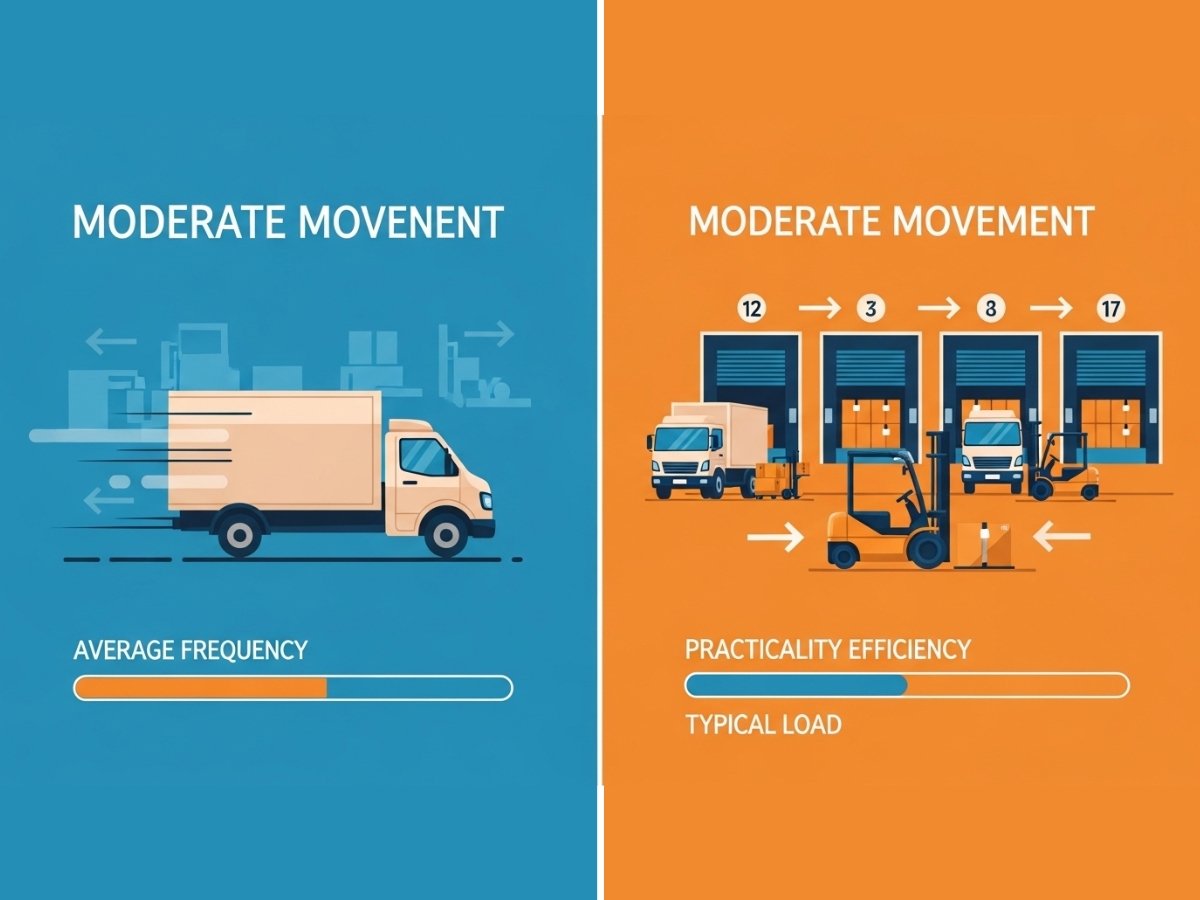
For true industrial movement, Rabale and Mahape are the serious contenders. Airoli is usually the weakest fit if frequent heavy freight movement is core to the business.
Rabale still has the practical DNA of an older industrial belt. That helps when the business genuinely depends on heavier movement, harder industrial use, and less polished stock. But that does not mean friction-free operations. Internal roads, parking pressure, monsoon waterlogging risk, and uneven upkeep can affect last-mile usability, especially in older stretches.
Mahape is more balanced. In better planned industrial campuses, loading, internal circulation, and movement discipline are usually more manageable than in older rugged zones. Rabale may still win for raw industrial tolerance, but Mahape often wins for operational neatness.
Airoli loses this comparison for most heavy users because commuter-led congestion and premium land use make regular freight movement less comfortable and less economical. If daily truck turning, loading-bay use, and raw-material handling are central to the business, Airoli usually falls out of the shortlist early.
Where does staff access change the answer completely?
This is where many industrial comparisons go wrong. Management looks at the industrial tag, the highway line on the map, maybe the rent, and stops there. But if the business depends on technicians, engineers, QA staff, client-facing teams, or back-office support, commute quality can change the entire decision.
Airoli is the strongest answer when staff convenience is central. Mahape can also work well, especially for businesses that use shuttle systems or recruit from nearby residential and station-linked catchments. Rabale becomes harder for staff-heavy modern operations when the last-mile environment feels too industrial, too rough after dark, or too unpleasant during monsoon months.
That does not matter much for every blue-collar operation. It matters a lot for businesses trying to retain engineers, designers, analysts, or client-facing employees.
When employee commute matters more than freight logic
If the business has 60 staff and only 2 loading vehicles a day, the decision logic is completely different from a fabrication unit with 15 workers and 12 heavy vehicle movements. This is why some companies wrongly choose a rugged industrial belt and then struggle with staff retention.
A medical-device support company with clean assembly, testing, procurement visits, and a 60-person technical staff may find Rabale cheaper on paper. But if the staff experience is poor and client visits feel mismatched, the cheaper rent can become false economy. That kind of user often lands more naturally in Mahape.
Why Airoli and parts of Mahape can beat Rabale for staff-heavy users
The map distance between stations in the northern TTC stretch is not the whole story. The last mile matters. Airoli’s urban and commuter environment usually feels easier for white-collar-heavy teams. Mahape, especially for organized occupiers using buses or shuttles, can solve this well enough.
Rabale can still work, but only when the business accepts that the environment is primarily industrial first and employee-comfort-led second.
Which location suits light industrial, tech-industrial, and hybrid business use better?
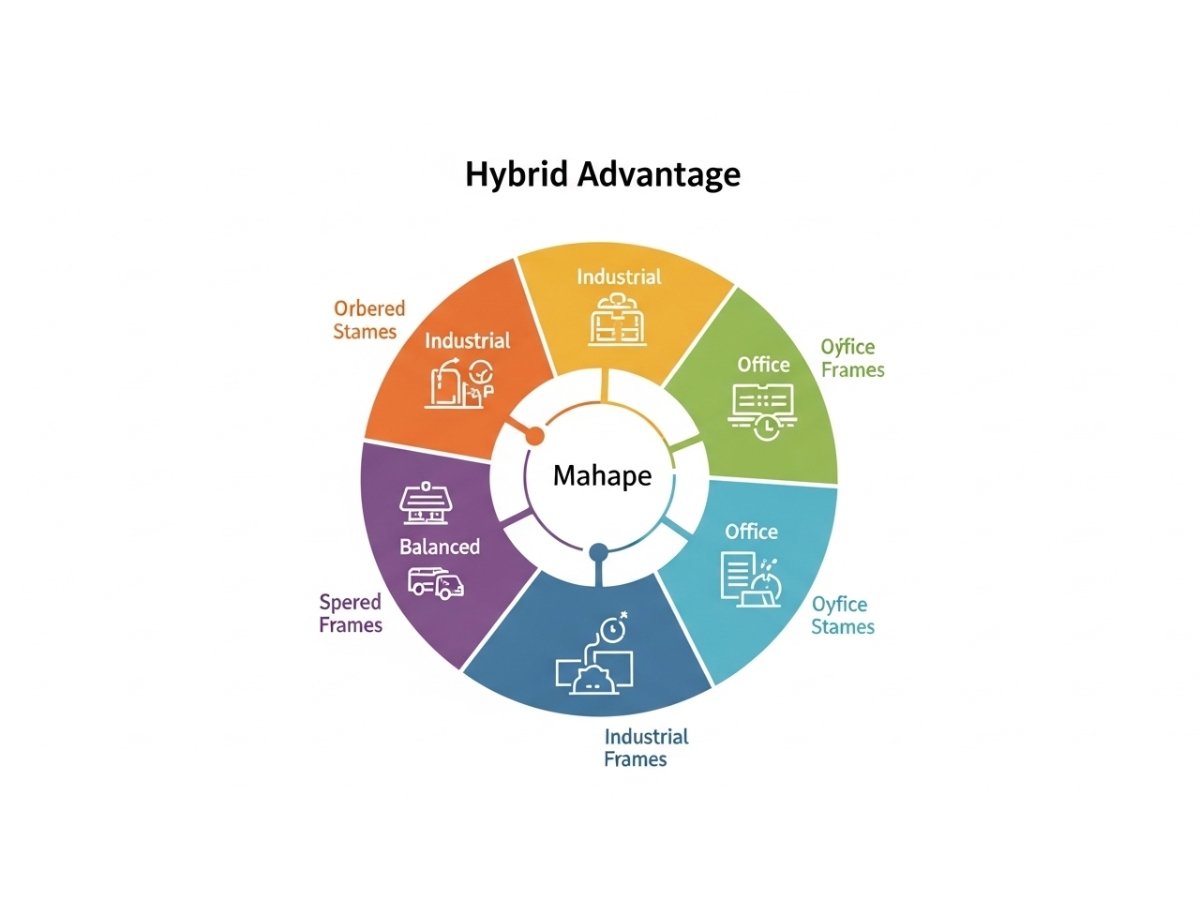
Mahape is usually the best answer.
This is exactly where Mahape stands out in the TTC MIDC comparison. It is not as rugged as Rabale and not as office-dominant as Airoli. That makes it strong for light industrial, hybrid manufacturing, electronics, medical-device support, precision assembly, and tech-industrial operations that need stable power, cleaner surroundings, and a more professional built environment.
Mahape’s market also benefits from official electronics-zone pricing logic and stronger power infrastructure. The research base for this article notes that Mahape is supported by a 220/22 KVA substation ecosystem, while Rabale’s network is seen as more limited and more vulnerable to localized tripping complaints. That difference helps explain why power-sensitive and technology-linked users cluster more naturally in Mahape.
When does Rabale make more sense than Mahape or Airoli despite a less polished image?
Rabale makes more sense when function matters more than presentation.
If the business involves heavy steel work, industrial fabrication, bulkier machines, raw material handling, vibration, harder floor use, or older-style production formats, Rabale often remains the more practical answer. Paying Mahape-level premium for a business that will anyway operate like a rugged factory can be unnecessary overspending. The same is even more true in Airoli.
In such cases, Rabale’s value is not appearance. Its value is structural practicality and ecosystem familiarity for harder industrial use. The presence of older industrial stock, ancillary repair culture, and more rugged operational tolerance matters.
There is a caution, though. Rabale is not a free lunch. Localized occupier reports and market commentary around late 2024 to early 2025 pointed to power-tripping issues in parts of the node. So continuous-process users should plan backup power seriously rather than assume the location itself solves the problem.
Is Mahape the best middle ground for modern industrial users, or is that overstated?
Mahape is a strong middle ground, but it is not automatically the right choice for everyone.
The market often treats Mahape as the safest default answer because it looks modern, cleaner, and more flexible. That reputation is partly justified. Rentals in the corridor can vary widely by format, but Mahape generally sits in a higher band than rugged Rabale sheds because better campuses, multi-storey MSME parks, cleaner specs, and hybrid usability command a premium.
That premium is worth paying only when the operation actually benefits from it. If the requirement is simple heavy-duty industrial space, low-turnover storage, or a dirtier process that will quickly wear down a premium unit, Mahape can become strategic overspending.
Myth vs reality
| Myth | Reality |
|---|---|
| Mahape is the safest answer for every industrial user | Mahape is best for selective modern users, not all industrial businesses |
| Cleaner buildings automatically mean better operations | Only true if the business needs clean processes, staff comfort, or client-facing presentation |
| Mahape is always better than Rabale | Not for rugged fabrication, bulk industrial movement, or harder factory use |
| Mahape gives premium value to every investor | Only if tenant demand matches the format and price point |
Is Airoli really an industrial choice, or does it work only for selective users?
Airoli works only for selective users.
This is the cleanest way to say it. If your operation needs frequent loading, conventional manufacturing setup, rugged industrial access, or hard factory-style logistics, Airoli is usually not the right shortlist. If your operation is more like data processing, software engineering, technology infrastructure, or office-heavy support functions, Airoli becomes much more logical.
That is also why land and commercial values there behave differently from a traditional shed market. Even official rate categories distinguish Airoli Knowledge Park and TTC electronics-oriented pricing from general TTC industrial pricing. In practice, the node has been heavily shaped by IT parks, tech space, and hyperscale digital infrastructure rather than traditional factory demand.
Practical suitability checklist
Airoli is worth shortlisting if:
- Your workforce is mainly white-collar or technical
- Staff commute convenience matters more than truck movement
- You need a more corporate or tech-facing business image
- Your operation is data-led, office-heavy, or digital infrastructure-linked
Airoli is usually the wrong shortlist if:
- You need regular heavy-vehicle loading
- You require rugged industrial floor use
- You run dirty, noisy, or machine-dense factory operations
- Your cost model cannot absorb premium location economics
What changes when the decision is to buy instead of lease?
A lease decision and a purchase decision are not the same thing in the TTC corridor.
A tenant can prioritize operational fit and relative cost. A buyer has to think about transfer premiums, development obligations, civic dues, exit liquidity, and long-term compliance exposure. This is where many industrial property decisions in Navi Mumbai become more complex than they first appear.
Owner-occupier logic
If you are buying for your own use, Rabale, Mahape, or Airoli must be judged not only by current usability but by legal and regulatory burden. MIDC transfer rules matter. The research dossier indicates that open-plot transfers can attract a 30% differential premium, while developed plots with valid completion compliance can attract a lower 10% premium. There is also a live regulatory issue around minimum FSI consumption. MIDC has extended the deadline to achieve the required 40% FSI utilization until December 31, 2026, but this is tied to non-utilization penalties.
That means a buyer of an underused industrial asset is not just buying space. They may also be buying future compliance pressure.
Investor logic
For investors, the answer shifts again. Older Rabale sheds may look cheaper, but exit liquidity, tenant profile, and capital appreciation quality may not match organized stock in Mahape or selective tech-driven spaces in Airoli. The corridor has historically supported stronger gross rental yields than residential property, often in the 6% to 8% range on the right asset class, but that does not mean every industrial asset is equally liquid or equally attractive.
An investor should ask a harder question: who will lease this asset five years from now, and at what quality of rent? In Mahape and Airoli, that answer may be clearer for organized hybrid or tech-space product. In Rabale, the answer may depend more heavily on practical industrial demand and the quality of the specific unit.
Exit and tenanting logic
Exit is where weak industrial decisions get exposed. A rugged owner-occupier may do well in Rabale. But a passive investor wanting easy resale to a wide buyer pool may prefer organized Mahape stock or selective Airoli tech-space assets. It depends on asset type, not just node name.
What mistakes do people make when comparing Rabale, Mahape, and Airoli?
The biggest mistakes are surprisingly common.
1) Treating the entire TTC belt as one market
This is the most basic error. Rabale, Mahape, and Airoli may be geographically close, but their actual industrial logic is different. A buyer who ignores that may end up with the wrong format in the wrong environment.
2) Assuming cleaner always means better
A polished building does not automatically create better industrial economics. For some businesses, that polish is useful. For others, it is just extra cost.
3) Ignoring NMMC property tax exposure in MIDC areas
This is one of the most dangerous legal and financial traps in the corridor. A long-running jurisdiction dispute ended with the Supreme Court upholding NMMC’s power to levy property tax within its territorial limits, including MIDC areas. That led to real recovery action and sealing drives against defaulting units. Buyers in the secondary market should not assume “MIDC area” means civic-tax immunity. They should verify arrears and demand proper clearance.
4) Not checking development and transfer exposure before buying
Open-plot transfer premium, developed-plot transfer premium, FSI consumption rules, and completion-related compliance all matter. A low headline quote can hide a future compliance bill.
5) Thinking station distance alone solves staff movement
It does not. The last mile matters. This is where Airoli and parts of Mahape can outperform Rabale for staff-heavy operations even if the map makes them look similar.
So which location should you choose based on your actual business type?
The best choice becomes much easier once the business type is clear.
| Business type | Better fit | Why |
|---|---|---|
| Heavy engineering or fabrication | Rabale | Better tolerance for rugged industrial use, loading, harder floor conditions |
| Medical device, electronics, clean assembly | Mahape | Better hybrid environment, cleaner surroundings, stronger power logic |
| Back-office plus technical operations | Airoli or Mahape | Staff convenience and more presentable working ecosystem |
| Data infrastructure or tech-heavy digital operations | Airoli | Stronger tech-commercial ecosystem and staff-driven fit |
| Light industrial with client visits | Mahape | Better balance of industrial function and business presentation |
| Cost-sensitive rugged occupier | Rabale | Lower entry logic for true industrial use |
| Passive investor seeking organized product | Mahape or selective Airoli | Better tenant profile and generally stronger institutional appeal |
Conclusion
If the operation is heavy, machine-led, and rugged, Rabale still makes the most practical sense. If the business sits between factory and office, Mahape is usually the best-balanced answer. If the use is mainly tech, digital infrastructure, or white-collar-heavy, Airoli is the sharper fit.
That is the real answer to Rabale vs Mahape vs Airoli for industrial users. Not which area sounds bigger. Not which broker calls it premium. The right belt is the one that matches your actual daily business model, your staff reality, your compliance appetite, and your long-term capital plan.
For most real industrial users in Navi Mumbai, the mistake is not choosing a bad area. The mistake is choosing the wrong industrial format in the wrong micro-market.
FAQs
Frequently Asked Questions