
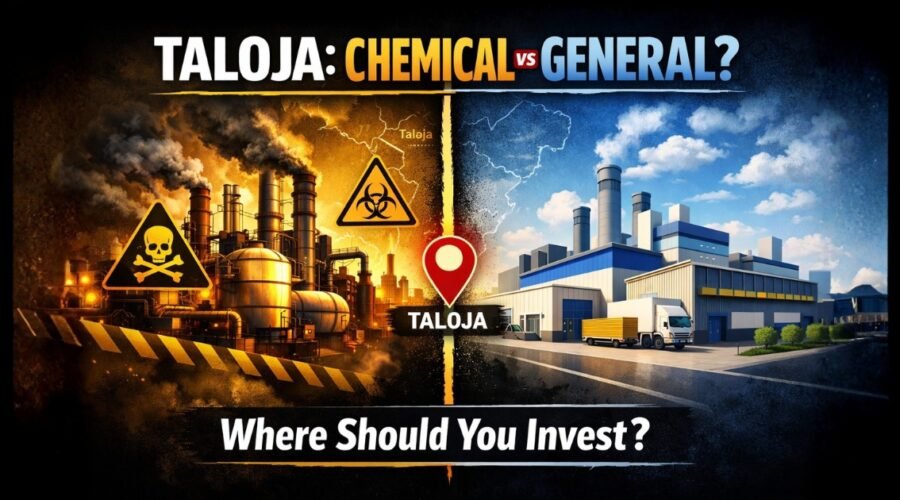
Chemical vs General Manufacturing in Taloja: Where should you invest?
If your business genuinely needs chemical-cluster support, effluent systems, hazardous-handling compatibility, and a red-category industrial ecosystem, Taloja fits chemical manufacturing more naturally than general manufacturing. But that does not mean every factory should come here. General manufacturing can work in Taloja too, especially engineering, fabrication, utility-heavy, and dispatch-led units. The real answer depends on effluent load, approvals, worker environment, truck movement, utilities, and whether your operations benefit from Taloja’s chemical ecosystem or get burdened by it.
Is Taloja naturally better for chemical manufacturing or for general manufacturing?
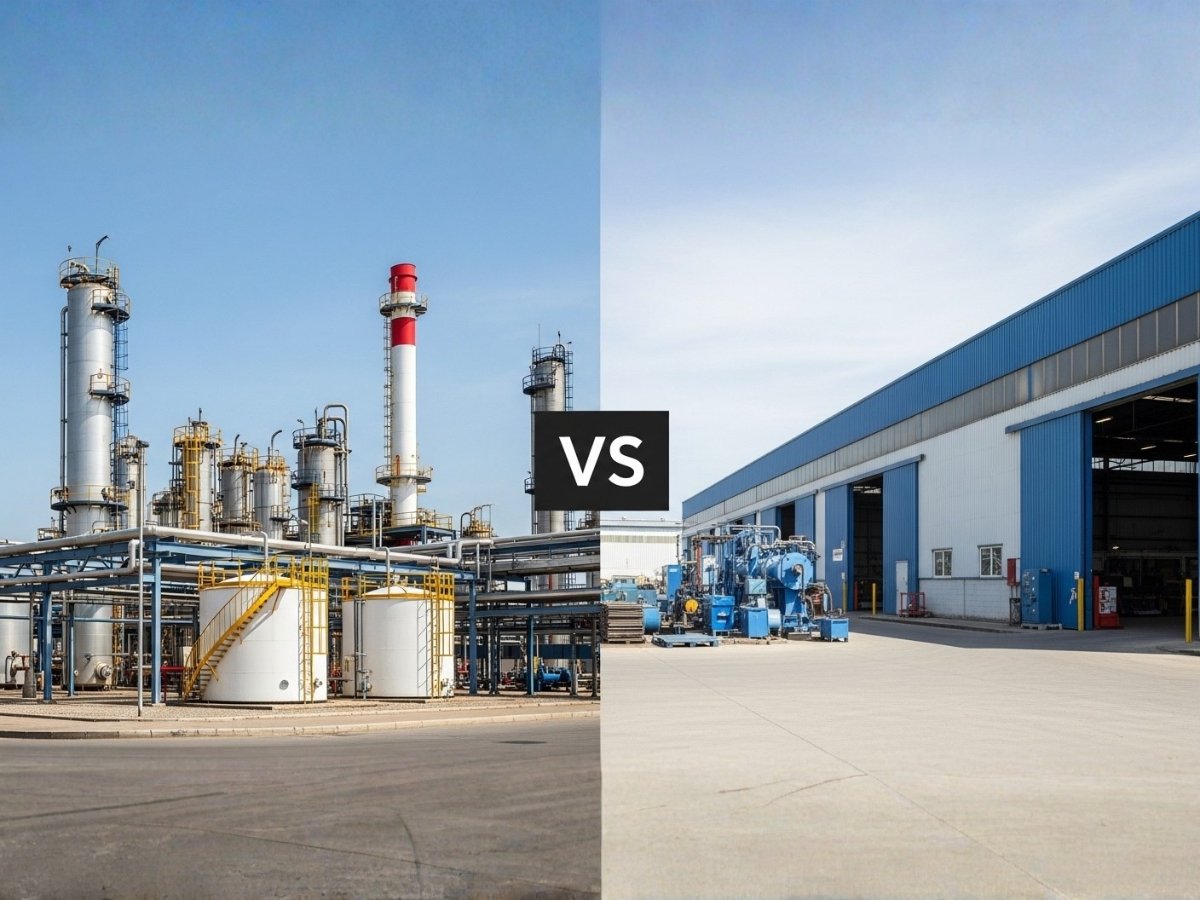
Taloja is naturally stronger for chemical manufacturing, but only for the kinds of chemical businesses that actually need a chemical-oriented industrial belt. It is not automatically the best choice for every factory just because it is a large MIDC area.
That distinction matters. Taloja MIDC has long developed with a strong chemical identity, with environmental infrastructure, hazardous-waste handling support, and regulatory patterns that make more sense for process-heavy units than for cleaner, lighter, staff-sensitive manufacturing. At the same time, parts of Taloja also support engineering, fabrication, food processing, pharma formulation, and light industrial activity. So the question is not “chemical or general” in a broad textbook sense. The question is: what kind of process are you running, and what kind of premises can support it without friction?
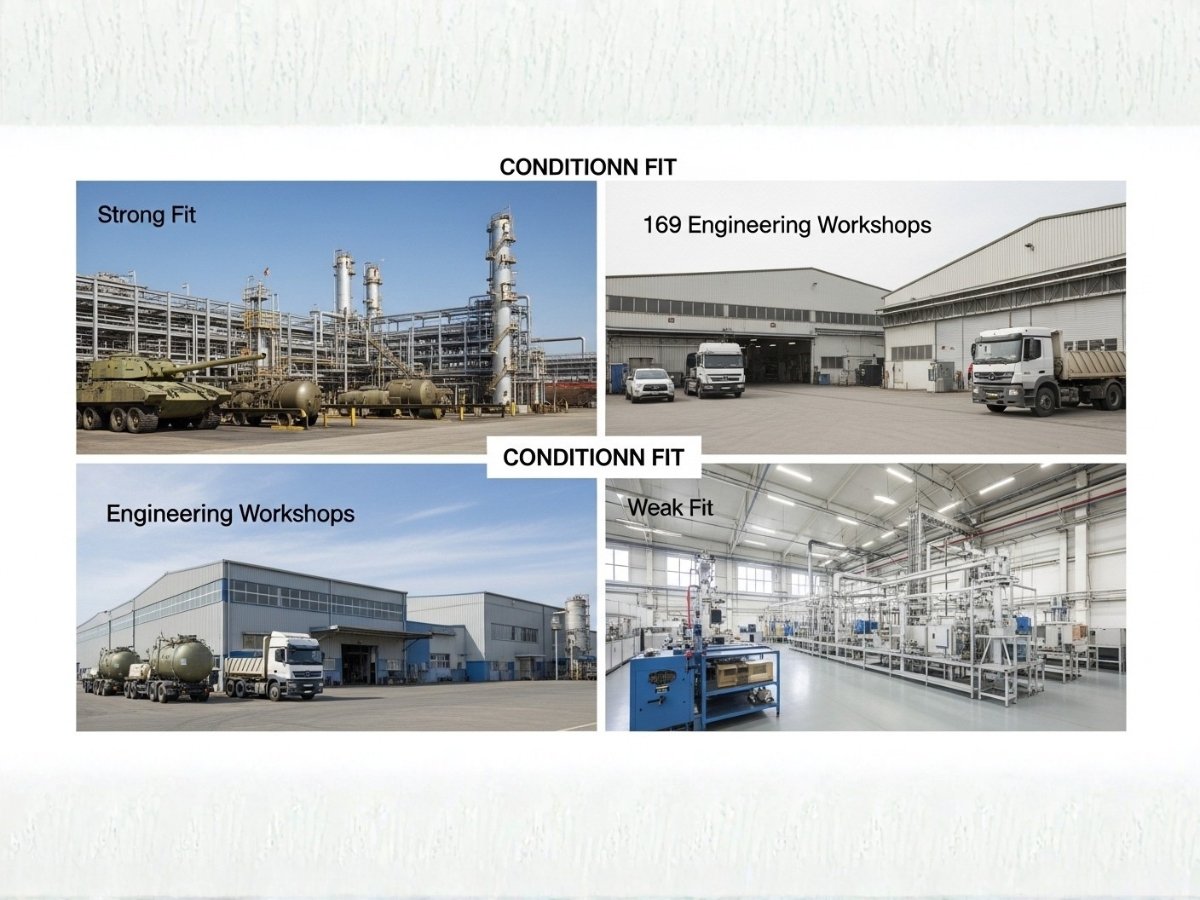
Quick summary: what usually fits better in Taloja?
| Manufacturing type | Fit in Taloja | Why |
|---|---|---|
| Heavy or regulated chemical manufacturing | Strong fit | Taloja has a chemical-oriented ecosystem, CETP-linked logic, hazardous-waste support, gas and power infrastructure, and a regulatory culture built around such units |
| Lower-intensity chemical processing | Conditional fit | Can work well if approvals, storage, safety, and disposal pathways are aligned properly |
| Engineering, fabrication, and utility-heavy manufacturing | Good fit in the right blocks | These users can benefit from industrial roads, power, and truck movement, especially in engineering-oriented pockets |
| Clean assembly or low-pollution light manufacturing | Selective fit only | These units may operate, but not all of them benefit from being in a chemical-heavy belt |
| Office-heavy, client-visit-heavy, worker-comfort-sensitive manufacturing | Weak fit in many cases | Chemical-belt environment may create unnecessary operational drag if the business does not need that ecosystem |
Why does Taloja’s industrial identity change this answer so much?
Because Taloja is not a neutral industrial box. It is an industrial belt with a real operating identity, and that identity changes who should locate here.
The industrial area spreads across roughly 863 hectares and supports around 950 industries with a very large annual turnover base. But more importantly for this topic, it has evolved as a major chemical, engineering, pharma, and food-processing corridor. That means the land, the infrastructure priorities, the environmental oversight, and the tenant ecosystem are not generic. They are shaped by the fact that Taloja is widely treated as a chemical-oriented MIDC belt.
For a chemical unit, that is often an advantage. The surrounding ecosystem understands trade effluent, hazardous handling, storage risk, continuous process operations, and pollution-control obligations. There is a Common Effluent Treatment Plant ecosystem, hazardous-waste disposal support through Mumbai Waste Management Ltd., and an industrial logic that is far more compatible with regulated process manufacturing than a cleaner mixed-use belt would be.
For a general manufacturer, this can be either useful or unnecessary. If the unit is engineering-led, machine-heavy, dispatch-oriented, or needs robust industrial infrastructure, Taloja may still work very well. But if the business is clean assembly, electronics-type light work, labour-comfort-sensitive production, or customer-facing manufacturing that gains little from a chemical ecosystem, then the same location can become operationally awkward.
> Important caution: “MIDC” alone does not tell you whether a unit is the right fit. In Taloja, the surrounding industrial behaviour, effluent pathway, consent conditions, road practicality, and neighbouring unit profile matter much more than the MIDC label by itself.
Which kinds of chemical manufacturing actually fit Taloja well?
Chemical manufacturing is not one category. In Taloja, some chemical users are natural-fit occupiers, while others still need very careful screening.
Effluent-generating, process-heavy, hazardous-material, or regulated operations
This is where Taloja makes the most practical sense. Businesses involved in synthesis, intermediates, dyes, specialty chemicals, petrochemicals, solvents, basic drug manufacturing, and other red-category activities often need exactly the kind of industrial support Taloja has historically built around.
These operations usually involve some mix of trade effluent, hazardous waste, process emissions, chemical storage, and strict MPCB oversight. In such cases, being in a belt that already has CETP connectivity logic, hazardous-waste infrastructure, and a known compliance environment is not a small advantage. It is often central to viability.
The dossier points to the New Chemical Zone and Blocks T and V as especially relevant for these kinds of operations. These locations benefit from chemical-cluster compatibility, pipeline or collection-point logic linked to effluent treatment systems, high-tension power, and broader process-industry support. Large process players such as IG Petrochemicals, Hikal, and VVF are the kind of reference points that show what Taloja is structurally built to accommodate.
A practical example helps here. A specialty chemical or dye-intermediate manufacturer that generates regulated effluent and ETP sludge, uses volatile raw materials, and requires regular consent renewals is usually better off in a chemical-compatible Taloja premises than in a cleaner industrial belt that lacks the same ecosystem depth.
Lower-intensity chemical users that still need the right approvals and handling systems
Not every chemical business is a large red-category synthesis plant. Some lower-intensity chemical units can also work in Taloja, especially where the process is more controlled and the effluent burden is lower.
But these users should not assume that being “light chemical” automatically makes the location simple. Even lower-intensity chemical units still need the right storage arrangements, emergency systems, handling protocols, consent structure, and disposal pathway. The practical difference is that they may not need the same scale of infrastructure as a high-load process unit.
That means Taloja can still fit them, but only if the premises actually supports their compliance and safety profile. A poor-fit building with weak drainage, improper storage planning, or unclear effluent arrangements can turn even a moderate chemical operation into a headache.
Which kinds of general manufacturing work well in Taloja, and which do not?
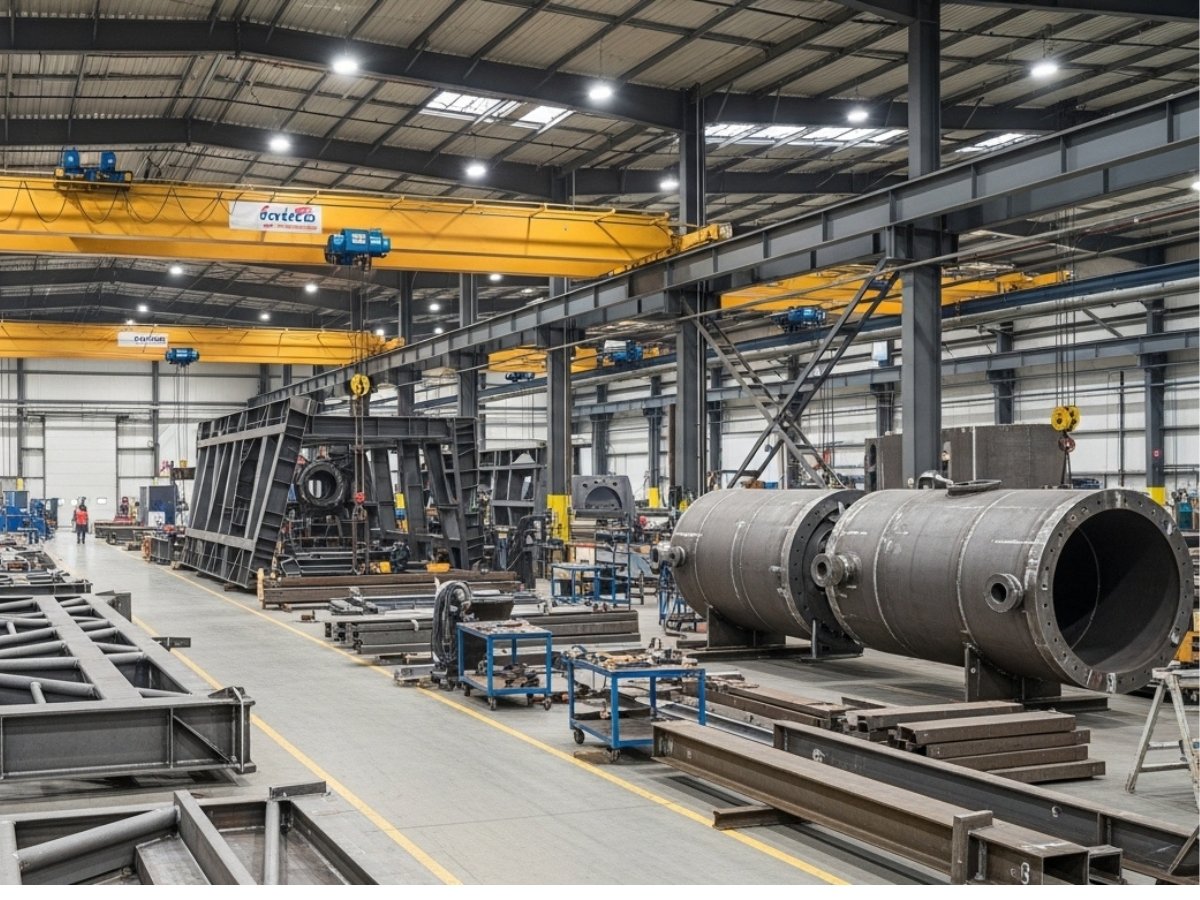
General manufacturing does have a place in Taloja. The mistake is assuming that all non-chemical manufacturing either fits perfectly or should avoid the area completely. The reality is more selective.
General manufacturing that can still benefit from Taloja
Taloja works well for general manufacturing when the business behaves like a serious industrial user rather than a clean urban workshop. Engineering, fabrication, steel processing, component manufacturing, machine-led operations, and dispatch-heavy units can all make sense here.
Blocks A through E are especially important in this discussion. These have been shaped more around engineering and fabrication activity, with concretized roads and better suitability for heavy vehicle movement. That matters because many manufacturing units fail not because of production capacity, but because daily movement, loading, unloading, and vehicle access become inefficient.
These users also benefit from the industrial utility logic of Taloja. Water augmentation, sub-station expansion, and road upgrades improve the case for operations that need stable infrastructure more than polished surroundings. For SMEs in fabrication, machining, and assembly linked to broader supply chains, Taloja can offer a good balance between industrial utility and relative affordability compared with TTC belts like Rabale or Mahape.
General manufacturing that may be better off in a cleaner or less compliance-heavy belt
This is where many buyers and tenants make mistakes. Clean assembly, low-emission light manufacturing, highly staff-sensitive units, premium-office-linked industrial users, and customer-visit-heavy occupiers often do not gain enough from Taloja’s chemical-heavy environment.
For these users, the problem is not that Taloja is “bad.” The problem is that they may be paying for the wrong ecosystem. If the business has very low pollution load, minimal hazardous handling, a strong white-collar component, or frequent external stakeholder visits, then a chemical-heavy belt may create more drag than value.
A simple example: a light electronics assembly unit or a clean packaging company with limited process waste may be technically able to operate in Taloja, but it might function more smoothly in a cleaner belt where worker comfort, image, and environmental surroundings align better with the business model.
What matters more here than the label “chemical” or “general”?
In Taloja, process profile matters more than sector label. Two businesses can both call themselves manufacturers and still have completely different location needs.
Effluent load and disposal pathway
This is the biggest filter. If your unit generates significant trade effluent, your decision starts with treatment responsibility, discharge norms, internal ETP readiness, and compatibility with the broader CETP ecosystem.
Taloja’s CETP serves a very large member base and has undergone expansion and pipeline replacement. That is important, but it should never be read as a shortcut. CETP access does not remove the need for proper internal handling, treatment stages, monitoring, and compliance.
Hazardous storage and safety systems
A unit handling solvents, acids, reactive inputs, or hazardous residues needs more than just legal permission on paper. The premises must physically support safe storage, movement, emergency response, and waste disposal.
This is one reason why chemical users often fit Taloja better than clean general manufacturers. The ecosystem is more aligned with these risks. But that same reality can make the area less attractive for businesses that do not need such an environment.
Truck movement, road width, and loading practicality
This point gets ignored too often. In industrial property, road practicality can matter as much as floor area. Taloja has had historical congestion issues, but road concretization, the second railway over bridge, and the planned truck parking terminus are meaningful improvements.
For engineering, fabrication, and dispatch-heavy users, these upgrades improve real working suitability. For businesses that barely use heavy movement, the same advantage may not matter enough to justify the location.
Worker usability, ventilation, and daily operating comfort
This is where some general manufacturing users begin to misfit. A labour-heavy, people-sensitive operation has to think about environment, ventilation, daily commute comfort, and the broader feel of the industrial zone.
Pharma formulation and food processing units in Taloja often have to invest more in self-contained protection systems because surrounding industrial behaviour matters. That tells you something important: even if your own process is clean, the surrounding belt can still affect your operations.
Power, water, drainage, and emergency-response readiness
Chemical and utility-heavy industrial users are more dependent on these systems than casual investors often realise. Taloja has seen meaningful investments in water pipelines, substations, and distribution infrastructure. That strengthens the case for process-led occupiers and serious engineering users.
But again, the lesson is not “Taloja suits everyone.” The lesson is that Taloja rewards businesses that truly need industrial-grade support.
Where does chemical manufacturing usually make more practical sense inside the Taloja context?
The best way to think about this is not by casually naming sectors or blocks as if every plot is equal. The better way is to look for chemical-compatible premises inside the Taloja ecosystem.
In practical terms, chemical manufacturing usually makes more sense in premises that are:
- closer to the chemical-oriented operating ecosystem
- aligned with CETP collection or discharge logic where relevant
- supported by proper internal treatment and storage systems
- compatible with hazardous-waste disposal needs
- designed for process industry safety rather than adapted casually from generic industrial use
The New Chemical Zone and the larger process-oriented Blocks T and V stand out in the dossier because they show the type of Taloja stock that is naturally aligned with chemical operations. But even there, the right question is not only “which block?” It is “does this exact premises match my process load, consent profile, and disposal pathway?”
For a chemical occupier, that is the real location filter.
Where does general manufacturing usually struggle inside a chemical-heavy belt?
General manufacturing struggles in Taloja when the business does not actually need chemical-belt infrastructure but still has to live with its trade-offs.
This usually includes:
- clean assembly operations
- light manufacturing with very low pollution load
- employee-sensitive units where the work environment matters heavily
- office-led industrial businesses
- customer-facing production units that depend on cleaner surroundings
- units that want broad tenant or resale appeal later
In these cases, Taloja may still be possible, but it is not always logical. The occupier may face a location identity mismatch. The investor may also face a narrower tenant pool than expected, especially if the unit is in a highly process-heavy pocket that only specific occupiers want.
> Practical caution: A general manufacturing business should not choose Taloja only because a unit looks large, available, or cheaper than TTC. If the business does not need chemical-belt infrastructure, the supposed cost advantage can later become an operating disadvantage.
If you are buying or leasing in Taloja, how should you evaluate a unit before saying yes?
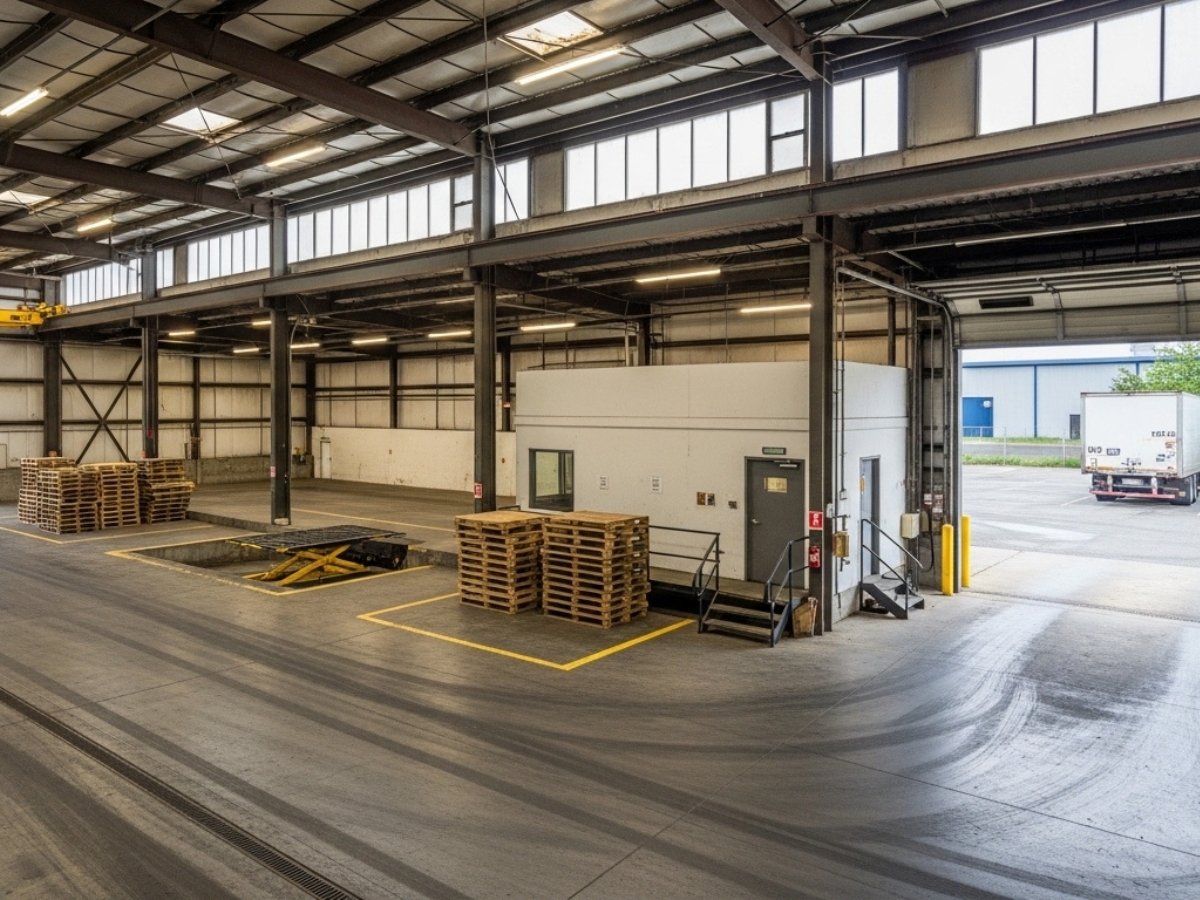
This is where theory must become action. Whether you are an occupier, investor, or broker advising a client, you should inspect Taloja through a process-fit lens, not just a property lens.
| Evaluation point | Occupier lens | Investor lens | Broker/advisor lens |
|---|---|---|---|
| Actual approved use | Does the unit legally support my process and consent path? | Will the next tenant also be able to use it safely and legally? | Match the client’s process to the approved use, not just to the building type |
| Effluent and drainage setup | Is there proper internal handling and disposal compatibility? | Weak effluent setup reduces tenant quality and increases vacancy risk | Verify actual systems, not verbal assurances |
| Hazardous storage and safety | Can the premises safely handle raw materials and waste? | Specialized safety-ready units may attract stronger niche tenants | Check whether the building suits red-category, orange-category, or lighter use |
| Road access and truck movement | Can tankers, trucks, or loaded vehicles move without daily friction? | Better access improves tenant retention | Visit during working hours, not only on a quiet inspection day |
| Power and water availability | Will operations run reliably? | Utility-ready units lease more easily to serious users | Match utility strength to the client’s process reality |
| Neighbouring industrial behaviour | Will nearby activity help or hurt my operations? | Surrounding user mix affects future tenantability and exit | A food, pharma, or clean manufacturer needs different neighbouring logic than a chemical unit |
| Compliance burden transfer | What recurring approvals, monitoring, and renewal costs come with this unit? | Higher compliance can narrow the tenant pool but increase specialization | Explain lifetime burden, not just entry cost |
| Long-term area friction | Is there rising residential proximity or complaint risk nearby? | Future litigation or environmental friction can affect value | Do not ignore edge-location risk in evolving areas |
Occupier lens
An occupier should start with process fit. What are you storing? What are you discharging? What kind of consent cycle will you live under? How many trucks enter daily? What happens in monsoon? Can your actual process run here comfortably for the next five years?
Investor lens
An investor should think beyond rent headline. Chemical-tenant demand can be real, but it is more specialized. Engineering and orange/green users may offer broader leasing demand in the right pockets. The key is understanding whether the asset is too specialized, reasonably adaptable, or poorly matched to both groups.
Broker/advisor lens
A broker should stop advising Taloja as one single industrial answer. The right recommendation depends on whether the client is a red-category process user, a fabrication-led SME, a clean formulation player, or a light assembly business better suited to another belt.
What mistakes do buyers and tenants make when they compare chemical and general manufacturing in Taloja?
The most common errors are surprisingly basic.
1. Assuming every MIDC unit is interchangeable It is not. In Taloja, two units can sit in the same broader industrial area and still have very different suitability.
2. Buying by price without reading the compliance burden A cheaper or available unit can become expensive once treatment, monitoring, storage, and renewal realities begin.
3. Ignoring effluent and hazardous-handling systems In Taloja, these are not side details. They are central filters.
4. Treating chemical-cluster advantage as universally positive That advantage helps chemical users more than clean general manufacturers.
5. Overestimating the tenant pool A specialized unit may lease well to the right occupier and poorly to everyone else.
6. Ignoring neighbouring industrial behaviour For food, pharma formulation, or clean operations, surrounding emissions and discharge risk are practical concerns.
7. Thinking location prestige alone will solve fit problems Taloja’s future growth story, airport proximity, and connectivity upgrades are real positives. But they do not cancel a basic process mismatch.
So what works where in Taloja?
Here is the clean decision answer.
Best fit
Taloja is a strong fit for:
- red-category chemical manufacturing
- specialty chemicals, intermediates, synthesis, solvents, petrochemical-linked processes
- units that need CETP-linked logic, hazardous-waste disposal support, industrial-grade utilities, and a chemical-oriented ecosystem
- engineering and fabrication users in the right non-chemical pockets, especially where truck movement and utility strength matter
Conditional fit
Taloja can work selectively for:
- lower-intensity chemical users
- pharma formulation and controlled process industries
- food processing with strong self-contained protection systems
- orange-category manufacturers that benefit from industrial infrastructure but do not suffer from the surrounding environment
- general manufacturing that is machine-led, utility-heavy, or dispatch-heavy
Weak fit
Taloja is often a weak fit for:
- very clean assembly units
- office-heavy industrial operations
- highly staff-sensitive manufacturing
- client-visit-heavy or brand-sensitive production environments
- light manufacturers who do not need chemical-belt infrastructure and would function better in a cleaner industrial corridor
The simplest way to say it is this: chemical manufacturing fits Taloja by nature, while general manufacturing fits Taloja by exception and process logic. If your business needs the chemical ecosystem, Taloja can be a very practical industrial location. If it does not, you should be much more selective.
Conclusion
Taloja is not simply “good for manufacturing.” It is especially good for the kinds of manufacturing that match its chemical-oriented ecosystem, environmental infrastructure, and industrial operating reality. That is why chemical manufacturing usually fits Taloja more naturally than general manufacturing.
General manufacturing can absolutely work here, but only when the process profile justifies the location. Engineering, fabrication, utility-heavy, and dispatch-led users can benefit. Clean, light, employee-sensitive, or office-heavy manufacturers often should not pay the cost of a chemical-heavy environment unless there is a very specific reason.
So, what works where in Taloja?
- Best fit: chemical and process-led users who need the ecosystem
- Conditional fit: engineering and selected orange/green manufacturers in the right premises
- Weak fit: clean light manufacturers who gain little from a chemical-dominant belt
That is the real Taloja answer. Not chemical versus general in theory, but process fit versus process mismatch on the ground.
FAQs
Frequently Asked Questions