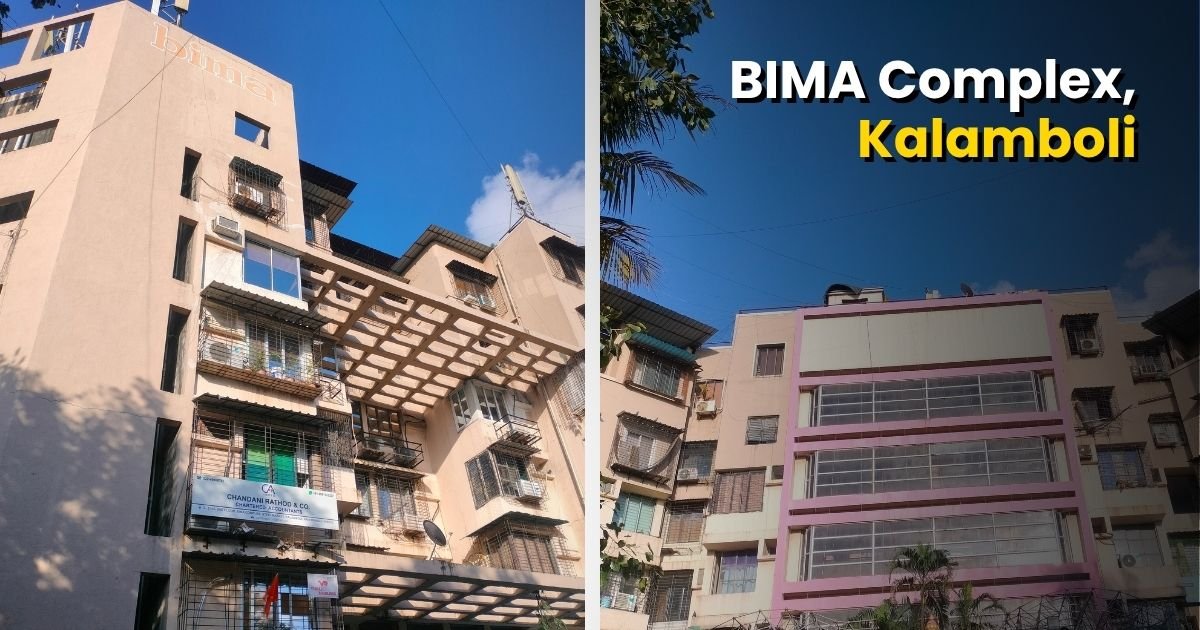
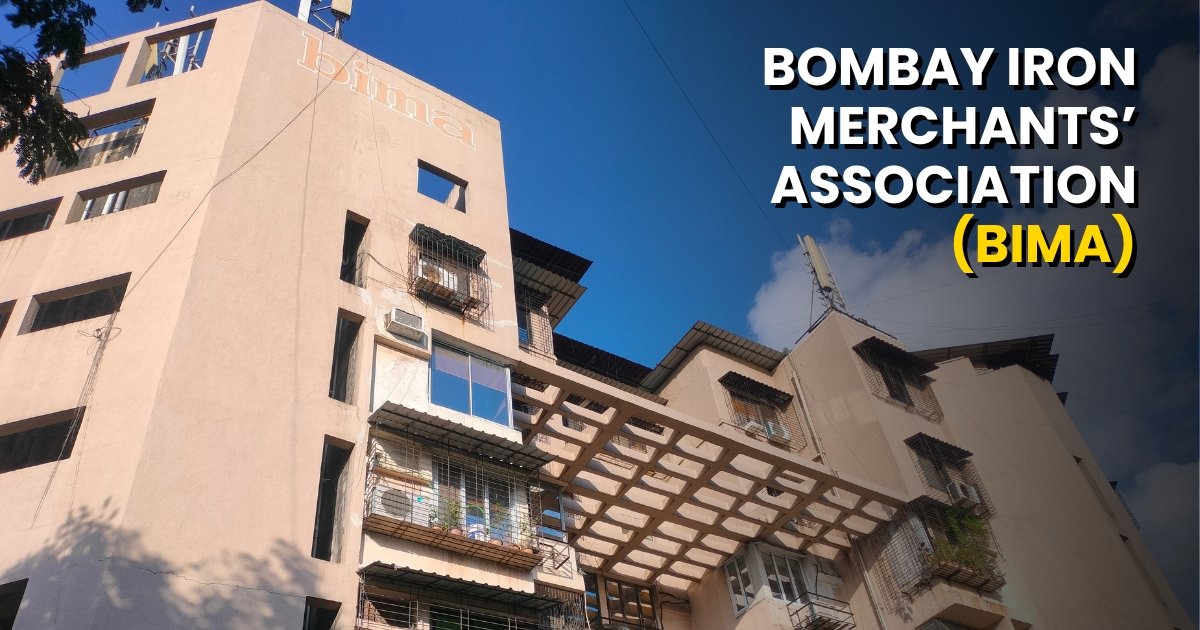
If the Kalamboli Steel Market is the muscle of India’s iron and steel trade, then BIMA – the Bombay Iron Merchants’ Association, is its mind. You might drive past the steel yards of Navi Mumbai and see stacks of rebars, roaring trucks, and the endless pulse of commerce. But what you won’t see is the quiet, powerful institution that holds it all together, a network that predates modern Navi Mumbai itself. BIMA isn’t just an association. It’s an institution that has governed, protected, and represented India’s steel merchants for over seven decades, weathering economic reforms, policy shifts, and industrial revolutions. And yet, most people outside the trade have never even heard of it. Founded in 1950, in the post-independence era when Mumbai (then Bombay) was still the undisputed commercial capital of India, BIMA emerged not from government policy, but from necessity. Traders needed order. They needed representation. They needed a voice. That’s where BIMA stepped in. Legal Name THE BOMBAY IRON MERCHANTS ASSOCIATION Corporate Identification Number (CIN) U51900MH1951GAP008565 Incorporation Date July 16, 1951 Company Category Company limited by guarantee Company Sub-Category Guarantee and Association Company Company Class Public, Unlisted Registrar of Companies (ROC) RoC-Mumbai Registered Address 501/508, Steel Centre, Sant Tukaram Road, Carnac Bunder, Iron Market, Mumbai, Maharashtra, 400009, India Telephone +91-22-2348 3021 / +91-22-2341 7499 Email contact@bima-steel.com; bimasteel@gmail.com Website www.bima-steel.com History of BIMA Born From Bombay The Vision: Unity in Trade At its core, BIMA was built around one powerful idea, collective strength. Individual traders might have limited influence, but united under one banner, they could: Standardize weighment and quality norms. Represent merchant interests before municipal and state authorities. Mediate disputes and promote fair dealing. Create shared welfare systems for members and workers. That vision, of professionalism and fairness, still guides BIMA’s actions decades later. The Registration and the Legal Backbone BIMA was formally registered under the Bombay Public Trusts Act, 1950 and later under the Societies Registration Act, 1860. These legal frameworks gave it legitimacy and allowed it to function not as a casual club, but as a recognized governing institution for iron and steel merchants across the region. Its registration wasn’t just paperwork, it was a declaration. A statement that the iron trade in Bombay was no longer fragmented or informal. It had a structure. It had rules. It had a face. The First Offices and Early Work BIMA’s early operations were modest, a small office in South Bombay, run by a handful of dedicated volunteers. But its influence spread fast. By the 1960s and 70s, it was already mediating price disputes, setting standard practices, and maintaining a reputation as the moral compass of the steel trade. In time, its jurisdiction extended far beyond South Bombay. When the Kalamboli Steel Market was established in the 1980s, BIMA naturally became its guiding hand, laying down the operational frameworks that traders still follow today. To understand BIMA’s story, you have to rewind to a very different Bombay. Picture the early 1950s, India had just become a republic, factories were booming, and construction cranes dotted the skyline. But the iron and steel trade? It was chaos. Thousands of small and mid-sized merchants were scattered across the old Carnac Bunder area. Narrow lanes. No traffic control. Disputes over pricing and weighment were common, and government oversight was practically non-existent. In that confusion, a few visionary traders decided enough was enough. They wanted to professionalize the trade, introduce uniformity, and create an organized front to negotiate with the government. And thus, in the dusty godowns of South Bombay, The Bombay Iron Merchants’ Association (BIMA) was born. If you think about it, the story of BIMA isn’t just about steel. It’s about structure, about how an unorganized marketplace learned to speak with one voice, and in doing so, helped build one of Asia’s largest steel ecosystems. How BIMA Shapes Trade, Trust & Governance If you’ve ever done business in the steel markets of Mumbai or Navi Mumbai, chances are that BIMA’s invisible hand was somewhere in the process, setting the norms, resolving disputes, or ensuring fairness at the weighbridge. That’s what makes BIMA special. It doesn’t sell steel. It doesn’t trade it. Yet, it quietly governs one of the most complex commodity ecosystems in India. Let’s pull back the curtain and see how it all works. Setting Standards in an Unregulated World The iron and steel trade is massive, but for decades it operated in a gray zone, millions of tonnes traded every year without standardized norms. Weight disputes, mislabeling, or undercutting could derail entire supply chains. BIMA stepped into that vacuum. It introduced rules for fair weighment, accurate documentation, and ethical trading conduct. Over time, these weren’t just internal guidelines, they became the unwritten law of the market. When a truck is weighed today at a BIMA-certified weighbridge, both the buyer and seller trust the number. That trust didn’t appear overnight. It was built, bar by bar, transaction by transaction, over decades of consistent integrity. The Trust Factor: Arbitration and Dispute Resolution Steel deals are big. And when money this big moves, disagreements are inevitable. That’s where BIMA’s arbitration system comes in. Instead of dragging matters to court (which could take years), members bring disputes to the association’s arbitration committee. The process is fast, fair, and rooted in deep industry understanding. Senior members, some with over 40 years of trade experience, act as mediators. Their word carries weight. For many traders, BIMA’s arbitration is not just about conflict resolution; it’s about preserving relationships in a business where trust is currency. The Weighbridges: The Market’s Beating Heart Ask any trader what they think of BIMA, and nine times out of ten, they’ll mention two things – BIMA Complex or the weighbridges. Located strategically inside the Kalamboli Steel Market, these are more than just platforms for trucks. They’re symbols of fairness. BIMA’s weighbridges are certified, calibrated, and widely respected for their accuracy. Traders from across Navi Mumbai prefer them because the receipts are legally accepted, the staff is professional, and the weighing is
Read More