Blogs

Everything about Navi Mumbai

15 Lakh Devotees Expected as PM Modi Heads to Kharghar for Hind Di Chadar Event

Published 27 Feb 2025, 12:09 PM IST Key Points What’s happening: PM Narendra Modi is likely to attend the ‘Hind Di Chadar’ programme in Kharghar, Navi Mumbai on Feb 28. Event dates & venue: The main public programme is scheduled Feb 28 to Mar 1, 2026, at Corporate Park, Sector 29, Kharghar (Owe–Kopra belt). Why it matters: The programme is part of Shri Guru Tegh Bahadur’s 350th Shaheedi Samaroh commemorations. Crowd estimates: Officials have earlier indicated around 15 lakh devotees could attend across the two days. Ground arrangements: The Owe Maidan venue is being scaled for very high footfall, including a main pavilion and crowd circulation planning. Traffic plan: 30 designated parking sites, a temporary bridge at Kopra, and a dedicated pedestrian pathway from ST bus drop points to the venue are part of the management plan. What It Means for Navi Mumbai This is not a “regular event day” for Kharghar. If the PM’s visit is confirmed, security layers, route control, and traffic diversions will go up several levels, especially on the Sion–Panvel Highway connectors, Kharghar internal roads, and the Owe–Kopra movement corridor. For locals, the biggest impact will be mobility and timing: Kharghar (Sector 29, Owe Gaon side, Kopra stretch) can see long vehicle queues during peak arrival and dispersal windows. Public transport users should expect longer walking legs due to controlled entry points; authorities have planned a pedestrian pathway from bus drop points, indicating heavy foot traffic flow. For the city’s economy, this is the kind of event that quickly lifts demand for autos/taxis, hotels in Kharghar–Belapur–Turbhe belt, eateries, medical shops, and small retail—especially if families arrive from outside Navi Mumbai. In simple terms: Navi Mumbai becomes a regional pilgrimage-and-logistics zone for 48 hours, and Kharghar sits at the centre of it. Main News Prime Minister Narendra Modi is likely to visit Navi Mumbai to attend the ‘Hind Di Chadar’ programme on February 28, as the city prepares for a large two-day public event in Kharghar, according to officials. The programme is scheduled from February 28 to March 1, 2026, at Corporate Park in Sector 29, Kharghar, and is being held as part of the 350th Shaheedi Samaroh commemorations of Shri Guru Tegh Bahadur. Officials have earlier indicated that nearly 15 lakh devotees may attend the event over the two days. In preparation, the venue at Owe Maidan, Kharghar is being readied for very high capacity, including seating and pavilion infrastructure. To manage the expected rush, authorities have planned a special traffic and movement system. This includes around 30 designated parking sites, a temporary bridge at Kopra to support vehicle flow, and a dedicated pedestrian pathway connecting ST bus drop-off points to the main venue area. Separately, the state’s Ministry of Information and Public Relations has stated that arrangements are being made for the event’s coverage, including planning linked to the PM’s proposed visit.

Read More
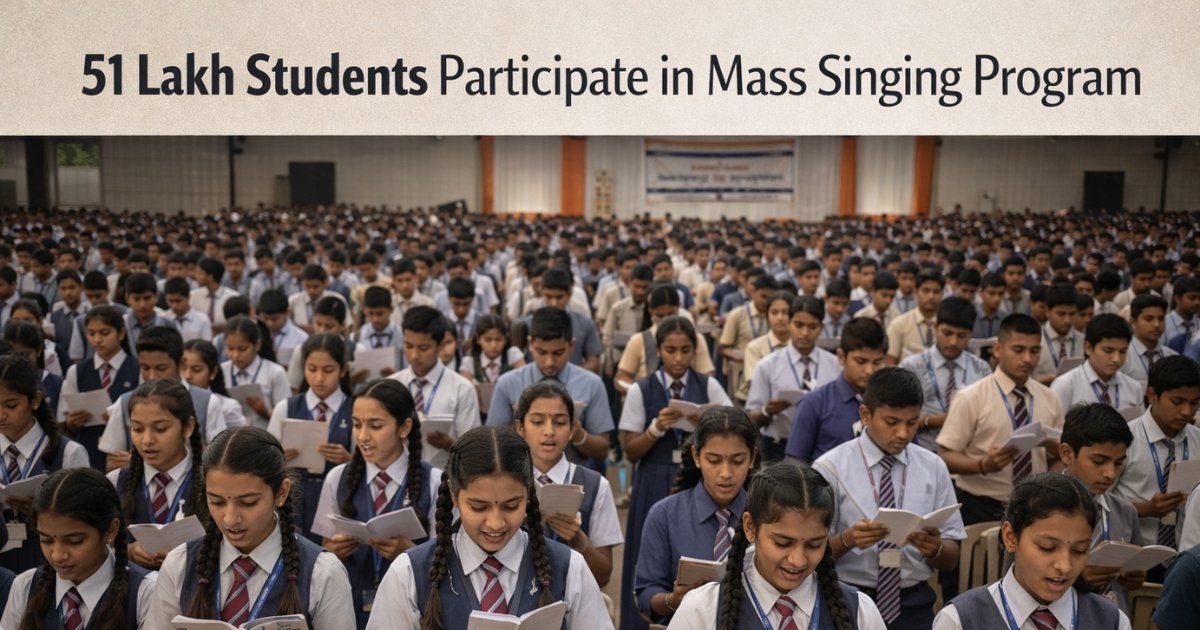

51 Lakh Students, One Voice: Konkan’s Massive ‘Hind Di Chadar’ Tribute Sets Record Before Kharghar Mega Event

Published 25 Feb 2025, 2:40 PM IST 51 Lakh+ Students Sing “Hind Di Chadar” Together Across Konkan Navi Mumbai schools run on routine. Morning assembly, quick announcements, a microphone that sometimes crackles, and then straight into the timetable. But on February 23, 2026, that same routine turned into a synchronised, region-wide tribute. At the same time across the Konkan division, students collectively sang “Hind Di Chadar” to mark the 350th martyrdom anniversary of Sikh Guru Tegh Bahadur. And that’s the real headline: not just singing, but coordination at a scale most people don’t see in daily civic life. Quick Summary Table Point Details Event Mass singing / recital of “Hind Di Chadar” Date Monday, Feb 23, 2026 Region Konkan division, including Navi Mumbai Participation (reported) 51 lakh+ students + ~1.5 lakh teachers/staff Institutions (reported) ~20,000+ institutions; one widely cited figure: 20,239 Record recognition Best of India Records recognition/certification (as reported) What’s next (local) Main program in Kharghar on Feb 28 & Mar 1, 2026 at Owe Ground/Ove Maidan, Sector 29 Key Points Scale: Reports say 51 lakh+ students participated across the Konkan division in a synchronised mass singing tribute. Staff support: Around ~1.5 lakh teachers and staff supported execution (as per reports). Institutions: Coverage mentions ~20,000+ schools/institutions, including a specific reported number of 20,239. Record claim: Reports state the programme was recognised/certified by Best of India Records. Navi Mumbai connection: The activity included schools across Navi Mumbai’s belts, and it was positioned as a lead-in to the two-day Kharghar programme on Feb 28 and March 1 at Owe Ground / Ove Maidan (Sector 29). Civic framing: The tribute was framed around social harmony, national integration, and values education for students. Why This Matters for Navi Mumbai For Navi Mumbai, this isn’t just a “school activity” headline. When lakhs of students and teachers participate together across districts, it becomes a state-coordinated civic message about values, identity, and inter-faith respect. The second reason is practical. Reports link the mass singing tribute to a bigger two-day programme in Kharghar. That means higher footfall, possible pressure on local transport, and a spotlight on Navi Mumbai in statewide coverage. What Exactly Happened This was not a single stage show. It was designed as a simultaneous assembly-time activity across government and private institutions, using a common instruction flow circulated through education channels. In Navi Mumbai, the execution looked familiar to anyone who has watched school operations here: audio prepared in advance, students aligned tightly, and timing managed down to minutes. In dense nodes where campus space is limited, schools often manage assembly participation through tight formations or section-wise alignment while still keeping the activity in the same time slot. What Happens Next in Navi Mumbai The reporting positions this mass singing tribute as a precursor to a larger two-day programme in Kharghar, scheduled for February 28 and March 1, 2026, at Owe Ground / Ove Maidan area, Sector 29. For locals, this is the part to watch because it directly affects: movement around Kharghar and nearby sectors, public transport crowding during peak arrival windows, and on-ground crowd management planning. Sources cross-checked: PTI, The Free Press Journal, Hindustan Times.

Read More

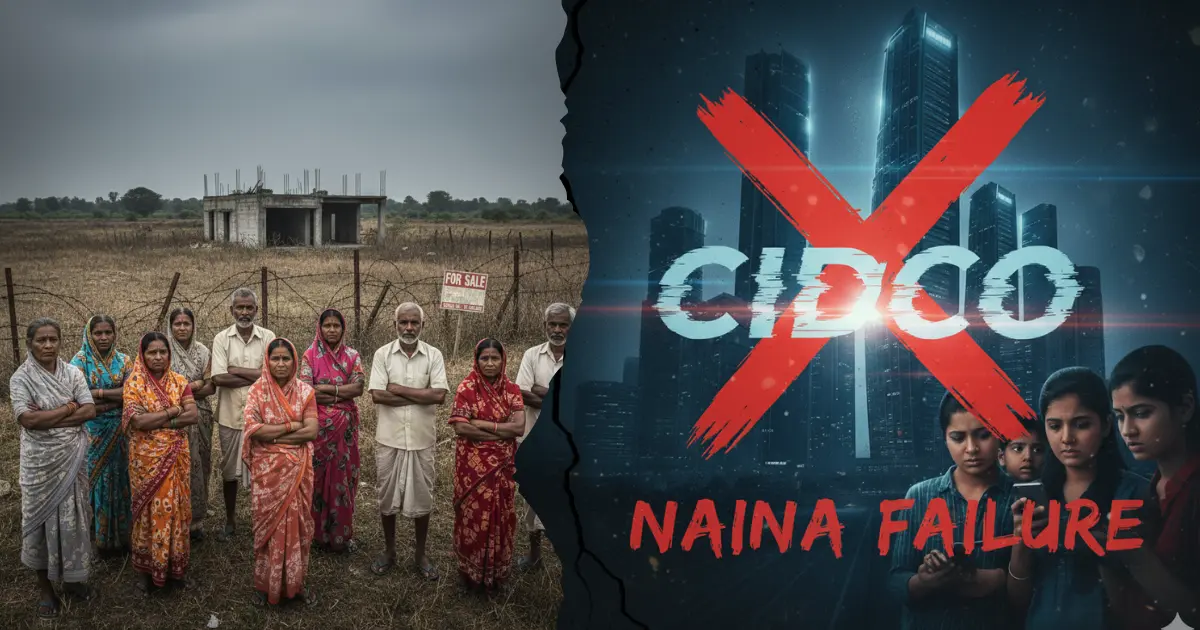
CIDCO In Trouble For Wrong Information To CM’s Office; Fake House Lottery Data and High Prices

Published 18 Oct 2025, 5:15 PM IST Key Points Wrong Information: CIDCO is accused of giving “unauthentic,” or wrong, information to the Maharashtra Chief Minister’s office about its October 2024 housing lottery. Fake Success Story: CIDCO said the lottery was a huge success, claiming 8 people applied for every 1 house. The truth is, only 6,500 people have paid the first installment after 1.5 lakh first showed interest. Very High Prices: The house prices were 30% to 100% higher than what an agency (hired by CIDCO) said they should be. This is why most people left. Rules Broken: The new homes are also accused of breaking the rules of the Pradhan Mantri Awas Yojana (PMAY). They are smaller than the rules allow and too expensive for the low-income (EWS) category. What it means for Navi Mumbai This news is a big shock for people in Navi Mumbai. Many families with low or middle incomes depend on CIDCO lotteries to buy a home. This incident makes people lose trust in CIDCO. First Gaining the Trust of innocent citizens showing a good offer, then changing the deal. It has made many people angry and upset, as their dream of owning a home in Navi Mumbai now seems much harder to reach. What it means for Navi Mumbai Navi Mumbai: A big problem is growing around CIDCO’s October 2024 housing lottery. CIDCO is being accused of lying to the state government, including the Chief Minister’s Office. It seems they wanted to make the lottery look like a huge success, but the real numbers tell a different story. CIDCO officials reportedly told the government that the lottery was very popular, with eight people fighting for every one house. But here is what really happened. When the lottery was first announced without prices, 1.5 lakh people signed up. They were very interested. But then, CIDCO announced the final prices for the homes. These prices were extremely high. An agency that CIDCO itself had hired had suggested much lower prices. But CIDCO ignored this and set the prices 30% to 100% higher. As soon as people saw these high prices, they backed out. The 1.5 lakh interested people dropped to just 8,000 who paid a confirmation fee. Today, only 6,500 people have paid the first installment. This is not a “success.” The problems don’t stop there. The houses are also accused of breaking the rules of the Pradhan Mantri Awas Yojana (PMAY), a government scheme meant to help poor people get homes. There are two big rule violations being reported: Home Size: The PMAY rule says a home for the EWS (Economically Weaker Section) must be at least 30 square meters. But all the homes in this CIDCO lottery are only 27.12 square meters. They are too small. Home Price: The EWS category is for families who earn less than ₹6 lakh per year. But the homes cost between ₹38 lakh and ₹48 lakh. These families cannot afford this, and banks will not give them loans for such a high amount. Because of all these issues, people feel cheated. Social groups and regular citizens are now asking the government to investigate this entire matter. They want the CIDCO officials who gave this wrong information to be held responsible for breaking the trust of thousands of homebuyers.

Read More

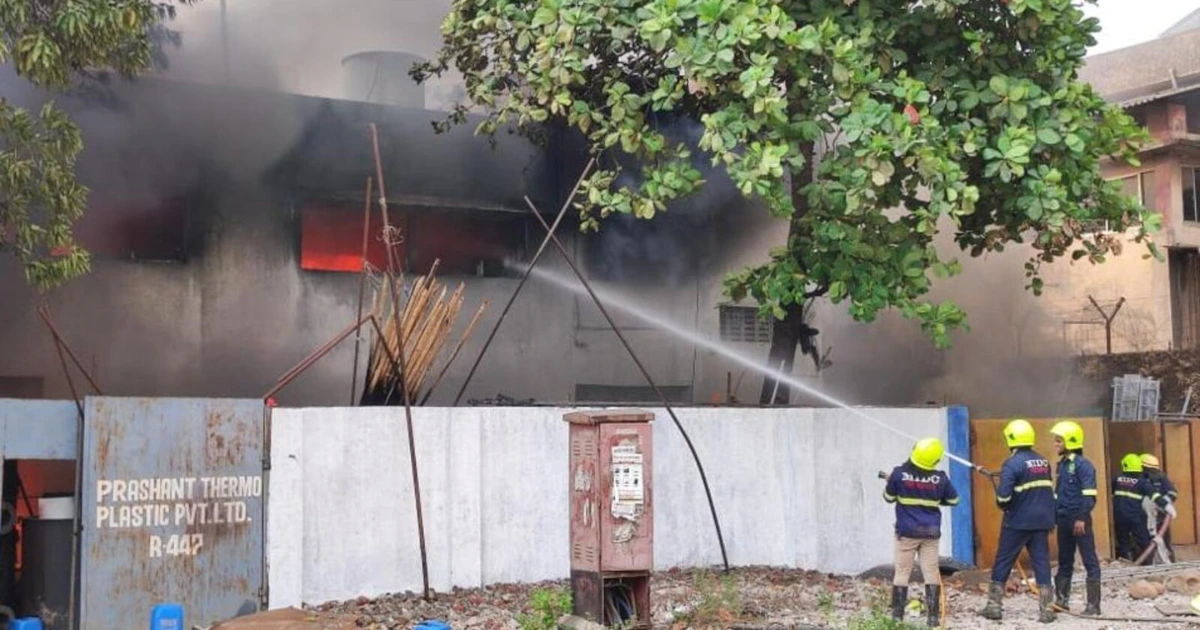
Massive Fire Destroys Rabale Pharmaceutical Factory; No Casualties Reported

Published 17 Oct 2025, 9:05 PM IST Key Points What: A massive fire broke out at a factory in the Rabale MIDC area of Navi Mumbai. Where: The fire occurred at Plot No. R-952, identified as the location of Jell Pharmaceutical (also reported as Gel Pharmaceutical). When: The Fire started in the early hours of Friday, October 17, 2025, at approximately 2:15 a.m. Company’s Products: The factory manufactured items including candles, wax products, and mosquito repellent, which are considered highly flammable. Response: A major firefighting operation involving multiple fire tenders from MIDC, Vashi, Kopar Khairane, and Airoli stations was launched. Outcome: The fire was brought under control after nearly eight hours (around 10:00 a.m.). There were no injuries or casualties reported, but the factory was reportedly destroyed. What it means for Navi Mumbai This incident serves as a huge reminder of the inherent fire risks within the densely packed Thane-Belapur industrial belt, one of Navi Mumbai’s economic lifelines. The Rabale MIDC area, home to thousands of manufacturing and chemical units, remains vulnerable to such disasters. The rapid spread of this fire, fueled by flammable materials like wax and chemicals, highlights the critical need for stringent and regular fire safety audits in all industrial units. The large-scale, multi-station response from the Navi Mumbai and MIDC fire brigades was crucial in preventing the fire from spreading in nearby areas, a very real danger in industrial areas where units are often in close proximity. While the city can be thankful that no lives were lost, the complete destruction of the factory unit means a significant loss of property, assets, and livelihood for those employed there. This event will likely trigger renewed calls for stricter enforcement of safety protocols to prevent future occurrences. Rabale Factory Fire Outbreak in Detail A devastating fire tore through a pharmaceutical and chemical factory in the Rabale MIDC area of Navi Mumbai in the early hours of Friday morning, October 17, 2025. The fire, which began at approximately 2:15 a.m. at the Jell Pharmaceutical plant on Plot No. R-952, quickly escalated into a massive inferno. According to officials and media reports, the factory’s inventory, which included highly flammable materials such as wax, candles, and chemicals for mosquito repellent, acted as an accelerant. This caused the fire to spread rapidly throughout the entire structure, engulfing the building in flames before emergency services could contain it. The Navi Mumbai Municipal Corporation (NMMC) fire services, along with units from the MIDC fire brigade, responded immediately. Fire tenders from Vashi, Kopar Khairane, and Airoli were all dispatched to the scene in a coordinated effort to battle the blaze. Firefighters fought for nearly eight hours to bring the severe fire under control, finally subduing the main flames by 10:00 a.m. Miraculously, no injuries or casualties were reported. The fire started during the early morning hours when the factory was likely empty, a fortunate circumstance that prevented a potential tragedy. However, the property damage was extensive. Reports indicate that the entire factory and its machinery were destroyed, resulting in a significant financial loss. Fire brigade officials remained on the scene long after the fire was controlled to conduct “cooling operations”, a necessary step to extinguish any remaining embers and prevent the fire from reigniting from the chemical and wax residue. The cause of the fire is not yet known. An official investigation is expected to begin to determine what ignited the blaze. Sources PTI. (2025, October 17). Fire breaks out in Navi Mumbai unit manufacturing candles, glass items; no injuries. The Hindu. PTI. (2025, October 17). Fire breaks out in Navi Mumbai unit manufacturing candles, glass items; no injuries. The New Indian Express. Mid-Day Online Correspondent. (2025, October 17). Fire breaks out in Navi Mumbai unit manufacturing candles, glass items; no injuries. Mid-Day. Express News Service. (2025, October 17). Fire breaks out at pharma company in Navi Mumbai’s Rabale MIDC. The Indian Express. Newsband. (2025, October 17). Fire destroys pharmaceutical factory in Rabale MIDC, no casualties reported. Aaj Tak. (2025, October 17). कैंडल और ग्लास की फैक्ट्री में धधकी आग…

Read More

The NMIA Effect: 200,000 Jobs Opportunity and Transformation of Regional Economy

Published 9 Oct 2025, 9:29 PM IST Key Points Massive Job Creation: The Navi Mumbai International Airport (NMIA) is projected to create over 200,000 direct and indirect jobs in sectors like aviation, logistics, hospitality, and IT. Economic Boom: The airport is expected to attract billions in investment, boosting Maharashtra’s GDP by an estimated 0.5% and potentially increasing local property prices by up to 30%. Global Gateway for Local Producers: NMIA will provide a direct connection for Navi Mumbai and Maharashtra’s farmers, fishermen, and small industries to international markets, reducing spoilage and logistical costs. Major Aviation Hub: Paired with the existing CSMIA, the new airport will elevate the Mumbai Metropolitan Region (MMR) into a global aviation league, comparable to cities like London and New York, with a combined capacity of 155 million passengers annually. What it means for Navi Mumbai The Loknete DB Patil Navi Mumbai International Airport (NMIA) is set to be the single most transformative project in the city’s history. For residents, this means an unprecedented wave of over 200,000 new job opportunities right at their doorstep, spanning various skill levels and industries. This will fundamentally reshape the local employment landscape. Furthermore, the influx of investment and business activity will trigger a significant real estate boom, increasing property values and driving development in adjacent areas. Local farmers and small-scale industries will gain a massive competitive advantage, with the airport’s advanced cargo facilities allowing them to sell their products directly to global markets like Europe and the Middle East. In essence, NMIA is not just an airport; it is the primary engine that will power Navi Mumbai’s economic growth, enhance the quality of life, and solidify its position as a globally recognized economic powerhouse for decades to come. The NMIA Effect: A Detailed Look The Navi Mumbai International Airport (NMIA) is poised to be a powerful economic catalyst for the entire region. Its primary impact lies in its role as a massive job creator, with projections indicating over 200,000 new direct and indirect jobs. This employment surge will be driven by billions in new investment, which is expected to boost Maharashtra’s GDP by 0.5% and ignite a real estate boom, with property prices near the airport areas to rise by as much as 30%. Additionally, NMIA will serve as a direct gateway for local producers to the global marketplace. The airport’s advanced cargo capabilities will allow the region’s farmers, fisheries, and small-scale industries to connect directly with international supply chains. This enhanced connectivity is expected to reduce spoilage for perishable goods, lower logistical costs, and significantly boost exports for local businesses. On a larger scale, NMIA is a critical step in making India a major aviation hub. Paired with the existing CSMIA, the new airport will give the Mumbai region a combined capacity of 155 million passengers annually, placing it on par with global multi-airport cities like London and New York. This makes the airport more than just infrastructure; it is a strategic investment set to drive the region’s economic transformation for decades.

Read More

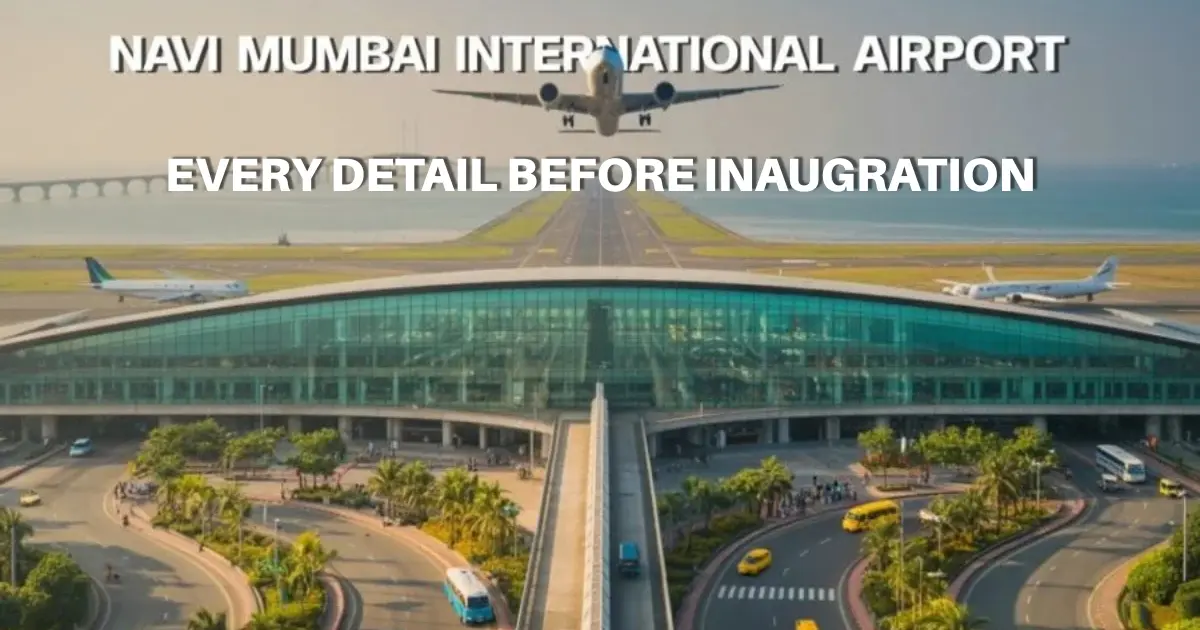
Navi Mumbai International Airport Inauguration on October 8: Timings, New Name, Future.

Published 7 Oct 2025, 9:02 PM IST Key Points Inauguration: The Navi Mumbai International Airport will be inaugurated by Prime Minister Narendra Modi on October 8, 2025. He is expected to land at the new airport around 2:40 PM and will spend approximately two hours at the site. New Name: The airport will be named ‘Loknete DB Patil Navi Mumbai International Airport,’ in honor of the late politician and social activist. Phased Operation: The first phase of the airport will have the capacity to handle 20 million passengers annually. Commercial flight operations are expected to commence in December 2025. Future Expansion: The airport is planned to be developed in five phases, with a final capacity to handle 90 million passengers per annum, making it one of Asia’s largest aviation hubs. What it means for Navi Mumbai The opening of the Navi Mumbai International Airport is a landmark event for the city and the surrounding region. It is poised to be a major economic driver, creating over 2 lakh jobs in various sectors including aviation, logistics, IT, hospitality, and real estate. The airport’s development is also expected to spur infrastructure growth and real estate development in Navi Mumbai and its vicinity. With its multi-modal connectivity to expressways, highways, metro lines, suburban rail, and even water taxi services, the airport will enhance the region’s connectivity and make it a more attractive destination for businesses and residents alike. In-Depth About The Airport After years of anticipation and several revised timelines, the Navi Mumbai International Airport is finally set to become a reality. The inauguration on October 8, 2025, by Prime Minister Narendra Modi, marks a significant milestone in India’s aviation history. The new airport will not only alleviate the immense pressure on the existing Chhatrapati Shivaji Maharaj International Airport (CSMIA) but will also position Mumbai among the elite group of global cities with twin-airport systems, such as London, New York, and Tokyo. The airport, a joint venture between the Adani Group and the City and Industrial Development Corporation (CIDCO), has been designed with a lotus-inspired theme, blending Indian aesthetics with modern, sustainable engineering. In its initial phase, the airport will operate with a single runway and one terminal, catering to both domestic and international flights. Airlines such as Air India, IndiGo, and Akasa Air have already announced their plans to shift a portion of their operations to the new facility. The decision to name the airport after the late D.B. Patil has been a long-standing demand of the local populace, and the official announcement by Maharashtra Chief Minister Devendra Fadnavis has been met with widespread approval. The Navi Mumbai International Airport is not just an infrastructure project; it is a symbol of India’s growing economic prowess and its ambition to become a global aviation hub. As the first flights take to the skies in December, it will open up a new chapter of growth and development for Navi Mumbai and the entire Mumbai Metropolitan Region.  

Read More

Traffic Curbs in Navi Mumbai for PM Modi to Inaugurate Navi Mumbai Airport on Oct 8

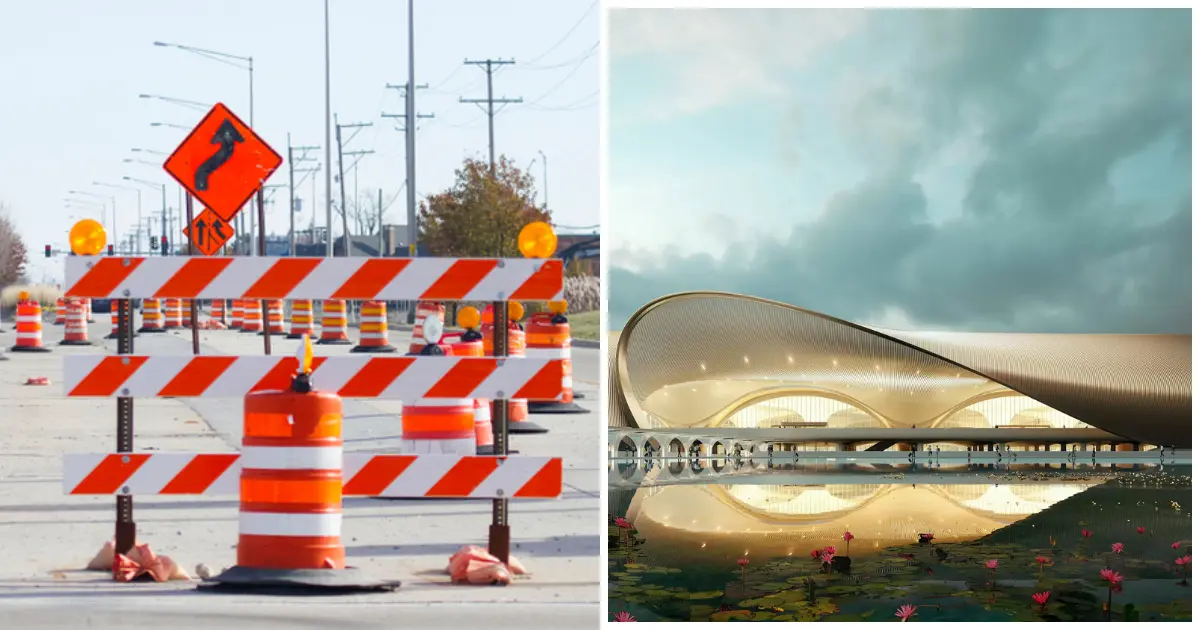
Published 7 Oct 2025, 8:57 PM IST The city is buzzing with excitement as the long-awaited Navi Mumbai International Airport is set to be inaugurated by Prime Minister Narendra Modi on Wednesday, October 8th. To ensure a smooth and secure event, the Navi Mumbai Traffic Police have announced significant traffic restrictions for heavy vehicles on the day of the inauguration. Key Points What: Ban on entry, stopping, and parking of all heavy goods vehicles. When: Wednesday, October 8th, from 6:00 AM to 10:00 PM. Where: All roads within the Navi Mumbai Police Commissionerate limits. Why: To facilitate the VVIP movement for the airport inauguration ceremony and prevent traffic congestion. Exemptions: Emergency and essential service vehicles, including ambulances, police vehicles, fire engines, government vehicles, passenger buses, and vehicles transporting essential commodities, are exempt from the ban. What it means for Navi Mumbai For residents and commuters in Navi Mumbai, this means that while the movement of heavy goods vehicles will be restricted, regular traffic should be less congested. The proactive measures taken by the traffic police are aimed at preventing the gridlock that can often accompany such large-scale events. However, residents should be prepared for increased police presence and potential diversions, especially on major roads and routes leading to the new airport. This one-day restriction is a small inconvenience for the long-term benefits the airport will bring to the region, including enhanced connectivity and economic growth. The Details of the Traffic Plan In an official notification, the Navi Mumbai Traffic Police have laid out a comprehensive plan to manage traffic flow on the day of the inauguration. The primary focus is on keeping the routes for the VVIP convoy clear and ensuring that there are no traffic snarls. To enforce the ban on heavy vehicles, blockades will be set up at key entry points to the city, including the Vashi and Airoli toll plazas. Additionally, the Atal Setu will also be monitored to prevent heavy vehicles from entering Navi Mumbai from Mumbai. A significant number of traffic police personnel will be deployed across the city to manage the diversions and assist commuters. Special arrangements have also been made for the parking of private buses that will be ferrying attendees to the ceremony, with dedicated plans for their smooth entry and exit. The inauguration of the Navi Mumbai International Airport is a landmark event for the city and the entire Mumbai Metropolitan Region. These traffic arrangements are a crucial part of ensuring that the day is a success.

Read More

CIDCO’s “Negative Attitude” Under Fire as NAINA Project Stalls Again (Copy)

Published 6 Oct 2025, 8:30 PM IST Key Points The Issue: The government has proposed to merge 14 villages with the Navi Mumbai Municipal Corporation (NMMC). These villages were previously kept out of the NMMC limits due to local opposition. Now, a new plan to include them again has reignited controversy. The Conflict: The clash is mainly between Navi Mumbai BJP and Shiv Sena Leaders. BJP claims the merger is being pushed by Thane’s political leaders for their own benefit. Shiv Sena, however, supports the inclusion, saying it will help in equal development. BJP’s Allegations: Former BJP corporators Suraj Patil, Netra Shirke, and Aparna Gavate are leading the protest. They argue that the merger will damage Navi Mumbai’s planned growth and infrastructure balance. According to them, the move is more about political expansion than actual urban improvement. Counter-Accusations: BJP has accused Shiv Sena of several issues during their past governance. Misusing funds and water resources meant for Navi Mumbai during the COVID-19 pandemic. Ignoring local youth (Bhumiputras) in job opportunities. Neglecting or even damaging industrial areas under MIDC instead of improving them. What it means for Navi Mumbai If this merger of 14 villages goes forward, it will expand the NMMC’s boundary and bring thousands of new residents under its governance. However, this expansion also brings serious concerns about planning and resources. Experts and local leaders warn that Navi Mumbai’s planned structure could be disturbed. The city was designed by CIDCO with strict zoning for residential, commercial, and industrial use, a balance that may be disrupted if unplanned areas are suddenly added. There are also fears about infrastructure pressure, including water supply, waste management, and road maintenance. The merger could also slow down current civic projects, as funds and attention get divided between old and new areas. For residents of both Navi Mumbai and the 14 villages, this decision will directly affect their future development, civic amenities, and governance. The political infighting shows how development planning and political influence are closely linked and how one decision can shape the city’s long-term future. Main News The 14 villages in question were once part of Navi Mumbai’s original plan but were excluded after residents opposed NMMC control many years ago. Now, the government’s attempt to bring them back under city limits has restarted an old debate. Why BJP is Opposing the Merger Local BJP leaders say the merger is being forced by Thane’s political leadership to extend their influence over Navi Mumbai. They argue that if the villages are added without proper planning, it will create confusion in administration and hurt the city’s image as a well-planned, modern urban hub. Shiv Sena’s Stand Shiv Sena supports the merger, claiming it will bring equal facilities and urban growth to nearby villages that have been left out of NMMC’s reach. The party believes this step will connect rural areas to the city’s infrastructure and help them progress. The Political Angle The issue has now become a battle for control over Navi Mumbai’s future. Both parties are accusing each other of mismanagement, neglect, and using the merger for political mileage. As the conflict continues, residents remain uncertain about how their civic life and development will be affected in the coming years.

Read More

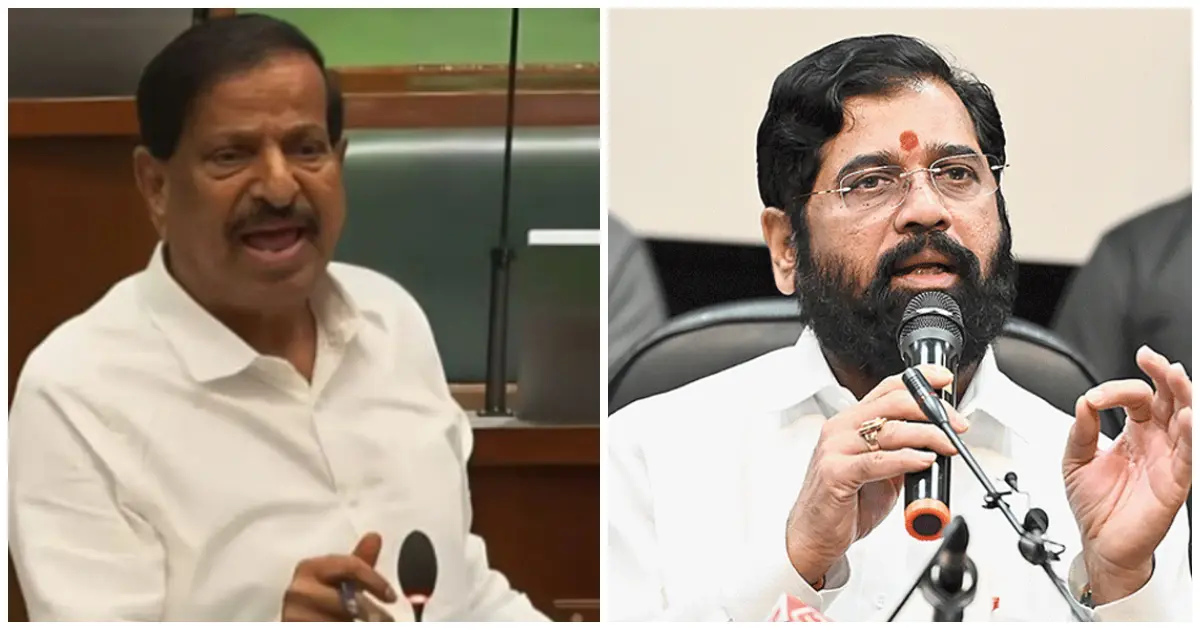
Ruling Alliance About to Break? Eknath Shinde and Ganesh Naik’s Fight Heats Up

Published 2 Oct 2025, 12:02 PM IST Key Points A major political fight has erupted in Navi Mumbai between Chief Minister Eknath Shinde (Shiv Sena) and veteran BJP leader Ganesh Naik. The two leaders, who are supposed to be partners in the ruling alliance, have been openly attacking each other in public speeches. The fight has become personal, with leaders making sharp comments about each other, signaling deep problems within the alliance. Both parties are now hinting that they might fight the upcoming Navi Mumbai (NMMC) elections separately, which could completely change the city’s politics. What it means for Navi Mumbai This fight between top leaders is not just political drama; it directly affects the city’s future. When leaders in the ruling alliance are busy fighting each other, important city work and development projects can get delayed. For the people of Navi Mumbai, this means uncertainty about the city’s governance. The upcoming NMMC election will now be very confusing. Instead of working together, these powerful parties might compete against each other, leading to an unstable result and making it harder to run the city effectively. Main News The political partnership that governs Navi Mumbai is showing serious signs of cracking. A growing fight between two of the state’s most powerful leaders, Chief Minister Eknath Shinde and Navi Mumbai’s veteran BJP MLA Ganesh Naik, has now burst into the open, leaving many to wonder if their alliance will survive until the next city election. What started as political rivalry has now become a direct and personal war of words. At recent public meetings, Ganesh Naik has made several strong statements, including calling himself the “tallest political leader in Thane district,” a direct challenge to CM Shinde, who is also from Thane. Reports also highlighted Naik’s sharp remark dismissing the Chief Minister’s rise to power as a mere “lottery win.” This kind of language has angered the Shiv Sena camp and has made the fight much more bitter than a simple political disagreement. In response, Chief Minister Eknath Shinde has not stayed quiet. He has made strategic moves to challenge Ganesh Naik’s long-standing control over Navi Mumbai. Shinde held a large party meeting in Vashi, right in the heart of Naik’s territory, sending a clear message of his intent. In another major move, Shinde welcomed Ankush Baba Kadam, a local leader who has previously fought elections against Naik, into his Shiv Sena party. Leaders from the Shiv Sena have also started openly criticising Naik’s style of working, calling it family-run politics and promising a different approach. Will They Fight the City Elections Separately? With the important Navi Mumbai Municipal Corporation (NMMC) elections expected soon, this fight could lead to a major political split. Leaders from both sides have started making threats. Shiv Sena MP Naresh Mhaske has publicly said that his party is “ready to contest the civic polls alone” if the attacks on CM Shinde continue. On the other hand, Ganesh Naik has often reminded people that he has “ruled the Navi Mumbai civic body singlehandedly” for years, showing he is also ready to go it alone. This open conflict between the top leaders has put the future of their alliance in serious doubt, and the fight for control of Navi Mumbai is only getting more intense.

Read More

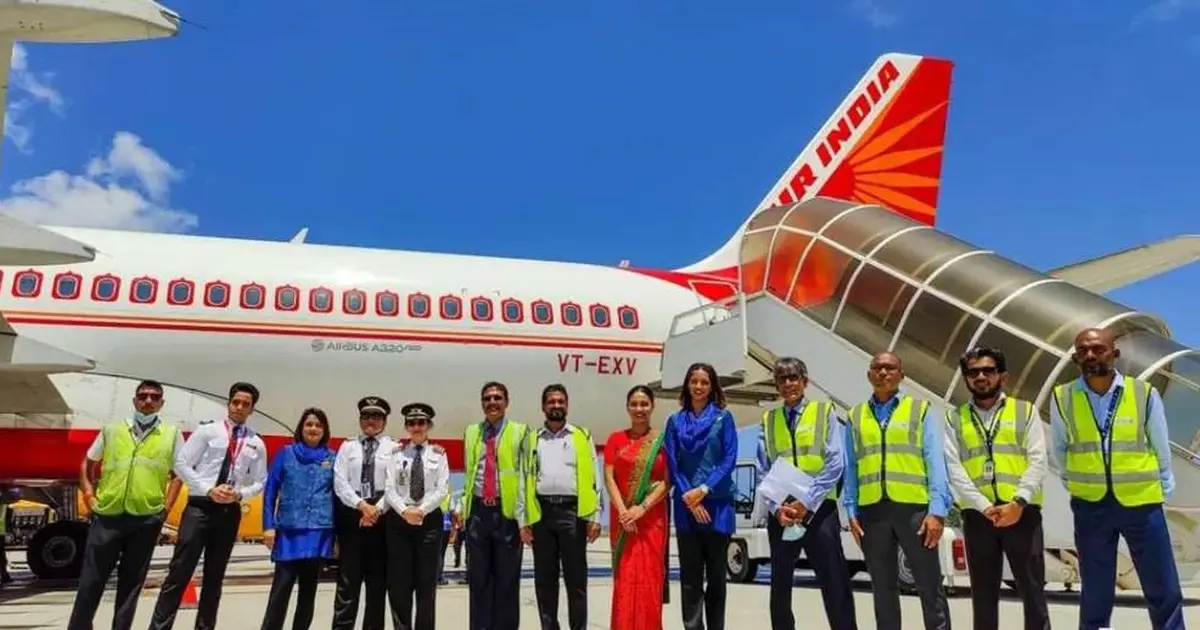
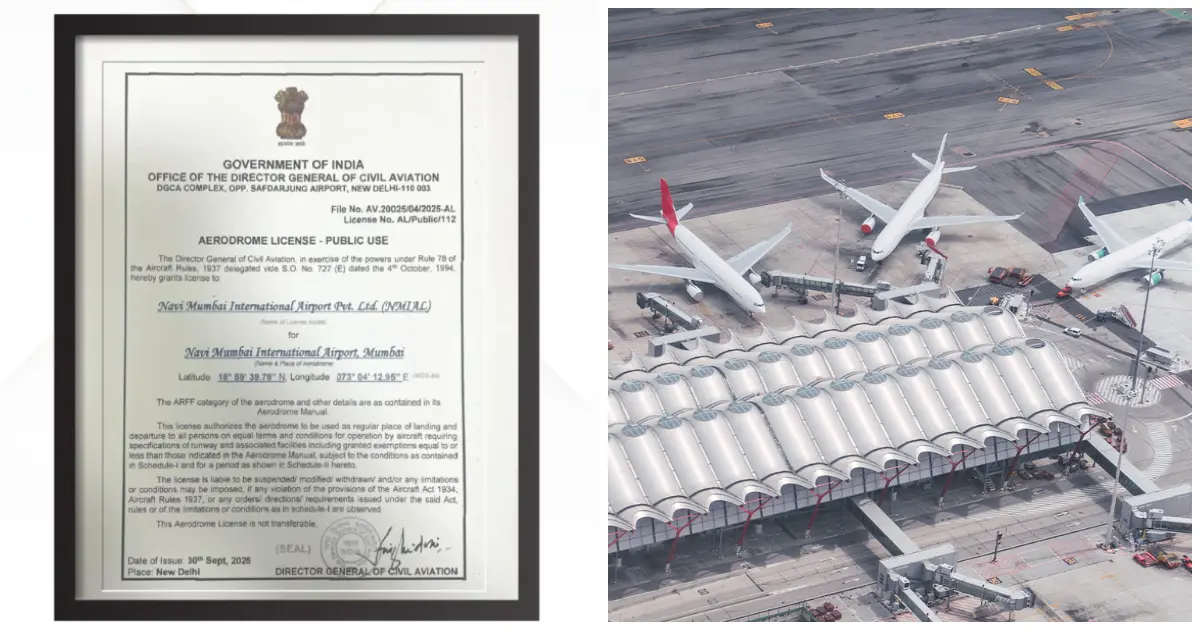
Green Signal Secured: DGCA Grants Aerodrome Licence to NMIA.

Published 1 Oct 2025, 10:05 AM IST Key Points Final Clearance: The Directorate General of Civil Aviation (DGCA) has granted the essential Aerodrome Licence to the Navi Mumbai International Airport (NMIA). Operational Ready: The licence confirms NMIA has met all stringent national and international safety, security, and operational standards, clearing the path for commercial flights. Inauguration Imminent: This milestone was achieved days before the airport’s expected inauguration by Prime Minister Narendra Modi, anticipated in early October (with reports pointing towards October 8th). Airlines Lined Up: Major carriers, including Air India Express, IndiGo, and Akasa Air, have already announced plans to commence operations from the new facility. First Phase Capacity: The initial phase is prepared to handle a significant volume of traffic: 20 million passengers per annum (MPPA) and 0.5 million metric tonnes (MMT) of cargo. What it means for Navi Mumbai The NMIA clearance is the biggest infrastructure news for Navi Mumbai since its inception. For residents, businesses, and investors, this moment is truly a game-changer. Economically, the shift from a project to an operational airport will spark a surge in activity. Logistics, hospitality, supply chain, and allied services in Ulwe, Panvel, and Kharghar are expected to boom. Real estate values will also climb sharply. With connectivity secured, both residential and commercial spaces are set to appreciate faster, making Navi Mumbai a top-tier investment hub. Globally, NMIA positions Navi Mumbai as more than a satellite city. The airport will function as an international gateway, attracting multinational companies and strengthening its identity as an independent metropolitan hub. The twin-airport model will finally ease pressure on Mumbai. Like London’s Heathrow–Gatwick or Dubai’s DXB–DWC, Navi Mumbai Airport will decongest MMR’s skies and ensure smoother operations. Main News The Aerodrome Licence is a mandatory certification, issued by the DGCA under the provisions of the Aircraft Act 1934 and Aircraft Rules 1937. It is essentially the ‘license to operate’ commercial air traffic. The licence was granted after NMIAL, the operator—a Special Purpose Vehicle (SPV) established by Adani Airport Holdings Ltd and the City and Industrial Development Corporation of Maharashtra Ltd (CIDCO)—successfully demonstrated full compliance. This included resolving all technical and safety-related issues, such as eliminating approximately 200 obstacles (like tall trees and cellular towers) that were identified during initial inspections and test flights. The licence is non-transferable and can only be used under the specifications outlined in the airport’s Aerodrome Manual, ensuring the highest standards are maintained from day one. Future of NMIA With this final certification, the NMIA project transitions from anticipation to reality. While the immediate focus is on the Phase 1 launch, the long-term vision is monumental. Upon full completion across all planned phases, NMIA is projected to handle a staggering 90 MPPA and 3.2 MMT of cargo each year. This transformative infrastructure, coupled with the ongoing development of multimodal transport systems (including new Metro lines, road networks, and rail links) designed to ensure seamless connectivity between NMIA and CSMIA, confirms Navi Mumbai’s role as the engine of future growth for the entire Maharashtra region. The city is now equipped with the infrastructure sophistication required to compete with premier world capitals. Referred Sources: Deccan Herald – Navi Mumbai International Airport gets aerodrome licence The Hindu – DGCA grants aerodrome licence to Navi Mumbai International Airport Indian Express – Ahead of inauguration, Navi Mumbai International Airport receives DGCA’s Aerodrome Licence to commence operations Hindustan Times – Navi Mumbai airport gets aerodrome license from DGCA ahead of inauguration

Read More
Digital To Infinity Academy - Build Skills. Build Projects. Build Your Future.