

Shree Aai Mataji Mandir Kharghar
Shree Aai Mataji is not a name that appears only during festivals or special poojas; it lives quietly in the daily rhythm of many families across Navi Mumbai, especially in areas like Kharghar, Kalamboli, Kamothe, and the older Panvel belt. Locals often mention her not with formality, but with familiarity during moments of worry, before important decisions, or when situations feel beyond human control. The phrase “Aai Mata sambhal legi” is common, and it carries generations of belief wrapped in calm reassurance.
In an urban region that is expanding rapidly with concrete, traffic, and changing lifestyles, worship is no longer limited to temple rituals alone; it extends to how cows are treated, how milk is sourced, and whether traditional values can coexist with modern living.
Who Is Shree Aai Mataji?
Shree Aai Mataji is believed to be an incarnation of Ambe Maa (Jagdamba), worshipped not as a distant goddess but as a deeply personal, protective maternal force
. According to traditional belief, she was born around 1415 AD (Vikram Samvat 1472), and over time came to be revered as the Kuldevi of the Khardiya Seervi community, a role that goes far beyond ritual worship. Being a Kuldevi means she is woven into family identity itself invoked during births, marriages, journeys, and crises, often before any other deity.
What stands out about Aai Mataji’s worship is its emotional closeness; devotees don’t speak to her formally, they speak with her, like one would with a mother who listens without judgement. Her story spread not through royal patronage or grand scriptures, but through migration, oral tradition, and lived faith, carried by families who moved from Rajasthan to different parts of India, including Maharashtra.
Origin of Shree Aai Mataji Mandir
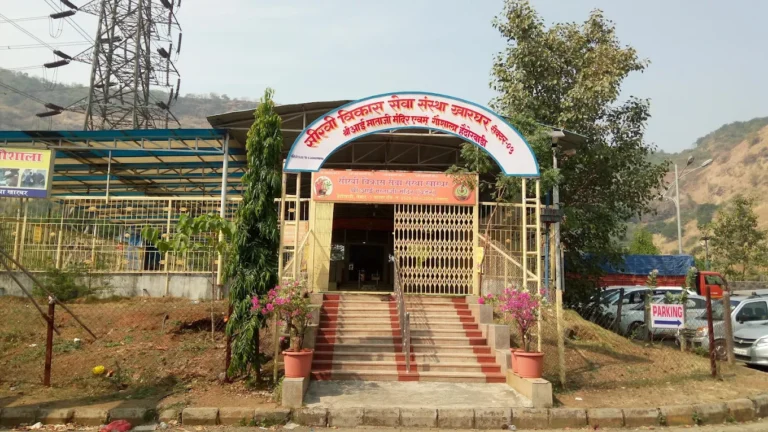
The spiritual origin of Shree Aai Mataji worship traces back to Bilara in Jodhpur district, Rajasthan, which is considered the primary and most revered seat of her devotion. Bilara is not remembered for grand monuments or royal patronage, but for its deep-rooted faith that grew organically among local communities, especially the Khardiya Seervi Samaj. According to belief, it was here that Aai Mataji’s presence was first acknowledged, and over time, a temple was established that became the central point of pilgrimage for devotees across regions. What makes Bilara significant is not just geography, but continuity centuries of uninterrupted worship carried forward through family traditions rather than formal institutions.
As families migrated for trade, livelihood, and settlement, especially towards western and central India, the devotion to Aai Mataji travelled with them, quietly embedding itself into new landscapes.
Shree Aai Mataji Mandir in Navi Mumbai
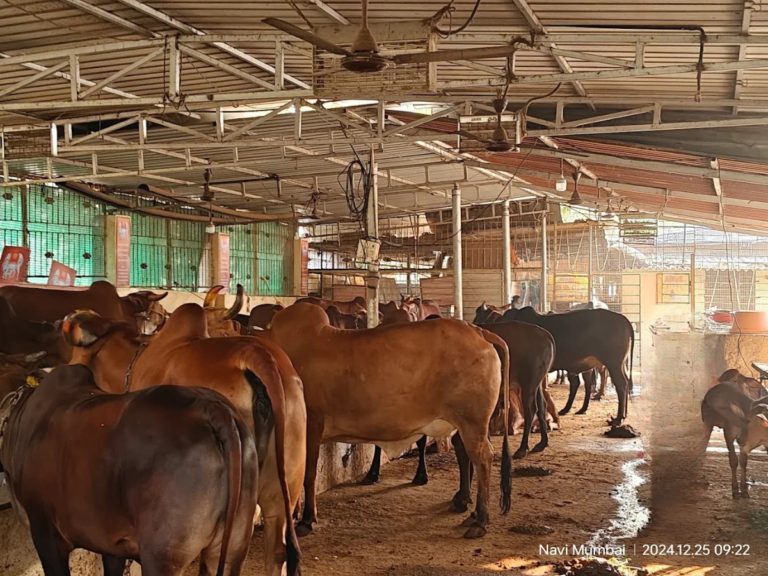
In Navi Mumbai, devotion to Shree Aai Mataji exists more as a lived reality than as a formally documented religious network, which is why locating her mandirs feels different from searching for larger, well-known temples.
Unlike centrally managed shrines, Aai Mataji worship here is spread across Kalamboli, Kamothe, and the Panvel–Jui belt, often in modest temples maintained by local communities or families. In Kalamboli, residents acknowledge an Aai Mata Mandir by name, yet its presence is defined more by collective belief than official records or signage, reflecting how faith often operates at the neighborhood level.
Around Kamothe and the Jui side of Panvel, similar small mandirs or worship spaces exist, serving as quiet centers of devotion rather than public landmarks. Interestingly, despite common assumptions, there is no clearly established or dedicated Shree Aai Mataji Mandir in Kharghar Sector 6, and this absence is important to note, as it highlights the difference between belief-based presence and verified locations. Many devotees in Kharghar instead travel to nearby areas or practice worship at home, reinforcing the idea that Aai Mataji’s presence is not confined to physical structures alone.
How To Reach
| Car Route: Shree Aai Mataji Mandir (Kharghar) to Navi Mumbai International Airport | ||
|---|---|---|
| Step | Driving Direction | Distance |
| Total Distance: 11.4 km | Estimated Time: 26 Minutes | ||
| 1 | Head south from Mandir | 400 m |
| 2 | Turn right onto Adhiraj Garden Rd | 650 m |
| 3 | Turn right onto Bharti Vidyapeeth – Utsav Chowk Rd | 2.3 km |
| 4 | At roundabout, take 1st exit onto MGM Marg / Sakaram Patil Marg | 1.9 km |
| 5 | Turn right onto Palm Beach Rd / Sakal Bhavan Rd | 1.0 km |
| 6 | Turn left at Police Point (Evening Checkup) | 500 m |
| 7 | Merge onto NH348A | 550 m |
| 8 | Keep right to take the flyover | 1.1 km |
| 9 | Take the exit | 1.2 km |
| 10 | Continue straight toward Airport (MLCP 11 visible) | 1.2 km |
| 11 | Keep right | 100 m |
| 12 | Keep left and proceed to Terminal | 350 m |
| Bus Routes from Shree Aai Mataji Mandir (Kharghar) to Navi Mumbai International Airport | |||||||||
|---|---|---|---|---|---|---|---|---|---|
| Route Option | Walk Distance | First Bus / Metro | From → To | Stops | Second Bus | Interchange | Final Bus | Total Duration | Estimated Cost |
| Option 1 | 900 m | 125AC | Sector 7 → C.B.D | 6 Stops | 23 | Killee Gaon | A-4 (NMIAL T1) | 1 hr 23 min | ₹46 |
| Option 2 | 1.0 km | 52AC | Canara Bank → Belapur Railway Station | 11 Stops | A-3 | Belapur Bus Depot | NMIAL Terminal 1 | 1 hr 15 min | ₹42 |
| Option 3 | 1.1 km | Metro Line 1 | Utsav Chowk → Belapur Terminal | 3 Stops | A-3 | Belapur Bus Depot | NMIAL Terminal 1 | 1 hr 08 min | ₹45 |
| Option 4 | 1.4 km | 49 | Teen Bandar → Belapur Bus Depot | 4 Stops | A-3 | Belapur Bus Depot | NMIAL Terminal 1 | 1 hr 09 min | ₹39 |
| Option 5 | 1.0 km | 22AC | Canara Bank → Vashi Sector 7 | 14 Stops | A-3 | Central Bank C.B.D | NMIAL Terminal 1 | 1 hr 11 min | ₹45 |
Why Gaushala Is Deeply Connected to Aai Mataji Worship
The connection between Shree Aai Mataji and the concept of Gaushala is not symbolic or decorative; it comes directly from the way devotees understand motherhood, protection, and responsibility. Aai Mataji is worshipped as a maternal force, and within Indian belief systems, the cow has long held a similar status gentle, nourishing, patient, and life-sustaining.
For followers of Aai Mataji, protecting cows is not seen as a separate religious act but as a natural extension of her values, something that aligns instinctively with the idea of caring for life without expecting anything in return.
This belief has historically encouraged communities to support Gaushalas as spaces of shelter rather than profit, especially for old, injured, or non-milking cattle that are often neglected elsewhere. In the context of modern Navi Mumbai and Panvel, this connection becomes even more relevant, as urban pressure reduces open land and traditional practices are forced to adapt.
Gaushalas Near Navi Mumbai & Panvel

Around Navi Mumbai and the Panvel region, Gaushalas exist in forms that are far more practical and modest than the large, well-funded institutions people often imagine. Instead of expansive complexes, what you mostly find here are smaller cow shelters run by trusts, families, or local caretakers who manage with limited space and resources
. One known example in the Panvel area is Shree Samarth Krupa Gir Go-vardhan Goshala, located near New English School, which focuses on indigenous breeds and traditional cow care practices. Apart from this, several small-scale shelters operate quietly on the outskirts of Panvel and rural stretches connecting Navi Mumbai to Raigad, often without formal publicity or digital presence. These Gaushalas primarily depend on local support, seasonal donations, and personal commitment rather than structured funding.
Their role becomes especially important in an urbanising region where abandoned or non-milking cattle have very few safe options. While these local Gaushalas may not have the scale or visibility of famous institutions elsewhere in India, they reflect the ground reality of cow protection in this region community-driven, resource-constrained, and deeply connected to belief systems rather than commercial motives
A2 Milk, Indigenous Cows & Modern Gaushala Practices
In recent years, conversations around cows in Navi Mumbai and Panvel have moved beyond sentiment and entered the space of health, ethics, and informed choice, especially with the rising awareness of A2 milk. Indigenous cow breeds such as Gir are valued for producing A2 milk, which many consumers now associate with better digestion and fewer health issues compared to mixed or highly processed dairy
. This shift has created a practical bridge between traditional Gaushala values and modern consumer awareness. In areas like Kharghar, Panvel, and nearby localities, small producers and Gaushala-linked initiatives have started offering A2 milk in limited quantities, often at higher prices due to the cost of ethical feeding, veterinary care, and low-yield indigenous breeds. Unlike large commercial dairies, these setups focus on natural grazing, chemical-free fodder, and non-exploitative milking cycles, reflecting principles that align closely with cow protection ideals
. While not every Gaushala is equipped with modern infrastructure, there is a visible effort among some local shelters to balance tradition with hygiene, sustainability, and transparency. This evolving approach shows how Gaushalas in the region are slowly adapting to contemporary expectations without abandoning their core belief system, allowing age-old values to remain relevant in today’s urban lifestyle.
Pros, Challenges & Ground Reality of Gaushalas Today
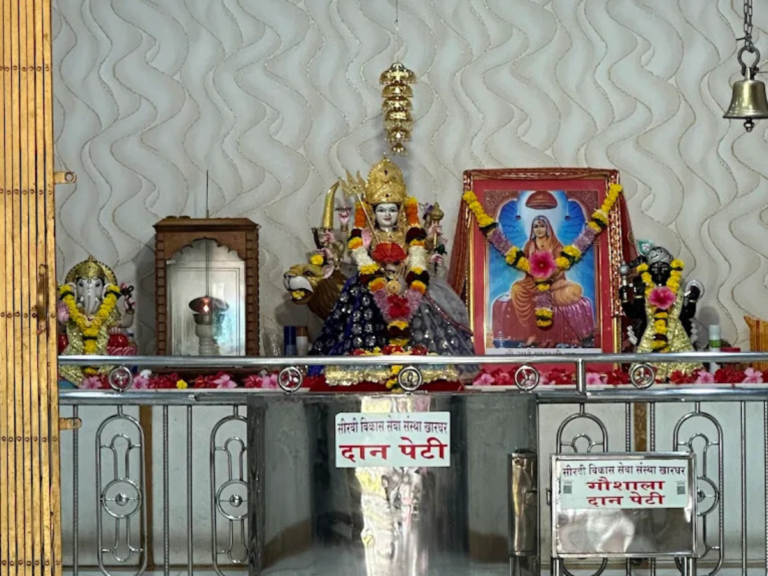
Gaushalas play an important role in preserving indigenous cattle, promoting ethical dairy practices, and offering shelter to cows that would otherwise be abandoned, especially in rapidly urbanising regions like Navi Mumbai and Panvel.
At their best, they represent sustainability in action manure is used for compost, cows are allowed to live beyond their milking years, and traditional knowledge of animal care is preserved through generations. However, the ground reality is far more complex. Many Gaushalas struggle with limited funding, overcrowding, inadequate land, and rising veterinary costs, which directly affect the quality of care they can provide.
In some cases, the intention to protect cows exists, but resources fall short, leading to compromised hygiene or insufficient nutrition. Urban pressure has only intensified these challenges, as shrinking open spaces and stricter regulations make it harder to operate shelters responsibly. This contrast between idealism and reality is important to acknowledge, because blind faith or unchecked donations do not always translate into better outcomes for the animals. True support for Gaushalas today requires awareness, accountability, and informed involvement rather than emotional reaction alone. Recognising both the strengths and limitations of these institutions allows devotees and citizens alike to engage more responsibly, ensuring that the
Shree Aai Mataji Mandir & Gaushala is more than just a religious place it is a peaceful spiritual corner where faith, tradition, and compassion come together. The temple’s calm environment, the presence of the gaushala, and the devotional activities throughout the year make it a meaningful spot for families and devotees in Navi Mumbai. Whether you visit for darshan, seva, or simply to experience serenity, this mandir continues to stand as a symbol of community, culture, and kindness.
FAQs
Frequently Asked Questions