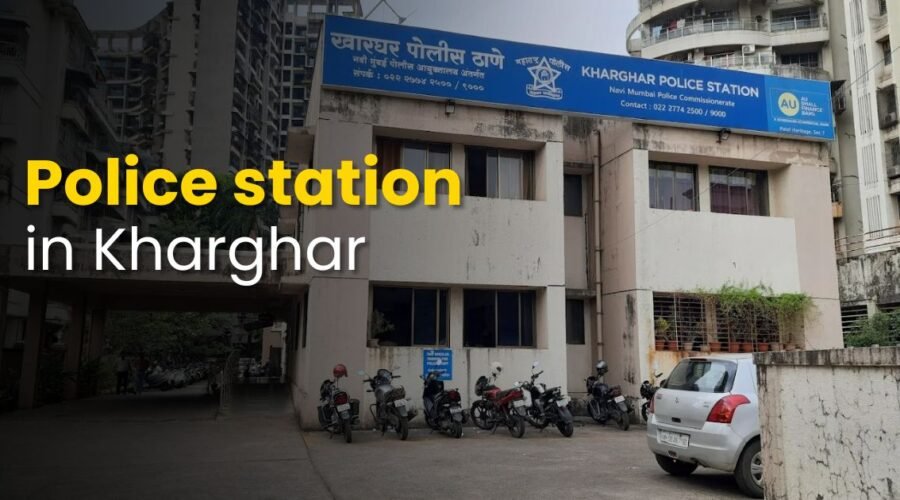
Kharghar Police Station, Navi Mumbai
Kharghar Police Station is the primary law enforcement authority responsible for public safety and policing across the Kharghar node of Navi Mumbai. For residents, students, landlords, housing societies, and local businesses, it functions as the first official point of contact for complaints, verification procedures, and emergency assistance.
Over the past decade, Kharghar has undergone a visible transformation. What was once a relatively quiet, planned township has evolved into a dense residential and educational hub with constant daily movement. High-rise housing, student accommodation, rental properties, commercial activity, and arterial road traffic have collectively changed the nature of policing in the area. As a result, the operational role of Kharghar Police Station has expanded in scope and complexity.
This guide provides a clear, practical, and up-to-date overview of how Kharghar Police Station functions today. It explains jurisdiction coverage, administrative structure, services available to the public, crime trends, and realistic guidance for residents interacting with the system.
At a Glance Table
| Feature | Details |
|---|---|
| Location | Sector 7, Service Road, Kharghar (Near Royal Tulip) |
| Jurisdiction | Sectors 7–37, Owe, Murbi, Pethapada, Chapewadi |
| Administrative Zone | Zone II, Navi Mumbai Commissionerate |
| Senior Police Inspector | Ajay Kamble |
| DCP (Zone II) | Shri. Amit Kale |
| Emergency Contact | 112 / 022-27742500 |
About Kharghar Police Station
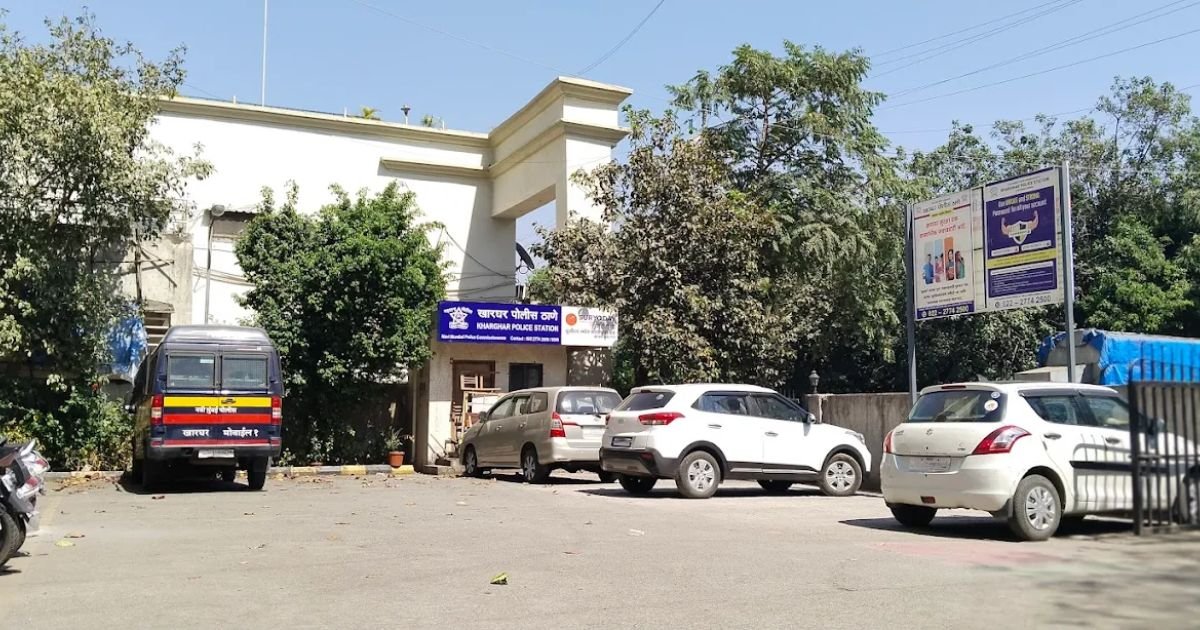
Kharghar Police Station was established to serve the CIDCO-planned township of Kharghar along with surrounding traditional settlements that existed before sector-based development. This dual character defines the station’s jurisdiction and day-to-day operations.
On one side are structured CIDCO sectors with gated housing societies, wide internal roads, educational institutions, and commercial pockets. On the other side are gaothan areas such as Owe and Murbi, where settlement patterns, land ownership, and community dynamics differ significantly. The police station is responsible for maintaining law and order across both environments.
The station is located near Sector 7, Kharghar, along the service road, close to major residential sectors, hospitals, and internal road networks connecting to the Sion–Panvel Highway. From an operational perspective, this location allows quicker access to both residential clusters and traffic-prone corridors.
On a routine day, the station deals with:
- Tenant and domestic help verification
- Property-related complaints from housing societies
- Student safety and rental-related issues
- Local disputes and land-related matters in village areas
- Traffic coordination and public assistance
As Kharghar’s population increased, the workload at the station rose accordingly. The station no longer functions as a low-volume suburban unit. It now handles urban-scale policing tasks, where preventive measures, documentation, and coordination play a larger role than before.
Administrative Structure and Senior Officers (2025)
Kharghar Police Station functions under the Navi Mumbai Police Commissionerate, which oversees policing across all nodes of Navi Mumbai. Recognising the pressure created by rapid growth in areas such as Kharghar and Panvel, the commissionerate introduced administrative restructuring to improve supervision and operational clarity.
As of 2025, Kharghar Police Station falls under Zone II, headquartered at CBD Belapur. This zoning was designed to reduce the administrative span of control and allow senior officers to focus more closely on high-growth regions.
Command Structure
The operational hierarchy governing Kharghar Police Station is as follows:
- Commissioner of Police, Navi Mumbai
- Deputy Commissioner of Police (Zone II), CBD Belapur
- Assistant Commissioner of Police, Kharghar Division
- Senior Police Inspector, Kharghar Police Station
The station is currently headed by Senior Police Inspector Ajay Kamble. The Senior Inspector oversees daily station operations, staff deployment, investigation supervision, and coordination with other units such as the Crime Branch, Traffic Police, and Cyber Cell.
For residents, this structure matters because it determines how complaints move within the system. Files registered at the station are reviewed under a defined supervisory chain. While response times still depend on case type and complexity, clearer administrative responsibility reduces ambiguity and improves follow-up consistency.
Jurisdiction Areas Covered by Kharghar Police Station
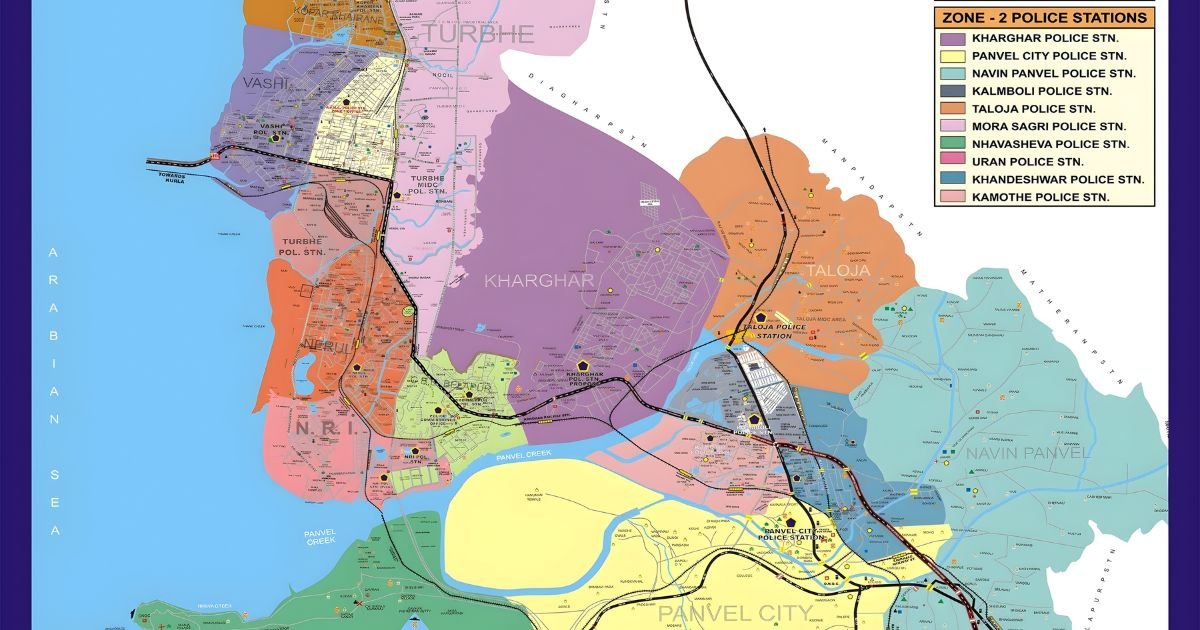
Jurisdiction clarity is essential when approaching any police station. In Kharghar, confusion often arises because multiple police stations operate close to each other, particularly near highways and industrial belts.
Kharghar Police Station covers both CIDCO-developed sectors and traditional village settlements.
CIDCO-Developed Urban Sectors
The following sectors fall under Kharghar Police Station:
- Sector 7
- Sector 12
- Sector 19
- Sector 20
- Sector 21
- Sector 34
- Sector 35
These sectors account for most residential and commercial activity. Complaints from these areas typically include theft, vehicle-related offences, society disputes, tenant verification, noise complaints, and cybercrime reporting. Due to high tenant turnover and student populations, verification-related work forms a significant portion of the station’s daily workload.
Gaothan and Village Areas
In addition to CIDCO sectors, the station also covers:
- Owe Village
- Murbi Village
- Belpada
- Pethapada
- Chapewadi
Cases from these areas often involve land disputes, boundary disagreements, and long-standing civil issues that occasionally escalate into criminal complaints. Policing in gaothan areas requires familiarity with local conditions and greater coordination with community representatives.
Rules and Regulations at Kharghar Police Station
- Report crimes or complaints in person/online FIRs as needed.
- Be polite; abusive behavior is not allowed.
- Carry valid ID when visiting.
- Open 24/7 check timings for specific services.
- Consult a lawyer if needed before giving statements.
- No entry under influence, except emergencies.
- Weapons/dangerous items not allowed without permission.
- Follow officers’ instructions in emergencies.
Services Provided by Kharghar Police Station

- Filing Complaints: Citizens can report any crime or incident they’ve witnessed or experienced.
- Crime Investigation: Responsible for investigating crimes, gathering evidence, questioning witnesses, and making arrests.
- Police Certificates: Issuance of certificates for purposes like passports, driver’s licenses, etc., for eligible citizens.
- Traffic Control: Ensures smooth traffic flow, pedestrian safety, accident investigations, and traffic ticket issuance.
- Community Programs: Conducts workshops, seminars, and events to educate the public about crime prevention and safety.
Cybercrime
Cybercrime has increased steadily in recent years. Online fraud, impersonation scams, and financial cheating cases are now common complaints, especially among students and salaried professionals.
While complaints are registered locally, detailed investigation is usually handled by specialised cybercrime units within the commissionerate. This layered process can extend resolution timelines, particularly in financial fraud cases where fund recovery depends on early reporting and inter-agency coordination.
Contact Numbers
🚨 Emergency Contact Numbers
112
022-27742500
103
1090
📋 Station Rules & Guidelines
- Carry a valid photo ID when visiting.
- Be polite; abusive behavior is strictly prohibited.
- No entry under the influence of substances.
- Weapons are not allowed without prior permission.
- Follow officer instructions immediately in emergencies.
Conclusion
Kharghar Police Station operates in a jurisdiction that continues to grow in both size and complexity. While routine policing remains functional, rising population density, rental occupancy, and cybercrime place sustained pressure on existing systems.
For residents, understanding how the station functions, which areas it covers, and what procedures apply can significantly reduce confusion and delays. As Kharghar develops further as a residential and transit hub, the role of the local police station will remain central to everyday civic life.
FAQ's
Frequently Asked Questions