
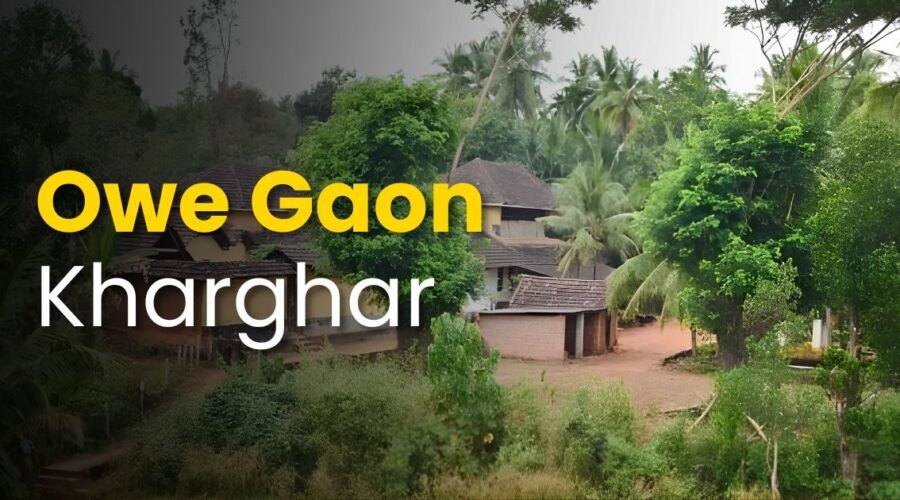
Owe Gaon Kharghar
Owe Gaon is one of those places in Navi Mumbai that does not try to compete with the city around it. It does not announce development loudly or promise a lifestyle it cannot deliver. Instead, it exists quietly within Kharghar, holding on to a rhythm that feels older, slower, and more personal.
Surrounded by fast-growing sectors, new residential projects, and infrastructure corridors, Owe Gaon feels like a pause in the middle of movement. Life here is not shaped by deadlines or glass buildings, but by routine, familiarity, and long-standing relationships. Even today, when the word “Upper Kharghar” is used frequently in property discussions, Owe Gaon continues to live on its own terms.
Quick Facts About Owe Gaon
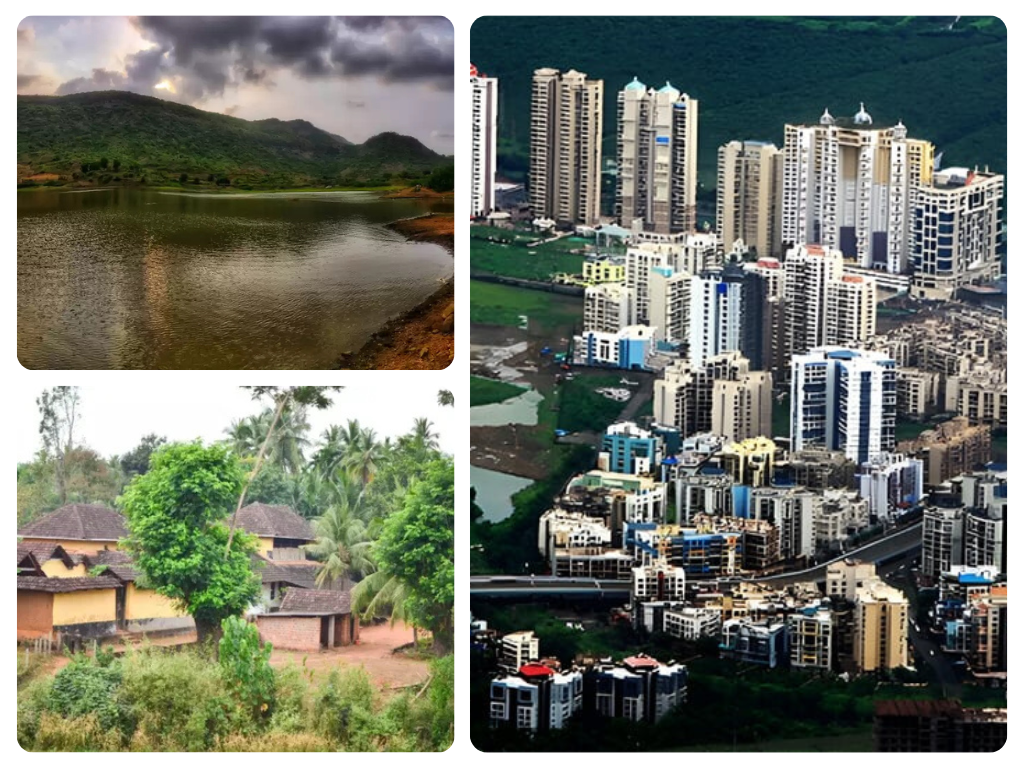
Owe Gaon is located in Sector 30, Kharghar, Navi Mumbai, close to the foothills and not far from the Taloja MIDC industrial belt. It lies roughly five kilometers from Kharghar Railway Station and is well connected by road and public transport. The area includes the original village settlement as well as Owe Camp, which houses families relocated decades ago under rehabilitation schemes.
The population is a mix of original villagers, Project Affected People families, and newer residents who have moved in due to relatively affordable housing options. The internal layout of the village remains organic, with narrow lanes and clustered homes rather than planned sector grids.
The Origins of Owe Gaon: A Brief Historical Context
The history of Owe Gaon is closely linked to displacement and rehabilitation. Many families living here today were relocated from other parts of Maharashtra due to large infrastructure projects, including dam and industrial developments. Owe Camp emerged as a settlement for these families, who were promised long-term stability and basic civic support.
While Kharghar developed as a planned node under CIDCO, Owe Gaon remained partially outside the main planning focus. Over time, this created a situation where modern development grew around the village, but the village itself retained its older structure and lifestyle. This history continues to influence how residents view new projects and announcements.There is awareness here that development brings both opportunity and pressure, and people tend to evaluate it carefully rather than accepting it blindly.
Why Owe Gaon Truly Feels Like Home
Owe Gaon feels like home because people are not anonymous here. Residents know their neighbors, shopkeepers recognize regular customers, and daily interactions are personal rather than transactional. Life is not curated for outsiders. It is lived for the people who stay here year after year.
Newcomers often mention that it does not take long to feel familiar with the area. This sense of belonging comes from consistent human interaction, something that is becoming rare in rapidly developing urban pockets.
A Culture of Togetherness
Community life in Owe Gaon is shaped by shared spaces and shared challenges. Festivals are celebrated collectively, discussions happen openly at tea stalls and outside homes, and local issues are addressed through group conversations rather than individual complaints.
This culture of togetherness has been strengthened by years of dealing with common concerns such as water supply, road conditions, and environmental impact from nearby quarrying. People here are used to standing together, not because it looks good, but because it is necessary.
Simple Living with Urban Support
Life in Owe Gaon is simple, but it is not isolated. Residents enjoy a quieter lifestyle while remaining close to urban facilities. Schools, hospitals, offices, and commercial areas in Kharghar and Panvel are accessible without having to live in constant congestion.
Daily essentials are managed within the village, while larger needs are fulfilled by nearby developed sectors. This balance allows residents to enjoy calm surroundings without sacrificing access to city infrastructure.
Connectivity: Peaceful Yet Perfectly Connected
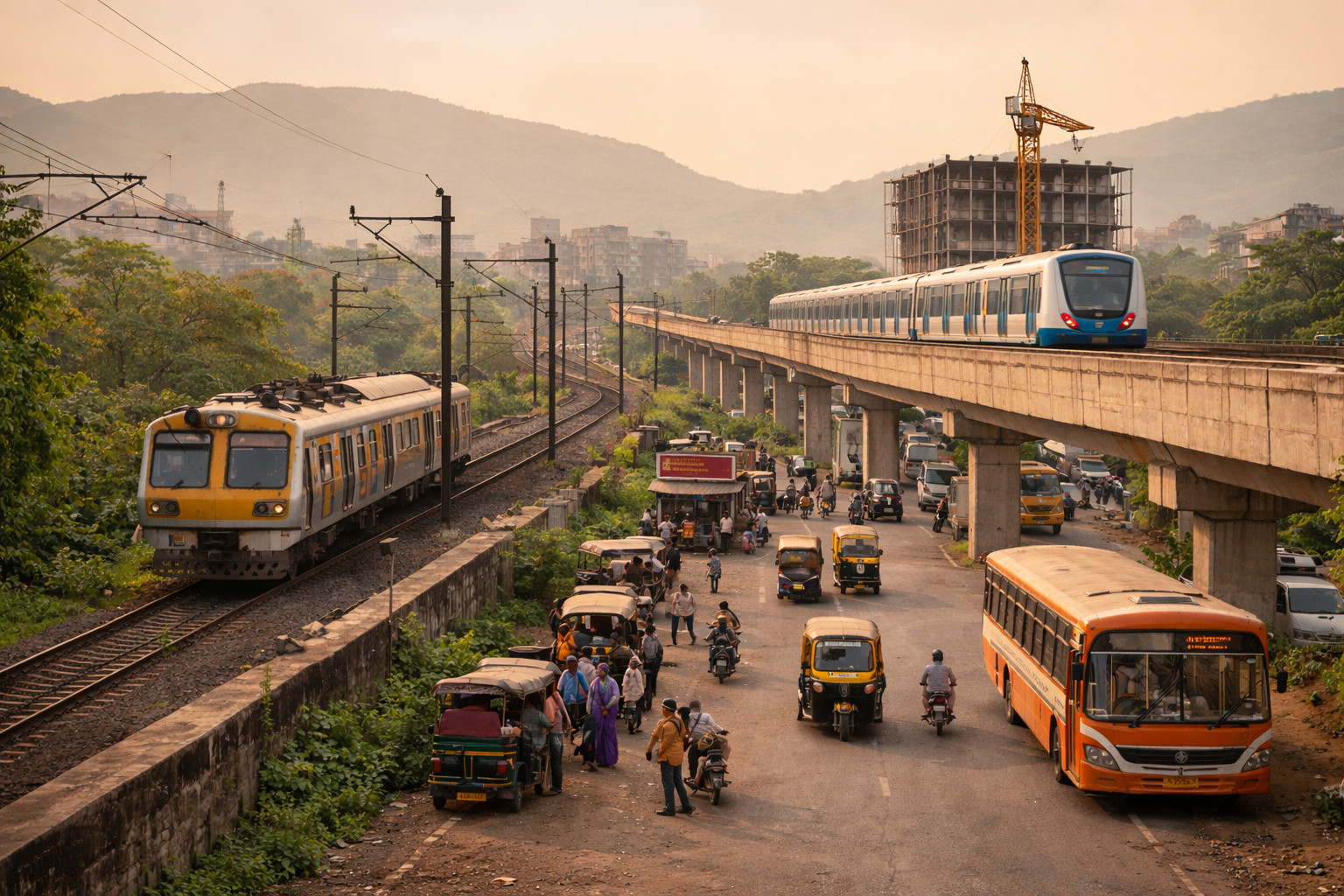
Connectivity is one of the understated strengths of Owe Gaon. While it does not sit at the center of Kharghar, residents manage daily travel efficiently through multiple transport options.
By Train
Kharghar Railway Station is the nearest suburban station and is approximately five kilometers away. Most residents reach the station using buses or auto-rickshaws. The station connects to the Harbour Line, making travel toward Belapur, Vashi, and Panvel practical for daily commuters.
By Road
Road connectivity links Owe Gaon to internal CIDCO roads and major routes leading toward Panvel, Belapur, and Taloja. Although internal village roads are narrow, external access routes function well for daily travel.
By Metro
The Navi Mumbai Metro has started influencing mobility in this region. While the nearest metro stations are not within walking distance, bus and auto connectivity to metro points has improved access to business and commercial areas.
Public Transport
Public buses are the primary mode of transport for many residents. Regular services connect Owe Gaon to Kharghar Station, Belapur CBD, Ghansoli, and Taloja MIDC. Auto-rickshaws provide reliable last-mile connectivity.
Close to the Airport, Without Losing Its Quiet
One of the lesser-talked-about advantages of Owe Gaon is its future proximity to Navi Mumbai International Airport (NMIA). While the village itself remains far from airport noise and daily congestion, it benefits from being located within a comfortable driving distance through Panvel and upcoming highway corridors. For residents, this means easier access to domestic and international travel without the pressure of living in an airport-dominated zone.
Real Estate in Owe Gaon: Prices, Demand

Real estate in Owe Gaon remains more grounded compared to central Kharghar sectors. It attracts end users and long-term holders rather than speculative investors.
Property Prices (July 2026)
As of July 2025, realistic property prices in Owe Gaon range between ₹10,500 and ₹12,000 per square foot for older buildings and resale properties. Newer constructions closer to Sector 30 and the Upper Kharghar belt may be priced slightly higher, depending on amenities and construction quality.
These rates remain lower than premium Kharghar sectors, making Owe Gaon attractive for buyers looking for affordability.
Rent Estimates
Rental values are stable and practical. One-bedroom units generally attract tenants working in Taloja MIDC or nearby service sectors, while two-bedroom units are preferred by families. Rent levels are moderate and reflect the area’s non-speculative nature.
Popular Residential Projects
Housing options include older village-style buildings, small apartment clusters, and limited newer developments along the Sector 30 stretch. Large gated communities are few, which helps maintain lower density and a quieter environment.
Rental Market
The rental market is driven by industrial workers, healthcare staff, and service professionals working across Navi Mumbai. Demand is consistent, but pricing remains realistic.
Facilities Available at or Near the Bus Stop
The bus stop area functions as a small commercial hub for Owe Gaon. Local kirana stores, vegetable vendors, medical shops, and tea stalls operate throughout the day. These handle daily necessities without requiring residents to travel far.
Nearby medical stores provide basic healthcare supplies, and local service providers such as electricians and mechanics are easily accessible within the village.
The Local Buzz: What People Are Saying
Local conversations often revolve around water supply, road maintenance, and environmental concerns linked to nearby quarrying. Residents appreciate the calm lifestyle and affordability, but there is ongoing concern about long-pending civic issues.
There is also cautious discussion about increasing development interest. While some residents see opportunity, others worry about rising costs and loss of village identity.
Travel Tips for Commuters
Early morning buses are generally less crowded and more reliable for daily commuters. Auto-rickshaws work best for last-mile connectivity rather than long-distance travel. During monsoon months, travel time may increase slightly due to internal road conditions.
Owe Gaon is not a polished urban destination, and it does not try to be one. It is a place shaped by history, routine, and quiet resilience. While Kharghar continues to expand around it, the village maintains a slower, more grounded pace of life. For those seeking affordability, community, and a sense of continuity within Navi Mumbai, Owe Gaon offers something increasingly rare. Not perfection, but balance.
FAQs
Frequently Asked Questions