

Power of Attorney (POA) Navi Mumbai: What Buyers Must Know?
In Navi Mumbai, Power of Attorney is not a rare legal tool. It is actively used in resale flats, CIDCO leasehold plots, NRI-owned properties, and even redevelopment projects.
The problem is not the concept of POA, but the misunderstanding around it. In Navi Mumbai, misuse of POA has led to delayed registrations, rejected home loans, CIDCO transfer issues, and even full-scale fraud. Understanding POA before entering any deal is no longer optional. It is a survival requirement.
Quick Summary: Power of Attorney in Navi Mumbai at a Glance
| Aspect | Reality in Navi Mumbai |
|---|---|
| Legal Validity | Valid only for authority, not ownership |
| Ownership Transfer | Impossible through POA |
| Registration | Mandatory in Maharashtra |
| CIDCO Properties | Extra approvals required |
| Home Loan | Mostly rejected by banks |
| Risk Level | High if misused or misunderstood |
| Aspect | What Navi Mumbai Buyers Should Know |
|---|---|
| Legal Effect | POA authorises an agent to perform specified acts for the owner. |
| Ownership Transfer | POA alone does not transfer ownership; a sale requires the proper registered conveyance. |
| Registration / Authentication | Depends on the type and use of the POA; not every POA is automatically subject to one identical registration rule. |
| CIDCO Properties | Check the property’s tenure and current CIDCO transfer requirements separately. |
| Home Loan | Lender-specific; valid POA representation can be accepted, but a POA-only ownership chain is a different and much higher-risk issue. |
| Buyer Risk | Depends on title, wording, execution, stamping, registration/authentication, revocation and current validity. |
What Is Power of Attorney (POA) in Real Estate?
A Power of Attorney is a legal document where a property owner authorises another person to act on their behalf. In real estate, this authority may include managing a property, signing documents, or completing a specific transaction like registration.
What POA does not do is transfer ownership. The property legally remains in the owner’s name until a registered sale deed is executed. This distinction is the root of most disputes and confusion seen in Navi Mumbai property cases.
Why Power of Attorney Is Widely Used in Navi Mumbai Properties

Navi Mumbai has a high percentage of absentee owners. Many flats in Kharghar, Seawoods, Ulwe, and Nerul are owned by NRIs or investors living outside Maharashtra. For them, POA becomes a practical necessity to manage transactions.
Another reason is CIDCO land structure. Older allotments, leasehold plots, and delayed conveyance cases often push owners towards POA for convenience. Unfortunately, convenience is also where risk quietly enters the transaction.
Types of Power of Attorney Used in Real Estate Transactions
General Power of Attorney (GPA)
A General Power of Attorney gives wide authority to the agent. In older Navi Mumbai transactions, GPA was often used loosely, sometimes even for selling property. Today, this approach is legally dangerous.
Because GPA language is broad, it carries a higher risk of misuse. Courts and banks treat GPA-based property dealings with extreme caution, especially in resale cases.
Special or Specific Power of Attorney (SPA)
A Special Power of Attorney is limited to a specific task, such as signing a sale deed or presenting documents for registration. This is the preferred and safer format in modern property transactions.
Most banks, lawyers, and registrars in Navi Mumbai accept SPA because the scope is clearly defined. Once the task is completed, the authority automatically ends.
A transaction-specific SPA can be easier to verify because the authority is narrowly defined. However, there is no universal rule that every bank, registrar or authority must accept every SPA; the document still has to meet the applicable execution, authentication, stamping and registration requirements.
Under the Indian Contract Act, an agency ordinarily terminates when the business of the agency is completed. The exact effect should therefore be checked from the wording of the POA and the circumstances of the transaction.
Durable vs Non-Durable Power of Attorney
In India, durability of POA is a grey area. If the property owner becomes mentally incapacitated, most POAs lose legal force, even if written otherwise.
This creates serious issues in senior citizen properties and family disputes. In Navi Mumbai, such cases often end up in court or require guardianship orders.
Indian property transactions should not be explained through a simple “durable vs non-durable” rule. Under Section 201 of the Indian Contract Act, an ordinary agency can terminate if the principal dies or becomes of unsound mind.
However, Section 202 creates an important exception where the agent has a genuine interest in the property that forms the subject matter of the agency. In such a case, the agency cannot be terminated to the prejudice of that interest unless the contract provides otherwise.
The word “irrevocable” written in a POA should therefore not be treated as enough by itself. If incapacity, death or an alleged irrevocable POA is involved, get the document reviewed by a property lawyer before relying on it.
Is Power of Attorney Valid for Property Sale in Navi Mumbai?

Power of Attorney cannot transfer property ownership in Navi Mumbai. This position is settled law. A POA holder may sign documents, but ownership passes only through a registered sale deed.
If someone claims that the POA itself transferred ownership to them, that is a major red flag. A GPA sale or POA-only transfer does not convey title.
But this is different from a genuine transaction where a valid attorney acts for the actual owner and executes the proper registered sale deed within the authority granted by the POA. The buyer should therefore ask one question first: Is the POA only authorising the sale, or is someone wrongly treating the POA itself as the sale document?
If someone claims they “bought” a flat through POA, legally they have not bought the property. This is why banks refuse loans, societies hesitate to transfer shares, and CIDCO blocks mutations in such cases.
Supreme Court Judgments That Changed POA Property Sales in India
The Supreme Court has clearly ruled that POA, agreement to sell, or will cannot replace a registered sale deed. These judgments were passed to stop tax evasion and fake ownership chains.
For Navi Mumbai buyers, this means one thing. If ownership is not backed by a registered conveyance deed, the title is weak, regardless of how old or “common” the POA transaction looks.
POA vs Sale Deed vs Agreement to Sell: Legal Comparison
| Parameter | POA | Sale Deed | Agreement to Sell |
|---|---|---|---|
| Ownership Transfer | No | Yes | No |
| Registration | Mandatory | Mandatory | Mandatory |
| Legal Strength | Limited | Absolute | Conditional |
| Bank Loan | No | Yes | No |
This table alone resolves most buyer confusion seen in Navi Mumbai resale discussions.
Registration Rules for Power of Attorney in Maharashtra

In Maharashtra, a notarised POA is not sufficient for property transactions. If a POA authorises sale, transfer, or registration of immovable property, it must be registered at the Sub-Registrar office.
In Navi Mumbai, Sub-Registrars actively verify POA scope, stamp duty, and identity details. Any mismatch can lead to refusal of registration, even if the buyer and seller agree.
Stamp Duty and Registration Charges for POA in Navi Mumbai
Stamp duty on a POA in Maharashtra depends on what authority is being granted, whether consideration is involved, and who receives the authority.
Under Article 48 of the Maharashtra Stamp Act, several ordinary POA categories carry a ₹500 duty. Where a POA is given for consideration and authorises sale of immovable property, conveyance-equivalent duty can apply on the market value. Where authority to sell or transfer is given without consideration to specified relatives — including parents, siblings, spouse, children and certain other relatives listed in Article 48 — the duty is ₹500. Other sale or transfer authorisations can attract conveyance-linked duty.
Do not estimate the duty only from the words “GPA” or “SPA.” Check the exact Article 48 category with the Department of Registration & Stamps before execution.
Stamp duty on a POA in Maharashtra depends on what authority is being granted, whether consideration is involved, and who receives the authority.
Under Article 48 of the Maharashtra Stamp Act, several ordinary POA categories carry a ₹500 duty. Where a POA is given for consideration and authorises sale of immovable property, conveyance-equivalent duty can apply on the market value. Where authority to sell or transfer is given without consideration to specified relatives — including parents, siblings, spouse, children and certain other relatives listed in Article 48 the duty is ₹500. Other sale or transfer authorisations can attract conveyance-linked duty.
Do not estimate the duty only from the words “GPA” or “SPA.” Check the exact Article 48 category with the Department of Registration & Stamps before execution.
Stamp duty on POA depends on who receives the authority. If POA is given to a close family member, duty is minimal. If given to a third party, duty can be almost equal to a sale deed.
This rule exists to prevent misuse. Many Navi Mumbai sellers are surprised when they realise POA offers no financial shortcut anymore.
Power of Attorney in CIDCO Leasehold Properties
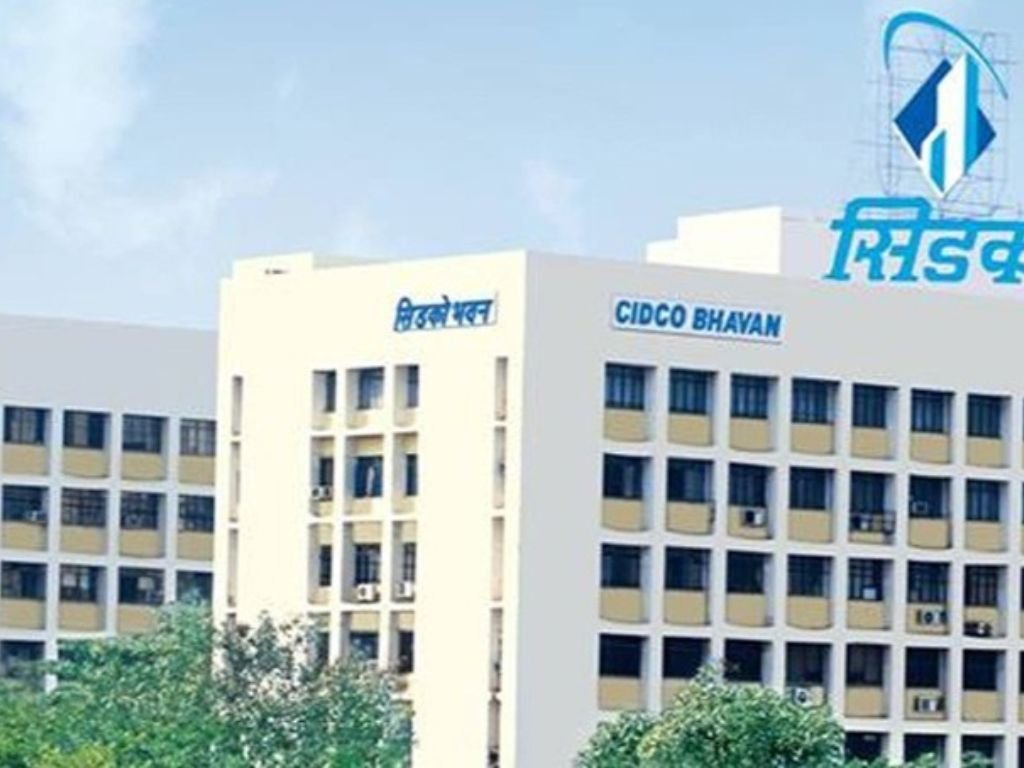
CIDCO properties add another layer of complexity. Even if a POA is registered, CIDCO permissions and transfer charges may still apply.
In areas like Taloja, Panvel, and Ulwe, CIDCO closely scrutinises POA-based transfers. Without compliance, mutation and conveyance can get stuck for years.
For a CIDCO-linked property, verify the property’s current tenure, the applicable transfer process and whether any CIDCO transfer charges or other formalities still apply. Do not assume that registration of the POA itself completes the CIDCO-side transfer.
CIDCO continues to publish a transfer-charge schedule for applicable properties for 2026–27, so the exact requirement should be checked for the property before token or registration.
Power of Attorney for NRIs Buying or Selling Property in Navi Mumbai
For NRIs, POA must be executed abroad and properly attested. Once the document reaches India, it must be stamped and adjudicated within the prescribed time.
Many NRI transactions fail simply because this step is skipped. An unstamped foreign POA has no legal standing in Indian courts or registries.
An NRI owner can execute a POA outside India, but the correct authentication route depends on where and how the document is executed.
For the purposes covered by Section 33 of the Registration Act, a POA executed by a person residing outside India can be recognised when executed before and authenticated by a Notary Public, Court, Judge, Magistrate, Indian Consul or Vice-Consul, or an authorised representative of the Central Government.
For Hague Convention countries, an apostilled document does not require further Indian consular legalisation merely because it is foreign. Once a chargeable POA is first received in Maharashtra, Section 18 of the Maharashtra Stamp Act allows it to be stamped within three months.
Because overseas execution, apostille/attestation, stamping and registration requirements depend on the document’s intended use, get the exact POA checked before relying on it for a property sale.
Why Banks Refuse Home Loans on POA-Based Transactions

Banks lend against ownership, not authority. Since POA does not transfer title, lenders see it as high risk.
In Navi Mumbai, almost all major banks insist on a registered sale deed in the owner’s name. POA-only transactions are typically rejected at the legal due diligence stage.
Banks distinguish between a POA-only ownership chain and a genuine transaction where a valid attorney acts for the actual owner.
A GPA sale that is being treated as proof of ownership creates a serious title issue because the POA itself does not convey title. But a valid POA can be used in recognised banking and property processes. For example, SBI provides documentation for an NRI borrower’s POA holder to execute home-loan documents and even deposit title deeds on the borrower’s behalf.
The final decision still depends on the lender’s legal and technical due diligence, the title chain, the wording and validity of the POA, and the final transfer document.
Power of Attorney and MahaRERA Compliance
Under MahaRERA, developers and promoters must execute agreements transparently. POA holders cannot bypass compliance obligations.
In under-construction projects, misuse of POA often leads to delayed possession and legal disputes. Buyers must verify who is signing and under what authority.
Risks and Fraud Cases Linked to POA in Navi Mumbai
In Navi Mumbai, POA-related fraud rarely looks dramatic at the start. Deals appear normal, prices look attractive, and brokers push urgency. The real damage surfaces later, during loan processing, society transfer, or resale.
Common fraud patterns include unauthorised sale using old POAs, multiple POAs issued for the same property, and POAs continuing even after the owner’s death. Such cases are frequently reported in nodes like Taloja, Kalamboli, Panvel, and older CIDCO sectors.
What Happens to a Power of Attorney After the Owner’s Death?
A Power of Attorney automatically becomes invalid the moment the property owner dies. This is a hard legal rule, regardless of what the POA document states.
Many buyers in Navi Mumbai unknowingly purchase properties where the owner passed away earlier, but the POA holder still executed the sale. Such transactions are legally void and often end up in long court battles with legal heirs.
Under Section 201 of the Indian Contract Act, an ordinary agency generally terminates when the principal dies or becomes of unsound mind.
But this is not an exception-free rule. Section 202 protects an agency where the agent has a genuine interest in the property forming the subject matter of the agency. The Supreme Court revisited this distinction in 2025.
There is another practical nuance. Section 208 of the Contract Act says termination does not take effect against the agent or a third person until it becomes known to them, and Section 3 of the Powers-of-Attorney Act protects certain good-faith acts done without knowledge of death, incapacity or revocation.
For a property buyer, the practical rule is still cautious: if the owner has died, stop the transaction and have a property lawyer review the POA, succession position, timing of the proposed act and any claimed Section 202 interest before proceeding.
Under Section 201 of the Indian Contract Act, an ordinary agency generally terminates when the principal dies or becomes of unsound mind.
But this is not an exception-free rule. Section 202 protects an agency where the agent has a genuine interest in the property forming the subject matter of the agency. The Supreme Court revisited this distinction in 2025.
There is another practical nuance. Section 208 of the Contract Act says termination does not take effect against the agent or a third person until it becomes known to them, and Section 3 of the Powers-of-Attorney Act protects certain good-faith acts done without knowledge of death, incapacity or revocation.
For a property buyer, the practical rule is still cautious: if the owner has died, stop the transaction and have a property lawyer review the POA, succession position, timing of the proposed act and any claimed Section 202 interest before proceeding.
Power of Attorney Misuse in Resale Flats and Old CIDCO Allotments
Resale flats with old CIDCO allotments are especially sensitive. Some owners never executed proper conveyance deeds and relied on POA-based transfers instead.
When such flats change hands again, societies refuse share transfer, CIDCO blocks mutation, and buyers realise the title chain is broken. Rectifying this later costs years, not months.
Power of Attorney in Society Matters and Redevelopment Projects
In redevelopment projects, societies sometimes allow POA holders to sign consent letters or agreements. This works only if the POA specifically authorises redevelopment-related acts.
Problems arise when developers rely on loosely drafted POAs. Courts in Maharashtra have increasingly sided with societies where developers delayed projects while holding “irrevocable” POAs without performance.
Why POA-Based Properties Face Problems During Resale
Even if a POA-based purchase looks smooth initially, resale becomes extremely difficult. New buyers, banks, and lawyers demand clean ownership, not authority-based chains.
In Navi Mumbai’s mature markets like Vashi, Nerul, and Seawoods, POA properties are often discounted heavily because of this resale risk. Market perception matters as much as legal theory.
How to Verify a Power of Attorney Before Buying Property in Navi Mumbai
Verification is the most ignored step by buyers trying to save time. A POA must be checked for registration number, scope of authority, and current validity.
Buyers should also confirm whether the POA has been revoked and whether the owner is alive and mentally competent. Skipping this due diligence is the fastest way to lose both money and peace of mind.
Importance of Index II and Registration Records in POA Deals
Index II is the backbone of verification in Maharashtra. It confirms whether a POA was actually registered and what powers were granted.
In Navi Mumbai, forged or manipulated POAs usually fail at this stage. If Index II does not clearly mention authority to sell or register, the transaction should stop immediately.
Index II can be useful for locating and cross-checking particulars of a registered document, but do not use Index II alone to decide what powers the attorney actually has.
Section 55 of the Registration Act says Index II contains specified particulars relating to the registered document. The complete operative authority is found in the POA itself. Section 57 also provides for inspection of registration records and certified copies in applicable cases.
So verify the Index II or registration entry, but also obtain and read the complete registered or authenticated POA preferably a certified copy where appropriate before deciding whether the attorney can sell, sign, admit execution, receive consideration or perform any other specific act.
Can a Power of Attorney Be Revoked or Cancelled?
Yes, a POA can be revoked at any time by the property owner, unless it falls under very specific legal exceptions. Revocation must be registered and ideally published through a public notice.
Buyers often miss this risk. A revoked POA has no legal value, even if the buyer was unaware of the cancellation.
A principal can ordinarily revoke an agent’s authority, but the rule is not simply “at any time in every case.”
Section 202 protects an agency coupled with a genuine interest. Section 204 also limits revocation in relation to acts and obligations that have already arisen from authority partly exercised, while Section 206 deals with reasonable notice.
Section 208 is especially important for buyers: termination does not take effect against the agent until known to the agent, or against a third person until known to that third person.
The formal steps for documenting a revocation can depend on how the original POA was executed and used. Before relying on a POA, ask for current confirmation from the owner, search the relevant registration records where applicable, and have any revocation document checked by a lawyer.
Power of Attorney vs Will vs Gift Deed in Property Planning
A POA only gives authority, not rights. A Will transfers property only after death, and even then, it must go through legal validation. A Gift Deed transfers ownership immediately.
In Navi Mumbai family properties, confusion between these instruments leads to disputes among siblings and legal heirs. Clear planning avoids future litigation.
Why Verbal Assurances and Broker Guarantees Are Dangerous

Brokers often assure buyers that POA is “common practice” or “adjust ho jayega later.” This mindset causes most property disputes.
Legal systems do not work on verbal assurances. In Navi Mumbai, documentation strength decides ownership, not intent or convenience.
Practical Red Flags Buyers Should Never Ignore
If the seller avoids direct interaction, insists on payment to the POA holder’s account, or pushes urgency citing “POA expiry,” it signals risk.
Another red flag is refusal to involve an independent lawyer. Genuine sellers welcome verification. Fraudsters rush deals.
When Should You Completely Avoid Power of Attorney in Property Deals?
POA should be avoided in resale purchases where ownership clarity is critical. If a flat is already registered in someone’s name, there is no practical reason to route the sale through POA unless unavoidable.
Loan-based purchases are another strict no. Since banks require clean title transfer, POA-only structures almost always fail at the sanction or disbursement stage, especially in Navi Mumbai’s regulated markets.
Do not automatically reject a loan-based purchase only because the owner is represented through a POA. The real red flag is a POA-only ownership chain, defective title, or an attorney who does not have valid authority for the transaction.
Banks can accept valid POA representation in appropriate cases; SBI, for example, has specific NRI home-loan procedures involving India-based POA holders. Before paying token money, ask the proposed lender to confirm whether the exact POA and title structure are acceptable to its legal team.
Situations Where Using POA Is Reasonable and Low Risk
POA works best when the owner is temporarily unavailable but the transaction structure remains a proper sale deed. NRIs selling flats often use POA only to sign documents, not to replace ownership transfer.
Another acceptable use is administrative management. Renting out a flat, paying society dues, or attending registrar appointments can be safely handled through a narrowly drafted POA.
Best Practices for Using Power of Attorney Safely in Navi Mumbai

Always prefer a Special Power of Attorney over a General one. The narrower the authority, the lower the legal exposure.
The POA should be time-bound and transaction-specific. Independent drafting by a property lawyer, rather than a broker template, makes a significant difference in enforceability and risk control.
Payment and Execution Rules Buyers Must Strictly Follow
All payments must go directly to the property owner’s bank account. Any request to route funds through the POA holder is a red flag that should stop the deal immediately.
Do not assume that a POA holder is automatically authorised to receive the sale consideration. Check whether the POA expressly gives that power and whether the proposed payment route matches the Sale Deed, tax requirements, lender instructions and your lawyer’s advice.
A request to send substantial consideration to an attorney holder’s personal account without clear written authority and a documented transaction trail should be treated as a serious red flag.
The final ownership transfer must always happen through a registered sale deed. POA should only assist the process, never replace it.
Power of Attorney and MahaRERA: Buyer Protection Angle
Under MahaRERA, transparency and accountability are mandatory for developers and promoters. POA holders cannot bypass statutory obligations under RERA.
In under-construction projects, buyers should verify whether the person signing agreements is authorised under both POA and RERA disclosures. This check prevents future enforcement issues.
Final Verdict: Is Power of Attorney Safe for Property Transactions in Navi Mumbai?
Power of Attorney is not inherently unsafe, but it is widely misunderstood. In Navi Mumbai’s current legal and regulatory environment, POA is a support tool, not a substitute for ownership transfer.
Buyers who treat POA as ownership expose themselves to long-term legal and financial risk. Those who use it carefully, within legal limits, can complete transactions smoothly without future complications.
FAQ's
Frequently Asked Questions