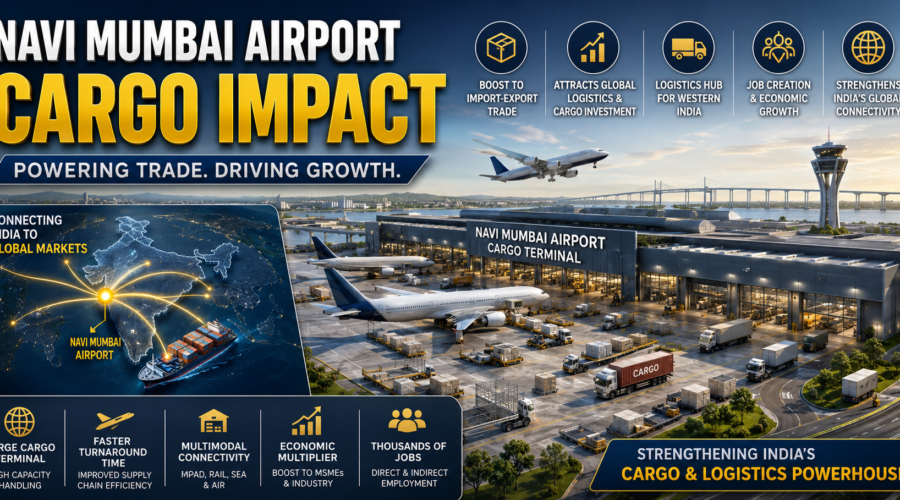
Navi Mumbai Airport Cargo Impact: How NMIA Is Reshaping Logistics in Western India
The Navi Mumbai International Airport cargo terminal launched Phase 1 operations with 0.5 million metric tonnes of annual handling capacity in early 2026 making it one of the most significant additions to India’s air freight infrastructure in years, and positioning western India as a genuine global logistics corridor.
If you are tracking how cargo economics shift in the Mumbai Metropolitan Region, or why businesses from MSMEs to multinationals are reorienting their supply chains toward the NMIA belt, this article explains the full picture.
NMIA's Cargo Infrastructure: What Exists Today
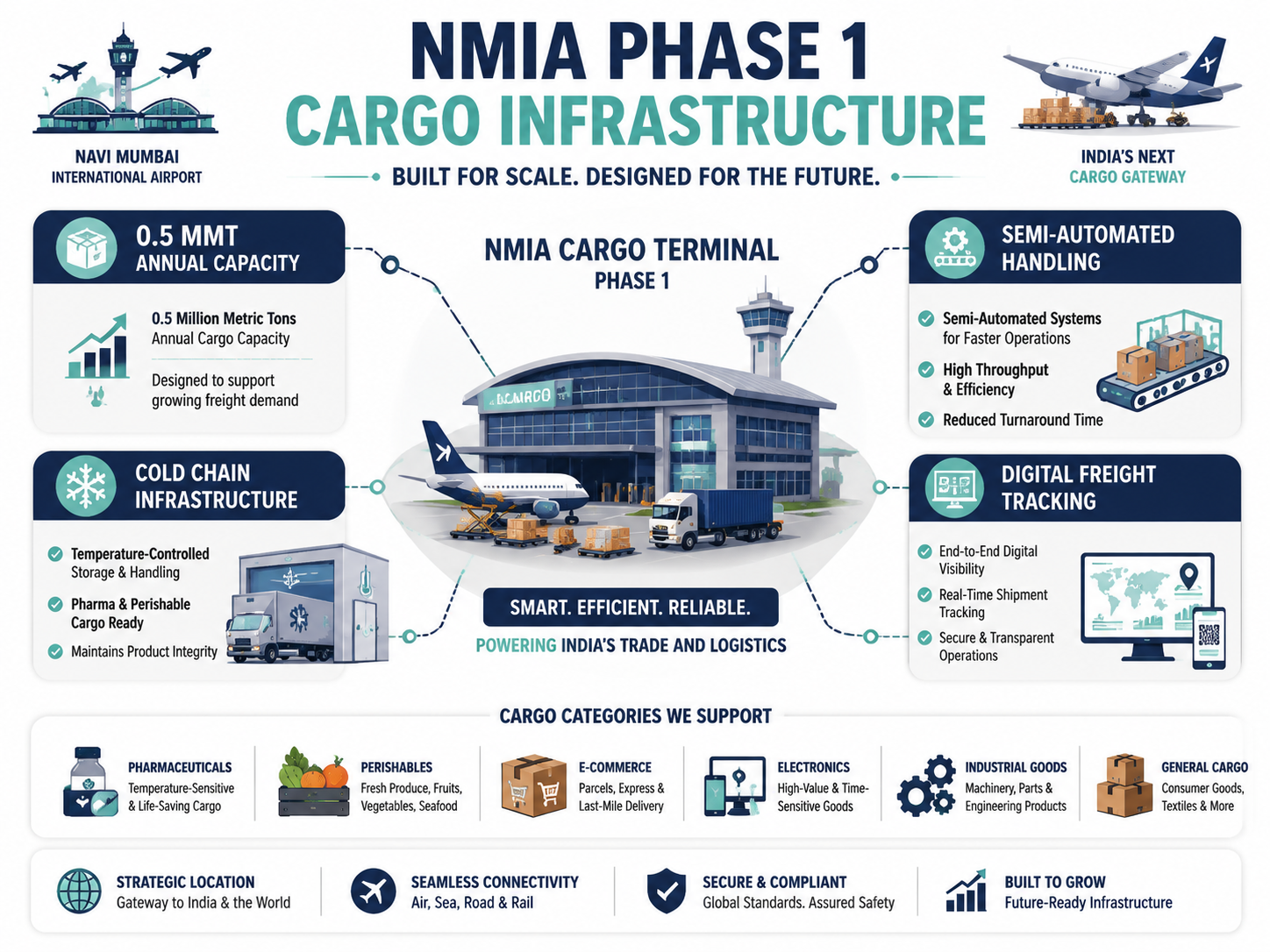
The D B Patil Navi Mumbai International Airport was designed with cargo as a core operational function, not an afterthought. From the beginning, CIDCO and Adani Airports Holdings built the facility’s infrastructure to serve both passenger and freight needs simultaneously.
Phase 1 Cargo Specifications
| Parameter | Detail |
|---|---|
| Phase 1 Cargo Capacity | 0.5 million metric tonnes per year (MMT) |
| Terminal Type | Semi-automated with digital tracking |
| Cold Chain Infrastructure | Yes (pharmaceutical and perishables focus) |
| Target Full Capacity | 3.2 MMT across all phases |
| Phase 1 Full Operational Date | January 2026 |
According to NMIA’s own operational statements, the airport was designed to be a “logistics hub, with cargo as a core focus” language that distinguishes it from passenger-first airports where freight is a secondary consideration.
The cargo terminal includes:
- Semi-automated material handling systems
- Cold chain logistics catering to pharmaceutical companies, fresh produce exporters, and e-commerce
- Temperature-controlled storage for perishable goods
- Digital tracking and integration with freight management systems
The FedEx Hub: What It Signals
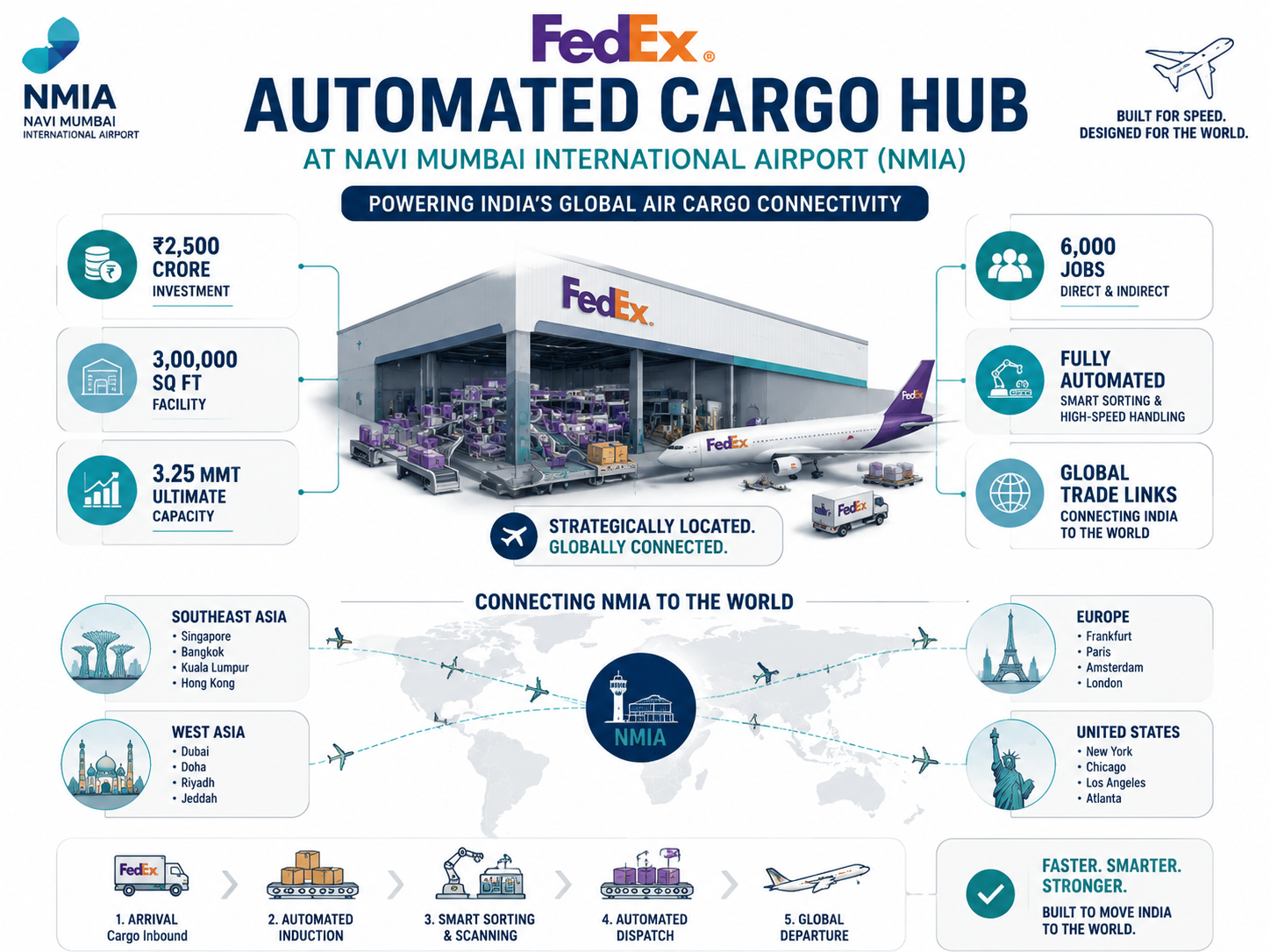
On February 18, 2026, FedEx and NMIA broke ground on a fully automated air cargo hub at the airport the single largest signal yet of how seriously global logistics players are treating NMIA’s strategic position.
The details are significant:
- Investment: ₹2,500 crore (long-term commitment)
- Facility size: 3,00,000 sq ft
- Ultimate handling capacity: 3.25 MMT annually
- Initial capacity: 0.5 MMT (scaling up in phases)
- Jobs created: More than 6,000 direct and indirect employment opportunities across logistics, warehousing, transportation, and allied services
- Developer partnership: Adani Airport Holdings Ltd (AAHL)
Maharashtra Chief Minister Devendra Fadnavis attended the groundbreaking and stated directly: “This will write history in the chapter of logistics.”
The hub is designed as a regional consolidation and redistribution center, connecting India to four major trade zones:
- Southeast Asia
- West Asia
- Europe
- United States
For FedEx, NMIA is not just a distribution point it is an integration node that places global network capability directly inside India’s primary western trade corridor.
The Mumbai Freighter Pause: Why It Matters for NMIA
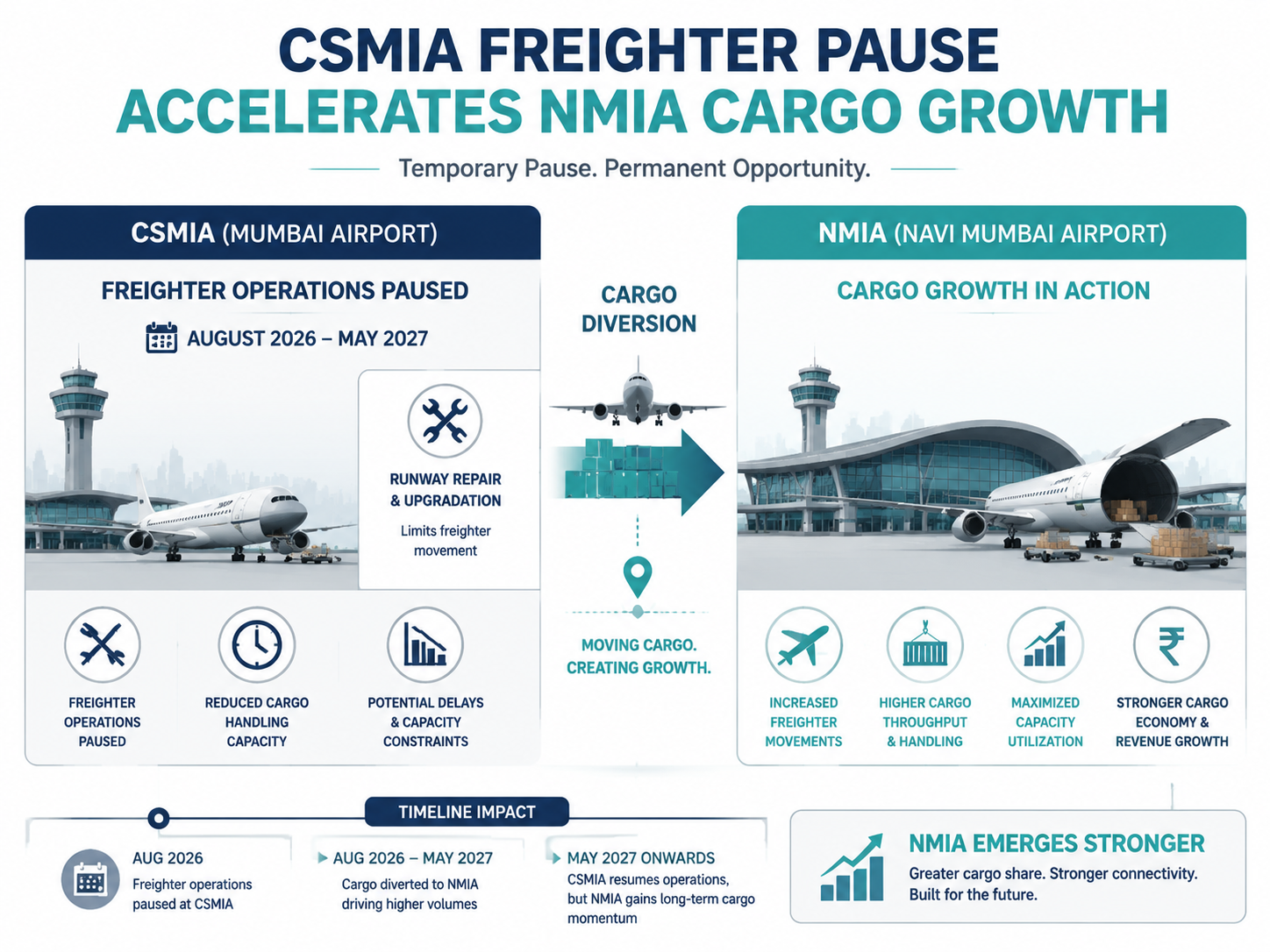
A significant, time-bound shift is accelerating NMIA cargo’s importance in 2026.
According to a formal notification issued by Mumbai International Airport (MIAL) in late December 2025, freighter operations at the Chhatrapati Shivaji Maharaj International Airport (CSMIA) in Mumbai are paused from August 2026 to May 2027 a ten-month window to re-carpet Runway 09/27, rebuild the ageing cargo apron, and construct Taxiway E.
This pause will:
- Reduce existing freighter capacity at CSMIA
- Increase freight yields and rates in the near term
- Force shippers to find alternative gateways for exports
NMIA is the natural destination for that diverted cargo volume. Also part of the Adani Group, NMIA is operationally positioned to absorb freighter movements that can no longer be handled at CSMIA during the upgrade window.
Industry observers note that “logistics ecosystem is not fully ready” at NMIA yet but the pace of development is accelerating precisely because of this window. The pause at CSMIA effectively brought forward NMIA’s cargo ramp-up by months.
What Sectors Benefit from NMIA Cargo
The airport’s cargo infrastructure is designed for specific high-value freight categories where air transport is either essential or strongly preferred.
Pharmaceuticals
Maharashtra is India’s largest pharmaceutical manufacturing hub. The combination of cold chain infrastructure, temperature-controlled storage, and direct international connections especially to West Asia, Southeast Asia, and eventually Europe makes NMIA a critical gateway for finished drug exports and active pharmaceutical ingredient (API) trade.
Perishable Goods
The Konkan and Raigad belts produce significant agricultural output. With cold chain capability built into Phase 1, NMIA allows local producers to access air freight routes that previously required overland transport to CSMIA adding cost, time, and temperature risk.
E-Commerce
India’s e-commerce exports are growing rapidly, and small parcel air freight is a high-growth segment. The FedEx hub’s automated systems are specifically designed for parcel-level sorting and redistribution, making NMIA a direct participant in the India-to-world e-commerce corridor.
MSME Exports
The FedEx announcement specifically cited improved reliability for micro, small, and medium enterprises. Lowering logistics costs and reducing turnaround times for MSME exporters has been a stated government priority, and NMIA’s position within the MMR gives regional manufacturers direct access to global freight routes without routing through CSMIA.
Scale Comparison: NMIA vs CSMIA
Understanding what NMIA’s cargo growth path means requires a comparison with the existing airport’s limitations.
| Metric | CSMIA (Mumbai Airport) | NMIA (Phase 1) | NMIA (Full Build) |
|---|---|---|---|
| Cargo Capacity | Approaching ceiling | 0.5 MMT/year | 3.2 MMT/year |
| Freighter Operations | Paused Aug 2026-May 2027 | Active and absorbing diverted freight | Full freighter hub |
| Automation Level | Legacy systems | Semi-automated | Fully automated (FedEx hub) |
| International Routes | Established | Domestic now; international from late 2026 | Full global network |
CSMIA is “fast approaching its operational ceiling,” according to NMIA’s own planning documents. When combined with the ten-month freighter pause, NMIA’s role as the region’s primary cargo gateway is not a future scenario it is an accelerating present reality.
Employment Impact of Cargo Operations
NMIA’s total employment projections across all phases stand at over 2 lakh (200,000) direct and indirect jobs. The cargo segment is a significant contributor to that figure.
The FedEx hub alone accounts for 6,000 direct and indirect roles. When the full 3.25 MMT cargo terminal ecosystem is operational, job categories will include:
- Cargo handlers and ramp agents
- Freight forwarders and customs brokers
- Cold chain logistics technicians
- Warehouse operations staff
- Transport and last-mile delivery personnel
- IT, tracking, and compliance roles
According to a detailed analysis published on I Love Navi Mumbai, NMIA cargo recruitment for 2026 is among the most searched job topics across Panvel, Ulwe, Karanjade, Dronagiri, and Uran with most hiring happening through logistics operators and ground handling agencies rather than direct airport postings. [verify current hiring portals and contract agencies for up-to-date vacancy information]
Real Estate Impact of the Cargo Ecosystem
The cargo and logistics build-up around NMIA is not contained to the airport boundary. It is driving demand for industrial land, warehousing space, and residential housing in the surrounding nodes.
Warehousing leasing in the Panvel and JNPT-Uran road submarket grew 8-9% year-over-year as of mid-2025, with plot values showing strong appreciation. The broader MMR warehousing leasing market increased by 31% in the second half of 2024.
Logistics parks within NAINA’s master plan are planned adjacent to the cargo terminal, creating a dedicated freight corridor that will attract:
- Third-party logistics (3PL) operators
- Cold storage facilities
- Bonded warehousing
- Industrial units serving cargo-dependent manufacturing
Areas like Dronagiri and Karanjade which sit at the intersection of JNPT port logistics and NMIA air freight are gaining particular attention from industrial and warehousing developers.
The Long-Term Positioning: Why NMIA Cargo Matters Nationally
Chief Minister Fadnavis has publicly linked NMIA’s cargo infrastructure to Maharashtra’s vision of becoming a $5 trillion economy by 2047. That scale of ambition reflects how seriously the state government is treating the airport’s freight function.
India’s national aviation cargo volume is projected to triple to 10 million tonnes by 2030. Mumbai Metropolitan Region handles a significant share of western India’s air freight. As CSMIA approaches capacity constraints and NMIA scales up, the region’s combined cargo throughput positions it alongside established Asian logistics hubs.
The FedEx investment in particular is a validation signal. A global logistics operator choosing to commit ₹2,500 crore for a 3,00,000 sq ft automated facility does not do so on speculation. It reflects a long-term assessment of NMIA’s connectivity, regulatory environment, and growth trajectory.
FAQs
Frequently Asked Questions
What is NMIA’s current cargo capacity?
What is the FedEx hub at NMIA?
How does the CSMIA freighter pause affect NMIA?
What types of cargo does NMIA handle?
How many jobs will NMIA cargo operations create?
FAQs
Frequently Asked Questions