
Karnala Fort Panvel Navi Mumbai – History, Trek Guide & Location
Karnala Fort stands high above the forests of Raigad district, rising from the dense greenery of Karnala Bird Sanctuary near Panvel. At an elevation of about 439 meters above sea level, this fort has served as a strategic military outpost for centuries. Its position on a volcanic hill made it one of the most naturally protected forts in the Konkan region, offering unmatched visibility over trade routes and surrounding territories.
Unlike many forts that existed only for defensive purposes, Karnala Fort played a critical role in controlling one of the most important trade routes connecting the Konkan coast to the Deccan Plateau. For centuries, empires including the Yadavas, Portuguese, Marathas, Mughals, and British fought to control this fort, making it a key military and economic asset in western India.
Quick Overview of Karnala Fort
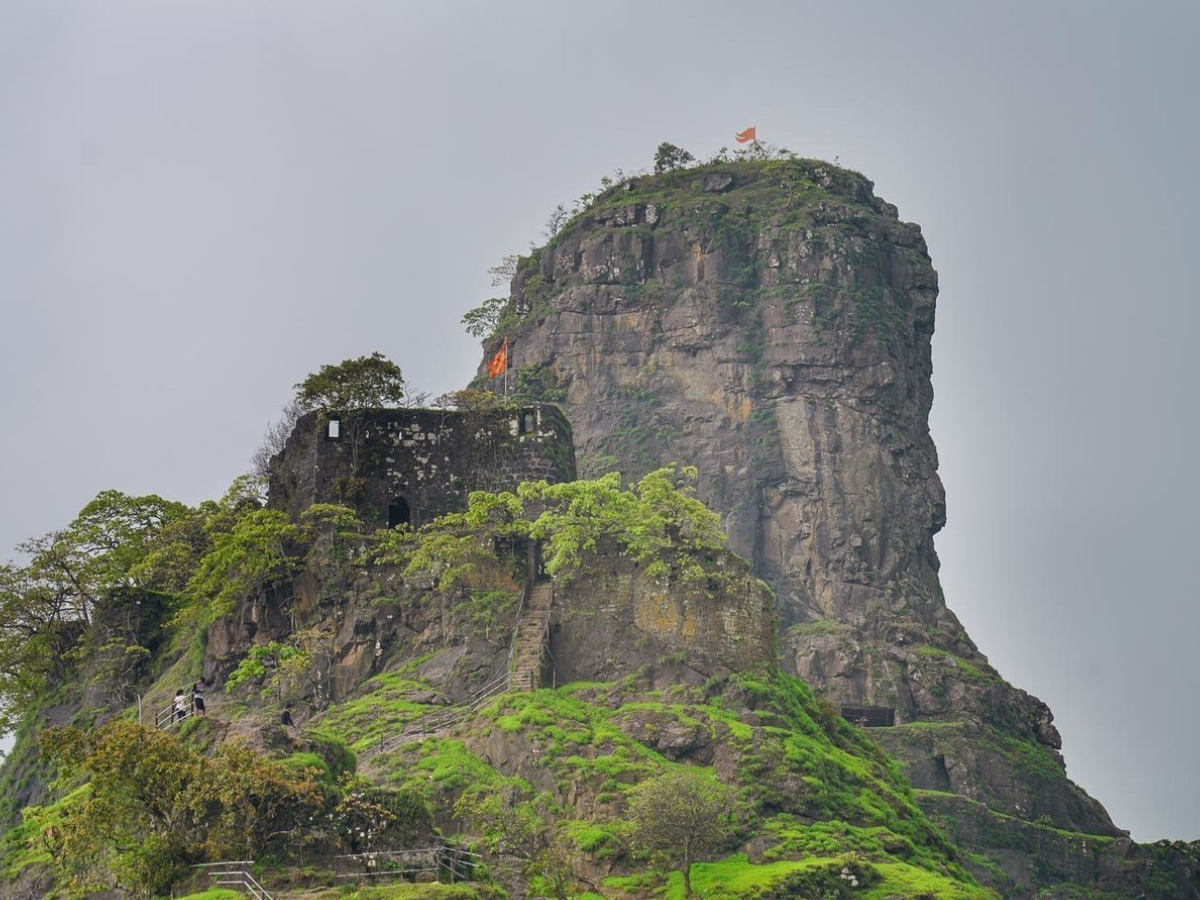
Karnala Fort is a historic hill fort located within Karnala Bird Sanctuary, approximately 10 kilometers from Panvel in Navi Mumbai’s Raigad district. The fort is famous for its unique thumb-shaped volcanic pinnacle known as Pandu Tower, which rises dramatically above the main fort plateau. This geological formation provided a natural watchtower, making the fort extremely difficult to attack.
Today, Karnala Fort is both a historical monument and an ecological landmark. It attracts trekkers, historians, and wildlife enthusiasts due to its combination of historical ruins and rich biodiversity. The fort remains protected as part of Karnala Bird Sanctuary, preserving both its cultural heritage and natural ecosystem.
Geographic Location and Strategic Position of Karnala Fort
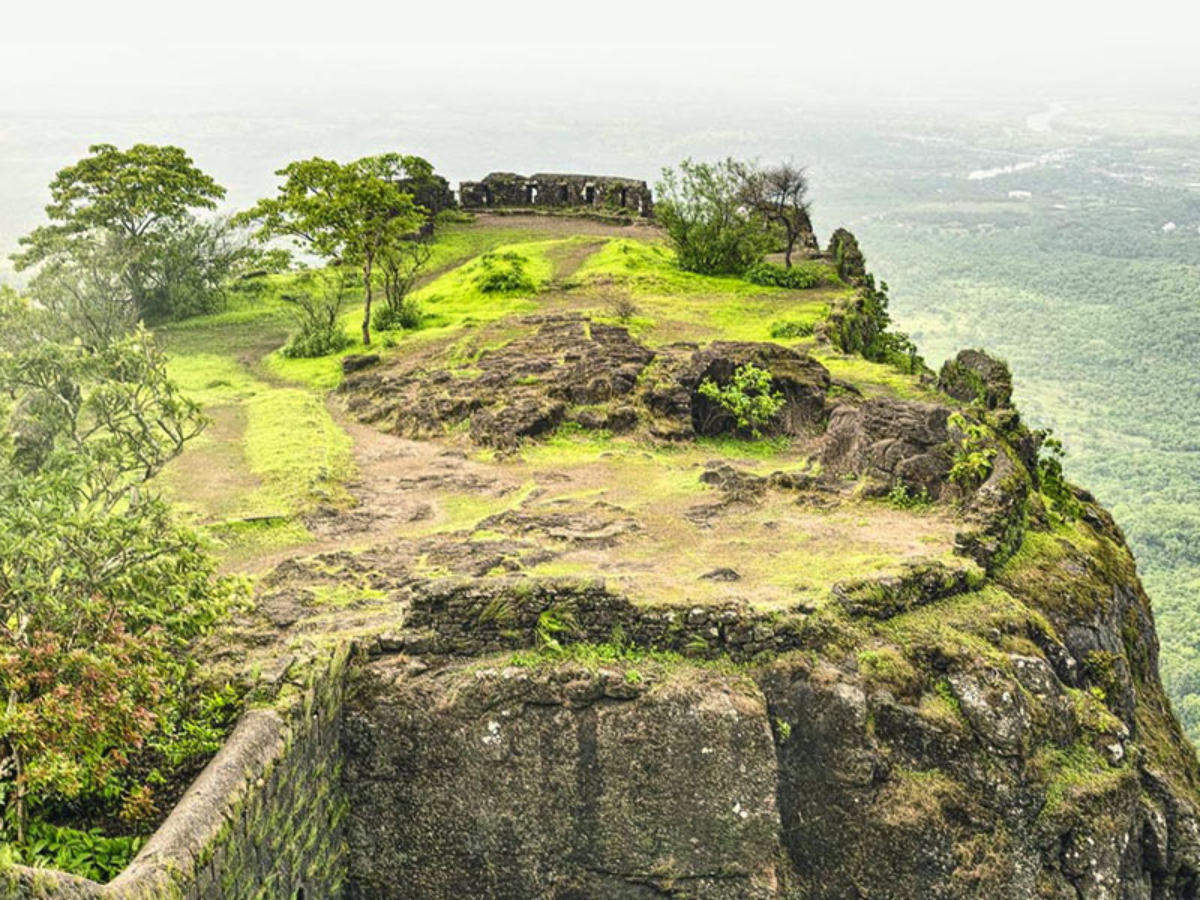
Karnala Fort is located in the Raigad district of Maharashtra, within the Karnala Bird Sanctuary, which covers an area of approximately 12.11 square kilometers. The fort is built on a volcanic hill formation that rises sharply from the surrounding plains, giving it a commanding position over the region. Its elevation and isolated hill structure made it an ideal location for surveillance and defense.
This fort overlooks the historic Bor Pass, also known as Bhor Ghat, which was one of the main routes connecting the coastal Konkan region with inland cities such as Pune and Ahmednagar. Control over this pass allowed rulers to monitor trade, collect taxes, and prevent enemy invasions, making Karnala Fort one of the most strategically valuable forts in western India.
Geological Formation and Natural Defense Advantage
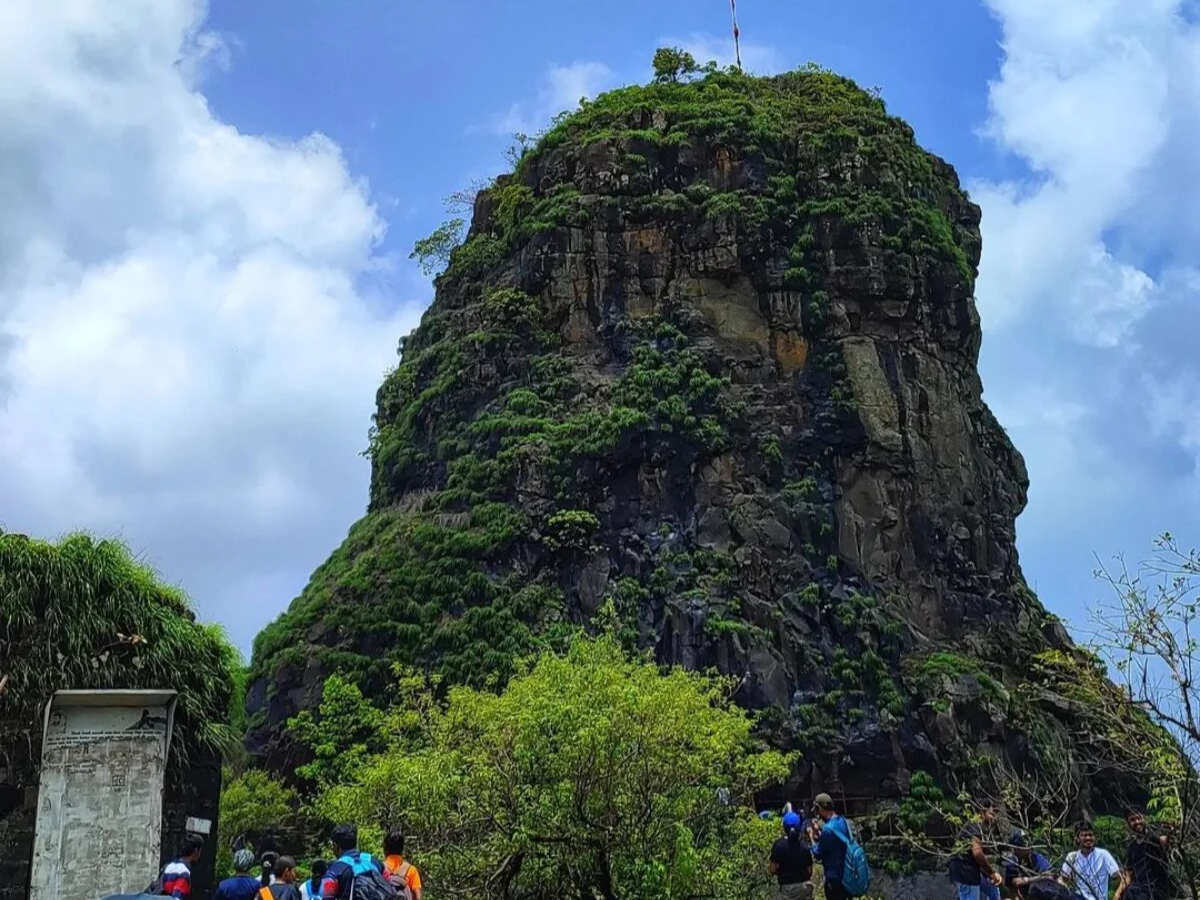
One of the most unique features of Karnala Fort is its geological structure. The fort is built on a volcanic plug formed millions of years ago during the Deccan Traps volcanic activity. This plug consists of hardened basalt rock that resisted erosion, leaving behind a steep, isolated hill formation ideal for military fortification.
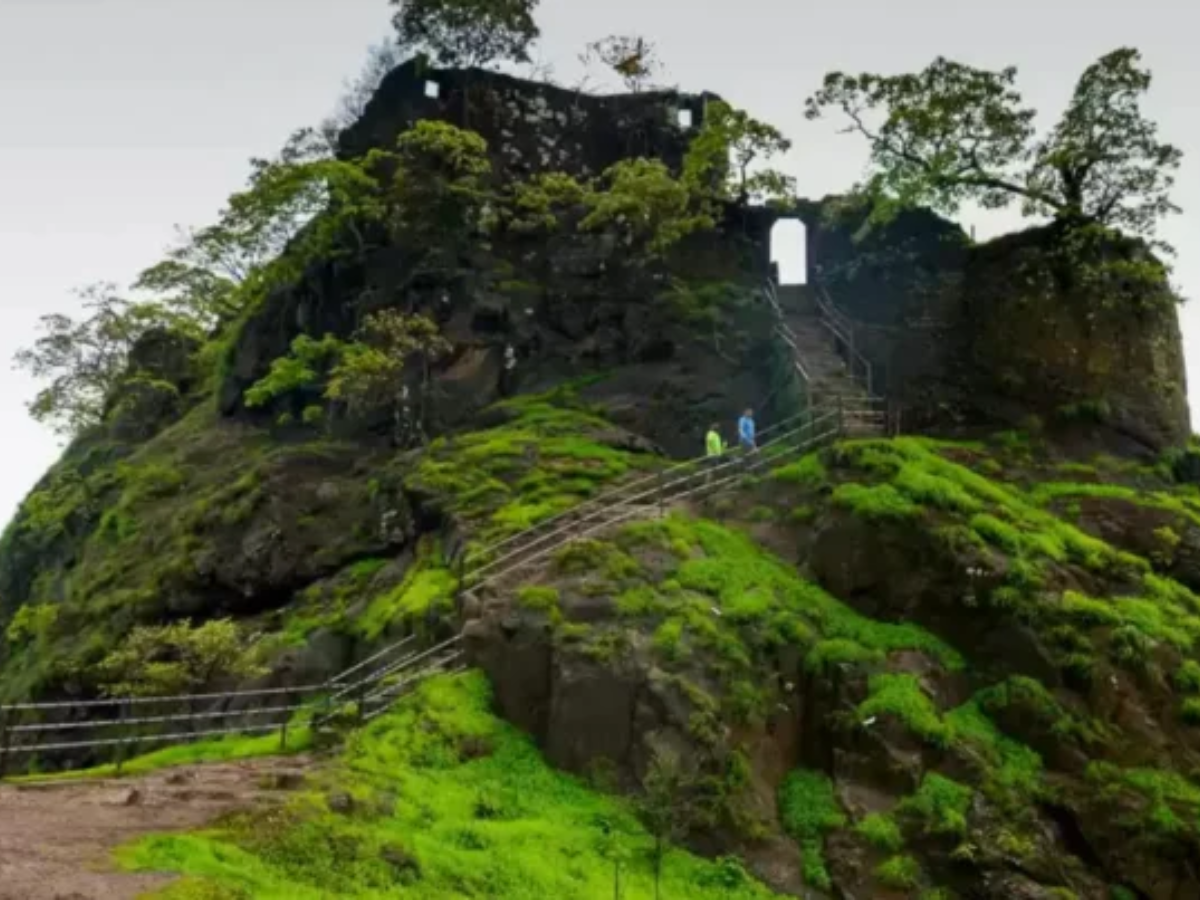
The steep vertical slopes and rocky terrain made direct attacks extremely difficult. Enemy forces would have to climb narrow paths while exposed to defenders positioned above, giving a significant defensive advantage to fort occupants. This natural protection reduced the need for extensive artificial defensive walls, making Karnala Fort a perfect example of terrain-based military engineering.
Strategic Importance of Karnala Fort in Trade Route Control
Karnala Fort played a crucial role in protecting the Bor Pass trade route, which connected coastal ports with inland economic centers. Merchants transporting goods such as spices, textiles, and precious metals had to pass through this route, making it a valuable economic corridor. By controlling the fort, rulers could regulate trade and generate revenue through taxation.
The fort also served as a military checkpoint, allowing rapid deployment of soldiers to defend trade routes or intercept enemy forces. Its elevated position provided clear visibility of surrounding areas, enabling early detection of approaching armies or caravans. This made Karnala Fort both an economic and military stronghold.
Early History of Karnala Fort and Yadav Dynasty Construction
The earliest known fortifications at Karnala Fort are believed to have been built during the rule of the Devagiri Yadava dynasty between the 13th and early 14th centuries. During this period, the Konkan region was an important coastal province, and forts like Karnala were constructed to protect trade routes and maintain administrative control. The Yadavas were known for building hill forts with strong water management systems, and the rock-cut cisterns at Karnala reflect their engineering expertise.
After the decline of the Yadava dynasty due to invasions from the Delhi Sultanate, the fort came under the control of the Tughlaq rulers. Despite the change in power, Karnala Fort continued to function as an administrative and military center, maintaining its strategic importance in controlling access between coastal and inland regions.
Gujarat Sultanate and Nizam Shahi Conflict Over Karnala Fort
During the early 16th century, Karnala Fort came under the control of the Gujarat Sultanate, which dominated much of the western coastal region. However, the growing power of the Nizam Shahi rulers of Ahmednagar led to military conflicts over control of important forts like Karnala. In 1540, the Nizam Shah launched a successful military campaign and captured Karnala Fort, gaining control over the critical trade route.
This shift in control alarmed the Gujarat Sultanate, which relied heavily on coastal trade and needed to maintain its influence over inland routes. The loss of Karnala Fort weakened their strategic position, forcing them to seek external military assistance to regain control of the region.
Portuguese Capture and Military Control of Karnala Fort
To reclaim Karnala Fort, the Gujarat Sultanate sought help from the Portuguese, who had established a strong military presence along the western coast of India. Portuguese forces led by Dom Francisco de Menenzes launched a military campaign with approximately 500 soldiers. Despite being smaller in number compared to local armies, the Portuguese had superior firearms and military discipline.
The Portuguese successfully captured Karnala Fort and established their military presence there. However, maintaining control over an inland hill fort proved difficult and costly. Eventually, the Portuguese agreed to return the fort to the Nizam Shah in exchange for financial compensation, demonstrating how forts like Karnala were treated as valuable strategic and economic assets.
Shivaji Maharaj’s Capture of Karnala Fort and Maratha Rule
In the 17th century, Karnala Fort became an important target for Chhatrapati Shivaji Maharaj during his campaign to establish Swarajya. Recognizing its strategic importance in controlling trade routes and military movement, Shivaji Maharaj launched an offensive to capture the fort. In 1670, his forces successfully conquered Karnala Fort using tactical warfare and siege strategies.
Shivaji Maharaj strengthened the fort’s defenses and integrated it into the Maratha military network. The fort played an important role in protecting Maratha territories and ensuring control over the Bor Pass trade route. Under Maratha rule, Karnala Fort became part of a larger defensive system designed to protect the Konkan region from enemy invasions.
Mughal Capture and Administrative Control of the Fort
Following the death of Shivaji Maharaj, the Mughal Empire launched major military campaigns to capture Maratha forts. Karnala Fort was eventually captured by Mughal forces during their expansion into the Deccan region. The Mughal administration maintained control of the fort and made modifications to its structure, including repairs and improvements to its gateways.
A Persian inscription found at the fort confirms Mughal administrative involvement and renovation efforts. This inscription provides important historical evidence of Mughal control and highlights the continued strategic importance of Karnala Fort even during changing political conditions.
Maratha Recapture and Final British Conquest of Karnala Fort
In the mid-18th century, the Marathas regained control of Karnala Fort under the leadership of the Peshwas. The fort continued to function as a military outpost, helping protect Maratha territories and trade routes. However, this period of Maratha control ended during the Third Anglo-Maratha War in 1818.
British forces led by Colonel Prother attacked Karnala Fort using heavy artillery. Unlike earlier battles, British cannons caused severe structural damage, breaking defensive walls and forcing the defenders to surrender. After capturing the fort, the British partially destroyed its defenses to prevent future rebellions, leading to the ruined condition visible today.
Architecture of Karnala Fort and Its Military Layout
Karnala Fort is a classic example of Giri Durg, or hill fort architecture, where natural terrain plays a major role in defense. Instead of relying entirely on artificial walls, the fort’s builders used the steep volcanic hill structure as a natural barrier against enemy attacks. This significantly reduced vulnerability and made it difficult for invading forces to approach the fort directly.
The fort is divided into two main sections: the lower fort and the upper citadel. The lower section served as the primary residential and operational area for soldiers, containing storage areas, defensive walls, and access routes. The upper citadel, located at a higher elevation, functioned as the final defensive position and observation point, ensuring complete control over the surrounding landscape.
Pandu Tower – The Most Unique Feature of Karnala Fort
The most distinctive feature of Karnala Fort is the towering basalt pinnacle known as Pandu Tower. This vertical rock formation rises approximately 125 feet above the fort plateau and was formed millions of years ago through volcanic activity. Its hardened basalt composition resisted erosion, leaving behind a strong natural pillar that became an integral part of the fort’s defensive structure.
This pinnacle served as a natural watchtower, allowing guards to observe enemy movement across large distances. From this elevated vantage point, defenders could monitor trade routes, nearby forts, and surrounding territories. The natural height and steep vertical structure made it nearly impossible for enemy forces to climb, adding a powerful natural defense advantage.
Bastions, Defensive Walls, and Fort Entry Points
Karnala Fort’s defensive system included multiple bastions strategically positioned to protect access routes and provide surveillance capabilities. These bastions allowed soldiers to monitor approaching enemy forces and defend key entry points. The fort’s elevated terrain further enhanced its defensive strength, making direct attacks extremely challenging.
The entrance gateway of the fort features important architectural elements, including symbolic carvings and structural reinforcements. These gateways were designed not only for access control but also to display the strength and authority of the ruling power. Their strategic placement ensured that attackers remained exposed while attempting to enter the fort.
Sharabha Symbol and Cultural Architecture of the Fort
One of the most important architectural features of Karnala Fort is the Sharabha symbol carved on the entrance gateway. The Sharabha is a mythical creature in Hindu tradition, representing strength, protection, and supreme power. This symbol was commonly used in fort architecture to demonstrate the ruler’s authority and ability to defeat enemies.
The presence of this symbol reflects the cultural and religious influence of the rulers who controlled the fort. Along with carvings of lions and elephants, these symbols served as visual representations of strength and protection, reinforcing the fort’s role as a powerful military and administrative center.
Water Storage System and Rock-Cut Cistern Engineering
Water supply was one of the most critical factors in the survival of any hill fort, and Karnala Fort featured advanced water storage systems. The builders created multiple rock-cut cisterns directly into the basalt rock, allowing the fort to store rainwater and access natural underground sources. This ensured a continuous water supply even during long military sieges.
These cisterns were carefully designed to preserve water quality and prevent contamination. Some of these ancient water tanks still hold fresh water today, demonstrating the engineering skill and hydrological knowledge of the fort’s builders. This reliable water system allowed the fort to sustain large military garrisons for extended periods.
Internal Structures and Military Functional Areas
Inside Karnala Fort, different sections were designed for specific military and operational purposes. Storage areas were used to keep weapons, ammunition, and food supplies safe from enemy attacks and environmental damage. Residential areas provided space for soldiers and commanders stationed at the fort.
Observation points and elevated platforms allowed continuous surveillance of surrounding territories. These functional areas ensured that the fort could operate efficiently as a military installation while maintaining defensive readiness at all times. The layout reflects careful planning and strategic military design.
Karnala Bird Sanctuary and Its Ecological Importance
Karnala Fort is located within the Karnala Bird Sanctuary, one of the most important protected forest areas in Maharashtra. Established in 1968, the sanctuary covers approximately 12.11 square kilometers and was created to protect the region’s rich biodiversity and forest ecosystem. This sanctuary represents one of the last remaining green zones in the rapidly urbanizing Panvel and Navi Mumbai region.
The sanctuary plays a vital role in maintaining ecological balance by preserving native vegetation and wildlife habitats. The presence of Karnala Fort within this protected forest adds historical importance to the region while ensuring that the surrounding environment remains largely undisturbed. This combination of heritage and ecology makes Karnala a unique destination where history and nature coexist.
Bird Species and Wildlife Found Around Karnala Fort
Karnala Bird Sanctuary is internationally recognized for its rich bird diversity, with more than 200 species recorded in the region. The sanctuary lies along the Central Asian Flyway, an important migration route used by birds traveling between Asia and the Indian subcontinent. During winter, migratory birds such as the Ashy Minivet and Black-naped Oriole can be seen in the forest.
In addition to birds, the sanctuary is home to mammals such as langurs, wild boars, jungle cats, and occasionally leopards. The forest also supports reptiles, butterflies, and various plant species, creating a complex ecosystem. This biodiversity enhances the significance of Karnala Fort, as it exists within one of the most important wildlife habitats in western India.
Trekking Experience at Karnala Fort and Route Details
Karnala Fort is considered one of the best trekking destinations near Navi Mumbai due to its accessible location and moderate difficulty level. The trekking route begins from the entrance of Karnala Bird Sanctuary and passes through dense forest, offering a peaceful and natural environment. The trek distance is approximately 2.7 kilometers and takes around two hours to reach the fort.
The trail includes gradual inclines, rocky patches, and shaded forest paths, making it suitable for beginners and experienced trekkers. Safety features such as railings and marked paths help visitors navigate difficult sections. The trekking experience offers a balance of adventure, history, and nature, making Karnala Fort a popular weekend destination.
View from the Top of Karnala Fort and Strategic Visibility
The top of Karnala Fort offers panoramic views of the surrounding Sahyadri mountain range, Panvel region, and nearby forest areas. From this elevated position, visitors can clearly see why the fort was originally built at this location. The height and visibility allowed defenders to monitor enemy movement and protect important trade routes.
This viewpoint also provided visual communication with nearby forts such as Prabalgad and Manikgad. In historical times, signals such as smoke or fire were used to communicate between forts, creating a defensive network across the region. Today, the same viewpoint provides visitors with a clear understanding of the fort’s military importance.
Cultural and Religious Importance of Karnala Fort
Karnala Fort holds cultural significance beyond its military history. At the base of the fort, there is a temple dedicated to Goddess Bhavani, who is closely associated with Maratha history and Chhatrapati Shivaji Maharaj. Local legends suggest that the goddess blessed Shivaji Maharaj during his campaign to establish Swarajya.
There is also a shrine dedicated to Karmaidevi along the trekking route, which is worshipped by local tribal communities. These religious sites reflect the deep spiritual connection between the fort and local culture, making it an important place for both historical and cultural heritage.
Karnala Fort as a Modern Tourism and Heritage Destination
Today, Karnala Fort has become one of the most popular trekking and heritage destinations near Navi Mumbai. Its combination of historical ruins, forest environment, and scenic views attracts visitors from Mumbai, Navi Mumbai, and surrounding areas. The fort offers an opportunity to experience history while exploring natural landscapes.
Despite its ruined condition, the fort continues to serve as an educational and tourism site. Visitors can learn about the region’s history, military architecture, and ecological importance. Karnala Fort remains an important landmark connecting modern Navi Mumbai with its historical past.
How to Reach Karnala Fort – Complete Transport and Location Guide
Karnala Fort is located approximately 10 kilometers from Panvel in Raigad district and can be easily accessed by both road and rail. The nearest railway station is Panvel, which is a major junction connecting Mumbai, Navi Mumbai, and Pune. From Panvel, visitors can reach Karnala Bird Sanctuary by auto-rickshaw, taxi, or private vehicle within 20 to 30 minutes.
The fort is also located near National Highway 66, making it easily accessible by road from Mumbai, Navi Mumbai, and Pune. Visitors traveling by car can park near the Karnala Bird Sanctuary entrance and begin the trek from there. This convenient accessibility makes Karnala Fort one of the most reachable historical trekking destinations near Navi Mumbai.
Entry Fees, Timings, and Visitor Rules at Karnala Fort
Karnala Fort falls within Karnala Bird Sanctuary, and visitors must enter through the sanctuary gate. Entry is generally permitted from 7:00 AM to 4:00 PM, allowing sufficient time for trekking and exploration. Visitors are required to exit the sanctuary before evening to ensure safety and wildlife protection.
A nominal entry fee is charged by the Forest Department, along with additional charges for parking and cameras. Strict environmental rules are enforced, including restrictions on plastic usage, to protect the sanctuary’s ecosystem. These regulations help maintain the natural and historical integrity of the area.
Best Time to Visit Karnala Fort for Trekking and Exploration
The best time to visit Karnala Fort is between October and February, when the weather is cooler and more comfortable for trekking. During this period, the forest environment is pleasant, and visibility from the fort is clear. Winter is also an ideal time for birdwatching, as many migratory species visit the sanctuary.
The monsoon season between June and September transforms the region into a lush green landscape, making it visually attractive. However, trekking during heavy rainfall requires caution due to slippery trails. Despite seasonal variations, Karnala Fort remains accessible throughout the year.
Hidden Facts About Karnala Fort Most Visitors Don’t Know
One of the most fascinating facts about Karnala Fort is that its famous Pandu Tower is actually a volcanic formation created millions of years ago. This geological structure provided a natural defensive advantage, allowing soldiers to monitor surrounding territories without requiring artificial watchtowers. This natural defense made the fort extremely difficult to capture.
Another lesser-known fact is that Karnala Fort was part of a larger network of forts used for visual communication. Soldiers used smoke and fire signals to communicate with nearby forts such as Prabalgad and Manikgad. This system allowed rapid transmission of information across large distances, strengthening regional defense.
Conservation Challenges and Protection Status of Karnala Fort
Karnala Fort is protected as part of Karnala Bird Sanctuary, but it faces conservation challenges due to natural weathering and human impact. Heavy rainfall, vegetation growth, and aging structures have caused gradual deterioration of walls and gateways. Preservation efforts are necessary to protect the fort’s remaining structures.
The sanctuary’s protected status helps limit human interference and ensures environmental protection. However, continued conservation efforts are essential to preserve both the fort and its surrounding ecosystem. Proper management will help protect this historical monument for future generations.
FAQs About Karnala Fort Navi Mumbai
Who built Karnala Fort and when was it constructed?
Karnala Fort was originally built by the Devagiri Yadava dynasty before the 14th century. The fort was constructed to protect trade routes connecting coastal Konkan with inland regions. Its strategic location made it an important military and administrative center.
Over time, the fort was controlled by various rulers including the Portuguese, Marathas, Mughals, and British. Each ruling power contributed to its development and military importance.
What is the height of Karnala Fort?
Karnala Fort is located at an elevation of approximately 439 meters above sea level. This height provided a strong strategic advantage by allowing defenders to monitor surrounding territories and trade routes.
The elevated position also made the fort difficult to attack, as enemy forces had to climb steep slopes while exposed to defenders.
How difficult is the Karnala Fort trek?
The Karnala Fort trek is considered easy to moderate in difficulty. The trekking distance is approximately 2.7 kilometers and usually takes around two hours to reach the top.
The trail passes through forest terrain and rocky sections, making it suitable for beginners with basic fitness levels.
Why is Karnala Fort important in history?
Karnala Fort was important because it controlled the Bor Pass trade route connecting coastal and inland regions. This allowed rulers to monitor trade and defend their territories.
The fort played a major role in military operations and economic control for centuries, making it one of the most strategic forts in the region.
Conclusion – Karnala Fort as the Historic Guardian of Konkan Trade Routes
Karnala Fort stands as one of the most important historical landmarks in the Navi Mumbai region, representing centuries of military, economic, and cultural history. Its strategic location, natural defensive structure, and role in controlling trade routes made it a vital asset for multiple empires.
Today, the fort continues to serve as a symbol of the region’s historical legacy and ecological importance. Preserving Karnala Fort ensures that future generations can experience and understand the rich heritage and natural beauty of Navi Mumbai and the Konkan region.