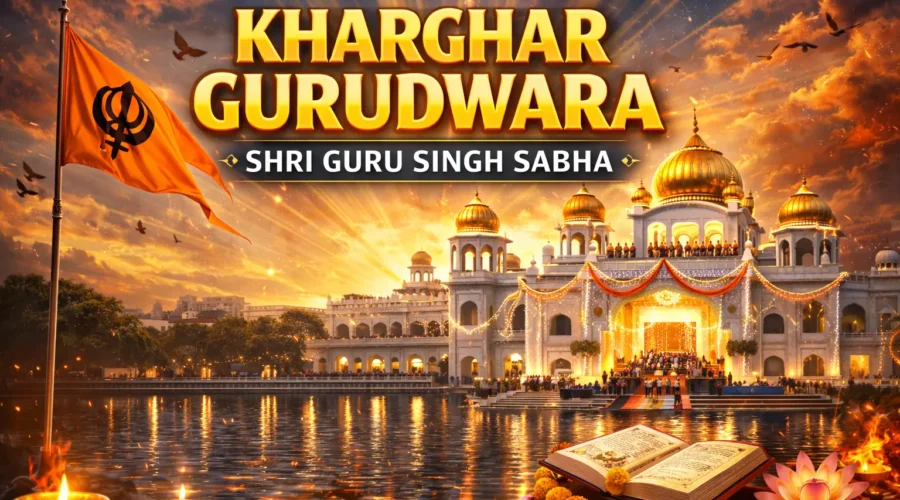
Kharghar Gurudwara Shri Guru Singh Sabha – Timings, Langar, History & Samagam
Kharghar has many landmarks, but Gurudwara Shri Guru Singh Sabha stands out for a different reason. It is not only a place of prayer, it is also one of the strongest “service centres” in the node, where sangat, seva, and langar feel like daily life, not a special event.
This guide is written for real visitor intent: where it is, how to reach it, what to expect inside, and what will change during the massive 2026 gathering in Kharghar. You will find practical details first, and the deeper story right after, so the page stays useful and rank-ready.
Quick Summary Table
| Topic | Details |
|---|---|
| Official Name | Gurudwara Shri Guru Singh Sabha Kharghar |
| Local Area | Sector 12, ahead of Central Park side (Kharghar belt) |
| Best For | Prayer (Diwan), Langar, community seva, peaceful visit |
| Big 2026 Update | 350th Shaheedi Samagam finale in Kharghar on 28 Feb & 1 Mar 2026 |
| Main Event Venue | Owe Maidan (major gathering venue) |
| Crowd Expectation | Very high footfall across two days; large-scale arrangements planned |
| Visitor Rule Basics | Head covered, footwear removed, respectful silence during prayers |
| Why This Guide Matters | Clear directions + real visitor planning + verified event context |
Gurudwara Shri Guru Singh Sabha Kharghar Overview
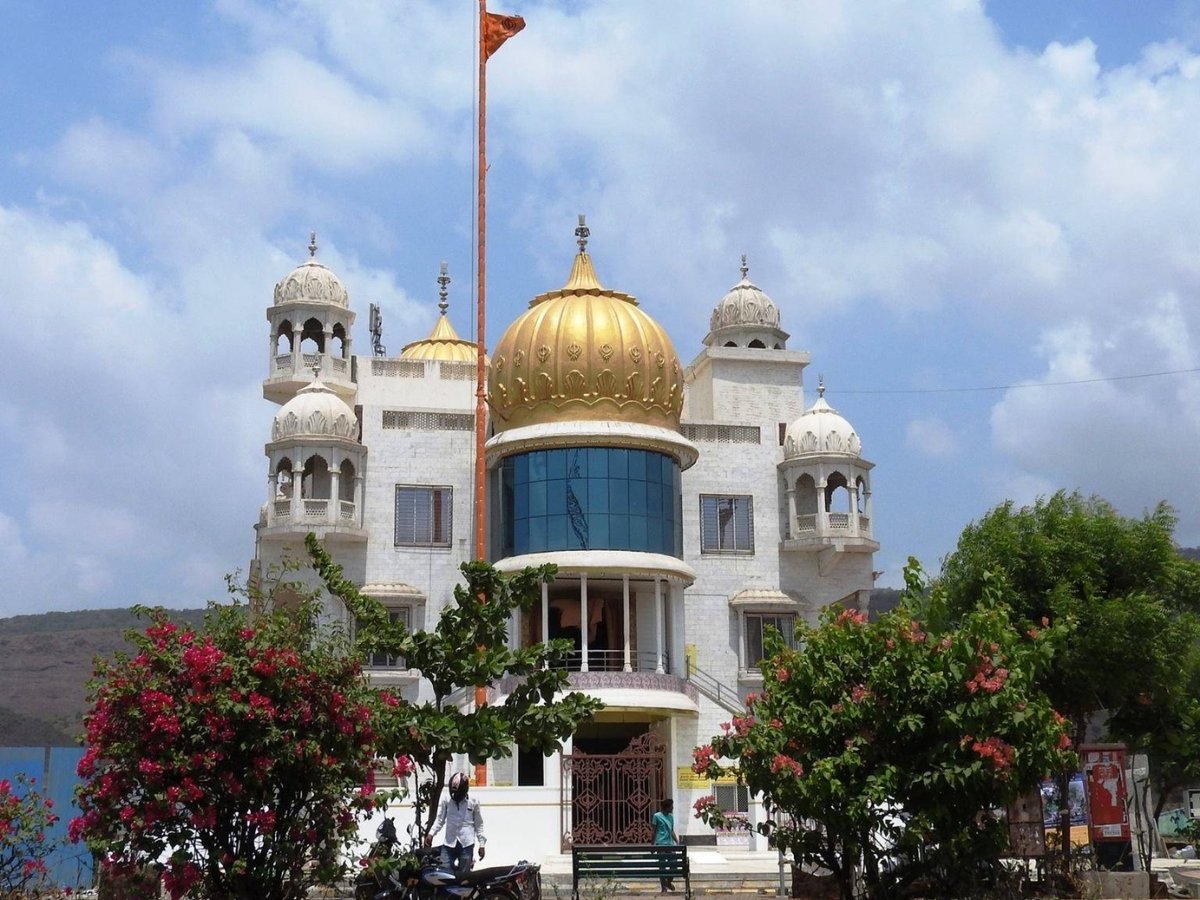
Kharghar Gurudwara is a community-rooted Sikh place of worship that grew alongside Navi Mumbai’s planned expansion. It began when the Sikh families of early Kharghar needed a shared space for daily prayers, and it gradually developed into a full institution with a strong public service role.
What makes it important in 2026 is scale. The gurudwara is closely linked to the final, state-level commemoration of Guru Tegh Bahadur Sahib Ji’s 350th martyrdom anniversary, with Kharghar positioned as the key host node for the finale gathering.
Where is it Located in Kharghar?
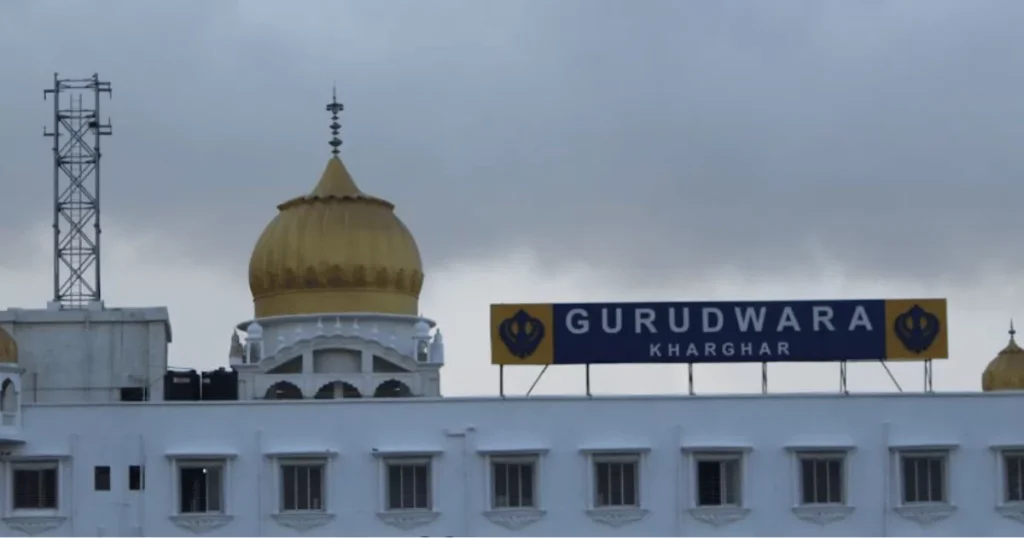
As per your research notes, the gurudwara is in the Sector 12 belt, described as ahead of Central Park, Kharghar, which is one of the easiest ways locals explain the approach. This “Central Park side” reference matters because it helps visitors choose the correct entry route and avoid unnecessary loops.
For a first-time visitor, the best mental map is simple: keep Kharghar as your node, use Central Park as the anchor landmark, and approach Sector 12 with extra buffer time on weekends. During major programs, the same belt becomes a movement corridor for devotees, volunteers, and traffic diversions.
Location
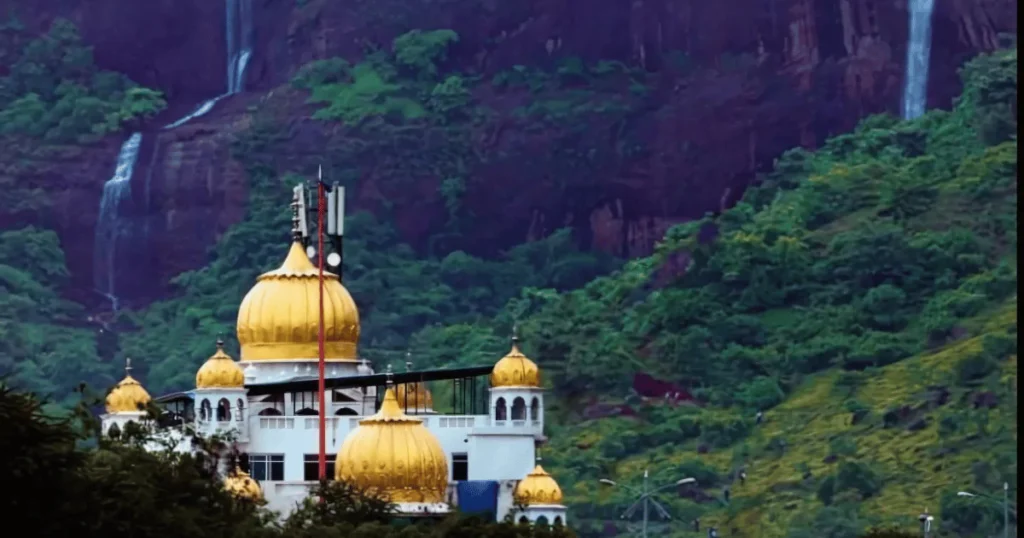
Kharghar is accessible via the Mumbai suburban network and the Navi Mumbai transit ecosystem, and your research confirms that public transport usage is actively encouraged during the 2026 event planning. For normal days, visitors typically come through Kharghar’s main access points and then use local autos for the final sector approach.
For the 2026 Shaheedi Samagam days, the on-ground plan includes organised drop points and pedestrian movement corridors towards the main venue zone. If you are visiting around the event dates, plan like a local: arrive early, keep walking comfort in mind, and assume parking will mean a short walk rather than doorstep access.
How to reach from Kharghar Gurudwara Shri Guru Singh Sabha to NMIA
By Car
| Route Type | Distance (km) | Travel Time | Key Landmarkers |
|---|---|---|---|
| Route 1 (via Sion-Panvel Hwy) | 16.8 km | 31 min | Tata Cancer Hospital, Utsav Chowk, NH348A |
| Route 2 (via Palm Beach Rd) | 14.7 km | 31 min | Bharti Vidyapeeth, MGM Hospital, Palm Beach Road |
Note: These all routes are also available to NIMA to Kharghar Gurudwara
By Bus
| Route Option | First Bus (to Belapur/CBD) | Transfer Point | Airport Shuttle | Total Time & Cost |
|---|---|---|---|---|
| Option 1 | Bus 52 (from Raghunath Vihar) | Belapur Railway Station | A-3 Shuttle | 1 hr 18 min | ₹41 |
| Option 2 | Bus 22AC (from Shilp Chowk) | Reti Bandar | A-4 Shuttle | 1 hr 10 min | ₹50 |
| Option 3 | Bus 55AC (from Shilp Chowk) | Belapur CBD | A-3 Shuttle | 1 hr 22 min | ₹45 |
| Option 4 | Bus 125AC (from Shilp Chowk) | Reti Bandar | A-3 Shuttle | 1 hr 14 min | ₹53 |
| Option 5 | Bus 22AC (from Shilp Chowk) | Central Bank CBD | A-3 Shuttle | 1 hr 17 min | ₹48 |
Note: These all routes are also available to NIMA to Gurudwara Kharghar
How to reach from Kharghar Gurudwara Shri Guru Singh Sabha to Railway Station
By Car
| Route Details | Fastest Route | Alternative Route |
|---|---|---|
| Total Distance | 5.4 km | 6.3 km |
| Estimated Time | 13 min | 16 min |
| Key Landmarks | Tata Cancer Hospital, Utsav Chowk, Arham Arcade | Jalvayu Road, Shilp Chowk, Apeejay Road |
| Primary Roads | Raintree Marg, Bharti Vidyapeeth Rd | Chatrapati Sambhaji Maharaj Rd, Jalvayu Rd |
| Destination Address | Sujata Empress, Sector 2, Kharghar, Navi Mumbai | |
Note: These all routes are also available to Kharghar Railway Station to Gurudwara Kharghar
By Bus
| Bus Number & Route | Estimated Time | Stops | Fare (Approx) | Last Stop/Walking Info |
|---|---|---|---|---|
| 125AC (Borivali Station) | 25 min total (17 min in bus) | 12 Stops | ₹15.00 | Get down at Belpada Village; 4 min walk to station |
| 54 (Kharghar Railway Station) | 31 min total (20 min in bus) | 20 Stops | ₹13.00 | Get down at Kharghar Station; 6 min walk to destination |
| 52 (Belapur Railway Station) | 34 min total (21 min in bus) | 18 Stops | ₹13.00 | Get down at Kharghar Subway; 9 min walk to station |
Note: These all routes are also available to Kharghar Railway Station to Gurudwara Shri Guru Singh Sabha Kharghar
How to reach from Kharghar Gurudwara Shri Guru Singh Sabha to Bus Depot
By Car
Driving Routes: Kharghar Gurudwara to Railway Station
| Feature | Fastest Route (Option 1) | Alternative Route (Option 2) |
|---|---|---|
| Total Distance | 5.0 km [cite: 249] | 5.9 km [cite: 192] |
| Estimated Time | 11 min [cite: 249] | 13 min [cite: 192] |
| Main Roads Used | Raintree Marg, Utsav Chowk Rd [cite: 259, 268] | Gurudwara Rd, Jalvayu Rd, Apeejay Rd [cite: 207, 214, 217] |
| Key Landmarks | Tata Cancer Hospital, Arham Arcade [cite: 262, 268] | Shree Swayambhu Ganesh Temple, Shilp Chowk [cite: 208, 217] |
| Arrival Point | Kharghar Railway Station Bus Depot, Sector 2 [cite: 243, 288] | |
Note: These all routes are also available to Kharghar Bus Depot to Gurudwara Shri Guru Singh Sabha Kharghar.
By Bus
Bus Routes: Kharghar Gurudwara to Railway Station Bus Depot
| Bus No. & Destination | Travel Time | Stops | Fare | Key Info |
|---|---|---|---|---|
| 45AC (Kharghar Rly Stn) | 20 min total (16 min bus) | 10 Stops | ₹15.00 | Quickest option; 1 min walk from drop-off to depot. |
| 125AC (Borivali Station) | 25 min total (17 min bus) | 12 Stops | ₹15.00 | Get down at Belpada Village; 4 min walk to station. |
| 52 (Belapur Rly Stn) | 28 min total (21 min bus) | 18 Stops | ₹13.00 | Get down at Kharghar Subway; most economical. |
Note: These all routes are also available to Kharghar Bus Depot to Gurudwara Shri Guru Singh Sabha Kharghar
How to reach from Kharghar Gurudwara Shri Guru Singh Sabha to Bus Depot
By Car
| Route Option | Distance | Time | Key Highways | Toll Status |
|---|---|---|---|---|
| Fastest Route (Via SCLR) Via Sion-Panvel Hwy & NH 48 | 36.6 km | 1 hr 10 min | Sion-Panvel Hwy, Ghatkopar-Mankhurd Link Rd, NH 48 | Toll Applied |
| Alternative Route Via SCLR Flyover | 36.7 km | 1 hr 10 min | Sion-Panvel Hwy, Ghatkopar Mankhurd Link Rd Flyover, NH 48 | Toll Applied |
| Shortest Distance Via Andheri Ghatkopar Link Rd | 34.8 km | 1 hr 14 min | Sion-Panvel Hwy, NH 48, Andheri Ghatkopar Link Rd | Toll Applied |
By Bus
✈️ CSMIA Airport to Kharghar Gurudwara: All Transit Options
| Route Option | Duration & Cost | Transit Modes Used | Step-by-Step Journey Summary |
|---|---|---|---|
| Metro & Bus Combo Fastest |
2 hr 9 min ₹77.00 |
🚇 Metro Line 3 🚌 BEST Bus 🚌 NMMT Bus |
|
| The All-Bus Route |
2 hr 25 min ₹77.00 |
🚌 BEST Bus 🚌 BEST Bus 🚌 NMMT Bus |
|
| Premium Bus via Kharghar |
2 hr 19 min Variable |
🚍 IntrCity SmartBus 🚌 NMMT Bus |
|
| Premium Bus via CBD Belapur |
2 hr 23 min Variable |
🚍 IntrCity SmartBus 🚌 NMMT Bus |
|
Timings, Daily Routine, and the Flow of a Normal Day
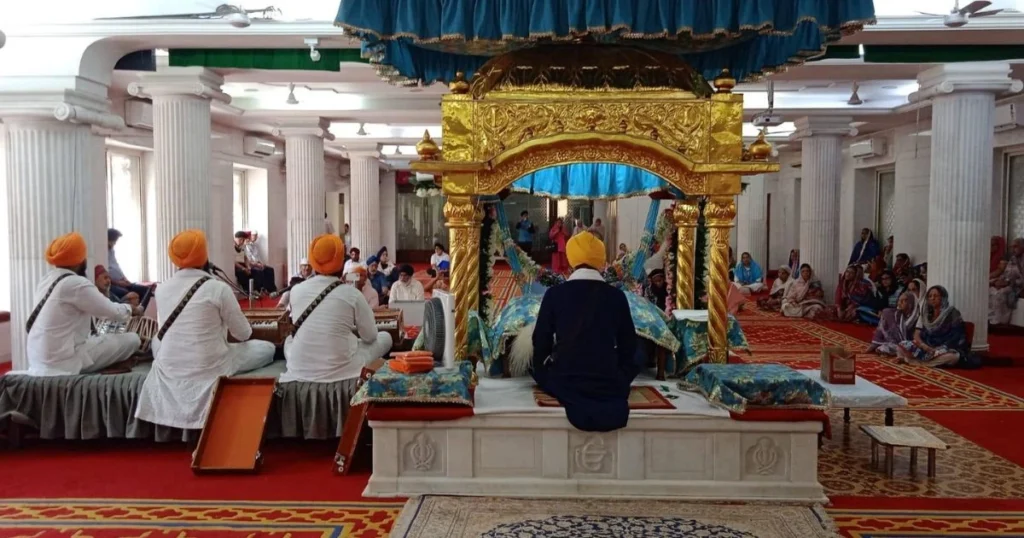
Your research confirms that the Gurudwara’s daily life is built around morning and evening diwans, a rhythm that started as early as the 2002 “garage era” when the sangat gathered in a temporary space. Even today, that same pattern remains the backbone, with prayer sessions creating a steady flow of sangat across the day, especially on weekends and special dates.
Because religious programmes can vary during Gurpurab days and large gatherings, the safest visitor approach is simple. Treat regular days as predictable, and treat special dates as flexible, where timings can shift based on crowd movement, kirtan line-ups, and administrative coordination around the 2026 observance.
What Happens Inside the Gurudwara
The main spiritual core is the Darbar Sahib, designed as a large, bright hall where the Guru Granth Sahib is placed on a Takht under a canopy, forming the visual and emotional centre of the space. A striking detail mentioned in your research is the Ik Onkar symbol embossed on the ceiling, which quietly reinforces the “one reality” idea without needing any explanation boards.
One thing visitors notice immediately is the absence of chairs, because people sit on the floor at an equal level, which is how the Gurudwara physically expresses equality. The hall also includes a gallery structure meant for crowd handling during peak days, so that even when attendance rises, the line of sight and discipline inside the darbar remains stable.
The Visitor Experience
A Gurudwara visit in Kharghar usually feels calm, but it is not casual. The basic visitor discipline is consistent: covered head, footwear removed, and a respectful tone during prayer, especially when the sangat is in active listening. This is not written as a “rule list” in your research, but it aligns with how the darbar space is designed to hold attention and collective focus.
In practical terms, the place functions like a well-managed public institution on normal days, and like a high-capacity venue during peak religious programmes. That difference matters in 2026 because the same community style of order and seva expands into large-scale crowd movement planning across Kharghar, especially around the finale dates.
How the Gurudwara Handles Large Crowds
Your research explains that the 2026 Shaheedi Samagam is expected to bring very large footfall, and the city planning approach is capacity-led. Even outside the main ground, this kind of gathering changes how people arrive, how they queue, and how long they stay inside prayer areas, so visitors should expect structured movement rather than free-flowing entry.
The key idea is not just crowd control, it is crowd dignity. The Gurudwara culture of sangat and pangat naturally supports this, because people already understand waiting, sitting with discipline, and cooperating with volunteers, which becomes crucial when the city is preparing to host numbers in the range your research mentions.
Langar at Kharghar Gurudwara
At Kharghar Gurudwara, langar is not treated like a “meal counter”. Your research clearly frames it as a continuous service where vegetarian food is served to everyone, without checking background, status, or identity. The simple act of eating together becomes the practical proof of equality, not just a teaching.
There is also a quiet dignity in how langar runs. Preparing, serving, and cleaning are viewed as worship, not support work. The report notes that during the pandemic, this Gurudwara was recognized for feeding underprivileged people and migrant labourers in the Navi Mumbai belt, which shows that seva here is not seasonal.
Seva Culture and “Vand Chakko”
Beyond prayers, the Gurudwara functions on the principle of Vand Chakko, meaning sharing what one earns with those in need. In real terms, this turns the space into a daily support system, not only for the Sikh community, but for any visitor who walks in with respect and humility.
Seva also explains why the Gurudwara scales well during large programmes. When thousands arrive, the system does not rely only on staff. It relies on disciplined volunteers, coordinated routines, and a culture where people naturally step in to serve, manage lines, and keep the environment calm.
Community Services Beyond Prayer
Your research describes the Gurudwara as a multi-functional community centre, not limited to the Darbar Sahib and langar hall. It includes rooms used for religious discourse and scripture-based learning, and a library presence that supports reading, reflection, and structured understanding.
It also mentions temporary accommodation style arrangements for travellers and devotees, plus cultural efforts like Gurbani music and paath learning for younger people. These are the kinds of details that matter for ranking because they answer real search intent like “facilities” and “what else is available inside”.
Visitor Etiquette and Protocols
The visitor discipline is straightforward, and it is written clearly in your research. Head covering is required, and scarves are usually available at the entrance. Footwear is deposited at the shoe counter, and visitors walk barefoot in sacred areas, which is why planning for comfort matters on busy days.
The Gurudwara and the larger Samagam environment follow strict sanctity standards. Tobacco, alcohol, and non-vegetarian items are prohibited, and the Darbar Sahib expects quiet attention and respectful conduct. The simplest way to fit in is to follow the sangat’s pace, bow respectfully, and keep your phone use minimal during prayers.
Historical Foundations
Gurudwara Shri Guru Singh Sabha in Sector 12 is not a pre-partition legacy institution like some older Mumbai gurudwaras. Your research positions it as a direct product of Kharghar’s 21st-century growth, built by a small early sangat that expanded as the node developed between CBD Belapur and Kalamboli.
That matters for visitors because the story is not “old city heritage”. It is a story of community building in a planned city, where faith infrastructure had to be created from scratch, step by step, with persistence and collective funding.
Initial Establishment (2002) and the “Garage Era”
In 2002, when Kharghar was still forming as a residential hub, a group of around 15 to 20 Sikh families felt the need for a shared congregational space. With no religious plot available then, they began a temporary gurudwara inside the garage of a row house, which became the daily anchor for the growing Sikh community.
For the next two years, that modest space hosted regular morning and evening diwans. It is a small detail, but it explains why this gurudwara still feels community-run at its core, because the culture was built long before the building existed.
Trust Registration (December 2004) and the First Formal Step
Your research notes that the official trust registration was completed in December 2004. This was not a paperwork formality. It was the first real move toward permanence, because it gave the community a legitimate structure to raise funds, approach authorities, and plan for a permanent religious space.
In local Navi Mumbai terms, this is the point where the gurudwara shifted from a household setup to an institution that could negotiate with planners like CIDCO. The transition made long-term land allotment possible.
CIDCO Plot Journey
As the Sikh population in Kharghar grew, the community formally approached CIDCO in 2005, and your report mentions a formal application submitted in April 2006. What followed was not quick approval. It took consistent follow-up for about three years before the plot was allotted.
CIDCO finally allotted a 1,500 square meter plot in December 2008. This timeline is important because it reflects how religious infrastructure in planned nodes often depends on multi-year administrative cycles, not only community demand.
Funding the Land (Early 2009) and the Power of Collective Support
The land acquisition required a significant financial mobilisation of Rs. 1.08 crores, settled in early 2009 as per your research. This was not funded by a small local group alone. It was supported by Sikh sangat and Gurudwara management committees across Mumbai and Navi Mumbai, making the project a wider community effort.
This is also where the gurudwara’s “service-first” identity becomes easier to understand. When a building is funded by collective sacrifice, the institution naturally feels accountable to the larger public, not just to a local membership circle.
Plot Possession (April 2009) and the Design Phase
Physical possession of the Sector 12 plot happened in April 2009, and then the project moved into a careful design phase. Your research describes involvement of specialised architects and senior sewadar guidance, with attention to both theology and functionality, not only external looks.
The objective was clear: build a space that could serve daily prayer needs and also handle peak festival crowds. This design intent is visible later in the darbar hall layout, crowd management features, and the overall facility flow.
Construction Timeline (2009 to 2013) and Key Milestones
The design was finalised in November 2009 and cleared for construction by January 2010. Then came a major public milestone, the foundation stone ceremony held from April 23 to April 25, 2010, framed as a three-day religious festival with prominent ragi and kavishar jathas.
Construction continued over the next three years, and your research records completion of the main building in September 2013. This gives your blog a clean, verifiable timeline, and it avoids vague claims like “built long ago”, which weakens trust.
28 Feb & 1 March 2026 “Hind Di Chadar” Shaheedi Samagam in Kharghar
The 350th Shaheedi Samagam finale in Kharghar is planned for 28 February and 1 March 2026, and your research categorises it as a major state-level programme. It commemorates Guru Tegh Bahadur Sahib Ji’s martyrdom and is being positioned as the culmination of a year-long national observance that started in late 2025.
The scale is what changes everything. The city’s planning is built around an estimated 1.5 million devotees, which means Kharghar is not only hosting a religious gathering, it is hosting a full public movement event, with administration, safety systems, and route discipline working together.
Venue Plan: Owe Maidan Capacity and Why Kharghar Was Chosen
For the finale, Owe Maidan is designated as the primary venue, with a simultaneous capacity of around 500,000 people. Your research also notes a main pavilion with 80,000 seats, which signals that the venue is planned like a structured event ground, not an open crowd space.
Kharghar fits this scale because it still has large open maidans and buffer zones that older Mumbai areas simply do not. The planning logic is clear: you need space not only for the stage and audience, but for parking, medical posts, entry discipline, and safe dispersal.
Traffic and Transport Strategy
Your research highlights a real constraint in this belt: the JNPA influence and heavy vehicle movement around Kharghar, with roughly 25,000 heavy vehicles daily creating baseline congestion risk. Because of that, the administration’s message is straightforward: avoid private vehicles when possible and prefer public transport and metro services.
Kharghar’s connectivity supports that advice. It is accessible via the Harbour Line and the Navi Mumbai Metro, and the event plan includes special bus services dropping visitors at designated points. From there, controlled walking routes handle the final approach to the ground.
Parking, Drop Points, and the Pedestrian Corridor to Owe Maidan
Instead of hoping that vehicles will “somehow fit”, the plan is structured. Your research states that 30 designated parking sites have been identified across Kharghar to manage private buses and cars, so the crowd does not collapse into one choke point near the venue.
A key feature is the dedicated pedestrian corridor from bus and ST drop-off points to Owe Maidan. This is important because it separates walking devotees from motor traffic, which protects families, reduces jams, and keeps emergency access viable even during peak arrival hours.
Medical and Safety Readiness
Large gatherings in late February can still mean heat, walking, and physical strain, so the medical framework is designed at scale. At Owe Maidan, the plan includes five temporary medical centres plus a specialised ICU facility, supported by mobile medical teams and first-aid posts.
For referrals beyond the ground, your research notes that 350 hospital beds have been reserved in nearby hospitals, including 75 ICU beds, specifically for emergencies linked to the Samagam. This is the kind of detail that builds trust because it shows planning is not only devotional, it is practical.
Who is Coordinating the Operation
The Samagam is being treated as a high-priority operation coordinated through the Konkan Divisional Commissioner’s office along with the Navi Mumbai Police. That matters for visitors because it explains why movement rules, drop points, and corridor walking will be enforced as a safety requirement, not a suggestion.
At the Gurudwara level, your research notes that senior sewadar leadership and the trust board are involved in integrating gurudwara operations with the government’s plan. In simple words, this is a combined system: religious volunteers for discipline and seva, and civil authorities for safety and movement.
Nearby Hospitals and Emergency Options Around Kharghar and Belapur
During a mass gathering, the smartest planning is the boring kind. Know the nearest hospitals in advance, especially if you are coming with senior citizens, small children, or someone with BP, asthma, or fatigue issues. Kharghar has strong healthcare access, and the Belapur belt adds higher-capacity multi-speciality coverage.
Below is a practical reference table you can keep saved. Phone lines and helpdesks can change during peak days, so treat this as a starting point and reconfirm once before you travel, especially on 28 February and 1 March 2026.
| Hospital | Area | Proper Address | Phone / Emergency |
|---|---|---|---|
| ACTREC (Tata Memorial Centre) | Sector 22, Kharghar | Plot No. 1 & 2, Sector 22, Kharghar, Navi Mumbai 410210 | (022) 2740 5000 / 6873 5000 |
| Kharghar Medicity Hospital | Sector 7, Kharghar | Plot No. C/23, Aum Sai CHS, Next to Kharghar Police Station, Next to Royal Tulip, Facing Highway, Sector 7, Kharghar, Navi Mumbai 410210 | 7045399388 / 8655864863 |
| Motherhood Hospital (Kharghar) | Sector 7, Kharghar | Fountain Square Building, Sector 7, Kharghar, Navi Mumbai | 8494800094 / 96203-96203 |
| Apollo Hospitals Navi Mumbai | Sector 23, CBD Belapur | Plot #13, Parsik Hill Road, Off Uran Road, Sector 23, CBD Belapur, Opp. Nerul Wonders Park, Navi Mumbai 400614 | +91 22 3350 3350 / +91 22 6280 6280 |
| MGM Hospital & Research Centre (CBD Belapur) | Sector 1, CBD Belapur | Next to CBD Belapur Police Station, Opp. to Belapur Bus Depot, Sec 1, CBD Belapur, Navi Mumbai 400614 | Call: 76076 02108, Emergency: 76310 81108 |
Practical Tips for Families Visiting During the 2026 Samagam Days
If you want the day to feel spiritual and not stressful, plan for movement, not just darshan. Wear comfortable footwear for the walk outside, carry a head covering for everyone, and keep water handy because crowd time often becomes standing time. On peak hours, your biggest “delay” is rarely the program, it is entry, walking, and regrouping.
For families, the most useful habit is staying predictable. Decide one meeting point in advance, keep children close in moving corridors, and avoid overloading bags since checks and walking become slower. If anyone feels dizzy or weak, do not push through, step out, sit, hydrate, and use medical help early instead of waiting.
FAQs
Where is Kharghar Gurudwara Shri Guru Singh Sabha located?
It is in the Kharghar belt of Navi Mumbai and is widely referenced in the Sector 12 area. For navigation accuracy, use the gurudwara’s name in maps and confirm the approach route before you start, especially on event days.
Is there any entry fee to visit the gurudwara?
No. Entry is free, and the space runs on the Sikh tradition of community support and voluntary offerings, without any fixed entry charges.
Is langar available at Kharghar Gurudwara?
Langar is a core part of gurudwara life and is served as a community meal. On special programs, langar operations may scale up, so timings and flow can vary based on crowd handling.
Do visitors need to cover their head inside?
Yes. Head covering is part of basic gurudwara etiquette, and it helps maintain respect and discipline in the darbar hall environment.
What are the dates for the “Hind Di Chadar” Shaheedi Samagam finale in Kharghar?
As per the event planning covered in your research, the finale is scheduled for 28 February 2026 and 1 March 2026, with Owe Maidan as the main venue zone.
What is the best way to reach during peak crowd days?
Public transport is generally the safest choice during a large gathering because parking and road congestion can become the slowest part of the day. Plan extra buffer time for walking from drop points.
Is parking available near the venue and gurudwara area?
Parking is expected to be managed through designated locations during the event period, which usually means parking farther and walking in. Assume a short walk and plan footwear and time accordingly.
Which hospitals are closest for emergencies?
Kharghar has strong options like ACTREC in Sector 22 and multi-speciality hospitals in Sector 7, while the Belapur belt has larger capacity hospitals like Apollo and MGM. Use the hospital table above and save one emergency number before you leave.