
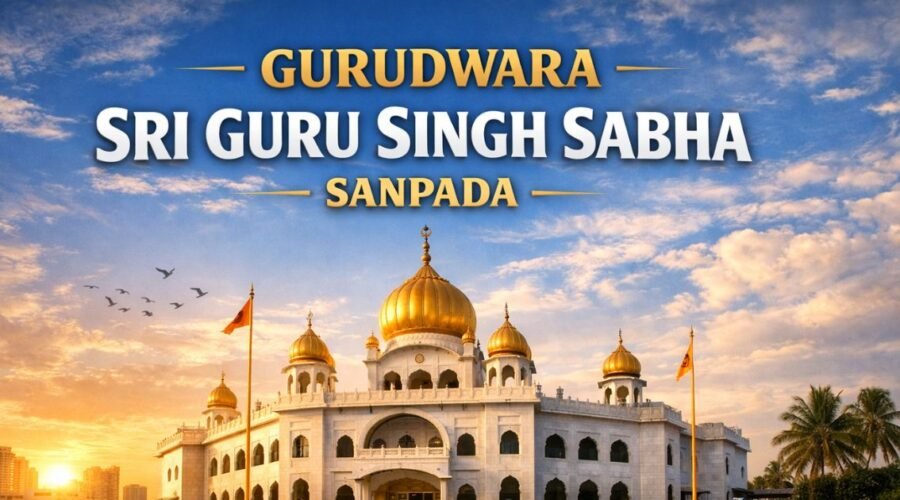
Gurudwara Sri Guru Singh Sabha Sanpada – History, Timings, & Langar
Gurudwara Sri Guru Singh Sabha in Sanpada is not only a prayer space. In Navi Mumbai’s religious landscape, it works like a full community institution that supports inter-faith harmony, emergency relief, and everyday dignity through langar and seva. It reflects the Sikh principles of Naam Japo, Kirat Karo, and Vand Chakko in a very practical, modern-city way.
What makes this Gurudwara special is how it belongs to the city. Sanpada’s Sectors 9 and 15 have grown rapidly, and this Gurudwara has grown with them, acting like a steady anchor for residents, commuters, and people in need. This guide is built for real search intent and real ground reality, not just directory-style facts.
Quick Summary Table
| Point | Details |
|---|---|
| Name | Gurudwara Sri Guru Singh Sabha, Sanpada |
| Primary presence | Sector 9 (main complex), plus a Sector 15 presence near bus station |
| Foundation milestone | Foundation ceremony held on 23 Jan 2011 on a CIDCO-allotted plot (Sector 9) |
| Core services | Daily langar, dispensary/health support, education programs, seva ecosystem |
| Major events | Gurpurab, Vaisakhi, Nagar Kirtan, Gatka, Akhand Paath patterns |
| General timings | Commonly described as open early morning to about 10 pm (plan to verify before travel) |
This table is designed to be Google-friendly and user-friendly. It gives fast clarity on what the place is, why it matters, and how a visitor should plan. The sections below expand each point with the kind of detail that helps you write a #1-quality local guide.
Sanpada has more than one public “address identity” for the Gurudwara, mainly because people refer to the Sector 9 complex and the Sector 15 bus-station-side presence. Instead of hiding that confusion, this article explains it responsibly and helps readers verify the correct pin before visiting.
What This Gurudwara Represents in Sanpada’s Daily Life
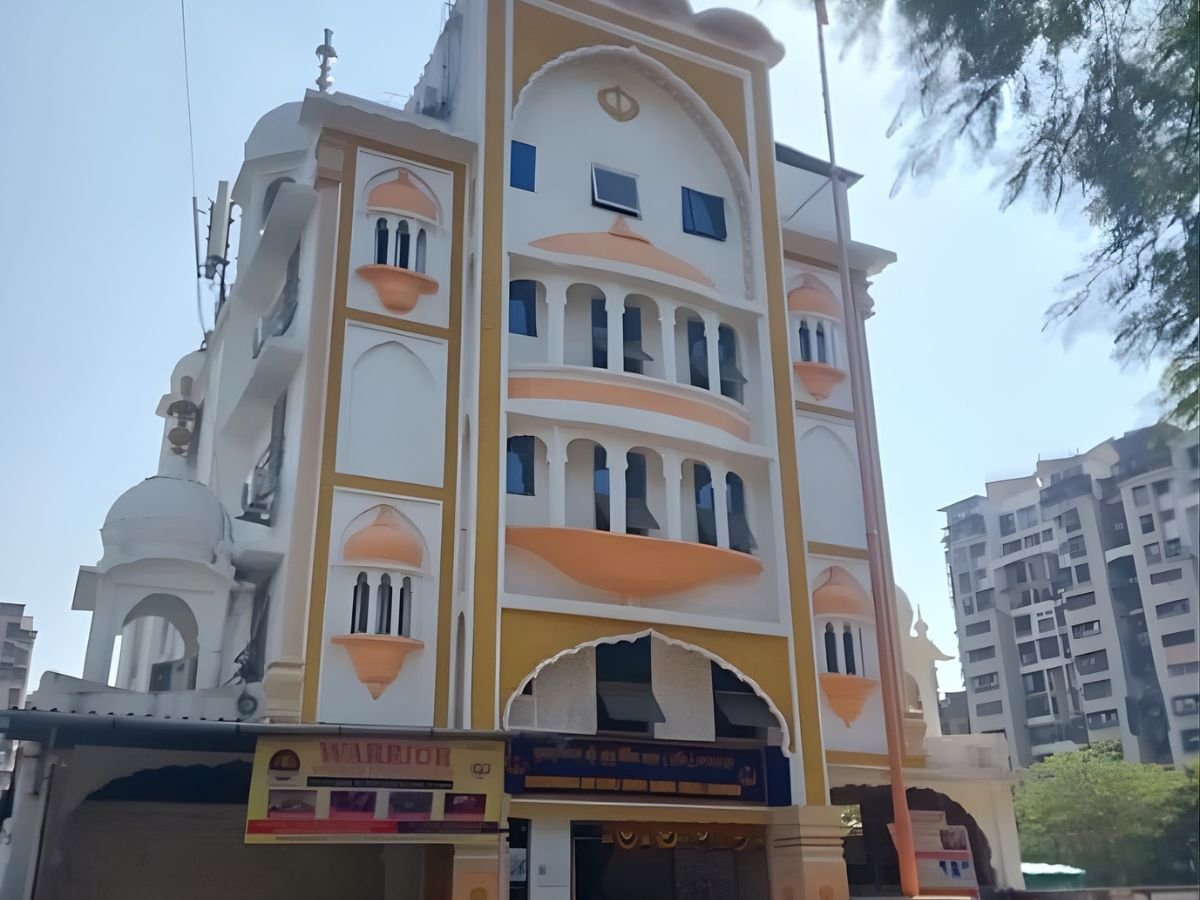
This Gurudwara is a spiritual sanctuary, but it also works like a social support system. In your research, it is described as a complex socio-cultural engine that feeds thousands, provides emergency help, and preserves Sikh heritage in an urban setting. The “open to all” nature is not just a statement, it is visible in langar, seva, and daily discipline.
Sanpada is a melting pot of communities, and this Gurudwara becomes a bridge because it welcomes anyone who follows basic maryada. People from nearby nodes like Vashi and Nerul also connect with it, especially during major festivals and community programs. That city-level participation is one reason the Gurudwara’s influence goes beyond its own sector.
Historical Lineage and the Singh Sabha Movement
The Sanpada Gurudwara’s identity is strongly linked to the Singh Sabha Movement, a 19th-century revival effort that shaped how Gurudwaras function as both spiritual and community institutions. Your research notes the movement began in the 1870s in Punjab, emphasising education, authentic Sikh practice, and building Gurudwaras as centres of learning and service. This is the blueprint Sanpada follows in a modern form.
The important part for your blog is not just the dates, but the continuity. The “Singh Sabha model” travels with the Sikh diaspora, so wherever communities settle, the same structure appears: prayer, langar, seva, education, and community governance. Sanpada is a Navi Mumbai expression of that older institutional DNA, adapted to today’s city needs.
Origins of the Singh Sabha Movement Punjab, 1870s
The research highlights that the first Singh Sabha was established in Amritsar in 1873, responding to pressures that threatened Sikh identity and practice. It focused on restoring Sikh faith to its foundational purity, promoting education, publishing historical Sikh literature, and building Gurudwaras that function as community centres. This is why the movement is still referenced when explaining Gurudwara governance today.
For Sanpada, this matters because the Gurudwara is not built as a “temple only” structure. It is built as an institution that combines spiritual routine with social infrastructure like langar, education, and healthcare support. That institutional approach is exactly what makes such Gurudwaras outperform normal religious places in terms of civic relevance.
Why the Movement Still Shapes Modern Gurudwaras
Your research makes the point clearly: the Singh Sabha model created Gurudwaras that are both sanctuaries and service engines. That is why you find libraries, classes, relief work, and disciplined governance alongside prayer halls. This is not modern marketing, it is a continuation of a long community strategy.
In a planned city like Navi Mumbai, this model fits perfectly because residents expect systems that work. Sanpada Gurudwara feels “organised” because it follows a tradition that treats community service as duty, not occasional charity. This context makes your article read like a serious local guide rather than a basic listing.
Mumbai Region Roots 1940s and Partition-era Relief
Your research notes that in the Mumbai region, early Sri Guru Singh Sabha centres existed around the mid-20th century, such as Bandra’s Bazaar Road area around 1945. These centres became critical during the 1947 Partition, providing langar and shelter to refugees arriving in distress. This is the service legacy Sanpada inherits.
This history is important because it explains why people trust Gurudwaras in emergencies even today. The community memory is long: when crisis hits, the langar and shelter model activates fast. Sanpada’s later COVID-era oxygen relief and food delivery efforts are modern echoes of that older refugee-relief tradition.
How That Legacy Reappears in Navi Mumbai
In Sanpada, the same principle shows up as modern emergency relief, healthcare support, and structured volunteering. The Gurudwara becomes a “lifeline institution” during difficult periods, not because it is forced to be one, but because that is part of its inherited model. Your research calls this the continuation of a historical mantle of service.
For SEO, this is valuable because it creates topical authority that directories don’t have. Instead of just stating “langar available,” you explain why such institutions exist and why service is non-negotiable in Sikh public life. This depth is what makes content rank over time, not just keywords.
How to reach from Gurudwara Sri Guru Singh Sabha, Sanpada NMIA
By Car
| Route Option | Distance (km) | Time (min) | Key Landmarks |
|---|---|---|---|
| Route 1 (via NH348A) | 13.3 km | 24 min | Juinagar Station, Satyaa House |
| Route 2 (via Palm Beach) | 14.9 km | 28 min | Sakal Bhavan Rd, Police Point |
| Route 3 (via MIDC) | 13.4 km | 24 min | Ashok Shantaram Thakur Marg, Hill View Residency |
By Bus
| Bus No. / Train | Route / Connecting Stop | Destination | Service Provider | Estimated Duration |
|---|---|---|---|---|
| Bus A-3 | Belapur Bus Depot to NMIAL Terminal 1 | Navi Mumbai International Airport | NMMT | 16 min (11 stops) |
| Bus A-4 | Nerul Railway Station (E) to NMIAL Terminal 1 | Navi Mumbai International Airport | NMMT | 20 min (10 stops) |
| Bus A-4 | Reti Bandar to NMIAL Terminal 1 | Navi Mumbai International Airport | NMMT | 7 min (Non-stop) |
| Bus A-502 | Nathu Joma Patil Chowk to Nerul Station (W) | Nerul Railway Station | BEST | 10 min (11 stops) |
| Bus 18AC | Nathu Joma Patil Chowk to Kharkopar Station | Kharkopar Railway Station | NMMT | 36 min (31 stops) |
| Train (98xxx) | Sanpada to Nerul or Belapur CBD | Panvel Bound Trains | Central Railway | 5-14 min |
How to reach from Gurudwara Sri Guru Singh Sabha, TO Sanpada Railway Station
By Car
Driving Directions: Gurudwara to Sanpada Station
| Step | Instruction | Distance |
|---|---|---|
| 1 | Head toward Dr BR Ambedkar Marg/Gaondevi Marg | 110 m |
| 2 | Turn left at BimAsurance onto Dr BR Ambedkar Marg (Pass by Shiv Bhole Tea Shop) | 300 m |
| 3 | Turn left at Mayra Fast Food onto Budhyadev Mandir Marg (Pass by St Vivekanand School) | 300 m |
| 4 | At the roundabout, take the 3rd exit onto Chatrapati Shivaji Marg (Pass by petrol pump) | 200 m |
| 5 | Turn left at Akbar Fruits Shop onto Chemist Bhawan Marg (Pass by METRO MEDS) | 290 m |
| 6 | Turn right at Sanpada College onto Sector 2 Sanpada Rd | 58 m |
| Total Distance | 1.3 km | |
By Bus
| STEP | BUS INSTRUCTION (NMMT & BEST) | DETAILS |
|---|---|---|
| 1 | NMMT Bus 18AC (Ghansoli Depot ki taraf) [cite: 77, 87] | Board: Nathu Joma Patil Chowk [cite: 86] Fare: ₹10.00 |
| 2 | BEST Bus A-502 (Shivaji Nagar Depot ki taraf) [cite: 31, 41] | Board: Nathu Joma Patil Chowk [cite: 40] Fare: ₹12.00 |
| 3 | Dono bus 2 stops baad drop karti hain [cite: 42, 88] | Travel Time: ~2 min [cite: 42, 88] |
How to reach from Gurudwara Sri Guru Singh Sabha, TO Sanpada bus depot
By Car
Gurudwara Sri Guru Singh Sabha to Sanpada Station (By Car)
| Step | Direction Details | Distance/Time |
|---|---|---|
| 1 | Head toward Dr B R Ambedkar Marg/Gaondevi Marg | 110 m (21 sec) |
| 2 | Turn left at BimAsurance onto Dr B R Ambedkar Marg (Pass by Shiv Bhole Tea Shop) | 300 m |
| 3 | Turn left at Mayra Fast Food onto Budhyadev Mandir Marg (Pass by St Vivekanand School) | 300 m |
| 4 | At the roundabout, take the 3rd exit onto Chatrapati Shivaji Marg (Pass by Monginis) | 350 m |
| 5 | Turn left at Opal Tech Solutions toward Sanpada Subway (Pass by Ramrajya Dessert Bowl) | 74 m |
| 6 | At SOIL AKHTAR, continue onto Sanpada Subway | 110 m |
| 7 | Turn left at Shiv-Yash Enterprises toward Sanpada Subway Rd | 12 m |
| 8 | Turn right at Hotel Indiana Inn onto Sanpada Subway Rd (Pass by Marathmoli Khanawal) | 180 m (52 sec) |
| 9 | Turn left onto Veer Savarkar Marg | 27 m (9 sec) |
| 10 | Turn left at Om Sai Video Game to reach Sanpada Bus/Railway Station | 38 m (15 sec) |
| Total Journey | 1.5 km (Approx. 5 min) | |
By Bus
| Bus No. | Route / Depot | Boarding Point | Drop-off Point | Duration | Stops | Cost | Operator |
|---|---|---|---|---|---|---|---|
| 18AC | Ghansoli Depot | Nathu Joma Patil Chowk | Ridhi Sidhi / Petrol Pump | 2 min | 2 stops | ₹10.00 | NMMT |
| A-502 | Shivaji Nagar Depot | Nathu Joma Patil Chowk | Sanpada Police Chowky | 2 min | 2 stops | ₹12.00 | BEST |
How to reach from Gurudwara Sri Guru Singh Sabha, TO CSMIA
By Car
| Travel Route: Sanpada to Mumbai Airport (CSMIA) | ||
|---|---|---|
| Route Options | Distance (किमी) | Estimated Time (समय) |
| Route 1: Via Andheri – Ghatkopar Link Rd | 22.2 km | 1 hr 10 min |
| Route 2: Via Santacruz – Chembur Link Rd (SCLR) | 24.0 km | 1 hr 02 min |
By Bus
| Route Type | Service No. | From | To | Duration |
|---|---|---|---|---|
| Bus (BEST) | 255 LTD | GTB Nagar Station | Dharavi Flyover | 16 min |
| Bus (BEST) | A-375 Express | Chembur Station | BKC (Income Tax) | 33 min |
| Bus (BEST) | A-22 Express | Sion (L.T. Hospital) | Dharavi Flyover | 7 min |
| Bus (BEST) | 321 LTD | Vile Parle (E) | Domestic Airport T1 | 7 min |
| Metro | M Line 3 | Dharavi / BKC | CSMIA Airport | 7-10 min |
The Sanpada Gurudwara’s Origin Story From Flats to a Permanent Landmark
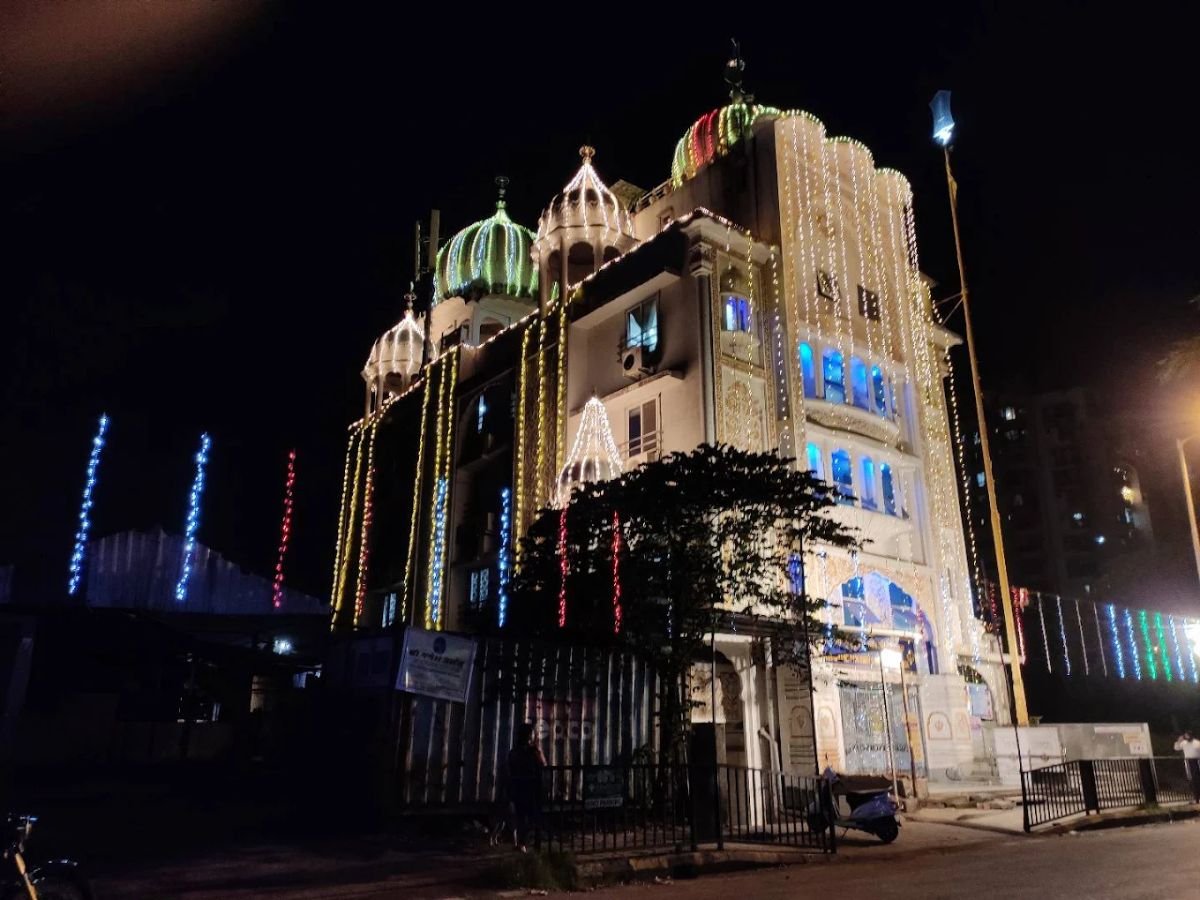
Your research states that for decades the Sikh community in Sanpada practiced rituals in residential flats and open grounds. The move to a permanent Gurudwara was not sudden, it was a long community persistence story, shaped by the city’s growth and the need for stable religious infrastructure. This is the type of origin story readers trust because it feels lived, not staged.
A major turning point came with a CIDCO-allotted 500-square-meter plot in Sector 9, where a historic foundation-laying ceremony was held on 23 January 2011. The research notes attendance of over 5,000 devotees and spiritual leaders from the Five Takhts, which signals the scale and significance of the project.
Foundation Stone Ceremony 23 January 2011
The foundation ceremony is described as historic because it marked the formal start of a monumental, multi-storey structure in Sanpada. Your research highlights the CIDCO allotment and the symbolic strength of leaders from the Five Takhts being present, which elevated the event beyond a local gathering. It signalled that Sanpada had become a recognised Sikh institutional node.
This section is also where you can naturally add your “Sector 9 vs Sector 15” clarity later in the article. The foundation plot is specifically described for Sector 9, while the bus-station-side presence is a separate convenience point for commuters. This approach prevents confusion and improves local trust.
Why the Five Takht Presence Matters
In Sikh tradition, the Five Takhts represent the highest seats of authority, so their leadership presence signals legitimacy and unity. When your blog mentions this, it becomes more than a local guide, it becomes a documented institutional story. This is the kind of detail that builds E-E-A-T without sounding promotional.
From an SEO standpoint, it also helps you rank for deeper informational queries like “Sanpada Gurudwara history” and “foundation date,” not only for basic navigation searches. These deeper queries often bring consistent long-term traffic and citations from other local pages.
Architectural Grandeur and Materiality
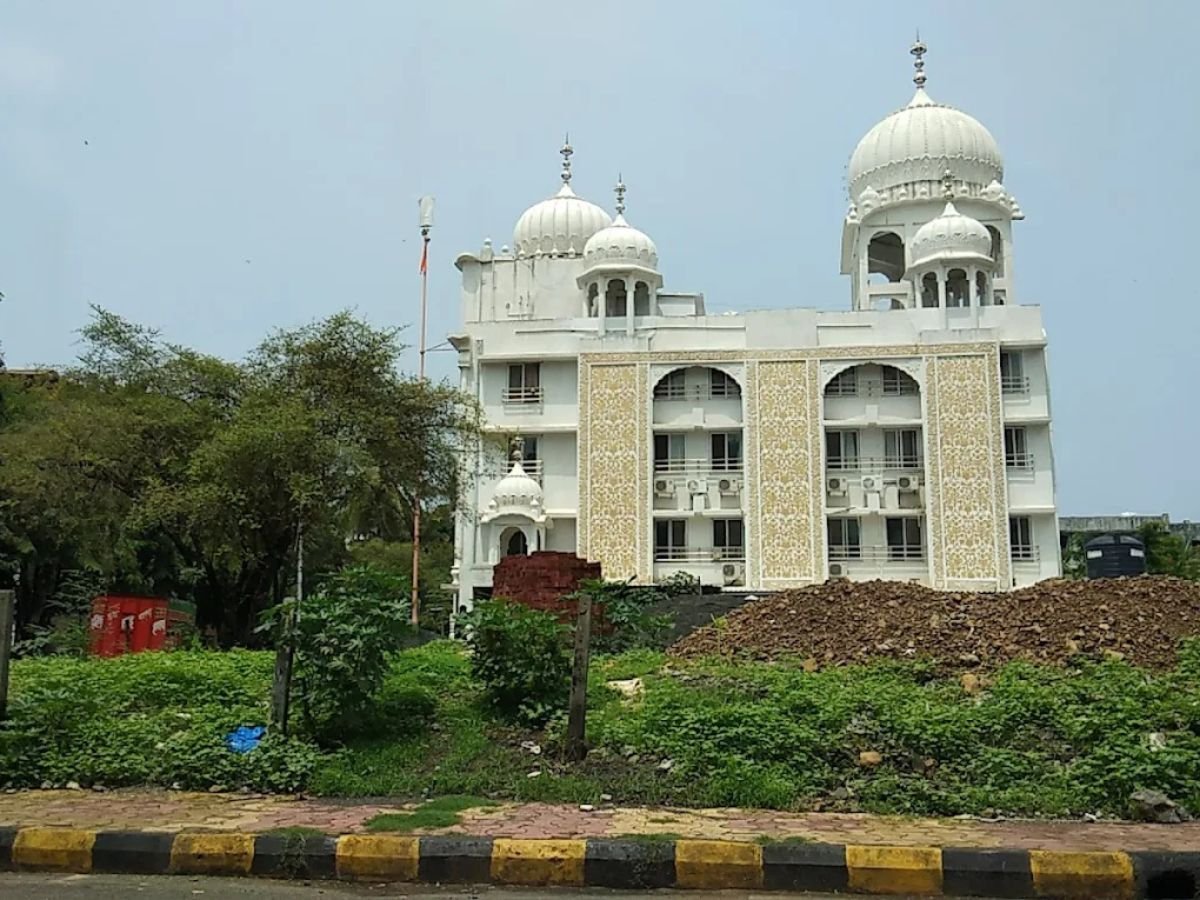
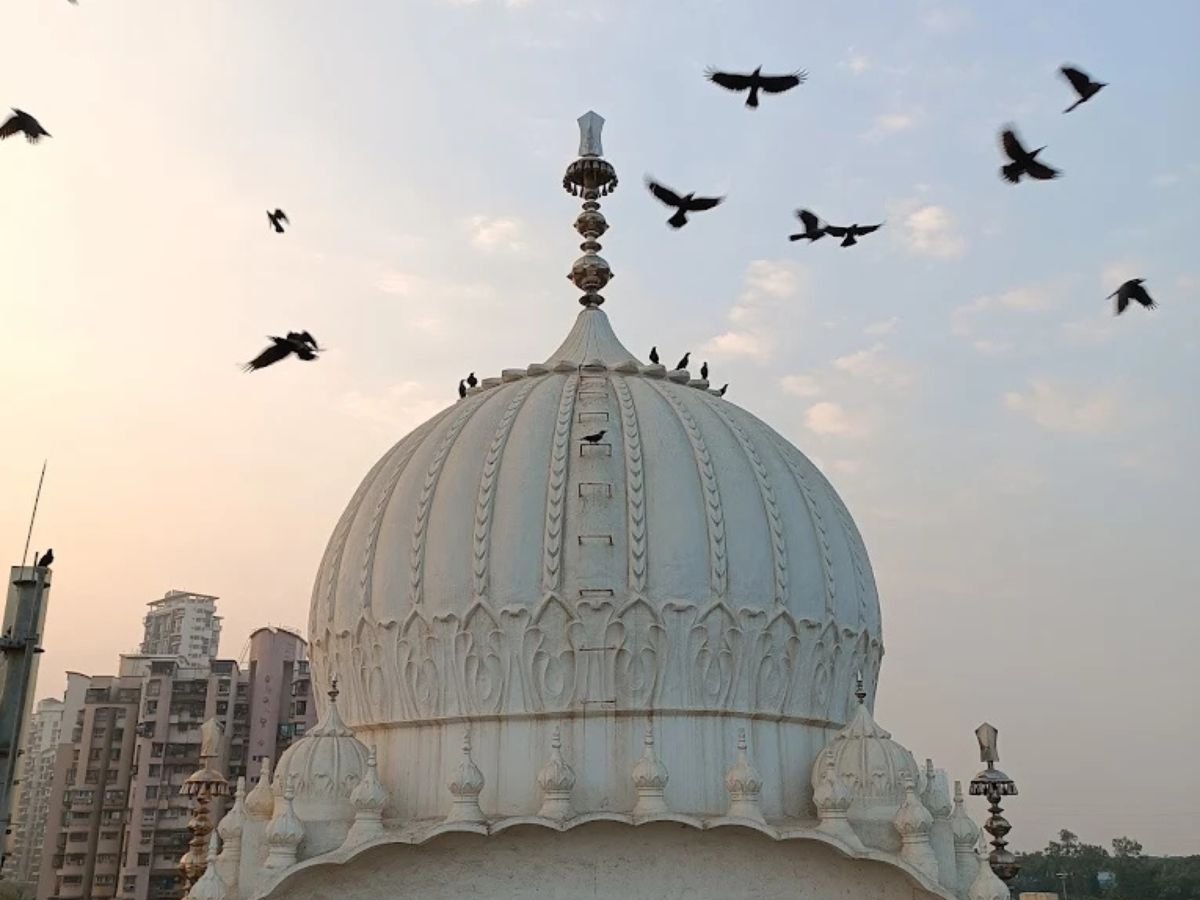
Sanpada Gurudwara’s design is described as a careful blend of traditional Sikh visual language with modern structural needs. The report explains that it follows the broader “Sikh style” that evolved under Mughal and Rajput influences, so the building feels both majestic and calm at the same time.
That blend matters in Navi Mumbai because the city is planned and modern, yet people still look for heritage and symbolism in religious spaces. This Gurudwara’s architecture communicates devotion without needing loud decoration, using form, symmetry, and material choice to create a steady spiritual mood.
The Exterior and Gateway Deodi
The entrance is marked by an ornate Deodi, which the report clearly describes as a symbolic threshold from the secular world into sacred space. It also notes chattris, oriel windows, and a roofline with bracket-supported eaves and ornamented friezes that create a strong skyline presence.
In a practical sense, this gateway does something simple and powerful. The moment you pass it, your behaviour changes, your pace slows, and your attention becomes more careful. That is the real function of Deodi in Sikh architecture, it quietly prepares the visitor for Darbar Sahib discipline.
Rajput Details That Shape the Sanpada Silhouette
The report highlights chattris and oriel windows as clear Rajput-style signatures on the facade. These elements add vertical rhythm and visual depth, so the building does not feel flat even when viewed from a distance in the Sector 9 skyline.
It also points to bracket-supported eaves and decorative friezes along the roofline. Together, these details create a layered silhouette that feels ornate but controlled, which is why the structure looks ceremonial without looking crowded or over-designed.
Nishan Sahib The Beacon Outside
A central exterior feature is the Nishan Sahib, described as a tall flagpost draped in saffron cloth and topped with the Khanda. The report explains it as a beacon that signals the Gurudwara is a place of sanctuary where anyone can find food and shelter, regardless of background.
In Navi Mumbai’s ground reality, this symbolism lands in a very practical way. The Nishan Sahib is not just an identity marker, it is a public assurance that service exists here, and that the space is open in spirit even before a visitor steps inside the gate.
Materiality Makrana White Marble and Why It’s Chosen
The report describes the extensive use of white marble as a deeply symbolic choice, associated with purity and the ability to remain cool in Maharashtra’s climate. It specifically mentions Makrana white marble as a preferred choice for major shrines because of its heritage look and durability, and links it to landmark structures like the Taj Mahal and Golden Temple’s upper work.
This material choice also shapes the visitor experience in a subtle way. White marble reflects light softly, keeps the environment visually clean, and makes the space feel calmer even during crowded hours. It is not just a “premium finish,” it is part of the spiritual atmosphere the architecture is trying to create.
Surface Craft Jaratkari, Tukri, Pinjra, Fresco
The report lists traditional techniques used on the outdoor surfaces, including jaratkari stone or glass inlay, tukri mirror or coloured glass on gypsum plaster, pinjra lattice work, and fresco painting on wet plaster. These techniques are not random decoration, they are craft traditions that help the building carry heritage into a modern city.
Functionally, these details serve multiple roles at once. Pinjra patterns support ventilation and privacy, while tukri and jaratkari interact with light to create a shimmering effect that feels symbolic, as if the structure itself is reflecting the “divine light” concept. Frescoes and motifs also act like cultural memory, reminding visitors the space belongs to a larger Sikh historical story.
The Darbar Sahib and Interior Design
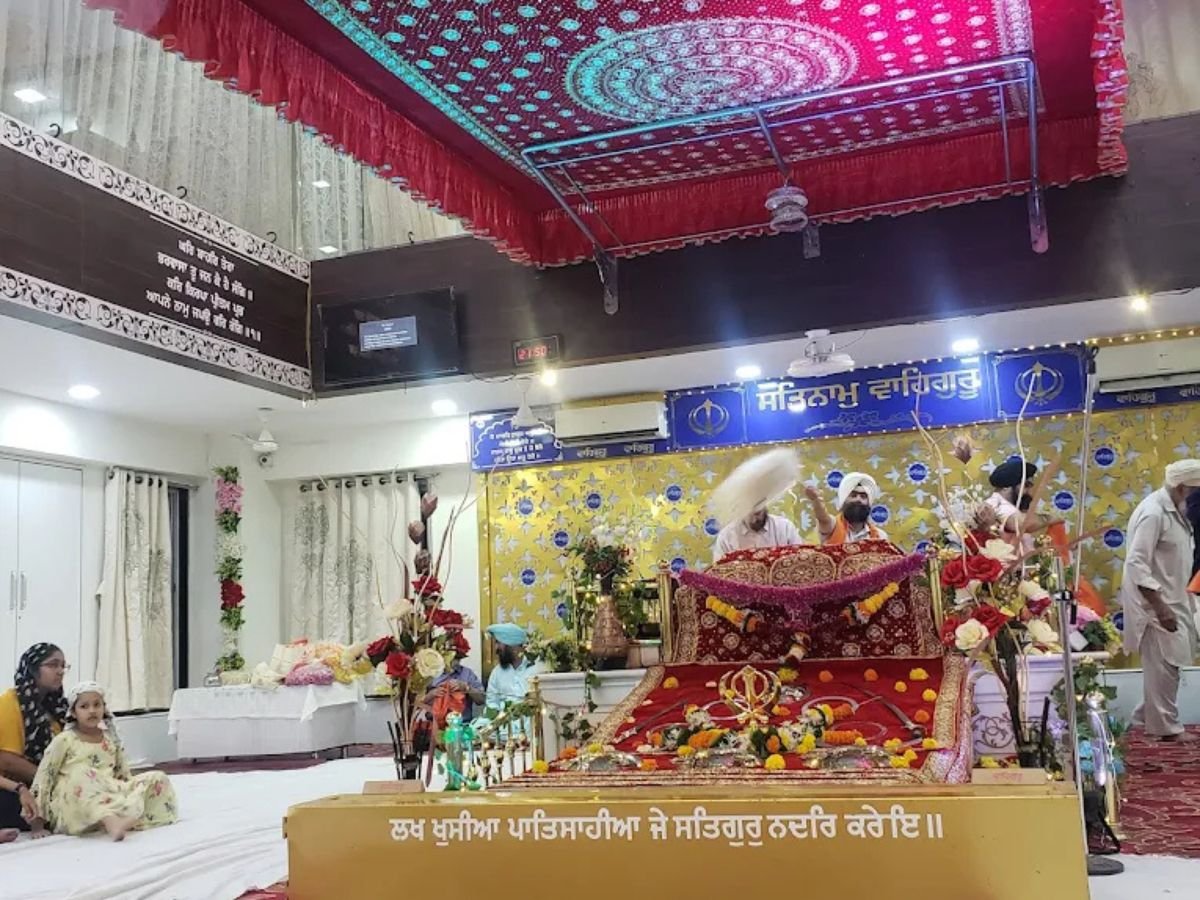
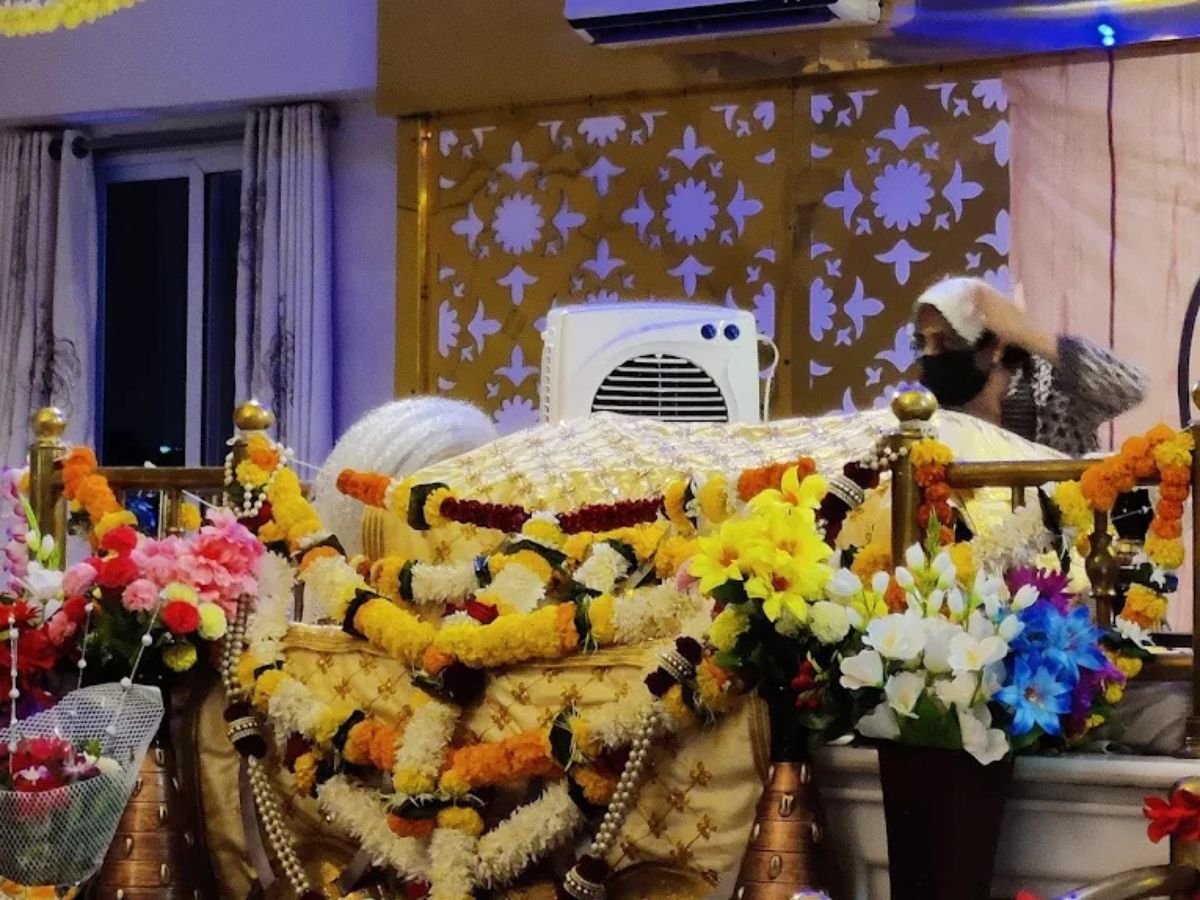
The report describes the Darbar Sahib as the heart of the building, designed to be spacious and well-lit, with a gallery that can accommodate larger crowds during major festivals. The central focus is the Takhat, where Guru Granth Sahib is placed under a decorative canopy, making the spiritual centre visually clear for the entire sangat.
This is where architecture becomes theology in a quiet way. The layout is built to reduce distraction and increase attention, so the visitor naturally settles into listening and reflection. Even if someone is new, the space teaches discipline through its design, not through instructions.
The Takhat and Canopy How Sovereignty is Shown
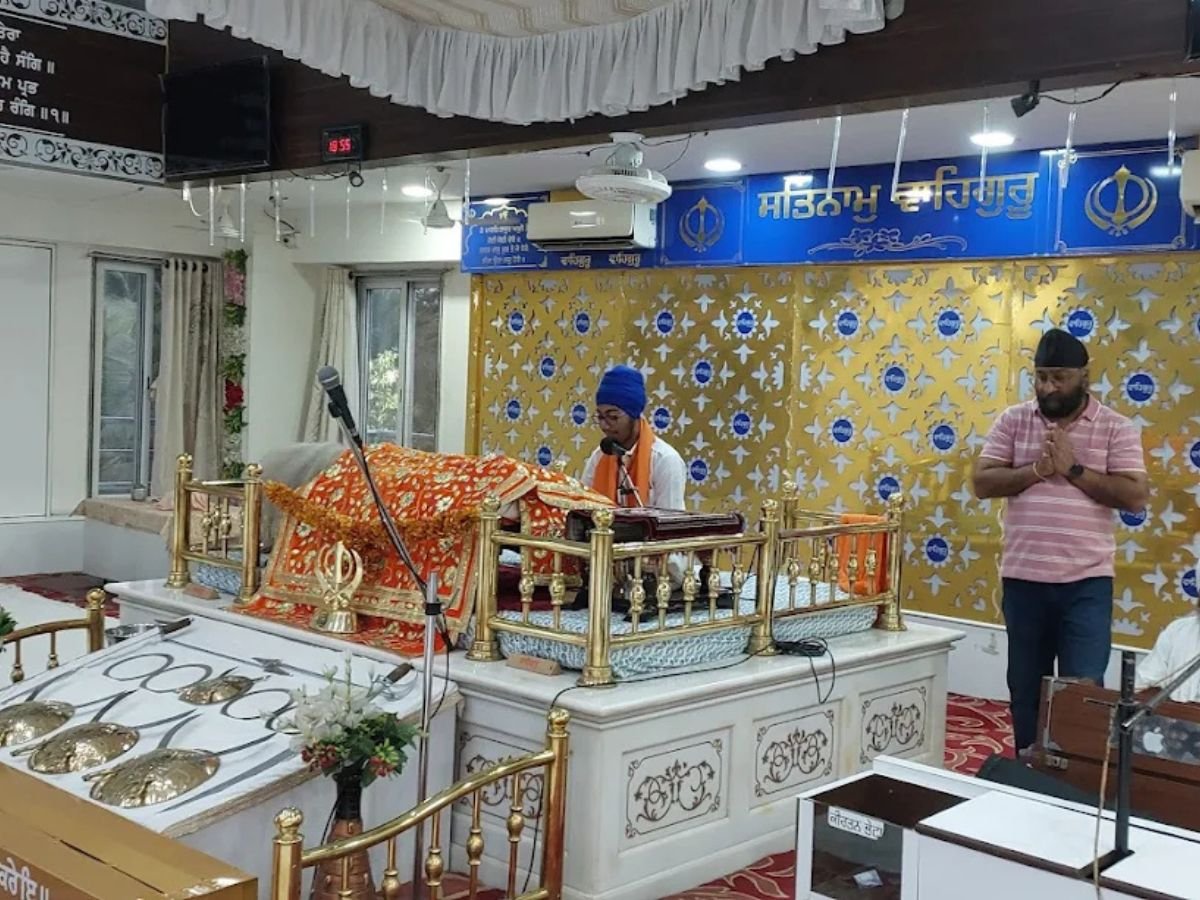
The Takhat is described as an elevated throne-like focus point where the Guru Granth Sahib is placed, under a decorative canopy. This arrangement is not for show, it communicates sovereignty, meaning the scripture is treated as the living Guru, not as a book kept on a shelf.
In practical terms, this central focus also keeps the sangat unified. Everyone’s attention moves towards one spiritual anchor, which reduces random movement and noise. It is one of the reasons Gurudwara prayer halls can remain disciplined even when attendance is high.
Gallery Layout Why the Space Handles Festival Crowds
The report notes that the hall often includes a gallery to accommodate visitors during major festivals. This is a practical architectural decision because festival days bring large sangats, and a gallery helps the hall scale without breaking the basic Darbar Sahib discipline.
In Sanpada, this matters because the Gurudwara is positioned as a city-level hub, not a small neighbourhood-only shrine. When a building anticipates crowd flow through design, the visitor experience remains calmer, and that calm is itself a form of respect towards the sangat.
Ik Onkar and Gold Leaf Light as a Spiritual Theme
The report explains that the interior design reflects Ik Onkar, often embossed on the ceiling in gold leaf as a focal point for meditation. It also links gold leaf and white marble flooring to an environment of light and reflection, which is interpreted in Sikh theology as the divine light of knowledge.
This is a detail that visitors actually remember because it changes the emotional tone of the hall. Gold does not just look “rich,” it draws the eye upward and inward, and the reflected light makes the space feel softer. In a planned city setting like Sanpada, that gentle visual discipline becomes part of why people return.
Langar System in Sanpada Food as Equality, Not Charity
Your research describes langar as the most visible proof of Sikh equality, where everyone eats together without identity checks. In Sanpada, langar is not a “festival-only” arrangement, it is treated as a daily civic service that runs through discipline, hygiene, and volunteer rotation. This is one reason the Gurudwara is trusted by people beyond the Sikh sangat.
The report also frames langar as a structured operation, not a loose crowd kitchen. Seating, serving flow, and cleaning are managed to keep the experience dignified even during heavy footfall days. For visitors, the best planning logic is simple: follow pangat discipline, take only what you can finish, and treat the meal as shared seva, not a service transaction.
Pangat Culture How the Dining Hall Creates Social Balance
In your research, pangat is described as a living social equaliser, because the sitting arrangement itself removes hierarchy. People sit in a single line format and receive the same vegetarian food, which quietly challenges the everyday social separation that still exists in many urban spaces. Sanpada’s Gurudwara keeps this practice consistent so visitors feel the equality in action, not in slogans.
The second layer is behaviour, because pangat is also a discipline of patience and respect. You do not rush, you do not waste, and you do not treat volunteers as staff. When your blog explains pangat clearly, it becomes extremely useful for first-time visitors and also very AEO-friendly, because it answers what people usually feel shy to ask.
Hygiene and Order Why Langar Feels Safe in a Busy Node
The report highlights hygiene and organised flow as essential to the langar system, especially in a city like Navi Mumbai where footfall can rise fast. Cleanliness is treated as part of spiritual discipline, so kitchen work, serving, and cleaning are performed in a routine cycle rather than “only when needed.” This is why the langar hall feels stable even on peak days.
For your content, this section is important because it builds trust without exaggeration. You are not claiming perfection, you are explaining the system and why it works. That tone helps you outperform directory pages, because directories rarely explain what a visitor should expect and how the institution maintains dignity under scale.
Dispensary and Healthcare Support Seva That Looks Like a Clinic
Your research describes the Gurudwara as a socio-cultural institution that also supports health services through a dispensary and medical initiatives. In an urban node like Sanpada, this matters because many residents need affordable, reliable touchpoints for basic care, guidance, and periodic health support. It also fits Sikh tradition, where service includes feeding and healing.
This section should be written responsibly, with a practical note that clinic timing and services can change based on volunteers and programmes. Still, mentioning it is essential because it shows why the Gurudwara is trusted by the wider public. It becomes a civic support space, not only a religious landmark, and that is a strong local ranking advantage.
Blood Donation and Medical Camps Community Health in Action
The report notes health-oriented community initiatives like medical camps and blood donation style drives as part of the Gurudwara’s seva culture. These activities matter because they move beyond prayer and into measurable civic contribution, especially when organised with discipline and transparency. For residents, it signals that the Gurudwara responds to real local needs, not only festival calendars.
From an SEO perspective, this section captures high-intent queries such as “Sanpada Gurudwara medical camp” and “blood donation camp Sanpada.” The safest phrasing is to explain that such initiatives happen periodically and details are shared through announcements at the Gurudwara. That keeps your content accurate and avoids fixed claims that can become outdated.
Why This Builds City-Wide Trust Not Only Sikh Audience
Your research repeatedly frames service as the reason Gurudwaras gain cross-community trust. When a dispensary or camp is available, it helps families who may not have immediate healthcare guidance or who prefer community-supported support during uncertain phases. In Navi Mumbai’s mixed demographics, that kind of service expands relevance beyond a single faith group.
In your blog, this point should be expressed in simple human language, not in promotional tone. You are describing a community institution’s role in the city, and that is exactly what Google’s Helpful Content systems reward. It also fits AI Overviews, because it answers “why this place matters” in one practical argument.
Education and Learning Programs Why the Gurudwara Teaches Too
Your research highlights that the Gurudwara supports education programs, including modern learning initiatives alongside religious learning. This is a key Singh Sabha pattern, because the movement historically emphasised literacy, community upliftment, and teaching as part of Sikh institutional life. In Sanpada, the same spirit appears through programs that support youth and families in practical ways.
This section helps you rank for broader queries beyond “timings” and “address,” such as “Sanpada Gurudwara classes” or “Gurudwara education support.” It also makes your article feel Wikipedia-quality because it explains the institution’s multi-layer role. A city does not remember a building for its dome only, it remembers it for its usefulness.
Computer Lab, Skills Support, and Community Upliftment
The report describes learning initiatives that include computer-related support and skill-building as part of the Gurudwara’s education focus. In Navi Mumbai, this kind of support matters because families often want affordable learning access, especially for youth who are preparing for modern work environments. When a religious institution supports such learning, it strengthens both trust and long-term community stability.
Write this section with careful realism, focusing on purpose and impact rather than over-promising availability. Mention that programs can be seasonal or schedule-based and are usually announced by the Gurudwara. This keeps your content accurate and still highly useful, because readers understand what to ask for when they visit.
Gurmukhi, Library Culture, and Heritage Continuity
Your research links modern learning to heritage learning, including Gurmukhi education and preservation of Sikh history. This matters because it keeps the next generation connected to identity while still participating in modern city life. A Gurudwara that teaches both heritage and practical skills becomes an institution, not just a place of worship.
For SEO, this adds depth and topical authority, and it reduces the risk of your page feeling like a generic listing. You are not only telling readers where the Gurudwara is, you are telling them what it does for the city. That is exactly the difference between a Page 1 article and a forgettable page.
COVID Relief and Emergency Service How Seva Became Lifeline
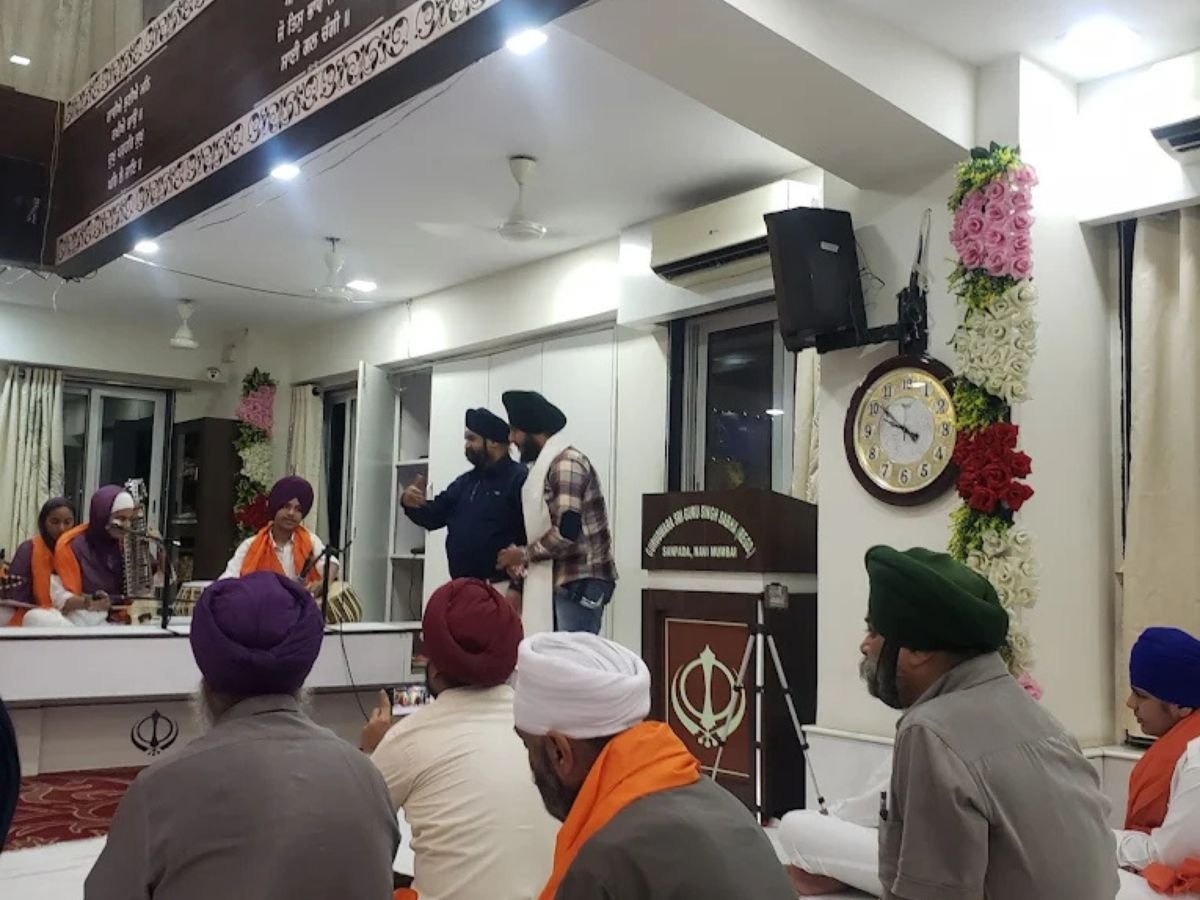
Your research documents COVID-era relief as a key proof point of the Gurudwara’s civic role, including food support, volunteer coordination, and emergency response patterns. In a period when families felt isolated and anxious, Gurudwaras often became the most reliable community system because they already had kitchens, volunteers, and discipline. Sanpada’s role fits that same wider Sikh relief tradition.
This section should be written in a respectful and factual tone, avoiding exaggeration. The goal is to show that the same institution that runs daily langar can also scale into emergency mode. For readers, this becomes a trust anchor: the Gurudwara is not only spiritual, it is dependable when life becomes uncertain.
Oxygen and Food Support Emergency Work With Systems
The report describes oxygen support and food delivery style relief work as part of the Gurudwara’s emergency seva during the pandemic period. This is important because it shows how the community used the same organisational structure, volunteers, and communication networks to respond quickly when hospital systems were under stress. It also reinforces the idea that seva is not occasional, it is operational.
In your blog, present this as a city-level service signal rather than as a moral claim. Mention that aid was offered without discrimination and was coordinated with practical local needs. This keeps the tone credible and makes the content feel human, because people remember who helped, but they trust writers who describe help responsibly.
Why This Section Helps You Rank Trust, Not Hype
From a ranking viewpoint, COVID relief details are unique content that directory pages cannot produce with depth. It builds E-E-A-T because it explains the Gurudwara’s role in real-world emergencies, not just religious routines. Google’s local results tend to reward pages that demonstrate lived usefulness, especially when the tone stays factual.
This is also AI Overview friendly because it answers “what makes this place important” in a concrete way. You are giving a reader a reason to respect the institution, and you are doing it through evidence and local context. That combination is what makes long-form hyperlocal content outperform generic summaries.
Location Clarity in Sanpada Why You See Sector 9 and Sector 15 Online
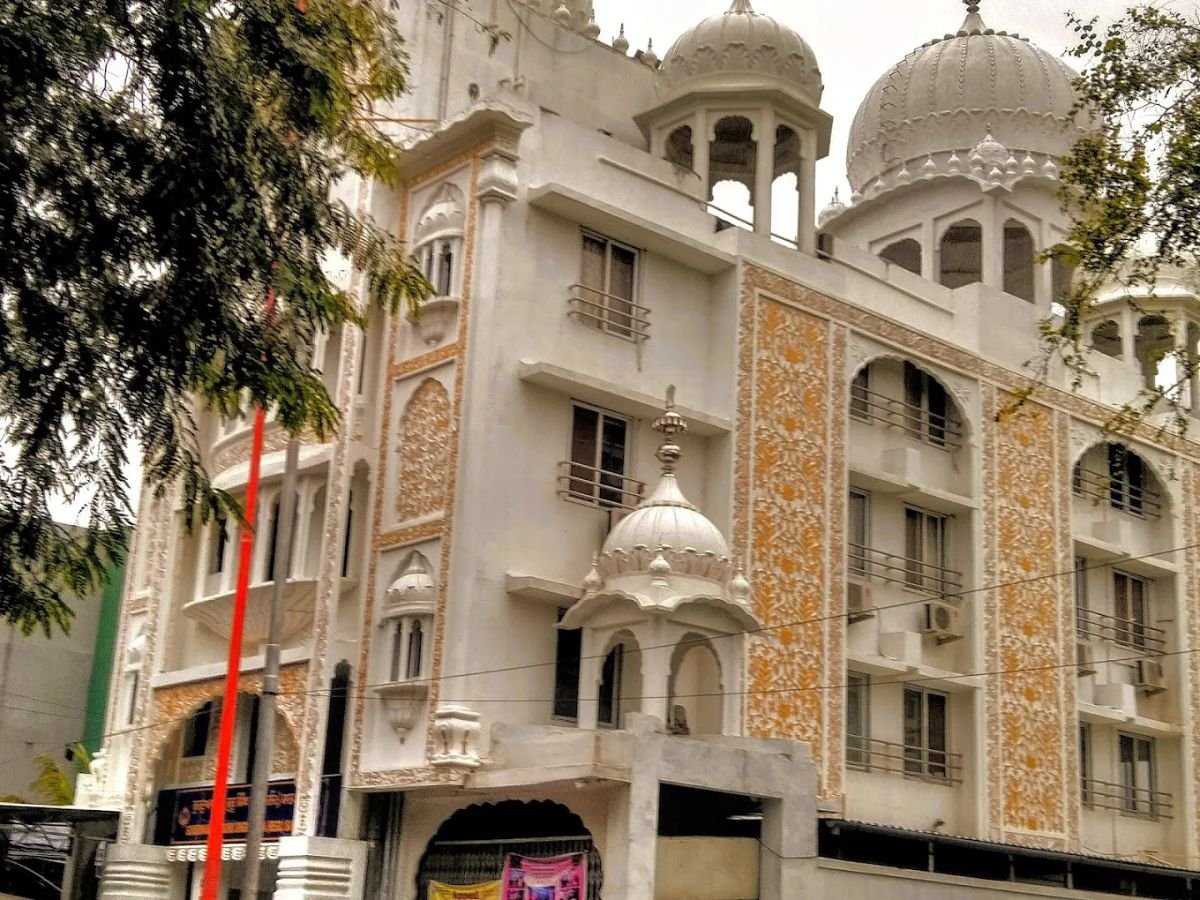
Your research clearly states that the Gurudwara has two primary presences in Sanpada, with the main historic building in Sector 9 and another prominent branch in Sector 15. This is the cleanest way to explain the confusion without guessing, because it matches how locals describe the place: one is the main complex, and the other is a commuter-friendly presence.
This clarity is important for SEO and trust because users often land on different pins depending on which listing they clicked. Instead of treating it as a contradiction, your blog should present it as a known reality and then guide readers to verify the right location before they travel, especially if they are coming from outside Sanpada.
Sector 9 Presence Main Complex and Primary Visitor Flow
The Sector 9 Gurudwara is described as the main historic building, and it is the one most visitors associate with the larger campus experience. Your research also notes that Sanpada Railway Station is the nearest rail stop and that reaching the Sector 9 Gurudwara from the station is typically a short auto ride.
For visitors, Sector 9 is the better choice when they want the full Darbar Sahib plus langar experience in a single visit. It also fits the Sanpada “planned layout” logic, where sectors are connected through predictable internal roads, so the last-mile route usually stays simple if you follow the correct map pin.
When Sector 9 Is the Best Choice
Sector 9 is usually the best option when someone is visiting with family, planning for a longer stay, or wants to attend prayers and then move to langar without rushing. It is also the better option for readers who want a “complete guide” experience, because the main complex naturally offers more visibility into how the Gurudwara operates as an institution.
From a local ground perspective, Sector 9 also tends to feel more like a destination visit rather than a quick stop. That matters in a guide because your readers are often trying to decide where to go when time is limited, and your job is to remove decision fatigue with clear reasoning.
Sector 15 Presence Bus Station Convenience and Commuter Access
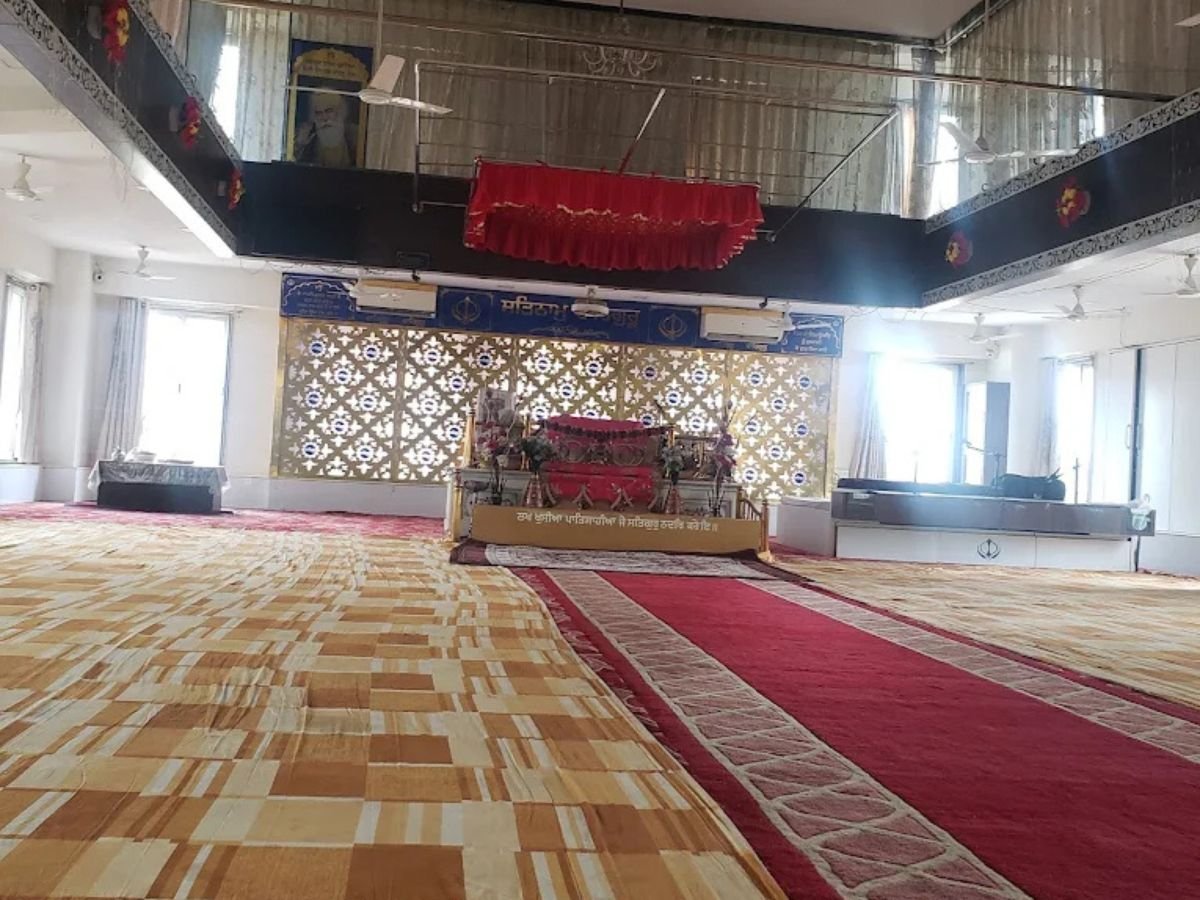
Your research specifically notes that the Sector 15 branch is located adjacent to the Sanpada Bus Station, which makes it highly convenient for commuters. This is a real-world utility point, because many people in Navi Mumbai move node-to-node by bus and prefer a location that is naturally on the transit path rather than inside residential lanes.
For your blog, the correct tone is to describe Sector 15 as a practical access point, not as a “different Gurudwara.” Many visitors will use it for quick prayers and community touchpoints, especially when they are already on the bus-station side. This framing protects trust and matches how the research describes the two-presence system.
When Sector 15 Is the Better Choice
Sector 15 is the better option when someone is coming directly by bus, is short on time, or wants the easiest last-mile route without relying on an auto from the station. It is also useful for people who are already in the Juhu Nagar and bus-station belt and prefer a quick, reliable entry to a Gurudwara space.
In your article, this becomes a strong GEO section because it makes the reader feel guided by lived navigation logic, not by copied addresses. The moment your readers feel “I can reach this easily,” your content wins over generic directory pages that don’t explain which pin suits which visitor intent.
How to Reach Rail and Bus Paths That Match Sanpada Reality
Your research provides a clear reachability split: rail visitors usually arrive at Sanpada station and then take a short auto towards the Sector 9 complex, while bus visitors often land near the Sector 15 branch because it is adjacent to the bus station. This is exactly the kind of simple, intent-based routing that helps your blog rank for “how to reach” queries.
For car users, the safest advice in a Sanpada guide is to keep buffer time during evenings and festival days, because node traffic can tighten quickly near station corridors. Instead of making hard claims about parking, guide people to plan early and rely on the correct map pin, because in Navi Mumbai, the correct lane entry often decides whether the visit feels smooth or frustrating.
Timings and Daily Routine What to Expect Without Guesswork
Your research states that the complex typically opens around 4:00 AM for early morning prayers and remains open until approximately 10:00 PM. It also notes that while tea may be available through the day, the main langar meals are typically served around lunch and dinner hours, with extended service on Sundays and festivals.
This section should be written as a planning tool rather than a strict promise, because local programmes can shift on special days. The most practical visitor logic is to treat early morning as the quiet window and evenings as the more active community window, and if someone is visiting specifically for a festival diwan, they should check the latest on-site announcement before planning travel.
Accessibility and Visitor Comfort Elders and Wheelchair Users
Your research explicitly mentions accessibility features, stating that the Gurudwara includes wheelchair-accessible entrances and exits to support elderly and disabled visitors. This is a meaningful detail for Sanpada because the audience is often families, and many visits include elders who need smoother movement and seating comfort.
For your blog, write this section in a practical, respectful tone: plan early, avoid peak rush if visiting with elders, and prioritise calm entry. Accessibility is not only about ramps, it is about crowd timing, and your guide becomes more valuable when it teaches visitors how to protect comfort without disturbing the atmosphere.
28 Feb & 1 March 2026 (Hind Di Chadar) Shri Guru Teg Bahadur Sahib Ji 350th Shaheedi Samagam
On 28 February and 1 March 2026, Navi Mumbai is hosting the “Hind Di Chadar” 350th Shaheedi Samagam in remembrance of Shri Guru Teg Bahadur Sahib Ji, with public coverage highlighting very high expected attendance and major civic planning. The venue has been reported in the Kharghar belt, so this is a city-level movement event, not limited to one node.
For Sanpada readers, the useful angle is travel planning across the Sanpada–Vashi–Nerul–Kharghar corridor. Even if someone prays in Sanpada first, they should keep buffer time, check advisories, and avoid last-minute routing assumptions on those dates. Add one responsible line in your blog: “We will update this section when a detailed official programme schedule or advisory is published.”
Visitor Protocols Maryada That Keeps the Space Peaceful
Your research states the basic protocols clearly: cover your head, remove shoes, maintain cleanliness, and keep the Darbar Sahib environment quiet and respectful. It also mentions the strict rule against intoxicants like tobacco and alcohol, which is central to Sikh discipline and is treated seriously in Gurudwara spaces.
Inside the Darbar Sahib, the most important thing is behaviour, not knowledge. Sit calmly, avoid loud conversation, keep your phone silent, and follow the sangat flow rather than trying to “figure out rules” in the moment. For families, arriving early is the simplest way to avoid pressure and keep the visit comfortable for elders and kids.
Dress Code and Entry Flow What First-Timers Should Do
The practical dress expectation is simple: modest clothing and a head covering, and the Gurudwara environment will feel welcoming. Your research also notes that the entry system is designed to keep the campus organised, including footwear management and a clear flow into the Darbar Sahib and langar areas.
For first-time visitors, the best advice is to arrive with a calm mindset and give yourself a few extra minutes at entry. The moment you slow down, the space becomes easier to understand, because the Gurudwara’s discipline teaches you what to do without needing someone to instruct you. That’s why the experience feels dignified rather than confusing.
Photography and Phone Etiquette Respect Before Content
Exterior photos are usually the least sensitive part, because they help people remember the visit and also help with navigation. Inside the Darbar Sahib during prayers, filming and casual selfies can disturb the sangat, so the respectful approach is to keep the phone away and protect the atmosphere.
If someone is a creator, the safest rule is permission-first and crowd-first. Avoid recording people who are praying, do not block pathways, and never treat the Darbar Sahib like a shoot location. This guidance helps your blog feel practical and culturally aware, which improves trust and long-term rankings.
Programs and Festivals The Yearly Rhythm of Sanpada Gurudwara
Your research describes Sanpada Gurudwara as a major community hub where festivals become city-level gatherings, not small neighbourhood events. It mentions patterns like Gurpurabs, Vaisakhi, Nagar Kirtan, Akhand Paath, and martial heritage elements like Gatka, which together reflect how Sikh institutions preserve culture while serving the city.
The best way to write this section is to explain what changes on festival days rather than claiming fixed schedules. Expect higher sangat, longer kirtan flow, bigger langar scale, and more organised crowd management. If someone wants exact timings for a particular programme, the safest practice is to check announcements at the Gurudwara close to the event date.
Gurpurab and Akhand Paath Why These Days Feel Different
Gurpurab days carry a deeper emotional tone because they centre remembrance and collective worship, and your research notes they often involve Akhand Paath patterns. Akhand Paath is the continuous recitation of the Guru Granth Sahib, and it naturally shapes the Gurudwara environment into a more intense, disciplined spiritual rhythm over the programme duration.
For visitors, the practical difference is crowd and flow. You may see longer seating time, a more structured entry pattern, and a larger volunteer system operating in the background. If you are visiting with elders, arrive earlier than you think you need to, because comfort is easier to protect before peak crowd builds.
Nagar Kirtan and Gatka Public Procession and Heritage
Your research includes Nagar Kirtan as a major community expression where devotional singing moves through public space, often involving organised seva and disciplined crowd movement. It is a strong local identity marker because it brings the Gurudwara spirit into the city’s streets while still keeping a respectful tone.
Gatka is presented as a martial heritage tradition that reinforces Sikh values like courage and discipline, and it is usually showcased around major programmes. In your blog, write it as heritage and discipline first, and as “performance” second, so it remains respectful. This section also helps you rank for deeper informational queries that competitors often ignore.
Internal Linking Plan and Schema How to Make This Rank Stronger
This article becomes stronger when it sits inside a Navi Mumbai spiritual cluster rather than standing alone. Link it to your Sanpada main area guide and then to Vashi, Nerul, Seawoods, and CBD Belapur guides, because Sanpada visitors often move across these nodes. Google sees this as topical authority and rewards the site that behaves like a local knowledge base.
Conclusion
Gurudwara Sri Guru Singh Sabha, Sanpada is important because it functions as both sanctuary and system. The Darbar Sahib gives calm, the langar gives equality, and the organised seva culture makes the institution dependable even during stressful phases. In a mixed urban node like Sanpada, that dependability becomes a civic strength.
If you are visiting for the first time, keep it simple: choose the right location pin based on your route, arrive with buffer time, and follow maryada without overthinking. Sector 9 is usually best for a complete campus experience, while Sector 15 is ideal for bus-station-side convenience. The visit feels best when you match the Gurudwara’s discipline with your own calm.
FAQs
Frequently Asked Questions