
Gurdwara Guru Nanak Darbar New Panvel – Timings, Langar, History & Visitor Guide
New Panvel is a planned node, but the city’s real character comes from the communities that settled here and built institutions that feel permanent. Gurdwara Guru Nanak Darbar stands in that category, a place that functions as prayer space, community kitchen, and social support system in the fast-growing Panvel–Kalamboli corridor.
This guide is written for the questions people actually search: where it is, how to reach, what timings look like, how langar works, what etiquette to follow, and which days feel busiest. It also covers the deeper side that listings don’t explain well, like the Gurudwara’s social role and the “seva ecosystem” that keeps it running.
Quick Summary Table
This table is designed for fast reading and AI Overviews. It gives a clean snapshot, then the sections below explain each point with local context so the page feels like a real guide, not a directory entry. Gurdwara Guru Nanak Darbar Rese
If you are visiting for the first time, the simplest planning rule is to arrive with buffer time and follow the flow. Gurudwara visits feel best when you enter calmly, because the Darbar Sahib atmosphere depends on shared discipline, not on rushing. Gurdwara Guru Nanak Darbar Rese
Why Gurdwara Guru Nanak Darbar Matters in New Panvel
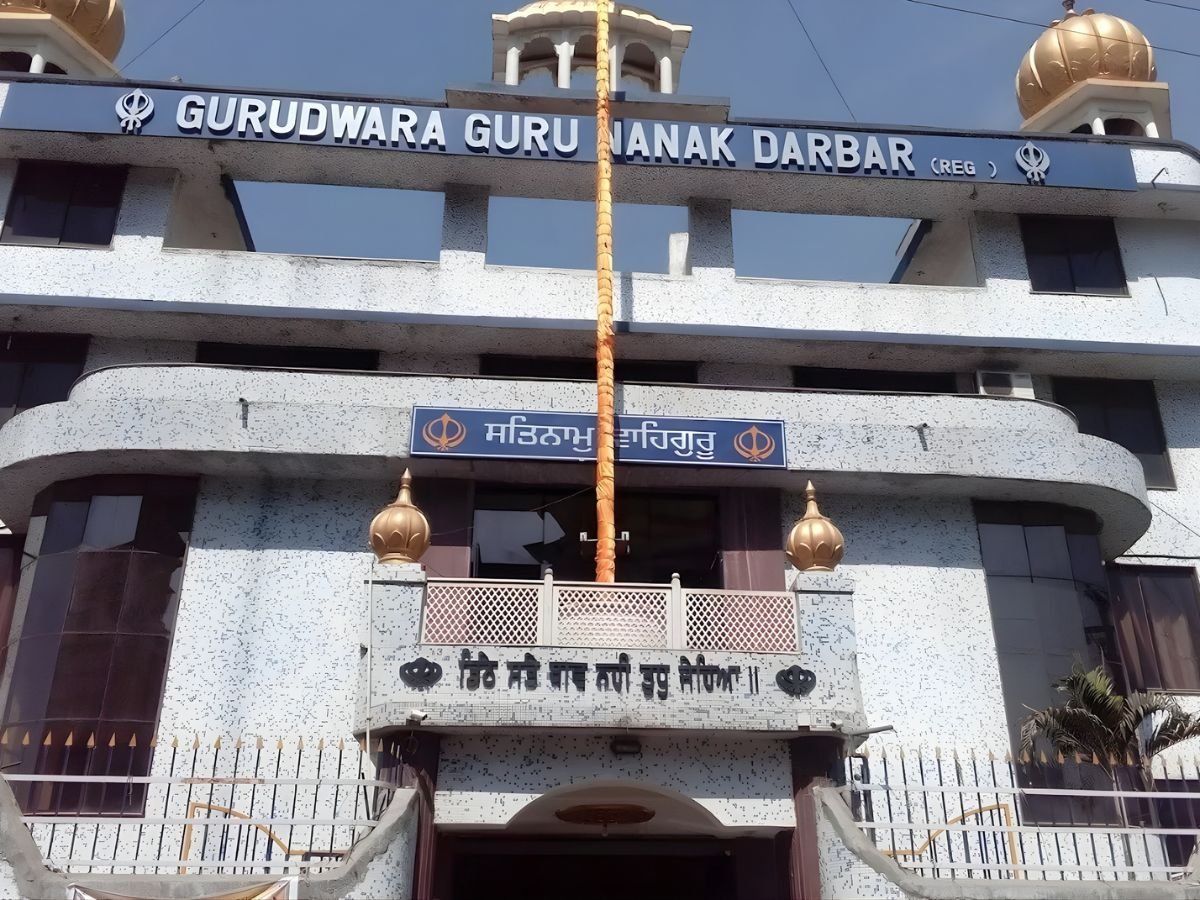
Your research frames the Gurudwara as a stabilising institution inside a planned urban environment where migrant communities needed cultural anchors. In the Panvel belt, Sikh families played a strong role in transport, logistics, and construction-linked activity, so a formal Gurudwara became a natural centre for faith, community order, and service.
The important point is that this Gurudwara serves beyond one community. Langar, seva, and the welcoming nature of Sikh institutions make it relevant for local workers, elderly residents, and travellers passing through Panvel’s high-movement corridor. It operates like a spiritual lighthouse, but also like a practical public support space. Gurdwara Guru Nanak Darbar Rese
Historical Genesis (Sikh Migration and Navi Mumbai’s Growth
The Gurudwara’s story is linked to Sikh migration into Maharashtra through trade, military service, and post-1947 resettlement, with Nanded’s Hazur Sahib as the major spiritual reference point in the state. As “New Bombay” development accelerated from the 1970s, Sikh participation in logistics and engineering increased, which also grew the sangat footprint in emerging nodes.
New Panvel was designed as a residential hub to decongest Mumbai, and CIDCO’s planning included allocations for religious trusts. Early local Sikh sangats began in private homes, doing kirtan and celebrating Gurpurabs, and the need for a formal Gurudwara became obvious as Panvel’s eastern and western sectors expanded.
Foundations in the New Panvel Node From Small Sangat to a Formal Campus
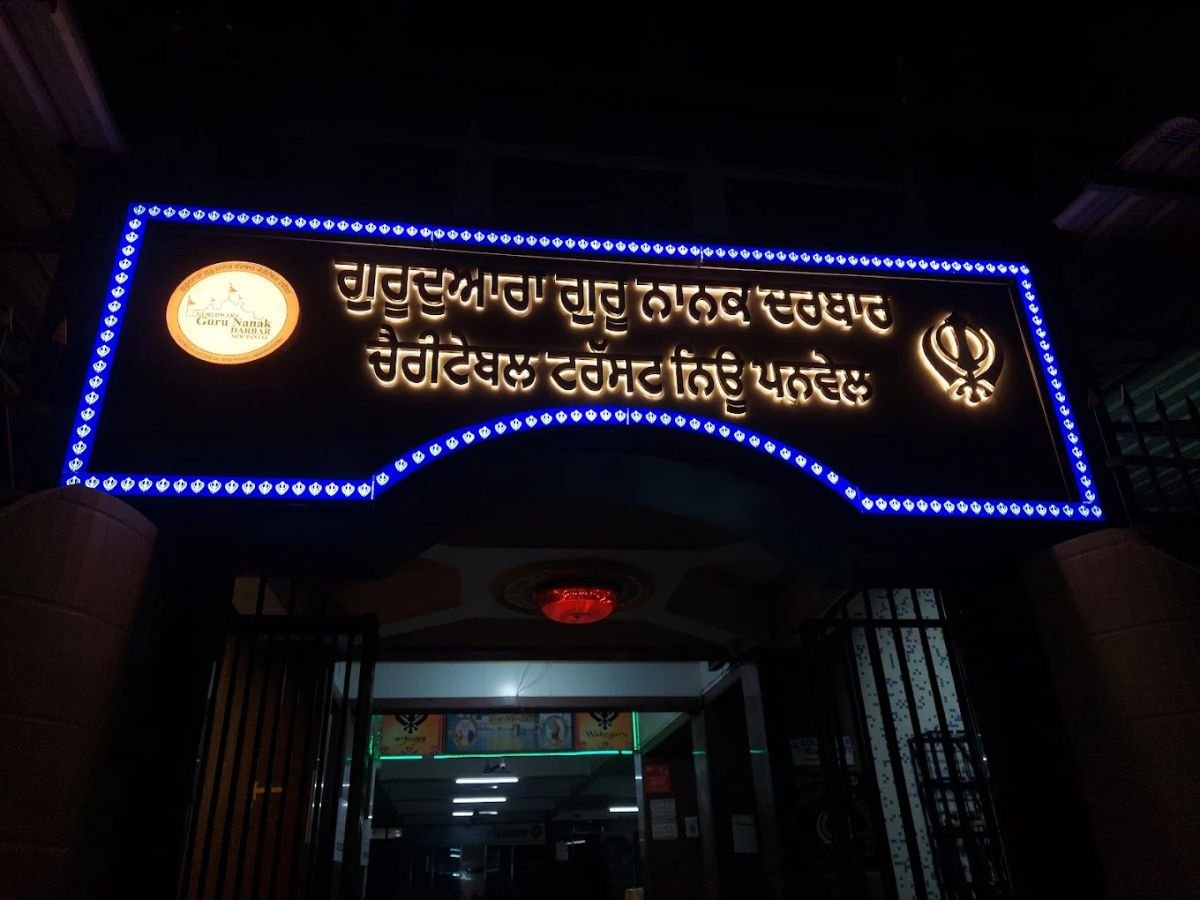
Your research notes that the Gurudwara emerged as a central assembly point for families around Sector 15, Sector 6, and adjacent areas like Kalamboli and Kamothe. The name “Guru Nanak Darbar” itself carries meaning, it reflects the idea of an egalitarian court where everyone is welcome, and it echoes the dharamsal tradition started by Guru Nanak during his travels.
The formalisation of the site through CIDCO land acquisition signals legitimacy and long-term community presence in the Raigad belt. Over time, what began as a modest prayer arrangement evolved into a multi-functional complex that hosts worship, langar, welfare work, and community organisation. That evolution mirrors New Panvel’s own transformation from outpost to urban hub. Gurdwara Guru Nanak Darbar Rese…
Architecture and Structural Philosophy Openness, Equality, Function
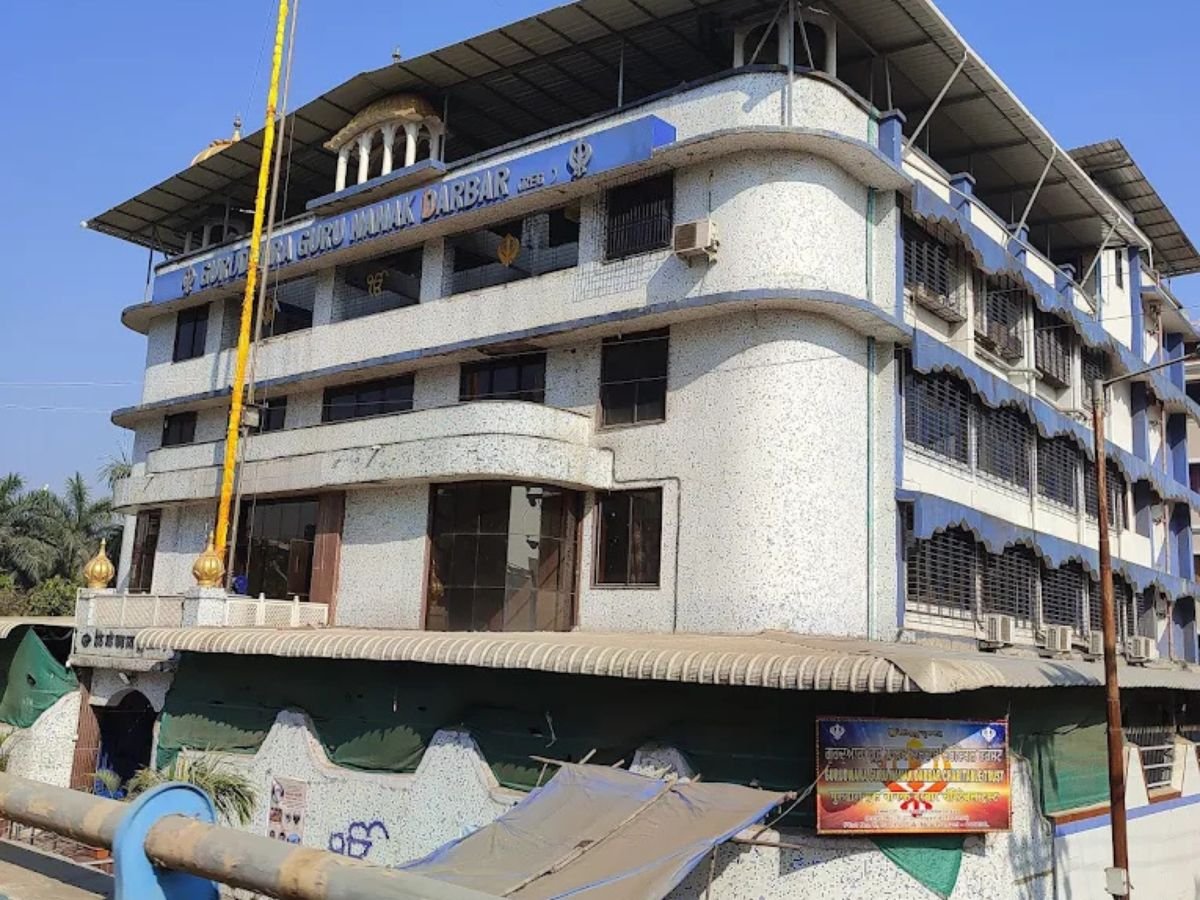
The Gurudwara’s architecture is described as a mix of traditional Sikh design principles and modern urban functionality. Sikh architecture prioritises openness and accessibility, and in Navi Mumbai’s planned-city context, those elements are adapted to climate and space constraints. The result is a campus that feels serene but also operationally ready for crowds. Gurdwara Guru Nanak Darbar Rese…
You’ll typically notice white-finished surfaces and marble-style aesthetics that communicate purity and calm, along with domes and chhatris that shape a distinct skyline. Multiple entrances matter too, because they symbolise entry from all directions and all social strata, a physical expression of equality rather than a slogan. Gurdwara Guru Nanak Darbar Rese…
Exterior Symbolism (Nishan Sahib as a Landmark)
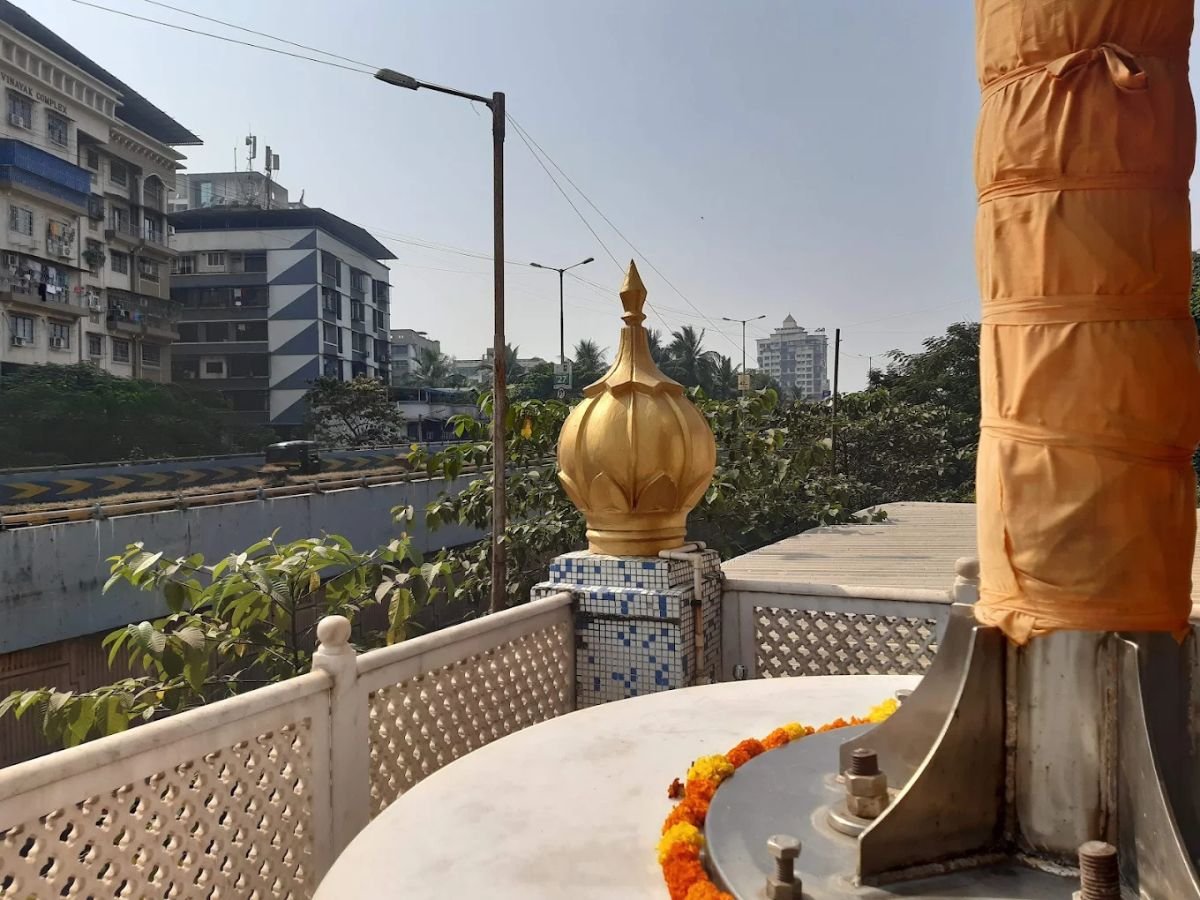
The most recognisable marker is the Nishan Sahib, the saffron triangular flag on a tall flagpole topped with the Khanda. In New Panvel, your research notes that it functions as a visible vertical landmark from nearby residential buildings and even from the Sion–Panvel Highway side, signalling that the Gurudwara is a sanctuary space.
This visibility is not just aesthetic, it has a social meaning. The Nishan Sahib communicates that food and protection are available to any traveller or seeker, regardless of background. In a corridor that sees constant movement of people, work, and migration, that symbolism lands in a very practical way.
Inside the Darbar Sahib (Equality Built into the Space)
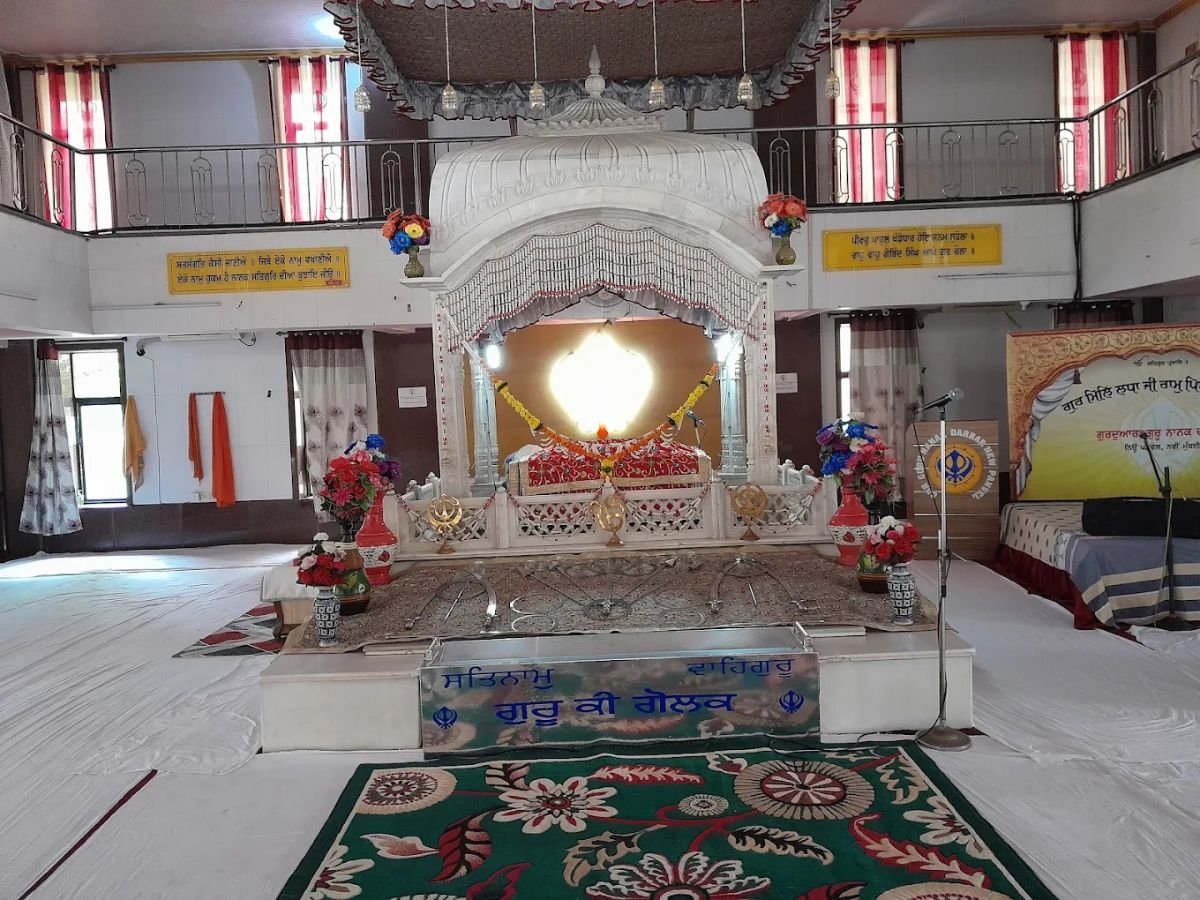
The heart of the Gurudwara is the Darbar Sahib, organised around the presence of the Guru Granth Sahib as the living Guru. Your research describes an expansive seating area where devotees sit on the floor, which is not a comfort choice, it is an equality choice. The space is designed so the sangat participates together, without hierarchy.
Key elements like the Palki Sahib, canopy, and the raised platform (Manji Sahib) are not decoration, they represent the sovereign status of the scripture. Acoustic and ventilation priorities help create a meditative environment, letting the sangat detach from the noise of Panvel’s commercial and industrial edges.
Langar in New Panvel (Daily Food, Real Equality, Clean Systems)
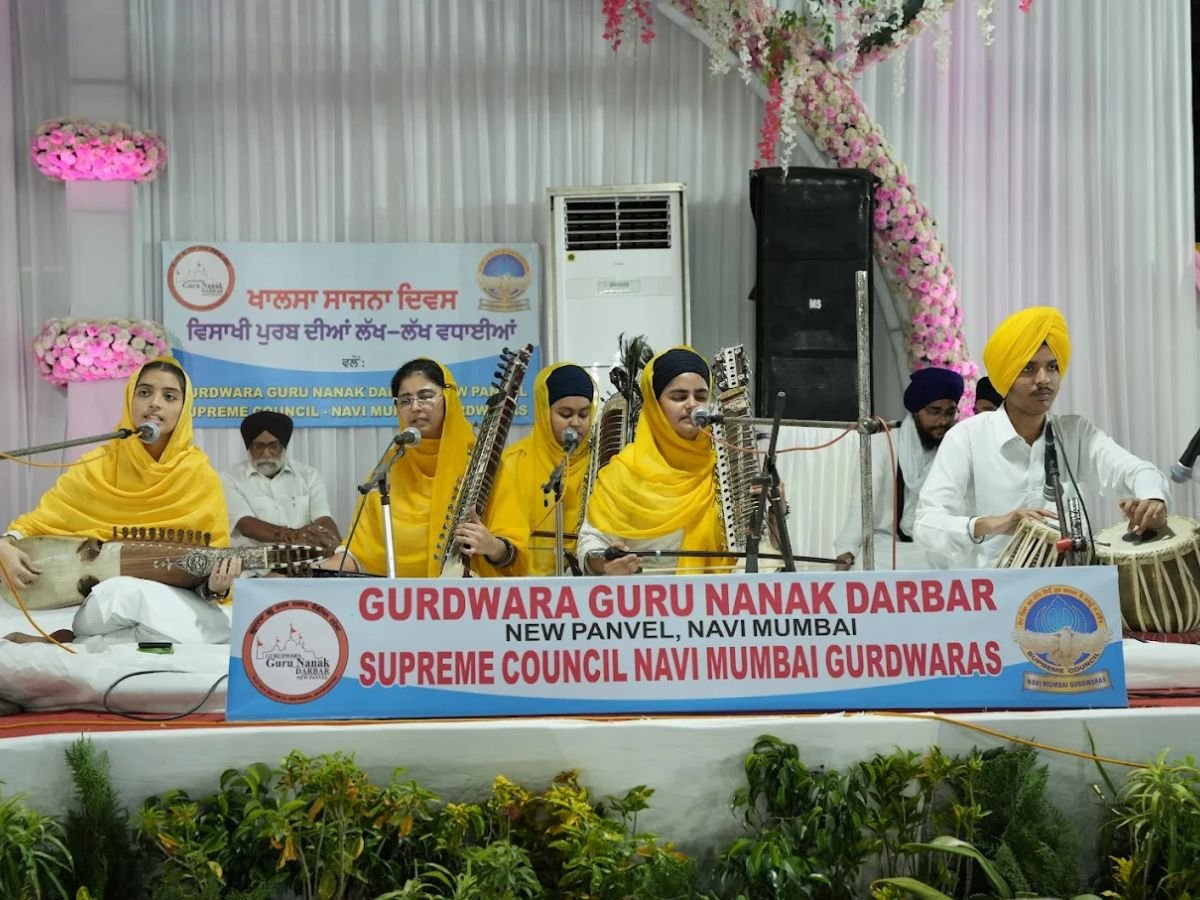
Your research describes langar at Gurdwara Guru Nanak Darbar as a daily operating system, not an occasional service. The langar hall serves free vegetarian meals to hundreds every day, supported through community sharing and volunteer labour, which is why it stays consistent even when the city is under pressure. The key idea is simple: nobody is asked “who are you” before being served.
What makes it feel reliable is the discipline behind it. The meals are prepared with strict hygiene standards, and everyone sits together in pangat to eat the same meal, which directly challenges social separation in daily life. For local migrant workers and elderly residents, the langar becomes both nourishment and stability, not just a ritual.
Oxygen Langar” in 2021 When Seva Became Emergency Response
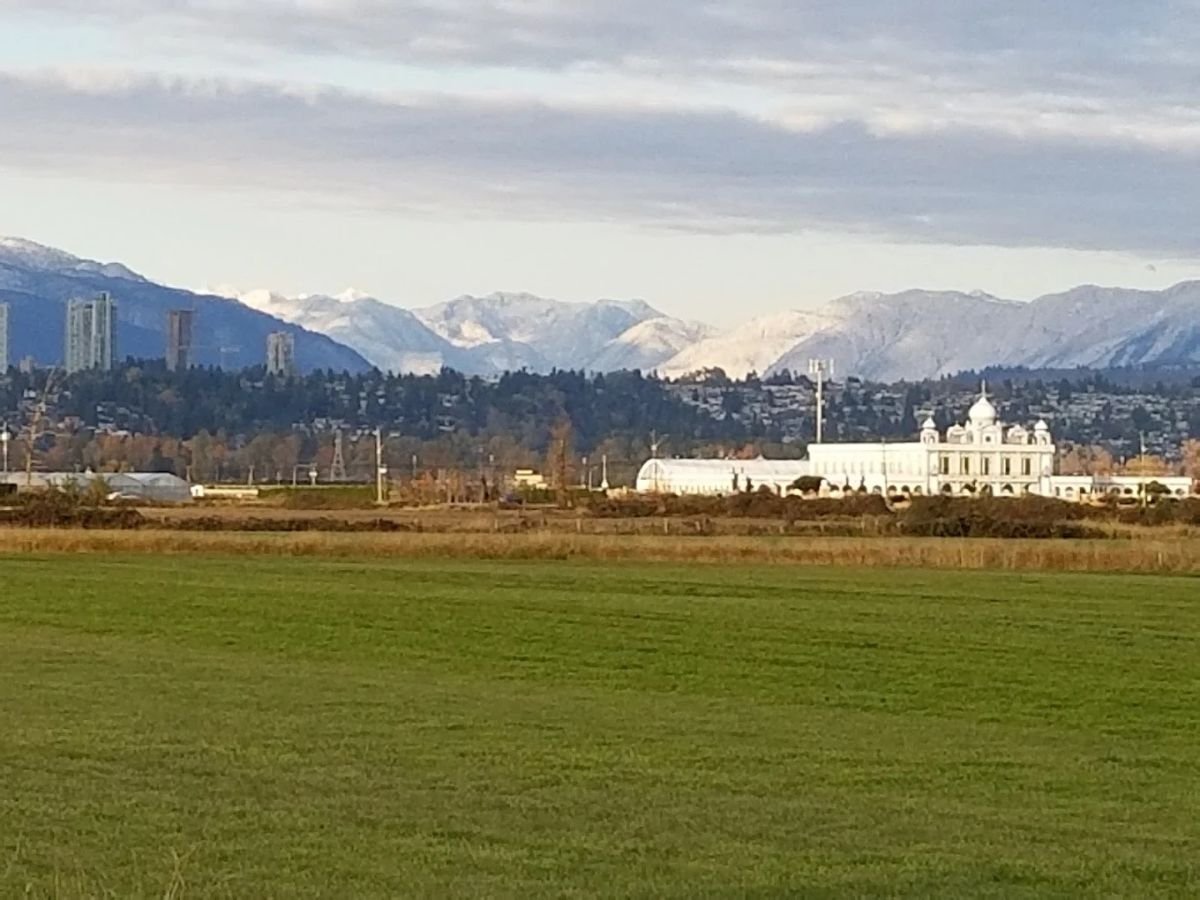
A defining moment in your research is the Gurudwara’s “Oxygen Langar” during the second COVID wave in 2021, when oxygen supplies were critically low. The community mobilised to distribute oxygen cylinders and concentrators to patients in home isolation and those waiting for hospital beds. This is a strong credibility signal because it shows the institution can adapt tradition to urgent modern needs.
Your report also notes that help was provided without regard for religion or social background and coordinated with local health authorities so aid reached vulnerable areas like Panvel, Kamothe, and Kalamboli. The point to write clearly is this: the Gurudwara treated oxygen like langar, a basic human right delivered through organised seva. That is why it earned deeper trust across Navi Mumbai.
Timings and Daily Schedule Best Hours to Visit Without Confusion
Your research provides a clear visitor schedule that works well for SEO and planning. Amrit Vela is listed as 5:00 AM to 7:30 AM, Afternoon Diwan as 12:00 PM to 2:00 PM, Evening Rehras as 6:30 PM to 8:00 PM, and Sukhasan at 9:00 PM. This structure helps readers pick the right time based on whether they want silence or community energy.
The report also notes Sundays as the busiest day due to a special Diwan that draws families from across Navi Mumbai, while weekday mornings are best for quieter contemplation. That’s a practical, local way to guide readers: if you want a calm Darbar Sahib experience, go early on a weekday; if you want to see the Gurudwara in full community flow, come on Sunday and keep buffer time.
Location and Landmarks Sector Cues That Locals Actually Use
Gurdwara Guru Nanak Darbar to Navi Mumbai International Airport
| Route Options | Distance (km) | Estimated Time | Key Landmarks |
|---|---|---|---|
| Route 1 (via NH548) | 19.6 km | 31 min | Dr Babasaheb Ambedkar Flyover, JNPT Waterfall, MLCP 11 |
| Route 2 (via North Rd) | 17.5 km | 28 min | Swaraj Farm House, Magic Hill, Navi Mumbai Airport Entry |
| From | To | Bus No. | Service Provider | Details |
|---|---|---|---|---|
| Adaigaon Phata | Panvel Rly Station (E) | 59 | NMMT | 9 stops (8 min) |
| Adaigaon Phata | Khandeshwar Rly Station (E) | 59 | NMMT | 7 stops (10 min) |
| Belapur Bus Depot | NMIAL Terminal 1 | A-3 | NMMT | 11 stops (16 min) |
| Reti Bandar | NMIAL Terminal 1 | A-2 | NMMT | 2 stops (6 min) |
| Nerul Rly Station (E) | NMIAL Terminal 1 | A-4 | NMMT | 10 stops (20 min) |
| Central Bank C.B.D. | Reti Bandar | 23 | NMMT | 7 stops (10 min) |
How to reach from Gurdwara Guru Nanak Darbar to Railway station
Driving Routes: Gurdwara Guru Nanak Darbar to Panvel Station
| Route Option | Distance | Estimated Time | Main Landmarks |
|---|---|---|---|
| Route 1 (via Matheran Rd) | 4.3 km | 15 min | Sister’s Vadapav, Hotel Phoenix, Matheran Road |
| Route 2 (via Sector 14) | 3.7 km | 12 min | Shree Ayyappa Temple, Cidco Amphitheater |
| Route 3 (via Janardhan Bhagat Marg) | 4.0 km | 13 min | Lek View, Heartfulness Meditation Centre, Hotel Swadist |
Bus Options: Gurdwara to Panvel Station
| Details | Option 1 (Bus 50) | Option 2 (Bus 59) |
|---|---|---|
| Initial Walk | 25 min (1.8 km) to Panvel Stop | 7 min (450 m) to Adaigaon Phata |
| Bus Number | 50 (NMMT) | 59 (NMMT) |
| Stops & Time | 6 stops / 9 mins | 9 stops / 8 mins |
| Drop-off | Panvel Station (West) | Panvel Station (East) |
| Ticket Fare | ₹9.00 | ₹9.00 |
| Total Duration | 37 Minutes | 20 Minutes (Fastest) |
How to reach from Gurdwara Guru Nanak Darbar to Bus Depot
Panvel Route Guide: Gurdwara Guru Nanak Darbar to Bus Depot
| Feature | Route 1 (via Vijay Marg) | Route 2 (via Matheran Rd) |
|---|---|---|
| Total Distance | 2.8 km | 3.3 km |
| Travel Time | 9 mins | 9 mins |
| Key Landmarks | DMart New Panvel, New Panvel Flyover, Vijay Sales | Lake View, Matheran Rd Roundabout, Vijay Sales |
| Main Roads | Gurudwara Rd, Vijay Marg | Matheran Rd, SC Rd |
| Destination | Bus Depot, Aviraj Building, Old Panvel | Bus Depot, Aviraj Building, Old Panvel |
Bus Route Options: Adaigaon to Panvel
| Bus No. | Boarding Point | Intermediate / Stop | Final Bus Stop | Duration (Stops) | Leg Cost |
|---|---|---|---|---|---|
| 59 | Adaigaon Phata | Panvel Railway Station (E) | Abhyudaya Bank | 7 min (7 stops) | ₹9.00 |
| AC73 | Panvel | — | Panvel S.T. Bus Stand | 7 min (4 stops) | ₹10.00 |
| 59 | Adaigaon Phata | — | Khanda Colony | 5 min (2 stops) | ₹17.00* |
| AC73 | Panvel | — | Panvel S.T. Bus Stand | 7 min (4 stops) | Included |
How to reach from Gurudwara Guru Nanak Darbar Airoli to CSMIA
Travel Routes: Gurdwara Guru Nanak Darbar to Mumbai Airport
| Route Option | Distance | Estimated Time | Main Highways / Landmarks | Tolls |
|---|---|---|---|---|
| Via Atal Setu (MTHL) | 55.0 km | 1 hr 23 min | Atal Setu (MTHL), NH548, Eastern Freeway, BKC Connector | Yes |
| Via Sion-Panvel Highway | 40.6 km | 1 hr 14 min | Sion-Panvel Hwy, Vashi Toll, Ghatkopar-Mankhurd Link Rd, SCLR | Yes |
Major Bus Routes: Adaigaon, Mankhurd & BKC
| Bus No. | Starting Point | Destination | Route Details / Intermediate Stops | Service Provider |
|---|---|---|---|---|
| 59 | Adaigaon Phata (near Gurudwara) | Panvel Railway Station (E) | 9 stops (approx. 8 mins) via New Ticket Counter Road. | NMMT |
| 59 | Adaigaon Phata (near Gurudwara) | Khandeshwar Railway Station (E) | 7 stops (approx. 10 mins) via Adai Road/Adaigaon Road. | NMMT |
| 105 | Mankhurd Station (North) | Bandra Bus Station | 20 stops (approx. 32 mins) ending at Income Tax Office (BKC). | NMMT |
| 255 LTD | GTB Nagar Station | J.V.P.D. Bus Station | 11 stops (approx. 16 mins) via Dharavi Flyover. | BEST |
Location and Landmarks Sector Cues That Locals Actually Use
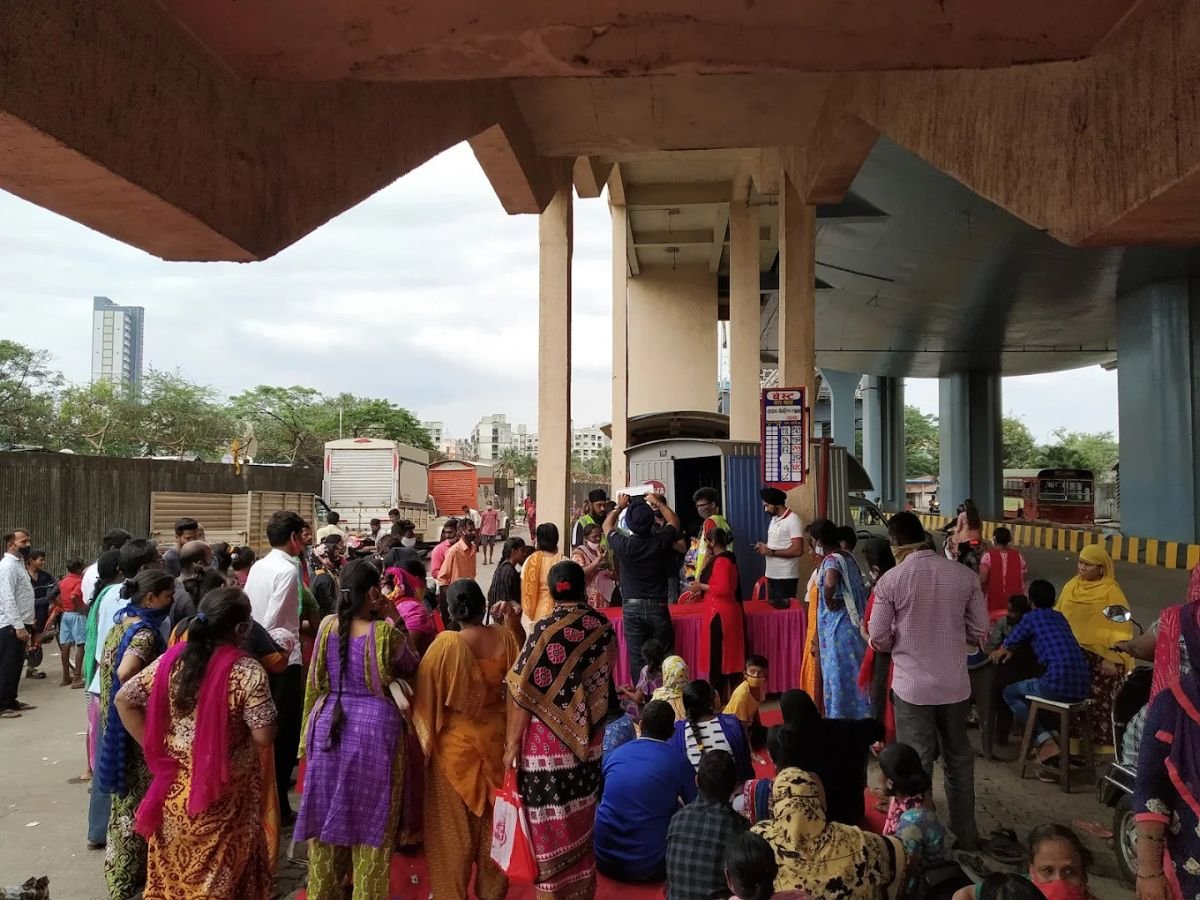
Your research pins the Gurudwara in the New Panvel sector belt with practical landmark cues that people recognise quickly. It highlights the Sector 6 side and notes it is opposite Bank of Maharashtra, Sector 5, which is exactly the kind of local reference that works better than vague “near Panvel” statements. These cues help first-time visitors reach the correct lane without confusion.
The same notes also connect the Gurudwara’s approach to the wider Panvel corridor, including highway visibility and the fact that it is easy to access from neighbouring pockets like Kamothe and Kalamboli. This matters because New Panvel’s layout can feel repetitive to outsiders, but a bank landmark and sector reference gives immediate clarity. It makes the guide feel grounded, not generic.
Visitor Protocols Maryada for First-Timers in New Panvel
Your research lists the core protocols very clearly: cover your head before entering, remove shoes at the shoe area, maintain cleanliness, and keep the Darbar Sahib atmosphere quiet and respectful. These rules are not symbolic, they protect the prayer flow, especially during busy Sunday diwans when movement inside the hall needs discipline. If you follow the sangat rhythm, you will feel naturally guided.
It also highlights strict avoidance of intoxicants like tobacco and alcohol, which is a foundational rule in Sikh spaces. Inside, sit calmly on the floor, avoid loud conversation, and do not treat the Darbar Sahib like a sightseeing spot. If you bring kids or elders, arriving early helps because you can settle footwear and seating without any rush.
Festivals and Major Events Gurpurab to Bandi Chhor Divas
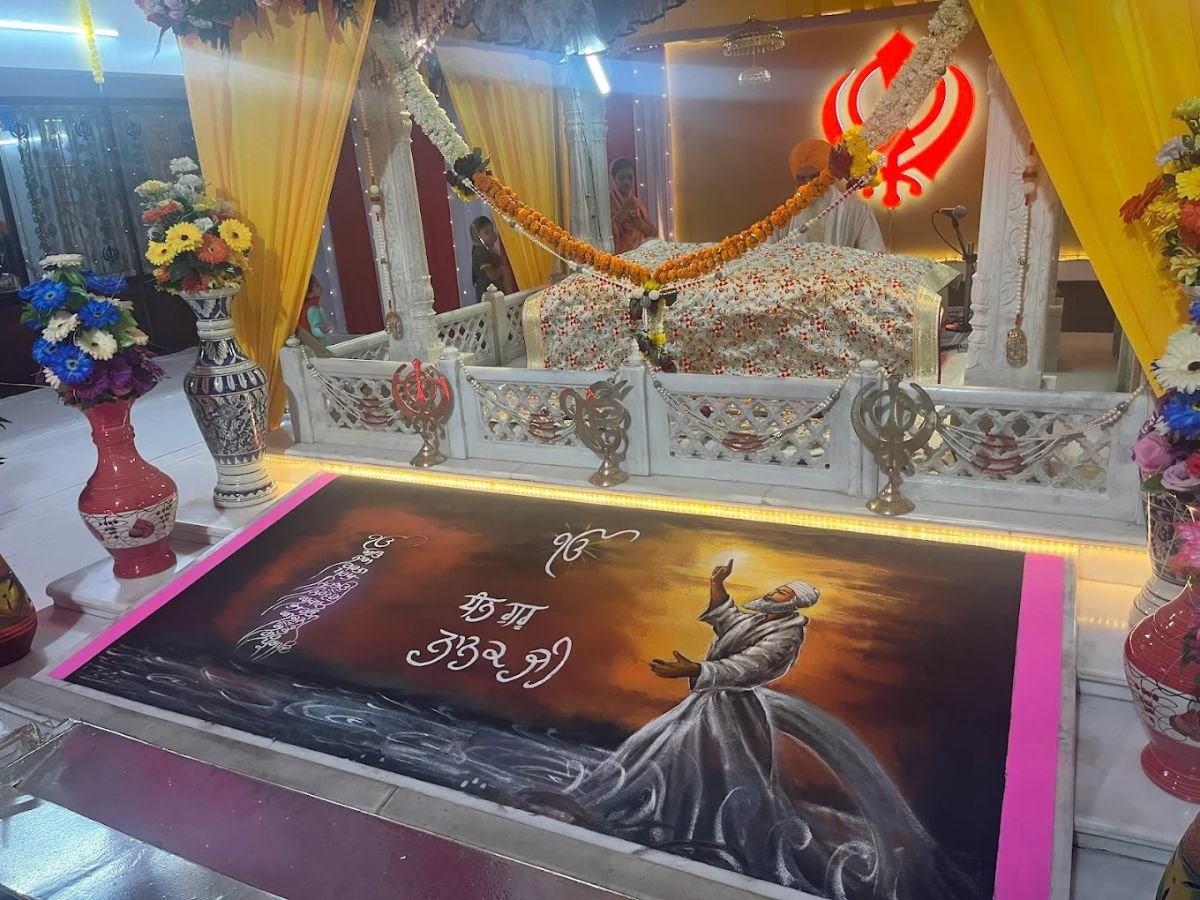
Your research points to major Sikh events that shape the Gurudwara’s yearly rhythm, including Gurpurab, Nagar Kirtan, Baisakhi, and Bandi Chhor Divas. These days usually bring higher sangat, longer kirtan flow, and expanded langar operations, which is why the campus feels more like a city-level gathering point. For visitors, these are the best days to feel community energy, but they require better planning.
The right way to write this section is to explain what changes on these days rather than claiming fixed schedules. Your guide should encourage visitors to arrive early, expect crowd management, and follow announcements for programme timings. This keeps the blog accurate over time and protects trust, because event formats can vary year to year depending on local planning and sangat scale.
How to Reach Gurdwara Guru Nanak Darbar New Panvel Train, Highway, Local Access
Your research notes that the Gurudwara is in a well-connected part of New Panvel, with direct accessibility from Panvel Railway Station (Harbour and Central lines). It also highlights that the site sits close to key corridors like the Mumbai–Pune Expressway and the Sion–Panvel Highway, which explains why visitors come not only from Panvel but also from the wider Navi Mumbai belt.
For first-time visitors, the most reliable route logic is simple: reach Panvel station, then take a short last-mile ride into th Gurdwara Guru Nanak Darbar Rese…oming by car, plan buffer time on Sundays and festival days, because New Panvel’s movement pattern changes quickly with local traffic and crowd peaks.
Seva Roles and Community Contribution How the Campus Runs Daily
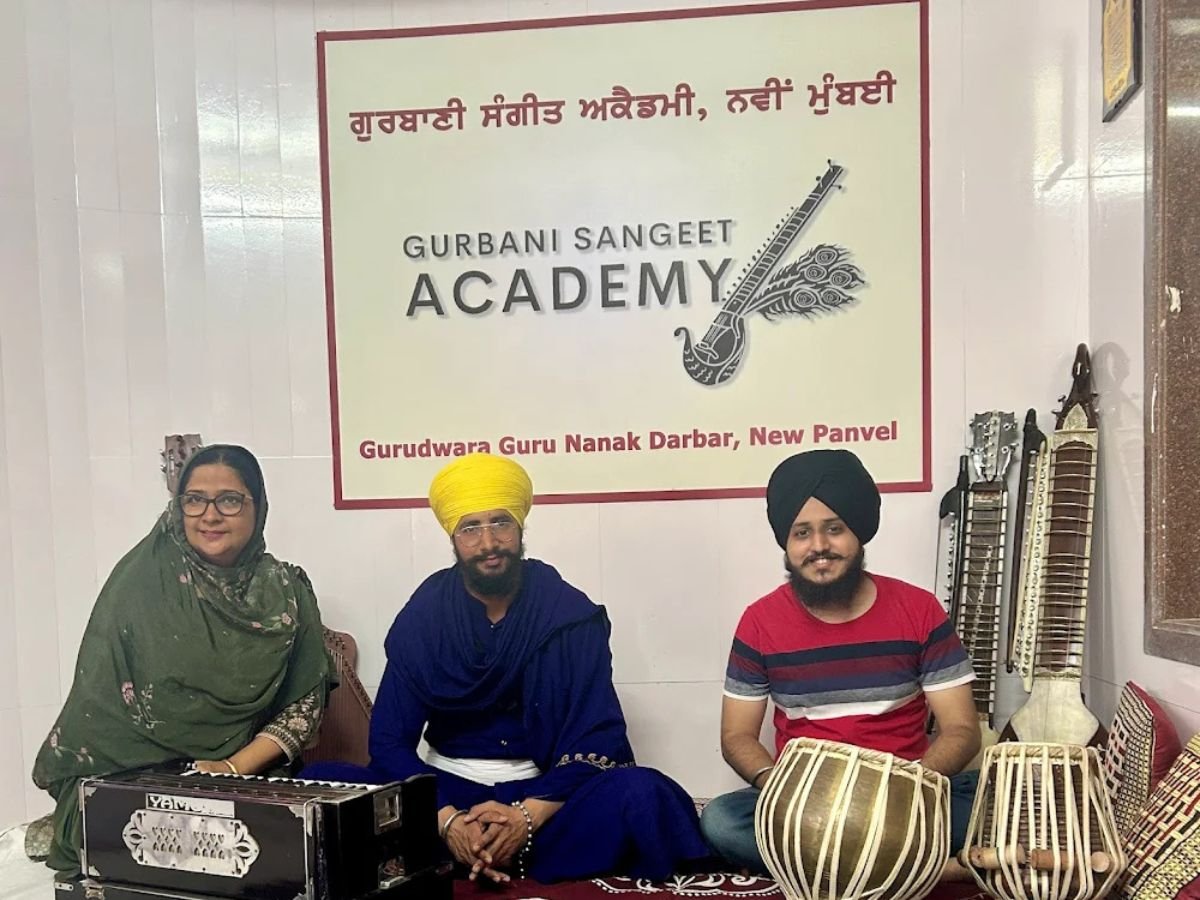
Your research describes the Gurudwara as a socia s the operating model. The langar system runs daily through Vand Chakna style community sharing and the consistent labour of sevadars, which is why it remains stable even when demand rises. This makes the Gurudwara feel like a functioning institution, not a place that depends on occasional charity.
For readers, the most practical guidance is that seva can be physical, quiet, and routine: helping in langar preparation, serv low respectful. The message to write clearly is that seva is worship in Sikh tradition, and that mindset is why the Gurudwara’s systems feel disciplined even on high-footfall days. Gurdwara Guru Nanak Darbar Rese…
28 Feb & 1 March 2026 Hind Di Chadar Shri Guru Teg Bahadur Sahib Ji 350th Shaheedi Samagam
On 28 February 202 Di Chadar” 350th Shaheedi Samagam in remembrance of Shri Guru Teg Bahadur Sahib Ji. Public coverage states the venue is Owe Maidan, Sector 29, Kharghar, with very large expected attendance and a full traffic and safety planning push by authorities.
For New Panvel readers, the value of this section is practical planning. Even if you are not staying in Kharghar, the Panvel–Kharghar belt can see higher movement, route changes, and longer travel time on those two days, so keep buffer time and check advisories before leaving. In the blog, add one responsible line that you’ll update this section if a detailed programme schedule or official advisory is published.
Best Time to Visit Quiet Darshan vs Full Sangat Experience
Your research makes the timing logic very clear: weekday mornings around Amrit Vela are calmer, while Sundays draw larger sangat due to the weekly gathering pattern. If someone wants a peaceful Darbar Sahib experience with minimal waiting, early morning on a weekday is the best choice because movement is smoother and the atmosphere feels more meditative.
If someone wants to feel the full community rhythm, Sunday is the right day, but it needs planning. Arrive with buffer time for footwear, seating, and langar flow, because crowds can rise quickly during Diwan hours. This section is important for ranking because it answers a practical question directory pages rarely explain clearly.
Conclusion
Gurdwara Guru Nanak Darbar in New Panvel matters because it blends faith with function. The Darbar Sahib gives calm, the langar system gives equality, and the seva culture makes the institution reliable even during emergencies, as seen during the Oxygen Langar effort. In a fast-growing corridor, that reliability becomes a real civic asset.
If you are visiting for the first time, plan a calm entry, follow maryada, and let the prayer rhythm guide you. Choose a weekday morning if you want peace, and choose Sunday if you want the full sangat atmosphere, with enough buffer time. The Gurudwara gives back most when you approach it with the same discipline it practices every day.
FAQs
Frequently Asked Questions