Owe Camp & Corporate Park: Sector 29, Kharghar
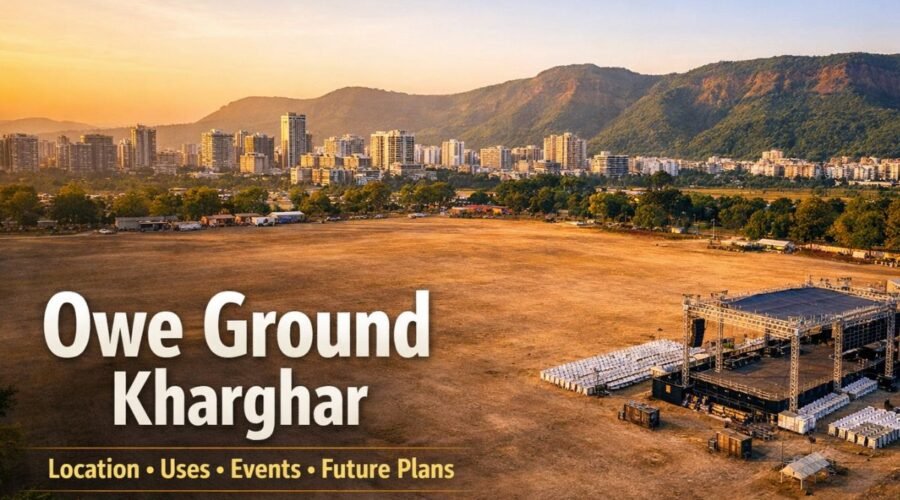
Owe Ground is one of those places in Kharghar that doesn’t look dramatic at first glance. It’s “just a ground.” Then you spend a Sunday there and you realise it’s basically a public living room for half of north Khargharcricket nets, football runs, festival crowds, political gatherings, everything.
This ground is not only a community space anymore, it’s a contested zone. Sector 29 is sitting at the edge of a major CIDCO vision called the International Corporate Park (ICP), a “BKC 2” style commercial pivot that will permanently reshape Owe Gaon’s surroundings.
Quick Summary
| Point | Details |
|---|---|
| Common names | Owe Ground / Owe Maidan / Corporate Park Ground |
| Location context | Sector 29, Kharghar, near Owe Gaon (north Kharghar belt) |
| Why it matters | Rare large open space used for sports + mega gatherings |
| What’s changing | CIDCO’s International Corporate Park (ICP) planned across Sectors 28–33 + Owe parts |
| Major civic pain point | Debris dumping, encroachments, enforcement gaps |
| Best time to visit | Morning/evening on regular days; event days need buffer time |
| Trust signal | Last verified on: [ Feb 26, 2026] |
Sector 29 has both old and new identities running in parallel: Owe Gaon’s gaothan logic and CIDCO’s grid logic. Acknowledging that reality is important instead of pretending the area is fully “settled.” It isn’t. Not yet.
What is Owe Ground and Why It Matters in Kharghar
Owe Ground is one of the most vital multi-functional open spaces in Navi Mumbai, mainly because of its scale. A ground this large is rare in a city where towers grow faster than parks, so naturally it becomes the default venue for sports, community gatherings, and mega events.
What makes Owe Ground especially important is the mix of people it serves. Owe villagers, CIDCO mass-housing families, premium high-rise residents, and students from nearby education zones all use the same open space. That shared usage is what makes it feel like a “real city ground,” not a private society playground.
Sector 29 as Kharghar’s Northern Frontier
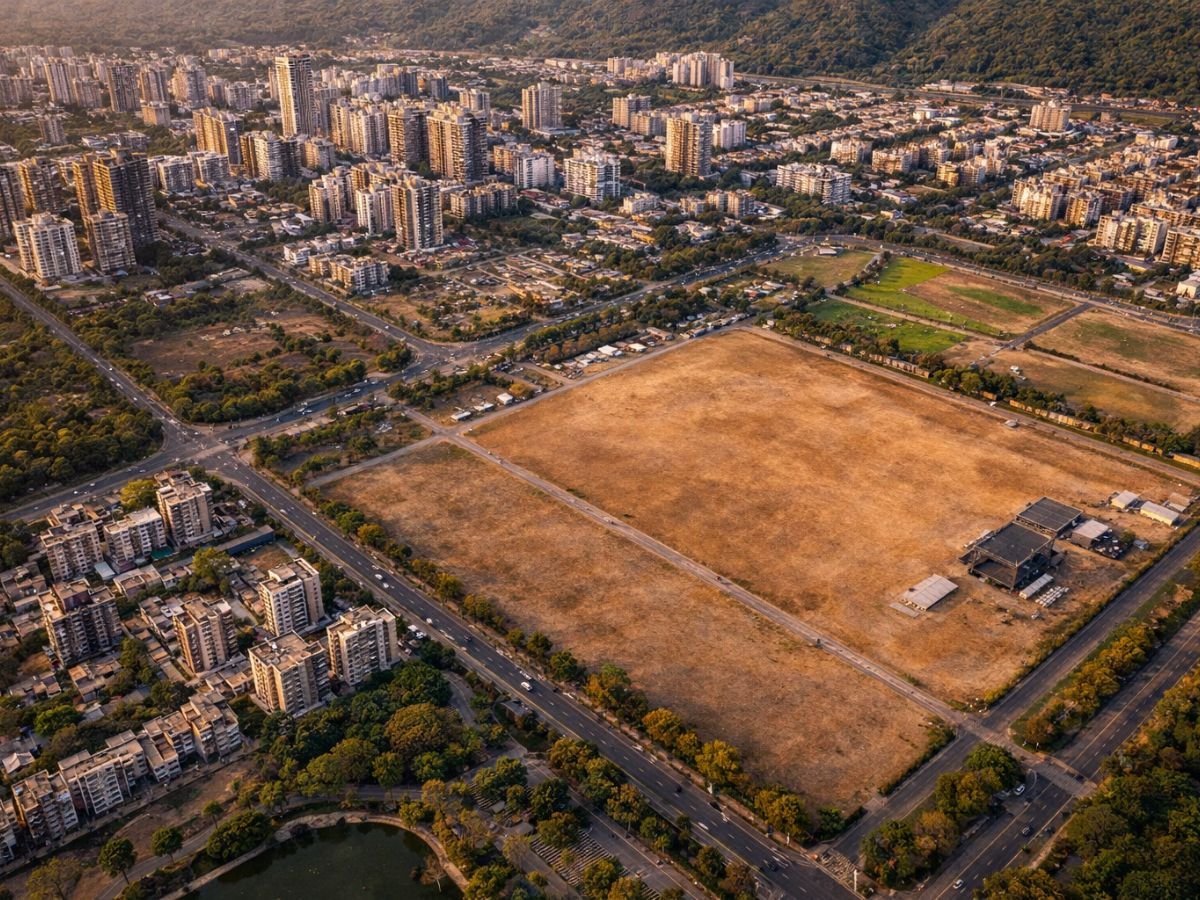
Sector 29 acts as a deliberate transition zone in CIDCO planning, sitting between residential expansion and the industrial fringes toward Taloja. In older phases, central Kharghar grew first, while the northern periphery retained more of its gaothan charm around the hills and seasonal water bodies.
That history matters because it explains the “unfinished” feeling some people still notice here. Sector 29 looks like two timelines at once: village lanes in one pocket and 20-storey towers in another. Owe Ground sits right in the middle of that friction, which is why it attracts both everyday sport use and high-stakes planning attention.
Why People Call It “Owe Ground” and “Corporate Park Ground”
The same ground is referred to by multiple names: Owe Ground as a community term and Corporate Park Ground because it sits inside the larger corporate park planning belt. Online, this creates confusion, but on the ground, locals understand it by context and route. Treating both names as valid is the safest approachsame area, different naming conventions. Simple. Honest.
Historical Roots of Owe Gaon
Owe Gaon’s identity is rooted in the Agri and Koli communities, with livelihoods tied to rice farming, seasonal cycles, and coastal ecology. This matters because the village is not a “recent settlement,” it’s an older Konkan social fabric that existed before CIDCO’s grid arrived.
When Navi Mumbai planning began in the 1970s, Kharghar was envisioned as a premier node, but Owe’s northern periphery stayed relatively insulated for a long time. That insulation is why Owe Gaon still exists as a distinct enclave today, even as modern towers rise around it. It’s not a leftover. It’s an ongoing presence.
CIDCO Planning Logic for Sector 29
Owe Ground wasn’t an accident; it was a deliberate reservation within CIDCO’s master planning as an amenity/open-space plot. Originally, such land is meant to act as a lung space for high-density living, and the ground was intended as a regional-scale sports and recreational facility.
Then the logic shifted as the Navi Mumbai International Airport gained momentum. CIDCO consolidated a large belt across Sectors 28, 29, 31, 32, 33 and parts of Owe Village into the International Corporate Park (ICP) vision. In that pivot, Owe Ground becomes an anchor for commercial-led transformation, not just recreation.
The Land Struggle and PAP Reality
Land acquisition and negotiation with local farmers slowed development, with PAPs seeking compensation packages like the 12.5% developed plot scheme. This historical tension is why Owe Gaon remains a tighter street enclave beside CIDCO’s planned blocksa village morphology inside an urban grid.
This is not just policy, it’s identity. People don’t surrender ancestral land quietly, and when negotiations stretch, the area develops in uneven layers. This context is crucial because it explains why the “future corporate hub” narrative is running alongside “village continuity” at the same time, in the same sector.
A Human Note About Identity
Sector 29’s story is not only about walls, roads, and plots, it’s also about who gets to feel at home when a place becomes expensive. There is clear gentrification pressure and value shifts once multinational offices arrive. Development is good, but it should not erase the people who carried the land’s memory.
How People Use Owe Ground Today
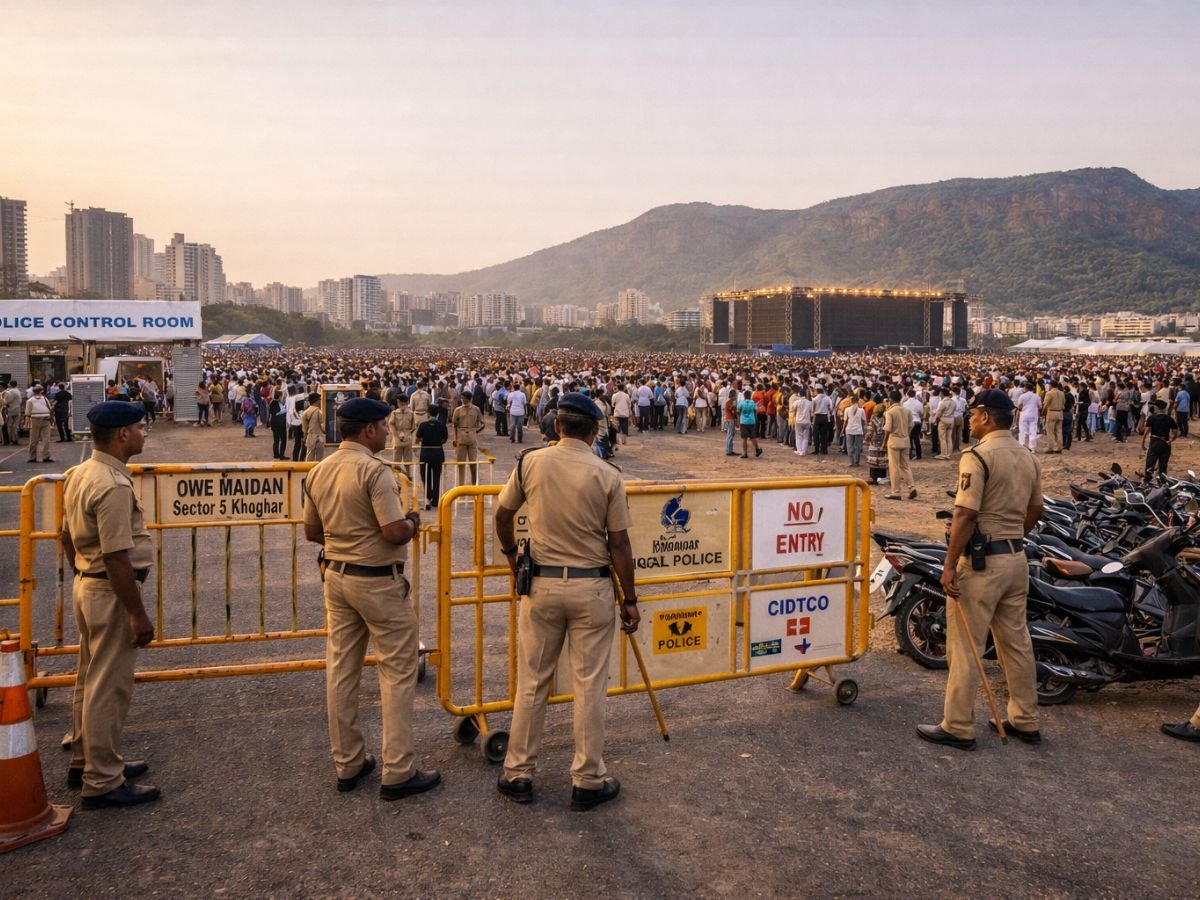
Owe Ground is a rare “multi-use” open space that serves both routine and scale. On regular days it behaves like a neighbourhood sports hub: morning walkers, kids practicing, casual cricket, football drills. Then suddenly, on event weekends, it becomes a city venue with loudspeakers, barricades, crowd flow, and that feeling that the whole belt has shown up.
What makes it uniquely Kharghar is the mix of people using it at the same time. Owe Gaon residents, high-rise societies, students, and commuters from the sector grid share one ground without a membership gate. That shared usage is why the space feels public in the true sense, not “public on paper.”
Sports Identity (Why This Ground Matters to Youth)
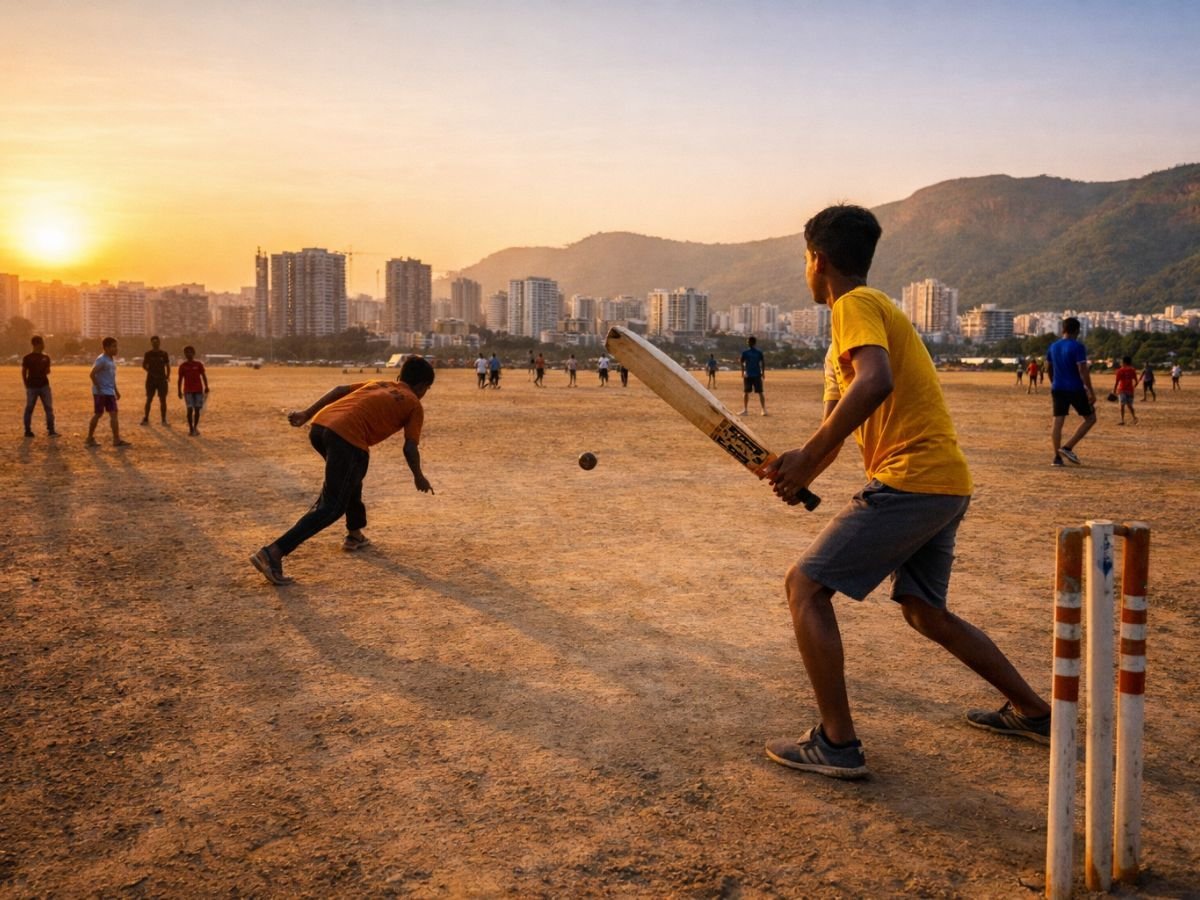
Open grounds in Kharghar are disappearing under real estate pressure, which makes a large playable area more valuable every year. Owe Ground acts like a pressure valve for the node, giving young people a place to run hard without needing a paid turf. That matters more than people admit.
The ground’s scale also allows multiple games to happen at once, which is why it gets used for informal tournaments and practice sessions. If Kharghar wants a healthy youth culture, it needs spaces like this that are simple, free, and accessible. Everything else is secondary.
A Small Truth About City Grounds (Why People Get Emotional)
People don’t get emotional about grass. They get emotional about what grass represents: freedom, childhood, community, and a place that doesn’t charge you for existing.
That’s why even small changes around the ground trigger strong reactions. When an open space feels threatened, people feel their city is becoming less breathable. And yes, that feeling is real in Navi Mumbai too, especially in nodes that are growing faster than their parks.
Civic Issues (Debris Dumping, Encroachments, Enforcement Gaps)
The biggest problem on the ground level is debris dumping and waste. The ground is often treated like a convenient dumping pocket during construction cycles, with encroachments slowly creeping in where enforcement is weak. That doesn’t just spoil aesthetics, it changes ground usability and safety.
The deeper issue is governance mismatch. The land is tied to CIDCO planning, while daily civic control often feels unclear to residents, leading to “everyone knows it’s wrong, but nobody stops it” outcomes.
Parking and Crowd Pressure on Event Days
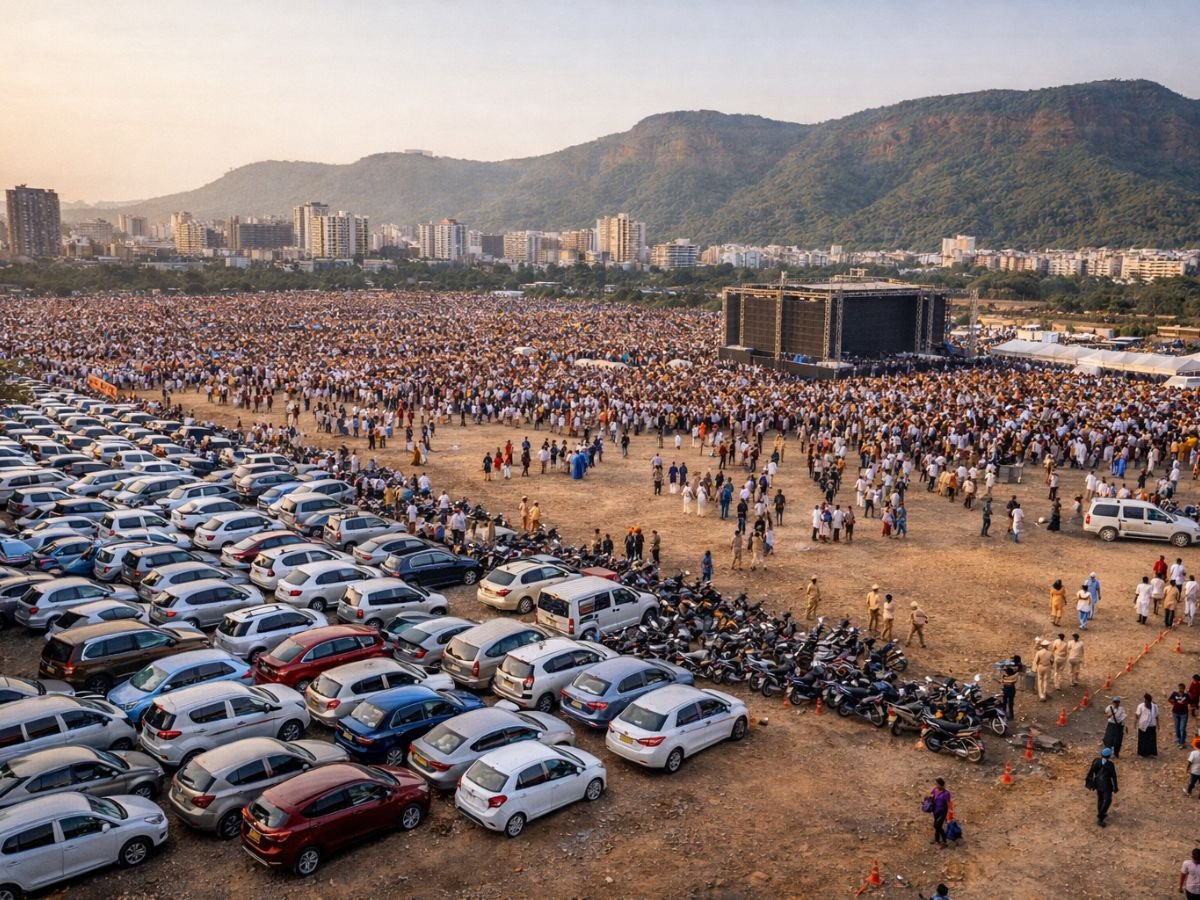
Event days change the whole corridor’s movement pattern. Parking spills into surrounding lanes, noise rises, and traffic becomes unpredictable, especially for families living nearby. For visitors, the right approach is simple: buffer time, early arrival, and acceptance that you are entering a high-footfall zone.
For residents, the pressure feels different because it repeats. A ground that hosts major gatherings needs proper crowd management, entry points, and sanitation planning, otherwise the neighbourhood absorbs the cost. That is why the “event venue” identity must come with civic discipline, not just permissions.
Cleanliness Etiquette (A Public Ground Is Only as Good as Its Visitors)
If visitors don’t treat public spaces with basic respect, no authority can keep up. Cleanliness is not only a municipal job here, it is also a community behaviour issue. The ground suffers when people treat it like a disposable venue.
A simple local rule works: leave it cleaner than you found it. Not because it sounds nice, but because if this ground deteriorates, it will be “developed” into something that doesn’t serve the public anymore. And once open space is gone, it rarely comes back.
Future Plans Around Owe Ground (ICP “BKC 2” and Transformation Pressure)
Sector 29 is part of CIDCO’s International Corporate Park (ICP) vision, which is often framed as “BKC 2” for Navi Mumbai. This plan spans a large belt across Sectors 28–33 and parts of Owe, intending to bring multinational offices, commercial towers, and high-value development into the area. That means Owe Ground will sit beside a very different city in the next decade.
This future has two faces. On one side, jobs, infrastructure, and better connectivity. On the other side, pressure on open space, gentrification around Owe Gaon, and a shift in who can afford to remain near the ground. The truth is, development is coming, the question is whether the ground remains public in spirit, not only in land records.
Sports Infrastructure Proposal
There are proposals and local expectations around upgrading parts of the ground into a FIFA-standard football ground style facility. This is a powerful ambition, but it should be viewed as proposed or expected rather than confirmed, pending official tenders.
Still, the very existence of such proposals shows the ground’s importance. Nobody talks about upgrading a useless plot. They talk about upgrading a space that already carries community value. So even as the corporate park narrative expands, sports development becomes a key argument for keeping the ground functional and protected.
Compound Wall and Boundary Control
Boundary control ideas like compound walls are also being discussed, mainly as a response to dumping and encroachment. This is controversial for public grounds because walls can protect a space, but they can also restrict access if managed poorly.
If a boundary is built, the deciding factor will be governance: who controls gates, who maintains cleanliness, and whether sports access remains inclusive. In Navi Mumbai, “improvement” sometimes becomes privatization quietly. It is important to watch governance details, not just construction plans.
How to Reach Owe Ground (Sector 29) Without Confusion
Because Sector 29 is a transition belt, the biggest visitor problem is not distance, it’s choosing the right entry road. The safest logic is to route toward the Owe Village/Owe Gaon belt and then confirm the pin near Sector 29, because the same area gets labelled as Owe Ground, Owe Maidan, and sometimes “Corporate Park” in public references.
Keep it simple: reach Kharghar and use last-mile auto or car depending on weather and family comfort. On event days, arrive earlier than your instinct, because Sector 29 crowds create ripple traffic across the node and even small delays become big delays.
By Bus and Local Stops
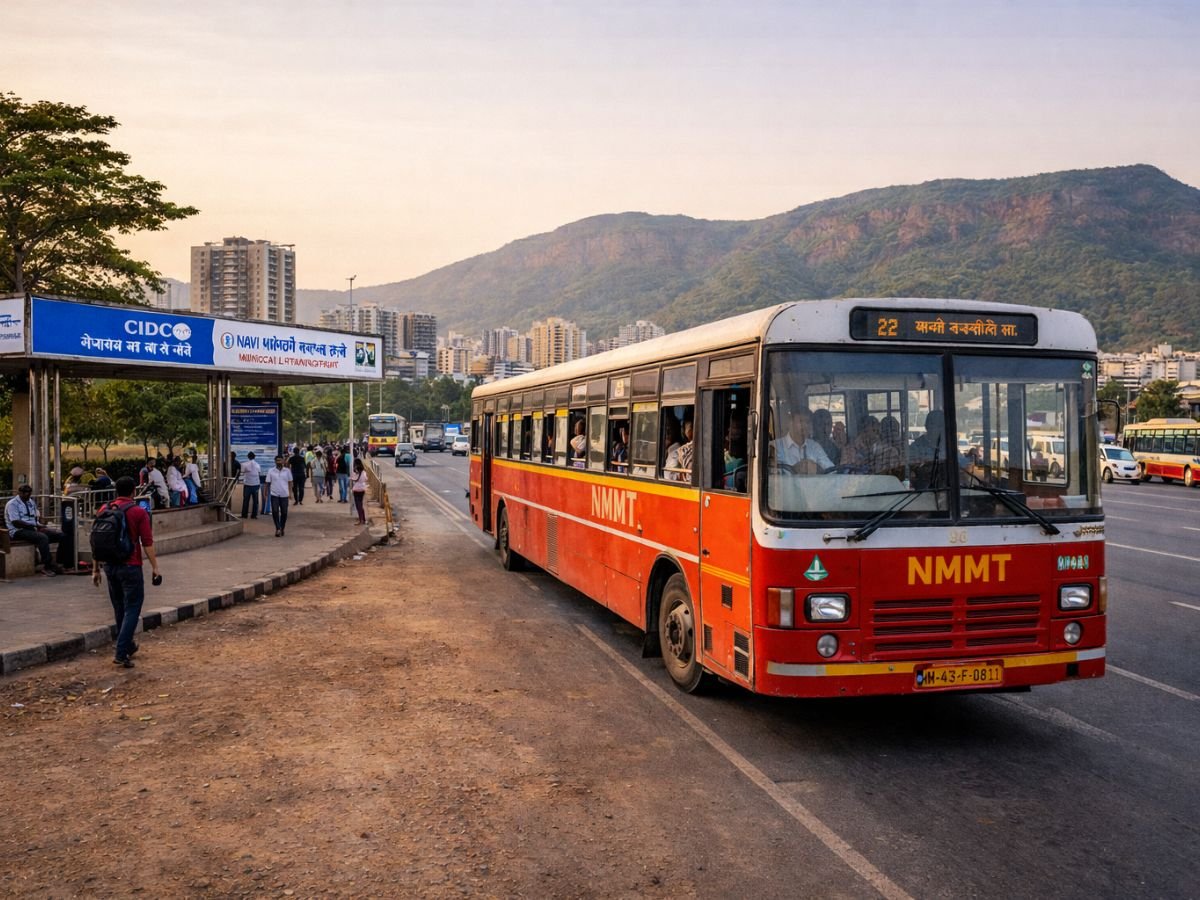
Public transit data shows clear nearby stop cues that people actually use: Sai Satsang, Kharghar Sector 35 Circle, and Ove Gaon CISF appear as closest stops for the Owe Village belt. Stop names are more reliable than “sector talk” when you’re new to the area.
Common bus lines in this belt include 125TAC, 45AC, 54AC, and 55AC, which is useful for visitors coming from other nodes. Schedules can change, so verify in your transit app on the same day.
One Practical Tip That Saves Time
If you’re coming with elders or kids, choose the route that keeps walking minimal, because the last 300–500 meters can decide your mood. Stops like Sector 35 Circle and Sai Satsang are helpful because they give you a predictable walking start point instead of random lane entry.
Also, don’t chase shortcuts through half-finished internal roads during monsoon or late evening. Sector 29 is still in a shifting development phase, and “shortcuts” often become slowdowns. Boring routes are faster here.
The "Owe Camp" Phenomenon: A City Within a City
While Owe Ground is the stage, the surrounding “Owe Camp” setup for the 350th Shaheedi Samagam (Feb 28 – March 1, 2026) represents a masterclass in temporary urban planning. This isn’t just a gathering; it is a fully functioning ecosystem designed to support a footfall of nearly 2 million people. The “Camp” identity transforms Sector 29 from a quiet northern frontier into a high-service corridor featuring a 80,000-capacity main pavilion,
dedicated langar (community kitchen) zones capable of feeding lakhs simultaneously, and an unprecedented medical grid. With a dedicated on-site ICU unit and a temporary bridge constructed at Kopra specifically to filter traffic, the “Owe Camp” serves as a bridge between Kharghar’s village roots and its future as a world-class corporate hub. It is a temporary testament to what this land can handle before the International Corporate Park (ICP) permanently rewrites the skyline.
Past Major Events at Owe Ground (Sector 29, Kharghar)
1) Large political rally logistics (Nov 2024)
In November 2024, traffic arrangements were organized around the “helipad” Owe Cricket ground in the Sector 29 belt during a PM Modi rally-linked planning context. It involved no-parking and diversions on routes connecting Kharghar/Taloja to the venue area, which confirms the Owe Ground/Cricket Ground zone has been used as a high-security, high-footfall event corridor earlier too.
2) Official / civic inspections and joint reviews (Feb 2026, pre-event)
Ahead of the 2026 two-day congregation, officials and civic leadership conducted on-site inspections and a joint civic review at Owe Ground to prepare for crowd management, health setup, sanitation, and safety readiness. The venue is routinely treated like a large public infrastructure zone, not just a casual ground.
3) Lead-up citywide programmes tied to commemorations (Feb 2026)
Before major events, there are often linked commemorative activities reported as part of wider campaigns, such as the “Hind Di Chadar” student participation and mass tribute initiatives. These prelude programmes occur across Navi Mumbai/Konkan, culminating at main congregations scheduled at Owe Ground.
(Note on Venue Labels: Some reports refer to the same Sector 29 venue belt as Owe Ground/Owe Maidan, while others refer to it as Corporate Park in Sector 29. Always follow official advisories for final entry gates.)
28 Feb & 1 March 2026 – “Hind Di Chadar” 350th Shaheedi Samagam
A large two-day congregation tied to the 350th Shaheedi Samagam is scheduled on February 28 and March 1, 2026. The venue is publicly described as Owe Ground, Sector 29, with a multi-agency planning approach due to very high expected footfall.
Official Planning and Crowd Management
Official district notices describe the program being organised in Kharghar/Navi Mumbai from 28 Feb 2026 onward. For visitors, the real value is practical: advise buffer time, avoid last-minute route assumptions, and await detailed route advisories or timetables closer to the date.
Conclusion
Owe Ground is valuable because it is one of the last large public open spaces in this part of Kharghar that still behaves like a true community ground. The future is heavy: corporate park expansion, boundary debates, and transformation pressure, which makes today’s everyday usage feel even more important.
If you visit on a normal day, you’ll see the simple joy of a city ground. If you visit on an event day, you’ll see how Sector 29 turns into a corridor-level hub. Both are real, and both deserve to be documented honestly as a core part of Kharghar’s identity.
FAQs
Frequently Asked Questions