

How is a Property valued in Navi Mumbai: Complete Guide
A property in Navi Mumbai does not have just one value. In real life, there are usually three different numbers around the same property: the market value, the government value used for stamp duty, and the bank’s own valuation for loan approval. Once you understand this, property pricing becomes much less confusing.
That is exactly where many buyers and sellers get stuck. A seller quotes one number, the bank approves a lower number, and the government still calculates charges on another number. In Navi Mumbai, this gets even more local because CIDCO land status, transfer charges, freehold conversion, station access, water supply, and redevelopment potential can all change valuation in a very practical way.
Quick summary near the top
| Term | What it really means | Who uses it | Why it matters |
|---|---|---|---|
| Asking price | The amount the seller wants | Seller or broker | Usually higher than the final deal price |
| Market value | The price a buyer is realistically willing to pay in the current market | Buyers, sellers, brokers, valuers | This is the real negotiation zone |
| Ready Reckoner value | The government’s baseline value for stamp duty and registration | Registration department | Stamp duty is charged on deal value or RR value, whichever is higher |
| Bank valuation | The bank’s cautious value for loan approval | Bank and technical valuer | Decides how much loan you may actually get |
What property valuation means in Navi Mumbai

Property valuation simply means finding a fair financial value for a property at a given time. It is not a random guess. It is based on sales data, official rates, physical condition, location, legal clarity, and buyer demand.
In Navi Mumbai, valuation is more layered than in many other cities because the city grew under CIDCO’s planning system. That means land status, transfer permissions, society paperwork, and even whether a property is leasehold or freehold can affect value.
This is why a flat in the same node can still carry a very different value. A clean-title flat near Seawoods station with proper parking and smooth society records will not be valued the same way as a similar-sized flat in the same node with unpaid CIDCO issues or weak water supply.
A simple way to see it
- Asking price is the dream
- Market value is the reality
- Deal price is the compromise
Suppose a seller in New Panvel lists a 2BHK for ₹1.20 crore. Similar homes in the same area may actually be closing around ₹1.05 crore to ₹1.10 crore. That means the market value is closer to that lower band, not automatically the seller’s number. The final deal may settle somewhere in between.
The 3 values people often confuse
The biggest confusion in property valuation in Navi Mumbai comes from mixing up three different values that serve three different purposes.
Market value
Market value is the price that a willing buyer and a willing seller are likely to agree on in the open market.
This number is affected by very practical things: proximity to railway stations, road access, age of the building, quality of society management, nearby infrastructure, water supply, parking, and even whether the flat is on a good floor with better light and ventilation.
This is also the number that moves fastest. If a location suddenly gets better connectivity or stronger demand, market value can move well before official RR rates catch up.
Ready reckoner value and bank valuation
| Value type | Who decides it | Main use | Negotiable? | Usual position |
|---|---|---|---|---|
| Ready Reckoner value | Government | Stamp duty and registration baseline | No | Often below active market value |
| Market value | Buyers and sellers in the real market | Final sale price | Yes | Usually highest in a strong market |
| Bank valuation | Bank’s technical valuer | Loan decision | No | Often lower than seller expectation |
The main methods used to value a property

Valuation is not done in one universal way. The method changes depending on the type of property.
Sales comparison method
This is the most common method for flats and resale homes in Navi Mumbai.
A valuer looks at recently sold similar properties in the same area and compares them with the subject property. They adjust for size, age, floor, parking, condition, view, and location within the node.
For example, if a 1,000 sq ft flat in Seawoods is being valued and similar flats recently sold around ₹15,000 per sq ft, that gives a base of ₹1.50 crore. If the flat has a better interior finish but no dedicated parking, the final estimate may move slightly up or down.
This is why comparing only by “2BHK in Kharghar” is weak. The comparison has to be much tighter than that. Sector, building age, road, and building reputation matter.
Income method and cost method
The income method is mostly used for commercial property such as shops and offices. If a shop or office earns stable rent, its value is often judged from that earning power.
Example: an office in Vashi earning ₹12 lakh annual rent, with ₹2 lakh annual expenses, leaves ₹10 lakh net income. If investors in Vashi usually expect an 8% yearly profit from rent, the value comes to roughly ₹1.25 crore.
The cost method is more useful for unique properties such as an independent house, a bungalow, or a special-use industrial structure. It works by adding land value and construction cost, then reducing for age and wear.
What actually changes property value in Navi Mumbai
In Navi Mumbai, valuation is not only about carpet area. Ground reality changes price.
Location, connectivity, and neighbourhood
Distance from a railway station still matters a lot. A flat within walking distance of Vashi, Nerul, Seawoods, or Sanpada station usually carries a stronger valuation than a similar flat that depends on daily autos or long internal travel.
Road quality also matters. Better access to Palm Beach Road, Sion-Panvel Highway, Atal Setu connectivity influence, or airport-side growth corridors can improve buyer interest. But buyers should be careful here. Future infrastructure can push asking prices up much faster than true end-user value.
Water supply is another real valuation factor. In some growth-heavy parts of Ulwe, Taloja, and parts of Kharghar, buildings that depend too much on tanker water often become less attractive because monthly maintenance rises and daily living becomes stressful.
Building quality, age, floor, view, parking, and legal status
A better building gets a better valuation even inside the same area.
What usually raises value:
- clear title and clean document chain
- proper parking in documents
- good lift condition and society upkeep
- better floor in a working high-rise
- stable water supply
- freehold status or cleaner transfer path
- good redevelopment potential in select old nodes
What usually reduces value:
- messy old paperwork
- unpaid CIDCO transfer-related issues
- tanker dependence and high maintenance
- weak society management
- illegal internal changes
- poor access road or noisy frontage
- leasehold complications not properly understood by the buyer
One major Navi Mumbai-specific point deserves attention. In older nodes such as Vashi, Nerul, and CBD Belapur, some old buildings are getting stronger valuation not because they are new, but because redevelopment potential has become valuable. In many older CIDCO buildings, flats under 30 sq.m are expected to get at least 37.50 sq.m, or roughly 400 sq.ft, in the redeveloped building. That is one big reason some old, tired-looking flats still get surprisingly high valuations. So age does not always reduce value here. Sometimes it raises it.
How flats, plots, and commercial properties are valued differently
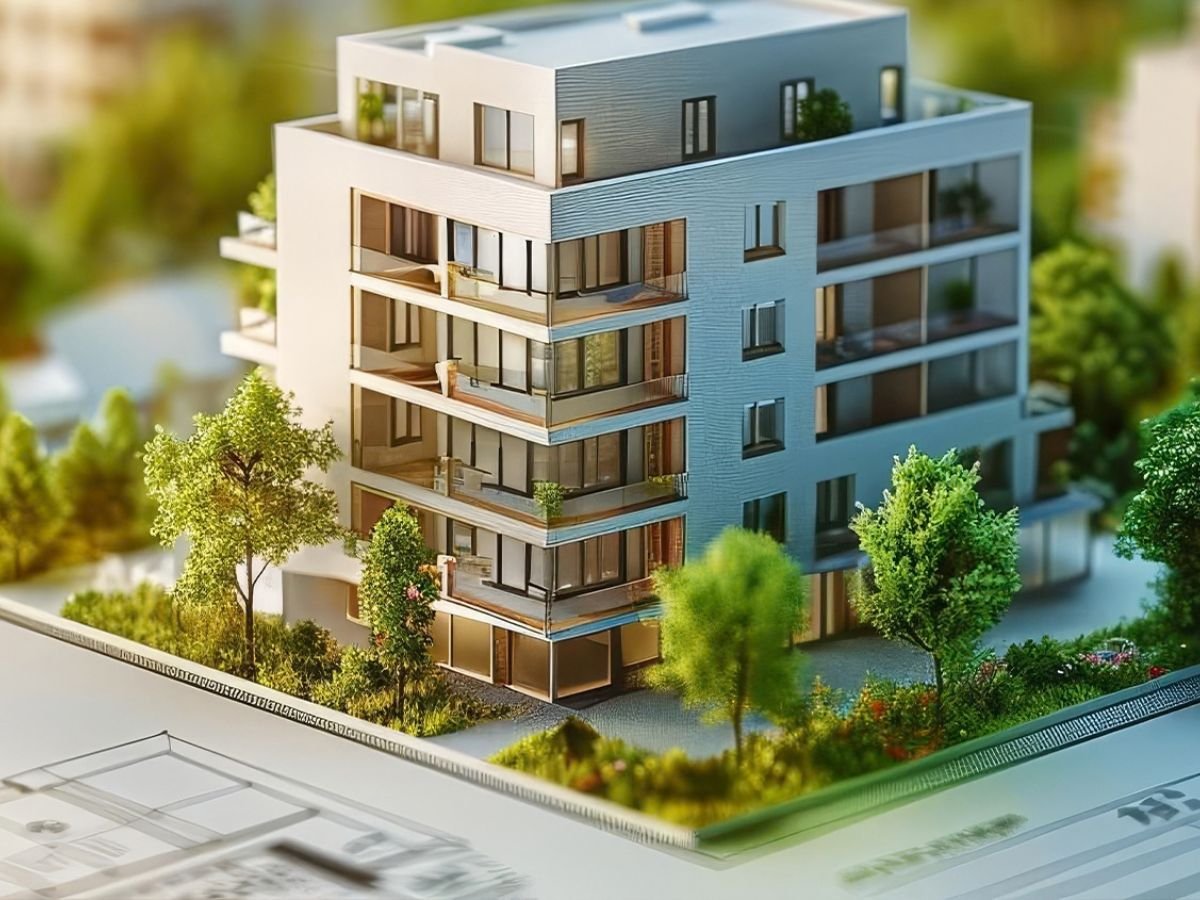
Different property types follow different valuation logic.
| Property type | Main method | What matters most in Navi Mumbai |
|---|---|---|
| Residential flat | Sales comparison | Recent nearby sales, station access, society condition, parking, water, legal clarity |
| Plot / land | Development potential plus legal status | What can be built, road width, utilities, title clarity, CIDCO/tender/12.5% context |
| Shop / office | Income method | Rent, footfall, frontage, visibility, business demand, expected yield |
This is why an empty plot cannot be valued the same way as a 2BHK flat, and a rented office cannot be valued like a residential resale unit.
Also, in Navi Mumbai, plot background matters more than many outsiders expect. Tender plots, 12.5% scheme plots, gaothan-linked land, and leasehold parcels do not move through the market in the same way.
How banks and valuers usually check a property before giving a value
This is the part buyers should take very seriously.
When you apply for a home loan, the bank usually sends a technical valuer. That person looks at the property from the bank’s risk point of view, not from the seller’s marketing point of view.
They usually check:
- whether the property physically matches documents
- whether the area stated is believable
- age and condition of the building
- illegal alterations
- basic sale comparison in the area
- title chain and key approvals
- how easy or difficult the property would be to sell in a distress situation
This is why the bank’s value may come lower than the agreed price. And that directly affects the loan amount.
For a buyer, this can become a real cash problem. If you agree to buy at ₹80 lakh and the bank values the property at ₹70 lakh, the loan is calculated on the bank’s value, not on the seller’s confidence. [Internal Link: How to Verify Property Documents Before Buying in Navi Mumbai]
Why two properties in the same area can still have very different values
This is common in Navi Mumbai.
Two flats in the same tower may still differ in value because of:
- floor
- facing
- parking
- renovation quality
- society dues
- legal papers
- loan eligibility
- future liability on the buyer
Now zoom out one step further. Two buildings in the same sector can also differ sharply because one is on a cleaner legal footing and the other carries hidden transfer or title complications.
CIDCO-related realities matter here. Many Navi Mumbai buyers now actively check whether a property is still leasehold, whether transfer permissions are clean, and whether freehold conversion has already happened or may be possible. That directly affects comfort, future resale ease, and valuation. This becomes even more serious when transfer charges are high. For larger flats, the CIDCO transfer charge example can go up to around ₹10 lakh plus GST, which can directly pull down the practical value of the property if the seller has not handled it properly.
How buyers and sellers can use valuation properly before a deal
Valuation is not just a theory section. It is a negotiation tool.
If you are a buyer:
- do not trust listing price blindly
- check the RR baseline
- compare recent sale records where possible
- ask about leasehold or freehold status
- ask clearly who pays pending transfer-related charges
- check water supply before getting impressed by a tower view
- expect the bank to be stricter than the broker
- always calculate your own value based on the Carpet Area found in the Index II or Agreement, not the “Super Built-up” area the broker tells you
If you are a seller:
- do not set price only by looking at portal listings
- understand that the bank may not support an unrealistic number
- fix document gaps before putting the property on the market
- be honest about society condition and dues
- know whether your property has a valuation advantage, such as parking, better approach road, or redevelopment potential
If you re buying property first time in navi mumbai you can read this come guide: First-Time Home Buyer Guide for Navi Mumbai
Conclusion
Property valuation in Navi Mumbai is a mix of hard numbers and local reality.
The hard numbers include official RR rates, measured area, comparable sales, rent, and bank lending rules. The local reality includes CIDCO status, transfer issues, water supply, station distance, building condition, and even redevelopment possibility in older nodes.
That is why the same flat can look expensive, fair, or underpriced depending on who is looking at it and why.
For buyers, the safest approach is simple: do not confuse seller price with actual value. For sellers, the smartest approach is also simple: price with realism, not hope. In Navi Mumbai, the best deals usually happen when both sides understand the difference between government value, bank value, and market value before the paperwork begins.
FAQs
Frequently Asked Questions