

Rent vs Buy in Taloja: What Makes More Sense for Buyers, Renters, and Families?
For most people in Taloja today, renting is the safer choice if you need flexibility, want to test the area, or are not fully sure about your long-term commute, family plans, or job stability. Buying makes more sense if your budget is tight, your income is stable, you plan to stay for many years, and you are comfortable with Taloja’s still uneven on-ground reality. In simple words, this is not just a money decision. It is a lifestyle and conviction decision.
A lot of people look at Taloja and think the answer is obvious. Flats are cheaper than Kharghar. New societies look attractive. Metro connectivity has improved the conversation. So why not just buy?
Because Taloja is still not a simple “cheap and ready” market.
It is one of Navi Mumbai’s biggest affordability-led housing zones, but it is also a place where the exact project, exact road, exact phase, and even exact daily routine can change your experience completely. That is why the rent-vs-buy decision here needs more than a calculator.
Rent or buy in Taloja: what is the smarter choice for most people right now?
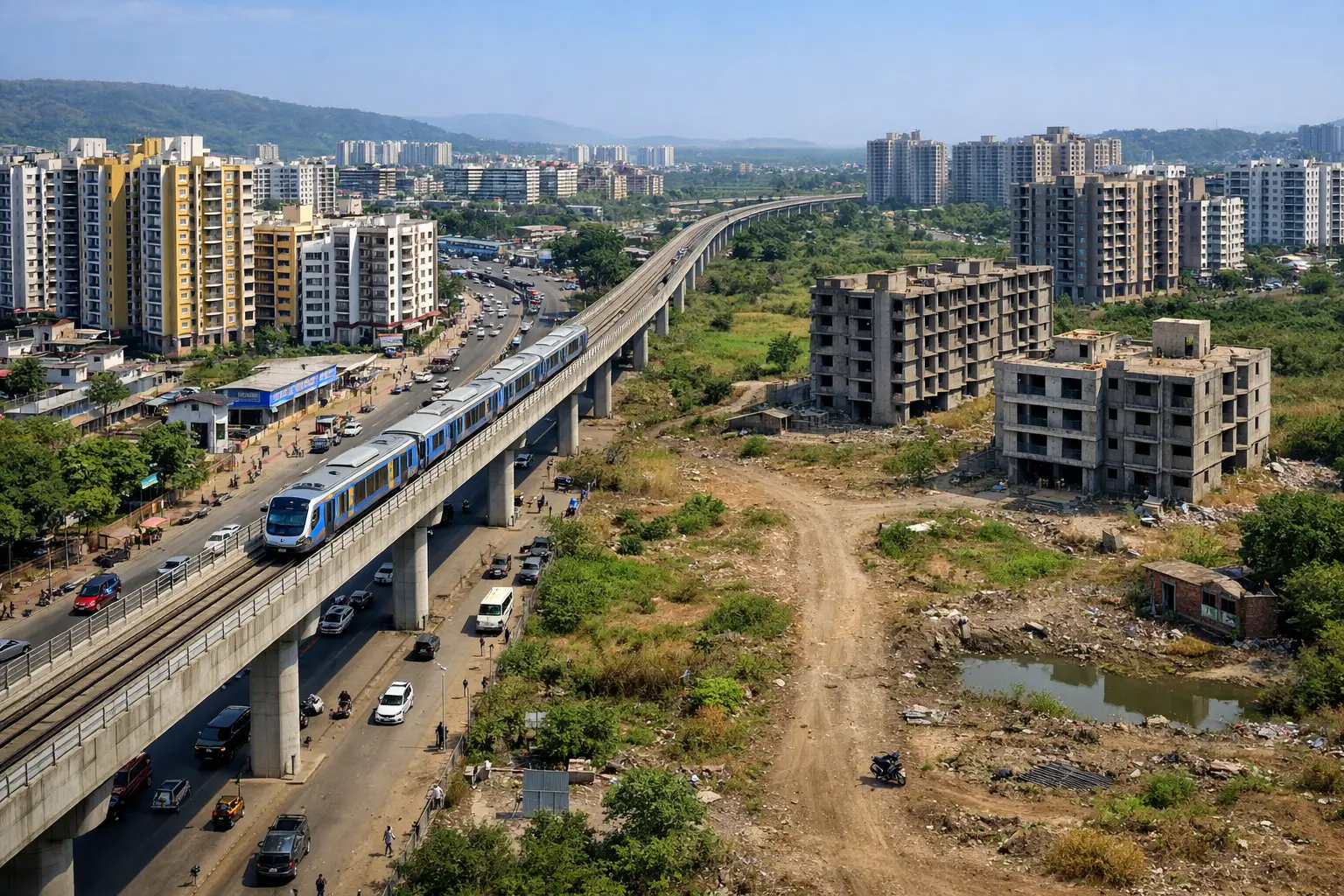
The practical answer is this: rent first if you are still unsure, buy only if you already know why Taloja fits your next 7 to 10 years.
That one line settles most of the confusion.
If you are a first-time buyer trying to enter Navi Mumbai at a lower budget, Taloja can make sense. But if you are still figuring out commute, water reliability, industrial smell tolerance, or whether you may shift to another node later, renting usually protects you from a costly wrong commitment.
Quick summary: who should rent and who should buy in Taloja?
| Profile | Rent or Buy? | Why |
|---|---|---|
| Young working professional | Rent | Flexibility matters more than ownership right now |
| Couple with unstable job location | Rent | Easy exit if commute or family needs change |
| Budget buyer with long-term self-use plan | Buy | Locks in entry-level pricing in a CIDCO-planned node |
| Family wanting modern gated amenities | Buy selectively | Only if the project and micro-location are workable |
| Investor expecting quick resale | Usually avoid or be very selective | Liquidity is not equally strong across all projects |
| Health-sensitive resident | Rent first or avoid | Air and environmental tolerance should be tested first |
Why Taloja gives a different rent-vs-buy answer than Kharghar, Kamothe, or Panvel
In Kharghar, Kamothe, or more established parts of Panvel, buying usually means paying a premium for a place that is already more functional. In Taloja, buying is often a bet on what the area may become, not just what it already is.
That changes the decision completely.
Taloja works as a fallback for buyers priced out of Kharghar and sometimes Kamothe. That is its biggest strength. It offers entry-level access to the Navi Mumbai story at a lower ticket size. But that lower entry price comes with trade-offs such as uneven water reliability, patchy internal road quality in some pockets, and big differences between one project cluster and another.
Phase 1 and Phase 2 do not feel the same. Older pockets and resale zones do not behave like newer gated townships. Station-side practicality is different from deeper internal sectors. So anyone writing off Taloja as either “great value” or “bad location” is usually missing the real picture.
When renting in Taloja is the better decision
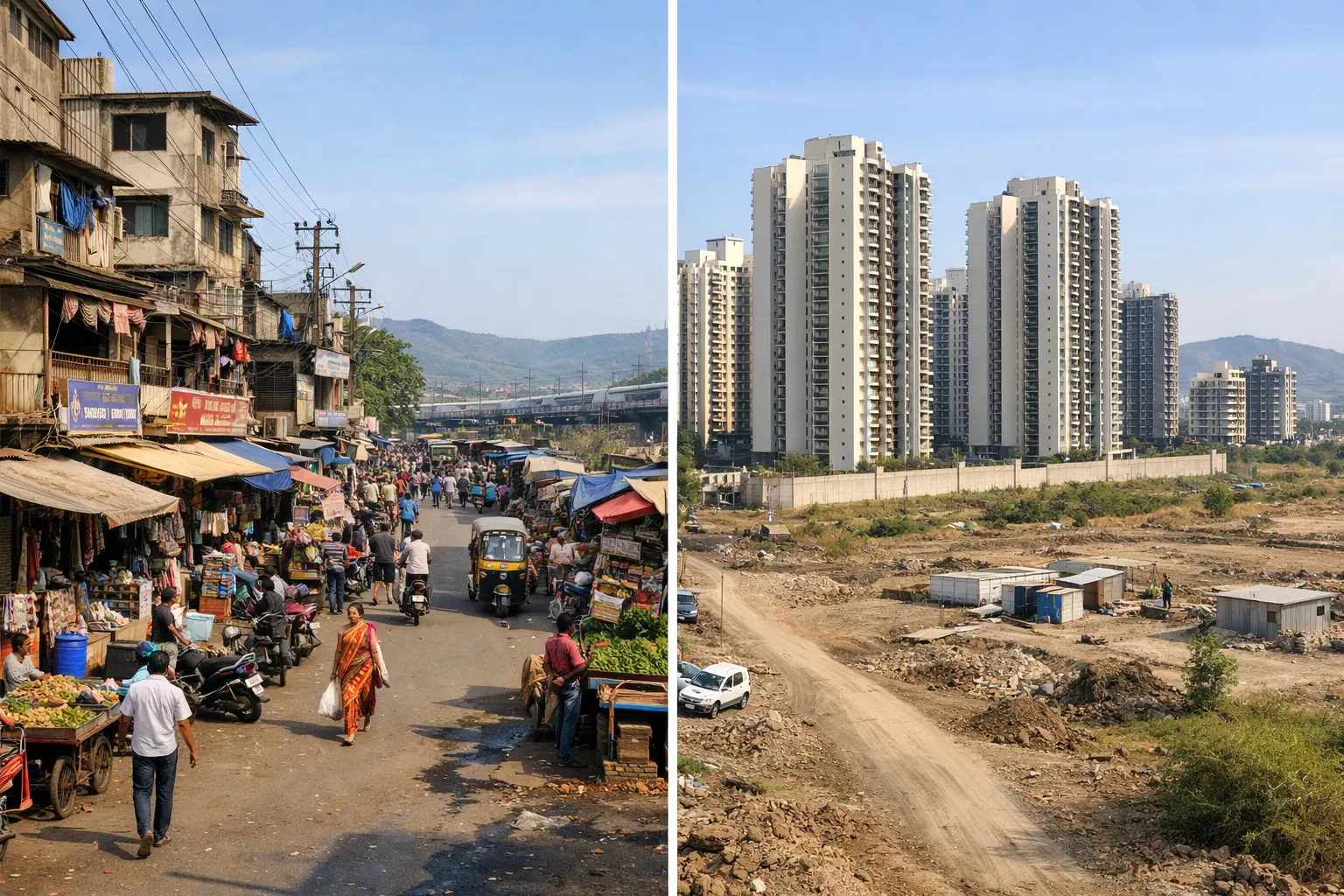
Renting in Taloja is not a weak choice. In many cases, it is the smarter choice.
If your job, commute, or family needs may change in the next 2 to 3 years
This is the biggest reason to rent. If you may shift jobs, get transferred, move closer to Belapur, Vashi, or Mumbai, or need to upgrade to a better family-friendly area later, an EMI can become a trap. Rent gives you an exit. Ownership does not.
Taloja especially rewards flexibility because the node is still evolving. What feels manageable today may feel tiring after one monsoon, one summer tanker season, or one difficult commute pattern.
If you want to test the area before locking yourself into an EMI
This is one of the most practical things a buyer can do in Taloja. Live there for 11 months or one year. See the daily routine. Check late-night transport. Notice water timing. Observe the roads, dust, shops, and social comfort.
A brochure cannot tell you whether the area suits you. A site visit also cannot tell you. Only daily living can.
If the project quality and pocket quality still feel uncertain
Taloja has good-looking projects, but project quality is not uniform. Some societies function better. Some are better maintained. Some have stronger occupancy and more liveable surroundings. Renting lets you choose a functional project without taking construction delay risk, finishing quality risk, or long-term resale risk on day one.
When buying in Taloja makes more sense
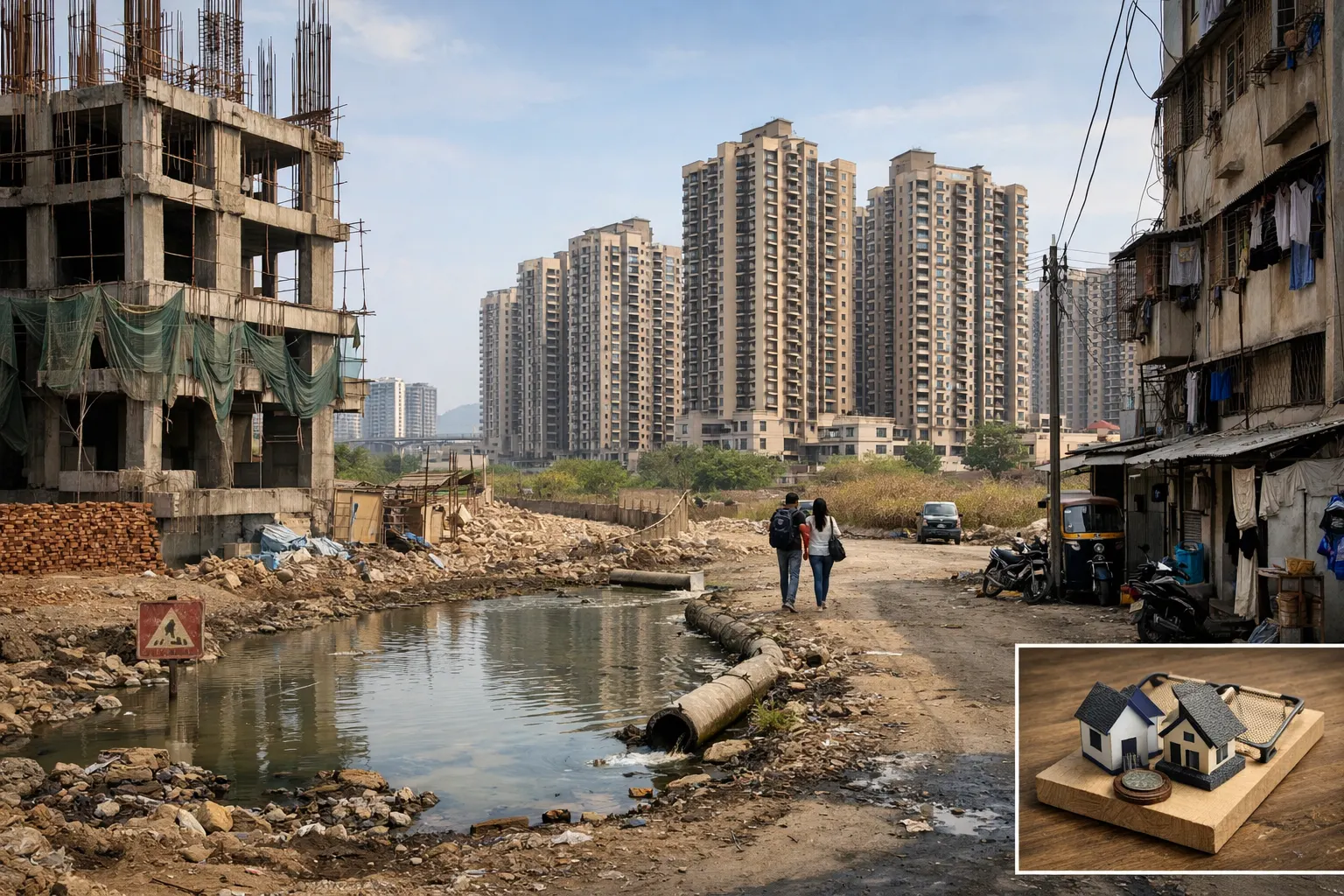
Buying in Taloja works best when the buyer is realistic, patient, and buying for the right reason.
If your budget cannot comfortably enter Kharghar or Kamothe
This is the most common buyer logic. For many people, the actual comparison is not “Taloja versus my dream home.” It is “Taloja versus continuing to wait for years.”
If your budget is under roughly ₹50 lakh for a 1 BHK or under roughly ₹75 lakh for a practical 2 BHK, Taloja often becomes one of the few organised-node options left in the Navi Mumbai region. In that case, buying can be sensible because it secures entry instead of leaving you exposed to future price increases.
If you are buying for long-hold self-use, not quick exit
Taloja is not ideal for people who need easy short-term resale. There is a lot of supply. Not every building has equal buyer demand. And older non-amenity stock can become harder to move when new inventory is available nearby.
But for a buyer planning to hold for 7 to 10 years, that is a different story. Then the focus shifts from quick resale to affordability, future infrastructure upside, and stable housing creation.
If you are selecting a usable pocket rather than buying only on brochure promise
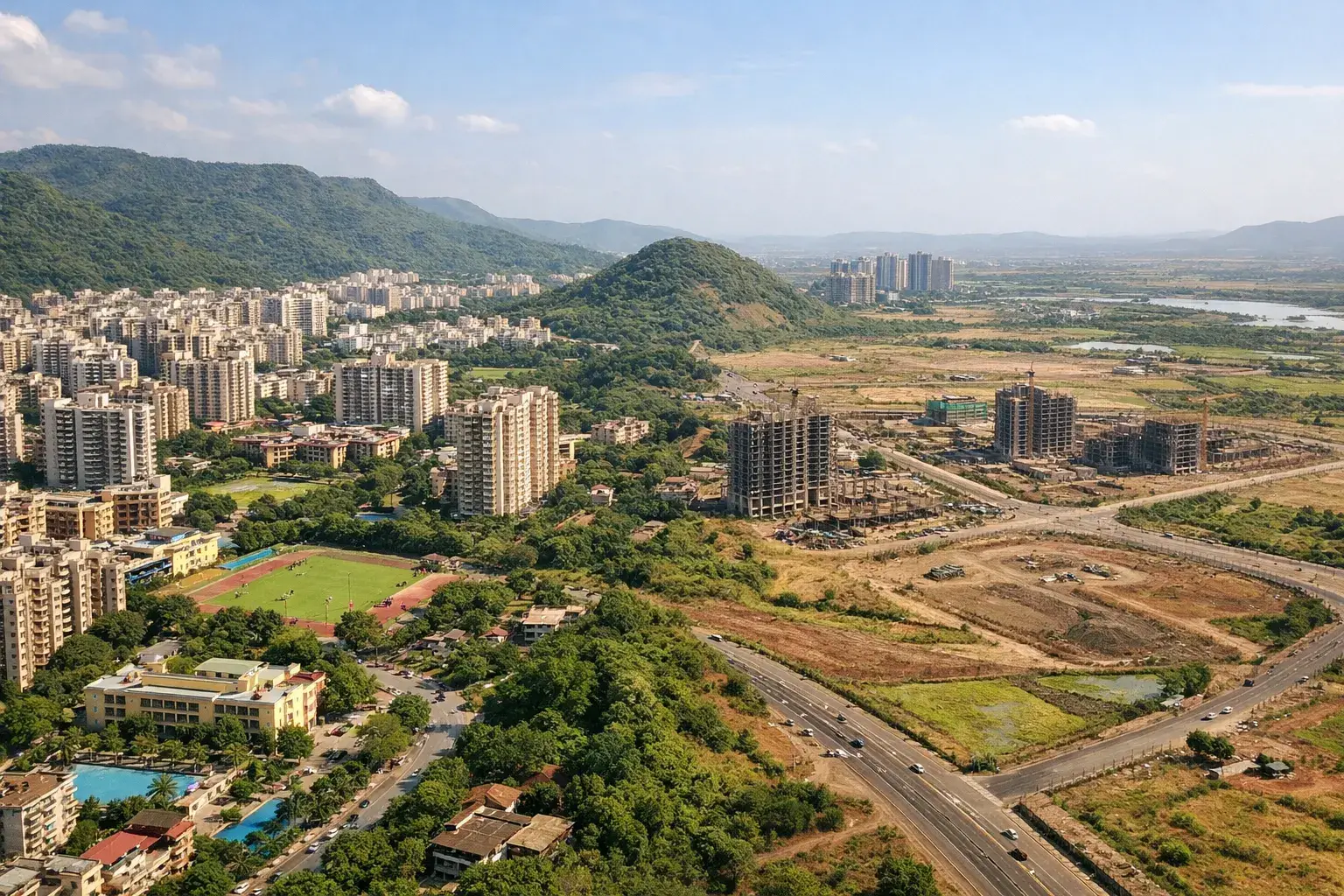
This matters a lot. Buying in Taloja makes more sense when you are choosing a project with visible occupancy, clear access, better maintenance, working water arrangements, and real daily usability.
Buying just because the flat is cheaper is not a strategy. Buying because the micro-location works for your life is.
EMI vs rent in Taloja: where the monthly math actually starts changing
This is where many buyers get emotionally confused.
On monthly outgo alone, rent usually looks much lighter than ownership in Taloja. That is normal in an emerging market.
Illustrative comparison
| Flat Type | Typical Local Price Band | Approx Monthly Rent | Approx EMI (80% Loan, 20Y @ 8.5%) | Upfront Cost Awareness |
|---|---|---|---|---|
| 1 BHK | Around ₹35 lakh | ₹7,500 to ₹9,000 | Around ₹22,230 | Stamp duty + registration + down payment |
| 2 BHK | Around ₹55 lakh | ₹12,000 to ₹15,000 | Around ₹34,930 | Higher upfront outgo and furnishing cost |
This comparison immediately shows one truth: renting is easier on monthly cash flow.
So why do people still buy?
Because ownership is not only about this month’s outgo. It is about locking in a price, building an asset, and avoiding future entry shock if the node matures further. Still, buyers should not fool themselves. A Taloja purchase is rarely a pure monthly savings move today.
It is more of a long-term positioning move.
Also remember that EMI is not the only cost. Owners may face maintenance bills, society charges, and in some cases extra burden linked to water tanker dependence during peak shortage periods. Renters often face a more predictable fixed monthly outgo.
The real question is not just money, it is whether you can live in that exact part of Taloja
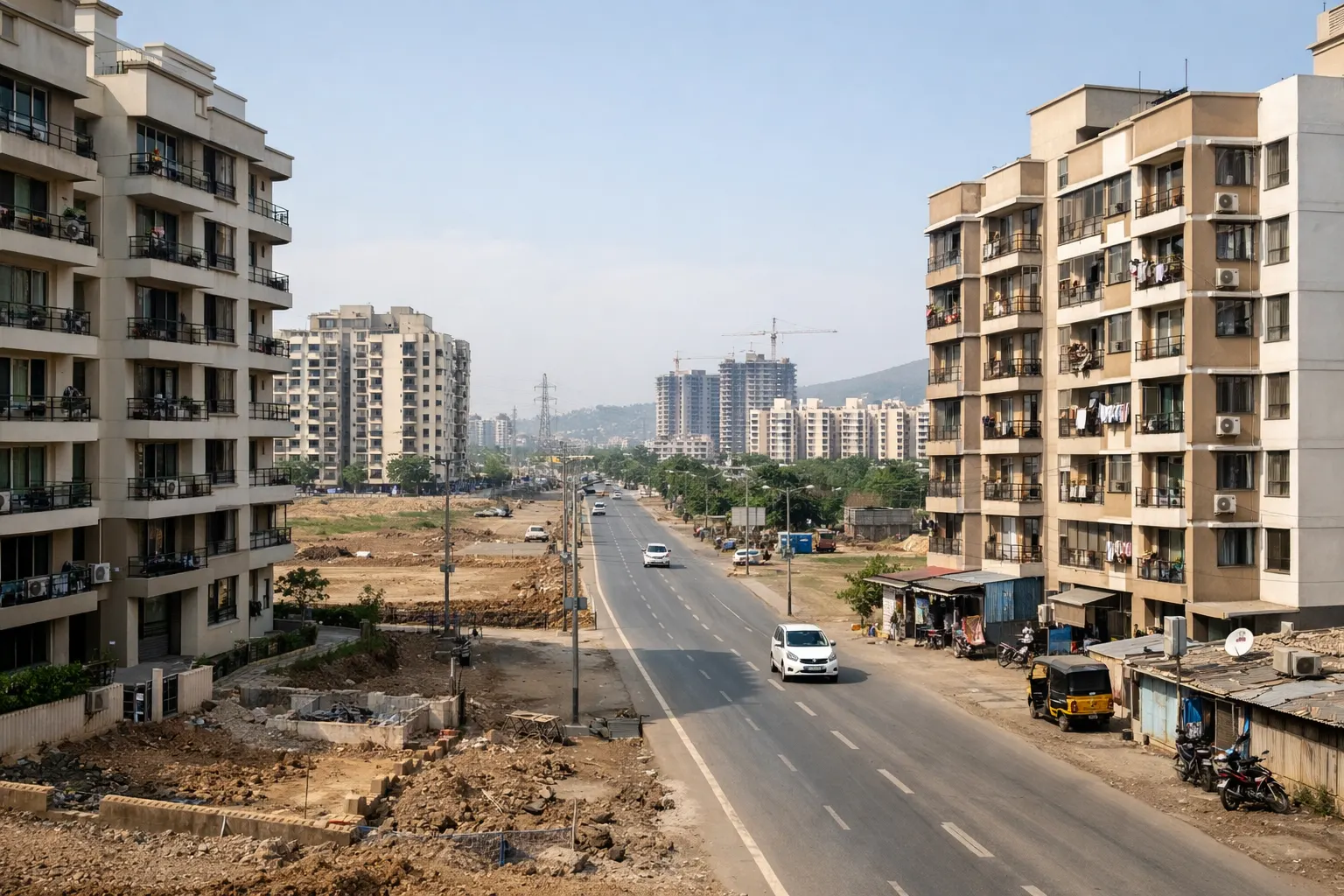
This is the section most generic pages miss.
You are not buying “Taloja.” You are buying one exact building in one exact pocket of Taloja.
Station access and internal road reality
Projects closer to Taloja Panchanand, Pendhar-side connectivity, or practical road movement usually offer better daily usability. Even in the same broad locality, one project may feel connected and another may feel isolated after dark.
If your daily life depends on walking, autos, local trains, metro linkage, or easier access to Kharghar-side movement, distance from practical transport matters more than a glossy clubhouse.
Water, services, and day-to-day convenience
Water is not a small issue here. It is one of the biggest livability filters. Some societies rely heavily on tankers, and this can affect both cost and comfort. The problem is not just technical. It changes the mood of daily life.
A buyer should ask direct questions:
- Is there a proper water storage setup?
- How often do tankers come in summer?
- Are residents satisfied with supply?
- Is there direct connection clarity or just temporary arrangements?
These questions are far more useful than asking only about future appreciation.
How Phase 1 and more peripheral pockets can feel very different
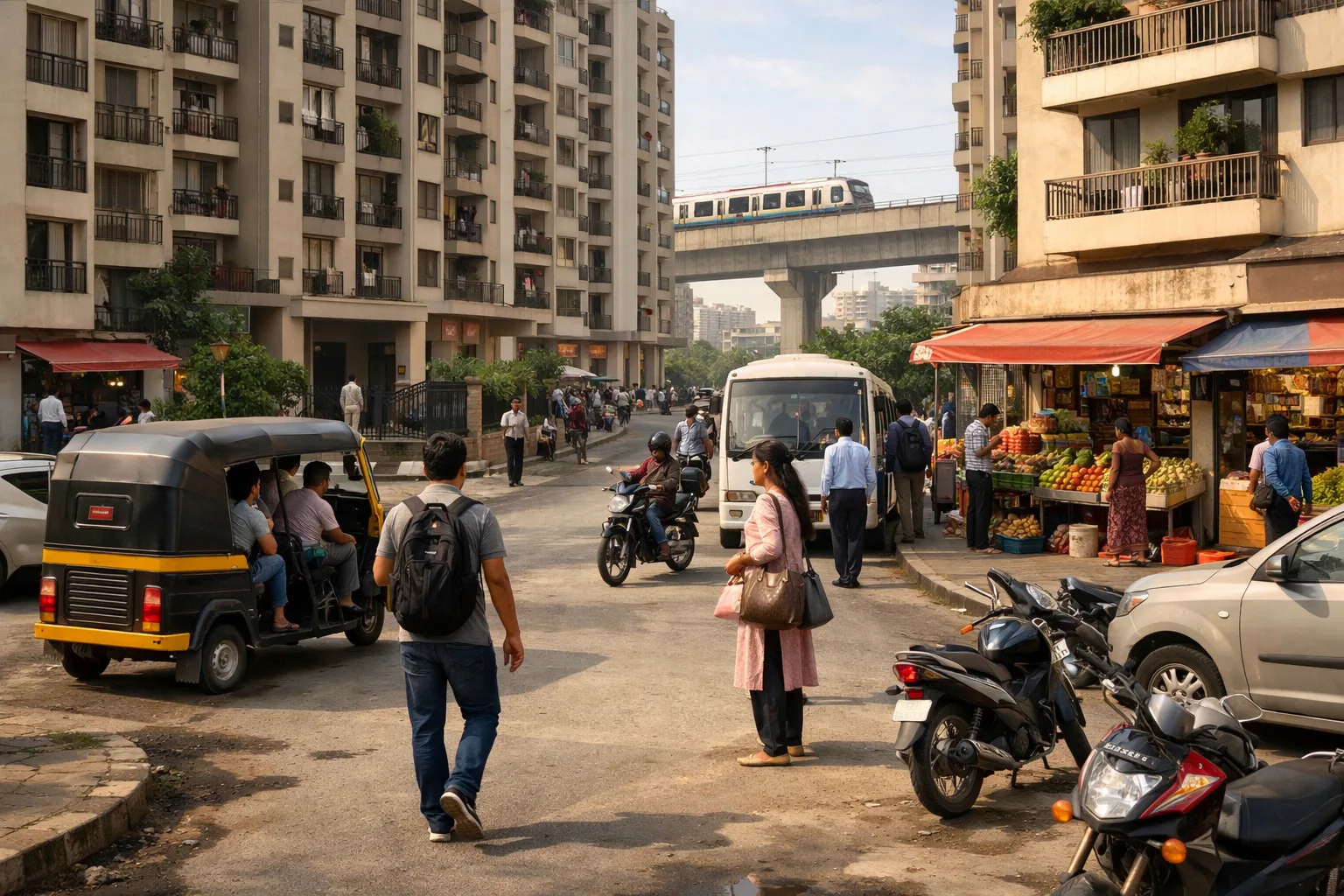
Phase 1 generally feels more practical in day-to-day life because it has older activity, more visible local shops, and stronger lived-in character. But some parts are also closer to industrial influence.
Phase 2 and newer sectors may offer better-looking gated projects and a cleaner township feel in some stretches, but many pockets still feel incomplete. Newer is not always easier. Better design on paper does not always mean better daily living today.
Renting helps you stay flexible, buying forces you to commit to Taloja’s future
This is the core emotional truth of the whole decision.
Renting gives you optionality. You can test, leave, upgrade, relocate, or change plans. That matters a lot in a node that is still solving part of its civic maturity story.
Buying demands conviction. You are effectively saying: “I believe this area will improve enough over time to justify today’s compromises.”
Neither mindset is wrong. But mixing them up causes mistakes.
If you want flexibility but buy anyway because the price looks tempting, frustration often follows. If you want long-term stability but keep renting endlessly because nothing feels perfect, you may miss your best affordable entry window.
Working professionals
If you are single, early in career, or likely to switch office locations, rent is usually better. Taloja can work as a lower-cost base, but flexibility matters more than ownership at this stage.
First-time couples and young families
This depends on stability. If both incomes are steady, the holding period is long, and the chosen project is actually usable, buying can make sense. If family planning, school decisions, and commute routes are still unclear, rent first.
Long-hold budget buyers
This is the strongest buy category in Taloja. If your budget cannot stretch to Kharghar and you want an owned house in an organised node, Taloja remains one of the more realistic options. But choose carefully, and prefer practical livability over only future promise.
Pure investors
This is where caution becomes important. Taloja is not equally strong for every investor. A quick-flip mindset can be risky because supply is high and resale liquidity varies sharply. Investors should focus only on stronger sectors, stronger developers, and transport logic that will still matter later.
Situations where buying in Taloja can be a mistake even if the flat looks affordable
Cheap entry can hide expensive regret.
Buying may be a mistake if:
- you are purchasing under-construction inventory without properly checking project status
- you are depending on quick resale in a supply-heavy pocket
- you are confusing “Upper Kharghar” style marketing with actual Kharghar-level practicality
- you have not checked occupancy, water management, and daily access
- your job situation is unstable
- you are sensitive to industrial smell, dust, or environmental discomfort
- you are stretching EMI beyond comfort just to become an owner
This is where buyer discipline matters. Ready possession, proper document checks, public project verification, and on-ground resident feedback matter far more than launch marketing.
Situations where staying on rent too long can also cost you
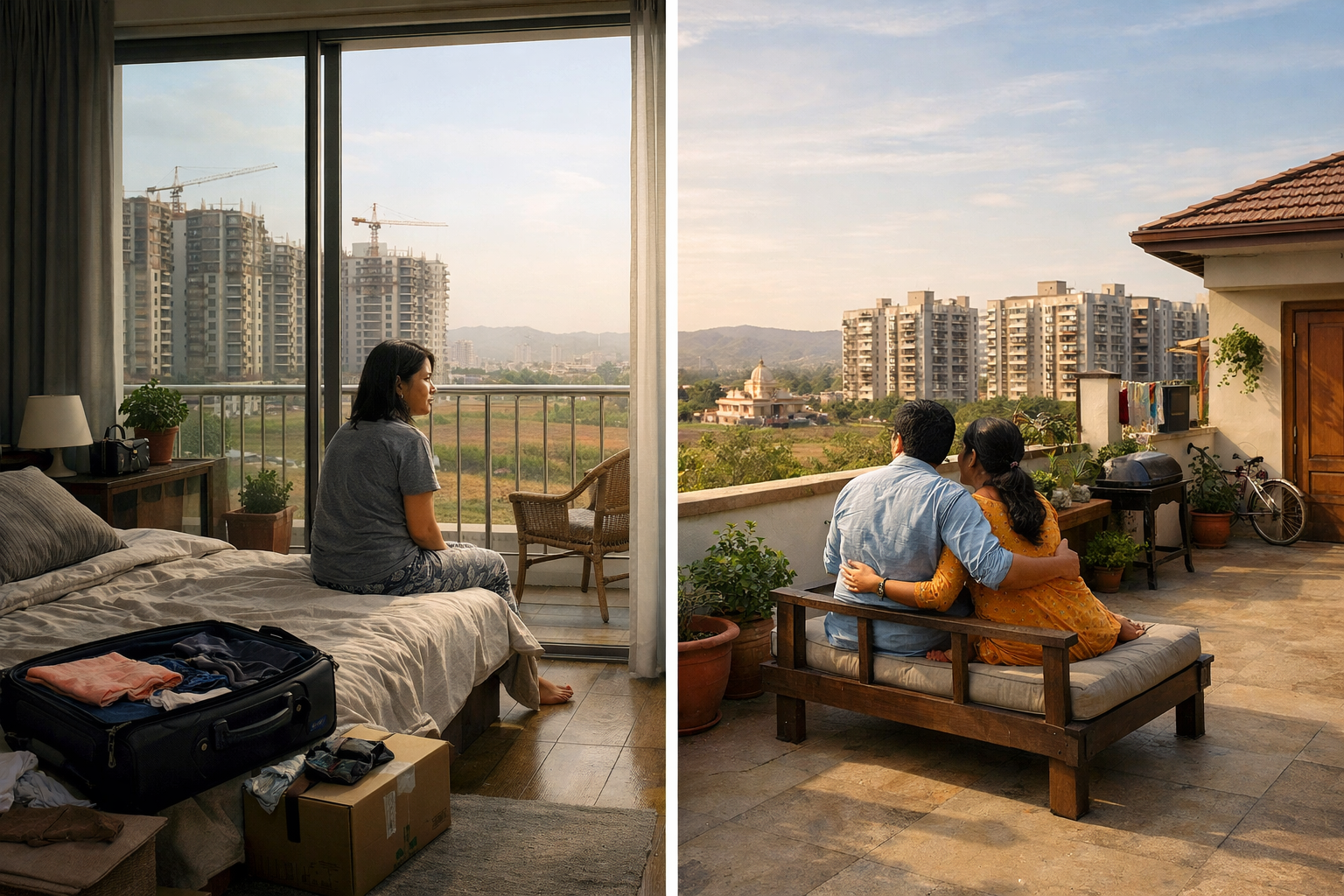
Renting is not automatically the superior strategy forever.
If your income is stable, your family is likely to stay in Navi Mumbai long term, and you are already comfortable with a specific Taloja pocket, then delaying too much can hurt. Entry prices may rise. The same budget may buy a smaller flat later. You may keep paying rent for years without moving closer to ownership.
So the real question is not “rent is good” or “buy is good.”
The real question is: are you renting because it fits your plan, or because you are delaying a decision you have already emotionally made?
A simple decision framework: choose rent or buy in Taloja based on your next 5 years
Use this practical checklist.
Rent in Taloja if:
- you may shift location within 2 to 3 years
- your monthly housing budget is much closer to rent than EMI
- you want to test the area first
- you are not fully convinced about water, commute, or local livability
- you are health-sensitive and unsure about environmental conditions
- you may later buy in another node
Buy in Taloja if:
- you plan to stay in Navi Mumbai for at least 7 to 10 years
- your income is stable and EMI is manageable without stress
- your budget cannot realistically enter better-established nearby nodes
- you have shortlisted a usable, occupied, and reasonably well-managed project
- you are buying for self-use or long-hold, not instant resale
- you accept current compromises in exchange for lower entry pricing
Conclusion
If you want the cleanest practical answer, here it is: rent in Taloja if you still need proof that the area suits your life, and buy in Taloja only when you already know that its compromises are acceptable for your long-term plan.
Taloja is not a bad option. But it is also not a shortcut. It is a calculated trade-off.
For renters, it offers low-cost entry, flexibility, and a safe way to test the node. For buyers, it offers one of the few remaining chances to own in a CIDCO-planned Navi Mumbai corridor at a lower ticket size. The right move depends less on what sounds attractive and more on how sure you are about your next 5 to 10 years.
FAQs
Frequently Asked Questions