

Nerul vs Seawoods for End-Use Buyers: Prices, Lifestyle, Commute, and Which One Fits Better
For most end-use buyers, Nerul is usually the better buy because it offers more usable space, stronger school access, calmer internal pockets, and lower monthly burden. Seawoods is better for buyers who can comfortably pay extra for newer towers, Seawoods Grand Central convenience, and a more polished lifestyle setup. The real choice depends on budget, commute style, family routine, and whether you value practical living more than premium presentation.
One point needs to be cleared early. Seawoods is not a separate city or municipality. It is essentially the premium cluster of sectors within the broader Nerul geography, mainly Sectors 40 to 48. But in market behaviour, daily life, and buyer perception, Seawoods and Nerul function like two different worlds.
The right home is not the one that looks best on a Sunday site visit. It is the one that quietly supports your Monday routine.
Nerul or Seawoods: what is the short answer for end-use buyers?
| Factor | Nerul | Seawoods |
|---|---|---|
| Typical appeal | Space, schools, practical living, redevelopment upside | Premium towers, mall-station integration, lifestyle convenience |
| Indicative Q1 2026 price band | Roughly ₹16,000 to ₹28,000 per sq. ft., with select premium pockets higher | Roughly ₹18,000 to ₹30,800 per sq. ft., with Palm Beach-facing luxury stock much higher |
| Monthly maintenance pattern | Often lower in older societies, roughly ₹2 to ₹5 per sq. ft. | Often much higher in luxury towers, roughly ₹10 to ₹25 per sq. ft. |
| Best for | Families, value-focused buyers, school-led households, buyers who want bigger usable homes | Professionals, DINK households, buyers who want newer towers and walk-to-transit comfort |
| Main strength | Better day-to-day value | Better premium convenience |
| Main risk | Old building quality must be checked carefully | Overpaying for the Seawoods name and carrying high monthly costs |
The short answer is simple. If you want a practical self-use home that works well for the next 10 to 15 years without unnecessarily stretching monthly cash flow, Nerul usually makes more sense. If you want a more curated urban lifestyle and you will genuinely use the station, mall, tower amenities, and lock-and-leave convenience, Seawoods can justify its premium.
Why this comparison changes completely when the buyer is buying for self-use

This comparison becomes sharper when the buyer is purchasing for self-use, not for investment. Investors can tolerate higher maintenance, lower carpet efficiency, and premium branding if the property rents well or holds prestige. End-use buyers cannot hide from monthly reality. They live inside the flat, pay the maintenance, manage the commute, and deal with the building every day.
That is why brochure price is only the starting point. The real question is total cost of ownership. In both Nerul and Seawoods, residential properties fall under the highest NMMC Zone 1 bracket, and residential property tax is calculated at 38.67% of rateable value. On paper, the rule is the same. In practice, Seawoods homes often carry higher absolute tax bills because the rental value of those properties is usually higher.
Then comes society maintenance. This is where many end-use buyers get a shock. In an older standalone or CIDCO-style society in Nerul, monthly maintenance can still stay in a practical range. In a premium Seawoods tower with pool, gym, large podiums, high security staffing, and advanced mechanical systems, maintenance can become a permanent monthly burn.
There is also a carpet area issue. A modern Seawoods tower may look more premium, but the internal usable space can feel tighter than an older Nerul flat with the same advertised area. That difference matters much more to a family than it does to a brochure.
A simple example makes this clear. For a highly usable 700 sq. ft. RERA carpet flat, a buyer may end up spending around ₹1.12 crore in Nerul versus around ₹1.32 crore in Seawoods, depending on the exact sector, building age, and amenities. Over a standard 20-year home loan, that capital gap alone can mean roughly ₹11,000 to ₹12,000 extra EMI every month, even before Seawoods’ higher maintenance is added.
Which area feels more practical for daily life: Nerul or Seawoods?
For daily life, Nerul usually feels more natural and more spread out. That matters more than many buyers expect.
Nerul has the advantage of being deeply lived-in. Daily retail is not dependent on one large destination. You have older sector markets, kirana ecosystems, active local strips, clinics, vegetable shops, and service businesses spread through the node. Sectors like 15 and 17 are busy and functional. Calmer internal pockets such as parts of Sector 21 and Sector 28 feel more residential and quiet by late evening.
Seawoods works differently. It is more concentrated. Nexus Seawoods, the station integration, D-Mart in Sector 42A, and the Sector 48 market cluster create strong convenience, but they also create concentration pressure. You get comfort and access, but you also get more visitor traffic, more parking strain, and more noise around the high-activity belts.
This is where outstation buyers often make a mistake. They imagine all of Seawoods as Palm Beach-facing premium Seawoods West. That is not the full picture. Seawoods East, especially in some older sectors, can feel crowded, more affordable, and much less polished than the Seawoods brand suggests. So a buyer paying a “Seawoods premium” must be careful about which Seawoods they are actually buying into.
If your ideal daily life means quieter internal roads, less weekend congestion, and a more balanced residential rhythm, Nerul usually wins. If your ideal daily life means being close to mall retail, modern food options, and a more visibly premium environment, Seawoods may feel better.
Which one works better for station users and daily commuters?
For railway commuters, Seawoods is excellent. For network flexibility, Nerul is stronger.
Seawoods-Darave is one of Navi Mumbai’s most powerful transit-oriented hubs. The station integration with Seawoods Grand Central creates a rare kind of convenience. For people travelling regularly toward South Mumbai or using the Harbour line heavily, Seawoods offers a frictionless routine. It is especially attractive to professionals who value smooth entry, weather protection, and immediate retail access before or after work.
But Nerul Junction is more versatile. That is the key difference. Nerul gives access not just to the Harbour line but also to the Trans-Harbour line toward Thane. For buyers whose work or family movement depends on the Thane-Airoli side, Nerul can actually be the more practical choice.
For road users, the answer changes again. Both areas connect well to Palm Beach Road and the Sion-Panvel Highway, but Seawoods carries its own success problem. The same mall-and-station combination that makes it convenient also creates traffic friction around peak entry and exit windows. Many people enjoy Seawoods on a Sunday visit and then realise on weekdays that the surrounding roads can test their patience.
So the simple rule is this: Seawoods usually wins for rail-dependent professionals. Nerul usually wins for road-dependent families.
One more local reality matters here. During the heavy August 2025 monsoon spell, severe rainfall affected both nodes. Nerul saw waterlogging in parts of Sectors 15 and 17. The Seawoods station subway also flooded badly. That does not mean either node is unlivable. It means buyers should not judge connectivity only in dry-weather conditions. A monsoon visit still tells the truth better than a sunny brochure tour.
Are you paying for real quality in Seawoods, or mostly for location branding?
This is one of the most important questions in the whole comparison.
Seawoods premium is real in some pockets. It is not equally real everywhere.
If you are buying in Seawoods West, especially near Palm Beach-facing zones, NRI Complex influence belts, or premium projects like L&T Seawoods Residences and Akshar Alvario, you are paying for a genuine package: better presentation, stronger social signalling, improved common areas, newer construction, and the rare convenience of a transit-oriented premium address.
But if you are buying in older Seawoods East stock, the logic changes. Some sectors there are older, denser, and far less special than the Seawoods label suggests. In those cases, the buyer may simply be paying extra for the pin code while getting a product that is not clearly better than a good Nerul society.
This is why Seawoods should never be treated as one uniform premium market. A buyer looking at a compact older flat in Seawoods East must compare it very honestly with a better-kept, better-laid-out home in Nerul East or West. In many such cases, Nerul gives better value per rupee.
For end-use buyers, branding matters only if it improves daily life. If the premium gets you a better commute, better tower quality, better security, and a routine you will truly use, it is worth considering. If it gives you only a more expensive address with no major daily advantage, it is probably not worth paying for.
How building stock changes the answer more than most buyers expect

In this comparison, building stock matters almost as much as location.
Nerul has a lot of older CIDCO and mid-rise private stock. That creates two very different realities at once. First, yes, old buildings can bring practical problems such as lift wear, terrace leakage, parking limitation, and dated common areas. Second, older Nerul stock can still offer better room sizes, better carpet efficiency, and future redevelopment upside.
This is no longer a small side point. It is central to the decision. CIDCO’s amended reconstruction policy, which lowered required member consent to 51% from 100%, has changed the psychology of older housing in Navi Mumbai. In Nerul especially, many buyers no longer see old CIDCO stock as just aging stock. They see it as a possible redevelopment play, provided title is clear and the building is sound enough for current living.
That said, caution is non-negotiable. For 2025-26, NMMC identified 501 dangerous buildings, of which 51 were classified as C-1 and required immediate evacuation. No buyer should casually purchase older stock without checking official NMMC status, society records, and structural condition. Buildings over 30 years old should be assessed with proper seriousness.
Seawoods, on the other hand, offers more newer private towers and lifestyle-ready stock. That reduces structural uncertainty in the short term, but it does not make the decision automatically better. A new tower also means higher upfront cost, higher monthly maintenance, and often lower carpet efficiency. For some buyers, that is worth it. For others, it is an expensive trade-off.
Which area suits families better in real everyday terms?
For most family homebuyers, Nerul is the stronger end-use choice.
The biggest reason is not glamour. It is routine. Nerul has one of the strongest legacy school belts in Navi Mumbai, including institutions such as DPS, Apeejay, Ryan, and Don Bosco. That school ecosystem matters far more to long-term family living than many buyers admit in the beginning. Good schooling, stable routines, older community networks, and calmer sectors are still the backbone of a family-friendly node.
Nerul also has mature green spaces and a more settled residential feeling in many pockets. For children, senior citizens, and families with structured weekday schedules, that stability reduces friction. Homes also tend to feel more usable internally, especially in older well-planned societies.
Seawoods is not weak for families. It is simply different. It offers modern towers, better entertainment, and a polished environment in the right pockets. But it also brings more traffic, more commercial pull, and in many cases a higher monthly carrying cost. A family that stretches too much just to enter Seawoods can end up with less space and more financial pressure.
That is why Nerul usually wins for family end-use. It gives a more grounded, more forgiving residential experience.
Which area suits working couples, single professionals, and frequent travelers better?
For professionals and frequent travelers, Seawoods becomes much more attractive.
This is where the station integration, modern tower lifestyle, and lock-and-leave convenience start making real sense. If both spouses work, or if the buyer travels often, Seawoods can save time in ways that do not show up in a simple price-per-square-foot comparison. Quick station access, immediate retail, late-night pharmacy and food access, and a more self-contained living environment all matter to this buyer profile.
The December 25, 2025 launch of commercial flights from NMIA has also changed regional movement patterns. Both Nerul and Seawoods benefit from the airport’s operational reality, but Seawoods often feels more naturally aligned with the buyer who values mobility, fast access, and a premium urban routine.
Still, even here, discipline is needed. A professional buyer should not blindly pay for amenities that will barely be used. If the gym, pool, podium, and clubhouse are mostly visual attractions and the maintenance bill becomes a regular pain, the purchase stops making sense very quickly.
So yes, Seawoods is usually better for professionals. But only when the buyer has the budget and the lifestyle to actually use what they are paying for.
Where do end-use buyers commonly make the wrong decision in Nerul and Seawoods?
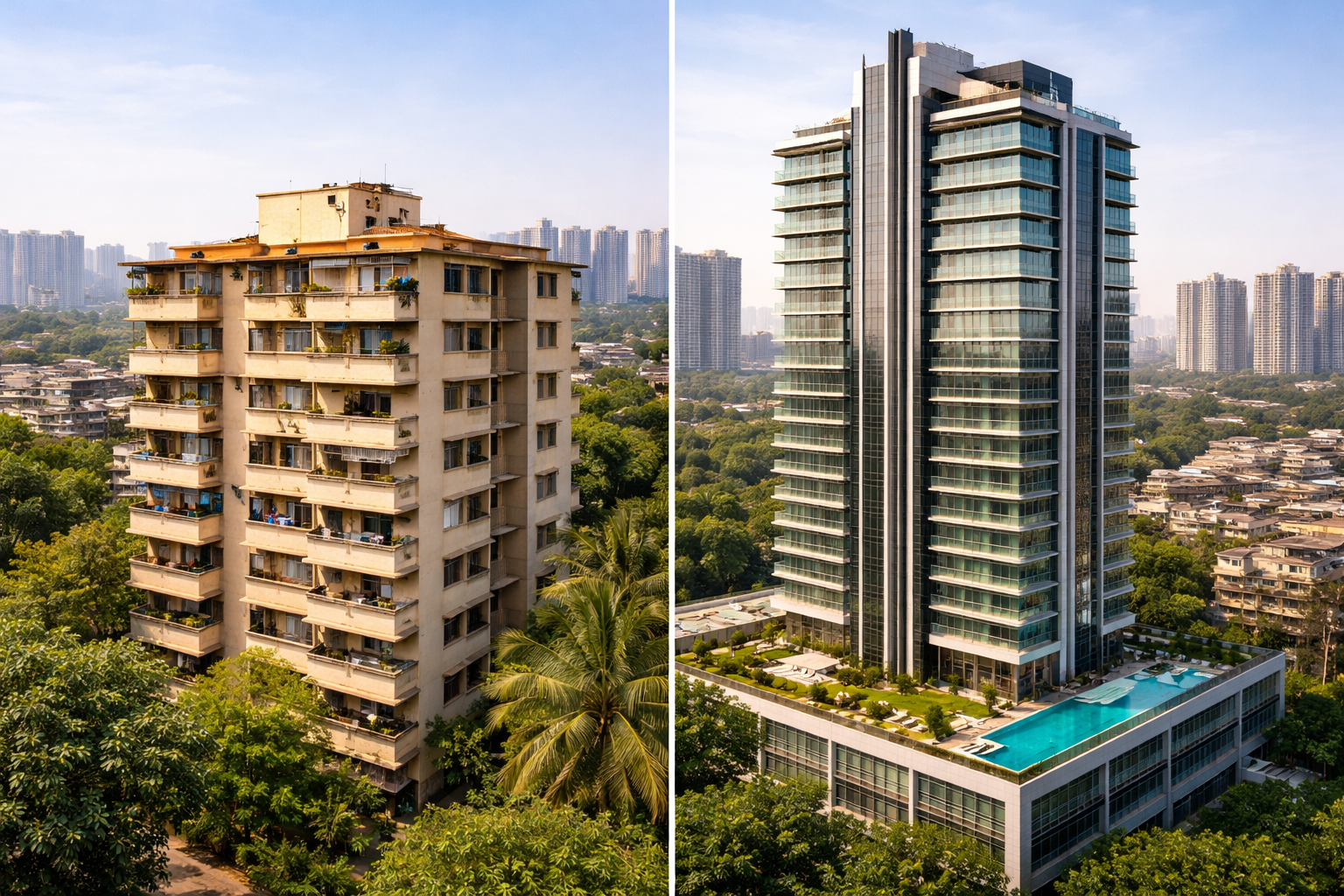
The first mistake is assuming every Seawoods address is premium. It is not. Seawoods West and Seawoods East do not offer the same experience, and buyers who ignore that difference often overpay.
The second mistake is buying old stock only by appearance. In Nerul, older buildings can be a smart move because of usable layouts and redevelopment potential. But buyers must verify structural condition, title, society health, and NMMC danger classification. Old can be strategic. Old can also be a headache. The difference lies in due diligence.
The third mistake is ignoring the legal distinction around Darave and gaothan-side properties. A lower price near Seawoods can look tempting, especially in deeper Darave interiors, but buyers must be extremely careful. Clear-title CIDCO or properly regularised stock is one thing. A Power of Attorney transaction in a legally weak gaothan setup is another. These are not small technical issues. They can completely change future resale, legality, and redevelopment outcomes.
The fourth mistake is underestimating hidden cost. In Seawoods, that usually means maintenance and property tax outgo. In Nerul, that usually means repair and building-age-related capex over time.
The fifth mistake is ignoring NMIA and monsoon reality. Early post-launch aviation noise is now a real site-visit factor in certain coastal and southern belts of Nerul and Seawoods. Buyers should visit during active aviation hours, not only at peaceful times. The same goes for monsoon checks. Low-lying pockets and station access points behave very differently during intense rain.
Choose Nerul if these are your priorities
Choose Nerul if you want a home that works harder for everyday living than for social display. It usually suits buyers who want a larger practical flat, stronger school access, calmer internal roads, and lower monthly outgo.
It is also the better fit if your family budget is disciplined and you do not want maintenance to keep climbing every year just because the building has premium facilities. Buyers who are comfortable with older but well-located stock, and who understand the long-term redevelopment angle, often find Nerul far more rewarding than a superficially premium alternative.
Nerul makes the most sense for school-led families, value-conscious upgraders, road-dependent households, and end-users who care more about carpet utility than glossy common areas.
If Nerul is looking more suitable for your needs, this Vashi vs Nerul comparison is the next practical step for judging Nerul against another major mature residential node.
Choose Seawoods if these are your priorities
Choose Seawoods if you want immediate convenience and you have the budget to support it without stress. It usually suits buyers who value station integration, modern high-rise living, stronger lifestyle presentation, and a more urban, premium-feeling routine.
It is also a better fit for professionals, DINK households, NRIs, and buyers who genuinely want a lock-and-leave home with better common amenities and quicker access to the station-mall ecosystem. In the right pockets, especially premium Seawoods West belts, the price premium can make sense.
Seawoods works best when the buyer is paying for real daily use, not just for the idea of prestige.
If Seawoods is still staying on your shortlist, it also helps to compare Vashi vs Seawoods before deciding whether Seawoods is really the right premium-node fit.
Final verdict: which node gives the better end-use buy for most people?
For most end-use buyers, especially families and buyers with controlled budgets, Nerul is usually the better choice. It gives more usable value, better educational depth, lower regular carrying cost, and a more balanced residential life. It is not perfect. You must check old building quality carefully. But if selected well, Nerul offers lower future regret.
Seawoods is the better choice for a narrower but very real buyer profile: affluent professionals, convenience-first households, and buyers who are happy to pay more for newer towers, faster station access, better lifestyle packaging, and a more premium address.
So the honest conclusion is this: Nerul is the stronger all-round end-use buy for most people. Seawoods is the stronger premium lifestyle buy for the right people.
Conclusion
Nerul and Seawoods are close on the map, but they solve very different buyer problems. Nerul solves for space, schooling, long-term practicality, and manageable ownership cost. Seawoods solves for convenience, image, tower lifestyle, and transit-linked urban living.
That is why the better area is not decided by a portal average or a Sunday visit. It is decided by your weekday reality. If your life needs space, stability, and family utility, Nerul usually wins. If your life needs speed, polished convenience, and premium living, Seawoods can be worth the price.
FAQs
Frequently Asked Questions