

Panvel vs Ulwe: Which Benefits More From Airport-Led Growth?
Ulwe benefits more from direct airport nearness. Panvel benefits more from wider airport-linked growth. That is the clearest answer. If you want the purest Navi Mumbai International Airport story, Ulwe is the more obvious play. If you want a more durable and practical market that can absorb airport, logistics, rail, road, and future regional growth together, Panvel usually makes more sense. So the better choice depends on whether you are chasing immediate adjacency or stronger long-term resilience.
Now that Navi Mumbai International Airport is operational, this comparison is no longer about a future promise. The airport story has entered the real market. Flights have started, commercial movement is growing, and buyers are no longer asking whether the airport will happen. They are asking where the real benefit will show up first and where it may last longer.
That is where Panvel and Ulwe start to behave very differently.
Panvel vs Ulwe at a glance
| Comparison Point | Panvel | Ulwe |
|---|---|---|
| Type of airport benefit | Broader regional growth, logistics, commercial, transport integration | Direct airport adjacency, residential and transit sentiment |
| Distance logic | Usually farther from NMIA than Ulwe, but deeply connected to wider networks | Closer to NMIA and more directly linked to the airport narrative |
| Governance | Panvel Municipal Corporation side context | CIDCO-administered node |
| Market maturity | More established, more layered, more varied | Newer, more narrative-driven, more uneven by sector |
| End-use practicality | Usually stronger for families and long-term self-use | Improving, but civic gaps still matter in some sectors |
| Rental profile | More stable and broad-based | More airport-linked, more churn, wider variance |
| Speculative upside | Moderate and longer-cycle | Higher short-to-medium narrative upside, but more priced in |
| Major risk | Property tax and jurisdiction-related friction in some Panvel-side contexts | Water shortage and infrastructure gaps in specific Ulwe sectors |
| Best for | Cautious investors, families, long-hold buyers | Aggressive investors, airport-adjacent buyers, shorter-horizon plays |
What does airport-led growth actually mean in Panvel and Ulwe?
Airport-led growth sounds like one clean idea. In reality, it is not. In Navi Mumbai, it has at least two very different meanings.
One part is passenger-led growth. That includes housing demand from aviation staff, airport-linked service workers, business travellers, support businesses, and people who want to live close to the airport or close to access routes such as the Atal Setu. This is where Ulwe gets its strongest boost.
The second part is logistics-led and region-led growth. That includes warehousing, freight movement, office demand, large land absorption, support industries, transport corridors, and commercial spillover. This is where Panvel gets a more powerful long-term case.
Airport nearness is not the same as property strength
A property market close to an airport can rise quickly because the story is easy to sell. “Near airport” is simple, visual, and emotionally strong. But that alone does not guarantee better long-term depth.
What matters after the excitement phase is this: Who will live there? Who will rent there? What businesses will absorb space nearby? How strong is the daily ecosystem? How many other drivers exist if airport momentum slows for some time?
That is why Panvel and Ulwe should not be judged by distance alone.
Price movement, end-use demand, and city relevance are different things
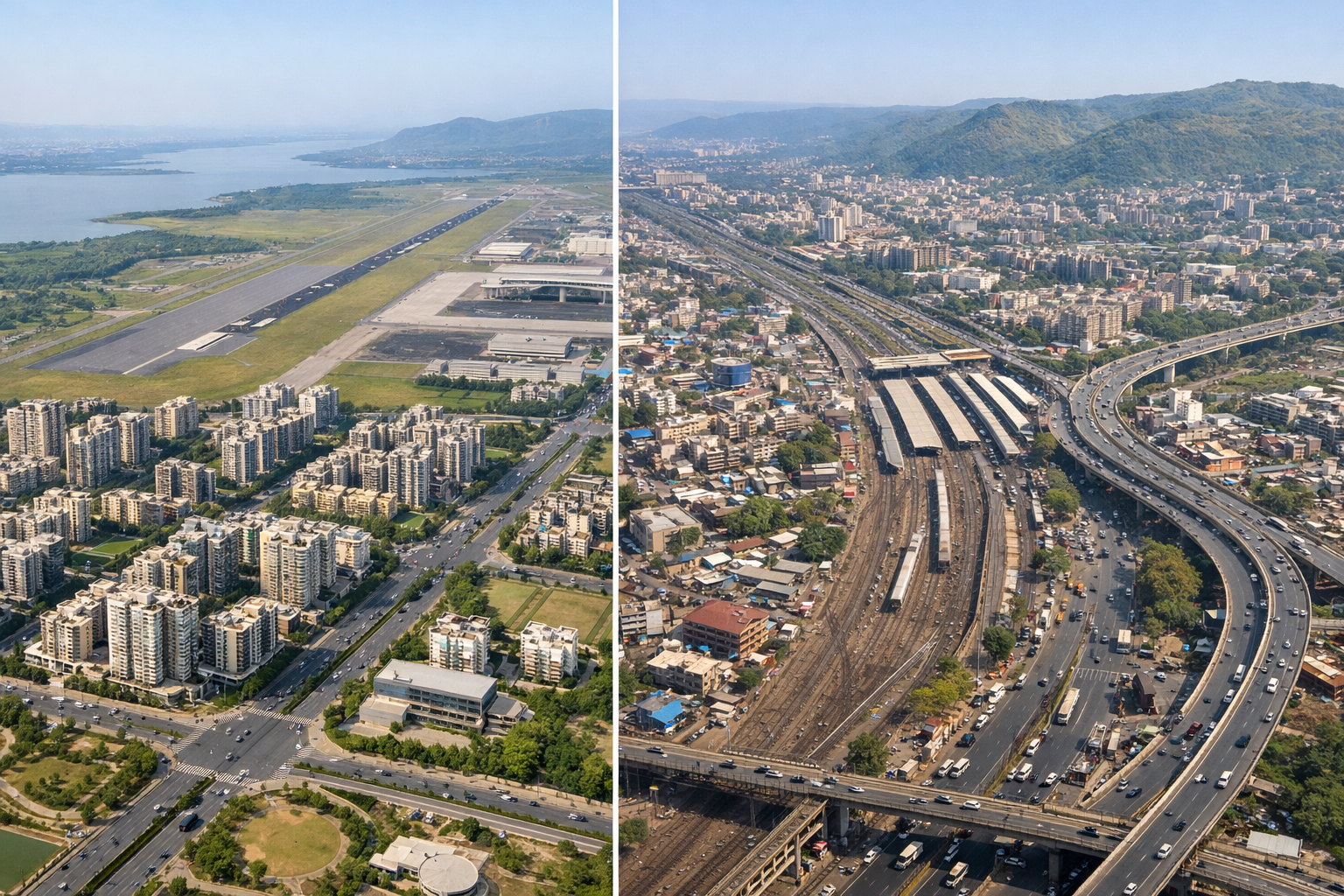
A market can go up in price without becoming easier to live in. A market can get attention without gaining stable rental demand. A market can benefit from a mega project but still remain uneven sector by sector.
That is exactly the mistake many buyers make in airport-led markets. They assume that because the catalyst is real, every nearby pocket will benefit equally. That usually does not happen.
Why Ulwe looks like the more obvious airport-led market
Ulwe is the easier market to understand on a map. It sits closer to the airport story, closer to the Atal Setu-driven access logic, and closer to the kind of visual planning that investors usually find attractive. For this reason, Ulwe has become the cleaner airport narrative in the public mind.
In simple words, when a broker says, “This is the airport zone,” the average buyer is far more likely to imagine Ulwe than Panvel.
Physical nearness to the airport story
Ulwe’s main advantage is straightforward. It is much more directly tied to the NMIA story in terms of adjacency and perception. That matters, because in real estate, perception itself moves markets, especially in the early years of a major infrastructure shift.
This is also why Ulwe saw strong appreciation in the years leading up to and around the airport’s operational phase. The market was already pricing the airport into its identity long before flights began.
CIDCO-planned sectors and newer market positioning
Ulwe also benefits from the kind of planning language that sells well. CIDCO sectors, wider roads in selected belts, a newer node image, and a more “future-facing” feel have helped it attract buyers who want an emerging market, not an old one.
That does not mean all of Ulwe works equally well. It does not. But compared with many older micro-markets, Ulwe looks more like a clean next-generation story on paper.
Why airport sentiment is easier to sell in Ulwe
Ulwe’s airport narrative is simple: close to NMIA, linked to MTHL, and supported by the promise of improving access through ongoing projects such as the Ulwe Coastal Road. This kind of triangle is very easy to market.
That is why Ulwe may benefit more from the human side of the airport economy: staff housing, flexible rentals, airport-linked professionals, and investors who want direct proximity value.
But there is a catch. The easier a story is to sell, the faster it tends to get priced in.
Why Panvel may benefit in a broader and more durable way
Panvel’s airport benefit is less dramatic on the surface, but often deeper underneath. It is not just a market near the airport. It is part of a much larger movement system.
Panvel already has a strong identity beyond NMIA. That matters a lot. It means the market does not need the airport alone to justify itself.
Panvel’s role as a wider transport and regional movement hub
Panvel is not merely a residential extension. It is a transport and regional integration point. Railway connectivity, inter-city movement, road corridors, and access to wider economic belts give Panvel a very different kind of strength.
This becomes even more important as the Panvel-Karjat rail corridor moves toward commissioning. It adds another layer to Panvel’s long-term integration story and strengthens its role beyond airport dependence.
Rail, road, and long-range connectivity add depth beyond the airport
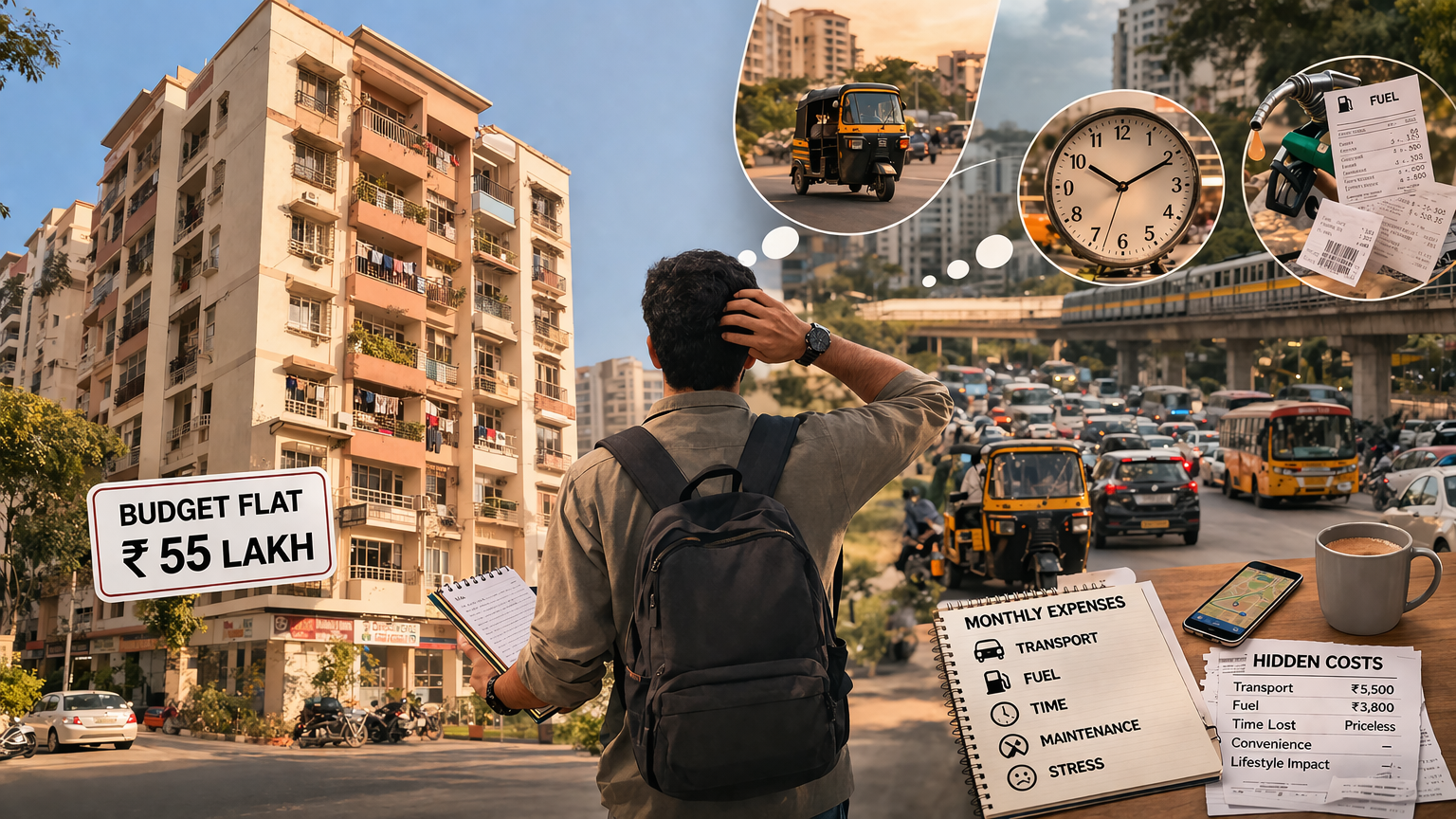
Panvel benefits from being tied into more than one engine. The airport helps, yes. But so do rail networks, road movement, logistics flows, older demand bases, institutional presence, and township-led end-use demand.
This is why Panvel may absorb airport-led growth in a less flashy but more resilient way. If Ulwe is the front-facing residential airport narrative, Panvel is the larger regional machine behind it.
Why broader absorption can matter more than proximity alone
A market with multiple demand sources usually handles shocks better. If airport-linked housing demand slows, a broader market may still hold because it is supported by schools, hospitals, transport links, local commercial activity, and a wider mix of buyer types.
Panvel fits that profile more than Ulwe.
Large township ecosystems in the Panvel belt also make a difference. In practical terms, that means better self-use appeal, more family acceptance, and less dependence on one single story. That does not make Panvel more exciting. It makes it more durable.
Which market has already priced in more of the airport story?
Ulwe has priced in more of the obvious airport narrative. That is the honest reading.
Its price movement over the last several years has already captured a big part of the “airport is coming” and “airport is operational” excitement. So future gains in Ulwe are less likely to come from pure announcement value and more likely to depend on how well the node converts that excitement into sustained rental strength, actual livability, and real transaction depth.
Panvel still has more room to benefit from layered growth, because its story is not limited to airport nearness alone.
Where Ulwe expectations may already be reflected
In many parts of Ulwe, asking prices and even rental expectations began running ahead of daily practical realities. That is usually a sign of a story-rich market where sentiment has moved faster than on-ground equilibrium.
This does not mean Ulwe is finished. It means buyers should be more careful now. The easy upside that came from pure anticipation may already be behind the market in many sectors.
Where Panvel may still benefit from layered growth drivers
Panvel has a wider pricing spectrum and a more layered entry map. New Panvel, township zones, and affordable peripheral pockets do not behave exactly the same. That actually helps buyers, because it creates more entry choices and different risk-reward levels.
It also means Panvel may continue to benefit over time from airport-linked regional integration, not just airport branding.
> Caution box: > In Ulwe, the main mistake today is paying tomorrow’s premium for a property that still has today’s civic friction. In Panvel, the main mistake is treating the whole belt as one uniform market. Both errors can be expensive.
If the airport grows exactly as expected, who wins more?
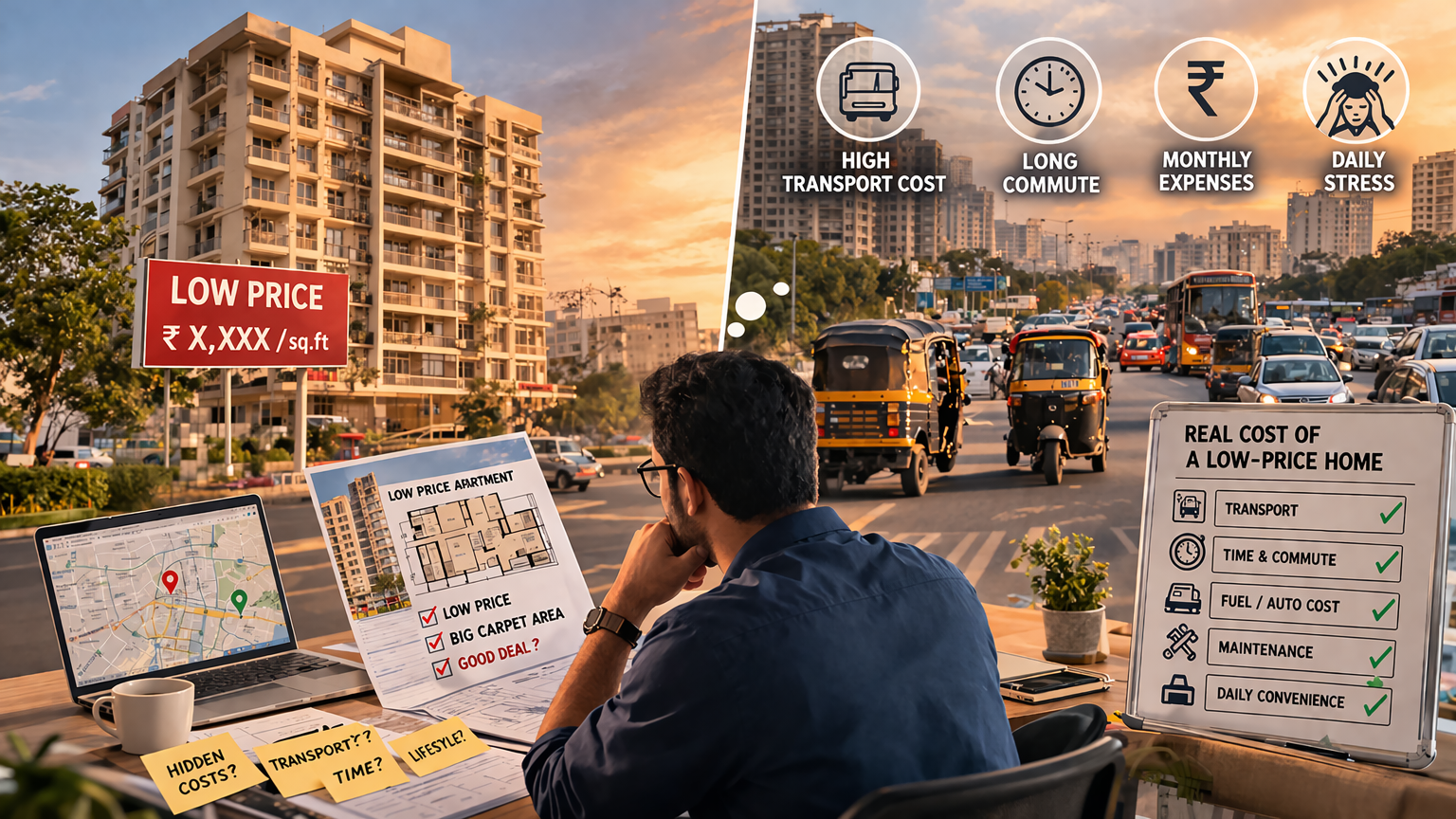
If NMIA scales smoothly, both markets benefit. But they may not win in the same timeframe.
Ulwe may win faster. Panvel may win longer.
Ulwe’s upside case
If airport staffing, passenger movement, support services, and premium transit-linked demand rise quickly, Ulwe stands to capture the most immediate emotional and residential spillover. That is where its short-to-medium-term case remains strongest.
This is especially true for investors who are comfortable with an expectation-heavy market and who understand that sector quality, building quality, and water reliability can make a big difference to actual returns.
Panvel’s upside case
If the airport matures into a real regional growth engine, with cargo, logistics, commercial parks, innovation districts, and wider economic integration, Panvel’s long-term case becomes very strong.
That case gets even more interesting when you connect the airport to the Third Mumbai framework, the Davos-announced innovation push, and the freight-led opportunity that comes from large-scale logistics movement. Panvel is structurally better placed to absorb those wider economic effects.
Why the answer changes based on holding period
This is where many readers need clarity.
If your horizon is three to five years and you are chasing the immediate airport adjacency story, Ulwe may look stronger.
If your horizon is seven to ten years and you care about city-form relevance, commercial integration, and lower dependence on one single narrative, Panvel may be the better market.
If airport-led expectations slow down, which area is better protected?
Panvel is better cushioned if airport-driven excitement does not translate as quickly as expected.
This does not mean Ulwe collapses. It means Ulwe is more sensitive to the speed and strength of the airport story, while Panvel has more backup support from other systems.
Why diversified demand matters
A diversified market does not need one catalyst to keep proving itself every year. Panvel has stronger defensive qualities because it is linked to transport, education, healthcare, local business, established settlement patterns, and broader regional movement.
That makes it more forgiving if some part of the airport-linked promise takes longer to fully mature.
Why single-story markets become timing-sensitive
Ulwe’s strength is also its vulnerability. It is easier to market because the story is clean. But a clean story can create timing pressure. If you buy after a lot of the sentiment has already been priced in, future returns depend more on execution quality and less on story momentum.
That is why Panvel generally looks safer for cautious buyers, while Ulwe remains more suitable for buyers who understand timing risk.
Which is better for self-use buyers, and which is better for investors?
For most self-use buyers, Panvel is usually the safer and more practical choice. For investors looking for a stronger pure airport adjacency play, Ulwe can still look more exciting, though not without risk.
This is not a slogan. It comes from how people actually live.
Families care about schools, hospitals, water reliability, market depth, and daily ease. Investors care about appreciation, rental churn, occupancy, and market narrative. Panvel and Ulwe answer those needs differently.
| Buyer Type | Panvel | Ulwe |
|---|---|---|
| Self-use family | Usually stronger due to established ecosystem and broader practicality | Can work in selected sectors and projects, but still more uneven |
| Conservative investor | Better for steady compounding and lower single-story risk | More exposed to sentiment swings and civic micro-risks |
| Aggressive investor | Good only in carefully chosen pockets with long-hold logic | Stronger for airport-adjacent upside if entry is disciplined |
| Rental-focused investor | Stable demand, family-led and broad-based | Better airport-linked churn, but sector and building quality matter greatly |
| Buyer wanting less friction | Usually easier | More caution needed on water, ecosystem, and project selection |
If Panvel is looking more practical for your needs, then Panvel vs Taloja is another useful comparison before finalising the better growth-side market.
End-use buyer logic
Panvel has the edge because everyday living is easier to justify there in most cases. There is already a more mature ecosystem, and the family-use case is clearer.
In Ulwe, the right project can still work for self-use. But the wrong sector or an overhyped building can lead to frustration much faster.
Appreciation-focused investor logic
Ulwe still has the cleaner appreciation story if the goal is to benefit from direct airport-linked market psychology. But investors entering today must be careful not to assume that past appreciation rates will simply repeat.
Rental-focused investor logic
Ulwe may attract airport-linked tenants and higher-turnover professional demand, but yields can get damaged if asking rents become unrealistic or if a building suffers from civic friction such as tanker dependency.
Panvel may not feel as glamorous, but it often offers more stable and practical rental depth.
How station access, road movement, and daily convenience change the answer
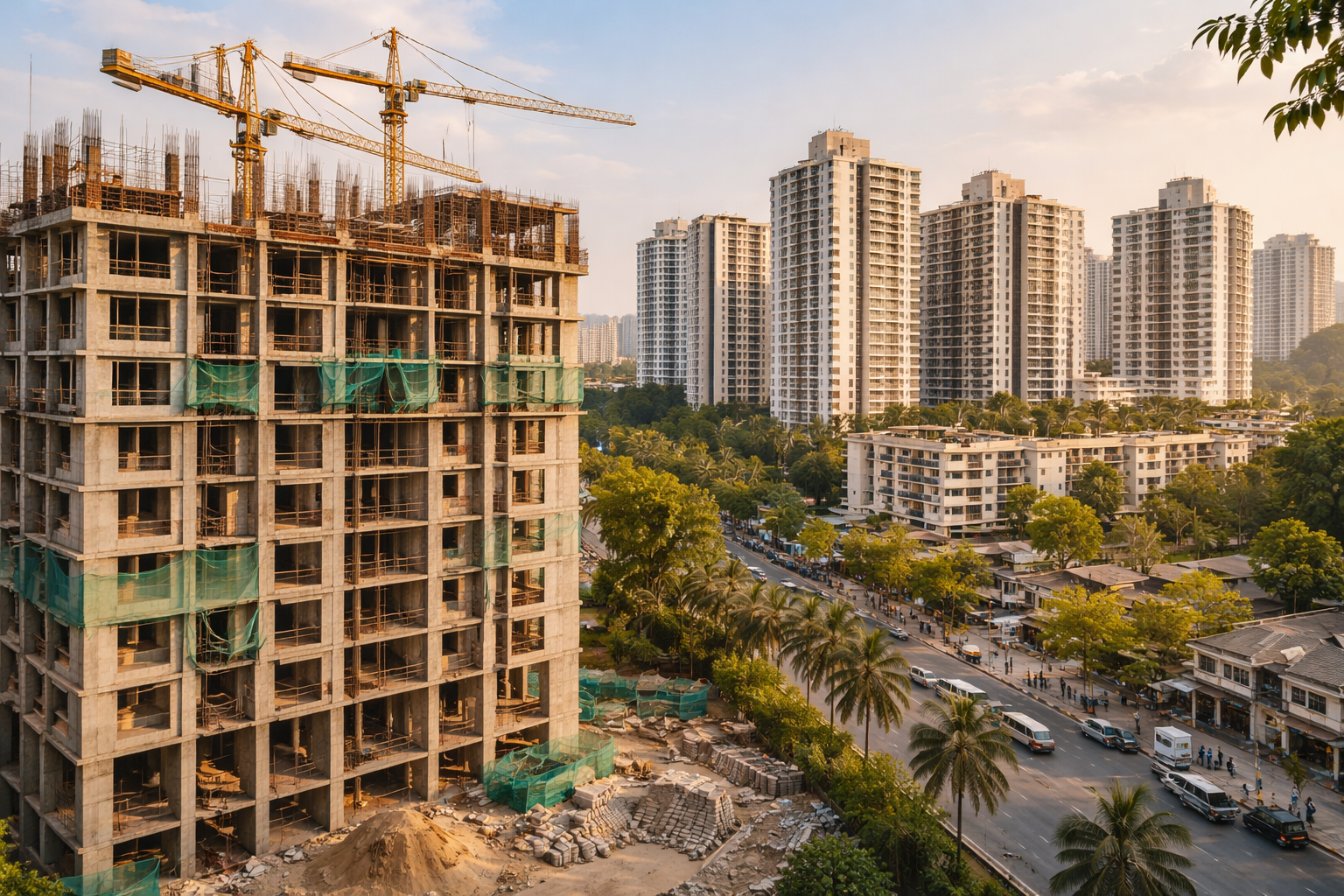
This part changes the answer more than many buyers realize.
Airport access is important. But property value in Navi Mumbai is still shaped heavily by daily movement, suburban rail convenience, and last-mile comfort. A market that looks strong on a macro map may still feel tiring in daily life.
Why airport growth alone is not enough for everyday value
Ulwe has clear map-level advantages, especially with MTHL and airport positioning. But for middle-class day-to-day life, rail frequency, station reach, walkability, internal movement, and service ecosystem still matter a lot.
The Uran line stations serving the Ulwe belt are useful, but Panvel remains a much deeper rail node. That difference affects not just commuting, but rental depth too.
Practical difference between travel narrative and lived convenience
A buyer who drives regularly and can absorb bridge toll logic may read Ulwe differently from a family that depends on local train and everyday services. These are not small differences. They directly affect who can actually live comfortably in a place.
This is why some markets look better in investor presentations than in ordinary weekday life.
> Local reality box: > Ulwe’s MTHL-linked appeal is strongest for buyers who can actually use that mobility comfortably. For many middle-income households, a daily high-cost road commute is not the same as a practical commuting solution. Panvel’s strength is that it still works better for a wider mass of users.
What local risks buyers should not ignore in either market
Every airport-led market has a story. Serious buyers also need the caution file.
In this comparison, the risk is not identical. Ulwe’s risk is more physical and civic in nature. Panvel’s risk is more bureaucratic and jurisdiction-linked.
Ulwe risks
The biggest red flag in parts of Ulwe is water reliability. Multiple sectors have faced chronic shortage and tanker dependence. That is not a small issue. It affects daily living, monthly cost, tenant retention, and buyer confidence.
So if you are evaluating Ulwe, do not stop at airport distance or station proximity. Check the building’s actual water situation, storage capacity, tanker dependence, and society-level management.
Other Ulwe caution points:
- Do not assume all sectors behave equally
- Do not pay premium pricing only for narrative
- Do not ignore construction-heavy surroundings and unfinished ecosystem issues
- Do not rely only on broker rent expectations
Panvel risks
Panvel’s most important caution area is the PMC property tax issue in certain contexts arising from the transition from CIDCO-side logic to municipal taxation and retrospective demands.
This may not affect every buyer in the same way, but it is a real due diligence point. Resale buyers should check tax status, society paperwork, and any pending municipal issues before assuming the property is financially clean.
Other Panvel caution points:
- Do not compare peripheral Panvel and prime New Panvel as if they are the same market
- Do not assume all township zones have equal resale ease
- Do not ignore distance-to-station or corridor dependence in fringe pockets
- Do not buy only on “Third Mumbai” excitement without checking present usability
So which benefits more from airport-led growth?
For most readers, the most accurate answer is this:
Ulwe benefits more from direct airport-led growth. Panvel benefits more from airport-triggered regional growth.
That distinction matters because these are not the same thing.
If your question is, “Which node is more clearly and immediately linked to NMIA in the buyer mind?” the answer is Ulwe.
If your question is, “Which market may build more durable value because the airport is only one part of a much larger growth machine?” the answer is Panvel.
If this comparison is making you lean toward Ulwe, then Ulwe vs Pushpak Nagar is the more specific next comparison within the airport-influenced side of the market.
Verdict for most readers
For most cautious buyers and end-users, Panvel is usually the stronger choice because it offers broader practicality, wider demand support, and better protection if the airport story takes time to deepen.
Verdict for speculative investors
For investors chasing the pure airport narrative, Ulwe remains the sharper airport-adjacency play. But it now requires more discipline because a large part of the easy narrative premium is already reflected in pricing expectations.
Verdict for long-hold investors
For buyers who can think in decade-long cycles, Panvel may offer the more complete thesis. Airport, cargo, logistics, rail, townships, and the wider Third Mumbai push together create a deeper long-range case.
Who should choose Panvel, and who should choose Ulwe?
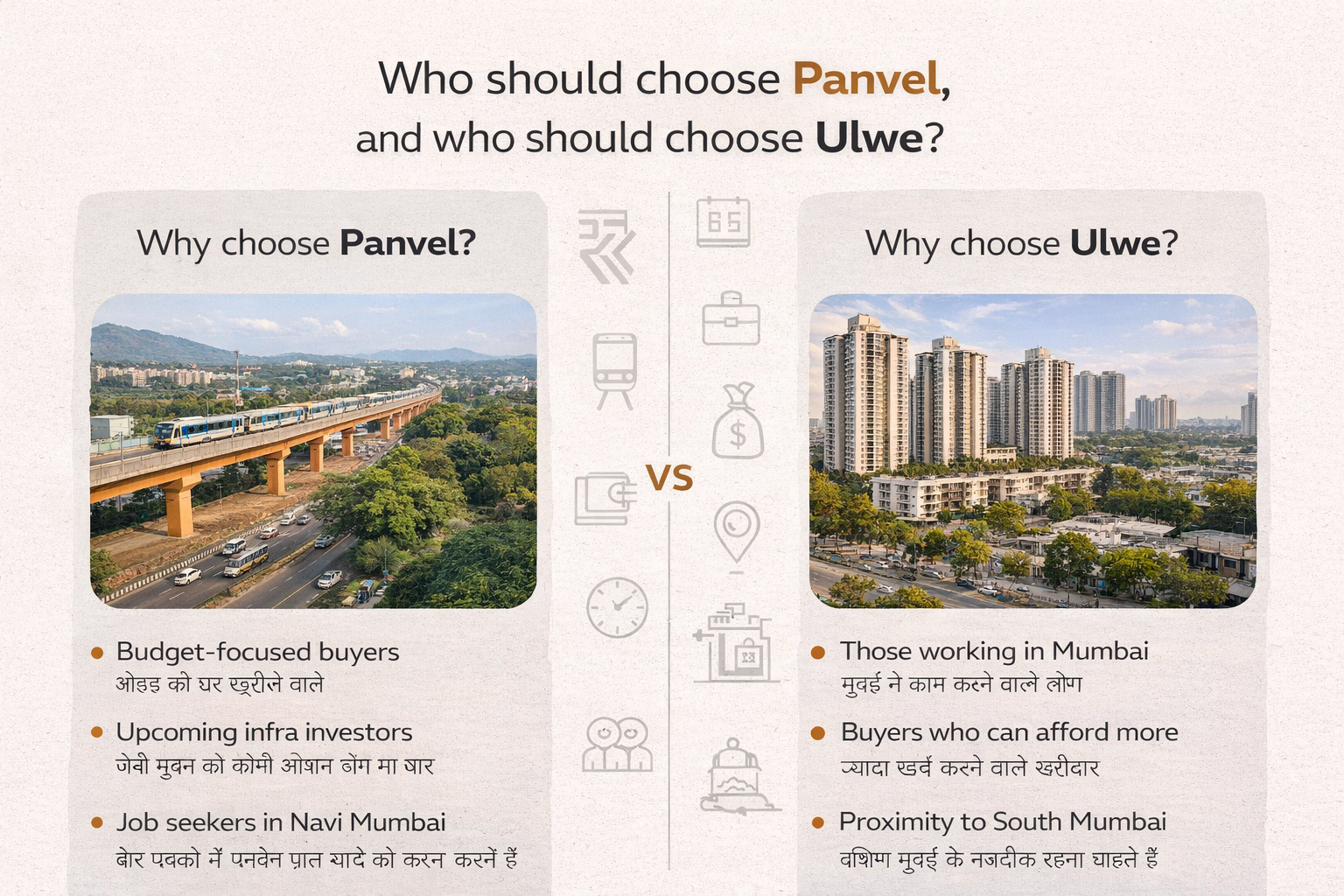
Choose Ulwe if:
- You want a more direct NMIA-linked location story
- You are comfortable with a three-to-five-year investment mindset
- You understand that sector quality and civic checks matter a lot
- You want a more obvious airport-adjacency market
- You are not assuming past appreciation will repeat automatically
Choose Panvel if:
- You are buying for self-use with family comfort in mind
- You want more stable long-term logic instead of a single-theme market
- You prefer a broader transport and ecosystem base
- You want to reduce exposure to pure sentiment-driven pricing
- You are betting on regional growth, not just runway proximity
Conclusion
If you want the cleanest airport-nearness story in Navi Mumbai, Ulwe benefits more.
If you want the stronger airport-linked growth platform over the long term, Panvel usually benefits more.
That is the real difference.
Ulwe is the sharper, more direct, more sentiment-sensitive airport market. Panvel is the broader, more durable, more integrated airport-region market. For aggressive investors, Ulwe can still be attractive with the right entry and the right sector. For most end-users and for long-hold buyers who want resilience as much as upside, Panvel is usually the better bet.
In short: Ulwe wins the proximity story. Panvel wins the durability story.
FAQs
Frequently Asked Questions