

Navi Mumbai Commercial Property Rates and Rental Yields
Navi Mumbai commercial property rates, rents, and yields do not move together. That is the first thing buyers and investors need to understand. A shop in Vashi, an office in Airoli, and a warehouse-linked unit in Taloja may all be called “commercial property,” but the pricing logic is completely different. In simple terms, high rates do not automatically mean strong returns, and strong rents do not always mean the best long-term asset.
Navi Mumbai has grown into a serious commercial market, not just a residential extension of Mumbai. Recent market reporting says the city now has about 32.7 million sq ft of prime office stock, hosts roughly 430 occupiers, and could add another 23.5 million sq ft by 2031. Average office rents are reported at around ₹70 per sq ft per month, and are materially lower than many Tier-1 city benchmarks, which is one reason office demand has stayed strong here.
That said, this is still a very fragmented market. Vashi, CBD Belapur, Nerul, Seawoods, Airoli, Ghansoli, Kharghar, Turbhe, Taloja, and Panvel-side belts do not behave like one uniform commercial map. The right way to read this market is by property type, node, access, occupier demand, and actual use case.
For better context behind these numbers, it helps to read the Navi Mumbai Commercial Real Estate Guide and understand the market more fully.
Quick summary: what the market is really telling you
| Market Question | Practical Answer |
|---|---|
| Are Navi Mumbai commercial rates high everywhere? | No. Premium nodes and practical cash-flow nodes behave very differently. |
| Are commercial rents strong? | Yes in the right corridors, especially office-driven and established retail belts, but not evenly. |
| What is a normal gross commercial yield band? | Roughly 4% to 8% in many cases, with some riskier or more operationally driven pockets pushing higher. |
| Where do rates look strongest? | Vashi, Belapur, select Nerul-Seawoods pockets, and stronger office campuses. |
| Where can yields look better? | Taloja, Turbhe, some Panvel-side and industrially linked markets, but risk is higher. |
| What is the biggest mistake buyers make? | Mixing office, retail, showroom, clinic, and warehouse-style assets into one comparison. |
Navi Mumbai commercial property rates, rents and yields do not move together
This market becomes much easier to understand once you separate three things:
- Rate means capital value, or buying price
- Rent means monthly income or occupier cost
- Yield means return, usually annual rent divided by capital value
A premium market can have very high rates and still give only moderate yield. That is common in mature locations where branding, scarcity, and long-term holding comfort push prices up faster than rents. Vashi is the clearest example. Prime retail pricing there is commonly quoted around ₹45,000 to ₹65,000 per sq ft, while prime office pricing can sit around ₹38,000 to ₹50,000 per sq ft. Those are serious capital values. But that does not mean yield will be spectacular. In many such locations, rent is strong in absolute terms, yet yield gets compressed because the entry price is already very high.
The opposite can happen in lower-entry, more operational markets. Taloja, for example, has much lower capital values in many commercial formats, with emerging office pricing often discussed around ₹11,000 to ₹18,000 per sq ft and retail around ₹14,000 to ₹22,000 per sq ft. If the unit is actually usable for the local business ecosystem and tenant demand exists, yields can look better there than in prestige locations. But that comes with more volatility, more tenant dependence, and often a weaker brand profile.
So the question is not “Which area has the highest price?” The better question is: What kind of commercial asset are you buying, and what is it supposed to do for you?
What counts as a strong commercial yield in Navi Mumbai, and when is it misleading?
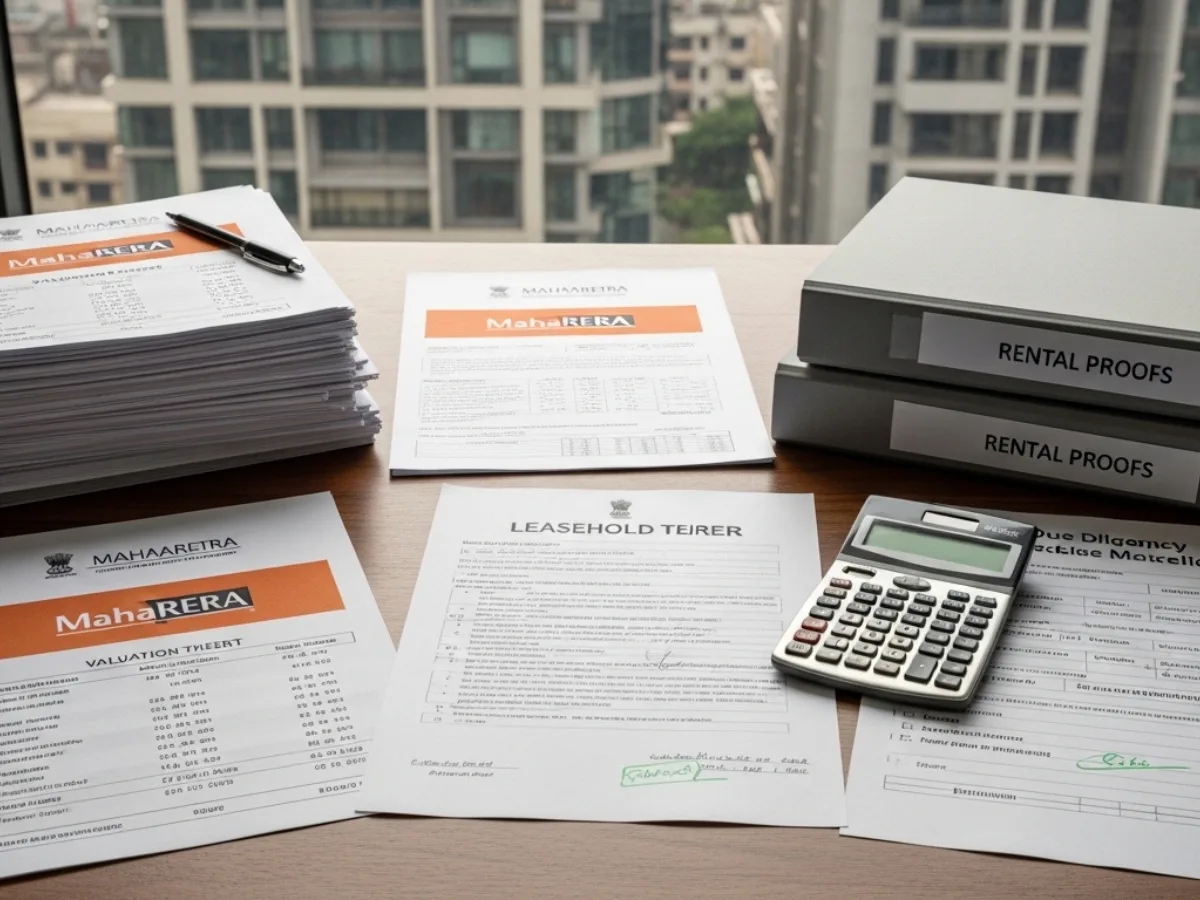
On paper, many commercial deals look attractive because brokers or sellers talk about gross yield. Gross yield is only the top-layer number. Real investors should care more about net yield.
A gross yield may look like this:
- annual rent ÷ purchase price = 7% or 8%
But that is before important costs such as:
- municipal property tax
- common area maintenance
- vacancy loss between tenants
- brokerage on leasing
- fit-out contribution or rent-free period, where relevant
This matters a lot in Navi Mumbai. NMMC property tax on commercial assets is a genuine yield reducer, and public explainers using the NMMC framework place commercial tax at around 68.45% of rateable value, with bank premises higher. At the same time, CAM charges in commercial properties can be significant, and broad market guidance often places commercial CAM in roughly the ₹10 to ₹25 per sq ft range depending on building quality and services.
That is why a so-called 8% gross yield may feel much less exciting after real deductions. In actual practice, once taxes, CAM, vacancy, and churn costs are factored in, many investors discover that the “yield in the brochure” is not the “yield in the bank.”
Gross yield vs real yield after costs
A simple rule helps:
- Gross yield is a screening number
- Net yield is the decision number
Premium nodes can still make sense with lower net yield if the buyer wants long-hold stability, asset quality, or a better tenant profile. But if the only objective is monthly cash flow, then compressed-yield prestige markets can disappoint.
Which type of commercial property are you evaluating?
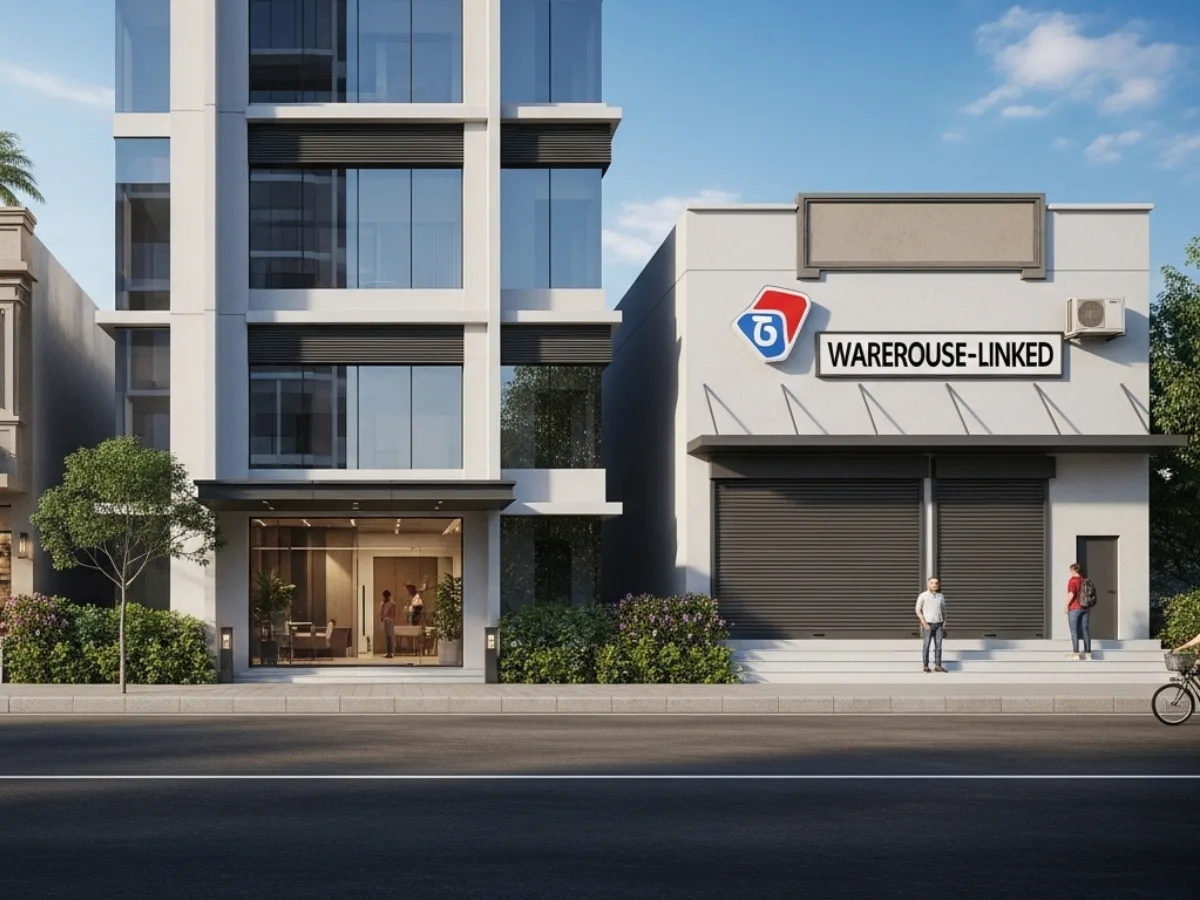
This is where most weak articles fail. Office, shop, showroom, clinic, and mixed-use units do not follow the same economics.
Office space
Office demand in Navi Mumbai is driven mainly by Airoli, Ghansoli, Mahape, Rabale, and the larger TTC belt logic. These areas work because of corporate ecosystem, infrastructure, talent movement, and campus-style stock. Navi Mumbai’s larger office story is being supported by growing Grade A stock, relatively competitive rentals, and continuing occupier interest.
Shops and retail units
Retail depends on footfall, frontage, daily catchment, station access, and repeat demand. A ground-floor unit near an active market or station influence zone is not comparable to a random podium unit inside a weak commercial project. Vashi, Nerul, Belapur, Seawoods, and selected Kharghar pockets behave very differently from low-footfall emerging sectors.
Showrooms
Showrooms need visibility, road width, parking, and vehicle-led access, not just a good address. That is why some buyers look at corridors like Turbhe or highway-facing stretches rather than older internal markets with parking stress.
Clinics and service businesses
These depend less on pure retail hype and more on residential catchment, access, society permission, zoning fit, and repeat local use. Belapur, Vashi, and established residential-commercial mixed nodes can make more sense here than speculative commercial blocks.
Which Navi Mumbai nodes usually command the highest commercial rates, and why?
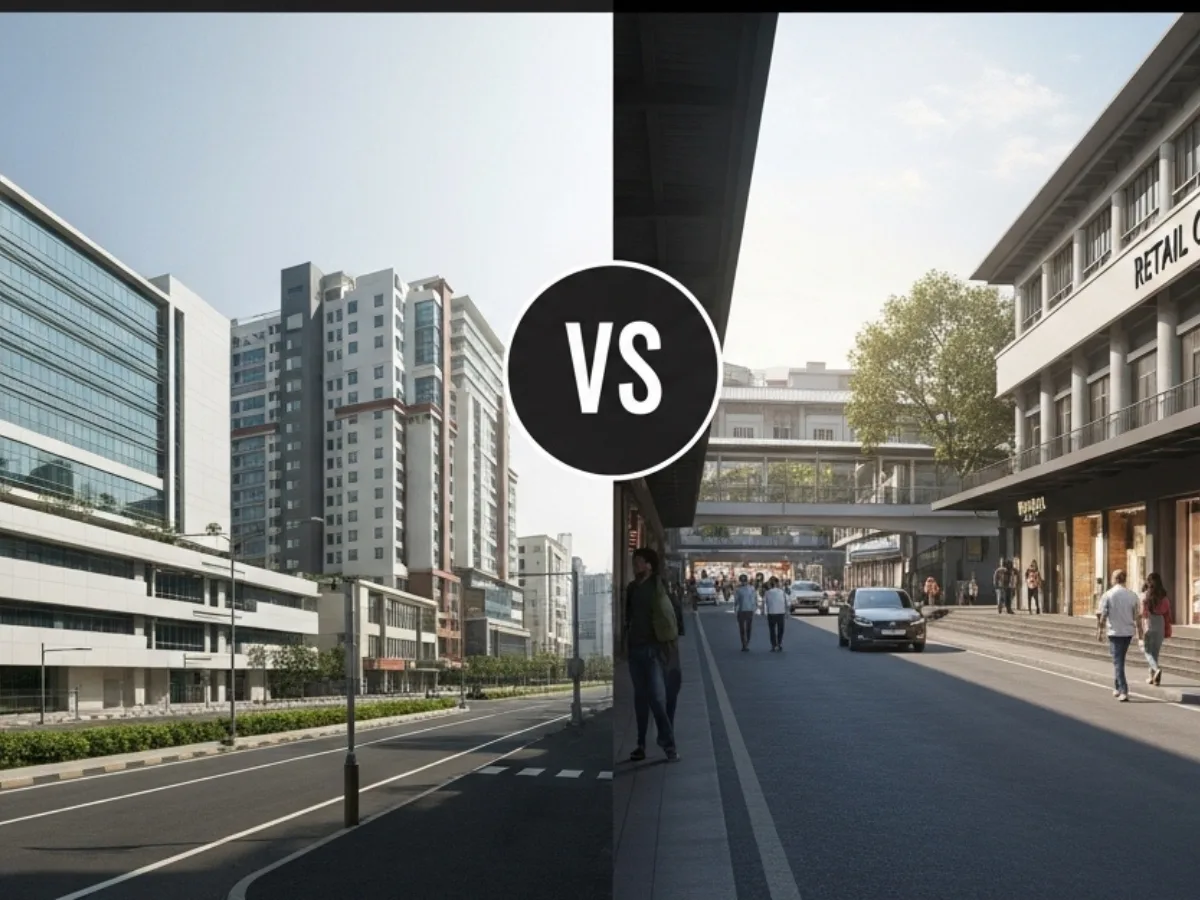
The most expensive markets are usually the ones where demand is already proven, supply is limited, or institutional comfort is higher.
Vashi
Vashi remains one of the strongest commercial names in Navi Mumbai. Its best-performing commercial pockets benefit from railway access, bus connectivity, historic retail depth, and a long-established market identity. That is why prime retail and office rates here are among the highest in the city.
CBD Belapur
Belapur carries administrative and business importance. Government and institutional presence, better office perception in some pockets, and stronger formal office demand help keep pricing firm.
Nerul and Seawoods
These are not just residential names anymore. Their better commercial pockets benefit from stronger household catchment, Palm Beach Road influence in selected belts, and good local spending power. But buyers should be careful here: some areas are genuine business zones, others are simply expensive because of the surrounding residential image.
Kharghar
Kharghar’s commercial story is part current demand and part future expectation. Retail and service-commercial formats can work well where residential density and node maturity support them. But not every high asking price here is equally justified just because the area sounds “future-ready.”
Where are rents stronger than buying prices, and where are prices running ahead of rent?

This is one of the most important distinctions in the whole article.
Rent-led markets are usually better for yield hunters. These are the places where the entry price is still moderate compared to the actual rent that local occupiers are willing to pay. Taloja, Turbhe, and some industrially linked belts can fall into this category in the right asset type. They are not glamorous, but they can work better for cash flow.
Price-led markets are usually better for buyers who care about prestige, brand perception, scarcity, or long-term holding comfort. Prime Vashi pockets, Palm Beach-influenced commercial stretches, and some premium station-linked zones can fall into this side. The problem is simple: capital value runs ahead of rent, so yield becomes thinner.
If monthly return is your main goal, do not buy a price-led asset just because the location sounds premium.
You should also read Best Commercial Node in Navi Mumbai for First-Time Investors if you want to connect pricing with entry-level investment decisions.
How office corridors and retail corridors behave differently in Navi Mumbai
Navi Mumbai has a clear split between office corridors and retail corridors.
The office engine is mainly the TTC belt and large campuses, especially around Airoli, Ghansoli, Mahape, and surrounding submarkets. This is a business ecosystem story. Companies care about floor plates, power backup, connectivity, and team movement, not daily street shopping appeal. Recent reporting on Navi Mumbai’s office market underlines exactly this growth logic.
Retail corridors work on a different logic. They are more dependent on station-led movement, market familiarity, residential density, and visible frontage. Airoli may work strongly for offices, but that does not automatically make every Airoli commercial unit a strong retail investment. In the same way, a strong shop near a station-influenced market may perform better than a much costlier office floor if the buyer’s goal is local retail rent.
That is why a reader should never compare TTC office demand with Vashi station retail demand as if both are one market. They are not.
Is it better to buy or lease commercial property in Navi Mumbai right now?

For many users, leasing is still the smarter move.
Why? Because buying commercial property is not only about purchase cost. It is also about fit-out cost, tax burden, flexibility, lease risk, and business certainty. Fit-out cost in Mumbai remains among the highest in India. Recent cost guides place Mumbai office fit-outs around ₹6,209 to ₹6,588 per sq ft, depending on specification and reference source.
So if you are a business occupier taking a bare-shell unit, your real entry cost is not just rent or purchase price. It is rent plus CAM plus GST where applicable plus interiors plus deposit plus lock-in risk.
Buying generally makes more sense when:
- you have a stable long-term business
- you need heavy customization
- you want to avoid future rent escalation shock
- you are comfortable with capital being locked in
Leasing makes more sense when:
- the business is still scaling
- the location may change in 2 to 5 years
- you want flexibility
- you would rather keep capital in business operations instead of property
How should buyers read quoted commercial rates in Navi Mumbai without getting misled?
This is where many expensive mistakes happen.
Do not compare commercial properties only on the quoted per-square-foot rate. First ask:
- Is this carpet area or super built-up area?
- Is CAM included or extra?
- Is GST extra?
- How much loading is there?
- What is the actual usable area?
Commercial loading can be very high. So a deal that looks decent on paper may become expensive once you calculate the price on actual usable carpet area.
Quick buyer checklist before trusting a quoted rate
| Check | Why It Matters |
|---|---|
| Carpet vs super built-up | Prevents overpaying for non-usable area |
| CAM extra or included | Changes monthly outgo materially |
| GST applicability | Affects occupier budget |
| Parking availability | Important for showroom, clinic, office, and customer-facing use |
| Frontage and visibility | Critical for retail and showroom formats |
| Tenant profile or lease proof | Important for yield-based purchases |
| MahaRERA status for newer projects | Helps verify project validity and disclosures |
| IGR rate baseline | Helps understand valuation and closing-cost logic |
What local factors actually change commercial rents and yields in Navi Mumbai?
A few local factors change the answer more than people expect.
First is station access. In Navi Mumbai, railway connectivity still matters enormously. Commercial value within a strong walking or short-access zone to key stations often behaves differently from value in the same node but farther inside.
Second is parking and loading practicality. This is why some older markets feel strong but stop scaling for larger users.
Third is jurisdiction and legacy structure. CIDCO’s planning history still affects how people read ownership, transfer, and building quality in many parts of Navi Mumbai. CIDCO has officially developed Navi Mumbai and continues to shape project-level permissions and services, while recent policy discussion on leasehold-to-freehold has clearly centered on eligible residential plots, not a blanket conversion of all commercial property. Buyers should therefore verify commercial title and transfer conditions case by case.
Fourth is municipal cost structure. Under NMMC-side locations, recurring municipal and compliance realities can materially change yield math. That is why two properties showing the same gross rent may still produce different owner outcomes.
Which type of buyer should target which kind of commercial market?
A practical way to close this topic is to match the buyer with the market.
- Self-use office buyer: Airoli, Ghansoli, Mahape-side logic, or Belapur depending on team type and business function
- High-street retail brand: Vashi, Nerul, Seawoods, selected Kharghar sectors, and selected road-front belts
- Yield-focused investor: Taloja, Turbhe, practical Panvel-side or industrially linked micro-markets, but only with careful tenant and title checks
- Long-hold appreciation buyer: better-quality established nodes or infrastructure-linked growth corridors, but only if low yield is acceptable
- Clinic or service-business occupier: dense residential catchment zones with legal usage clarity, not random cheap commercial units
What should you verify before buying commercial property at a yield-based price?
Before paying token, do these checks properly:
1. Verify project and promoter details on MahaRERA for under-construction or recently delivered stock. MahaRERA’s public portal allows project search, quarterly updates, project progress review, and buyer guidance. Check IGR Maharashtra Ready Reckoner and valuation process so you understand rate baseline, stamp-duty logic, PDE workflow, and registration steps. Demand actual rent proof if the property is being sold as an income asset. 4. Check whether the quoted yield is gross or net. 5. Confirm usage suitability for clinic, food, medical, or high-footfall activity. 6. Ask clearly about CIDCO leasehold transfer issues wherever applicable. 7. Model vacancy and turnover cost instead of assuming permanent occupancy.
conclusion
Navi Mumbai is a strong commercial market, but it is not one single market. The real difference is not just between one node and another. It is between office and retail, rent-led and price-led, self-use and income-buying, gross yield and net yield.
If you want stability and stronger business quality, mature nodes and stronger office or retail corridors may justify higher entry prices. If you want better cash flow, practical lower-entry markets may look more attractive, but they require sharper due diligence. The smart buyer in Navi Mumbai does not chase the highest quoted rate or the loudest yield claim. The smart buyer checks use case, carpet-area reality, local demand, authority records, and net return after real costs.
FAQ's
Frequently Asked Questions