
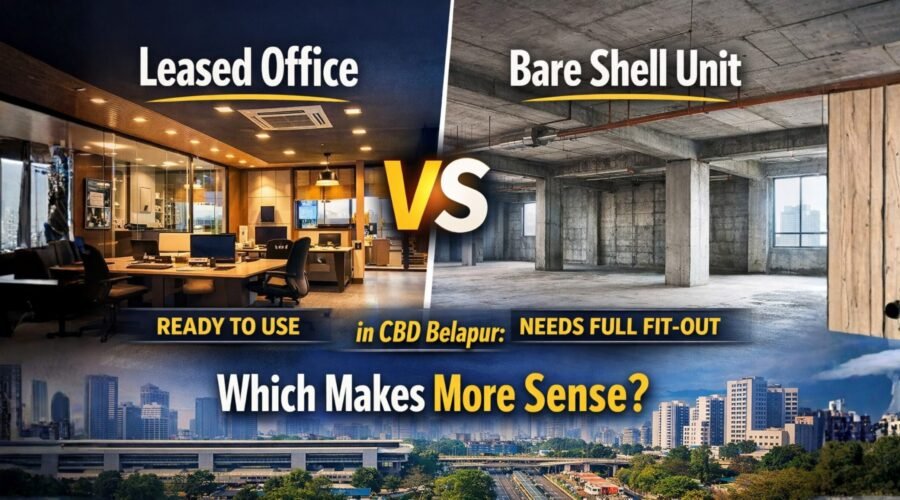
Leased Office vs Bare Shell Unit in CBD Belapur: Which Makes More Sense?
In CBD Belapur, a leased or fitted office usually makes more sense for buyers who want immediate use, faster occupancy, easier tenanting, and less execution headache. A bare shell unit usually makes more sense only for buyers who need full layout control, can handle fit-out work, and have enough capital buffer for interiors, delays, and approvals. In Belapur, the right choice depends less on headline price and more on use case, building quality, station access, parking, and tenant profile.
That is the practical answer. But this topic becomes much clearer once you stop looking at it as a simple “ready office vs raw office” comparison.
CBD Belapur is not just another commercial node in Navi Mumbai. It is an administrative and professional hub. The presence of the NMMC headquarters, CIDCO Bhavan, court-related demand, and established professional activity changes what actually works here. That is why many buyers make a mistake when they compare only rate per square foot. In Belapur, usability, fit-out cost, leasing speed, and exit liquidity matter just as much as purchase price.
Before comparing both options too closely, CBD Belapur Commercial Property Guide is worth reading for the wider picture.
Leased office or bare shell unit in CBD Belapur: which one usually makes more sense?
For most small and mid-sized buyers in CBD Belapur, a leased or fitted office usually makes more sense. It reduces setup time, avoids the stress of managing contractors and approvals, and is easier to occupy or rent out quickly. This is especially true for lawyers, CAs, consultants, shipping agencies, branch offices, and small firms that do not want to spend months turning a raw unit into a usable workplace.
A bare shell unit is usually better only in specific cases. It suits buyers who have a clear operational plan, need custom infrastructure, or want to create value through a controlled fit-out. That can work for larger self-use buyers, diagnostic or technical users, or investors who know exactly how to design, budget, and lease the space later.
Quick comparison box
| Metric | Leased / Fitted Office | Bare Shell Unit |
|---|---|---|
| Best fit | Self-use professionals, SMEs, income investors | Corporate users, specialized occupiers, value-add investors |
| Occupancy speed | Fast | Slow |
| Initial usability | High | Very low |
| Customization | Limited | High |
| Interior cost burden | Low after purchase | High after purchase |
| Execution hassle | Lower | Much higher |
| Immediate income | Possible from day one | No |
| Risk of delay | Lower | Higher |
What is the actual difference between a leased office and a bare shell unit in Belapur?
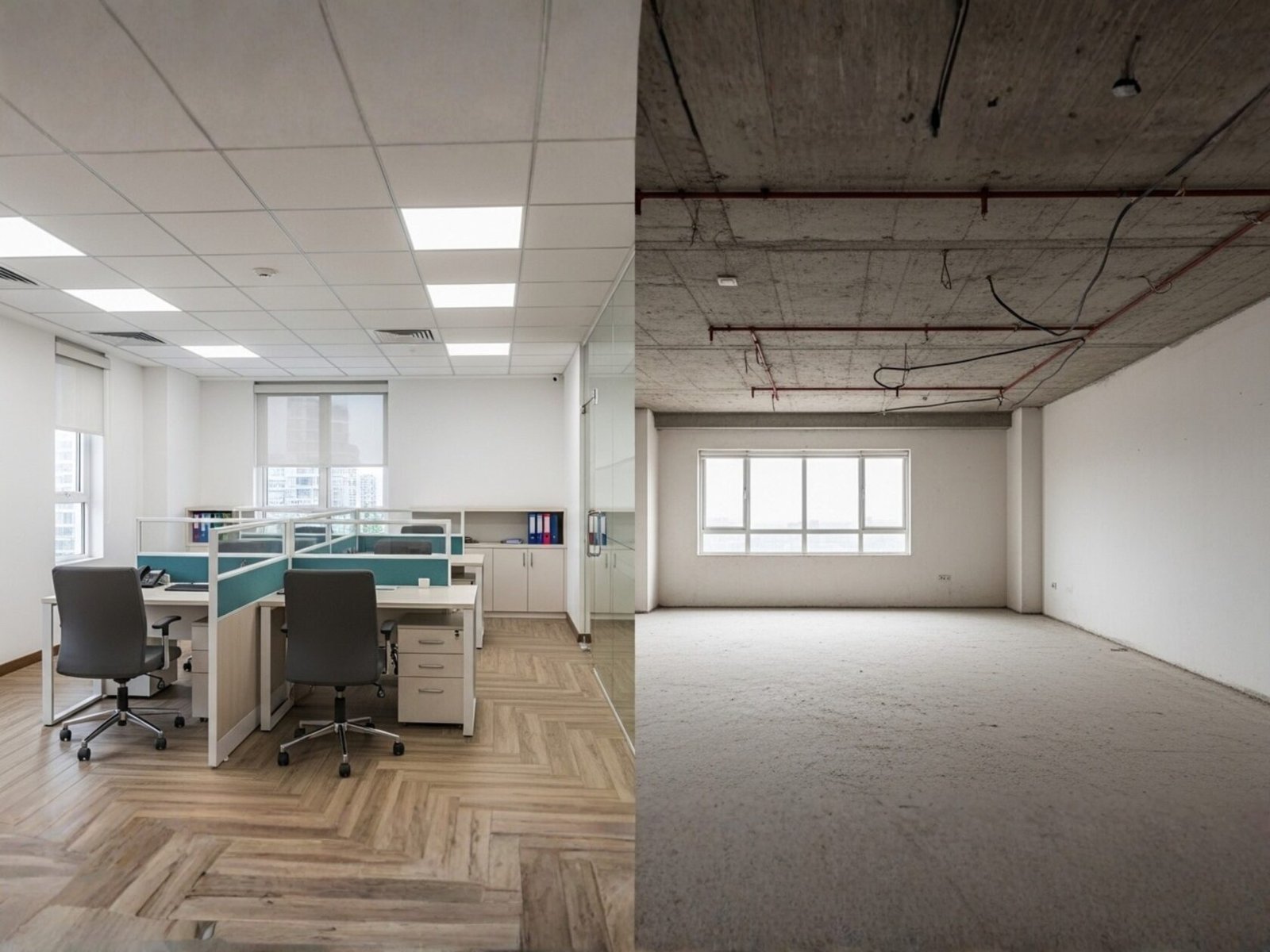
A leased or fitted office is a space that is already usable to some extent. It may have flooring, electrical wiring, false ceiling, AC setup, partitions, work areas, cabins, and sometimes even an existing tenant. A pre-leased office goes one step further because it already comes with a live rent stream and an executed lease agreement.
A bare shell unit is basically the building structure handed over without real office functionality inside the unit. You may get the concrete slab, walls, ceiling, base utility provision, and some building-level systems, but the office is not ready to use. Flooring, electricals, internal AC distribution, partitions, and functional zoning still have to be created.
So the real difference is not cosmetic. It is about who carries the time, cost, and execution risk after purchase.
What buyers often misunderstand about “ready” office stock
Many buyers assume that a ready office is automatically a better office. That is not true. A ready office is only useful if its current layout and services suit the next user.
An old office made for dense back-office seating may not work for a law practice that needs privacy and document storage. A fitted office with dated interiors may also look ready on paper but still need costly demolition and redesign. In other words, “ready” does not always mean efficient, flexible, or future-proof.
What a bare shell unit still needs before it becomes usable
This is where many first-time buyers miscalculate badly. A bare shell office is not just missing furniture. It often still needs major work before any business can function from it.
That usually includes:
- flooring and levelling
- full electrical distribution
- lighting
- internal HVAC distribution
- partitions and cabins
- false ceiling
- networking routes
- fire safety integration within the unit
So yes, the entry price may look attractive. But the office is still far from operational.
Who should buy a leased or fitted office in CBD Belapur?
A leased or fitted office in Belapur usually suits buyers who value speed, predictability, and operational ease more than absolute layout freedom. For many real-world buyers, that is the smarter choice.
Self-use buyers who need immediate occupancy
If a business needs to move in quickly, a fitted office usually wins. This is common for branch offices, consultancy firms, legal professionals, tax and compliance practices, and service businesses that do not want their founders or managers to spend months handling interior contractors.
In CBD Belapur, this matters even more because many buyers are choosing the area for practical daily function. They want proximity to the station, access to civic and legal offices, and a predictable office base. A ready space lets them start operating fast instead of delaying work for fit-out execution.
Investors who want income from day one
For passive investors, a pre-leased office has one obvious advantage: it starts generating income immediately. There is no empty period during interior execution and no immediate pressure to find a tenant from scratch.
That is why pre-leased offices often attract NRIs, HNIs, and buyers who want a more stable income-producing commercial asset. But that does not mean every pre-leased office is automatically a good buy. Lease quality still matters, and that becomes important later in the article.
Small professional offices where setup delay is costly
This is one of the most practical Belapur-specific points. A large share of office demand here comes from professionals and SMEs operating in smaller office sizes, often in the 250 to 800 sq ft range. For such buyers, interior design, project management, and compliance costs do not scale down neatly.
So for a small chamber or compact office, paying a premium for a usable ready space is often cheaper than buying a raw unit and building everything from zero.
Example
A 450 sq ft legal office near the station or court belt is usually more practical as a fitted chamber than as a raw shell. The buyer saves time, avoids disproportionate fit-out cost, and can start work much sooner. For this profile, the “cheaper” shell option often becomes more expensive in real terms.
Who should consider a bare shell unit in CBD Belapur, and who usually should not?
A bare shell unit works only when the buyer has a strong reason to choose it. It is not a default value play.
Buyers who need layout control and can manage fit-out
Some businesses genuinely need a blank canvas. A specialized clinic, diagnostic use case, high-density operations setup, or a corporate office with strict branding and infrastructure needs may find a fitted office wasteful.
In such cases, a bare shell unit is better because the buyer can design the space exactly as required. There is no need to demolish someone else’s outdated cabin layout or rebuild a poorly planned interior.
Investors trying to create value through customization
Some experienced investors buy shell units, create a high-quality market-ready fit-out, and then lease them at stronger rents. This can work, but only when the investor has deep local market understanding, cost control, and patience.
In Belapur, this strategy makes more sense in better buildings where the final space can attract serious office users. In weak buildings, even a good interior may not solve the deeper demand problem.
Buyers who underestimate time, approvals, and interior cost
This is where bare shell buying becomes dangerous. In the Navi Mumbai commercial market, a basic functional office interior can cost around ₹800 to ₹1,200 per sq ft. A standard mid-range corporate fit-out often falls in the ₹1,200 to ₹2,500 per sq ft range. Premium interiors can cross ₹3,000 to ₹3,500 per sq ft.
That means a buyer who “saves” money on acquisition can easily spend the same amount later on interiors, compliance, and delay. Add three to six months of dead time, ongoing CAM charges, taxes, and loan servicing, and the shell unit may stop looking cheap very quickly.
In CBD Belapur, what matters more than the office category itself?
Quite often, the building and the micro-location matter more than whether the office is fitted or shell. A good office in the wrong building is still a weak commercial asset. A shell unit in the right building may outperform a ready office in a poor one.
Building quality, maintenance, and common area impression
Commercial tenants and clients judge a building before they judge the office inside it. The facade, lobby, security, lift condition, washrooms, backup systems, and maintenance standards all affect leasing and resale.
A fitted office inside a tired building with poor upkeep can struggle, even if the interiors look decent. On the other hand, a bare shell in a better-managed building can hold long-term value because the building itself stays marketable.
Station access, court belt, civic-office relevance, and parking
This is where Belapur’s local logic really matters.
Properties near the Belapur Railway Station and the court-oriented belt tend to work well for legal professionals, consultancies, shipping and maritime-related offices, and smaller firms that care about walkability and commuter convenience. In these pockets, fast access can matter more than luxury.
Properties towards Sector 15 and the Palm Beach Road side generally suit larger occupiers and buyers who care more about building image, better parking, and larger corporate-ready stock. These users usually expect better-grade commercial towers and do not want daily parking friction.
Floor plate efficiency, lift access, washroom setup, and signage practicality
A building may look fine from outside but still be inefficient inside. Odd floor plates, too many columns, poor lift ratios, weak washroom support, or bad signage provisions can reduce office usability and tenant appeal.
This matters for both types of offices. A shell unit in an inefficient building becomes expensive to plan. A fitted office in an awkward structure may still remain difficult to use well.
What to physically check before deciding
- lobby and common area quality
- lift speed and number of lifts
- parking availability and usability
- building age and overall upkeep
- common washroom condition
- ease of access from station or major roads
- floor plate shape and usable layout
- signage visibility for office users
- overall professional impression of the building
Which option is usually better for self-use, leasing, and resale?
The best option changes based on your objective. That is why this decision should be reverse-planned.
| Objective | Usually Better Choice | Why |
|---|---|---|
| Self-use for SME / consultant / professional | Fitted / ready office | Faster setup, lower distraction, less capital blocked in interiors |
| Self-use for specialized corporate or clinic use | Bare shell unit | Better for custom planning, technical needs, and brand-specific layout |
| Leasing to tenants | Ready or warm shell office | Smaller Belapur tenants usually prefer usable spaces over raw units |
| Immediate passive income | Pre-leased office | Income starts early, leasing risk is lower at entry |
| Exit and resale liquidity | Pre-leased or practical fitted office | Buyers often prefer stabilized or easily usable assets |
For most practical Belapur buyers, ready stock is easier to understand, easier to operate, and easier to market later. Shell units become stronger mainly when the use case is highly specific or the buyer is execution-capable.
Is a bare shell unit actually cheaper, or does it just look cheaper at first?
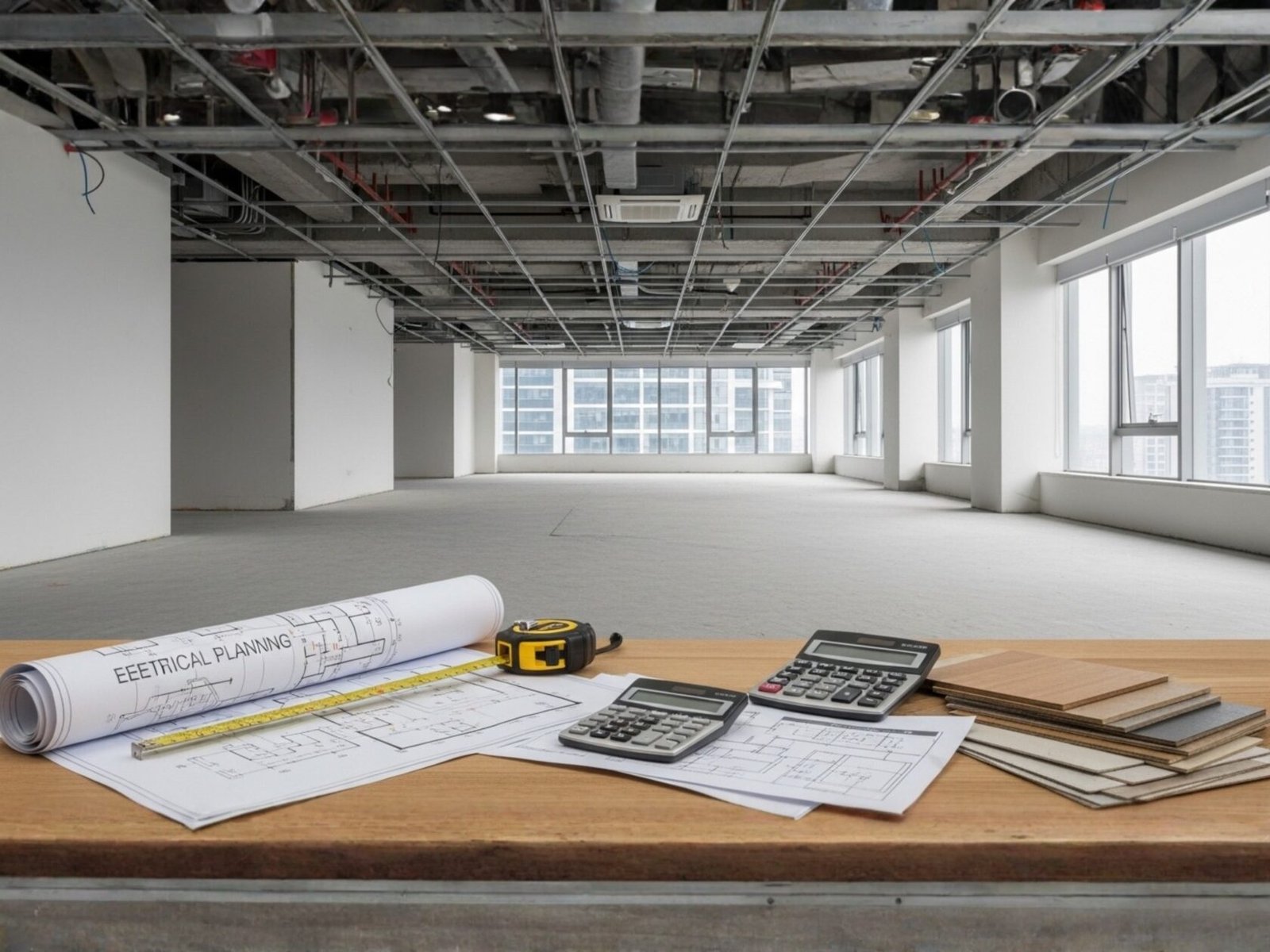
Usually, it just looks cheaper at first.
The acquisition price of a bare shell office is lower because the big spending has simply been pushed forward. That future spending is real, and many buyers underestimate it.
Interior cost
Even a basic office finish in the current Navi Mumbai market can cost around ₹800 to ₹1,200 per sq ft. A mid-range corporate fit-out often runs around ₹1,200 to ₹2,500 per sq ft. Higher-end office environments can go above ₹3,000 per sq ft.
So if a 1,000 sq ft shell unit looks cheaper by ₹15 to ₹20 lakh, that gap can disappear once interiors are executed properly.
Delay cost and carrying cost
A shell office usually has a zero-utility period. During that time, the owner still pays CAM, property tax, and loan EMI if financed. If it is an investment purchase, there is also no rent coming in during the fit-out period.
That dead period often lasts three to six months depending on complexity. For many buyers, that time cost is the most ignored part of the comparison.
Compliance, MEP, and practical setup cost
Office interiors are not just about partitions and paint. Internal electricals, data routes, HVAC planning, fire safety integration, and design coordination all add cost.
If the work involves anything beyond routine tenantable changes, extra compliance and technical certification may also come in. So the financial difference between shell and ready stock should always be looked at as total cost of usable occupancy, not just purchase price.
Why do many small office tenants in Belapur prefer ready or partially fitted spaces?
Because most small tenants do not want to spend heavily on someone else’s premises.
CBD Belapur has strong demand from SMEs, professionals, legal users, consultancies, and branch offices. Many of these occupiers want spaces they can start using quickly. They usually do not want to lock money into a heavy fit-out, especially when their lease term may only be three to five years.
That is why ready and warm shell offices often lease faster than raw shell stock in smaller sizes. A slightly older but functional office can still move faster than a perfectly empty bare shell if the user simply wants speed and lower hassle.
This matters a lot for investors. A small shell office may look like a flexible asset, but in reality it may remain vacant longer unless the owner funds interiors first.
When can a leased office become a bad buy in CBD Belapur?
A pre-leased office becomes a bad buy when the rent looks strong but the income is weak, temporary, or misleading.
You should also read CBD Belapur Office Rents and Market Trend because current pricing and demand can change the decision.
Low-quality tenant profile or weak lease terms
A lease is only as good as the tenant behind it. If the tenant is unstable, unverified, or close to possible exit, the pre-leased office loses much of its investment strength.
The buyer should look at:
- tenant quality
- balance business strength, where possible
- lock-in period
- remaining lease term
- escalation clause
- deposit structure
- maintenance responsibility
A property with only a short remaining lock-in can quickly throw the next owner back into vacancy risk.
Rent that looks attractive but is not sustainable
This is a common trap. Sometimes the rent figure includes recovery of interior cost layered into the lease for the first term. That can make the yield look very high in the beginning.
But once that period ends, the rent may reset closer to normal market levels. So if a buyer purchases based on the inflated number, the actual long-term yield may fall sharply later.
Poor building, weak exit, or overcapitalized interiors
Even a leased office can become hard to exit if the building is deteriorating, poorly managed, or falling behind better-grade options nearby. Also, highly tenant-specific interiors may not help the next lease cycle at all. They may actually need demolition.
So a leased office is not just a rent figure. It is a building-quality decision, lease-quality decision, and future-liquidity decision.
When does a bare shell unit become the smarter long-term buy?
A bare shell unit becomes the smarter buy when the buyer has a specific long-term plan that genuinely needs raw space.
This usually applies to:
- large self-use buyers
- specialized clinics or diagnostic users
- technical occupiers with infrastructure needs
- corporate users with brand-led layout requirements
- experienced investors creating high-quality custom office stock
It also makes more sense in newer, better-grade commercial towers where the building itself has long-term relevance and better tenant appeal. In that kind of product, a good custom fit-out can create a stronger long-term asset.
But the condition remains the same: the buyer must have money, time, and clarity. Without those three, shell buying usually creates more trouble than value.
What should you check before buying either type in CBD Belapur?

This is the part many buyers rush through. In Navi Mumbai, commercial due diligence is not just about title papers and possession. Local authority context matters.
Due diligence checklist
- Check whether the property is leasehold under CIDCO and whether transfer charges apply.
- Verify whether the property has any relevance under CIDCO’s freehold conversion position, if applicable.
- Confirm the building has a valid Occupancy Certificate. This is critical.
- If the building is older, ask for the latest structural audit or structural stability report where relevant.
- Verify whether the existing interior changes in a fitted office are legally compliant.
- Ensure the transaction value is aligned with or above the IGR Maharashtra Ready Reckoner benchmark.
- Check building dues, CAM position, tax status, and general building governance.
- In a pre-leased office, review the actual lease document carefully, not just the broker summary.
- In a shell office, budget separately for fit-out, time delay, and compliance-related spending.
- Confirm the actual office use is suitable for the building and unit configuration.
A very important local point is CIDCO transfer cost. In Belapur, many commercial properties are on leasehold land, and transfer charges can materially change the economics of the deal. Buyers should not treat this as a minor paperwork issue. It can be one of the biggest acquisition-side costs.
Another critical point is the Occupancy Certificate. A building may look fully functional from outside, but that is not the same as being compliant. For commercial buyers, OC status matters for legality, leasing confidence, financing comfort, and resale liquidity.
Final decision framework: which office type fits which buyer in CBD Belapur?
The cleanest way to decide is to start with your real objective.
If you are a small or mid-sized self-use buyer, a fitted office usually makes more sense.
If you are a passive investor chasing stable income, a good pre-leased office usually makes more sense, but only after lease quality and rent sustainability are checked carefully.
If you are a large self-use buyer or a specialized operator who needs custom infrastructure, a bare shell unit can be the better long-term choice.
If you are a first-time commercial buyer with limited spare capital and no appetite for execution delays, a bare shell unit is usually the riskier route.
Decision matrix
| Buyer profile | Better fit | Main caution |
|---|---|---|
| SME / consultant / lawyer / CA for self-use | Fitted / ready office | Make sure layout does not need major demolition |
| Passive income investor | Pre-leased office | Check tenant quality, lock-in, and whether rent is truly sustainable |
| Corporate HQ / specialized clinic / technical use | Bare shell unit | Keep 20% to 30% capital buffer for fit-out and delays |
| Value-add investor with execution capability | Bare shell unit | Works best in stronger buildings, not weak stock |
| First-time commercial buyer with tight budget | Usually fitted office | Shell units often create hidden cost stress |
Conclusion
If the choice is between a leased office and a bare shell unit in CBD Belapur, the safer and more practical answer for most buyers is the leased or fitted office. It suits the real demand profile of Belapur better, reduces operational delay, and is easier to occupy, lease, and often resell.
A bare shell unit should usually be bought only when the buyer has a very clear reason for needing raw space and the financial strength to complete it properly. In Belapur, this is not a market where lower entry price alone makes a better deal. Building quality, station access, parking, tenant demand, lease quality, and total usable cost matter far more than the brochure category.
FAQs
Frequently Asked Questions