

Small Office vs Shop in Nerul: Which Commercial property you should invest in?
In Nerul, a small office usually makes more sense for most first-time commercial buyers because entry cost is lower, tenant demand is broader, and the investment depends less on perfect footfall. A shop makes more sense only when it sits in a genuinely strong retail pocket with visibility, practical parking, and daily catchment. That is the real answer. Nerul is not one single commercial market, and the result changes sharply by micro-location, frontage, building type, and use case.
Buying commercial property in Nerul is not just about choosing between “office” and “shop.” It is really about choosing between two very different risk profiles. One is more accessible and flexible. The other can be more rewarding, but only if you get the location and business logic exactly right.
Before comparing both formats too closely, Nerul Commercial Property Guide is worth reading for the bigger picture.
Small office vs shop in Nerul: what is the real difference in on-ground commercial logic?
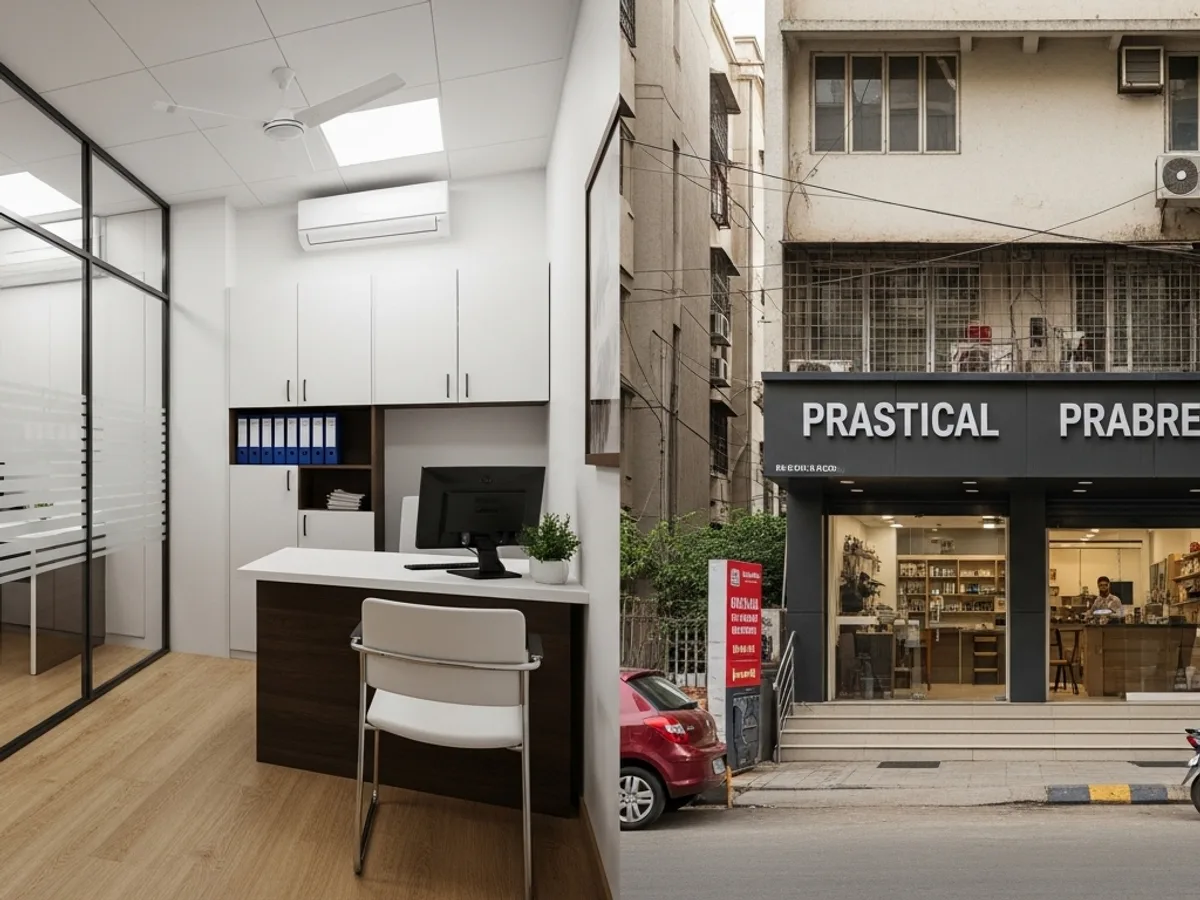
The real difference is simple. A small office gets its value from usability. A shop gets its value from visibility.
An office can work well even on an upper floor or in a quieter commercial building if the space is functional, the access is decent, the building is maintained, and the tenant’s business is appointment-based or backend-led. A chartered accountant, coaching brand, consultant, logistics team, architect, or small startup does not need highway-style walk-in traffic every hour.
A shop is different. It lives or dies by frontage, stop-and-transact convenience, repeat local movement, and parking practicality. That is why two commercial units of similar size can behave like two completely different assets in Nerul.
Quick summary table
| Feature | Small Office in Nerul | Shop in Nerul |
|---|---|---|
| Typical capital range | Lower to moderate | Moderate to very high |
| Approx. pricing logic | Around ₹9,000 to ₹14,000 per sq. ft. for standard stock, higher for premium office projects | Around ₹15,000 to ₹36,000 in weaker/emerging pockets and roughly ₹30,000 to ₹55,000 in prime retail belts |
| Main value driver | Layout, usability, professional environment, connectivity | Visibility, frontage, footfall, daily catchment, parking |
| Tenant pool | Broad | Narrower and more location-sensitive |
| Gross yield pattern | Usually more stable, around mid-range commercial yields | Can be stronger in prime pockets, but more binary |
| Vacancy risk | Moderate to lower if unit is practical | Very low in prime retail, but severe in weak pockets |
| Better for | First-time investors, consultants, clinics, coaching, small firms | QSR, pharmacy, salon, convenience retail, branded walk-in business |
There is one more practical difference that many buyers miss. Both asset types carry real holding costs in Navi Mumbai. NMMC commercial property tax is materially higher than residential tax, and modern commercial buildings can also carry serious monthly maintenance. So a vacant commercial unit is not a harmless asset. It is a carrying-cost machine.
When does a shop in Nerul actually make more sense than a small office?
A shop makes more sense only when the location already proves the business case.
That usually means one of three things in Nerul. First, the unit is on a visibility-led corridor such as a strong station-adjacent belt or a proven main-road stretch. Second, the catchment is mature and daily-use driven, like a pocket where residents already depend on nearby services. Third, the business model itself needs walk-ins, impulse visits, or direct frontage trust.
Visibility-led roads, daily-needs catchment, and proven retail pockets
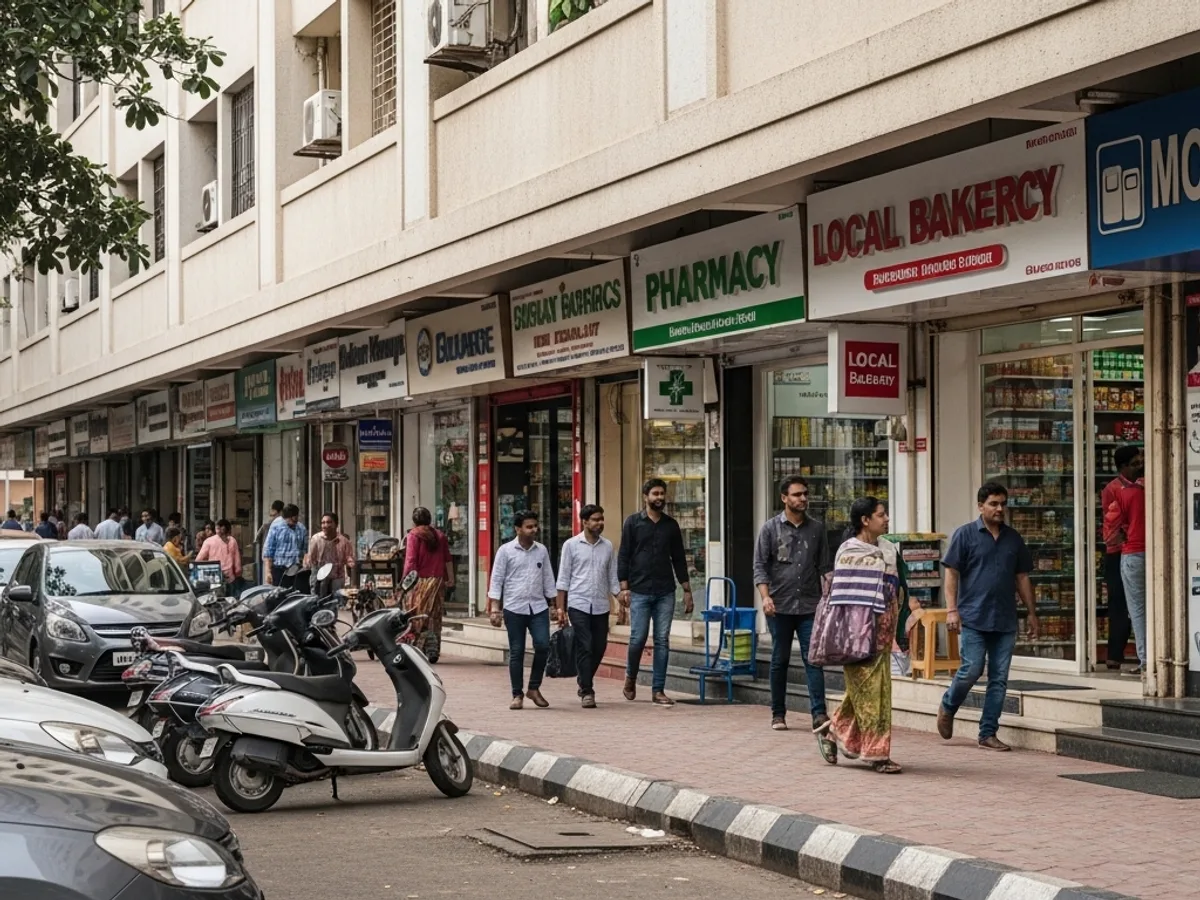
A good shop in Nerul is not just “ground floor.” It is ground floor plus visibility plus practical stopping ability. A shop on Palm Beach Road pricing may look glamorous, but if customers cannot stop comfortably, the frontage loses business value. On the other hand, a unit in a mature daily-needs zone can outperform flashier locations because the catchment is repeat-driven and dependable.
This is why Sector 21-type neighbourhood retail logic and station-led convenience logic should be read differently. One works through repeat household demand. The other works through transit movement and business spillover.
Which businesses benefit most from shop ownership
Shops make sense for businesses like:
- pharmacy and urgent medical support
- salon and grooming
- quick service food
- boutique daily retail
- café or snack-led formats in the right belt
- branded franchise models that depend on visible customer access
If the business needs signage, impulse discovery, or frequent walk-ins, office space usually becomes a compromise.
What kind of “shop” usually looks good on paper but struggles in reality
This is the trap. Many buyers see a relatively cheaper internal shop and assume they are getting retail at a bargain. In reality, some of these units are neither good retail nor good office. They sit inside a quiet lane, face inward, have weak frontage, poor stopping access, and limited business types that can survive there.
That kind of shop often attracts only low-margin users. Rent growth stays limited. Vacancy hurts more. And because the unit is still commercial, the owner remains exposed to tax and maintenance pressure even when rent is not flowing.
When does a small office in Nerul make more sense than a shop?
For most first-time commercial buyers, this is the more practical route.
A small office in Nerul usually makes more sense when the buyer wants a manageable ticket size, broader tenant demand, lower dependence on perfect location, and steadier leasing logic. That is exactly why small offices have become a more rational entry point in this market.
Why offices usually have broader tenant logic

Office demand is more forgiving because one usable office can suit many different occupiers over time. A clinic, accountant, consultant, training setup, startup team, recruiter, logistics desk, design studio, or back-office operation can all use a similar kind of space.
That tenant flexibility matters. A shop often needs a very specific business match. An office usually needs only decent usability, access, building quality, and commercial practicality.
Which buyers are better suited to small office units
A small office is usually better for:
- cautious first-time investors
- buyers with budgets around smaller commercial tickets
- professionals planning their own practice
- people who want a commercial asset without betting everything on retail visibility
- investors who value lower entry and broader leaseability over headline glamour
Where office demand is more practical than glamorous
Nerul’s office logic is tied more to movement, access, and utility than to retail buzz. Proximity to the Harbour Line, the Sion-Panvel side, established business buildings, and the wider Navi Mumbai commercial ecosystem supports office demand in a quieter way.
This is not flashy demand. It is practical demand. And practical demand is often better for smaller investors.
Example
An investor with about ₹1 crore may be forced into a poor-quality, badly placed, compact shop if they insist on retail. The same budget may get them a much better small office in a modern or more usable commercial setting. That office may not feel exciting on day one, but it often gives a better chance of stable occupancy.
Which one is usually easier to rent out in Nerul?
In most ordinary situations, a small office is easier to rent out than a weak or average shop.
That does not mean every office beats every shop. A truly prime retail unit can lease faster and even command stronger gross yields. But prime retail is rare, expensive, and unforgiving. Average retail is a very different story.
A usable office has a wide tenant pool. A poor shop has a narrow one.
Which one usually costs more in Nerul, and is the premium always justified?
A shop usually costs much more than a small office in Nerul on a per-square-foot basis. That premium can be justified, but only in the right pocket.
If a retail unit sits on proven frontage with strong catchment, repeat movement, and practical parking, then yes, the premium can be logical. But if the same pricing logic is being used for a weak unit just because it is “ground floor,” the premium becomes dangerous.
The real problem is not price. It is mispriced business utility.
Many buyers confuse commercial pricing with commercial performance. A shop can be expensive and still weak. An office can look ordinary and still perform better over time.
That is why the reader should not stop at gross yield talk. Net yield matters. NMMC’s commercial property tax structure, ongoing maintenance, and vacancy exposure can shrink the real return quickly. This is especially important in premium buildings where monthly outgo is meaningful.
What changes the answer inside Nerul itself?
A lot. Nerul is not one flat market.
Station-linked zones versus internal sectors

Station-linked zones have stronger movement-led demand. That helps both offices and shops, but in different ways. Shops benefit from convenience and transit-facing traffic. Offices benefit from commuter accessibility and client reach.
Internal sectors behave differently. Some are strong for neighbourhood retail. Others are too quiet for meaningful shop demand but still acceptable for offices if the building and access are practical.
Main-road frontage versus inside-lane visibility
This difference is huge. A main-road shop with stopping ability and real exposure can justify a premium. An inside-lane shop without destination pull often cannot. Offices are less sensitive to this difference, although they still benefit from recognisable access.
Standalone retail, mixed-use buildings, and proper office stock
Not all commercial stock in Nerul is built for the same occupier. Some mixed-use stock works for clinics, classes, or service professionals but not for premium office users. Some retail stock is too internal to behave like real retail. Some proper office buildings offer stronger leasing logic simply because they were designed for work, not improvised commercial use.
There is also one wider local reality. Seawoods Grand Central has already pulled a lot of premium retail gravity toward an organised transit-linked mall format nearby. That means a standalone Nerul shop should not be judged as if it can automatically compete with mall-led premium retail. Hyperlocal convenience, essential services, and specific need-based retail now matter even more.
For investment, which is usually safer: a small office or a shop?
For most investors, the safer buy is a small office.
Not because offices are magical. Not because retail is bad. But because office investing in Nerul is usually more forgiving on entry, tenant pool, and leasing logic.
A shop can absolutely outperform. But it usually does so only when the location is right, the frontage works, the tenant type is strong, and the buyer can absorb vacancy risk. That is not a beginner asset profile.
There is also an important exit-risk angle. CIDCO transfer charges for commercial properties saw major hikes effective April 2025, including a 50 percent increase for some commercial built-up transfers in registered societies. In plain language, this hurts easy flipping logic. So a buyer who assumes quick resale profits from a commercial asset may be taking the wrong kind of risk.
A vacant retail shop under this environment can become painful. You carry tax, maintenance, and illiquidity together. A well-bought small office is usually safer from that angle.
For end use, which buyers should choose a shop and which should choose an office?
The right answer depends on the business model.
| Buyer / Business Type | Better Fit | Why |
|---|---|---|
| CA, consultant, architect, agency, recruiter | Small office | Client meetings are appointment-based, not footfall-based |
| Dental clinic, specialist clinic, training setup | Small office or first-floor commercial | Accessibility matters more than pure frontage |
| Salon, pharmacy, café, quick-service retail | Shop | Needs walk-ins, signage, and local visibility |
| Boutique service brand with destination customers | Depends on exact model | A shop helps if visibility matters; office works if appointments dominate |
| First-time investor under moderate budget | Small office | Better entry point and broader leasing logic |
| High-risk investor targeting strong retail pocket | Shop | Can work, but only in a proven micro-market |
What are the biggest mistakes buyers make when comparing a shop and office in Nerul?
The first mistake is assuming all shops are good because “retail gets footfall.” It does not work that way. Only the right shop gets actionable footfall.
The second mistake is ignoring parking. This matters a lot in Navi Mumbai. If stopping access is weak or parking reality is poor, the shop’s value can collapse for many business types.
The third mistake is calculating returns only on gross rent. That is incomplete. Commercial property tax, maintenance, fit-out requirements, and vacancy periods can change the picture sharply.
The fourth mistake is assuming resale will always be easy. Under current commercial transfer realities, especially in a CIDCO-linked environment, exit costs and process should not be treated casually.
The fifth mistake is comparing old built-up stock with newer carpet-area based stock without normalising the numbers properly. That can completely distort value judgement.
What should you check before buying either one in Nerul?
Before buying any commercial unit here, check these properly:
- whether the unit is genuinely suitable for your intended use
- whether the project or building falls into a MahaRERA-relevant framework, especially for under-construction stock
- whether the quoted area is carpet area, built-up area, or super built-up area
- whether the CIDCO transfer burden is clear and who is paying it
- whether the property is leasehold and what transfer process applies
- whether there is Occupancy Certificate and legal commercial usability where relevant
- what the NMMC property tax and monthly maintenance actually look like
- whether parking is practical in real life, not just on brochure paper
- whether the building attracts the kind of tenant your asset needs
One more local correction matters here. In Navi Mumbai, many buyers assume that once an Agreement for Sale is registered, the transfer is effectively done. For CIDCO leasehold property, that is not the full story. Transfer documentation, approvals, and the correct assignment process matter. This is exactly where weak buying decisions become long-term legal headaches.
So, small office or shop in Nerul: which one makes more sense for you?
If you want one clean answer, here it is.
A small office usually makes more sense in Nerul if you are a first-time investor, a professional buyer, or someone who wants a commercial asset with lower entry pain, broader tenant demand, and more stable leasing logic.
A shop makes more sense only if your business or investment case depends on real walk-in visibility and the unit sits in a proven retail pocket with practical parking, true frontage, and strong daily catchment.
Do not buy a shop just because it feels more “commercial.” In Nerul, a weak shop can be a much worse asset than a decent office.
You should also read Who Should Buy Commercial Space in Nerul if you want to match the asset type with the right buyer profile.
Conclusion
For most buyers in 2026, a small office is the smarter and safer commercial buy in Nerul. It suits first-time investors, professionals, and moderate-budget buyers who want practical leasing logic instead of retail gamble. A shop is worth buying only when the location is genuinely strong enough to justify the premium. In Nerul, that means real visibility, real catchment, and real parking practicality, not just a ground-floor label.
FAQs
Frequently Asked Questions