

Nerul vs Seawoods for Commercial Space: Which Fits Better?
Seawoods usually makes more sense if you want premium positioning, station-linked convenience, and a stronger brand-facing commercial address. Nerul usually makes more sense if you want better practical usability, deeper repeat local catchment, more flexible business fit, and in many cases a better return on capital. That is the real answer. In Navi Mumbai, this decision is not about which node sounds bigger. It is about whether your business depends more on prestige-led demand or utility-led demand.
If that sounds like a small difference, it is not. It can decide whether a business feels polished but struggles on everyday conversion, or feels slightly less glamorous on paper but performs better for years.
Before comparing both nodes directly, Nerul Commercial Property Guide is worth reading for the local context.
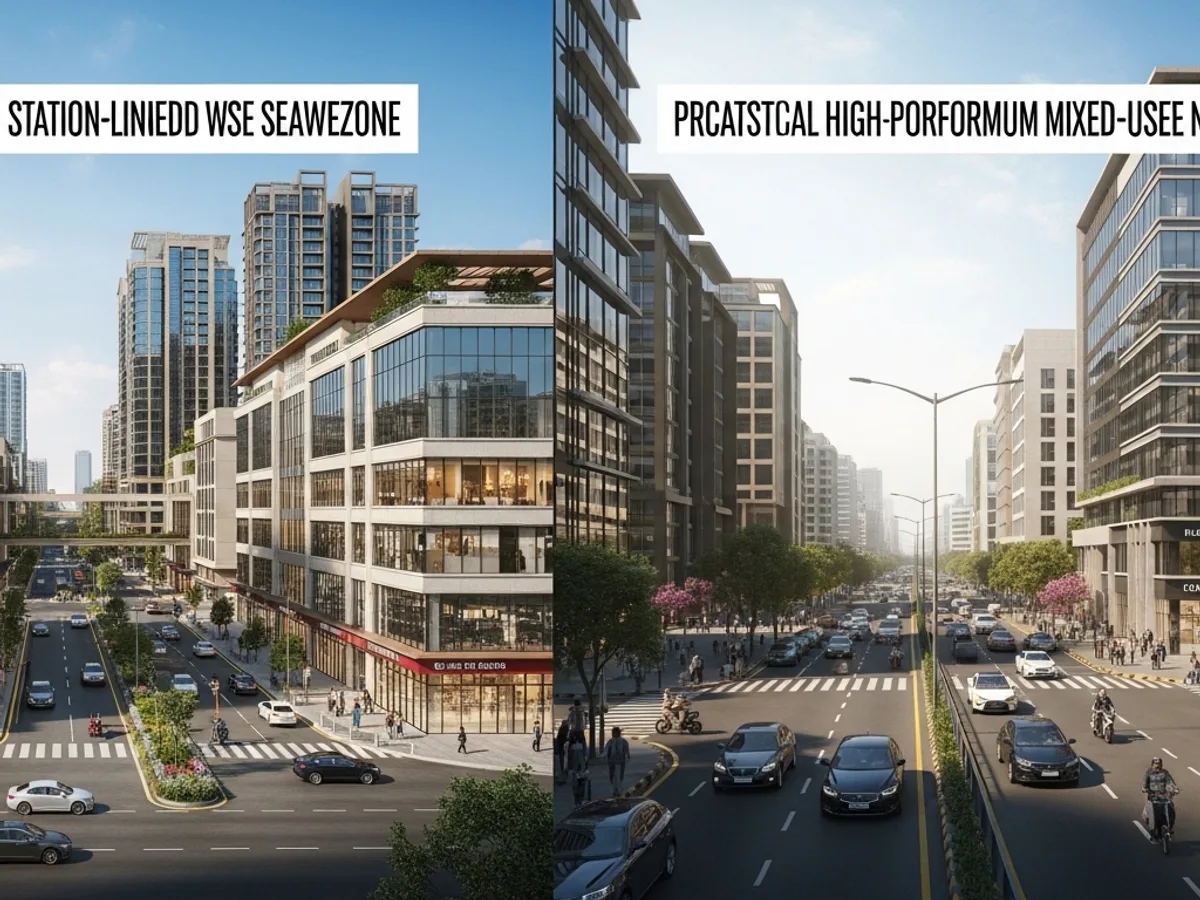
Quick Summary
| Decision factor | Seawoods | Nerul |
|---|---|---|
| Premium image | Stronger | Good, but more pocket-dependent |
| Station-led pull | Much stronger | Good in selected belts |
| Corporate address value | Stronger | Moderate to strong |
| Local repeat catchment | Selective | Stronger in many practical pockets |
| Retail outside landmark ecosystems | Riskier than many buyers assume | Often more stable on the right high street |
| Capital entry | Higher | Usually more flexible |
| Gross yield tendency | Lower because capital entry is high | Often better if bought sensibly |
| Best fit | Prestige-led mixed-use | Utility-led mixed-use |
This is why a simple “Seawoods is premium, so buy Seawoods” answer is incomplete. Commercial property does not reward image alone.
What counts as “premium mixed-use commercial space” in real Navi Mumbai terms?
In Navi Mumbai, premium mixed-use commercial space is not just a glass facade, a nice lobby, or a high asking price. A real premium asset combines usable design, legal clarity, parking practicality, frontage quality, and the right mix of surrounding users.
A building becomes truly premium when office users, retail users, service users, and visitors can all use it without friction. That means people should be able to reach it, park, find it easily, and operate there without daily compromise.
Why office + retail + F&B + service overlap matters more than a fancy label
Mixed-use works when one demand source supports another. Office employees support cafes, pharmacies, printing, and convenience retail. Nearby residents support clinics, salons, diagnostics, food, and recurring services. Better retail and food improve the building’s daily usefulness for offices.
That is why some buildings feel alive all day while others look premium but stay commercially weak outside one narrow time band.
Why mixed-use performance depends on the exact building and frontage, not just the node name
This is where many buyers make expensive mistakes.
An expensive shop in an awkward internal pocket is not automatically premium. A fancy office without proper visitor parking is not automatically premium. A property close to a landmark but with poor pedestrian capture can still underperform badly.
After the January 2025 parking policy tightening in Navi Mumbai, parking practicality became even more important for larger premises. So today, a so-called premium commercial unit without proper paper-backed parking support can quickly become a headache instead of an advantage.
Why Seawoods often wins on premium image, station integration, and brand-facing demand

Seawoods wins the perception battle very easily. And to be fair, it is not just perception. It is backed by a real mixed-use anchor.
Seawoods Grand Central changed the commercial identity of the node. It brought together retail, offices, residential, and direct railway integration in a way very few Navi Mumbai locations can match. That matters because it creates a concentrated premium ecosystem, not just scattered good buildings.
The Seawoods Grand Central effect and where it truly matters
The strongest part of Seawoods is not the name alone. It is the integrated pull created by the station, the mall, the office environment, and the surrounding premium catchment.
That kind of environment helps businesses that benefit from:
- image and address recall
- easy client navigation
- workforce convenience
- premium first impressions
- stronger trust from outside visitors
This is especially useful for wealth advisory, premium consulting, branded retail, corporate branch offices, and businesses where the address itself helps close the deal.
Which business types benefit most from Seawoods premium positioning
Seawoods usually works best for business models where polished presentation is part of the product.
| Business type | Better fit in Seawoods? | Why |
|---|---|---|
| MNC or regional office | Yes | Better station-linked access, stronger address value |
| Branded retail | Yes, but only in the right ecosystem | Depends heavily on actual footfall capture |
| Premium financial services | Yes | Client trust and polished environment matter |
| Corporate consulting office | Yes | Better for meetings, talent access, and brand image |
| Boutique destination brand | Yes, selectively | Works when the location is truly visible and accessible |
That said, Seawoods is not automatically right for every premium business. A patient-driven clinic, a diagnostic centre, or a family-oriented service brand may not need mall-adjacent prestige as much as it needs easy ground access and practical parking.
Why Nerul can still be the smarter premium mixed-use buy for many serious users
This is the part many generic comparisons miss.
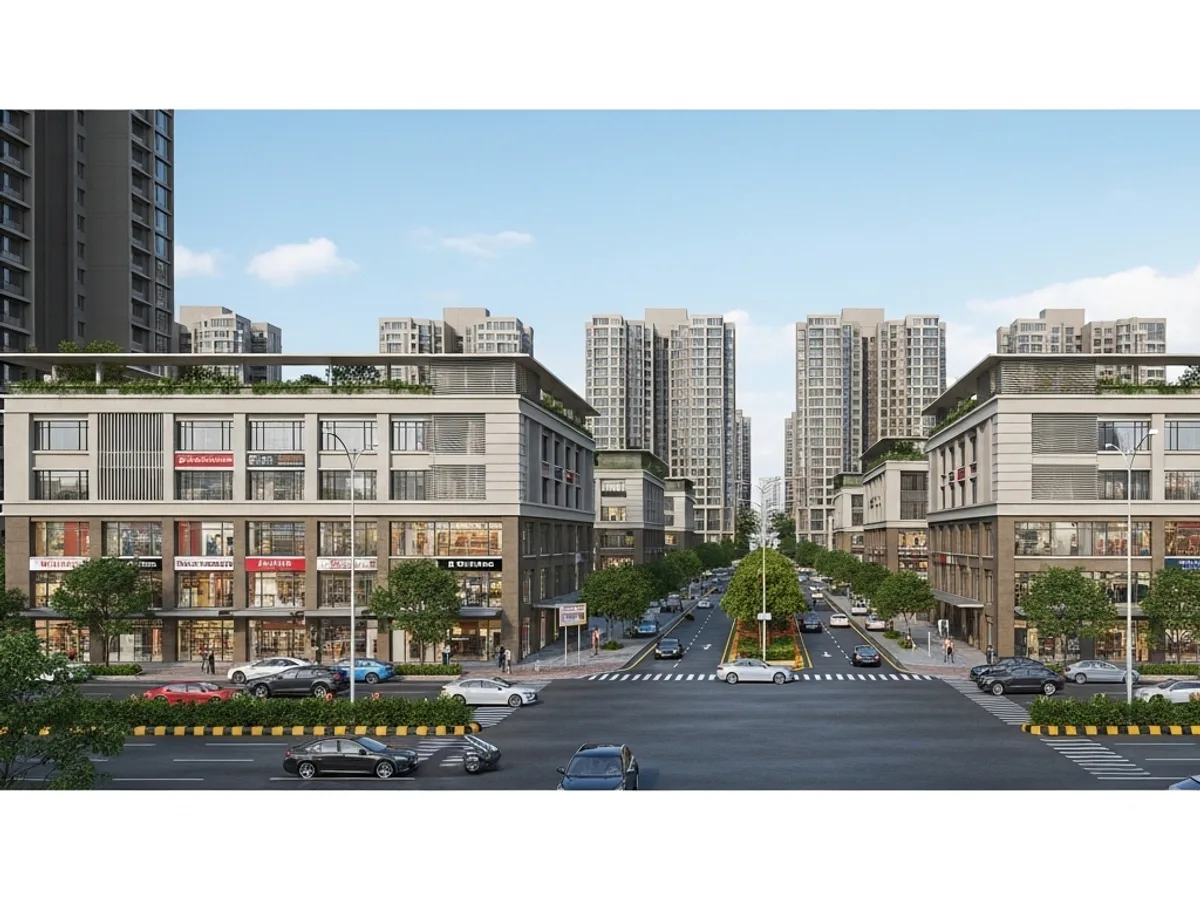
Nerul is not just an older residential node with some commercial spillover. It is a much wider and more practical commercial ecosystem than many buyers realise. It combines established high-street demand with newer premium commercial stock, and that mix makes it stronger than Seawoods for many real business models.
Where Nerul feels more practical, flexible, and less packaging-led
Nerul often feels easier to use in everyday commercial life.
In many pockets, the roads are easier for local access, repeat footfall is more dependable, and the catchment is less dependent on destination prestige. There is also a wider spread of commercial formats, from high-street clinics and boutiques to more formal office environments and newer premium developments linked to the MIDC-side transformation.
The result is simple: many businesses can perform well in Nerul without paying the full premium that Seawoods often demands.
Which business types fit Nerul better than Seawoods
Nerul often makes more sense for businesses where repeat customers, easy access, and practical entry cost matter more than pure image.
| Business type | Better fit in Nerul? | Why |
|---|---|---|
| Premium clinic or diagnostic centre | Often yes | Easier ground-level access and repeat local demand |
| Wellness, salon, and service businesses | Often yes | Local catchment is strong and recurring |
| Boutique office or SME | Often yes | Better capital efficiency |
| IT or modern office in newer commercial belts | Yes, selectively | Newer stock can offer strong utility at better economics |
| High-street F&B | Often yes | Residential catchment and repeat use can be stronger |
A very practical example: a premium dental clinic often does better on an accessible Nerul high street than in a polished but vertically separated premium cluster where parking and patient movement are less convenient. Patients do not choose by facade alone. They choose by ease.
Which node is better for office, retail, F&B, clinic, wellness, and service-led commercial use?
There is no one universal winner. The answer changes by business model.
Business-fit comparison
| Use case | Seawoods | Nerul | Better overall fit |
|---|---|---|---|
| MNC / regional office | Strong | Good | Seawoods |
| Boutique corporate office | Strong | Strong | Depends on budget and client profile |
| Branded retail | Strong in the right ecosystem | Selective | Seawoods if real footfall capture exists |
| High-street local retail | Risky if bought only for the name | Stronger in practical pockets | Nerul |
| Premium clinic | Good in select buildings | Stronger in many high-street pockets | Nerul |
| Wellness / beauty / service | Selective | Stronger | Nerul |
| F&B | Strong only in the right catchment | Stronger for recurring local trade | Nerul in many cases |
| Investor-led office buy | Safer prestige play | Better yield play | Depends on goal |
The important point is this: Seawoods is not “better commercial”. It is better for certain kinds of commercial use. Nerul is not “less premium”. In many business categories, it is simply more useful.
Is the premium in Seawoods actually justified, or are buyers sometimes paying for image more than performance?
Sometimes it is justified. Sometimes it is pure overpayment.
That is the truth.
If a Seawoods property benefits from genuine station-linked movement, a polished mixed-use ecosystem, strong residential support, and a real-quality building, then the premium can make sense. But many buyers make the mistake of paying Seawoods-level rates just because the registered address says Seawoods.
That is dangerous.
A shop near a famous node landmark does not automatically get landmark-level footfall. A unit near a strong commercial ecosystem is not the same as a unit inside it or directly plugged into it.
The false premium problem
This is one of the biggest commercial property traps in Navi Mumbai.
Modern malls and transit-oriented developments are designed to hold movement inside their own ecosystem. So an outside unit sitting nearby may get traffic, noise, and pricing pressure without getting real convertible customers.
This is where many buyers pay for “adjacency” instead of paying for “capture”.
If the unit does not have:
- direct visibility
- natural stop-and-enter behaviour
- easy parking or drop-off
- usable frontage
- a building mix that supports daily trade
then the premium is often weaker than the brochure story suggests.
Where does Nerul beat Seawoods on real commercial usability?
Nerul beats Seawoods in more places than many brokers admit.
First, entry cost is usually more manageable. That immediately improves the business case for an end-user and can improve rental math for an investor.
Second, Nerul often has stronger repeat local demand. That matters more than glamorous footfall. Daily business stability usually comes from recurring users, not one-time curiosity.
Third, in several practical pockets, Nerul is easier for loading, local approach, street-level visibility, and routine business movement. That is not a small operational detail. It affects staff convenience, vendor movement, patient access, and customer conversion.
Fourth, the new-generation commercial story in Nerul is improving. The MIDC-side shift toward more modern office and premium commercial infrastructure means Nerul is no longer only a mature residential support market. It is also becoming a more serious business node.
So if your business runs on utility, recurring customers, and financial discipline, Nerul often beats Seawoods more clearly than the market’s prestige bias suggests.
Which pockets work best in Seawoods, and which pockets work best in Nerul?
This decision should never be taken at node level alone. It must be taken at pocket level.
Seawoods pockets that support premium mixed-use logic
The best Seawoods logic usually comes from areas that genuinely benefit from:
- station integration
- stronger internal destination pull
- premium residential surroundings
- more polished commercial ecosystems
The closer a property is to a true integrated demand zone, the stronger the premium case becomes.
Nerul pockets that support premium mixed-use logic
Nerul’s better commercial logic usually comes from:
- established high-street sectors with stable local spending
- pockets with wider road presence and easier access
- belts closer to modern commercial transformation zones
- places where the surrounding user base actually supports recurring business
This is why a well-positioned Nerul unit can outperform a more expensive Seawoods unit in pure business usability.
Pockets that sound strong on paper but need more caution
In both nodes, internal roads and prestige-led micro-pockets can mislead buyers.
A unit can look strong because of:
- a famous node name
- nearby premium housing
- a new tower launch
- a polished elevation
But if pedestrian capture is weak, parking is awkward, or the building’s actual commercial mix is poor, the performance can stay below expectations.
Pocket-level comparison table
| Pocket logic | Seawoods | Nerul |
|---|---|---|
| Direct station-linked mixed-use influence | Very strong in the right belt | Limited |
| Internal sector retail without real pull | High caution | Medium caution |
| Mature local high-street demand | Selective | Stronger |
| New premium office / commercial transformation | Selective | Stronger growth story in the right belts |
| Parking-sensitive business use | Must be checked very carefully | Also must be checked, but practical pockets can be better |
Which node is better for investors, and which one is better for end-users?
Investors and end-users should not use the same decision lens.
Investor logic
If the investor wants prestige, tenant profile quality, and a more defensive “blue-chip” commercial address, Seawoods can make sense. But that usually comes with lower yield efficiency because the capital entry point is higher.
If the investor wants better yield potential, more flexible ticket sizes, and stronger rental math, Nerul often gives a better commercial case. Current market patterns from portal aggregations and local listing behaviour broadly show Seawoods commanding higher asking capital values, while Nerul often looks stronger on gross rental return ranges when bought carefully.
What should buyers and tenants check before paying a premium in either node?
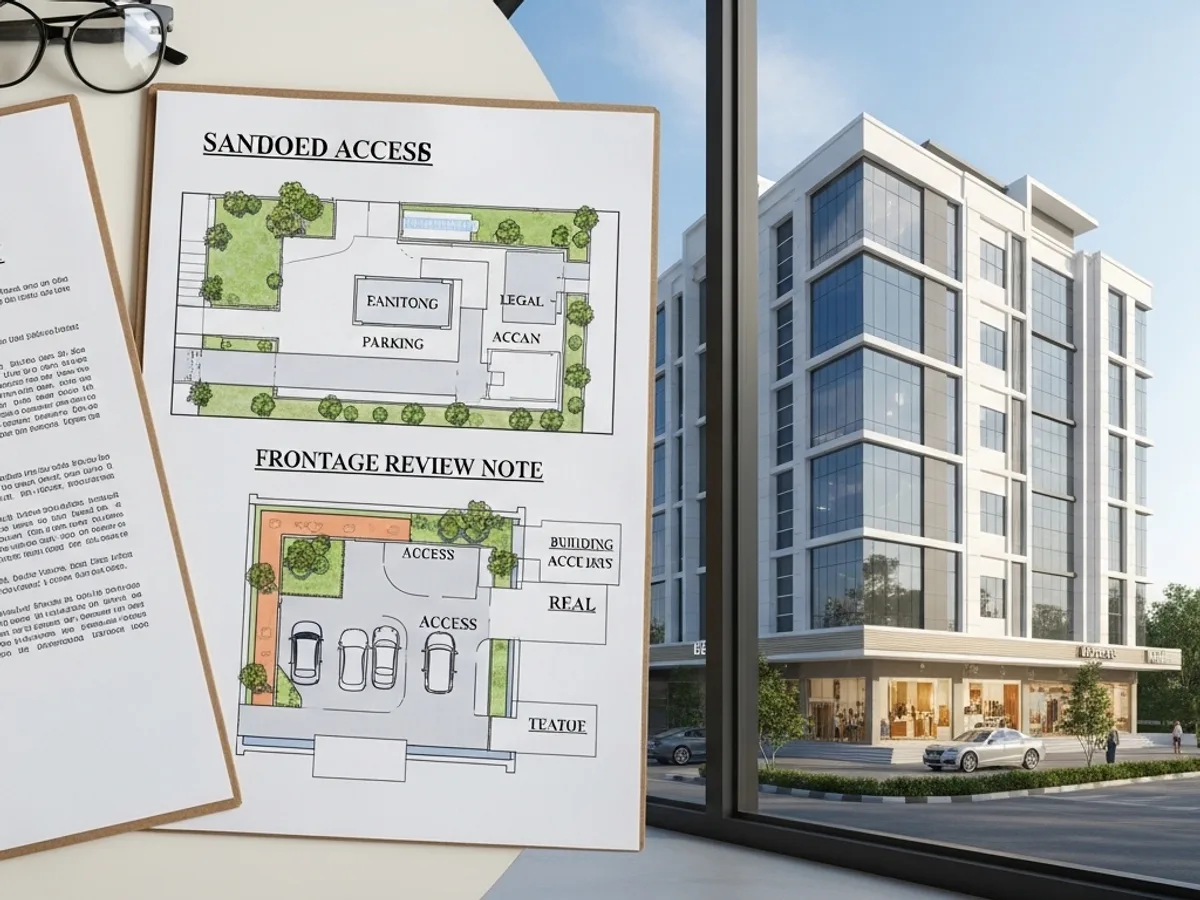
This is where costly mistakes can still be avoided.
The first check is parking. After the tighter 2025 parking compliance environment in Navi Mumbai, this is no longer a soft issue. Ask to see actual sanctioned parking allocation, not just verbal promises.
The second check is legal occupation status. For ready assets, Occupancy Certificate matters. For under-construction assets, MahaRERA verification matters. A commercial unit without proper legal clarity can delay possession, fit-out, licensing, insurance, and even loan execution.
The third check is CIDCO-side transaction burden. In Navi Mumbai’s leasehold context, buyers must factor transfer-related costs properly, especially after the 2025 fee hike cycle. Do not negotiate only on base rate and then act surprised later.
The fourth check is frontage reality. Visit at real hours. Morning, afternoon, and evening. Footfall quality changes by time, and many commercial properties look stronger during broker visits than during ordinary weekday operation.
The fifth check is building mix. A mixed-use commercial asset works better when the tenant ecosystem actually supports cross-demand. One empty podium and a weak office mix can make even a new building feel commercially dead.
Practical due-diligence checklist
- Check exact road-facing quality, not just map location
- Ask for sanctioned parking layout and actual allotment
- Verify OC for ready units
- Verify MahaRERA status for under-construction projects
- Estimate CIDCO transfer-related burden before closing
- Check visitor access and daily drop-off convenience
- Assess whether the building’s user mix supports your use case
- Compare asking price with realistic business utility, not brand story
So who should choose Seawoods, and who should choose Nerul?
Choose Seawoods if:
- you want a stronger premium address
- your business benefits from client-facing polish
- station-linked convenience helps your staff or customers
- you are comfortable with higher entry costs and lower yield efficiency
- you are buying for prestige-led stability, not maximum return
Choose Nerul if:
- you want better commercial practicality
- your business depends on recurring local demand
- you want stronger capital efficiency
- you are an investor looking for better rental math
- you want a business location that works harder than it shows off
Conclusion
For premium mixed-use commercial space in Navi Mumbai, Seawoods is the stronger prestige-and-transit play, while Nerul is the stronger practicality-and-performance play.
That is the cleanest way to understand this comparison.
If your business wins because the address itself helps build trust, Seawoods deserves serious attention. If your business wins because people can reach it easily, use it repeatedly, and operate from it efficiently, Nerul is often the better commercial decision.
Do not buy this category emotionally. Do not buy only by node reputation. In both Seawoods and Nerul, the real winner is usually not the bigger name. It is the better micro-location, the better building, and the better fit for your exact business model.
FAQ's
Frequently Asked Questions