
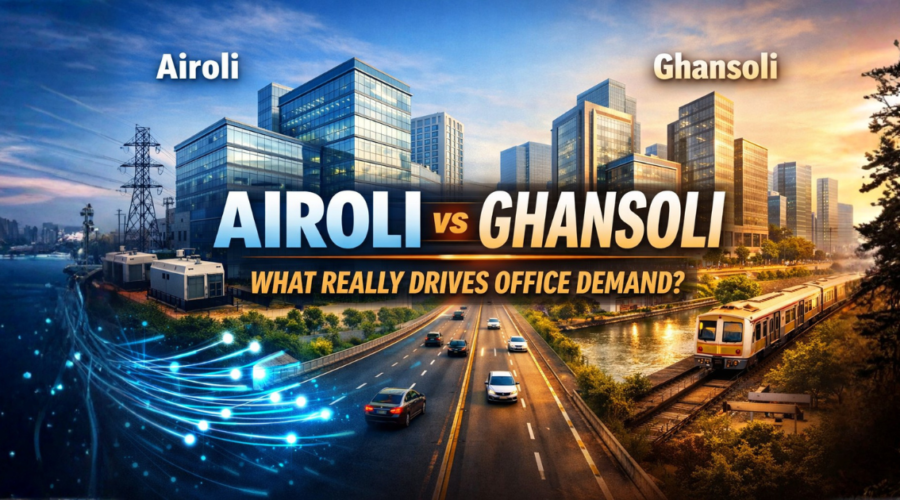
How Power, Fiber, Road and Talent Access Affect Airoli-Ghansoli Demand
| Driver | Why it matters | Airoli effect | Ghansoli effect | What it changes for demand |
|---|---|---|---|---|
| Power reliability | Keeps operations stable, reduces downtime risk, supports serious occupiers | Stronger in established institutional campuses and larger office parks | Strong where premium stock and corporate-grade buildings are properly supported | Improves leasing confidence and tenant retention |
| Fiber and data readiness | Supports IT, BFSI back-office, hybrid teams, and data-heavy work | Mature office ecosystem often suits enterprise connectivity needs well | Benefits from tech-adjacent and data-center-rich corridor logic | Makes buildings more occupier-ready and faster to lease |
| Road access | Affects employee travel, leadership commute, visitor ease, and vendor movement | Good corridor recognition and access logic, though last-mile still matters | Strong extension-corridor potential but micro-location selection matters more | Improves usability, not just map appeal |
| Talent access | Helps companies hire and retain staff from Navi Mumbai and Thane-side catchments | Usually stronger for commuter-comfort-led office demand | Works well for firms comfortable with a selective but still connected talent base | Supports long-term occupier stickiness |
What really drives Airoli-Ghansoli demand in practical terms?
What really drives Airoli-Ghansoli demand is business continuity. That is the simplest and most practical answer.
A corridor becomes commercially strong when occupiers trust it for daily operations, not when it only looks good in a brochure. In Airoli and Ghansoli, that trust is built through four things: the lights stay on, the data moves reliably, people can reach the office without too much friction, and companies can hire from a large enough commute-friendly catchment.
This is why the belt has stayed relevant for organized office demand. It is not only an image story. It is an operating environment story. Even if two buildings are close to each other on the map, demand quality can still differ sharply if one has better power backup depth, easier station access, stronger fiber readiness, or more institutional building management.
In plain terms, demand here is operational, not cosmetic.
Why does power reliability matter so much more here than buyers usually assume?
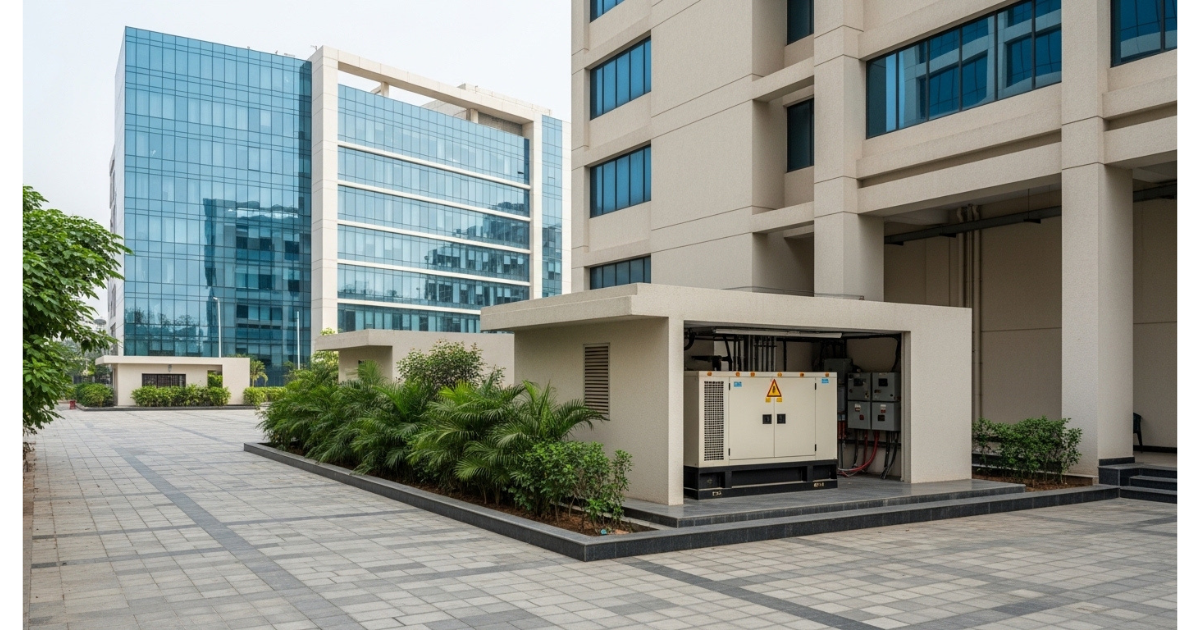
Power reliability matters here because many occupiers in this corridor are not casual office users. They are firms that depend on uptime, shift continuity, server stability, central cooling consistency, and uninterrupted internal systems.
A small disruption may sound like a minor building issue to a buyer. For a BFSI back-office, IT team, support centre, or shared-services operation, it can become an SLA problem, a systems problem, or an employee productivity problem. That changes leasing decisions very quickly.
Which occupiers care most about stable power in this belt?
The occupiers that care the most are usually:
- IT and ITeS teams
- BFSI back-office operations
- Shared-services centres
- Tech firms with 24/7 functions or support windows
- Data-heavy teams with sensitive equipment and uptime needs
These occupiers are not just checking whether a building has “power backup.” They usually care about the quality of supply, how backup transitions work, whether the building has deeper infrastructure support, and whether the operational model is reliable enough for serious use.
That is one reason organized campuses in Airoli have stronger institutional credibility. Larger office parks typically think about these issues more structurally. In contrast, a glass-looking standalone building may appear attractive but still carry hidden operational risk if the power setup is basic or expensive to run.
When does power strength improve leasing confidence rather than just day-to-day convenience?
Power becomes a leasing driver when it reduces risk, not just discomfort.
A tenant will pay more confidence premium for a building if it believes the office can function cleanly during disruptions, that HVAC performance will remain stable, and that the office does not need frequent workarounds. This is especially important in a corridor where institutional Grade A stock and secondary stock do not attract the same type of tenant.
A practical way to understand this is simple: if a building depends too heavily on repeated generator switching, the occupier sees higher operating stress. If the building is structurally better prepared, the occupier sees a smoother business environment. That difference shows up in tenant quality, retention, and leasing speed.
Example: two buildings may sit in the same broader Airoli-Ghansoli zone, but the one with stronger power depth and better building management will usually feel safer to a serious occupier, even if the base rent is slightly higher.
How does fiber and data readiness change office demand in Airoli and Ghansoli?
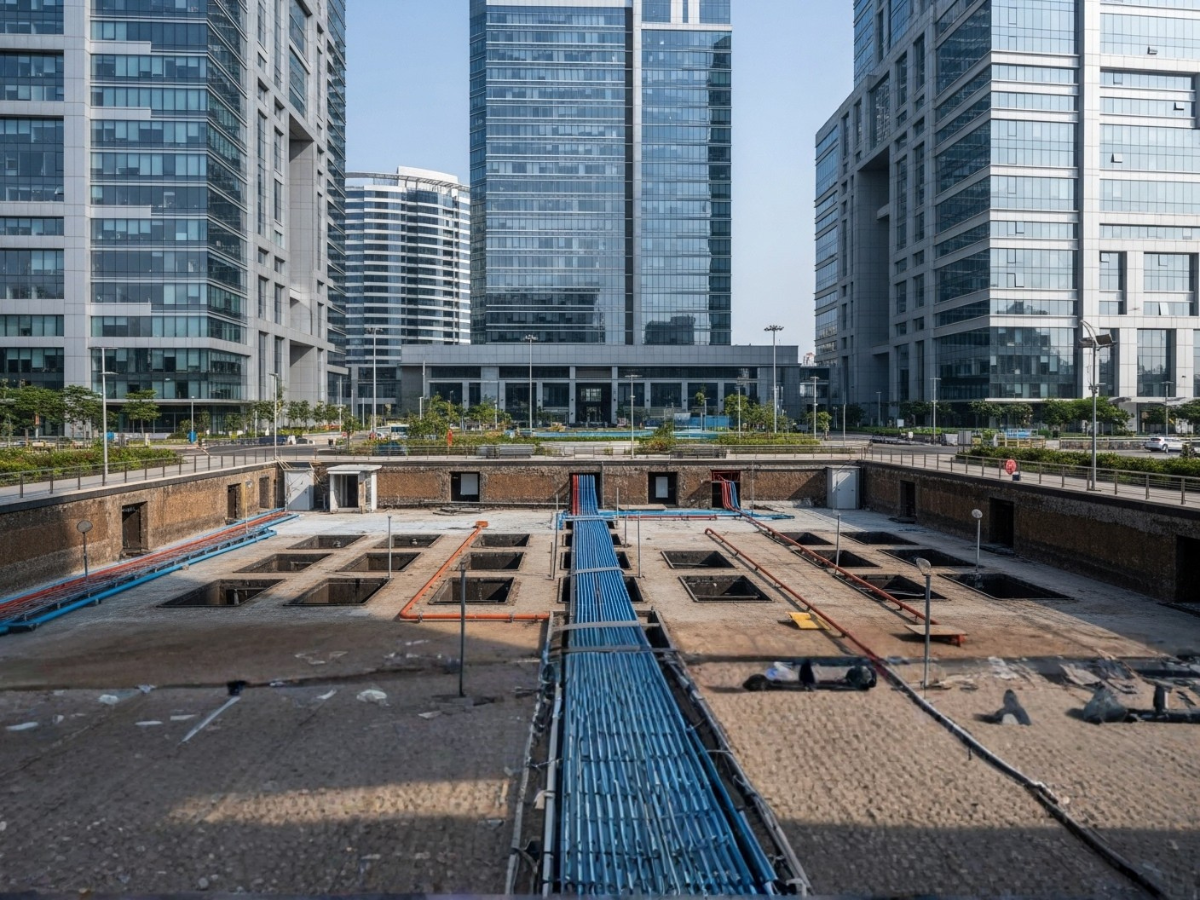
Fiber and data readiness change office demand because modern occupiers do not only need internet. They need continuity, redundancy, speed, and installation ease.
That is a big difference. A building can claim connectivity, but enterprise demand depends on whether it is actually ready for serious office operations. This matters even more in a corridor that is increasingly linked with data-heavy activity, digital operations, and enterprise-grade office users.
Why fiber matters differently for IT, back-office, and hybrid users
Not every occupier uses connectivity in the same way.
An IT firm may care about multiple pathways, stable throughput, and stronger redundancy. A BFSI support setup may care about secure and dependable connectivity for process continuity. A hybrid office may care more about smooth day-to-day digital operations, video meetings, cloud tools, and fast setup timelines.
So fiber is not a decorative technical point. It changes how quickly a tenant can become operational and how confidently it can scale.
This is one reason the Airoli-Ghansoli belt has stronger occupier logic than many surface-level commercial stories suggest. The corridor benefits from broader enterprise and digital infrastructure depth. But that does not mean every building in the corridor is equally ready.
Why “internet available” and “enterprise-grade readiness” are not the same thing
This is where many buyers and smaller investors get misled.
“Internet available” simply means a basic service can be activated. “Enterprise-grade readiness” means the building is genuinely usable for serious teams that need more than ordinary broadband. That includes better building-level preparedness, cleaner provider access, stronger redundancy possibilities, and lower time-to-market for occupiers.
Caution: being in a fiber-rich corridor does not automatically make every office tower enterprise-ready. Building-level readiness still matters. A location can benefit from the broader network ecosystem while a specific building remains weak in practical delivery.
That distinction matters for leasing pull. Buildings that reduce setup friction tend to lease more smoothly because occupiers see them as operationally usable from day one, not as a project to be fixed after possession.
Is road access just a convenience factor, or does it directly affect demand?
Road access directly affects demand. It is not just a convenience factor.
In this corridor, road connectivity shapes more than travel comfort. It affects leadership commute, client visits, vendor movement, hardware movement, daily predictability, and how tiring the office feels for staff. That makes it a real commercial driver.
Why Thane-Belapur Road still shapes corridor demand
The Thane-Belapur Road remains the working spine of this belt. It ties together the corridor’s office, industrial, and hybrid business logic.
That is why road upgrades and flyover projects around this larger belt matter so much. The road is not only helping people reach work. It is also supporting corridor identity. It links business clusters, reduces disconnection between nodes, and makes office ecosystems more usable at scale.
Airoli usually benefits from this because it already has stronger recognition as an office-oriented destination. Ghansoli benefits too, but more selectively. In Ghansoli, road logic becomes very micro-market sensitive. One pocket may feel efficient and corporate. Another may feel slower or more inconvenient because of junction friction or weaker last-mile handling.
Where future road improvements may help, but should not be oversold
Future road upgrades can absolutely improve corridor strength. But they should not be sold like instant magic.
In Navi Mumbai, a road project can improve long-term business logic while still creating short-term friction during execution. Construction phases, barricades, diversions, and local congestion can temporarily hurt daily usability even if the final outcome is positive.
That is why buyers, brokers, and occupiers should separate three things:
| Access layer | What it means | Practical impact on demand |
|---|---|---|
| Arterial access | How well the building connects to the main corridor road system | Helps macro attractiveness and business reach |
| Station access | How easily staff can connect by rail and then reach office | Improves staff convenience and hiring comfort |
| Last-mile ease | What the final few hundred metres or last 2 km actually feel like | Often decides occupier satisfaction in real life |
This is the difference between map logic and working logic. A building may look well connected on paper, but if the last-mile experience is frustrating every day, leasing strength weakens.
Why does talent access keep this corridor stronger than many other office belts?
Talent access keeps the corridor strong because companies do not lease in isolation from labour reality. Real estate decisions are also workforce decisions.
An office location becomes more valuable when a company can recruit from multiple residential belts without making daily commute too painful. That is one of the biggest strengths of the Airoli-Ghansoli belt. It sits in a recruitable zone that can draw from Navi Mumbai, Thane side, and wider surrounding catchments.
The role of residential catchment from Navi Mumbai and Thane side
This corridor benefits from a practical catchment advantage. It is not only about “many people live nearby.” It is about whether enough employable people can realistically reach the office daily.
That is why the Airoli side has long been seen as a stronger office choice for larger commuter-heavy organizations. The station-plus-road combination, along with access from Thane and nearby residential belts, helps reduce friction in hiring and attendance.
Ghansoli also benefits from this larger corridor catchment, but its appeal often depends more on the exact building and commute arrangement. For some occupiers, that is perfectly fine. For others, especially scale-heavy users, Airoli may still feel more proven.
Why staff convenience affects occupier stickiness
Staff convenience matters because a building is not only competing on rent. It is competing on commute pain.
If the office is hard to reach, companies may face higher attrition, weaker attendance comfort, and more resistance to full office usage. If the commute is smoother, the office becomes easier to retain over time.
That is why talent access quietly supports leasing resilience. In practical terms, companies stay longer in corridors that their workforce can handle.
Checklist: what companies often think about before committing
- Can enough staff reach the office by rail and road?
- Is the last-mile movement manageable in peak hours?
- Does the location work for both existing staff and future hires?
- Will commute fatigue create retention problems later?
- Is the building in a part of the corridor that staff will accept for long-term attendance?
Does Airoli benefit more from these four demand drivers than Ghansoli, or is the answer more mixed?
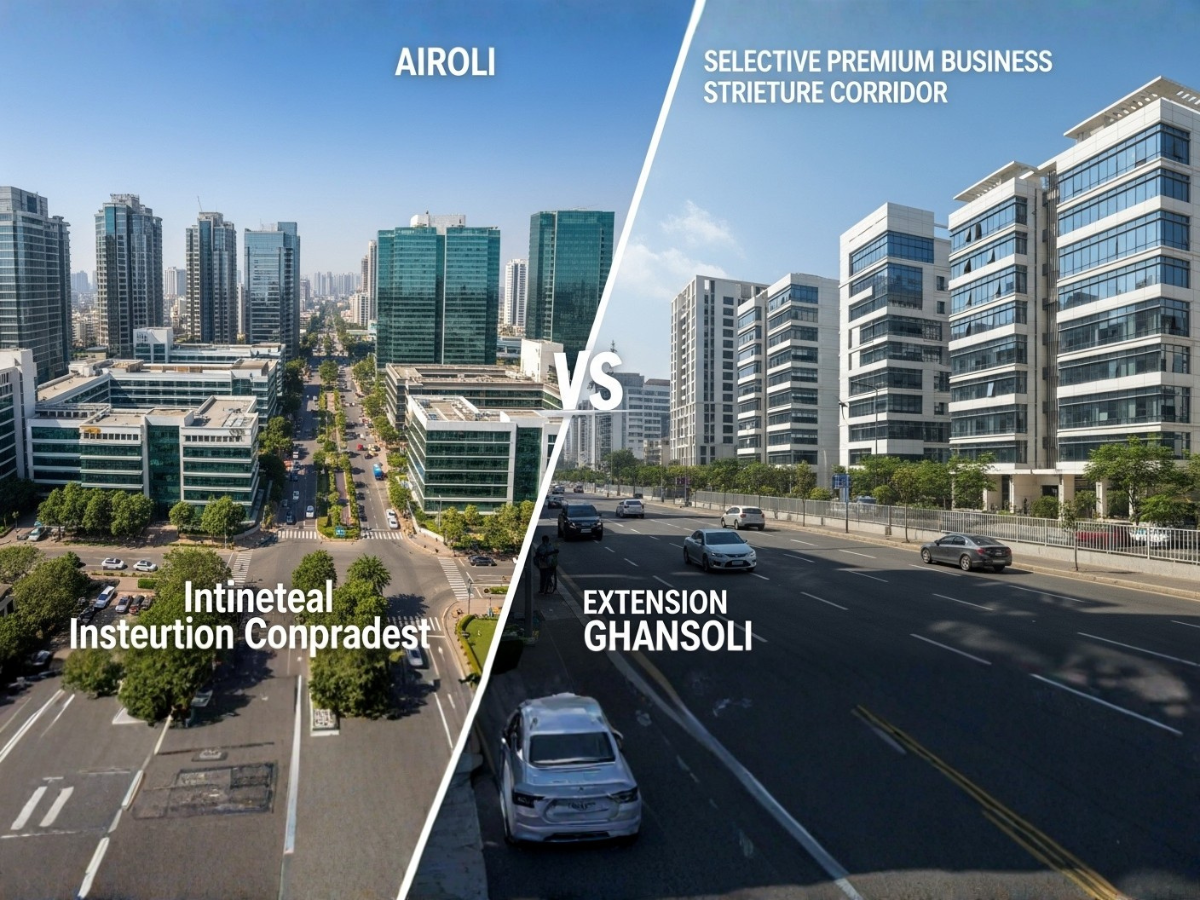
The answer is more mixed, but Airoli usually benefits more clearly from these four drivers when the occupier is office-heavy, staff-heavy, and campus-oriented.
That does not make Ghansoli weak. It makes Ghansoli more selective. Airoli is the more established office story. Ghansoli is the more nuanced extension-corridor story.
Where Airoli usually feels stronger
Airoli usually feels stronger when the occupier wants:
- established campus-office credibility
- large-scale commuter comfort
- proven organized office stock
- stronger institutional feel
- easier market recognition while pitching to serious tenants
This is where references such as Mindspace Airoli and the broader campus ecosystem matter. They reinforce the node’s identity as a serious office destination, not just a location with some commercial buildings.
Airoli often works better for firms that want the corridor to feel ready from day one, especially if employee count is high and the lease decision is being made by a structured corporate team.
Where Ghansoli can compete or work better
Ghansoli can compete strongly where the occupier is comfortable with a more selective micro-market choice and values premium stock, corporate adjacency, or a hybrid location logic.
This is where names such as Aurum Q Parc and the broader Reliance Corporate Park adjacency story become useful. They show that Ghansoli is not just spillover space. It has its own serious corporate relevance.
Ghansoli may work especially well for:
- hybrid tech occupiers
- cost-aware corporate users
- specialized support functions
- data-adjacent or digital-heavy operations
- firms that value corridor strength without needing Airoli’s exact campus profile
So no, the answer is not “Airoli wins, Ghansoli loses.” The better answer is that Airoli usually wins on maturity and scale comfort, while Ghansoli can win on selective fit and extension-corridor logic.
Which types of occupiers are most likely to prefer Airoli?
Airoli is usually preferred by occupiers that want scale, predictability, and a stronger institutional office environment.
That includes large IT and ITeS firms, GCC-style users, multinational back-office functions, BFSI support teams, and companies with heavy daily staff movement. These occupiers often care about contiguous space, organized building management, commuter ease, and a corporate ecosystem that already feels established.
Airoli occupier-fit box
Best fit:
- Large IT and ITeS occupiers
- BFSI back-office teams
- Corporate shared-services operations
- Staff-heavy office setups
- Firms that want campus-style stability
Why Airoli suits them:
- Stronger established office identity
- Better fit for commuter-volume logic
- More comfort for structured leasing decisions
- Organized campus references improve confidence
Poorer fit:
- Buyers expecting easy institutional yields from small fragmented strata units
- Users who assume any office in the pin code performs like the top campuses
Which types of occupiers are more comfortable choosing Ghansoli?
Ghansoli is often a good fit for occupiers that do not need the full campus-office logic of Airoli but still want a serious corporate environment.
These users may value better cost logic, a more selective premium building choice, or adjacency to larger corporate and digital infrastructure ecosystems. Ghansoli tends to suit companies that are comfortable making a sharper building-level decision rather than relying only on node-level brand comfort.
Ghansoli occupier-fit box
Best fit:
- Hybrid tech teams
- Specialized engineering and support functions
- Corporate back-offices with selective requirements
- Data-heavy or digital-adjacent teams
- Firms comfortable with micro-market-driven decisions
Why Ghansoli suits them:
- Premium stock can still deliver strong office quality
- Corporate ecosystem has become more credible
- Useful extension corridor for serious occupiers
- Can offer strategic value without always needing Airoli’s exact pricing or positioning
Poorer fit:
- Occupiers who want only the most established mass-campus identity
- Buyers who confuse one good building with blanket corridor-wide strength
Where do brokers, buyers, and investors misread this corridor most often?
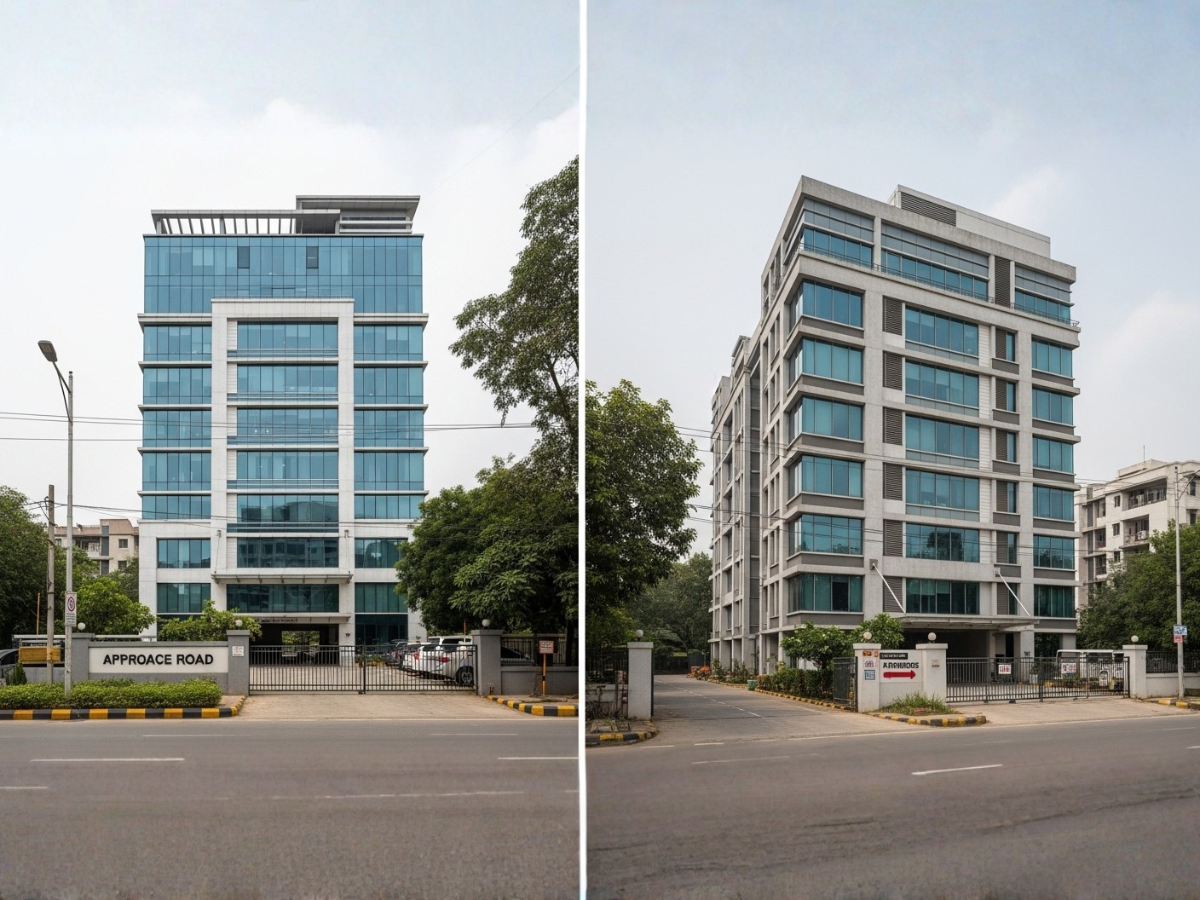
This corridor gets misread when people use shortcut logic.
The biggest mistake is assuming that nearby locations automatically have the same demand quality. They do not. Corridor proximity is not the same thing as identical occupier pull.
Mistaking headline connectivity for actual daily usability
A road project announcement, a station mention, or a big corporate landmark does not automatically make every nearby office equally strong.
The real question is daily usability. How easy is it to enter and exit? What does the last-mile feel like? Can staff actually reach the building without frustration? How much of the “good connectivity” story survives peak-hour reality?
Treating all Grade A-looking stock as equally demand-safe
This is one of the most common mistakes in Navi Mumbai commercial markets.
A building may look premium from the outside but still behave very differently from an institutionally managed campus. Ownership structure, maintenance standards, power depth, central infrastructure, and tenant profile all matter.
That is why the same broader corridor can contain both strong leasing products and weaker secondary products.
Ignoring staff commute logic
This is another major error. Buyers sometimes focus only on road frontage, brochure visuals, or quoted rent bands. Occupiers usually think harder about staff movement because they have to live with the decision daily.
If staff dislike the commute, the building’s theoretical strengths may not translate into long-term stability.
False assumption box
Many people assume:
- Airoli and Ghansoli are close, so demand is basically the same
- Good-looking office stock means equal tenant safety
- Future road works should already be priced as finished benefits
- Institutional market rent automatically applies to small strata units
What usually happens in reality:
- Micro-market differences remain important
- Building quality and ownership structure change leasing depth
- Under-construction infrastructure can temporarily increase friction
- Secondary and strata stock often attract a different tenant profile and different rent band
What should someone check before buying, leasing, or pitching commercial space in this belt?
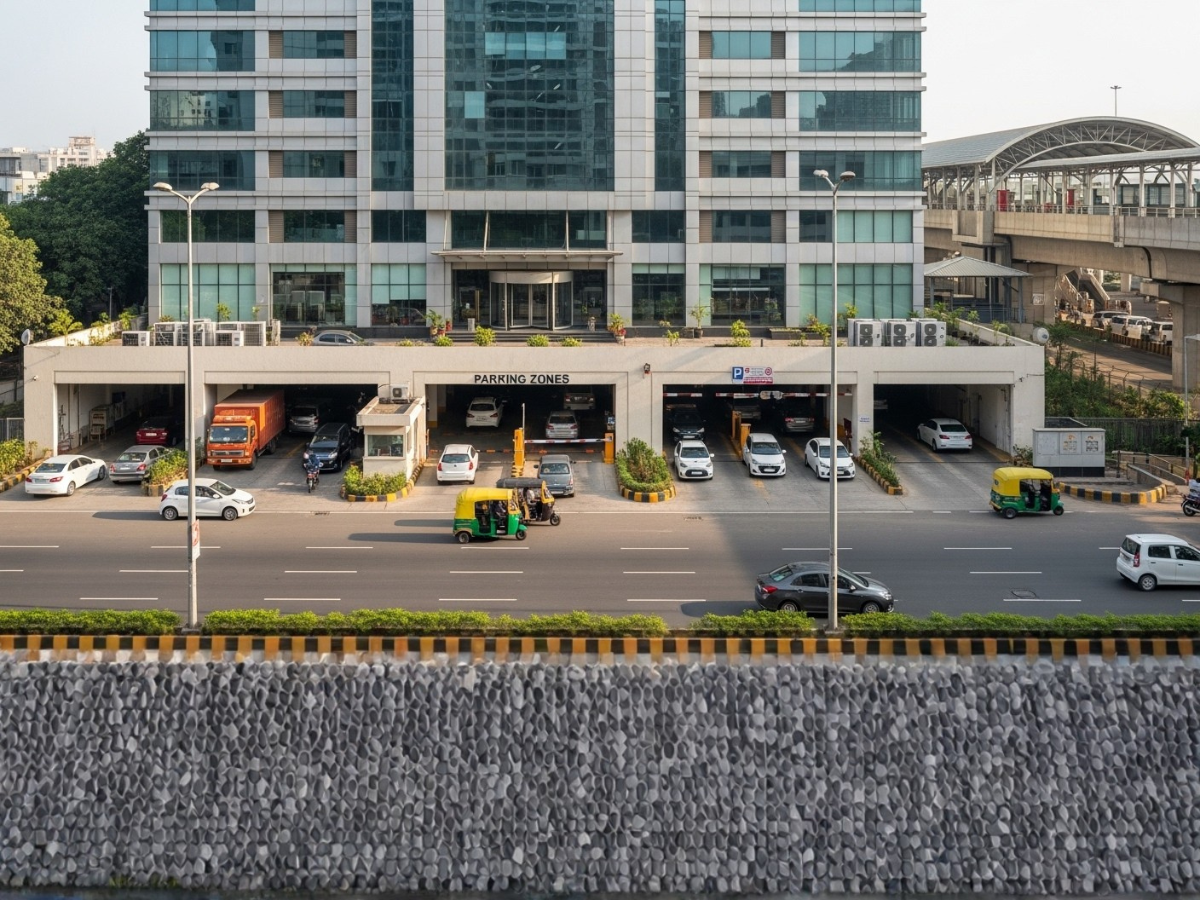
Before buying, leasing, or pitching commercial space here, check the building as an operating asset, not just as a property listing.
That means testing how the office will actually work in daily business life. A corridor story is useful, but the final decision is still building-specific.
Practical due-diligence checklist
- Check power setup depth, not just backup availability
- Ask whether the building is suitable for serious uninterrupted office use
- Verify fiber providers and whether redundancy is realistically possible
- Understand whether the building is enterprise-ready or just internet-enabled
- Visit during peak traffic hours, not only during easy daytime windows
- Measure station access separately from main-road access
- Test the last-mile from Airoli station or Ghansoli station to the building
- Check ownership pattern: single-owned and institutionally managed usually behaves differently from fragmented strata stock
- Study current tenant profile and vacancy reality in that exact building
- Compare headline asking rent with actual usability, fit-out burden, and long-term tenant appeal
For brokers, this checklist is also a better pitching tool. It helps explain why one building deserves more confidence than another in the same corridor.
Is Airoli-Ghansoli demand likely to stay resilient over the next few years?
Yes, the corridor is likely to stay resilient, but not evenly.
The stronger part of the answer is that organized office demand in this belt is supported by a real operating logic: established commercial stock, ongoing corporate relevance, road investment, and a broad recruitable catchment. That combination usually supports staying power.
What supports resilience
The corridor has several structural strengths:
- established office and corporate presence
- institutional campus credibility on the Airoli side
- serious premium stock and corporate adjacency in parts of Ghansoli
- workable rail-plus-road logic
- steady occupier interest in quality suburban office ecosystems
- relatively better support for tech, back-office, and shared-services users
This is also helped by the idea of constrained quality supply. When serious occupiers prefer a narrower set of buildings, those buildings usually remain more resilient than weaker stock in the same geography.
What could weaken momentum
At the same time, not everything in the corridor will perform equally well.
Momentum can weaken where:
- last-mile friction remains poor
- construction-led congestion continues for too long
- buyers overpay for secondary stock using top-campus benchmarks
- buildings look modern but lack true operational depth
- people overgeneralize the whole belt instead of reading micro-markets properly
So the future outlook is positive, but selective. The market is likely to reward operationally stronger buildings more clearly, while the gap between premium, occupier-ready stock and weaker secondary inventory may widen.
Conclusion
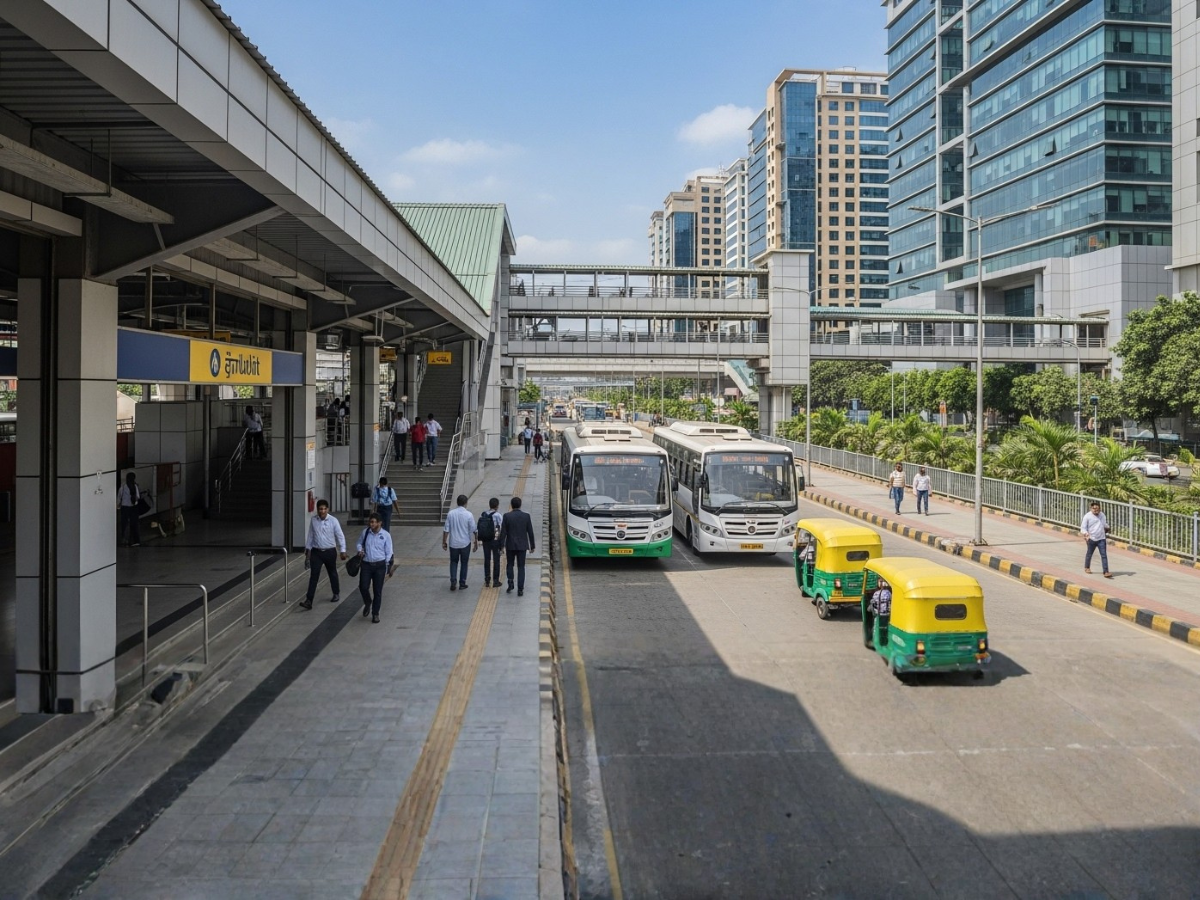
Power, fiber, road, and talent access affect Airoli-Ghansoli demand because they decide whether a company can actually function well here, not just whether the location sounds impressive. Airoli usually feels stronger for mature, campus-led, office-heavy demand. Ghansoli usually works best where premium stock, corporate presence, and selective hybrid office logic come together properly. For buyers, occupiers, and brokers, the practical lesson is simple: do not read this corridor by name alone. Read it by operating depth, building quality, last-mile reality, and workforce usability.