
Best Commercial Areas in Panvel: Where Shops, Offices and Business Space Actually Work
The best commercial areas in Panvel usually include the Panvel station belt, selected parts of Old Panvel, planned pockets of New Panvel, Kalamboli’s highway-linked commercial stretches, and some Kamothe service-commercial sectors. But there is no one single best area for every use. A shop, clinic, office, coaching class, logistics business, and investor will each need a different kind of location. That is the real starting point.
Panvel is no longer just a peripheral town people pass through. It is now one of the most important growth-side commercial zones in the wider Navi Mumbai and Raigad belt. But that also creates confusion. Many listings, broker pitches, and generic articles make Panvel sound like one uniform commercial market. It is not.
Old Panvel, New Panvel, Kalamboli, Kamothe, and airport-influence belts behave very differently on the ground. Some locations work because of station movement. Some work because of planned roads and parking. Some work because of dense residential catchment. Some work only for B2B trade, not normal retail.
So if you are searching for the best commercial areas in Panvel, the better question is this: best for what exactly?
For a broader local view before comparing specific pockets, Panvel Commercial Property Guide is worth reading first.
Quick Summary
| Area / Pocket | Best For | Usually Works Less Well For | Ground Reality |
|---|---|---|---|
| Panvel Station Belt | Quick retail, convenience shops, budget food, mobile and accessory trade, commuter-led demand | Quiet offices, premium destination businesses, high-parking dependence uses | Strong daily movement, heavy congestion, fast inventory absorption in the right pockets |
| Old Panvel | Traditional retail, jewelry, daily market business, legacy shopper traffic | Businesses needing clean parking, premium showroom feel, low-noise office use | Strong lived-in trading town energy, but congestion and parking friction are real |
| New Panvel | Offices, clinics, coaching, organized retail, SME setups | High-speed impulse retail that depends only on raw street rush | Better road planning, wider sectors, more structured business environment |
| Kalamboli | Logistics, steel, marble, hardware, transport-linked B2B business | Standard lifestyle retail, family walk-in retail, quiet consulting offices | Very strong for transit-linked trade, not a universal commercial market |
| Kamothe | Clinics, coaching, neighbourhood retail, daily services | Heavy wholesale trade, premium corporate office positioning | Dense residential catchment supports service businesses well |
| NAINA / Airport-side peripheral belts | Long-term commercial speculation, future warehousing, land banking | Immediate tenant-dependent investment, ready walk-in retail | More future-led than present-day retail-ready in many pockets |
If you want one simple rule, use this: choose Panvel station and Old Panvel for dense retail logic, New Panvel for organized office-service-commercial use, Kalamboli for B2B trade, and Kamothe for residential catchment-driven services.
Which Parts of Panvel Actually Count as Different Commercial Markets?
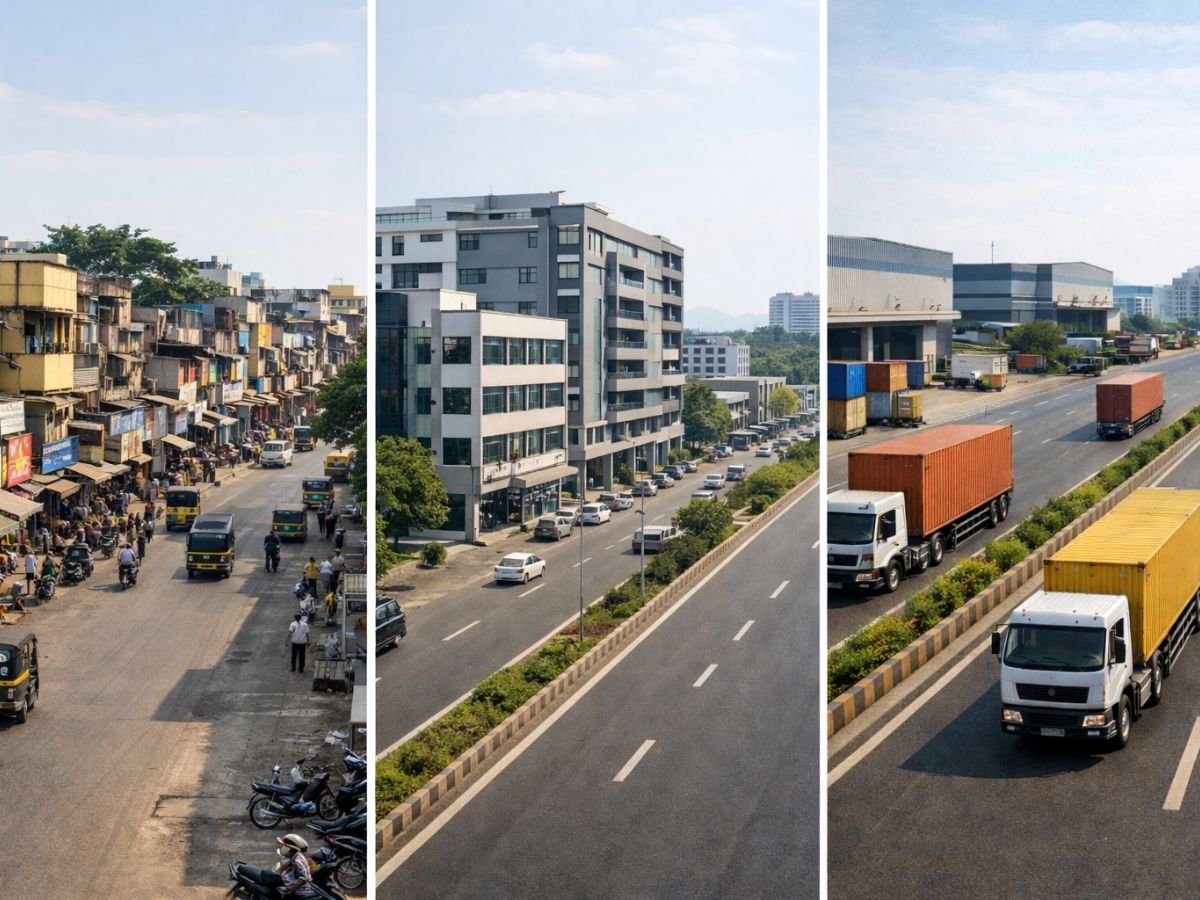
This is where most weak articles fail. They say “Panvel” as if everything is the same. In reality, Panvel is a cluster of very different commercial ecosystems.
Old Panvel city belts
Old Panvel is the older, denser, more organic market side. It has traditional trading routes, older shop patterns, narrow road pressure in parts, long-established customer habits, and strong daily market behaviour. This is where retail still has old-town strength. If you sell something people buy frequently, urgently, or habitually, Old Panvel still matters.
But it comes with trade-offs. Parking is not easy. Loading is not always easy. The environment is not ideal for every modern business model.
New Panvel sectors
New Panvel behaves differently because it comes from a more structured node-planning logic. Roads are wider in many parts. Layouts are more organized. Certain sectors support clinics, coaching classes, offices, and mixed commercial use better than old city belts do.
This is one reason many professional users prefer New Panvel over the station-side chaos. A CA office, diagnostic centre, coaching institute, insurance branch office, or consultancy does not necessarily need raw footfall. It needs access, usability, and a calmer operational environment.
Kalamboli-side highway and node-linked commercial belts
Kalamboli is often casually clubbed into “Panvel area” discussions, and for search intent that is understandable. But commercially, it is its own kind of machine. Kalamboli is driven much more by highway linkage, transport movement, logistics support, wholesale material trade, and B2B flow than by normal family retail patterns.
It can be excellent for the right commercial category and completely wrong for the wrong one.
Kamothe-side service and neighbourhood-commercial pockets
Kamothe works because of residential density and daily-use demand. It is not Old Panvel. It is not station-led Panvel. It is not logistics-first Kalamboli. It is a dense local services market where healthcare, education, and neighbourhood commercial activity can perform steadily.
That is why Kamothe often enters the same commercial conversation. Not because it is identical to Panvel city, but because many users comparing the broader Panvel side are really comparing functional options.
Which Are the Best Commercial Areas in Panvel for Shops, Offices and Daily Business?
Now let us answer the main query more directly by category.
1) Panvel station-linked belts for dense daily movement
If your business depends on commuter flow, fast movement, small-ticket spending, or frequent repeat visibility, the station belt is one of the strongest commercial zones in Panvel. Panvel station is not a small local stop. It acts as a major interchange and suburban terminus, and that changes commercial demand on the ground.
This is why shops selling food, mobile accessories, daily-use products, budget apparel, or fast-moving convenience items can perform well in the right station-linked belts. The advantage is obvious: people are already there.
But there is a catch. Station-side commercial success is highly format-specific. A premium clinic, a consulting office, or a destination showroom may actually suffer because the same congestion that helps low-ticket retail can hurt serious customer comfort.
2) Old Panvel for traditional market-led business
Old Panvel remains one of the best commercial areas in Panvel for trading-style retail. This includes jewelry, grocery-linked buying behaviour, old customer networks, daily-use categories, and traditional shop formats.
What makes Old Panvel strong is not modern planning. It is habit. The market already exists. People already know where to go. That matters a lot in commercial real estate.
At the same time, this is not a smooth modern commercial environment. Congestion, narrow circulation, unauthorized parking pressure, and delivery friction can reduce the practical value of a great-looking location.
3) New Panvel for mixed office-service-commercial use
New Panvel is often the more practical answer for people who search “best commercial area in Panvel” but actually need something more organized than a raw market lane.
This is where offices, clinics, coaching centres, organized retail, financial services, and local branch operations often make better sense. The roads are generally more usable, the sectors are more structured, and the business environment suits users who depend on appointments, student drop-offs, patient access, or planned customer visits.
For many SMEs, New Panvel is the safest balanced choice.
4) Kalamboli for highway-linked and logistics-support demand
Kalamboli is one of the strongest commercial zones in the broader Panvel side only for specific business categories. If your business is related to steel, marble, hardware, industrial supply, logistics, dispatch, transport support, or highway-linked warehousing logic, Kalamboli can outperform core Panvel in pure rental and trade efficiency terms.
But do not misunderstand what that means. Kalamboli is not a default answer for a normal consumer retail business. It does not behave like a lifestyle retail catchment.
5) Kamothe for healthcare, coaching and local services
Kamothe is one of the most underrated commercial areas in the broader Panvel decision set. It works especially well for businesses that depend on dense local residential demand rather than old-city market behaviour or commuter chaos.
That includes clinics, pathology labs, coaching centres, pharmacies, tuition-linked services, and neighbourhood retail. If the business depends on families, students, recurring patients, and repeat local use, Kamothe can be very practical.
Which Panvel Areas Work Best for Retail Shops?
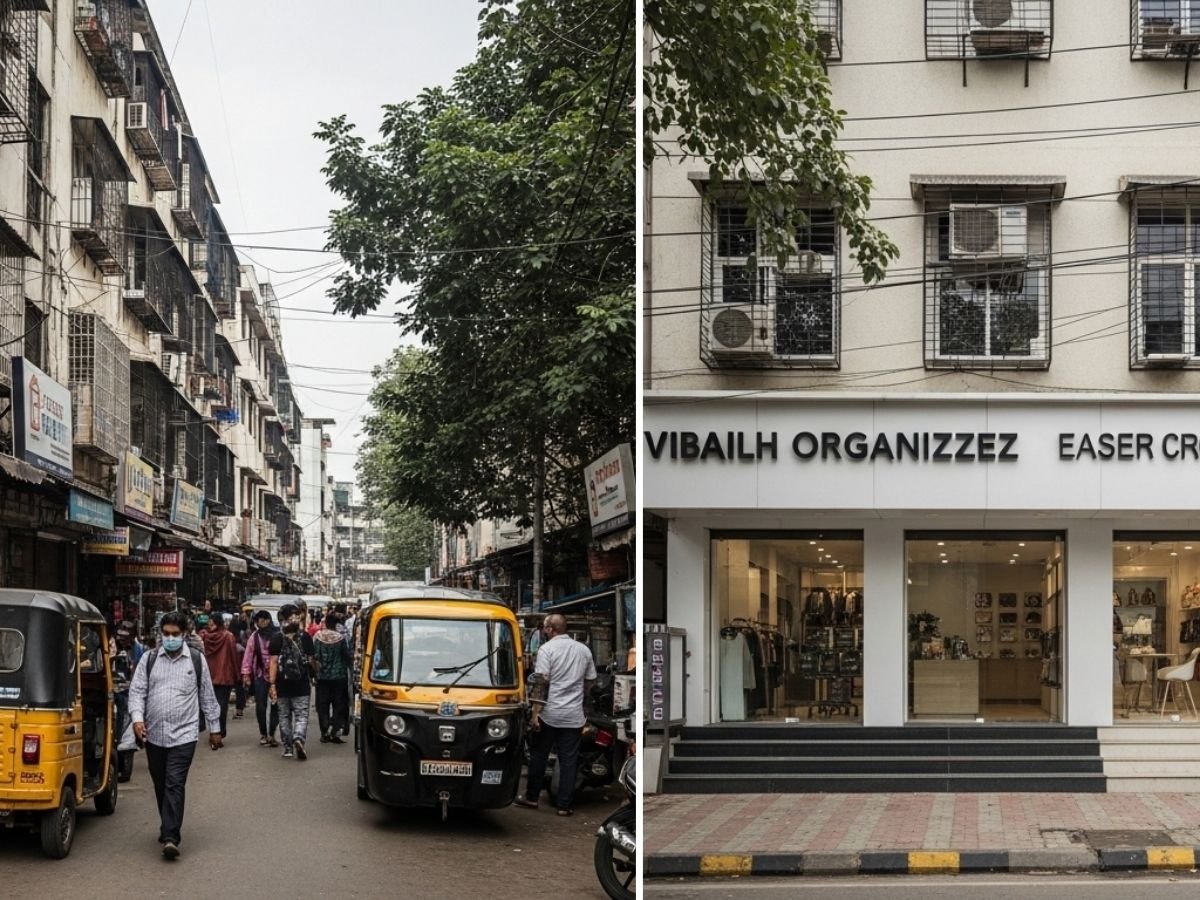
Retail is where many people make the biggest mistake. They see a crowded road and assume it is a strong shop location. That is not always true.
A good retail shop in Panvel needs three things: visibility, stopping power, and repeat catchment. If the road is busy but nobody can stop, park, or comfortably enter, the location may look strong but convert poorly.
What retail needs: visibility, stopping power, repeat catchment
Visibility alone is not enough. A retail shop performs when people can notice it, reach it, enter it, and return again. This is why some high-traffic roads disappoint while some slightly calmer pockets perform steadily.
In Panvel, retail usually works best where there is a blend of real movement and usable access.
Where retail works better in Panvel
For traditional and convenience retail, Old Panvel and station-linked areas remain strong. These locations have natural shopper volume and established buying behaviour.
For more organized, family-comfort, or service-led retail, some parts of New Panvel may be better. The customer experience can be easier there even if raw footfall is lower.
Where retail looks busy but may underperform
This is the trap. A road can look commercially alive because traffic is heavy, auto movement is constant, or pedestrians are passing through. But that does not guarantee sales.
A garment shop, premium gift shop, furniture studio, or family-focused branded outlet may struggle in a place where customers cannot pause or park. In Panvel, this gap between footfall and conversion is real and should not be ignored.
> Caution Box: Footfall Is Not the Same as Sales > > Panvel station-side and old-market areas can generate strong retail demand for the right categories. But they can also destroy conversion for businesses that need customer comfort, browsing time, trial rooms, loading access, or family visits. > A crowded location is useful only when your customer type matches that environment.
Which Panvel Areas Work Better for Offices, Clinics and Professional Spaces?
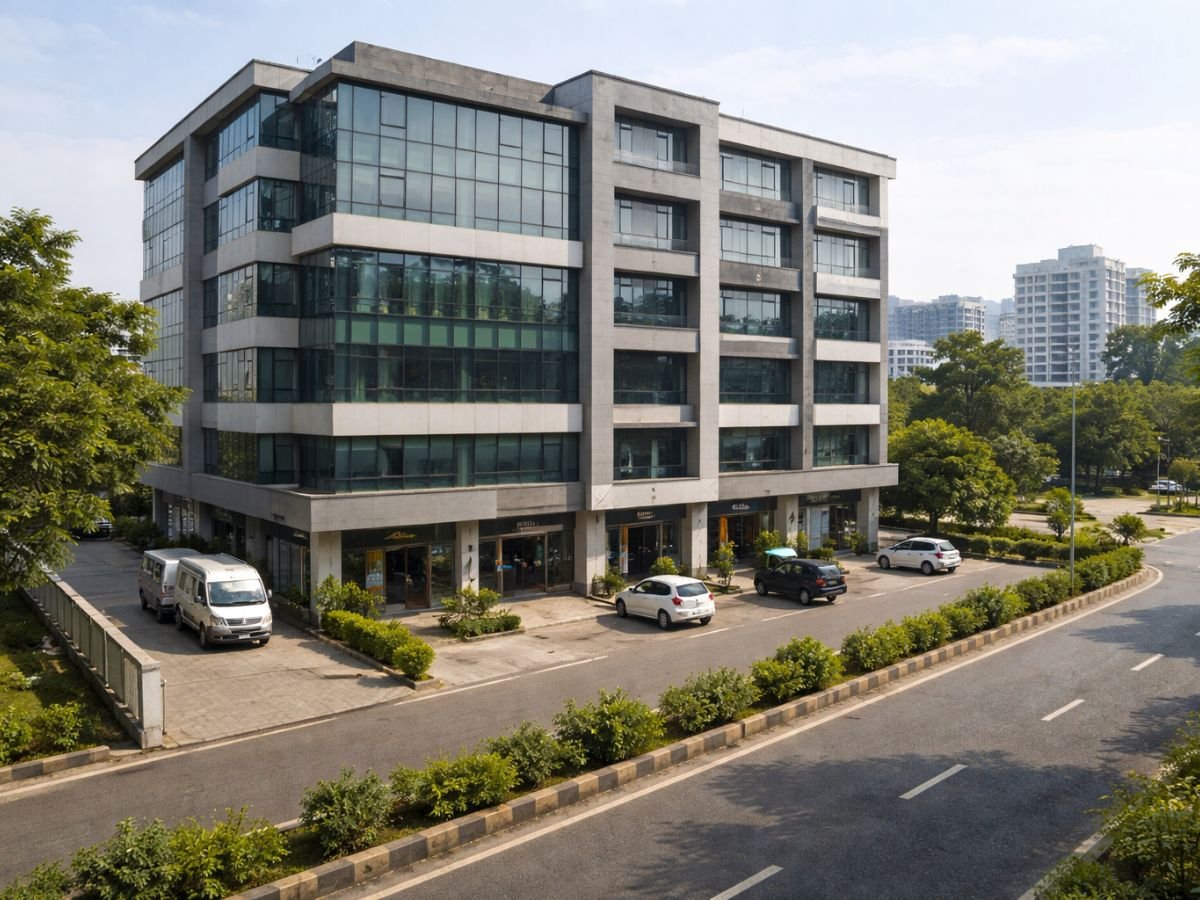
For offices and professional spaces, the logic changes completely. A CA office, clinic, diagnostic centre, consultant cabin, training centre, or back-office setup does not need maximum street chaos. It needs clean access, decent building usability, and easier drop-off or parking.
That is why New Panvel and selected Kamothe sectors often make more sense than the older station side.
Why office demand follows convenience more than pure frontage
Office users care about whether staff can reach the place, whether clients can find it, whether the building looks professional enough, and whether the environment supports work. A flashy frontage on a congested road may actually be a disadvantage.
This is why many office occupiers overpay when they choose a shop-like commercial space for a professional requirement.
Best pockets for clinics, consultants, coaching and back-office use
New Panvel’s planned sectors generally suit these uses better. Kamothe also works well where there is dense residential catchment and recurring local demand. Clinics and coaching centres especially benefit from this because parents and patients value practical access more than raw visual noise.
If your business works on appointments, repeat visits, referrals, and trust, choose usability over traffic theatre.
Why some shop-heavy locations are bad office buys
A ground-floor retail unit in a busy old market may sound prestigious, but it can be a poor office purchase. You may get compromised layout, higher noise, weaker privacy, and bad parking. For professional users, that is not premium. That is friction.
Old Panvel vs New Panvel for Commercial Use: What Changes on the Ground?
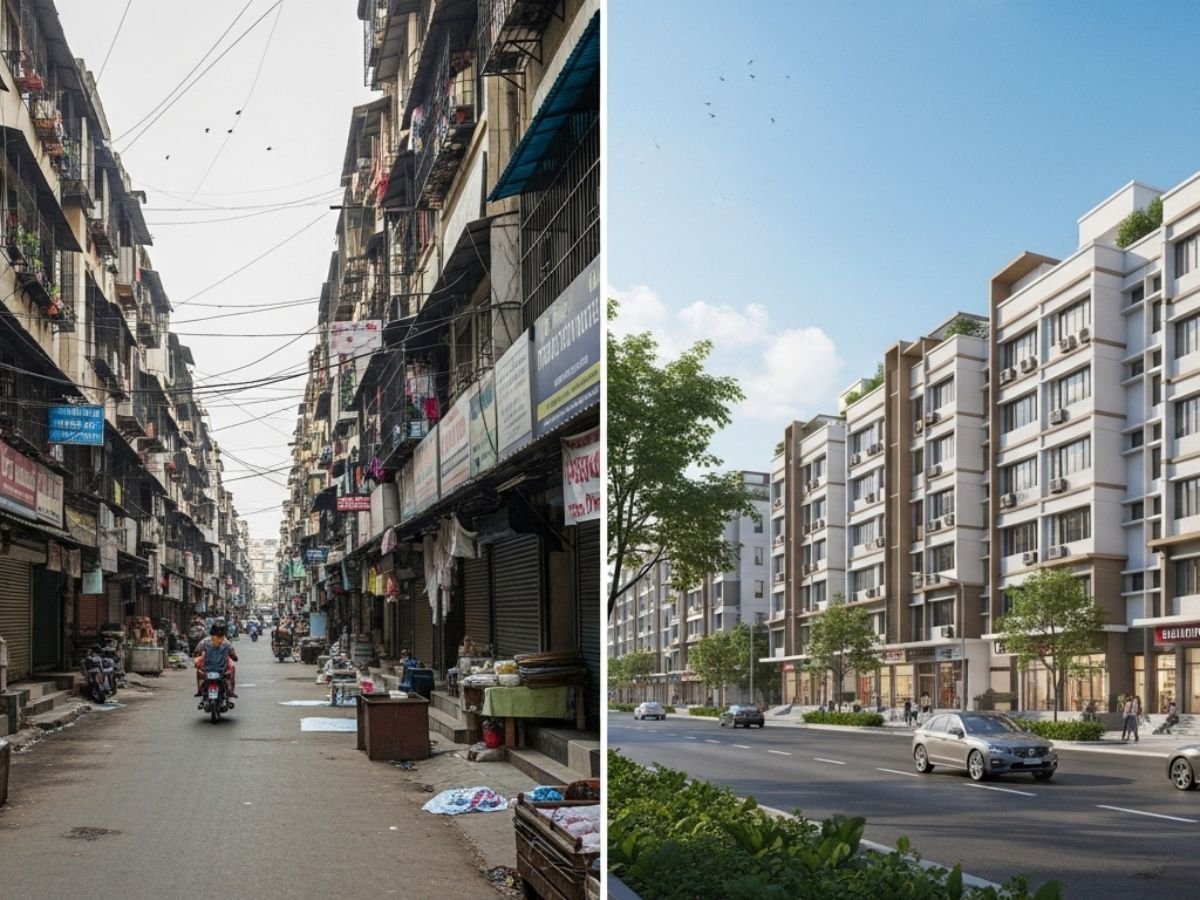
This is one of the most important comparisons in the whole topic.
| Factor | Old Panvel | New Panvel |
|---|---|---|
| Commercial Character | Traditional market town, legacy retail, dense daily trade | Planned sectors, mixed SME-commercial use, organized formats |
| Best For | Shops, jewelry, daily goods, traditional retail | Offices, clinics, coaching, service businesses, organized retail |
| Parking Reality | Often difficult, high friction | Usually better in relative terms, though varies by pocket |
| Road and Layout Logic | Organic, older, often congested | More structured and easier to navigate |
| Customer Type | Legacy local shoppers, market-driven users | Professionals, families, service users, newer catchment |
| Approx. Q1 2026 Capital Range | ₹10,000 – ₹14,000/sq.ft. | ₹6,500 – ₹12,500/sq.ft. |
| Approx. Rental Yield | 4.0% – 5.5% | 5.0% – 6.5% |
Old Panvel is stronger where history, habit, and dense shopper movement matter. New Panvel is stronger where structured usability, appointments, and organized business patterns matter.
So which is better? Old Panvel is better for established retail logic. New Panvel is better for practical office and service-commercial logic.
Does Station Access Really Decide the Best Commercial Area in Panvel?
Station access matters a lot in Panvel, but only for the right commercial formats.
Panvel’s station ecosystem helps businesses that benefit from daily commuter movement, staff convenience, fast-moving demand, and high inventory turnover. Budget food outlets, phone and accessory shops, small-ticket retail, courier-linked businesses, and convenience services can benefit strongly from this.
But station access does not solve everything.
It does not solve parking. It does not solve premium brand positioning. It does not solve loading for large goods. It does not magically make every office or showroom successful.
A luxury-focused furniture studio, for example, may gain nothing from station rush. In fact, the environment could actively hurt the customer experience. So yes, station access matters. But it is not a universal commercial superpower.
Do Kalamboli and Kamothe Count in a “Best Commercial Areas in Panvel” Discussion?
Yes, but only with proper context.
People search them together because real commercial decisions around Panvel often spill across nearby nodes. A business owner or investor looking in Panvel is commonly shown options in Kalamboli and Kamothe as well. That is natural.
But that does not mean all three are interchangeable.
Where Kalamboli fits better than core Panvel
Kalamboli is better for highway-linked, transport-linked, logistics-heavy, industrial-support, and wholesale-material businesses. It can also show stronger rental yields in the right commercial categories. Q1 2026 approximations in the dossier place some Kalamboli shop values in a much higher band and rental yields around 8% to 10% in suitable formats.
That sounds attractive, but remember what it means. It means specialized demand, not broad consumer demand.
Where Kamothe fits better than core Panvel
Kamothe can be better for neighbourhood retail, healthcare, education, and service-led commercial setups. It benefits from dense residential catchment and recurring daily-use demand.
A pathology centre, pharmacy, coaching class, or family clinic may prefer Kamothe over a chaotic Panvel market lane.
When including them becomes misleading
It becomes misleading when someone reads “best commercial areas in Panvel” and starts assuming Kalamboli is just another version of a family retail market, or Kamothe is identical to station-linked Panvel. They are not.
Include them in the discussion, yes. Treat them as adjacent specialized decision zones, not as identical twins of Panvel city.
Which Commercial Areas in Panvel Make More Sense for Investment, Not Self-Use?
Investment and self-use are not the same game. A self-use buyer may accept a lower yield if the location helps their own business. An investor needs tenant depth, stable leasing demand, and practical exitability.
Old Panvel can work for investors who understand legacy retail demand, but yields are usually more moderate. New Panvel can be more balanced because office-service-commercial demand is broader and easier to sustain in many cases. Kamothe may work for investors targeting clinics, tuition, pharmacy, and neighbourhood commerce.
Kalamboli is different. It can offer stronger yield logic, but only when the asset matches logistics or B2B trade demand. Buying there without understanding the tenant profile is risky.
Airport-influence and NAINA-side commercial buying is even more sensitive. The dossier clearly shows that these peripheral belts are more speculative. They may suit long-term land banking or future commercial positioning, but they are not always ready for immediate rent-driven expectations.
So if you are investing rather than using the space yourself, ask a stricter question: who is the real tenant today, not just in a future brochure?
What Local Checks Matter Before You Finalize a Commercial Area in Panvel?
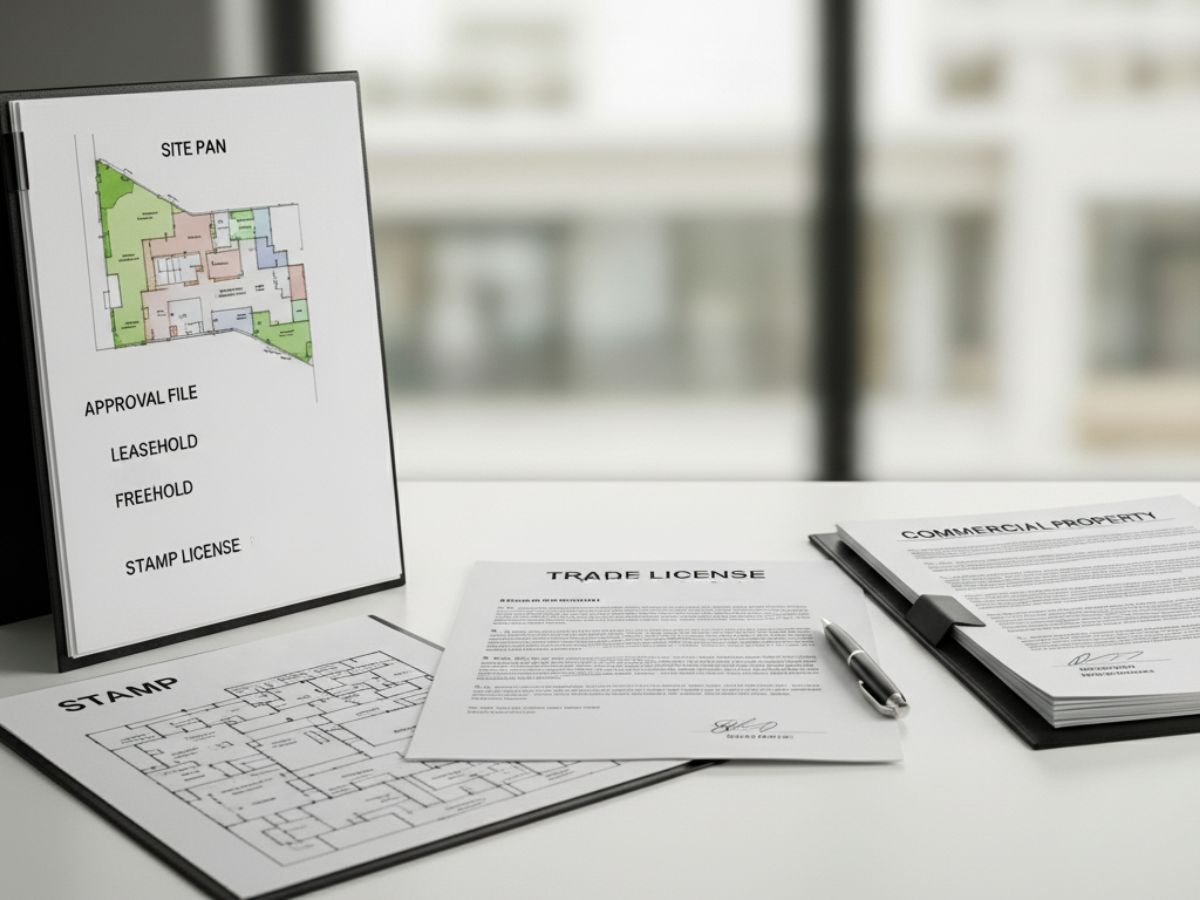
This is where a lot of people get hurt financially. A good-looking space is not enough. In Panvel-side commercial real estate, local authority and legal-process checks matter a lot.
1) Understand the PMC and CIDCO split
This is one of the most important local realities. In many Panvel-side areas, land and development history may come from CIDCO, while day-to-day civic governance and operational permissions come under Panvel Municipal Corporation.
That means many buyers and tenants wrongly assume that one approval automatically covers everything. It does not.
2) Check PMC trade license reality
Running a business without the correct trade permissions can lead to penalties and even sealing action. A sale deed or lease agreement does not automatically mean you can operate whatever business you want from that unit.
3) Check whether the property is leasehold or freehold
A large part of Navi Mumbai-side real estate operates within a leasehold structure. This matters because transfer fees, NOCs, and future liquidity can be affected heavily.
The dossier also highlights very high CIDCO transfer premium slabs for commercial property transfers in certain categories. That can change your investment math sharply. A property that looks affordable at first glance may become far more expensive once transfer burdens are properly counted.
4) Use MahaRERA carefully for under-construction commercial stock
If you are buying under-construction commercial property, verify the project properly on MahaRERA. Check possession timelines, promoter entity details, and status. Do not buy only on the strength of sales language.
5) Use IGR Maharashtra only as a baseline, not market truth
Ready reckoner values can help you understand stamp duty guidance and official valuation baselines. But they should not be treated as proof of the actual market-clearing price.
6) Verify parking, loading, signage, and society-use permissions
This sounds basic, but it is where many deals fail after purchase. If customers cannot stop, if staff parking is weak, if signage permissions are restricted, or if the society resists your business category, your commercial unit can become a stress asset.
Practical Site Visit Checklist Before Finalizing a Commercial Area
- Visit the location at peak hour and non-peak hour
- Check real parking, not promised parking
- Verify whether customers can actually stop and enter
- Confirm whether the building suits your business type
- Ask whether the unit is leasehold or freehold
- Check transfer cost implications before purchase
- Verify trade license and permitted usage
- Check drainage, access, and delivery practicality
- For under-construction stock, verify project details on MahaRERA
- Ask who the existing tenants are nearby and why they survive there
Which Businesses Usually Fit Best in Different Panvel Commercial Pockets?
This is the most practical matching table for decision-making.
| Business Type | Best-Fit Area | Why It Fits |
|---|---|---|
| Budget retail / convenience store | Station belt, Old Panvel | Strong daily movement and repeat footfall |
| Jewelry / traditional retail | Old Panvel | Legacy trading culture and established shopper trust |
| Clinic / diagnostic centre | New Panvel, Kamothe | Better access, calmer environment, repeat local demand |
| Coaching / tuition / classes | New Panvel, Kamothe | Student-friendly residential catchment and easier access |
| CA / consultant / back-office | New Panvel | Better usability than congested retail belts |
| Pharmacy / daily services | Kamothe, Old Panvel, selected New Panvel pockets | Dense repeat demand |
| Hardware / steel / wholesale material | Kalamboli | Strong logistics and trade ecosystem |
| Logistics support / transport-linked business | Kalamboli, fringe transit corridors | Highway and freight logic matters more here |
| Lifestyle retail / family-comfort retail | Selected New Panvel pockets | Better environment than raw station or industrial zones |
| Speculative future commercial positioning | NAINA / airport-side peripheral belts | Future-led rather than current tenant-depth-led |
Who Should Choose Panvel Commercial Space and Who Should Avoid It?
Panvel is a strong market for the right user. It is not a magic answer for everyone.
Panvel commercial space usually makes sense for:
- SME operators who understand local catchment
- Retailers who want dense demand rather than polished glamour
- Clinics, coaching centres, and service businesses needing recurring residential demand
- Investors who can separate ready tenant depth from future speculation
- Logistics and B2B operators evaluating Kalamboli-type specialized ecosystems
Panvel commercial space is usually a weaker fit for:
- Buyers expecting one location to work for every business type
- Premium-corporate-only investors seeking BKC-style tenant quality immediately
- Retail speculators buying only because of airport hype
- Office users who confuse market buzz with workplace usability
- People who do not account for trade licensing, transfer costs, or leasehold complexity
In simple terms, Panvel rewards users who think practically. It punishes users who buy on generic hype.
You should also read Panvel Commercial Rates and Market Trend to understand how pricing and demand are moving here.
Conclusion
The best commercial areas in Panvel are not one fixed list in one fixed order. For commuter-driven and traditional retail, the Panvel station belt and Old Panvel remain very important. For offices, clinics, coaching, and organized service-commercial use, New Panvel is often the smarter and more practical choice. For B2B trade, logistics, steel, marble, and transport-linked business, Kalamboli is one of the strongest zones in the broader Panvel side. For healthcare, education, and neighbourhood services, Kamothe deserves serious attention.
That is the real answer. Do not ask which area is best in a generic way. Ask which area is best for your exact business model, customer type, parking need, access pattern, and holding capacity. In Panvel, that one shift in thinking can save a lot of money and a lot of regret.
FAQs
Frequently Asked Questions