
Industrial Property Documents and Due Diligence in Navi Mumbai: What Buyers and Lessees Must Check
Industrial property due diligence in Navi Mumbai starts with one simple but critical check: who controls the land and what exactly is being transferred. After that, you must verify the title chain, transfer or subletting rights, approved plans, built status, dues, and activity permissions. This matters because many industrial properties here are not simple freehold assets. They sit inside authority-led systems where MIDC, CIDCO, municipal dues, and operational compliance can completely change the risk of the deal.
That is why a registered agreement alone is never enough comfort in an industrial transaction. On paper, the property may look clean. On ground, the authority may still not recognise the transfer, the mezzanine may be outside approval, the water or tax dues may be sitting on the unit, or the shed may be legally held but unusable for the activity you want to run. In Navi Mumbai, industrial property documents are not just a document list. They are the deal filter.
Quick summary: what should you identify first?
| First question | Common Navi Mumbai examples | What you need to identify immediately | Why it matters |
|---|---|---|---|
| Who is the controlling authority? | TTC, Taloja, Pawane, Turbhe-side industrial stock often follows MIDC logic; Dronagiri, some Panvel-side and CIDCO-origin belts follow CIDCO logic | MIDC, CIDCO, municipal/private, or mixed history | The authority decides transfer path, permissions, premiums, and document stack |
| What exactly is being transferred? | Plot, shed, gala, built unit, leasehold assignment, or subletting right | Nature of asset and nature of transaction | A plot deal is not checked like a gala deal, and a subletting deal is not checked like an assignment |
| Is the title chain complete? | Older TTC sheds, Panvel-side legacy assets, 12.5% plots | Allotment, lease deed, assignment chain, tripartite papers where relevant | Missing chain is one of the biggest industrial deal risks |
| Is the built structure actually approved? | Older sheds with extra lofts, mezzanines, yard coverage, side extensions | Approved layout plan, BCC/OC where relevant, actual site match | Unapproved area can affect finance, regularisation, and enforcement risk |
| Are there hidden dues? | NMMC tax in TTC belt, MIDC water dues, CETP charges, transfer premiums | No-dues proof from the relevant authority or service body | Dues often attach to the property, not just the previous user |
| Can your activity legally run there? | Fabrication, warehousing, chemical use, processing, bonded warehousing | MPCB, fire, factory, customs, and other operational approvals | A legal property can still be wrong for your intended business |
Industrial due diligence in Navi Mumbai starts with one question: who controls this property?

This is the first real filter. In Navi Mumbai, industrial property does not sit under one single uniform system. The same-looking shed in two different belts can follow completely different transfer logic.
A large part of the industrial stock in TTC, Taloja, Pawane, and Turbhe-side belts is tied to MIDC processes. Dronagiri, Kalamboli, and some Panvel-side or CIDCO-origin locations can follow CIDCO-side logic. Then there is the civic layer on top. For example, a unit may follow MIDC for land and transfer matters but still fall under NMMC for property tax collection. That overlap creates confusion for many first-time buyers.
This is where many people make their first big mistake. They believe that once the agreement is registered at the IGR office, ownership is safe. In industrial property, that is often incomplete thinking. Registration records the transaction. It does not automatically replace the need for the lessor or controlling authority to recognise the transfer where the land is on leasehold terms.
So before you even discuss price deeply, ask these questions:
- Who is the original allotting authority?
- Is this a leasehold right, an assignment, a resale of an assigned asset, or a subletting arrangement?
- Which authority has to issue transfer consent or recognise the incoming party?
- Which body handles tax, water, or other dues on this specific property?
If that first layer is unclear, the deal is already weak.
What exactly are you buying or leasing: plot, shed, gala, built unit, or subletting right?
Many industrial buyers say, “I am buying a property.” That sounds simple, but legally it may not be simple at all.
You may be buying an open industrial plot. You may be buying a built factory shed. You may be taking an industrial gala in a larger estate. Or you may not be buying ownership-type rights at all. You may only be taking occupation through subletting or leave and licence. Each of these needs a different due diligence path.
Why a plot file is different from a shed or gala file
An open plot file is heavily dependent on original allotment conditions, lease terms, development obligations, and time-based compliance. If the original allottee failed to use the plot properly within the required period, the incoming buyer may inherit non-utilisation issues, extension liabilities, or a weakened position with the authority.
A shed or built unit needs another layer. Here, structure legality becomes central. The question is not only whether the seller had the right to hold the land, but whether the actual built area, floor layout, mezzanine, access, and use pattern match the approved record.
A gala in an industrial estate often looks easier because it is a smaller unit. In reality, it can still be document-heavy if the estate history is old, the common approvals are unclear, or the unit has been internally altered over time.
Why a subletting deal is not the same as an assignment
This difference matters a lot in Navi Mumbai industrial belts.
An assignment is a transfer of leasehold rights from one party to another, subject to authority approval where required. A subletting or leave-and-licence arrangement usually means the original lessee remains on record while another party occupies the property. That changes the risk profile immediately.
In MIDC-linked situations, subletting can involve its own approval path and charges. More importantly, the original lessee often remains ultimately liable. So if you are entering as an occupier and not as a recognised assignee, your security is weaker than you may think.
That is why the phrase what exactly is being transferred should stay at the centre of the entire deal.
Which core title documents should be non-negotiable before token money?
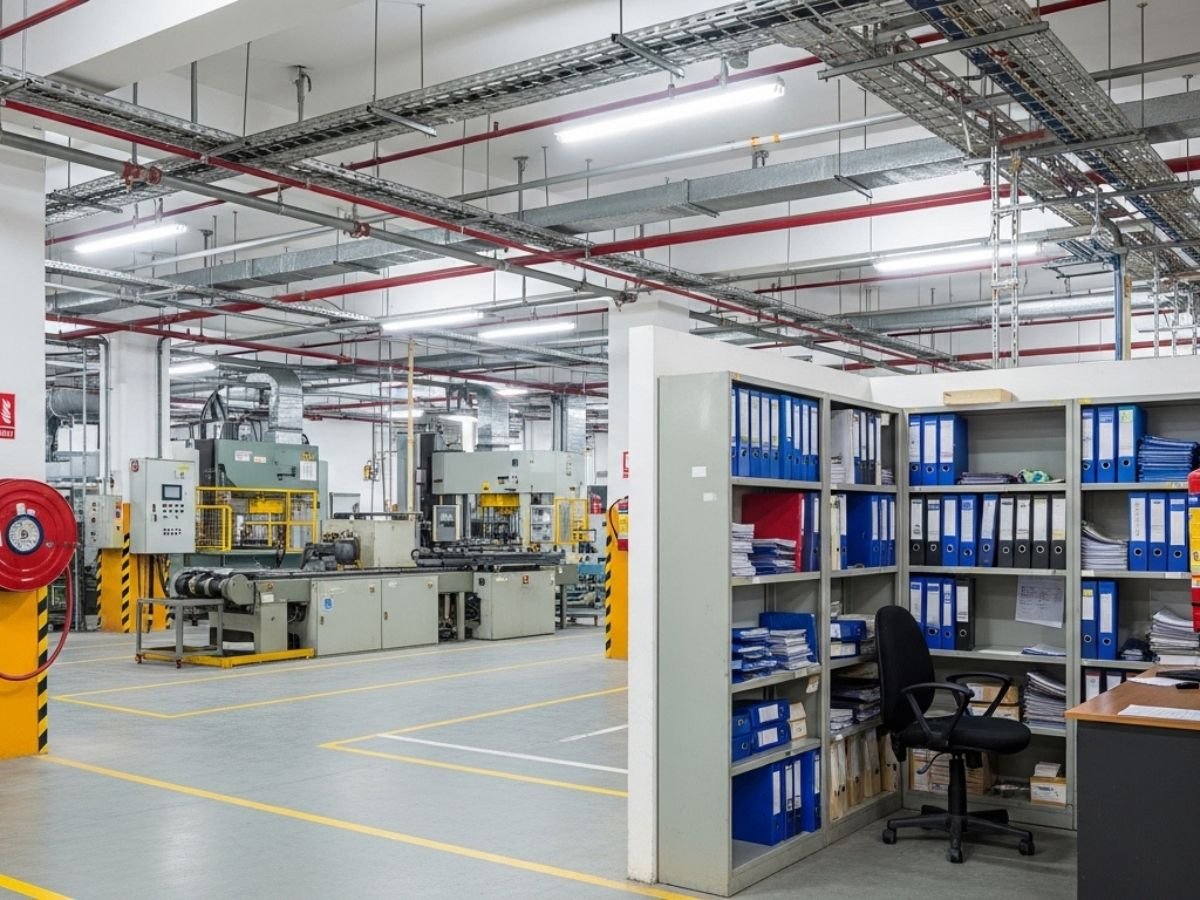
Before token money, you are not trying to finish the entire due diligence. But you must collect enough to see whether the deal is worth pursuing at all.
Start with the root papers. In Navi Mumbai industrial transactions, the foundation is usually not just a simple title deed story. You need to see the original allotment basis and the chain that followed.
Parent title and chain documents
Ask for the original allotment letter, lease deed or agreement to lease, and every later assignment document if the property has changed hands before. The chain must be continuous. If there is a missing link, vague oral explanation, or “that paper is old and not required now,” slow down.
For CIDCO-origin 12.5% scheme plots or similar Panvel-side cases, the chain may also need award-related papers, letter of intent, tripartite documentation, and the final order confirming the allotment or transfer structure. This is not a normal resale shortcut zone.
Allotment, lease, assignment, and transfer papers
You should be able to understand from the file:
- who got the asset originally
- under what scheme or authority
- whether the lease or allotment conditions allowed transfer
- whether past transfers were formally recognised
- whether the current seller stands on valid paperwork or only on possession
If the current seller is relying heavily on a GPA, old informal papers, or “everyone does it this way,” treat that as risk, not convenience.
Identity and authority proof of the seller
If the seller is a company, partnership, LLP, or family-run entity, then seller identity is not enough. You need signatory authority too. Board resolution, partner consent, company constitutional papers, and lender position all matter. The person signing should not just be the person speaking. They should be the person legally empowered to bind the asset.
How do you verify whether the seller can legally transfer, assign, or sublet the unit?
This is where many industrial deals look good and then collapse.
A seller may have possession. A seller may even have an old registered document. But can that seller legally transfer the unit to you under the authority framework? That is a different question.
For leasehold industrial property in Navi Mumbai, the authority’s transfer rules matter deeply. MIDC-side and CIDCO-side paths are not interchangeable. If a property needs prior written approval for assignment or transfer, a private arrangement alone does not cure that requirement.
Lease restrictions, consent requirements, and lock-in issues
Read the lease and allotment conditions carefully. Some properties come with restrictions on transfer, use, lock-in periods, or specific conditions tied to the original allotment.
This becomes especially sensitive in certain CIDCO-linked 12.5% scheme cases. A plot under a lock-in period is not made safe just because someone is willing to sign a document privately. If the authority-side condition says transfer is restricted, then trying to bypass it creates direct legal risk.
Mortgage, lender NOC, and charge checks
Industrial property is frequently used as collateral. So a clean-looking seller can still be sitting on a charged asset.
Do not rely on verbal comfort here. Ask:
- Is there any bank loan, working capital charge, or mortgage?
- Is a lender NOC required?
- Will the lender release the charge before or along with the transaction?
- Is there a tripartite closing structure if needed?
If the property is encumbered and the release mechanism is vague, you are stepping into avoidable trouble.
> Caution: A registered deal without clear authority recognition, lender release, and transfer permission can leave the buyer paying real money for a legally weak position.
Do the plans, built structure, and site reality actually match?
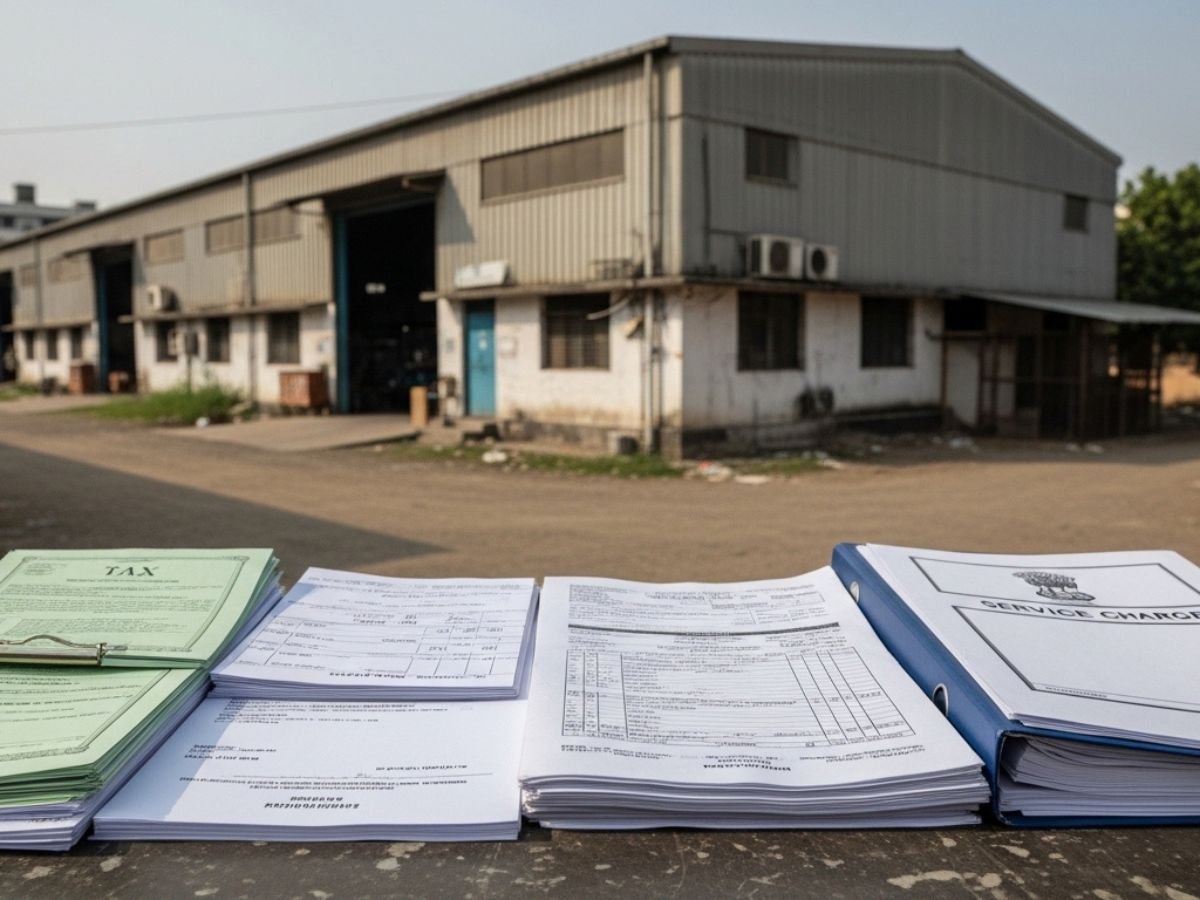
This section is where industrial buyers often get surprised.
The property may be marketed as 8,000 square feet usable. The actual approved plan may recognise much less. The difference may be sitting in an unapproved mezzanine, side extension, loft, yard cover, or floor addition. If you pay based on the physical area without checking the approved record, you may be buying risk at full price.
Approved plans, BCC, OC, and actual site match
Ask for the authority-stamped approved layout plan, building completion record, occupancy or equivalent completion documents where applicable, and then physically inspect the site against that record.
Do not stop at drawings. Walk the site with measurement logic in mind. Check:
- is the mezzanine shown on plan?
- is the open space actually open?
- has yard area been covered later?
- is an extra internal level being used as office or storage without approval?
- does the access and loading pattern match what the property is claiming?
The mezzanine trap: a very common industrial mistake
This is one of the most practical examples in Navi Mumbai industrial belts.
Suppose a buyer negotiates for a shed based on 5,000 sq ft of usable area. Later, during proper technical review, the buyer finds that 2,000 sq ft sits in a mezzanine that is not properly reflected in the approved plan or does not fit the permitted rule position. Under MIDC-side development control rules, mezzanine size and headroom are not casual matters. If that internal structure breaches rules or FSI logic, regularisation may be difficult, expensive, or not possible.
That changes the entire deal. Finance may become difficult. Insurance comfort weakens. Enforcement risk increases. And the buyer is left arguing over a price that was based on area that may not be legally dependable.
So do not ask only, “How much area is there?” Ask, “How much approved, usable, and legally supportable area is there?”
Which dues and liabilities can quietly pass to the buyer or incoming occupier?
In industrial property, unpaid baggage often sticks to the asset.
A buyer may negotiate well on price and still lose money later because tax, water, service, or transfer liabilities were not cleaned up before closing.
In TTC and other belts under NMMC tax collection, property tax can become a serious issue. If there are arrears, penalties can keep building. In industrial transactions, that is not a side issue. It affects financial cleanliness, transfer comfort, and operational peace.
MIDC water bills, service charges, and CETP-related dues can also become practical closing issues. For some properties, transfer premiums or authority-side charges can be large enough to materially change the economics of the deal.
What should you demand before closing?
At minimum, ask for current dues status on:
- property tax
- water and utility dues
- industrial estate or service charges
- CETP or related industrial association dues where relevant
- transfer premium, unearned income, or similar authority-level charges if applicable
And do not just ask who will pay them. Put that responsibility clearly into the transaction structure.
> Caution: Inheriting dues is one of the most avoidable industrial mistakes. A “good price” is not a good price if old tax, water, or authority-side liabilities are waiting behind the file.
Which activity approvals matter, and which ones do not automatically come with the property?
This is where buyers confuse property legality with business legality.
A property can be legally held and structurally fine, yet still be wrong for your intended operation. That is because building papers and activity permissions are not the same thing.
If the previous user ran a low-impact assembly operation, that does not mean you can automatically start a heavier process there. MPCB category, fire compliance, factory licensing, hazardous process rules, storage profile, and even bonded warehouse requirements in logistics belts can all change the answer.
Building papers and business-use papers are different
The file may show approved land and building history. Good. That still does not mean your proposed activity is approved.
Depending on your use, you may need to examine:
- pollution category compatibility
- Consent to Establish or Consent to Operate position
- fire compliance for the actual process and storage profile
- factory licensing requirements
- customs-related suitability in warehousing or bonded storage situations
- power load and infrastructure fit for the actual operation
This matters strongly in places like Taloja, where process-heavy activity requires stricter scrutiny, and in Dronagiri, where warehousing value can depend on logistics and customs-related operational fit, not just title.
How does due diligence change across TTC, Taloja, Dronagiri, Kalamboli, and Panvel-side belts?
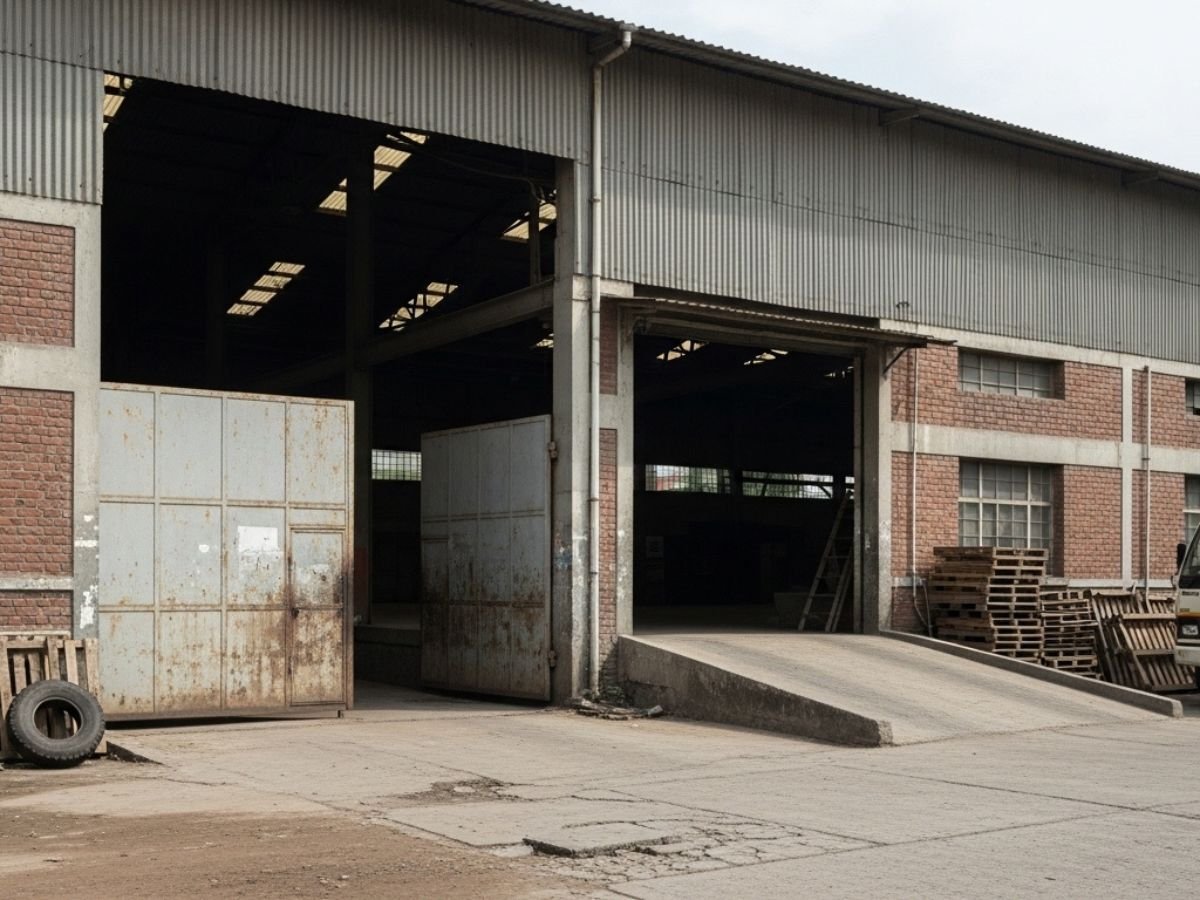
Navi Mumbai industrial property is not one flat legal landscape. Local belt logic changes what deserves extra attention.
TTC and older industrial stock
TTC often needs stronger historical document tracing. Older transfers, internal modifications, long use histories, and the MIDC plus NMMC dual layer make the file more sensitive. Property tax checks become especially practical here, and structural mismatch risk can be higher in older stock.
Taloja and process-heavy industrial use
Taloja requires sharper attention to activity fit, pollution-linked compliance, and on-ground technical practicality. Larger plots and heavier industrial uses mean you cannot treat the transaction like a simple shed resale.
Dronagiri and logistics-facing stock
In Dronagiri, warehousing and logistics use changes the due diligence lens. The property may need to be tested not only for CIDCO-side title logic but also for its actual suitability for the intended logistics operation, especially if bonded, customs-linked, or high-security warehousing value is part of the business plan.
Panvel-side and 12.5% documentation risk
Panvel, Ulwe, and nearby CIDCO-origin areas can become tricky where 12.5% files or legacy scheme histories are involved. These are not the places to be casual about tripartite papers, lock-in restrictions, or paper continuity. If the file is opaque, the risk can be much bigger than the property looks from outside.
What should the due diligence sequence look like before token, before agreement, and before registration?
Good due diligence is not only about what to check. It is also about when to check it.
Stage 1: Before token money
At this stage, do not try to solve everything. But do enough to avoid walking into a bad file.
Check:
- controlling authority
- original allotment and lease basis
- broad title continuity
- type of transaction: assignment, resale, or subletting
- obvious mortgage or lock-in issues
- whether the property is part of a newer project where MahaRERA relevance may apply
If this stage is weak, do not rush into token money.
Stage 2: Before agreement
Now the file becomes deeper.
This is where your lawyer and technical consultant should work properly. Ask them to:
- trace the full chain of title or assignments
- verify transfer rights and authority conditions
- check lender NOC position if the asset is charged
- verify approved plan versus actual site
- review tax, water, service, and other dues
- test the property for your actual business-use suitability
This is the stage where many “almost good” deals fail. That is normal. Better now than after money is deeply committed.
Stage 3: Before registration or final closing
At this stage, paper clarity should already exist. Now you are not discovering risk. You are controlling execution.
The agreement should clearly say:
- who is paying transfer charges or premiums
- who is clearing old dues
- what documents must be delivered before closing
- what lender release or authority acknowledgement is required
- what happens if approvals are delayed or refused
Industrial deals go wrong when commercial pressure overtakes document discipline.
Which red flags should make you slow down, renegotiate, or walk away?

Some problems can be solved. Some are warnings. Some are signs to stop.
Be careful when you see:
- a seller depending mainly on GPA-style comfort instead of clean transfer logic
- a missing link in the assignment or title chain
- tripartite or scheme-related papers missing in CIDCO-origin files
- “regularisation will be done later” promises for extra floors, mezzanines, or covered yards
- heavy dues that are not clearly allocated between buyer and seller
- lender charge release position not fully clear
- activity mismatch between what you want to run and what the site can realistically support
- pressure to pay quickly before document review
- claims that “registration is enough, authority approval can happen later”
- old industrial estate units where physical area and approved area are obviously not matching
A practical industrial buyer does not only ask whether the deal can be done. He asks whether the deal can stay safe after it is done.
Industrial property document checklist for Navi Mumbai buyers and lessees
conclusionIf you remember only one line from this guide, remember this: industrial due diligence in Navi Mumbai is not about collecting papers, it is about proving legal control, transferable rights, approved structure, clean dues, and usable activity fit in the correct authority framework. That is why the smartest industrial buyer does not begin with price. He begins with the file. He identifies the authority, checks what exactly is being transferred, tests the approved structure against the site, cleans the dues picture, and only then negotiates commercial terms. In a market like Navi Mumbai, that sequence is not over-caution. It is basic survival. A clean industrial deal is rarely the one with the fastest broker pitch. It is the one where the paperwork, authority position, site reality, and intended use all line up without hidden surprises. That is the standard you should insist on before token, before agreement, and definitely before registration. FAQsFrequently Asked Questions Is every industrial property in Navi Mumbai freehold?
No. A large part of industrial stock in Navi Mumbai works through leasehold-style authority structures, especially where MIDC or CIDCO history is involved. That is exactly why authority recognition and transfer logic matter so much.
Is registration enough to make the industrial deal fully safe?
Not always. In many industrial transactions, registration records the private deal but does not replace the need for the controlling authority to recognise the incoming party where leasehold or assignment rules apply.
Does MahaRERA apply to every industrial gala purchase?
No. MahaRERA is useful mainly where the transaction involves a new project that crosses the relevant project threshold. It is not a universal safety tool for every old resale shed or standalone industrial gala.
If property tax is being paid, does that mean all built area is approved?
No. Tax assessment and structural approval are not the same thing. A unit may be taxed on occupied area while still containing unapproved construction from a planning or development control angle.
Can an incoming buyer simply continue the previous business permissions?
Not automatically. Property rights and activity permissions are different layers. Pollution, fire, factory, and process-related approvals often depend on the incoming activity, not only on the building.
 Shashank HibareShashank Hibare is a real estate professional who contributes to I Love Navi Mumbai (ILNM), focusing on the city’s evolving property market. Related Posts |
|---|