

Kharghar vs Panvel for Commercial Growth: Which Node Makes More Sense?
If the question is simple, the practical answer is this: Kharghar is usually the safer commercial node for structured office demand, clinics, coaching, and premium daily-use retail, while Panvel is usually the stronger node for long-term transport-led commercial expansion, logistics, aviation-linked activity, and broader future upside. Kharghar works better when you need organized demand today. Panvel works better when you can handle more uneven pockets and a longer commercial build-up cycle.
That is the short answer. But this comparison becomes much clearer once you stop treating both places as one type of market.
Kharghar and Panvel are not competing on the same commercial logic. Kharghar is a more planned, education-and-lifestyle-backed node with operating metro connectivity and a tighter urban structure. Panvel is a much larger transport and expansion corridor shaped by railway connectivity, highway movement, the Atal Setu effect, and the now-operational Navi Mumbai International Airport ecosystem. Atal Setu was inaugurated in January 2024, NMIA was inaugurated in October 2025, and commercial operations began on 25 December 2025. Meanwhile, Navi Mumbai Metro Line 1 has already been operating since November 2023.
So the better choice depends on what you are buying for: office or shop, self-use or investment, immediate yield or long-hold upside, structured demand or infrastructure-led expansion.
Before comparing growth potential directly, Kharghar Commercial Property Guide is worth reading for local context.
Kharghar or Panvel for commercial growth: what is the practical answer?
Why Kharghar and Panvel are not growing in the same commercial way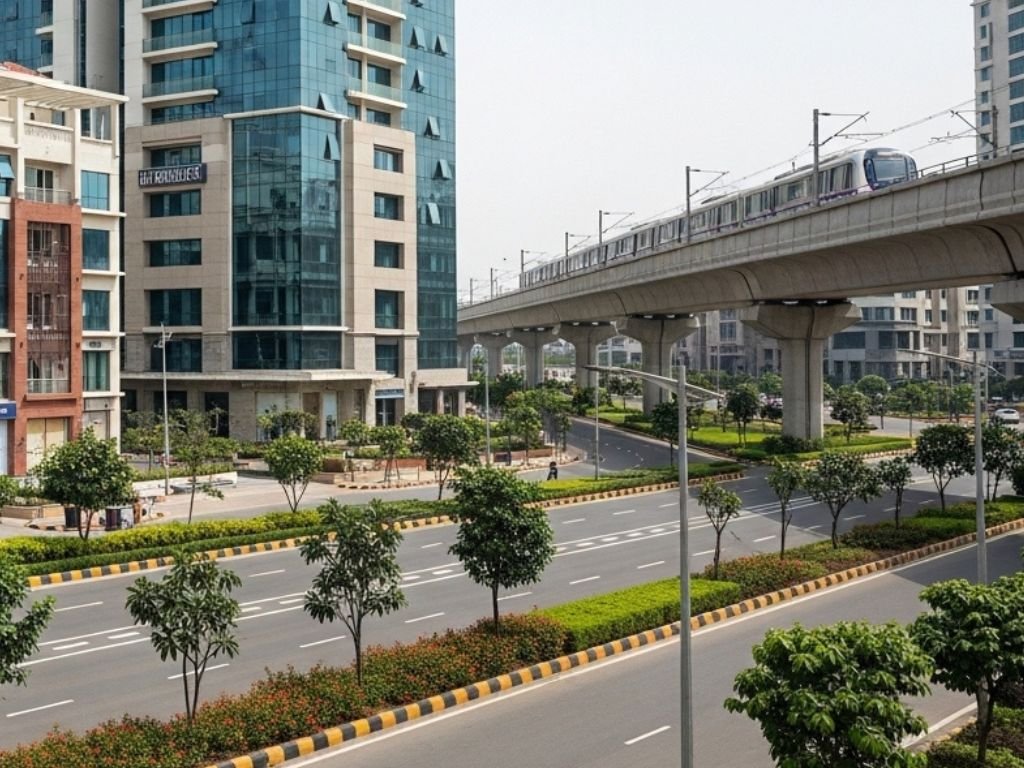 The biggest mistake in this comparison is assuming both nodes are growing from the same base. They are not. Kharghar’s growth model: planned node, educated catchment, office-and-service demandKharghar grows commercially through planned urban form, educated families, coaching demand, healthcare demand, lifestyle spending, and institutional employment. It is not just a residential node anymore. It already has a strong service economy, and its commercial demand is helped by metro access, organized sectors, and a more premium user profile. Navi Mumbai Metro Line 1 connects the Belapur-Kharghar-Taloja belt, which materially improves employee and commuter movement across this side of the city. :contentReference[oaicite:1]{index=1} The other important long-term trigger is the Kharghar corporate park story. CIDCO’s planning documents and public reporting have for years positioned the Kharghar corporate park area as a major office and employment district, which is why surrounding sectors attract interest well beyond simple retail logic. So Kharghar commercial growth is mostly internal and quality-led. It comes from people already living, studying, working, and spending in the node. Panvel’s growth model: transport junction, expansion geography, airport-and-highway pullPanvel grows differently. Its commercial story is built on movement. It benefits from railway connectivity, the Mumbai-Pune corridor, the wider JNPA-side logistics influence, Atal Setu access into Navi Mumbai’s eastern and southern belts, and now the live airport ecosystem around NMIA. The airport’s start of commercial operations in December 2025 changed Panvel’s commercial relevance in a real way, but that relevance is strongest first for logistics, hospitality, cargo-linked services, transport operators, and airport-support activity, not automatically for every shop or office in every Panvel pocket. That is why Panvel’s commercial growth is externally accelerated but internally uneven. The upside can be bigger. The execution risk is also bigger. Which node is better for offices, clinics, coaching, studios and service businesses?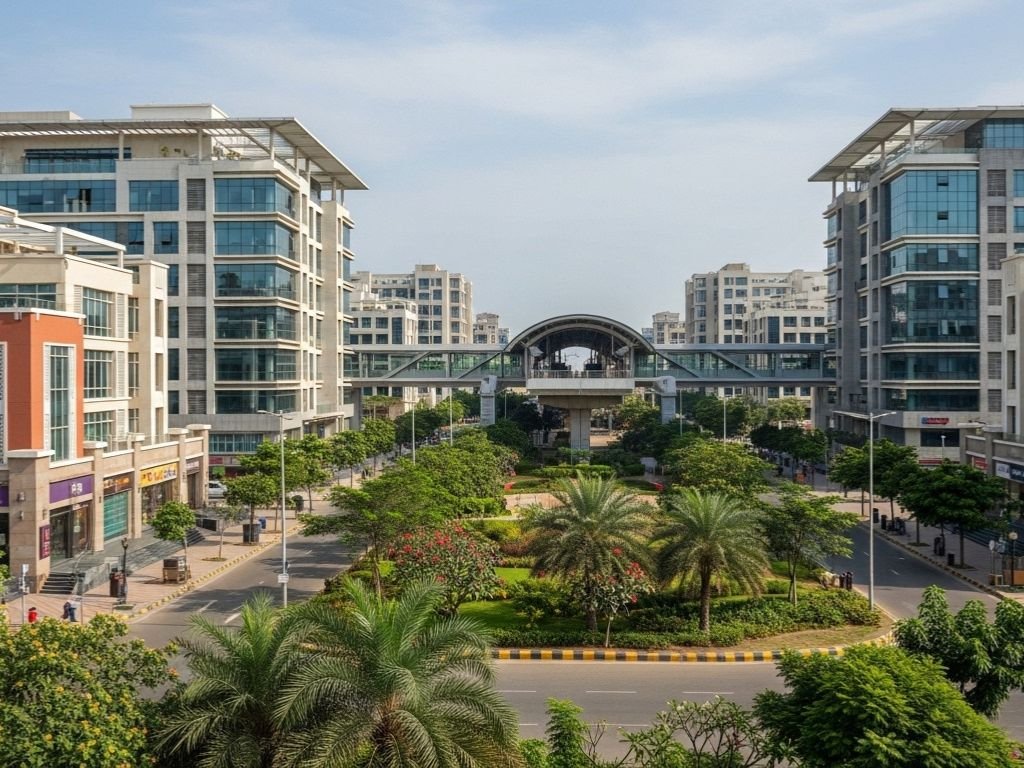 For this category, Kharghar clearly performs better in most cases. A clinic, CA office, digital agency, coaching centre, studio, dental practice, immigration consultant, or boutique finance office usually needs four things: a decent neighborhood image, predictable approach roads, usable parking or stopping convenience, and a local catchment that values organized services. Kharghar gives you that more consistently. Based on the research dossier, approximate Q1 2026 office pricing in Kharghar sits around ₹18,000 to ₹28,000 per sq. ft., versus ₹15,000 to ₹22,000 per sq. ft. in Panvel. That higher Kharghar entry band is not random. It reflects stronger immediate office usability and better service-led demand depth. Where Kharghar usually performs betterKharghar is usually better for:
Why? Because Kharghar has the kind of catchment that supports these businesses without forcing them to wait years for surrounding density to mature. A coaching brand, for example, does not just need a building. It needs parents, students, daily movement, trust, and a sector that already behaves like an education market. Kharghar is naturally stronger there. Where Panvel usually performs betterPanvel is usually stronger for:
These are businesses where highway access and network position matter more than premium urban feel. A freight-support office does not need Central Park adjacency. It needs movement efficiency. When the wrong office location becomes a dead assetThis is where many buyers get trapped. A polished-looking office unit in an outer Panvel growth pocket may look cheap and exciting on paper. But if the surrounding business ecosystem is still thin, your office can remain vacant for a long time. On the other side, a Kharghar office bought at too high a price can also become difficult if the rent required to justify your purchase is unrealistic. So the better office market is not just about cheaper or costlier. It is about tenant fit. Which node is better for shops, frontage-led business and walk-in demand?This is where the answer becomes more selective. For organized, premium, daily-use, and family-spend retail, Kharghar usually does better. For mass-market trading, old-market movement, and transit-heavy retail, Panvel can perform strongly, but only in the right belt. Kharghar shop logic: selective, sector-dependent, resident-backedKharghar retail works when the shop is in the right sector, with the right frontage, and backed by nearby residents who actually spend. Premium salons, cafés, wellness formats, pharmacy-plus-clinic clusters, dessert shops, small branded food outlets, coaching-support retail, and curated convenience businesses usually fit Kharghar better than Panvel’s outer belts. That is because Kharghar shoppers are often not just passing through. They are recurring local users. The research dossier places approximate Q1 2026 retail pricing in Kharghar around ₹25,000 to ₹35,000 per sq. ft.. That is high. So the shop has to earn. Panvel shop logic: broader catchment, more movement, but more uneven streets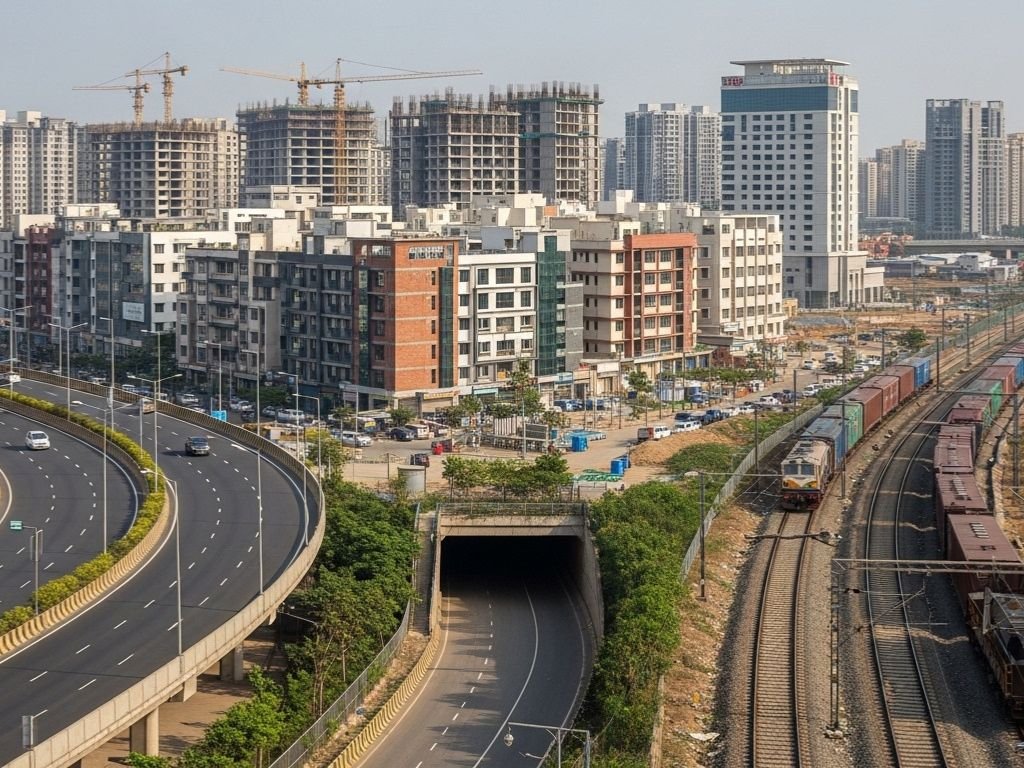 Panvel retail is not one market. Old Panvel has strong market energy, heavy movement, and local transactional depth. But it also has congestion, narrower roads, and a more chaotic street environment. This can work brilliantly for high-volume daily-needs retail, value-led food, hardware, mobile, trading, transport-side services, and commuter-driven formats. New Panvel is more structured and easier to understand. It offers a more balanced retail environment. Pushpak Nagar is the planned Panvel-side location many commercial buyers should watch more closely because it connects airport logic with a more structured planning framework. The outer NAINA-side periphery, however, should not be treated as ready-made retail gold just because the airport is nearby. Why footfall alone can mislead a shop buyerThis matters a lot. A shop buyer often sees movement and thinks that means sales. But footfall and spend capacity are not the same thing. Old Panvel may have massive daily movement, but that does not mean premium retail will work there. Likewise, a new Panvel-side or airport-side project may look shiny and future-ready, but without stable nearby users, even a beautiful shop can sit idle. So if the question is “Kharghar vs Panvel for retail investment,” the more accurate answer is this:
Does Panvel’s airport and transport story automatically make it stronger for commercial growth?No. It makes Panvel more important, not automatically more successful everywhere. This distinction is critical. Panvel’s long-term story is now much stronger because NMIA is operational, Atal Setu is live, and the wider airport influence region will keep attracting supply, planning attention, and business interest. But transport infrastructure does not instantly create a mature office ecosystem or a profitable high-street retail market. You may also want to read Panvel Commercial Property Guide to understand what is driving the Panvel side of this comparison. What infrastructure can genuinely improveInfrastructure can genuinely improve:
That is real. It matters. What still depends on micro-location, timing and business typeBut these still depend on the exact pocket:
So Panvel’s airport effect should be read as a commercial growth accelerator, not as a blanket guarantee. Does Kharghar’s planning and social infrastructure make it commercially safer?In many cases, yes. Kharghar’s commercial safety comes from the fact that it is a more contained and planned node. Metro connectivity is already live. Sector planning is more legible. The social profile is stronger for organized service businesses. Central Park and the wider Kharghar environment also support the premium perception many client-facing businesses want. CIDCO has publicly maintained and invested in key Kharghar assets such as Central Park, reinforcing the area’s lifestyle identity. :contentReference[oaicite:5]{index=5} But safer does not mean cheap, and it does not mean every unit works. Where structured growth helpsStructured growth helps when your commercial format depends on:
This is why Kharghar often feels easier for clinics, coaching, small offices, and branded convenience retail. Where pricing can get ahead of commercial realityThe risk in Kharghar is different from Panvel. Panvel’s risk is often premature buying in weak pockets. Kharghar’s risk is often overpaying for a premium story that is already priced in. If you buy at a very high rate and then expect a rent that only a narrow tenant set can afford, your unit can still remain vacant. That is especially true for expensive retail where the business model has to support high occupancy cost from day one. Which areas inside Kharghar and Panvel actually matter for commercial growth? This section matters more than the headline comparison. A node name helps. A micro-location decides the result. Kharghar pockets that suit commercial activity betterIn Kharghar, the more commercially relevant pockets usually include:
As per the research dossier, Sectors 20-21 and the broader metro-linked commercial areas remain more dependable, while Sectors 34-39 carry stronger future positioning because of the corporate-park influence. Panvel pockets that suit commercial activity betterIn Panvel, the practical commercial hierarchy is sharper.
Why internal roads, station approach and stopping convenience change the answerA commercial unit is not judged by brochure language. It is judged by use. That means the final decision should include:
These things decide rentability more than big banners about “future growth.” Who should choose Kharghar and who should choose Panvel?
This is the cleanest way to close the confusion.
What are the biggest mistakes buyers make when comparing Kharghar and Panvel commercial property?The first mistake is treating Panvel as one market. It is not. Old Panvel, New Panvel, Pushpak Nagar, and outer NAINA-side belts should not be underwritten with the same logic. The second mistake is mixing office logic and shop logic. A shop needs visibility, parking, and conversion. An office needs usability, access, and tenant relevance. These are not the same. The third mistake is confusing infrastructure relevance with immediate tenant depth. Just because a location is near the airport influence zone does not mean a small retail unit will work this year. The fourth mistake is ignoring municipal cost reality. Kharghar and Panvel commercial owners have had to deal with the legacy friction between CIDCO service structures and PMC property tax demands. Bombay High Court proceedings and subsequent litigation around retrospective property taxation made this a real operating issue, not a technical side note. As publicly reported, the dispute centered on tax demands in erstwhile CIDCO areas and brought major anxiety for property owners. :contentReference[oaicite:6]{index=6} Quick commercial screening checklistBefore choosing either node, check these points:
So which node makes more sense for commercial growth in 2026 and beyond?
The final answer is not one winner. It is a split verdict.
If you want structured commercial demand, steadier rentability, stronger service-business fit, and better immediate usability, Kharghar makes more sense.
If you want airport-linked, logistics-led, corridor-driven commercial expansion and can hold through uneven market phases, Panvel makes more sense.
Here is the final decision table.
ConclusionChoose Kharghar if you want a more dependable commercial node for offices, clinics, coaching, premium daily-use retail, and steadier rental logic. Choose Panvel if you want exposure to the bigger regional commercial story built around the airport, transport corridors, logistics, hospitality, and long-term expansion potential. That is the practical answer. Kharghar is usually the safer commercial buy. Panvel is usually the bigger but more uneven commercial bet. And in both cases, the real winner is not the node name. It is the micro-location, business fit, and entry price discipline. FAQsFrequently Asked Questions Is Kharghar better than Panvel for office investment?
For most client-facing office formats, yes. Kharghar is usually better for offices that depend on image, employee convenience, organized surroundings, and service-led local demand. Panvel is better mainly when the office is part of a logistics, transport, or airport-linked business ecosystem
Is Panvel better than Kharghar for shop investment?
Not by default. Panvel can be better for certain mass-market or movement-led retail formats, especially in stronger local trading pockets. But Kharghar is usually better for premium, resident-backed, organized retail. The right answer depends heavily on the exact street and catchment.
Which node has safer commercial demand right now?
Kharghar usually has safer commercial demand right now for small offices, clinics, coaching, and premium convenience retail. Panvel’s demand can be stronger in the right corridors, but it is less uniform.
Which node is better for long-term commercial growth?
Panvel usually has the larger long-term upside because of NMIA, corridor connectivity, and expansion geography. But that upside is more uneven and more dependent on pocket selection and holding power.
Is station access more important than future infrastructure promise?
For many office and retail formats, yes. Live access usually matters more than promised access. Future infrastructure can transform a belt, but tenant decisions happen in the present.
 Shashank HibareShashank Hibare is a real estate professional who contributes to I Love Navi Mumbai (ILNM), focusing on the city’s evolving property market. Related Posts |
|---|