

Airoli East vs Airoli West for Office Users and Investors: Which Side Makes More Sense?
Airoli East is usually the stronger choice for office users and investors who want established Grade A demand, easier station access, and more predictable leasing depth. Airoli West, however, is not the weaker side by default. It can make more sense for selective occupiers and investors who want newer stock, better road-side access from Thane and the western suburbs, and a more growth-oriented entry point. The right answer depends on your use case, not just the map.
Before choosing between the two sides, Airoli Office Market Guide is worth reading for a clearer overall view.
Quick Summary
| Use Case | Better Side | Why |
|---|---|---|
| Large office occupier with heavy staff movement | Airoli East | Stronger station-linked convenience and mature office ecosystem |
| Risk-averse office investor | Airoli East | More established leasing depth and institutional reputation |
| Tech-led or modern campus-focused occupier | Airoli West | Newer office stock and stronger appeal for modern enterprise setups |
| Value-seeking investor looking for upside | Airoli West | Slightly better entry logic in selective buildings |
| Business with leadership commuting from Thane side | Airoli West | Better fit for road-led movement and Digha-side access |
| Small professional office wanting safer commercial logic | Airoli East | Better-known commercial identity and easier day-to-day usability |
The mistake many people make is thinking East is always better and West is always secondary. In Airoli office real estate, the better side changes with the kind of office, the employee base, the building quality, and the tenant you want to attract.
Why this comparison is not as simple as “East vs West” in Airoli
This is not a residential locality comparison. For office users and investors, Airoli works as a commercial micro-market shaped by station access, the Thane-Belapur Road spine, and the quality of institutional office campuses.
A poor standalone office on the East side can perform worse than a better-managed modern building on the West side. That is the first thing to understand. The real divide in Airoli is often not only East versus West. It is also institutional managed stock versus ordinary strata stock.
That matters because occupiers do not lease only by pin code. They lease based on practical office questions:
- how easy is the daily commute
- how corporate-ready is the campus
- how big are the floor plates
- how reliable are power, security, and common areas
- how quickly can the landlord or manager handle issues
- how easy is it to replace a tenant later if one leaves
So yes, side matters. But building quality and access pattern matter even more.
What Airoli East usually offers office occupiers that Airoli West often does not
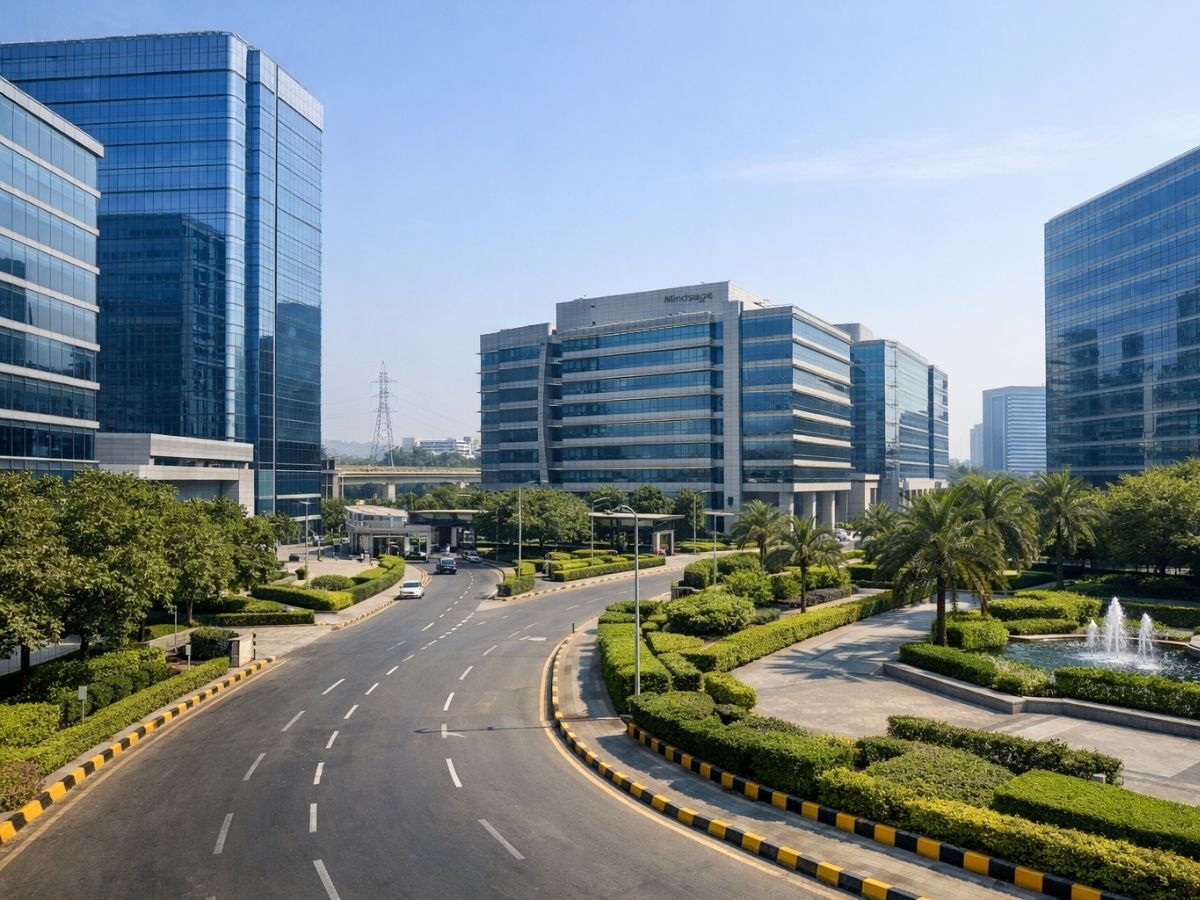
Airoli East remains the more established office side for one simple reason: it has the stronger legacy of institutional office demand. That legacy is not theoretical. It comes from the concentration of large business parks, especially Mindspace Airoli East, and the way this side connects into daily commuter behaviour.
You should also read Who Should Buy Office Space in Airoli if you want to match the location with the right buyer profile.
The Mindspace and institutional campus effect
Airoli East has a stronger “default office” identity in the Navi Mumbai-Thane commercial belt. For many occupiers, especially those taking larger spaces, this matters more than glossy marketing.
A large managed campus gives businesses something that smaller fragmented buildings usually cannot: expansion flexibility, unified operations, stronger security standards, better infrastructure management, and a cleaner tenant profile. If a firm takes space in a serious institutional environment, it is not just paying for square footage. It is paying for lower friction.
This is why East remains more attractive for bigger occupiers, IT and ITeS companies, and businesses that want their office location to feel established from day one.
Station-linked convenience is still a major advantage
For companies with high employee counts, public transport is not a side issue. It is often the main operating reality.
Airoli East benefits from stronger direct access to Airoli railway station, and that reduces friction in daily commute. For rail-dependent employees, especially junior and mid-level staff, a shorter, simpler station-to-office movement matters. It improves attendance, reduces shuttle dependence, and makes the office feel more usable in practical terms.
That is why East still wins for firms whose teams depend heavily on the Harbour and Trans-Harbour connectivity logic.
East feels more natural for formal corporate occupiers
There is also a perception layer here, and it matters in commercial real estate. Airoli East feels more like the “known office side” for many occupiers, investors, and brokers. That helps with leasing conversations, business visits, and location confidence.
It does not mean every East building is premium. It means the side itself carries a stronger institutional office narrative.
Where Airoli West can still make sense for office users and investors
Airoli West should not be treated like a compromise location. In the right situation, it can be the smarter choice.
The West side has improved because it now combines modern office stock, campus-led infrastructure, and better relevance for certain commute patterns. It is especially useful for occupiers and investors who care more about building specification and road-side approach than about legacy station advantage alone.
West works as a selective value play
For investors, Airoli West can make sense where the building is modern, the campus is relevant, and the entry pricing is still slightly lower than the best-known East-side options.
That does not automatically make West “cheap.” It means it may offer better relative value in some cases. If rents and tenant quality continue to strengthen while capital values remain a little behind the top East pockets, that gap can create a better risk-reward setup for some buyers.
Newer stock can beat older stock
One of the strongest arguments for Airoli West is simple: newer buildings often work better.
Modern occupiers, especially global capability centres, engineering teams, and enterprise users, increasingly care about building specification, efficiency, amenities, and the overall experience of the campus. A newer, better-managed building in the West can be more appealing than an older or more fragmented office option in the East.
That is why the comparison should never stop at side labels.
West is stronger for some commute profiles
Airoli West has gained real strength from Digha Gaon station and its relation to Thane-side movement. For teams coming from Thane, Kalyan, Dombivli, or parts of the central suburban belt, West can now feel much more logical than it once did.
For leadership teams or companies that rely more on road-based commuting through the Mulund-Airoli side, West may actually be more practical than East.
Which side is better for employee commute, station access, and daily usability?
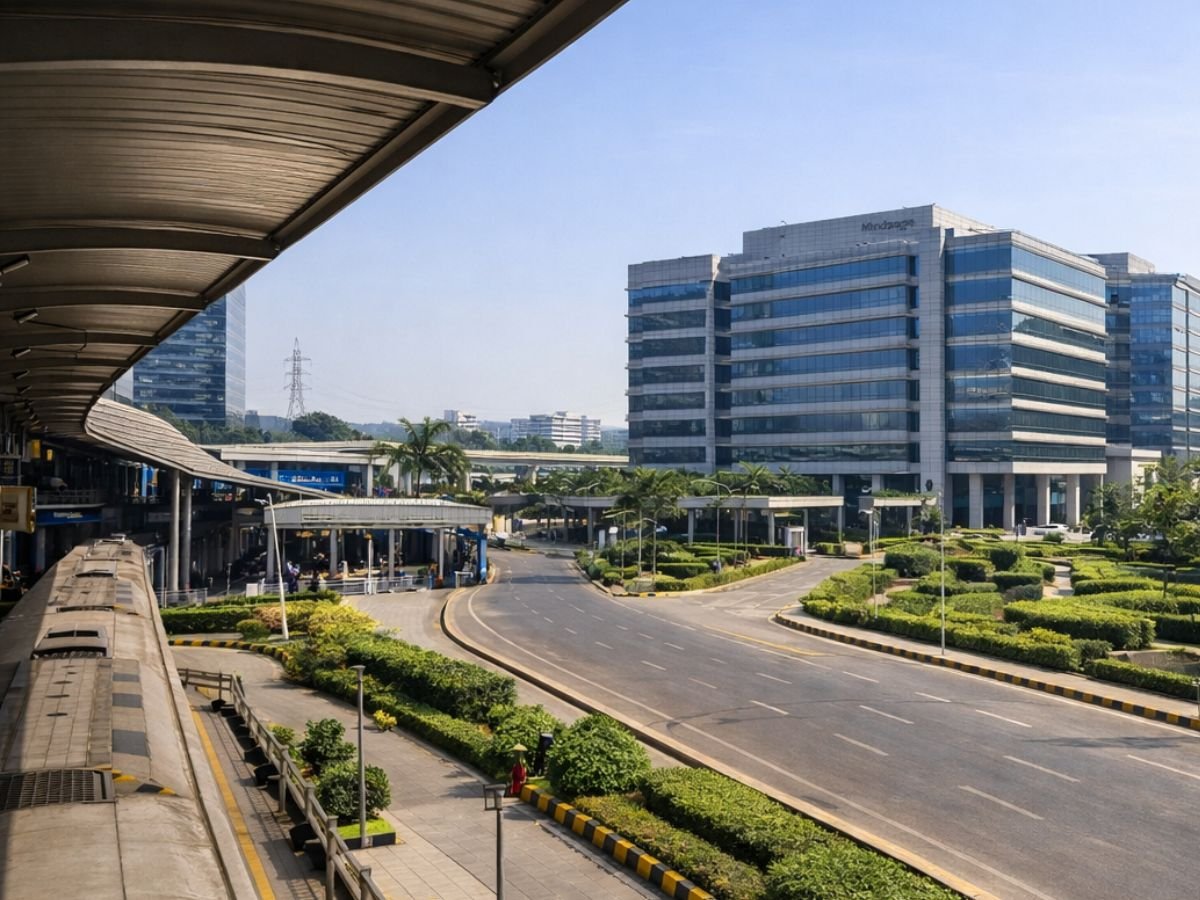
For heavy rail-based workforce movement, Airoli East is still usually the safer choice. For mixed road-plus-rail commute patterns, especially from the Thane side, Airoli West becomes much more competitive.
This is one of the most important decision points in the whole comparison. Many office users make the mistake of looking only at rent or capital value. But a bad commute profile can quietly damage the office experience every single day.
| Commute Factor | Airoli East | Airoli West |
|---|---|---|
| Best fit for station-led office movement | Stronger | Improving, but more selective |
| Best fit for Harbour-side employee flow | Stronger | Weaker |
| Best fit for Thane-side movement | Good | Stronger in many cases |
| Walkability from key station access | Better in prime campus-linked pockets | Better than before, but still building-dependent |
| Need for shuttle or last-mile support | Lower | Can still matter depending on exact property |
| Suitability for client visits by road | Good | Often strong, especially from Thane/Mulund side |
In plain terms, East is better where employee dispersal from the station is a major business need. West becomes attractive where the workforce is more mixed, senior-heavy, road-commute-heavy, or clustered around Thane-side catchments.
Which side feels stronger for Grade A leasing demand and tenant quality?
Airoli East is usually stronger for established Grade A office comfort. Airoli West is increasingly stronger for modern enterprise specification.
This is an important distinction. East gives many investors and occupiers confidence because it already has a mature institutional office image. West, however, is becoming more relevant because newer demand is often not just looking for “Grade A” in the old sense. It is looking for better campuses, bigger plates, and stronger building performance.
So the answer here is not one-dimensional:
- East is stronger for legacy leasing depth and institutional trust
- West is stronger where occupiers want fresher, more modern, enterprise-ready stock
For investors, this means East often feels safer, while West can feel more forward-looking.
Is Airoli East always better for investors, or can Airoli West give better entry value?
Airoli East is usually the safer harbour for investors. Airoli West can be the smarter growth play, but only when chosen carefully.
If your goal is predictable leasing, better-known tenant demand, and lower storytelling risk during resale or reletting, East usually wins. It has a more mature leasing base, stronger institutional reputation, and a clearer demand story.
But if your goal is to enter selectively into newer stock where the price is not yet fully reflecting future micro-market strengthening, West can offer better entry logic.
The key point is this: lower price alone is not value. A lower-priced office in a weaker or more fragmented building can become a yield trap. A slightly lower entry price only helps if the building can still attract serious tenants.
What the investor should actually compare
Do not compare East and West only on per square foot capital value. Compare them on these real questions:
- how easy is it to lease the space to a quality tenant
- what type of tenant will actually take that building
- how long will vacancy likely last if the tenant exits
- who manages the common areas and infrastructure
- whether renewal and escalation logic is likely to hold
- how strong resale liquidity will be later
Airoli East generally scores better on stability. Airoli West can score better on upside. The better pick depends on your risk appetite.
What kind of office buyer should choose Airoli East?
Airoli East is the better fit for buyers and occupiers who want predictability, institutional comfort, and stronger station-linked usability.
It usually suits:
- large occupiers with high employee count
- IT, ITeS, BPO, and process-driven companies
- investors who prefer stable leasing over speculative upside
- businesses that want a more formal and established office address
- occupiers who do not want to depend too much on private shuttle logic
- professional firms that value proven commercial behaviour more than novelty
If your first priority is friction reduction, East is usually the more dependable answer.
What kind of office buyer should choose Airoli West?
Airoli West is better for buyers and occupiers who can think more selectively and are comfortable choosing at the building level.
It usually suits:
- tech-led firms that prefer newer offices
- enterprise occupiers who value modern campus planning
- self-users whose core team comes from Thane or nearby central suburbs
- investors looking for selective growth potential rather than only stability
- buyers willing to do deeper due diligence instead of relying only on location reputation
- occupiers who care more about road connectivity and modern stock than pure station advantage
West works best when the buyer knows exactly why they are choosing it.
What investors usually miss when comparing Airoli East and Airoli West
The biggest mistake investors make is assuming that all Airoli offices share the same leasing power. They do not.
The second biggest mistake is chasing headline yield without checking what kind of tenant will actually lease that unit.
Airoli has a real difference between managed campus-style assets and fragmented strata stock. This difference affects almost everything: tenant quality, lease duration, vacancy risk, maintenance standards, and renewal confidence.
The yield trap in weaker office stock
An office can look cheaper and still be a worse investment.
If the building is fragmented, maintenance is inconsistent, security is average, and the common areas feel tired, serious occupiers may not want it even if the location sounds good on paper. That can leave the owner with longer vacancy periods and weaker bargaining power.
Tenant stickiness matters more than brochure promise
A long-term tenant in a well-managed campus is usually worth more than a slightly higher theoretical rent in a building with weak retention.
Institutional environments usually attract tenants who stay longer, expand internally, and accept structured escalation patterns. Smaller fragmented offices often face more churn. That churn reduces real return.
Replacement demand is a practical issue
If a major tenant leaves a strong managed campus, the building still has market pull. If a tenant leaves a weak standalone unit, the owner may struggle alone for months.
That is why investors should judge the micro-market by replacement demand, not just by the first lease.
How to compare one East office and one West office properly before buying
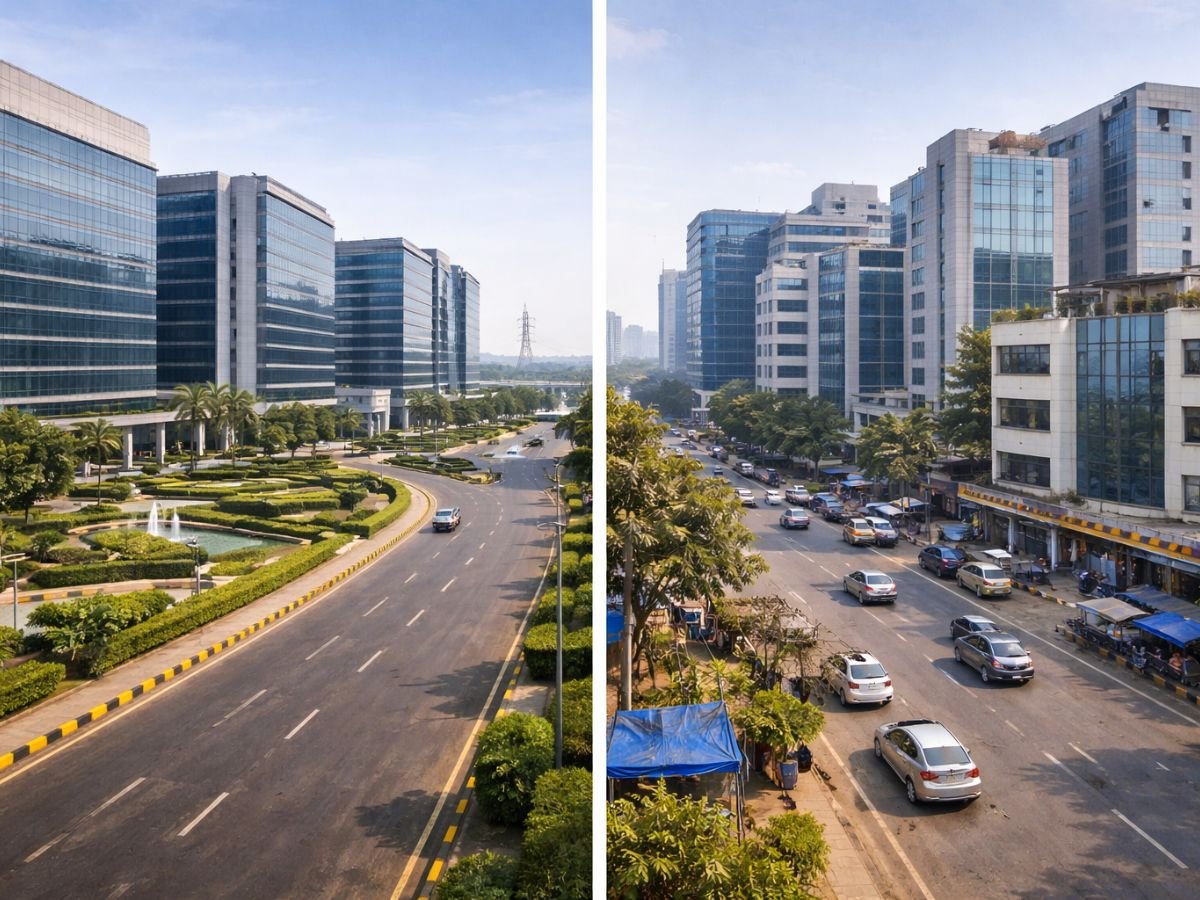
Before buying, do not trust the side label. Compare the actual office properly.
Use this checklist:
Location checks
- Walk from the nearest station to the building yourself
- Check whether the route is easy, safe, and practical after office hours
- Assess actual road access, not just Google Maps optimism
- Check where the workforce is likely to come from: Harbour side, Thane side, or mixed catchment
Building checks
- Verify whether it is a managed campus or fragmented strata building
- Check power backup quality, lift efficiency, fire safety, and common area maintenance
- See whether the building still feels current for modern occupiers
- Compare floor plate efficiency and entry experience
Tenant and rent checks
- Ask what type of tenants are already in the building
- Check whether the quoted rent is actually being achieved
- Compare vacancy signs in the same campus or same pocket
- Understand whether demand comes from serious occupiers or mostly small short-term tenants
Legal and paperwork checks
- For new or under-construction assets, verify MahaRERA details where applicable
- Use IGR Maharashtra transaction logic for benchmarking sale documentation and deal reality where relevant
- Check title chain, occupancy status, and any restrictions linked to the building or asset type
- Confirm whether the office is being sold at a brochure premium disconnected from real market evidence
This part matters because a wrong office purchase is usually not caused by the wrong node alone. It is caused by weak due diligence inside the right-looking node.
Real-world decision examples: who should choose East and who should choose West?
Example 1: A 300-employee IT services company
Airoli East is usually the better choice.
A large team needs reliable, repeatable daily movement. A stronger station-linked campus setup reduces shuttle cost, improves convenience, and supports a more scalable workforce model. East simply handles this use case more naturally.
Example 2: A 20-seat CA, consulting, or advisory office
Airoli East usually makes more sense.
A smaller professional office benefits from a more familiar commercial ecosystem, easier client understanding of the location, and a more straightforward business-use identity.
Example 3: An investor looking for lease income with moderate safety
Airoli East is usually the safer answer, but only if the building quality is strong.
If the investor wants better capital protection, easier tenant storytelling, and a more mature market narrative, East is usually better. The key is not just to buy in East, but to buy in the right East asset.
Example 4: A self-user business owner living in Thane
Airoli West can be the smarter choice.
If the owner and core team travel mainly by private vehicle or from the Thane side, West may reduce daily commute pain significantly. In that case, paying a premium for East-side station logic may not be necessary.
Example 5: A selective investor chasing future-ready stock
Airoli West can work better.
If the investor understands building quality, tenant profile, and emerging access improvements, West may offer a better long-term setup in newer stock than an average asset in the East.
Airoli East vs Airoli West: final verdict by use case
| Use Case | Better Side | Why It Usually Wins |
|---|---|---|
| Large employee-heavy office | Airoli East | Better station-linked daily usability |
| Safer office investment | Airoli East | Stronger institutional leasing depth |
| Modern enterprise campus preference | Airoli West | Newer stock and fresher building experience |
| Value-driven self-use from Thane side | Airoli West | Better commute logic for that catchment |
| Stable long-term tenant profile | Airoli East | Better legacy demand and market familiarity |
| Selective capital appreciation play | Airoli West | Better chance of re-rating in the right asset |
| Small professional office | Airoli East | More straightforward commercial practicality |
| Building-led rather than side-led selection | Depends | The specific building can outweigh the side |
Conclusion
If you want the safest practical answer, choose Airoli East for institutional strength, better station-led office usability, and easier investment logic. If you are more selective and your use case supports it, Airoli West can be the better pick for newer stock, Thane-side commute advantage, and selective upside.
So the real answer is not “East is good, West is bad.” The real answer is this: East is usually better for mass-market office logic and stable investment comfort, while West is better for targeted modern occupiers and selective value-driven investors. In Airoli, the smartest decision comes from matching the side to the office objective, not from blindly following the stronger label.
FAQs
Frequently Asked Questions