
Agreement to Sale vs Sale Deed in Navi Mumbai: Legal Differences
An Agreement to Sale and a Sale Deed are not the same in Navi Mumbai. An Agreement to Sale usually records the deal, price, timelines, and obligations. A Sale Deed, or in some CIDCO-linked cases another final transfer instrument such as an assignment-style deed, is what usually completes the legal transfer of rights. That is why a registered agreement can protect you, but still not be the last paper needed to prove clean, marketable ownership.
This difference matters more in Navi Mumbai than many buyers first realise. In a simple freehold resale, the answer is fairly clean. But in under-construction projects, older cooperative society flats, and CIDCO-linked properties, buyers often hear terms like registered agreement, conveyance, assignment, transfer order, or society transfer and assume all of them mean ownership has already passed. That is exactly where confusion starts.
Quick Summary
Here is the shortest practical answer.
| Point | Agreement to Sale | Sale Deed |
|---|---|---|
| What it is | A promise that the sale will happen on agreed terms | The document that usually completes the sale |
| Legal effect | Creates contractual rights and obligations | Transfers ownership in a standard sale |
| When it is used | Before final transfer | At final transfer stage |
| What it records | Price, payment schedule, property details, possession conditions, penalties | Final transfer of title, rights, and seller-to-buyer ownership handover |
| Does it make you owner? | Usually no | Usually yes, in a standard freehold transaction |
| Can it still be registered? | Yes, and in Maharashtra it often is | Yes, it must be registered for standard immovable property transfers above the statutory threshold |
| Navi Mumbai nuance | Very important in builder deals and staged transactions | In CIDCO-linked or leasehold situations, the final paper may be called something else, but it still must be the final transfer instrument, not just the agreement stage paper |
Under Section 54 of the Transfer of Property Act, a contract for sale does not by itself create any interest in or charge on the property, while sale of tangible immovable property of the relevant value is to be made by a registered instrument. Under RERA, the promoter cannot take more than 10% without first executing and registering an Agreement for Sale, which is one reason buyers think the agreement stage itself is the finish line. It is not.
Why so many Navi Mumbai buyers think both documents mean the same thing
The confusion is not random. Maharashtra’s process itself creates it.
In many transactions, the agreement stage feels heavy and official. The buyer pays significant stamp-duty-linked charges, goes through registration formalities, signs biometrically, and receives a registered document. The Maharashtra stamp law even contemplates that when a later conveyance follows an agreement of sale, the duty already paid on that earlier agreement can be adjusted toward the later conveyance. So naturally, a buyer feels, “If I have already paid this much and registered the paper, surely I am already the owner.” That emotional logic is common, but legally incomplete.
The second reason is local language. In Navi Mumbai resale discussions, people casually say “registered agreement ho gaya,” as if the whole title issue is over. In under-construction projects, buyers may only deal with the Agreement for Sale for a long period. In CIDCO-linked properties, the final transfer paper may not even be labelled like a clean freehold-style Sale Deed. So the words change, the property format changes, and buyers start treating all registered papers as equal. They are not.
A practical way to think about it is this: the agreement stage usually locks the transaction. The final deed stage usually closes the title.
What an Agreement to Sale actually does and what it does not do
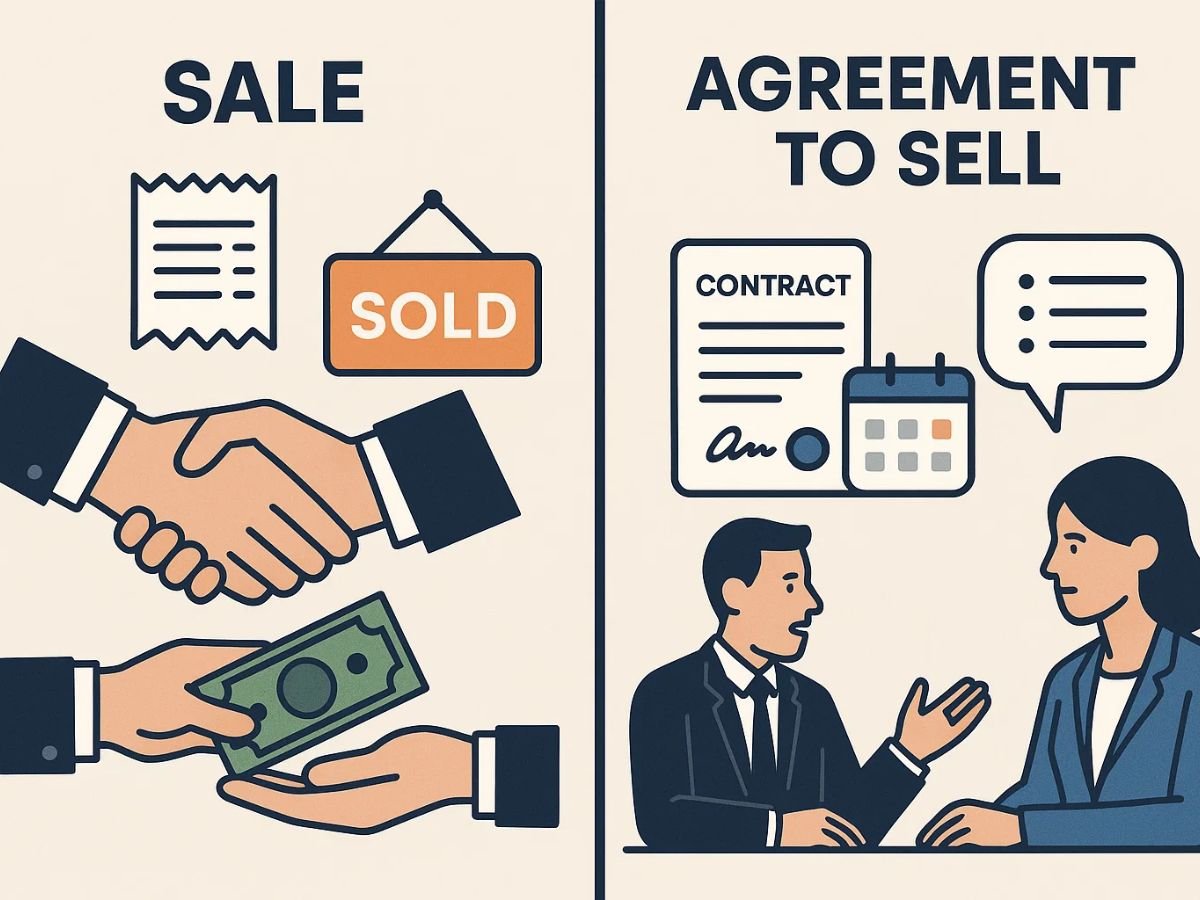
An Agreement to Sale is not a useless paper. Far from it. It is the rulebook of the transaction.
Rights it usually creates
It usually records the identity of the property, the agreed price, payment schedule, possession timing, default consequences, and obligations of both sides. In builder projects covered by RERA, the law specifically requires a registered Agreement for Sale before a promoter takes more than 10% of the cost, and the Act links buyer rights, payment obligations, possession expectations, and later conveyance to that agreement.
So yes, this document matters. It can help the buyer enforce the deal. It can protect the buyer against sudden price changes or vague verbal promises. In a MahaRERA project, it is a central document, not a side paper. The Agreement for Sale also sits inside a broader RERA structure where the promoter must later execute the registered conveyance deed and hand over title documents within the statutory framework.
Limits buyers often ignore
But this is the part many people miss: the agreement is still not the same as final ownership transfer.
Section 54 is blunt on this point. A contract for sale does not by itself create an interest in the property. So even if the agreement is registered, even if possession is promised, even if most of the money is paid, that does not automatically convert the buyer into the full legal owner for every later purpose.
What this means in real life is simple. A registered agreement can give you rights against the seller. It does not automatically cure title defects, replace the final transfer instrument, or guarantee that every downstream authority will treat you as the fully updated owner.
What a Sale Deed actually completes in a property transaction

A Sale Deed is the paper people often think they already have when they only have an agreement.
In a standard sale, the Sale Deed is the registered instrument that transfers ownership from seller to buyer. This is the document that usually makes future resale, financing, record updating, and title verification far easier. It is the point where the seller’s ownership rights are formally passed on, not just promised for later.
In under-construction cases, the exact final instrument may sit inside a larger conveyance framework under RERA. Section 17 of the Act says the promoter shall execute a registered conveyance deed in favour of the allottee and hand over possession and title documents within the statutory timeline, generally within three months from the occupancy certificate where no local law provides otherwise. That is the law itself telling you the agreement stage and the final title-transfer stage are different stages.
Ownership transfer
For a normal resale flat that is not trapped in leasehold complications, the Sale Deed is usually the strongest ownership paper in the individual buyer’s chain.
That is why buyers who stop at the agreement stage often get a rude surprise later. When they try to resell, mortgage, update records, or satisfy a careful lawyer’s title review, the missing final transfer paper becomes the real problem.
Why later mutation and record updates still matter
Even after the final deed, the practical job is not fully over.
NMMC’s property-tax system itself recognises services such as issuance of transfer of property certificate, new property taxation, tax demand preparation, and related property-tax actions. That tells you something important: registration of the deed and updating local records are connected, but they are not the same administrative step.
So the Sale Deed usually completes ownership transfer, but the local paperwork trail still has to catch up.
Which document matters more in these four Navi Mumbai situations
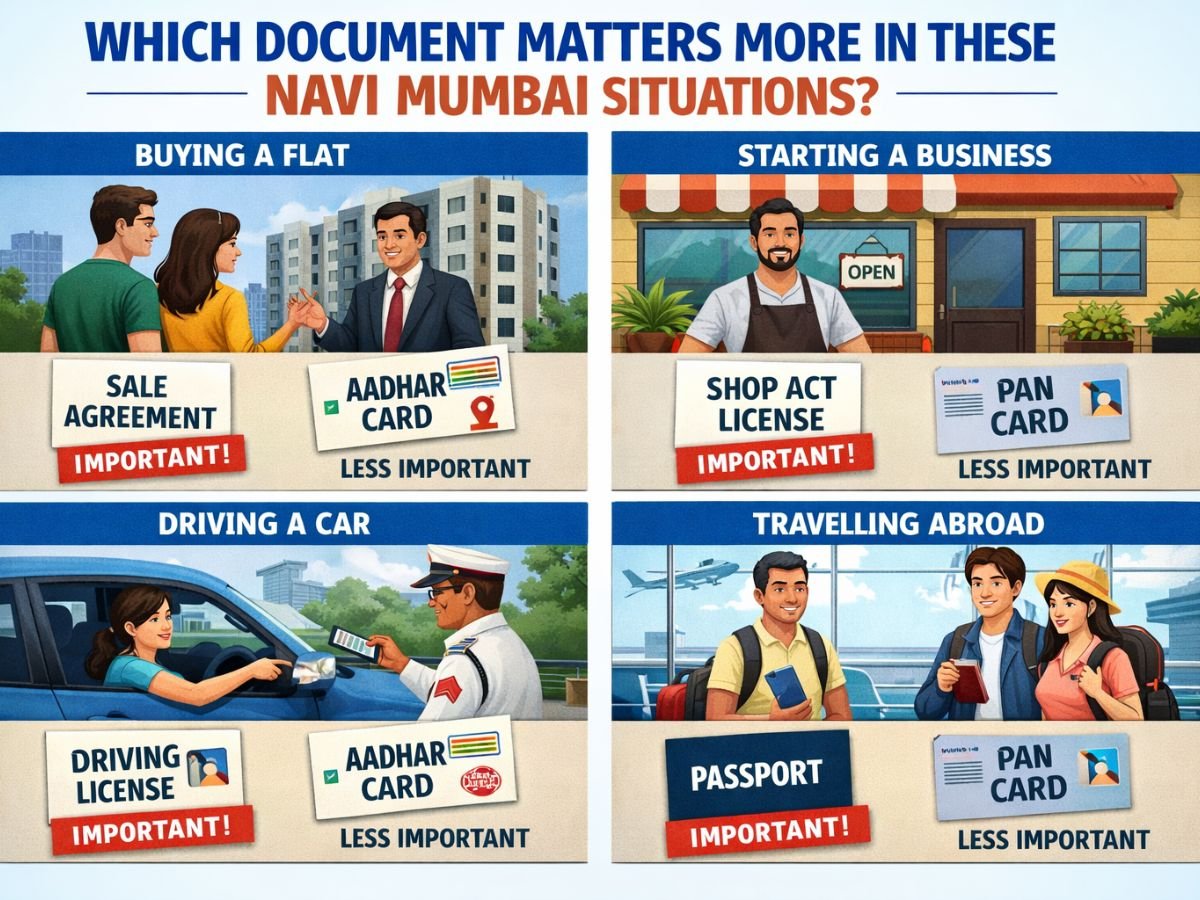
| Situation | Intermediate paper that matters early | Final paper that matters most | What buyers in Navi Mumbai should understand |
|---|---|---|---|
| Under-construction flat in a MahaRERA project | Registered Agreement for Sale | Later conveyance / final title-transfer instrument under the project structure | The agreement is mandatory and important, but RERA still separately requires conveyance/title transfer later |
| Resale flat in a housing society | Sometimes token receipt or MOU first, then agreement | Sale Deed | In standard resale, the Sale Deed is usually the document that closes the transfer |
| CIDCO-linked or leasehold property | Agreement to assign / transfer-stage paperwork may appear | Assignment-style or other final transfer instrument recognised for that property format | Do not assume a plain freehold-style label tells the full story |
| Investor exit before project completion | Original allotment and assignment paperwork matter | Deed of Assignment / transfer instrument as structured in the transaction | Rights may be transferred before a conventional resale-style deed stage arrives |
Does a registered agreement make you the owner in Navi Mumbai
Usually, no.
That is the clearest answer.
A registered agreement is evidence of a registered contract. It is not automatically proof that ownership has fully passed. Section 54 says the contract for sale does not by itself create an interest in the property. The Registration Act separately recognises that contracts relied on for part performance under Section 53A must be registered, but that protection is not the same thing as saying the buyer now holds full, marketable title.
In plain language, Section 53A can help a buyer defend possession in a qualifying case. It does not convert an agreement into a perfect title document. So if someone says, “Don’t worry, agreement registered hai, owner ban gaye,” that is too loose to trust without checking what final transfer instrument the property actually requires.
This is especially important when possession has already been given. Keys in hand can create psychological ownership. Legal ownership still depends on the correct title chain.
What banks, societies, CIDCO-side records, and local authorities may still look for after the agreement stage
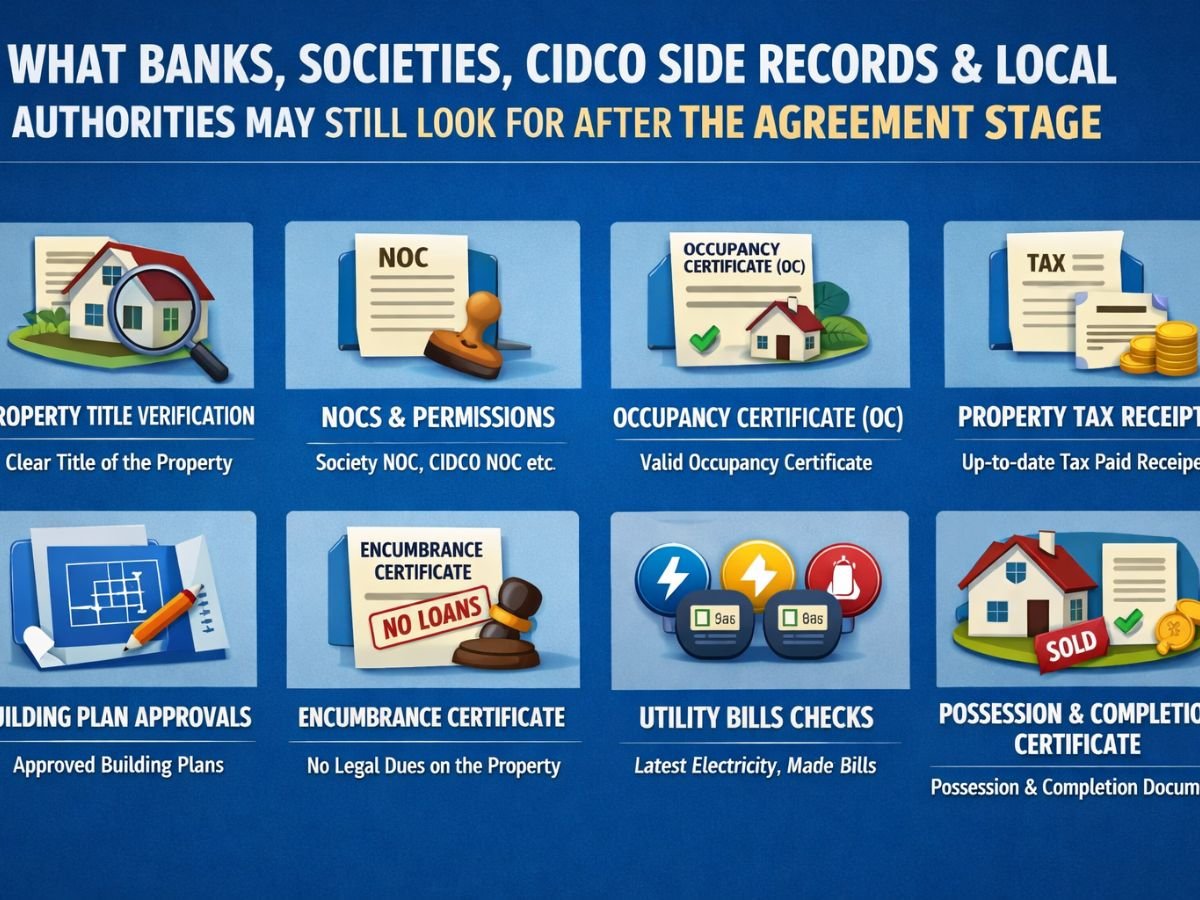
A property transaction does not end just because the agreement is signed.
Loan and disbursement angle
In practice, a lender cares about the quality of the title chain, not just whether one paper exists. The closer the buyer is to a proper final transfer instrument and a clean document trail, the easier the financing conversation usually becomes. A registered agreement may help start the process, but it does not erase missing title links.
Society transfer and share certificate angle
In a resale society flat, the society’s records matter for day-to-day ownership life. Transfer fee and transfer premium issues also matter. Maharashtra’s housing guidance records that transfer premium is capped and, in municipal corporation areas, the maximum rate shown is Rs. 25,000. That is important for Navi Mumbai buyers dealing with old societies that sometimes try to dress up extra collections under other names.
So even after the final deed, the buyer should still ensure the society updates membership and share-certificate records properly. The agreement alone usually does not finish that practical task.
Mutation / property record / authority update angle

At the municipal side, NMMC’s own property-tax portal shows transfer-related services as separate citizen actions. That is another reminder that a registered transaction paper and municipal record updating are not automatically the same event. Buyers should track both.
For a Navi Mumbai buyer, the practical takeaway is simple: document execution, society update, and municipal record update are three related but separate steps.
The most common risk situations buyers and sellers face
This is where money gets stuck.
Heavy payment made before final transfer paper
A buyer pays 80% to 95% because the agreement is registered and the deal feels secure. But the final deed, assignment paper, or authority-compliant transfer never gets completed on time. Now the buyer has paid heavily, yet title closure is still pending.
Possession given but title chain still weak
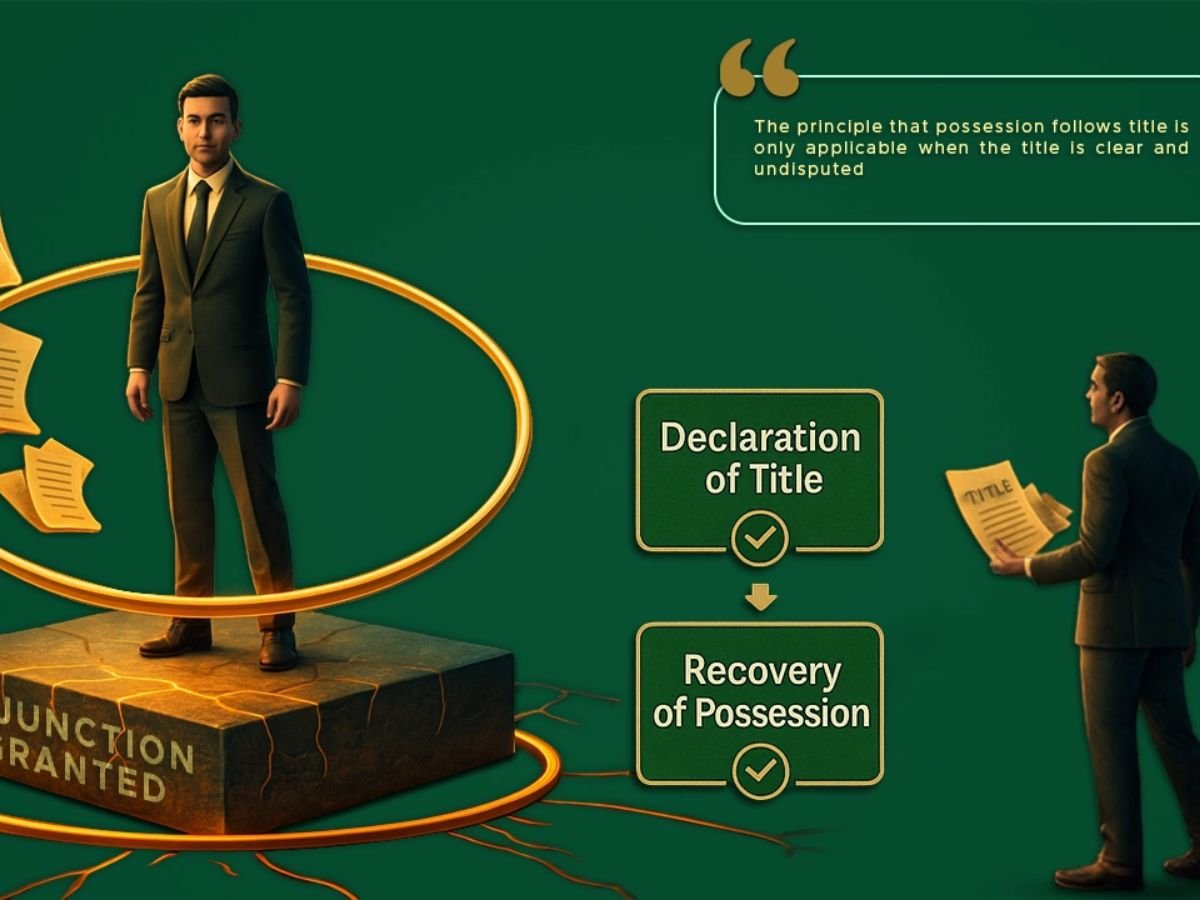
This is common enough to worry about. Somebody gets possession of a flat, starts interior work, maybe even shifts in, but one old transfer link is missing or the correct final instrument was never executed. The buyer feels settled. The title file is not.
Confusion between sale deed, conveyance, and assignment
These terms are not always interchangeable. IGR Maharashtra’s own draft document library separately lists Conveyance Deed, Deed of Assignment, Agreement of Assignment, and transfer deed formats. That is a strong signal that the label matters less than the legal role of the document in that specific transaction chain.
Old CIDCO or leasehold cases with incomplete transfer history
This is where Navi Mumbai becomes very local. If the property is CIDCO-linked, older, or transferred through multiple owners over time, the risk is not just “which paper name is correct?” The real risk is whether the chain is complete.
A broken chain is a title problem, not a vocabulary problem.
Before signing or paying, what should you verify first
Before you pay serious money, check these points.
- Ask what the final transfer instrument will be for this exact property type. Do not accept a vague “agreement ho jayega” answer.
- Verify whether the property is part of a standard resale, under-construction RERA project, or a CIDCO-linked / assignment-style transaction.
- For under-construction projects, verify the MahaRERA registration, and understand that the agreement stage and later conveyance stage are different under the Act.
- For resale transactions, ask for the registered history, Index II, and prior transfer papers. IGR Maharashtra’s e-Search and certified-copy systems exist precisely because document-chain checking matters.
- For society flats, confirm that society dues, membership transfer, and share-certificate updating are not being treated casually.
- For NMMC-side compliance, remember that property-tax transfer and related services are separate actions. Registration is not the end of local paperwork.
- If the property is CIDCO-linked, insist on clarity around the exact transfer route and all authority-specific papers.
- If the seller or broker becomes evasive when you ask for the full document chain, stop and get a local property lawyer to review before making payment-heavy commitments.
When this is a document issue and when it is actually a title issue

This distinction can save a buyer from a very expensive mistake.
A document issue is when the naming is messy but the legal chain is still complete. For example, somebody loosely says sale deed, but the correct registered paper for that property type is an assignment-style deed and all approvals, registrations, and chain papers are in place. That is manageable.
A title issue is when the chain itself is broken. Missing previous transfer papers. Unclear seller authority. No proper final instrument. Unresolved charge. Mismatch between what is occupied and what is legally transferred.
So do not ask only, “Is it agreement or deed” Ask the better question: “What is the final title-transfer document for this property, and is the chain complete from the first owner till today?”
That is the difference between paperwork confusion and ownership risk.
Conclusion
If you remember only one line, remember this: an Agreement to Sale usually secures the deal, but a Sale Deed or the correct final transfer instrument usually secures the title.
That distinction is the whole game.
In Navi Mumbai, this matters even more because the city has a mix of builder projects, old cooperative society stock, and CIDCO-linked property structures where the final paper trail is not always simple. So do not judge ownership by one registered document alone. Judge it by the complete transfer path.
If the transaction is a standard resale, the Sale Deed is usually the real ownership-closing paper. If the transaction is under-construction, the agreement stage is important but RERA still expects later conveyance. If the transaction is CIDCO-linked, ask for the exact assignment or transfer route and verify it properly. And if the document chain feels confusing, assume it needs checking, not blind trust.
That is the safest, most practical way to read this topic in Navi Mumbai.
This article is a practical explainer for Navi Mumbai readers and not a substitute for case-specific legal advice. For leasehold, CIDCO-linked, disputed, or document-gap cases, get a local property lawyer to review the full chain before making payment-heavy commitments.
FAQs
Frequently Asked Questions