
Airoli vs Vashi for Office Cost, Access and Talent Catchment
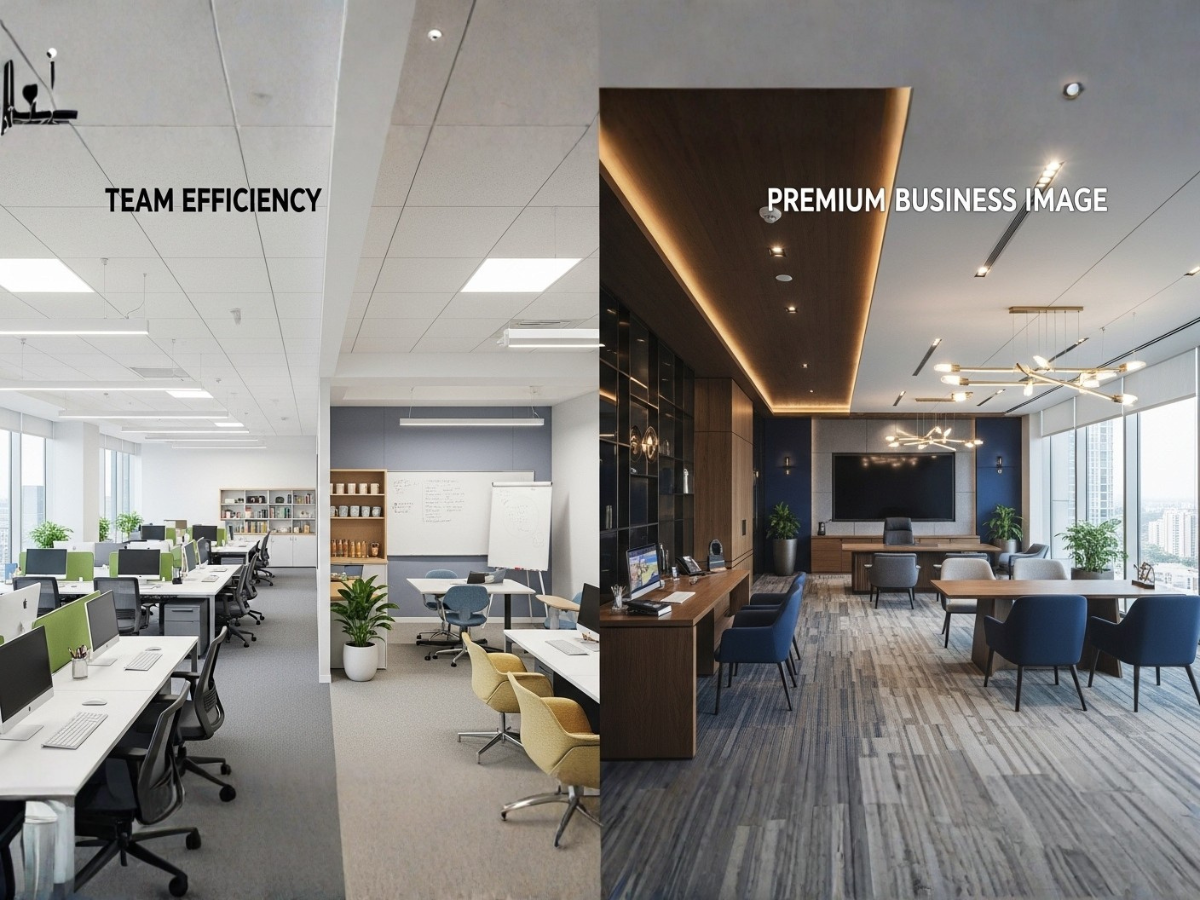
If your priority is lower occupancy cost, bigger office formats, and easier access to talent from Thane, Mulund, Kalyan, and the eastern side, Airoli usually makes more practical sense. If your priority is central access, client convenience, business familiarity, and a stronger mixed-use office environment, Vashi usually works better. The right choice is not about which node is “better” in general. It depends on whether you are optimizing for cost, commute, hiring, or business-facing convenience.
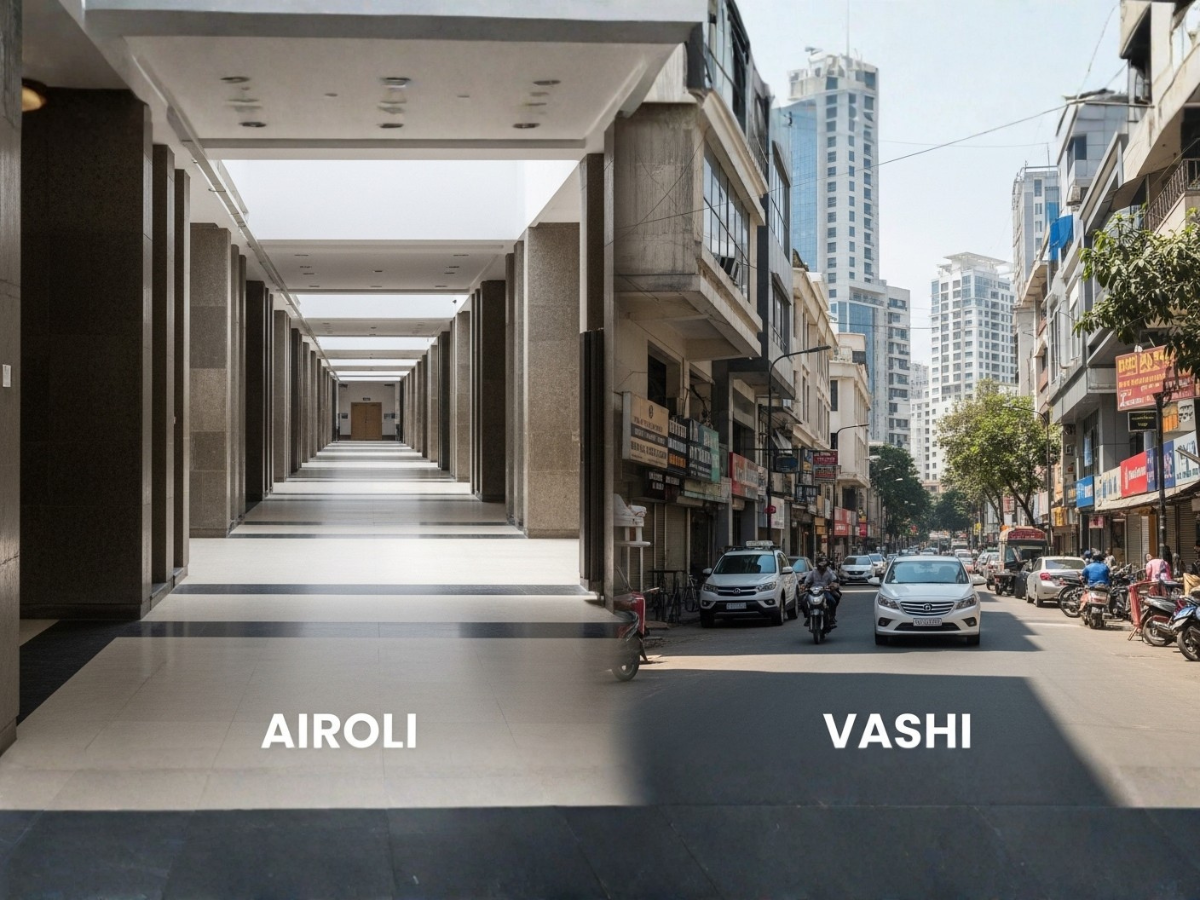
A lot of buyers and tenants compare Airoli and Vashi as if both serve the same office user. They do not. In Navi Mumbai’s office market, Airoli and Vashi solve different business problems. One is stronger for scale and corridor efficiency. The other is stronger for centrality and client movement.
That is exactly why this comparison matters.
Airoli or Vashi for Office Space? The Practical Answer First
Here is the shortest honest answer.
- Choose Airoli when your office is team-heavy, operations-heavy, IT-led, or dependent on staff coming from Thane and the eastern corridor.
- Choose Vashi when your office is more client-facing, meeting-heavy, centrality-sensitive, or dependent on broader cross-city access.
Quick Summary Table
| Comparison factor | Airoli | Vashi | Practical winner |
|---|---|---|---|
| Base office cost | Usually lower quoted rent bands | Usually higher quoted rent bands, especially around Sector 30A | Airoli |
| Large floor plates | Stronger | More limited and costlier | Airoli |
| Daily client convenience | Good in the right buildings, but not the main strength | Stronger due to centrality and interchange-style access | Vashi |
| Staff access from Thane, Mulund, Kalyan, Dombivli | Stronger | Weaker for daily east-side commute | Airoli |
| Staff access from central/south Mumbai and Panvel side | Decent but not ideal for all teams | Stronger | Vashi |
| IT / back-office suitability | Stronger | Selective | Airoli |
| Mixed SME office use | Good but more specialized in many pockets | Stronger and broader | Vashi |
| Small-ticket office buying options | More selective | Wider strata-style options | Vashi |
| Business prestige and address familiarity | Good in major office parks | Stronger legacy recognition | Vashi |
| Long-term office investment logic | Can work, but stock is more ecosystem-specific | Broader tenant pool, but high entry and exit friction | Depends on unit and holding period |
Why This Comparison Is Really About Cost, Commute and Hiring, Not Just Location
A lot of office comparison content fails because it treats location as a branding line. For actual office users, that is not enough.
An office decision in Navi Mumbai usually sits on three real layers:
1. Total cost of occupation 2. Daily access for staff and clients 3. Talent catchment and hiring comfort
That is why a simple sentence like “both have good connectivity” is almost useless. Good connectivity to whom? Staff from Thane? Clients from South Mumbai? Sales teams moving across the MMR? A 100-seater operations team? A consulting office where founders meet clients every day?
Those answers change everything.
Airoli has grown as a more institutional office corridor. Vashi remains a more mixed, familiar, central commercial node. So the decision is less about map distance and more about business mechanics.
Which Node Usually Costs Less for Office Occupation in Real Terms?
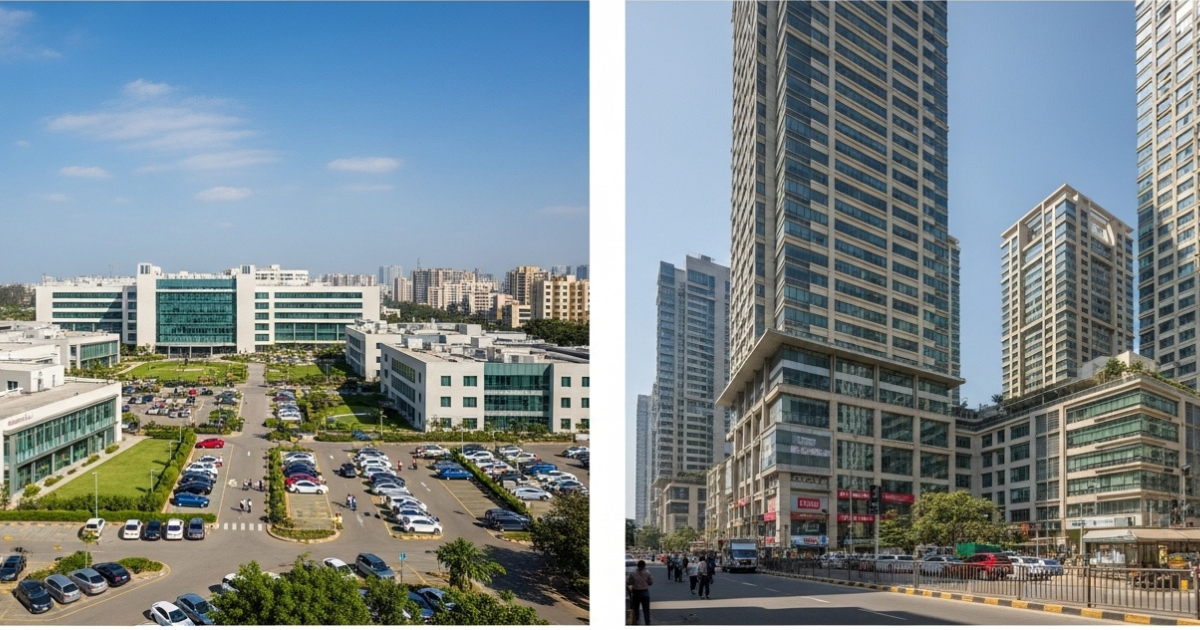
At the base level, Airoli is usually cheaper than Vashi for office occupation, especially when the requirement is larger and more operational in nature.
The Step 2 research supports quoted Airoli office rent ranges roughly around ₹57 to ₹114 per sq ft per month, depending on building type, office ecosystem, and fit-out condition. Vashi, especially stronger station-linked or premium office stock, can sit much higher at around ₹140 to ₹220+ per sq ft per month in quoted asking bands.
But that still does not answer the real question.
The real question is not “Which node has lower rent per sq ft?” The real question is “Which node gives better value for usable office function?”
Base rent or price is only one part of office cost
This is where many tenants and buyers get trapped.
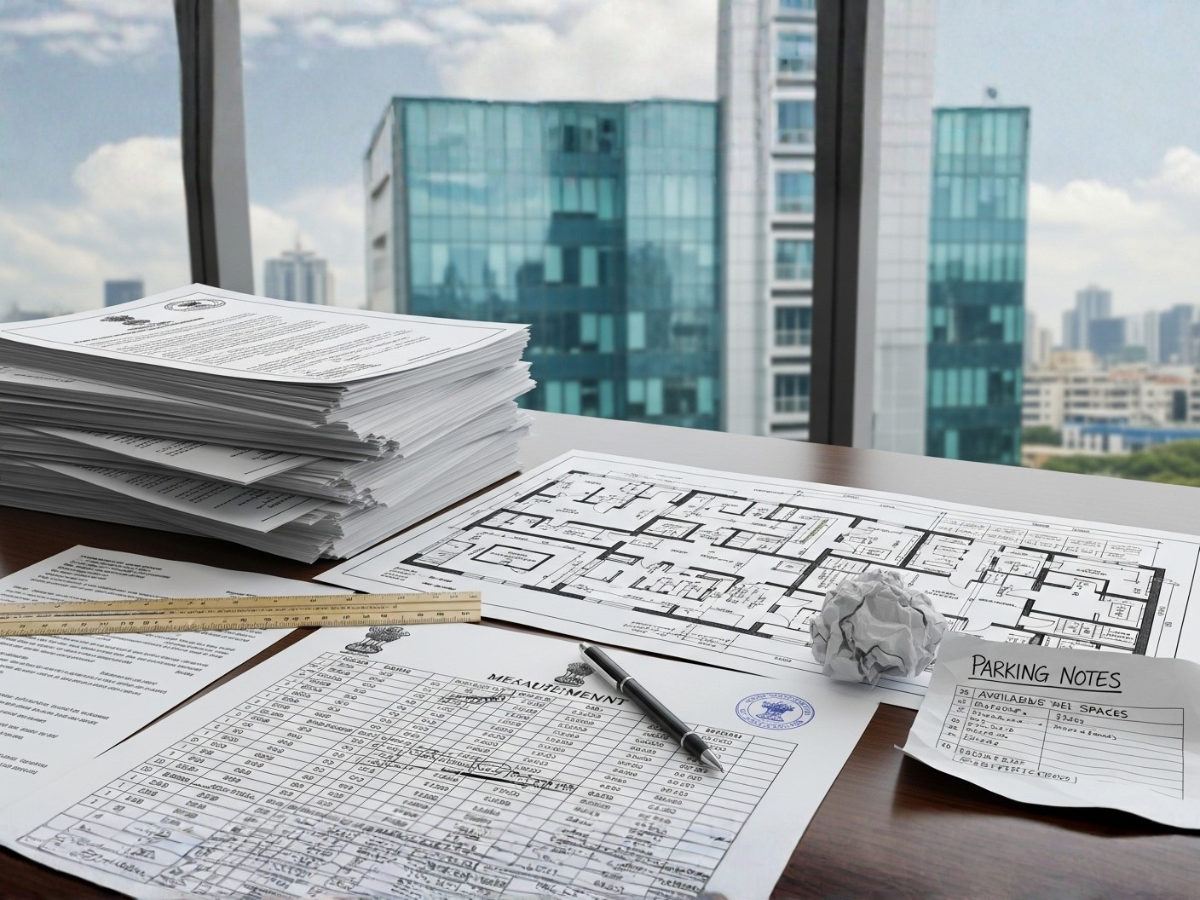
Office portals and brokers usually push the headline size and the headline rate. But a commercial office is not judged only by advertised super built-up area. What matters is the usable carpet area, because that is the space your team actually works in.
The research dossier notes that loading factors in Navi Mumbai commercial stock often range around 35% to 45%, and in some cases can go even higher. That means a 1,000 sq ft advertised office may give you only around 550 to 650 sq ft of usable carpet space.
So yes, Vashi may already look expensive on quoted rent. But once loading is considered, some modern premium-looking towers can become far more expensive in real operational terms than the first brochure suggests.
Where fit-out, parking, maintenance and layout efficiency change the answer
This is where Airoli often gets stronger.
In larger institutional office environments, especially where office stock is designed for bigger users, the cost structure is often easier to spread across a larger team. In practical terms, the per-seat economics can become more manageable.
In Vashi, especially in premium standalone towers or glass-heavy office buildings, the occupier may face:
- higher quoted rent
- steeper monthly common area maintenance
- more expensive parking reality
- less forgiving unit efficiency
The dossier notes that maintenance charges can range roughly from ₹10 to ₹25+ per sq ft per month, and some premium Vashi buildings can create very heavy monthly maintenance outgo. For a small or mid-sized occupier, that becomes a serious monthly burden.
Parking also matters more than many first-time office buyers expect. In Airoli’s more institutional office environments, parking planning is often more practical. In older and tighter Vashi commercial pockets, parking stress can become a daily operational problem for staff and clients.
Why the cheaper office can become the costlier operational decision
A cheaper office on paper can become a costlier office in reality if:
- usable carpet is low
- staff commute becomes painful
- client access becomes awkward
- parking is weak
- fit-out efficiency is poor
- maintenance is heavier than expected
That is why the better question is not “Airoli or Vashi is cheaper?” It is “Which one is cheaper for the kind of office I actually need?”
For larger operations, Airoli usually wins that test more often.
Which Node Is Easier for Daily Access for Staff, Clients and Business Movement?
For broad, central, multi-directional access, Vashi usually has the stronger overall convenience edge. For corridor-style movement linked to Thane, eastern suburbs, and the Thane-Belapur belt, Airoli often works better.
That sounds similar on the surface, but the difference is practical.
Airoli’s Thane-Belapur Road and eastern catchment advantage
Airoli works very well when your office movement is naturally aligned to:
- Thane
- Mulund
- Kalyan
- Dombivli
- eastern suburban connections
- the Thane-Belapur road belt
This matters a lot for team-heavy businesses. If your employees are coming from the eastern side, Airoli reduces daily commute friction. That is not a small benefit. Over time, commute friction becomes a staffing problem, an attendance problem, and sometimes even a retention problem.
Airoli is especially strong when the office is less about frequent outside client visits and more about smooth, repeatable daily staff movement.
Vashi’s interchange-style convenience and broader familiarity
Vashi is more of a gateway node. It connects more naturally into broader city movement patterns. The dossier rightly frames this as an interchange advantage.
That is why Vashi often works better for businesses that need:
- easier Harbour Line dependence
- stronger cross-city access
- quicker executive movement
- more practical client travel from multiple sides
- central familiarity within Navi Mumbai’s commercial map
The operational impact of the Atal Setu has also made Vashi more relevant for businesses where cross-harbour movement matters. That does not mean every Vashi office is perfect. It means the node itself has stronger central movement logic.
When station access matters more than road branding
In office decisions, many people get distracted by road-facing visibility. For actual staff and client convenience, station access can matter more than main-road branding.
This is especially true in Vashi. A station-front or near-station office in a better business cluster functions very differently from a deeper, more congested internal commercial pocket.
The same is true in Airoli. A more organized institutional office environment is not the same as a random standalone office building just because both carry the Airoli name.
So access should be judged at three levels:
- node level
- micro-location level
- building-entry level
That is where good decisions happen.
Which Node Gives Better Talent Catchment for Hiring and Team Retention?
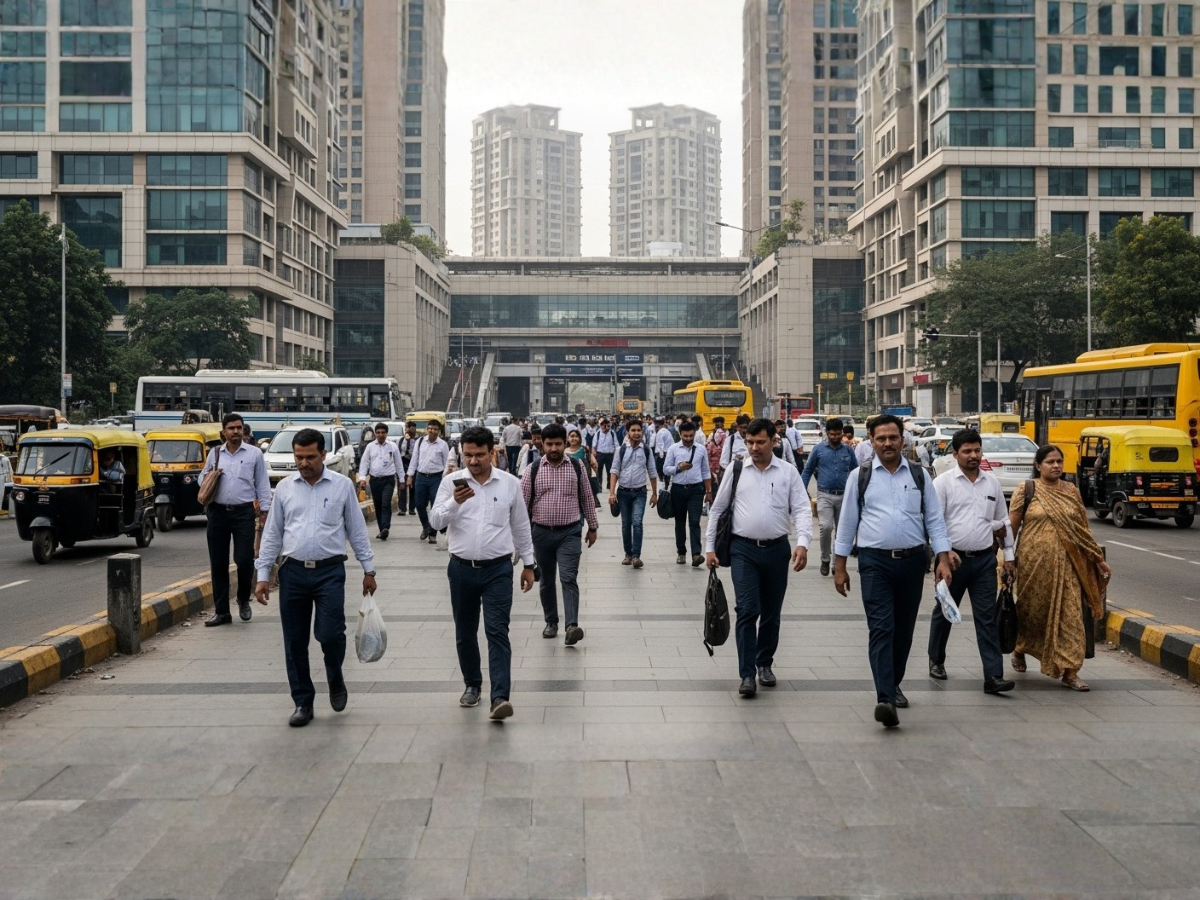
For east-side talent catchment, Airoli usually has the stronger hiring advantage. For broader central access and mixed urban movement, Vashi can work better depending on where your people come from.
This section matters because talent catchment is often treated like a buzzword. In reality, it is one of the biggest office decision variables.
Airoli for teams coming from Thane, Mulund, eastern suburbs and the industrial-office corridor
Airoli has a natural hiring pull for teams coming from:
- Thane
- Mulund
- Kalyan
- Dombivli
- eastern suburban belts
- nearby industrial and office corridors
If your business depends on engineers, operational staff, back-office teams, IT support, or larger team structures, this matters a lot. Airoli reduces the psychological and physical resistance of the daily commute.
That makes hiring easier and retention more stable.
Vashi for wider cross-Navi Mumbai and client-friendly centrality
Vashi works well when the office needs a more central feel for a broader mix of employee origins. It also works better where business activity involves more external movement, client visits, banking access, and a more established mixed commercial ecosystem.
If your team is distributed across central Navi Mumbai, the harbour line side, Panvel direction, or business users who value central station-linked access, Vashi can become the more natural choice.
Why your employee origin matters more than a map pin
Airoli vs Vashi should not be decided from Google Maps alone.
A better way to think is this:
- If most of your team will come from Thane side and eastern suburbs, Airoli is often the smarter office node.
- If your business depends on broader city access and meeting-heavy movement, Vashi often becomes easier.
Talent Catchment Snapshot
Airoli vs Vashi by Business Type: Which Office User Fits Which Node Better?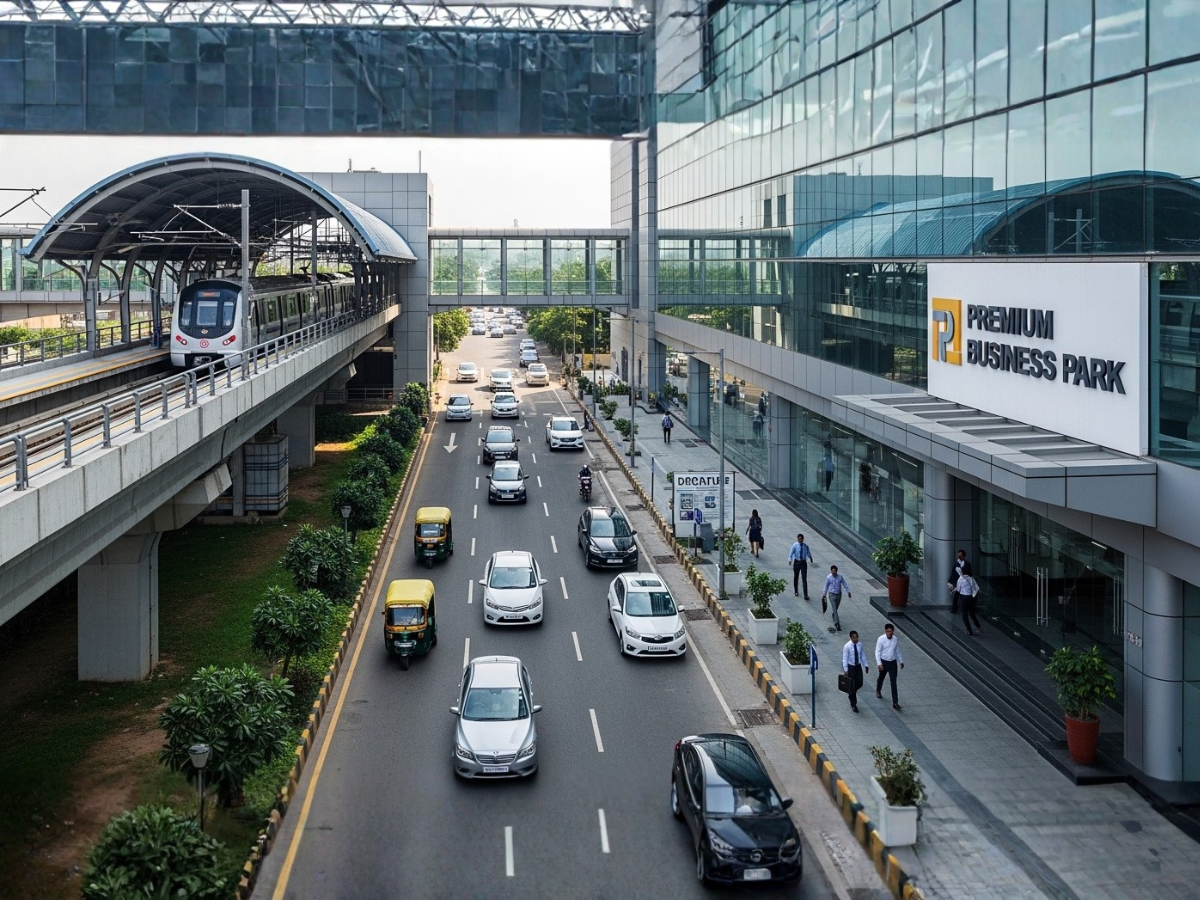 This is where the answer becomes much clearer. Airoli and Vashi are not just two office nodes. They are two different office ecosystems with different business fit. IT, back office, GCC-style, operations-heavy and larger teamsAiroli usually fits better for:
The dossier points to Airoli’s stronger institutional office ecosystem and larger leasable office environment. That matters because some businesses do not just need an office. They need a machine that runs every day without friction. Airoli suits that model better. Consultants, finance, training, agency, sales and mixed client-meeting businessesVashi usually fits better for:
Why? Because these users benefit from:
Vashi is often not the cheapest answer. But for these business types, it can still be the more practical answer. Investors looking for rentability rather than self-use comfortFor investors, the answer gets more complicated. Vashi can offer a broader tenant pool in many office-size bands, especially where smaller strata-style premium units are in demand. Airoli can work where the asset sits inside a strong office ecosystem and the tenant profile is aligned. But investors should not confuse rent demand with easy investment safety. Entry cost, maintenance, vacancy, loading, and exit mechanics all matter. Airoli Is Not One Uniform Office Market and Vashi Is Not One Uniform Office Market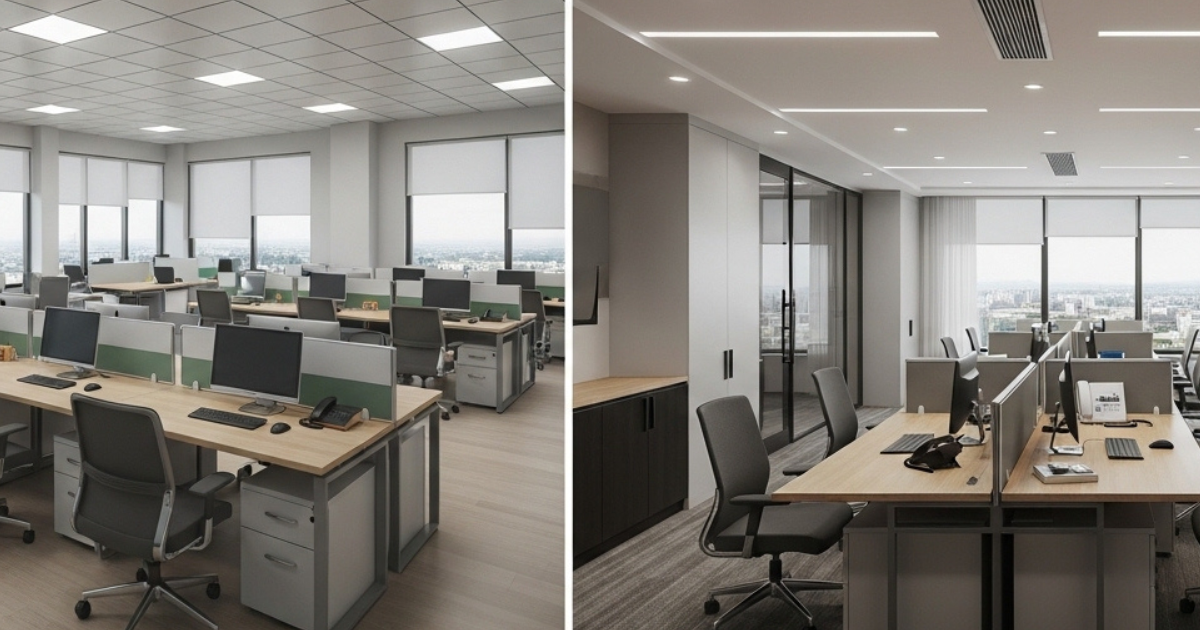 This is one of the biggest mistakes in Navi Mumbai office comparisons. “Take office in Airoli” is too broad. “Buy office in Vashi” is too broad. Each node has internal differences that completely change office performance. In Vashi, a station-facing or station-near premium office cluster behaves very differently from an older, more congested, retail-heavy internal commercial area. The difference between Sector 30A-type office appeal and older high-street business pockets is not small. One is more corporate and transit-friendly. The other can be busier, tighter, and more difficult for daily office experience. In Airoli, a known office-park environment behaves very differently from a smaller standalone building. The office feel, access discipline, parking, usable layout, and tenant profile can be completely different. So before saying Airoli is cheaper or Vashi is better connected, ask:
Sometimes the building and immediate surroundings matter more than the node name. Where Airoli Has the Edge and Where Vashi Still Wins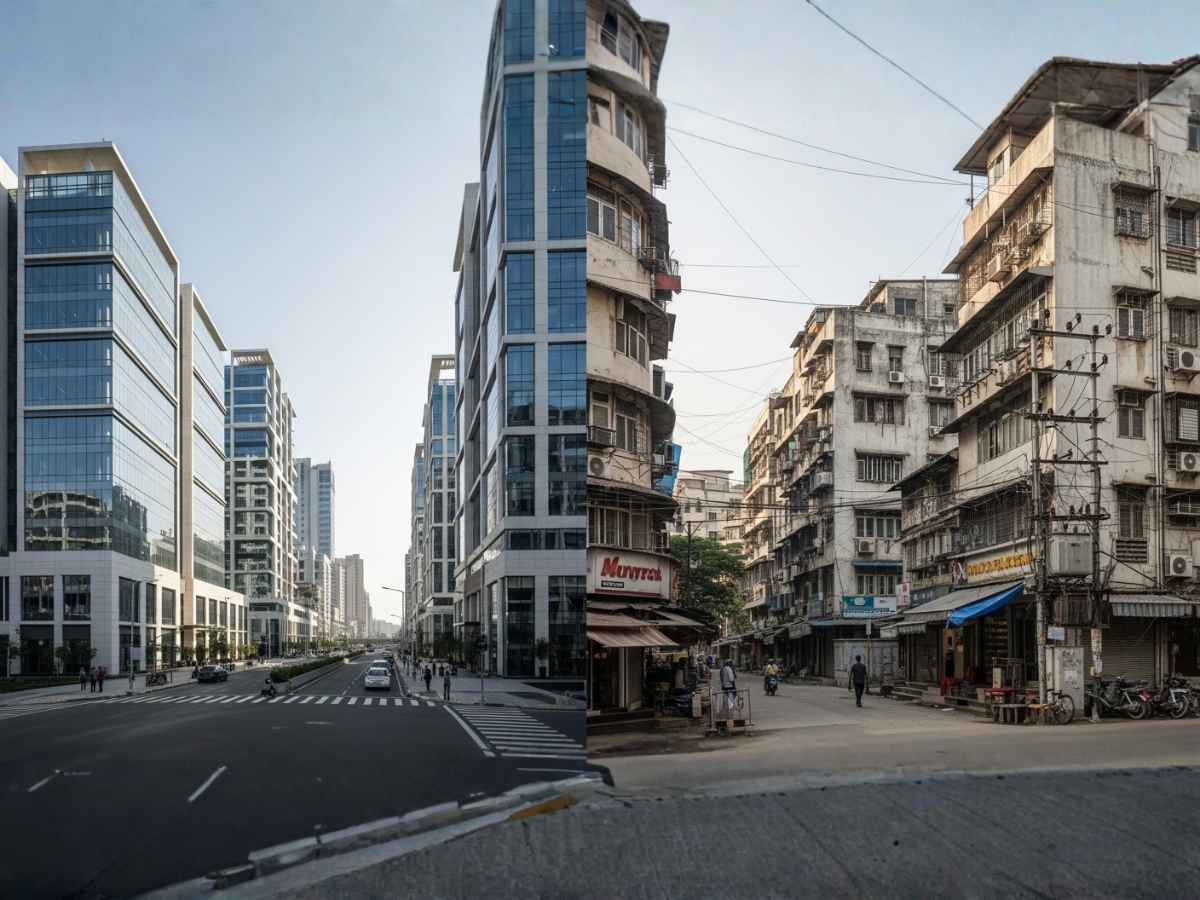
This is the cleanest way to see the market.
|
|---|